audiobriefs
7:37in productionCh. 1 · Built for the desk/ 7:37 · ceiling 15 min
Mixing & mastering · Monitors & headphones

Sennheiser HD 600

The HD600 doesn’t flatter — it reveals. That’s why it’s still the quiet benchmark for mixing.

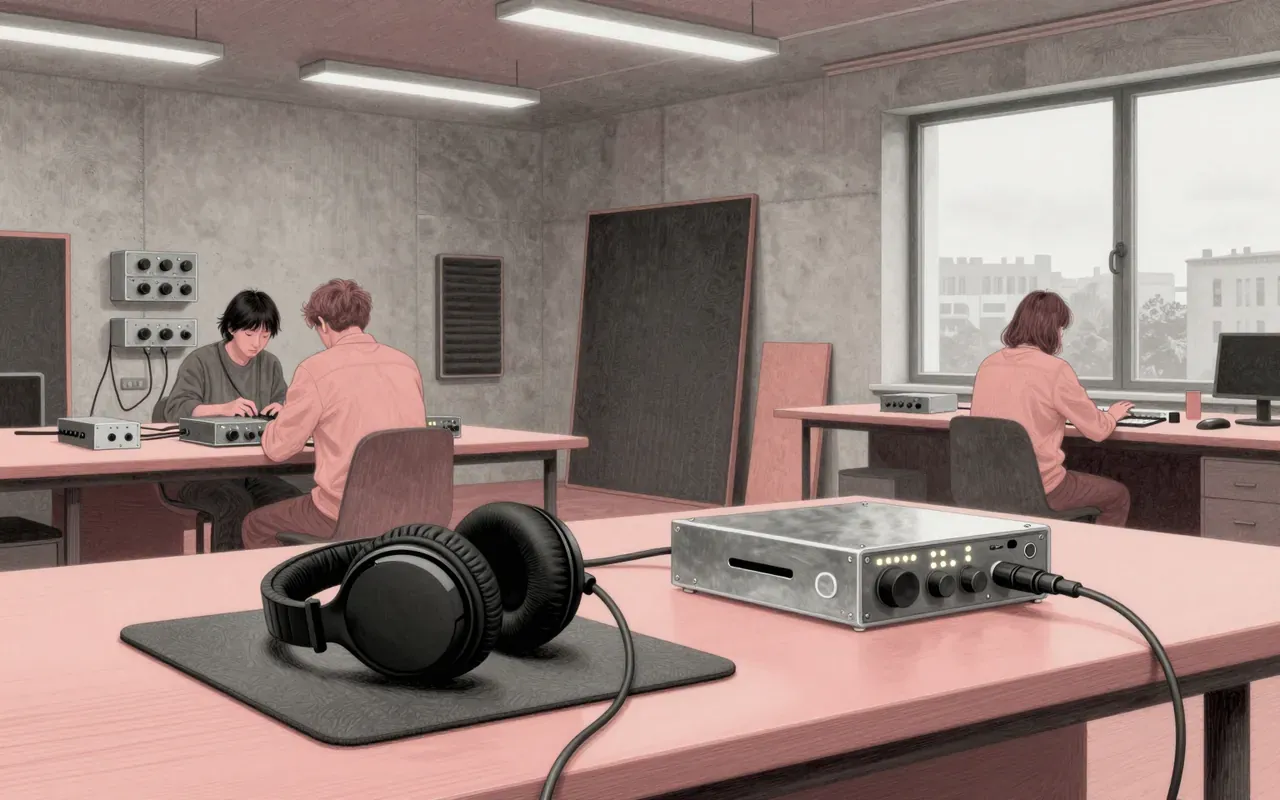
The Sennheiser HD 600 is a studio-grade open-back headphone. It delivers an even frequency response. It renders acoustic instruments realistically across the full spectrum. Its highs are clear and crisp without harshness. Its lows are detailed and clear without overpowering. It was tested against the HD650, HD700, and HD800 using a decent D/A converter and a good headphone amplifier. It is used for mixing and mastering in professional and home studios. It requires capable amplification. It offers no sound isolation.

Chapters & takeaways4
  1. 0:50
    Built for the desk

    Engineers use it for mixing and mastering in real studios.

  2. 2:10
    No peaks, no dips

    Its even frequency response makes it a neutral reference.

  3. 3:23
    Realistic across the spectrum

    Acoustic instruments sound real. Highs are crisp but not harsh. Lows are detailed but not overpowering.

  4. 5:16
    Tested, not trusted

    It was tested against the HD650, HD700, and HD800 using a decent D/A converter, a good headphone amp, and diverse genres.

Worth your time?

Yes. Use the whole thing.

4.5/ 5
What works
  • even frequency response
  • realistic acoustic instrument reproduction
  • balanced high- and low-end performance
What does not
  • flatter
  • isolate
  • work well with weak sources
Use it if
  • mixing engineers
  • mastering engineers
  • critical listeners who value neutrality
Skip it if
  • mobile users
  • noisy environments
  • tracking sessions
The written brief1 min read

What it is and what it was built for

The Sennheiser HD 600 is a studio-grade open-back headphone built for critical listening tasks: mixing and mastering.

How it works, in terms a player would use

The HD600 is an open-back studio headphone. It requires a decent D/A converter and a good headphone amplifier to perform as intended. It delivers sound across Jazz, Classical, Electronic, Rock, Metal, acoustic guitar, and vocal material.

What it does better than anything else

It delivers an even frequency response more consistently than the HD650, HD700, and HD800 in comparative listening tests. Acoustic instruments sound realistic across the full frequency spectrum. Its top end is clear and crisp without harshness. Its bottom end is detailed and clear without overpowering.

What it does badly

It offers no sound isolation. Its open-back design leaks audio and admits ambient noise. It cannot be used in noisy environments or for tracking. It demands capable amplification — it falls short with weak or unbalanced sources.

What people made with it

People used it to mix and master tracks in professional and home studios.

Who should use it, and who should not

Studio engineers and producers who prioritise tonal balance, realism of acoustic sources, and neutrality over isolation or convenience should use it. Anyone needing closed-back performance, battery-powered portability, or loud output from phones or laptops should not.

Is it worth your time

It is worth your time if you need a reference-grade open-back headphone for mixing and mastering in professional or home studios. It is not worth your time if you need isolation, portability, or high-efficiency operation from low-power sources.

Same bench · Mixing & mastering4 of 110
Up next in Audio

Crane Song HEDD 192

Crane Song · 8:37

A DAC that refuses to be transparent — and wins by committing fully to triode grit, pentode width, or tape softness.

8:37