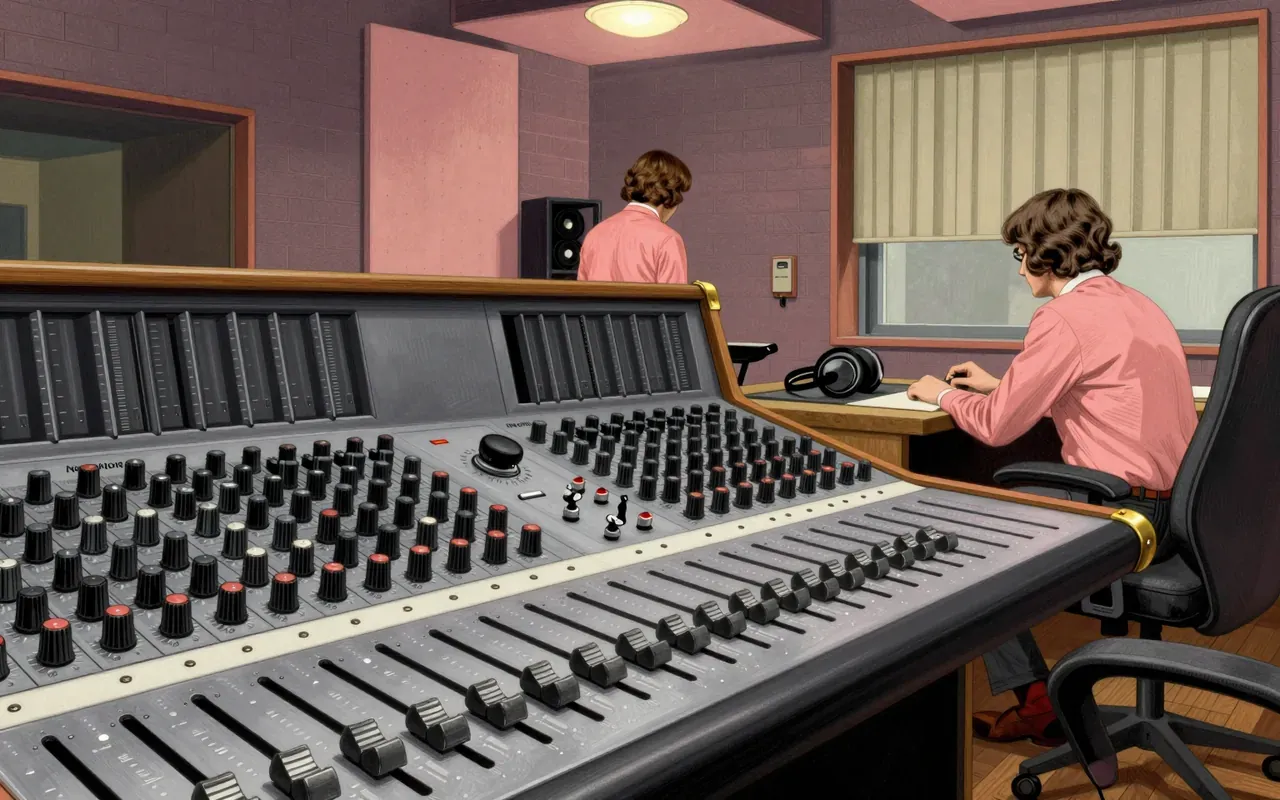
The first intelligent limiter wasn’t clever—it was fast, clean, and built for cutting lacquers, not making records sound ‘vintage’.
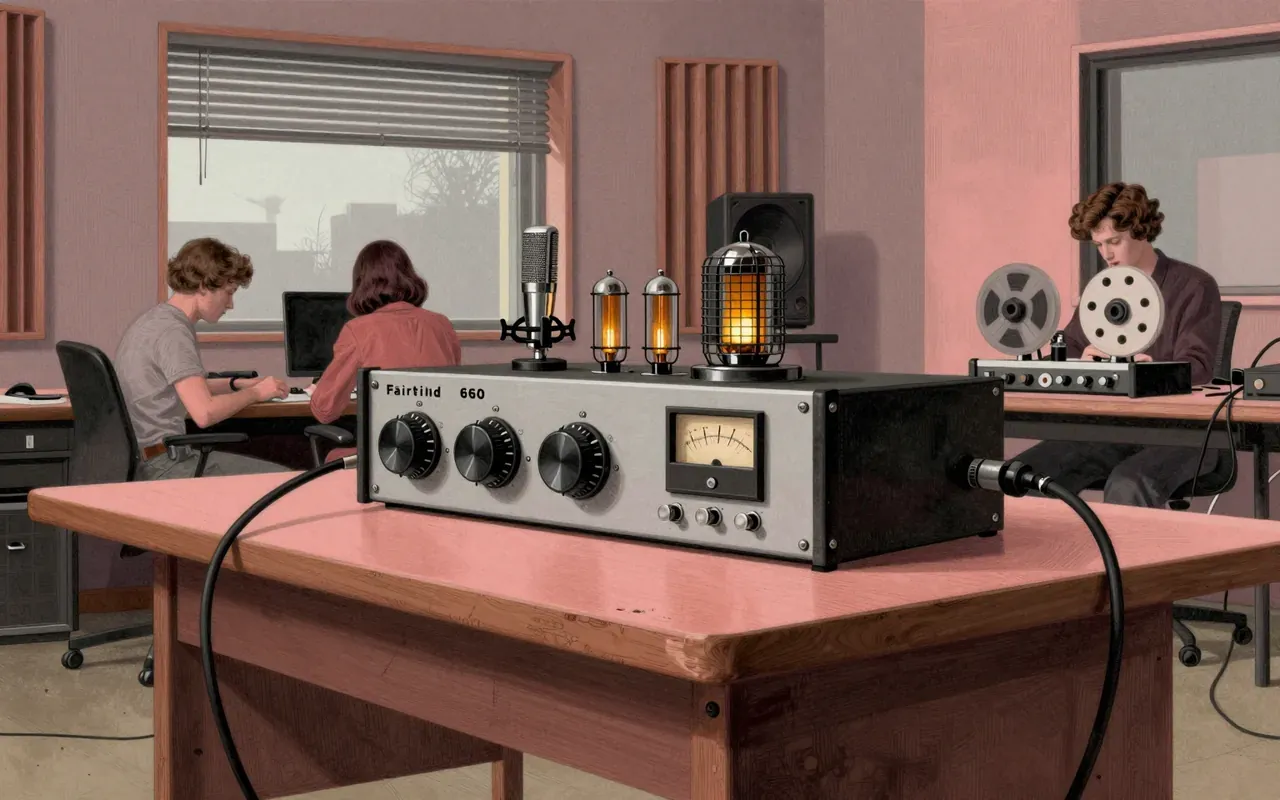
The Fairchild 660 is a mono tube compressor introduced in 1959. It was the first intelligent automatic volume control limiter. Designed by Rein Narma, the first ten units were built by him. The first unit went to Rudy Van Gelder, who used it to cut lacquer masters for Blue Note Records and Vox Records. It functions as a compressor (2:1, threshold 5 dB below normal) or peak limiter (30:1, threshold 10 dB above normal), with fixed 1/10,000-second attack and variable release. Its push-pull amplification and high control voltage yield low distortion, low noise, and no audible thumps.
It was the first intelligent automatic volume control limiter—and a mono tube compressor built for one job: mastering.
2:30
How it works
It compresses from 2:1 to limits at 30:1—with fixed 1/10,000-second attack and variable release.
3:31
Why it sounds clean
Its push-pull stage and high control voltage deliver zero thumps, low distortion, and low noise.
4:55
What it made
Rudy Van Gelder used the first unit to cut Blue Note and Vox lacquers—defining the sound of mid-century jazz pressings.
Worth your time?
Yes. Use the whole thing.
4.5/ 5
What works
ultra-fast peak limiting without thumps
clean gain control under extreme transients
low-distortion compression at high ratios
What does not
offer stereo operation
support recallable settings
include sidechain input
integrate with modern DAW workflows
Use it if
mastering engineers restoring lacquer-era jazz
archival studios replicating 1959–1965 cutting-chain signal paths
Skip it if
bedroom producers
live sound engineers
anyone needing more than one channel
The written brief1 min read
What it is and what it was built for
It is a mono, tube-based, single-channel audio compressor introduced in 1959. It was built to control dynamic range during lacquer mastering—especially for jazz records cut directly to disc.
How it works, in terms a player would use
It operates as a mono tube compressor or peak limiter. Controls set threshold and ratio between 2:1 compression and 30:1 limiting. Attack is fixed at 1/10,000 of a second. Release timing curves are variable—including automatic variable release.
What it does better than anything else
It does fast, clean, thump-free peak limiting better than any other valve-based single-channel hardware from its era. Its combination of high control voltage and push-pull amplification delivers low distortion and noise where others thump or smear.
What it does badly
It does badly anything requiring stereo tracking, multiple channels, or modern workflow integration. It has no metering beyond basic VU, no sidechain input, no bypass switch, and no recallable settings.
What people made with it
Rudy Van Gelder used the first unit to cut lacquer masters for Blue Note Records and Vox Records. Its sound shaped the tonal balance and punch of those pressings.
Who should use it, and who should not
A mastering engineer restoring vintage jazz tapes should use it. A bedroom producer building a DAW-based mix bus should not.
Is it worth your time
It is worth your time only if you need ultra-fast, thump-free analogue gain control with zero audible artefacts—and can source, maintain, and afford a working unit built before 1960.