audiobriefs
Saved
Maker

Epiphone

Website →
6
briefs
9:33
average
57 min
in total
On audio.briefs6
9:43

Epiphone Crestwood

Epiphone

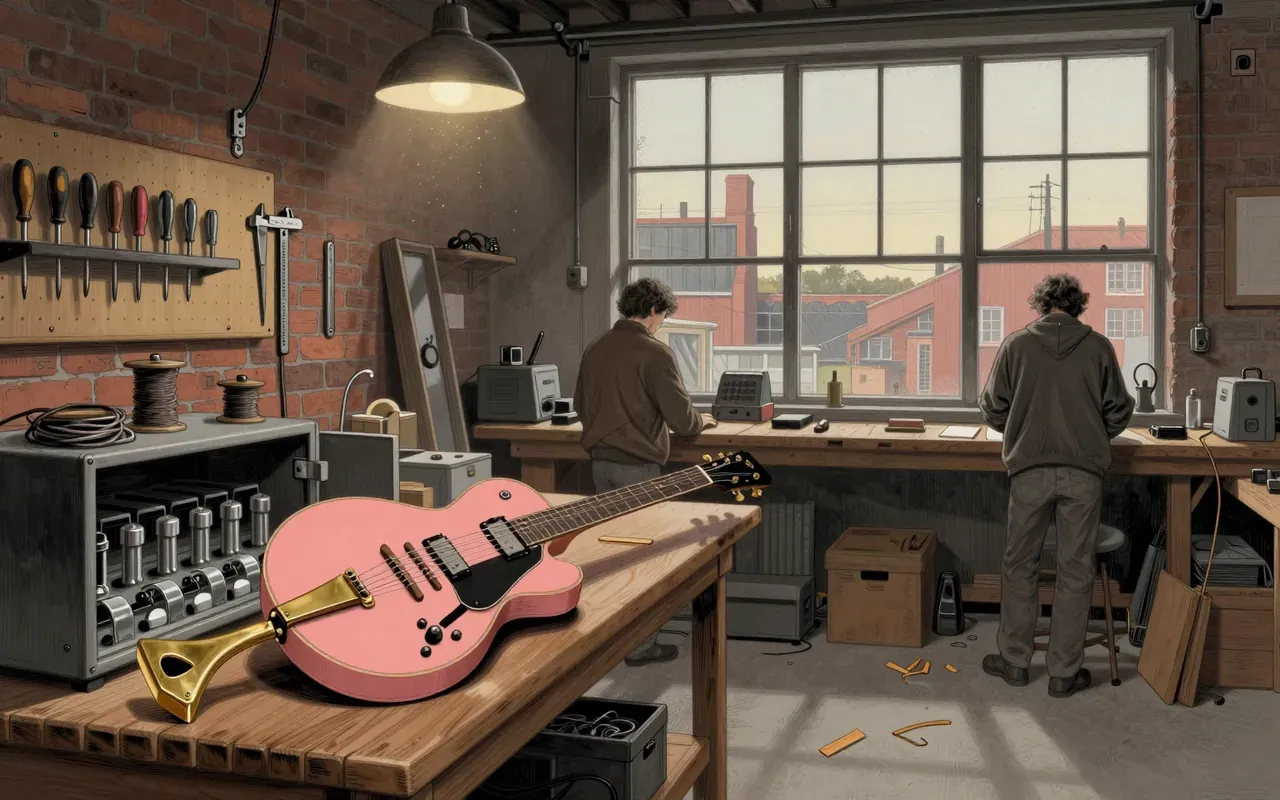
The Epiphone Crestwood is a solid-body electric guitar introduced in 1958. It has no Gibson equivalent. It evolved through named variants—Crestwood Custom, Crestwood DeLuxe—before ending production in 1970. Its construction is mahogany. Its pickups are New Yorker. Its headstock changed from three-on-a-side to six-on-a-side. Its pickguard changed design and lost the Epiphone logo. Its fretboard markers changed from dots to ovals. Its plating changed from gold to nickel. Its upper horn lengthened slightly by 1963. The Crestwood DeLuxe added a third pickup and an ebony fretboard with block inlays.
9:29

Epiphone Jack Casady Signature Bass

Epiphone

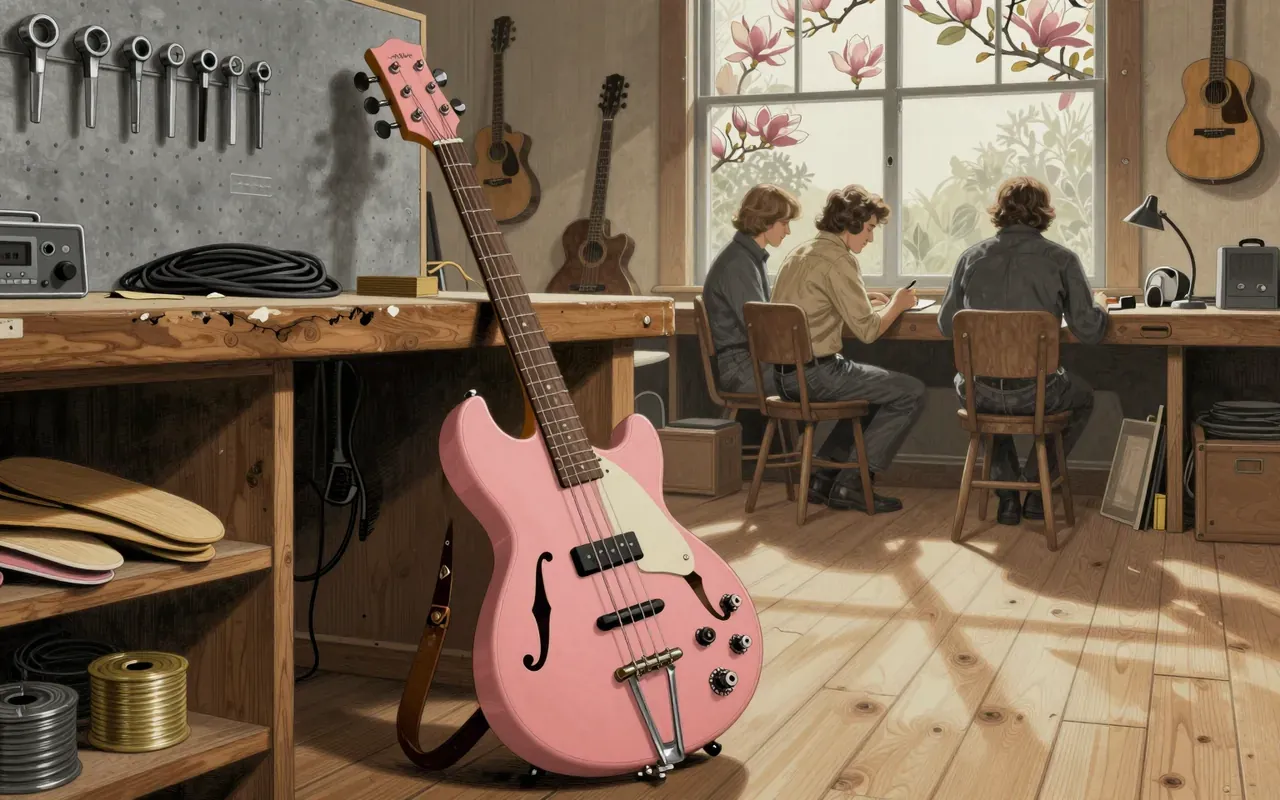
The Epiphone Jack Casady Signature Bass is a 4-string semi-hollow bass guitar co-developed by Jack Casady and Epiphone. It features a maple body, mahogany neck, and a custom low-impedance humbucking pickup connected to a transformer with a three-position impedance selector (50, 250, or 500 ohms). It was designed specifically to improve tonal definition in ensemble playing — a documented shortcoming of the 1970s-era Gibson Les Paul Signature bass. It belongs to Epiphone’s list of exclusive electric bass guitars. It offers no tone controls, no second pickup, and no active circuitry. Its tonal range is defined entirely by impedance selection: lower values yield clarity and balance; higher values yield output and bass weight.

9:38

Epiphone Casino

Epiphone

A true hollow-body electric guitar built for resonance, not resistance. Lightweight. Loud unplugged. Feedback-prone. P-90-driven. 16th-fret neck joint. Used by The Beatles and generations of players who value immediacy over isolation.

11:04

Epiphone Texan

Epiphone

The Epiphone Texan is a jumbo acoustic flattop guitar introduced in 1961 as a continuation of the FT-79. It was built for songwriting and studio use — not for high-volume amplification or tonal experimentation. Its defining features are its jumbo body, midrange-forward voice, and (from 1962) an adjustable bridge. Later reissues added a lightweight internal pickup, but the original was acoustic-only. Paul McCartney used a 1964 model to write 'Yesterday'. It is generally equivalent to the Gibson J-45, differing only in scale-length. Production shifted from the US to Japan and back; discontinuations and reissues reflect corporate ownership changes, not design evolution.

9:11

Epiphone Coronet

Epiphone

The Epiphone Coronet is an Epiphone-exclusive, entry-level solidbody electric guitar with a single P-90 pickup, one volume and one tone control. First introduced as an amplified archtop in 1939, it was reclassified as a solidbody by 1961. It has been manufactured across multiple eras — 1959 US production, 1960s Dwight-branded variants, discontinuation in the 1970s after Epiphone moved overseas, a late-1990s Korean reissue, and a 2020 reissue. It offers no pickup switching, no neck pickup, and minimal control options. Its design prioritises simplicity and direct tone over versatility or refinement.

8:12

Epiphone Sheraton

Epiphone

The Epiphone Sheraton is a thinline semi-hollow body electric guitar introduced in 1958 under Gibson’s ownership but exclusively manufactured by Epiphone. It was reworked from Epiphone’s Century archtop and shares its body design with Gibson’s ES-series. Key spec changes include the 1958 twin-pickup configuration, 1961 switch to mini-humbuckers, and 1970 shift to full-sized humbuckers and Japanese production.