A tube condenser that gives warmth at the cost of control — choose it for colour, not clarity.
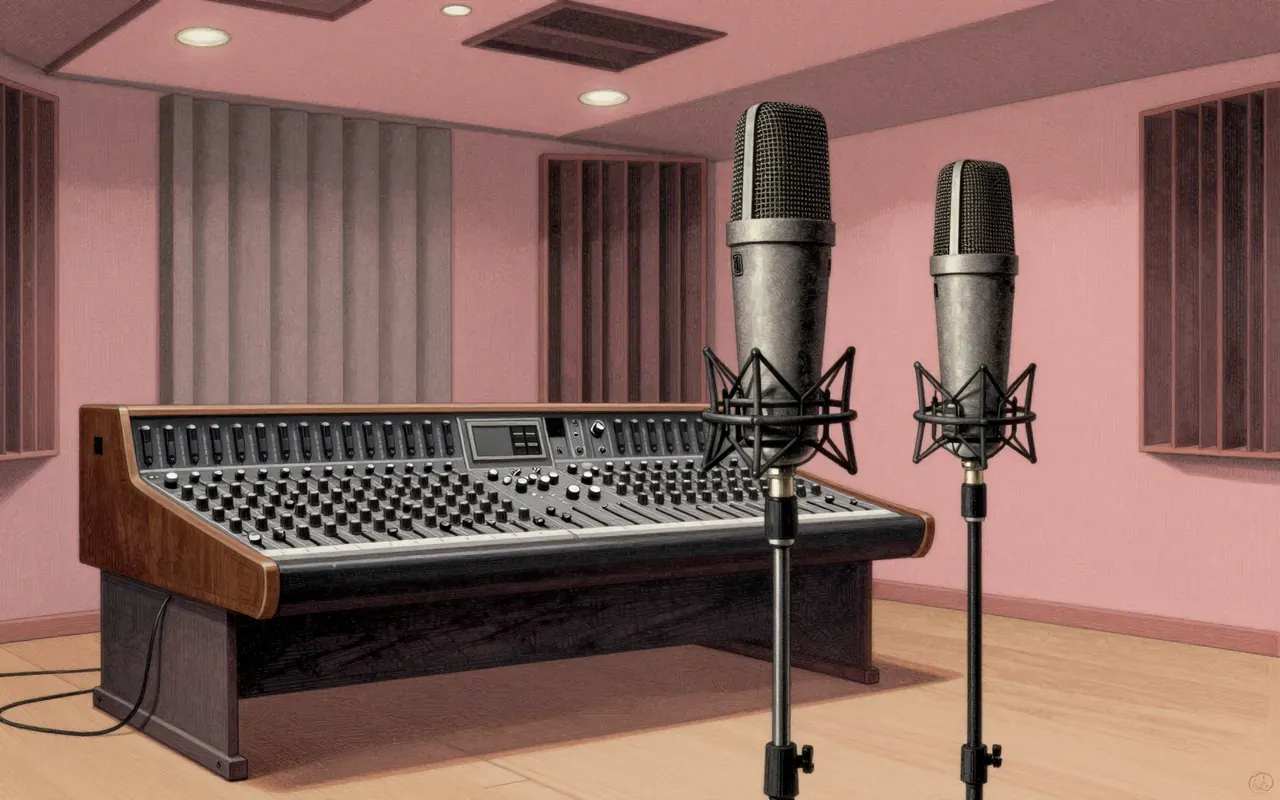
The Sony C37A is a large diaphragm condenser tube microphone. It belongs to a narrow class of studio mics defined by harmonic colour rather than flexibility. It has no documented switches, filters or pads. Its alternate names — 'c 37a' and 'c37 a' — appear in official listings but indicate no functional variation.
It is a large diaphragm condenser microphone powered by a vacuum tube.
1:58
Where does it sit in the mic family?
It belongs to the narrow category of large diaphragm tube condensers — a design focused on tonal character over versatility.
3:08
What’s in the name?
Its alternate names — 'c 37a' and 'c37 a' — reflect inconsistent capitalisation in documentation, not variants in hardware.
4:13
What can’t it do?
It has no documented switches, filters or pads — so it cannot adapt to high-SPL sources or bright rooms without external processing.
Worth your time?
Yes. Use the whole thing.
3.5/ 5
What works
vocal warmth
acoustic instrument bloom
What does not
offer switchable polar patterns
include a pad
include a low-cut filter
Use it if
engineers who want tube saturation
studios with vintage signal chain infrastructure
Skip it if
live sound engineers
home recordists without tube maintenance capability
The written brief1 min read
What it is and what it was built for
The Sony C37A is a large diaphragm condenser tube microphone built for studio vocal and acoustic instrument capture.
How it works, in terms a player would use
It is a tube-powered large diaphragm condenser microphone. It requires phantom power and an external power supply unit to operate.
What it does better than anything else
It delivers the harmonic saturation and transient softness typical of tube condensers, suited to vocal warmth and instrument bloom where colour is desired.
What it does badly
It offers no switchable polar patterns, no pad, no low-cut filter — limiting its adaptability in loud or reflective environments.
What people made with it
No recordings, artists, sessions or releases are named in the source material.
Who should use it, and who should not
Studio engineers seeking tube character should consider it. Beginners, live sound users, or those needing flexibility should not.
Is it worth your time
It is worth your time only if you need a vintage-style large diaphragm tube condenser and have access to a working unit with verified service history.