audiobriefs
10:52in productionCh. 1 · Power Source/ 10:52 · ceiling 15 min
Guitars & amps

Orange OR120

It’s not loud — it’s authoritative. And it won’t whisper.

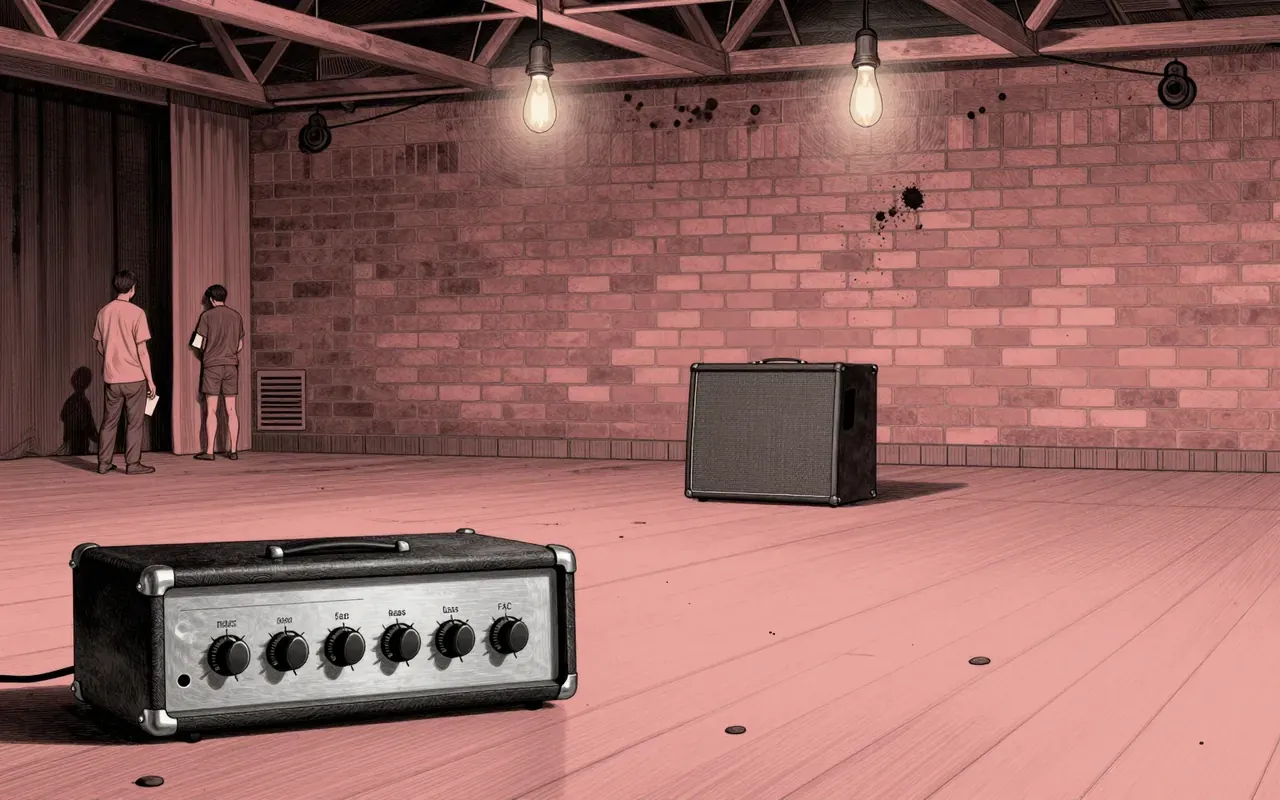
The Orange OR120 is a 120-watt tube guitar amp head built around four EL34 tubes. It has high and low inputs, echo send/return, handles, and controls for master, gain, presence, treble, bass and FAC — but no middle control or standby switch. It delivers rich overdrive and vibrant clean tones at volume, but cannot be used quietly without compromising tone or risking tube stress.

Chapters & takeaways4
  1. 0:51
    Power Source

    Four EL34 tubes push 120 watts — no compromise on headroom or harmonic saturation.

  2. 2:31
    No Middle Ground

    Master, gain, presence, treble, bass and FAC — six knobs, no middle, no standby.

  3. 4:43
    Stage-Ready Wiring

    High/low inputs, echo send/return and handles — built for stage, not studio isolation.

  4. 7:22
    All or Nothing

    On/off only — no standby means longer warm-up, no silent standby mode.

Worth your time?

Yes. Use the whole thing.

4/ 5
What works
  • rich overdrive
  • vibrant clean tones
  • FAC-driven speaker interaction
What does not
  • fit in a flat
  • track cleanly at low volume
  • offer standby switching
Use it if
  • gigging guitarists
  • players who match amps to cabinets
  • those who treat volume as a parameter, not a problem
Skip it if
  • bedroom players
  • home recorders
  • anyone needing midrange sculpting
The written brief1 min read

What it is and what it was built for

The Orange OR120 is a 120-watt tube guitar amplifier head built for loud, expressive live performance. It was built for players who prioritise tonal immediacy and physical presence over bedroom compatibility.

How it works, in terms a player would use

It runs four EL34 tubes to deliver 120 watts. Front-panel controls are master, gain, presence, treble, bass and FAC — left to right, no middle knob. It has high and low 1/4 inch inputs on the front, echo send/return jacks on the front, a speaker output on the back, and an on/off switch but no standby switch.

What it does better than anything else

It delivers rich overdrive and vibrant clean tones with immediate dynamic response. The FAC control gives direct, interactive feedback between gain structure and speaker load — a rare feature in production amps.

What it does badly

It cannot be played at low volumes without sacrificing tone or risking damage. The absence of a standby switch forces full warm-up and cool-down cycles. There is no midrange control to shape core frequencies.

What people made with it

Players used it to generate rich overdrive and vibrant clean tones — sounds defined by its EL34-driven power section and FAC interaction with speaker cabinets.

Who should use it, and who should not

Guitarists who gig at volume, value tactile amp response, and own or regularly use high-power speaker cabinets should use it. Players who rehearse in flats, record at home, or need precise low-volume control should not.

Is it worth your time

Yes — if you need raw, responsive tube power at volume and can manage its weight and lack of master-volume control. No — if you play small venues, track quietly or rely on standby switching.
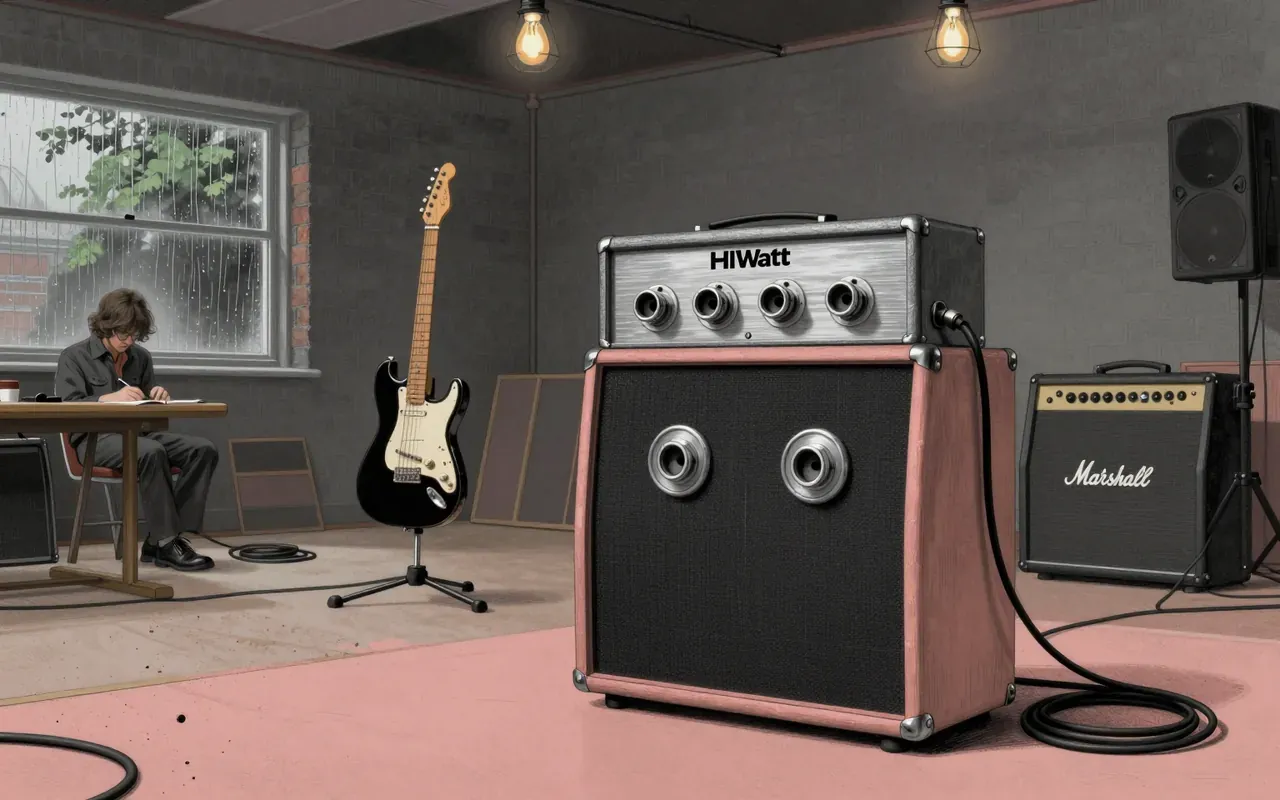
Same bench · Guitars & amps4 of 148
8:02
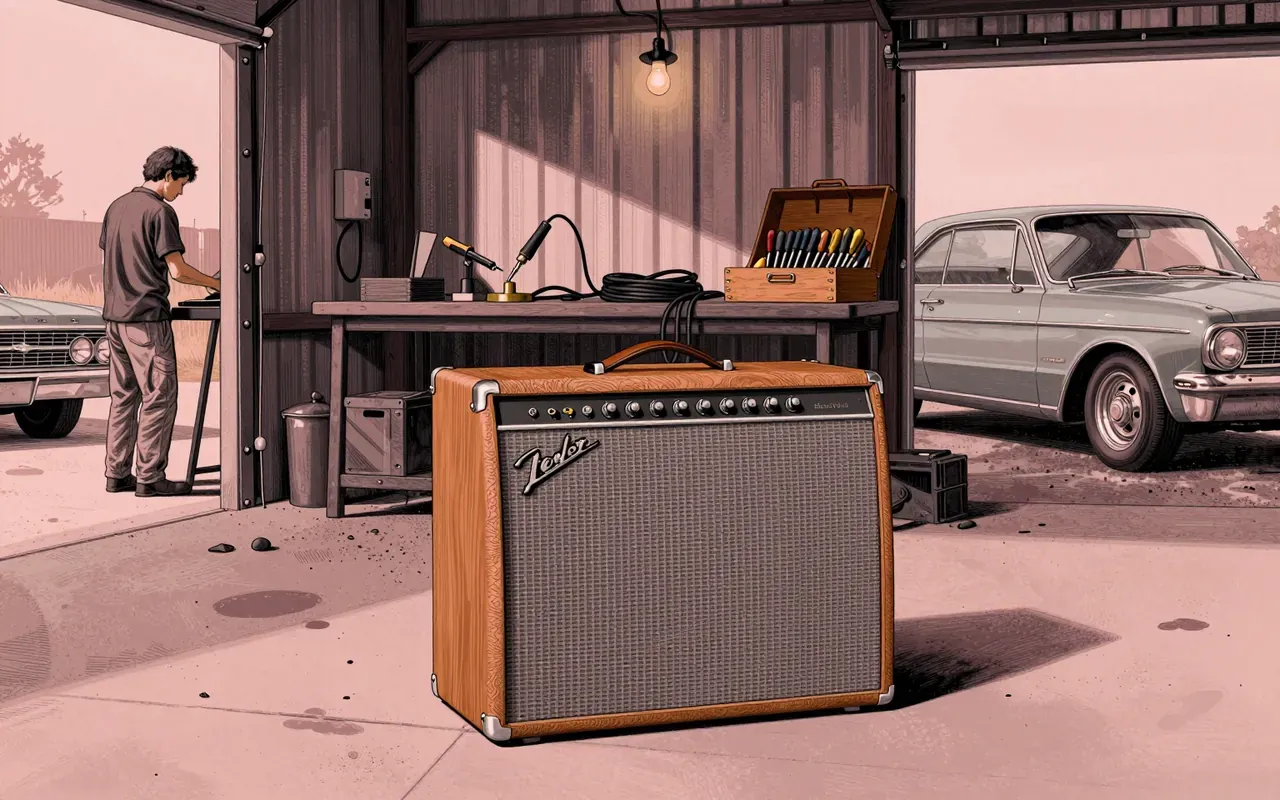
Fender amplifierFenderFender amplifiers are electric instrument amplifiers produced by the Fender Musical Instruments Corporation. The first guitar amplifiers attributed to Leo Fender were manufactured by the K&F Manufacturing Corporation (K&F) in 1945. Later, Fender began building its own line of electric guitars. Fender amplifiers would become favorites of guitarists like Jimi Hendrix, Eric Clapton, and Stevie Ray Vaughan, also known in these cases for playing Fender guitars. Fender amps have come in many configurations and styles. The early K&F and Fender amplifiers relied upon vacuum tube circuitry, with solid-state models appearing in the late 1960s. Fender frequently updated the internal circuitry of its amps, and changed their appearance throughout its history.
7:54
Hiwatt DR103HiwattThe Hiwatt DR103 is a 100-watt all-tube guitar amplifier head built for clarity, dynamics, and power-tube saturation at high volume. It has four inputs, two speaker outputs, bass/mid/treble/presence/master volume controls, voltage and impedance selectors, and no effects loop or direct output. Its crystalline highs and strong presence suit rock over jazz. Saturation requires driving both channels simultaneously. It is physically heavy and operationally uncompromising.
10:19
Marshall MajorMarshallThe Marshall Major is a 200-watt guitar amplifier built from 1967 to 1974. It was designed to produce more volume and clean headroom than Marshall's other amplifiers like the Super Lead. The 200 had only three controls on the front panel and used a preamplifier circuit that was closer in design to a hi-fi amplifier rather than a guitar amp. In 1968, Marshall updated the 200 with a typical EQ compliment of treble, middle, bass, and presence controls, and it was now named the Major. This tone stack—which was passive compared to the 200's active controls—was placed between the second and third gain stages created using ECC83 (12AX7) preamp tubes. Ritchie Blackmore of Deep Purple and Mick Ronson of David Bowie's band are frequently associated with the Major.
7:58
Matamp Matamp GT120MatampThe Matamp GT120 is a tube guitar amp head. No technical specifications are available. Nothing else is confirmed.
Up next in Audio

Vestax PDX-2000

Vestax · 8:43

It holds the groove when you dig in—but won’t hold your pitch.

8:43