audiobriefs
7:54in productionCh. 1 · No frills, no loop/ 7:54 · ceiling 15 min
Guitars & amps

Hiwatt DR103

It doesn’t do clean jazz—it does power-tube saturation like nothing else, but only if you’re willing to plug in twice.

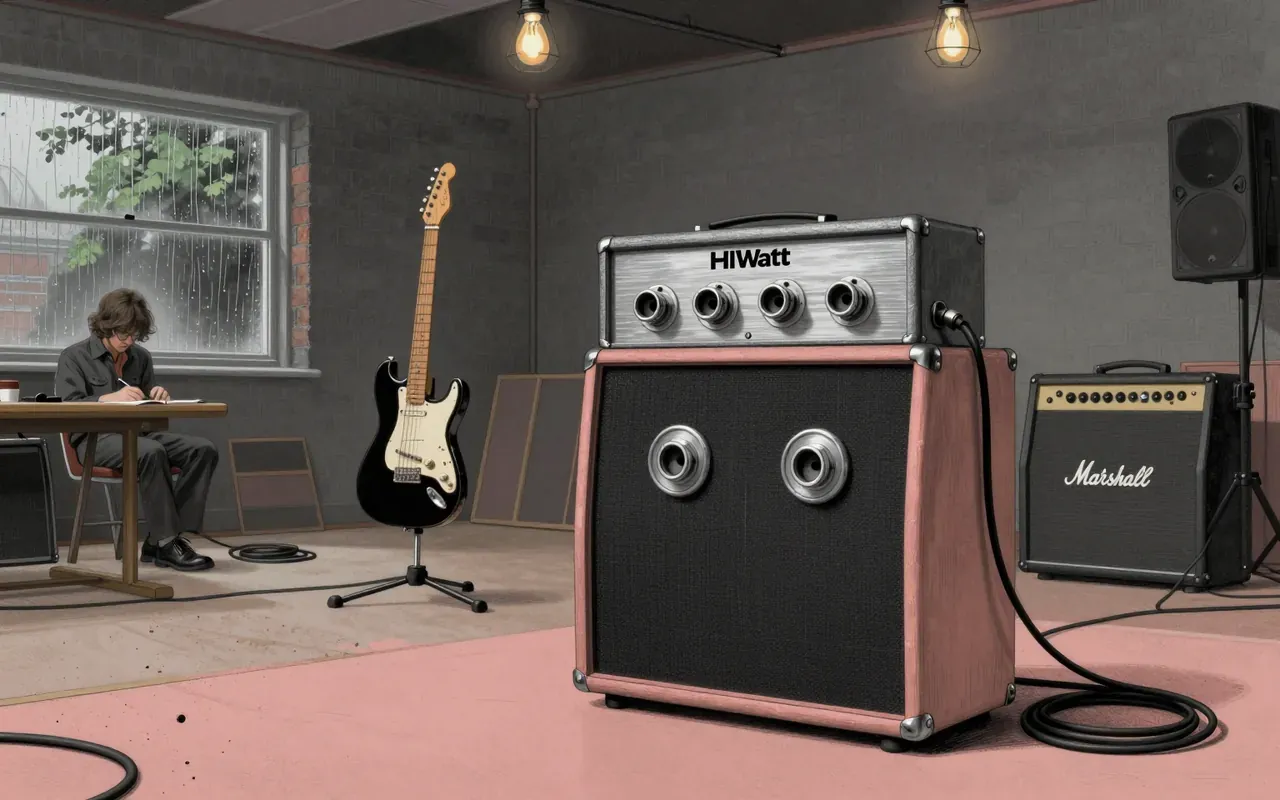
The Hiwatt DR103 is a 100-watt all-tube guitar amplifier head built for clarity, dynamics, and power-tube saturation at high volume. It has four inputs, two speaker outputs, bass/mid/treble/presence/master volume controls, voltage and impedance selectors, and no effects loop or direct output. Its crystalline highs and strong presence suit rock over jazz. Saturation requires driving both channels simultaneously. It is physically heavy and operationally uncompromising.

Chapters & takeaways4
  1. 0:51
    No frills, no loop

    Four inputs, two speaker outs, basic tone stack—and zero effects routing.

  2. 2:14
    Built for the world, wired for caution

    Voltage and impedance selectors let it run globally—but mis-set voltage blows fuses.

  3. 3:37
    Clarity first, crunch second

    Crystalline highs and strong presence dominate—saturation comes only from slamming both channels.

  4. 4:55
    What it refuses to do

    No effects loop. No direct output. And it’s not a jazz amp—full stop.

Worth your time?

Yes. Use the whole thing.

4.5/ 5
What works
  • crystalline-highs
  • strong-presence
  • clear-dynamics
  • power-tube-saturation
What does not
  • jazz
  • bedroom-recording
  • effects-integration
Use it if
  • loud-stage-players
  • power-tube-saturation-seekers
  • headroom-prioritisers
Skip it if
  • jazz-guitarists
  • pedalboard-heavy-players
  • DI-recorders
The written brief1 min read

What it is and what it was built for

The Hiwatt DR103 is an all-tube 100-watt guitar amplifier head built for loud, uncoloured amplification with high-grade components and wiring. It was built for players who prioritise headroom, punch, and power-tube-driven distortion over versatility or convenience.

How it works, in terms a player would use

It has four inputs: normal, bright, high, and low. Two speaker outputs. Tone controls are bass, mid, treble, presence, and master volume. A voltage selector offers 105, 115, 225, or 245 volts. An impedance selector covers 4, 8, or 16 ohms. No effects loop. No direct output.

What it does better than anything else

It delivers crystalline highs and strong presence with exceptional clarity and dynamics at high volume. Power-tube saturation is immediate and visceral when both channels are driven hard.

What it does badly

It does not deliver clean, articulate jazz tones. It lacks an effects loop and direct output, limiting pedal integration and DI recording. Saturation requires driving both channels simultaneously with a Y-cable—a cumbersome workaround.

What people made with it

Players used it to make crunch-heavy rock tones with clear separation and aggressive presence—especially when pushing both channels into power-tube saturation.

Who should use it, and who should not

Guitarists who play at high volume and want uncoloured headroom, tight low-end response, and power-tube saturation via channel stacking. Not for jazz players, bedroom recorders, or those needing effects integration.

Is it worth your time

Yes—if you need raw, dynamic headroom and power-tube saturation at stage volume. No—if you rely on pedals, need clean jazz tones, or require silent recording options.
Same bench · Guitars & amps4 of 148
Up next in Audio

Ibanez Musician MC924

Ibanez · 9:27

A 1978 bass that refuses to wear out — but demands strap-locks, patience, and respect for its heft.

9:27