What it is and what it was built for
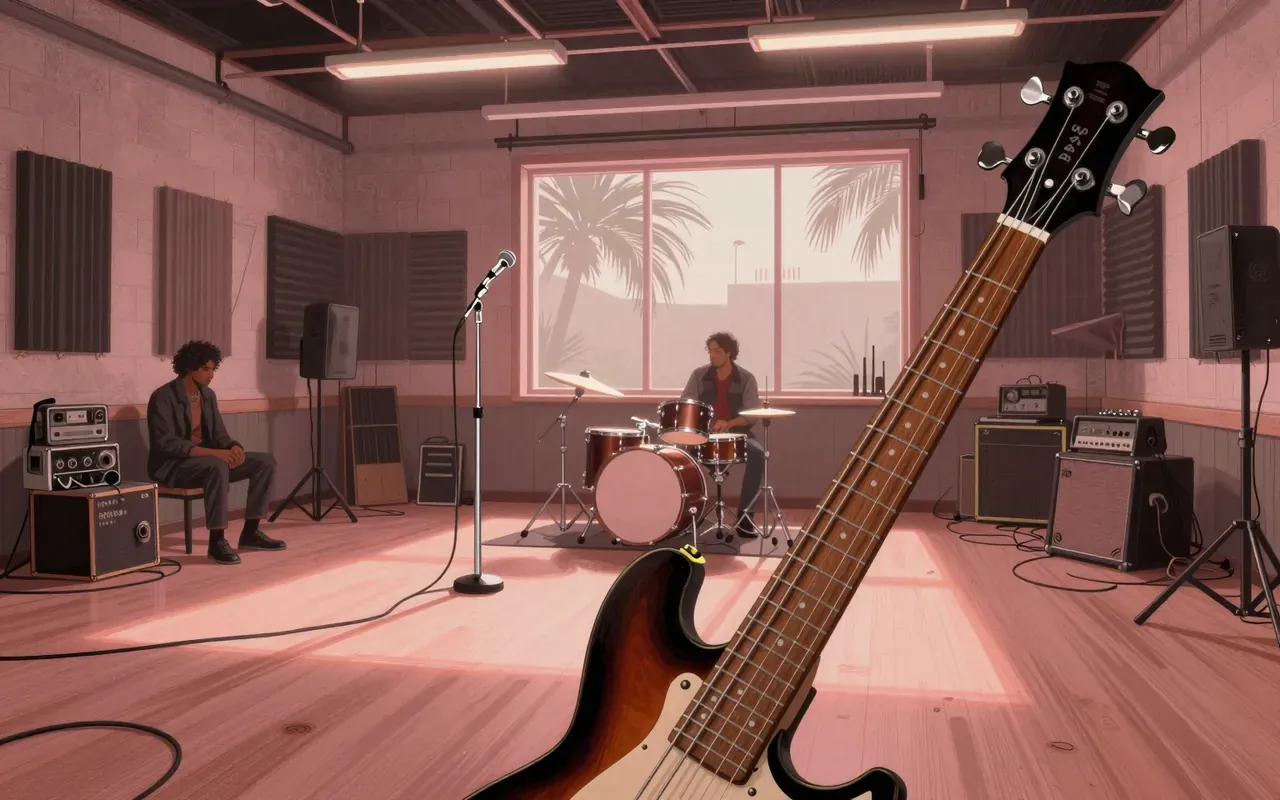
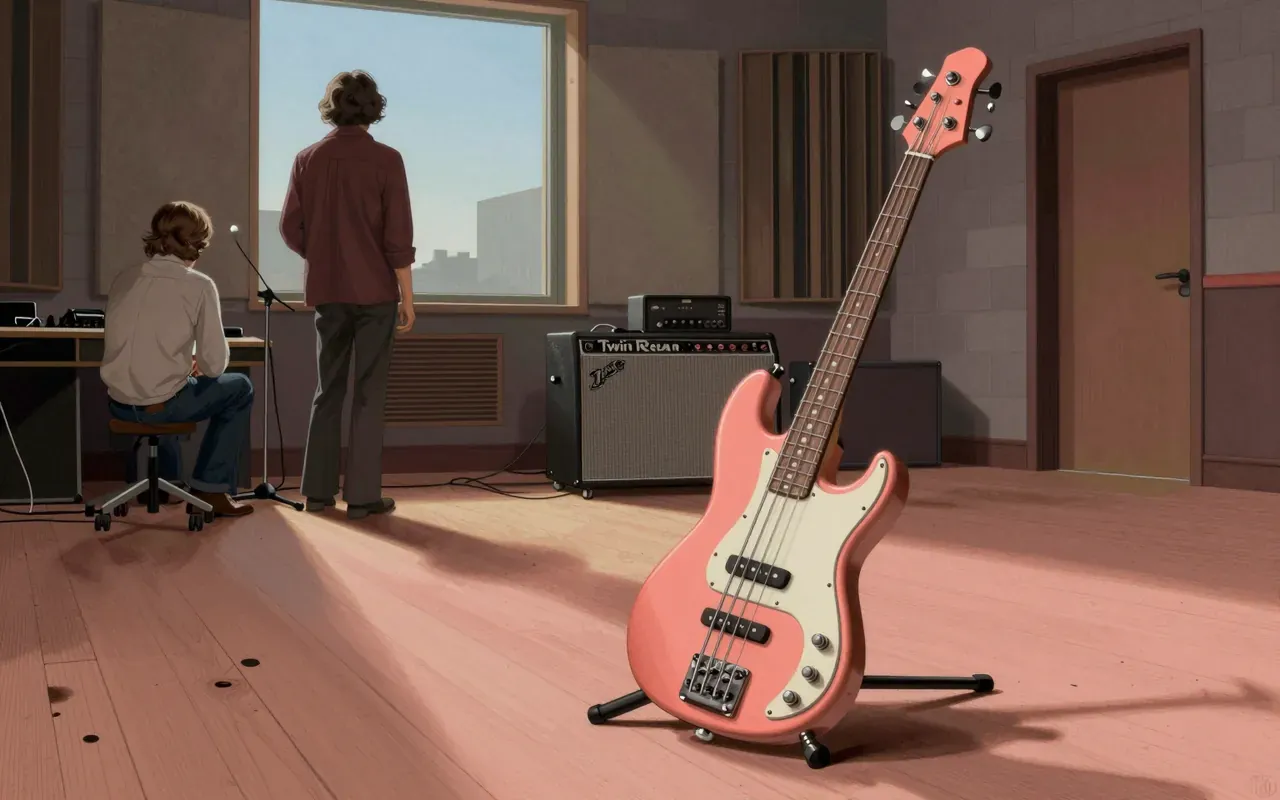
The Gibson Thunderbird is a 34-inch scale electric bass introduced in 1963. It was built for players seeking an alternative to Fender’s dominance — one with bold styling, Gibson’s humbucker voicing, and structural innovation.
How it works, in terms a player would use
The Thunderbird uses neck-through construction: the neck wood runs the full length of the instrument, with body wings glued on either side. It has a 34-inch scale and soapbar humbuckers. Original models (1963–1966) have a reverse body — treble horn extended, bass horn recessed — and are bolted or set into the neck depending on year; post-1966 models use set-neck construction and a non-reverse body.
What it does better than anything else
It projects a punchy, mid-forward tone that cuts through dense mixes more readily than many contemporaries. Its neck-through build delivers tight sustain and note definition, especially in the upper register.
What it does badly
It balances poorly when seated due to the reverse body’s weight distribution. The neck-through design makes repairs difficult. The non-reverse 1966+ models lose the original’s asymmetry and tonal character without gaining measurable playability improvements.
What people made with it
Players used it for rock, soul, and funk recordings where assertive bass lines needed to anchor rhythm sections without disappearing in the mix. Its tone became part of the sonic signature of bands favouring high-mid clarity over rounded warmth.
Who should use it, and who should not
Players who value strong tactile feedback, like instruments that respond aggressively to picking dynamics, and who don’t mind adjusting their strap height or posture for balance. Not for players who rely on long seated sessions, need feather-light weight, or prefer even tonal response from nut to bridge.
Is it worth your time
Yes — if you need a bass with aggressive midrange presence, physical heft, and visual distinction. No — if you prioritise light weight, ergonomic balance when seated, or consistent low-end response across all positions.