audiobriefs
9:04in productionCh. 1 · The House Cab/ 9:04 · ceiling 15 min
Guitars & amps

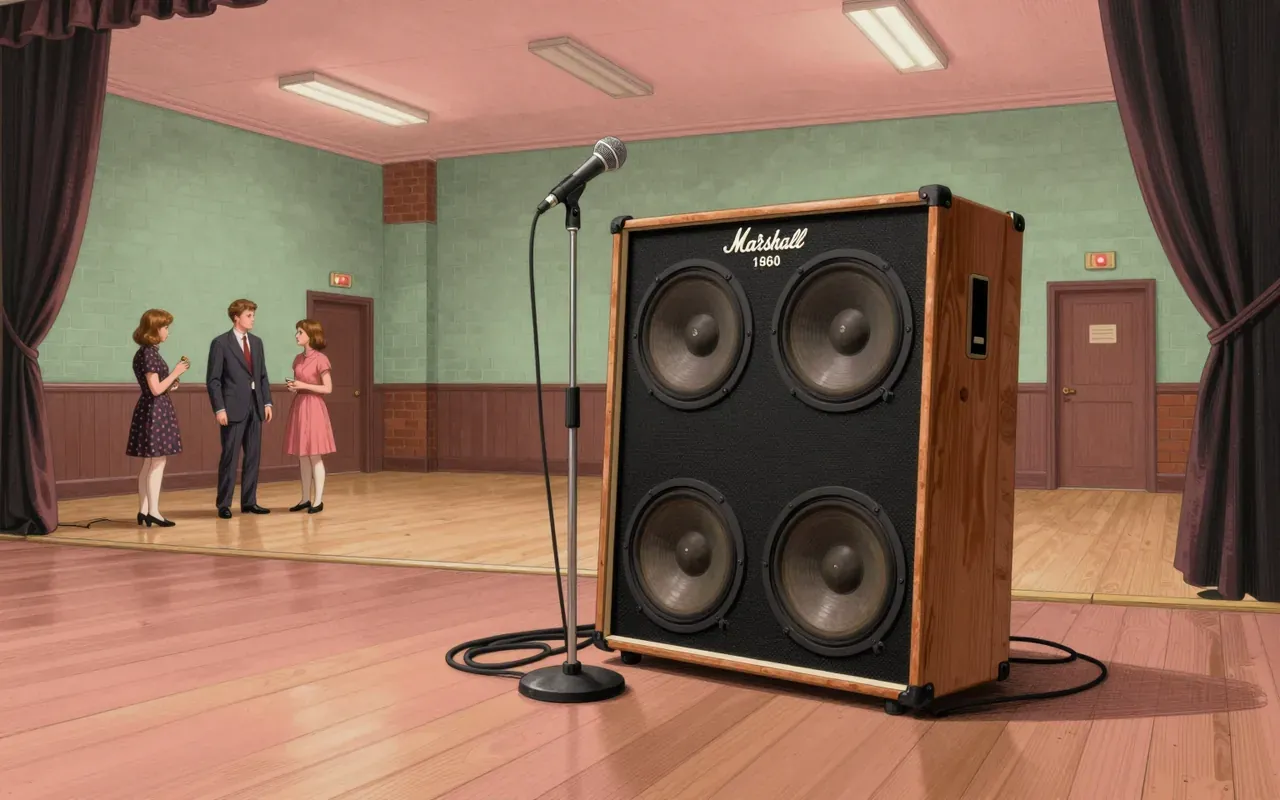
Marshall 1960A Cabinet

It leaks air, lacks warmth, and dominates metal stages—not because it sounds great, but because it’s cheap, loud, and easy to fix.

The Marshall 1960A JCM900 is Marshall’s designated main 4x12 cabinet—widely used, widely modified, and widely criticised. Its four Celestion G12T75 speakers deliver 300 watts of aggressive, scooped tone. Birch plywood construction meets an MDF back panel. Rear-panel impedance and stereo switching add flexibility. But air leaks at the seams. Joints feel insecure. Plastic handles flex under load. It excels only where harsh highs and tight lows serve metal—but fails jazz, grunge, and any genre demanding warmth or low-end authority.

Chapters & takeaways4
  1. 0:53
    The House Cab

    Marshall calls this its main cabinet—and it shows in how many are on stage and in studios.

  2. 2:24
    How It’s Built

    Four G12T75s, birch plywood, MDF back, and rear-panel switching define its signal path and limits.

  3. 3:54
    Where It Fails

    Air leakage and scooped mids make it brittle and thin—good for cutting through metal, bad for anything warm.

  4. 5:19
    Why It’s Everywhere

    It’s among the most common 4x12s ever made—proof of utility, not excellence.

Worth your time?

Yes. Use the whole thing.

3.5/ 5
What works
  • cutting through dense metal mixes
  • accepting high-wattage tube amps
  • taking speaker swaps and seam sealing
What does not
  • excellence
  • warmth
  • build integrity
Use it if
  • metal players
  • modders
  • budget-conscious gigging musicians
Skip it if
  • jazz players
  • grunge players
  • studio purists
The written brief1 min read

What it is and what it was built for

The Marshall 1960A JCM900 is a 4x12 guitar cabinet built for high-power tube amplifiers in the JCM900 series. Marshall designates it as its main cabinet.

How it works, in terms a player would use

It uses four Celestion G12T75 speakers wired to handle 300 watts. The rear panel offers selectable impedance and stereo switching. Birch plywood forms the main cabinet, but the back panel is MDF. Air leaks at the seams.

What it does better than anything else

It delivers a sizzling, aggressive high-end and tight, focused distortion that cuts through dense modern metal mixes better than most stock 4x12s.

What it does badly

It lacks warmth, delivering scooped mids, harsh highs, and weak lows. Its insecure joints and plastic handles undermine durability. It fails in jazz and grunge where midrange body and low-end fullness matter.

What people made with it

Players used it to shape the core tone of 1990s and 2000s modern metal—tight, aggressive, and front-heavy—often modifying it to seal air leaks or swap speakers.

Who should use it, and who should not

Metal players seeking a no-frills, widely supported cab for high-gain distortion should use it. Jazz, blues, or grunge players needing warmth and low-end authority should avoid it.

Is it worth your time

Yes—if you need a widely available, mod-friendly 4x12 for high-gain metal tones and can tolerate its tonal compromises and build flaws.
Same bench · Guitars & amps4 of 147
8:24
Trace Elliot AH250Trace ElliotThe Trace Elliot AH250 is a bass guitar amp head made by Trace Elliot. No technical specifications are available for it.
10:52
Orange OR120OrangeThe Orange OR120 is a 120-watt tube guitar amp head built around four EL34 tubes. It has high and low inputs, echo send/return, handles, and controls for master, gain, presence, treble, bass and FAC — but no middle control or standby switch. It delivers rich overdrive and vibrant clean tones at volume, but cannot be used quietly without compromising tone or risking tube stress.
10:19
Marshall MajorMarshallThe Marshall Major is a 200-watt guitar amplifier built from 1967 to 1974. It was designed to produce more volume and clean headroom than Marshall's other amplifiers like the Super Lead. The 200 had only three controls on the front panel and used a preamplifier circuit that was closer in design to a hi-fi amplifier rather than a guitar amp. In 1968, Marshall updated the 200 with a typical EQ compliment of treble, middle, bass, and presence controls, and it was now named the Major. This tone stack—which was passive compared to the 200's active controls—was placed between the second and third gain stages created using ECC83 (12AX7) preamp tubes. Ritchie Blackmore of Deep Purple and Mick Ronson of David Bowie's band are frequently associated with the Major.
8:02
Fender amplifierFenderFender amplifiers are electric instrument amplifiers produced by the Fender Musical Instruments Corporation. The first guitar amplifiers attributed to Leo Fender were manufactured by the K&F Manufacturing Corporation (K&F) in 1945. Later, Fender began building its own line of electric guitars. Fender amplifiers would become favorites of guitarists like Jimi Hendrix, Eric Clapton, and Stevie Ray Vaughan, also known in these cases for playing Fender guitars. Fender amps have come in many configurations and styles. The early K&F and Fender amplifiers relied upon vacuum tube circuitry, with solid-state models appearing in the late 1960s. Fender frequently updated the internal circuitry of its amps, and changed their appearance throughout its history.
Up next in Audio

Digidesign 888/24 I/O

Digidesign · 9:48

Eight clean analog inputs, four AES-EBU channels, zero autonomy: the 888/24 only works inside Pro Tools—and that’s exactly why it still earns its rack space.

9:48