audiobriefs
8:18in productionCh. 1 · Heavy. Violin. 1981./ 8:18 · ceiling 15 min
Guitars & amps · Instruments

Ibanez Artist AR300

A heavy, warm, violin-shaped 1981 Japanese guitar that sings in blues and jazz—but refuses to shred.

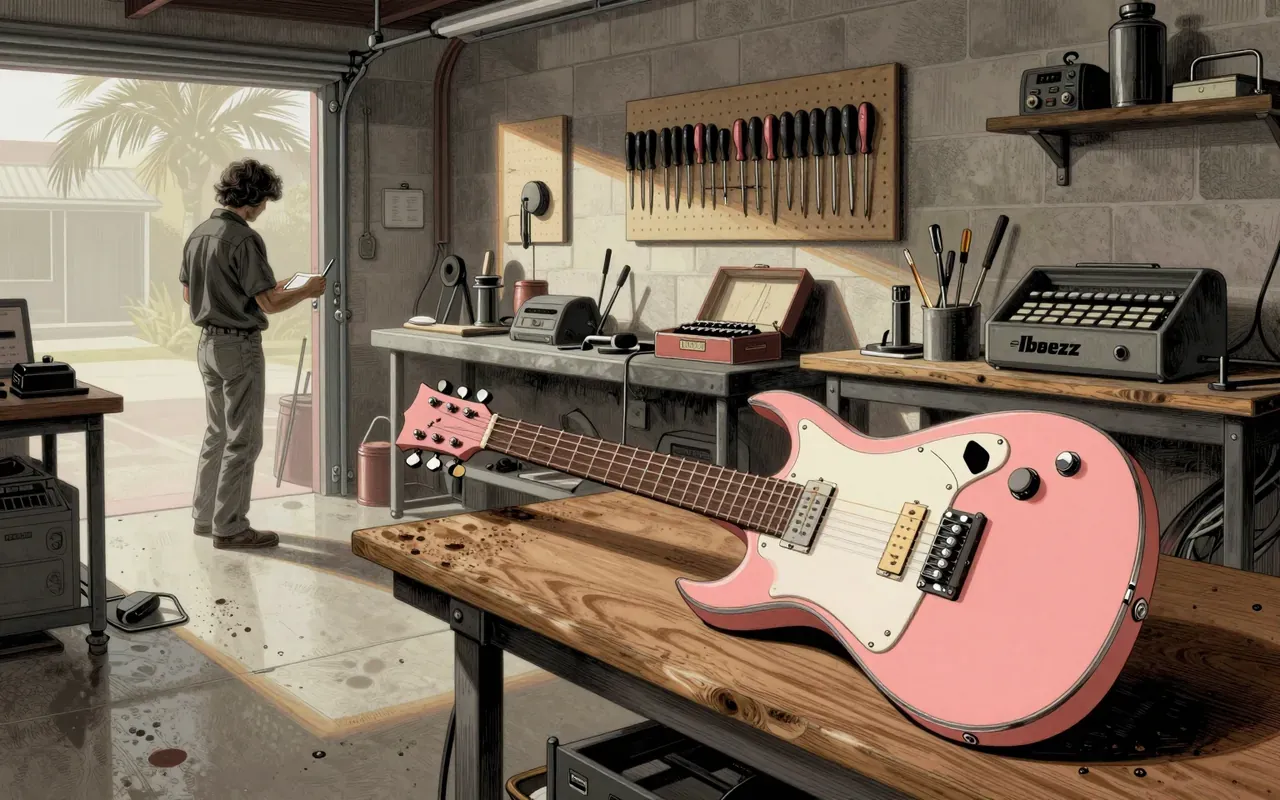
The Ibanez AR300 is a 1981 Japanese-made, violin-shaped electric guitar with a glued-in neck, two humbuckers, 22 frets, and four dedicated controls. It weighs like a vintage Les Paul and plays with warmth and authority in blues and jazz—but resists speed, modern ergonomics, and tonal neutrality.

Chapters & takeaways5
  1. 0:52
    Heavy. Violin. 1981.

    Made in Japan in 1981, it weighs like a vintage Les Paul and wears its violin shape like a badge of intent.

  2. 2:11
    Set Neck. Thick Neck.

    Its glued-in neck and thick 1960s-style profile deliver sustain and authority—but demand a deliberate hand.

  3. 3:16
    Humbuckers. Three Positions. Four Knobs.

    Two humbuckers, three pickup positions (low/high/medium), and four dedicated knobs give simple, direct control—no blending, no surprises.

  4. 4:03
    Not for Shredding.

    High-fret access is usable—but this guitar was never built for speed, tapping, or modern lead technique.

  5. 5:22
    Tube-Amp Warmth Only.

    Warm, round, powerful tones bloom best with tube amps and overdrive—not clean channels or digital modelling.

Worth your time?

Yes. Use the whole thing.

4/ 5
What works
  • warmth
  • sustain
  • blues-and-jazz-response
What does not
  • shred
  • lightweight
  • clean-pop
Use it if
  • blues-players
  • jazz-players
  • tube-amp-users
Skip it if
  • shredders
  • pop-session-players
  • digital-modeling-users
The written brief1 min read

What it is and what it was built for

The Ibanez AR300 is a violin-shaped electric guitar made in Japan in 1981. It was built for expressive, dynamic playing in blues and jazz—not for technical flash or genre-hopping.

How it works, in terms a player would use

It has a glued-in neck, two humbuckers, a 3-position pickup selector (low, high, medium), and four knobs: two volume, two tone. The thick neck and violin-shaped body sit heavily on the player, like a vintage Les Paul.

What it does better than anything else

It delivers a warm, round, powerful sound in blues and jazz contexts better than most mid-1980s Japanese production guitars—thanks to its set-neck construction, humbucker pairing, and responsive interaction with tube amplifiers and overdrive pedals.

What it does badly

It does not support shredding. High-fret access is relatively easy but not designed for speed or extended lead work.

What people made with it

Players used it to make warm, round, powerful sounds in blues and jazz, particularly when paired with tube amplifiers and overdrive pedals.

Who should use it, and who should not

Blues and jazz players who value warmth, sustain, and tactile response from a heavy, set-neck instrument should use it. Shredders, pop session players, or anyone needing lightweight ergonomics or broad tonal flexibility should not.

Is it worth your time

Yes—if you want warm, round, powerful tones for blues and jazz, especially through tube amps and overdrive pedals. No—if you need fast fret access, modern ergonomics, or versatility across high-gain or clean-pop styles.
Same bench · Guitars & amps4 of 147
9:28
Mesa/Boogie Mark IIC+Mesa/BoogieThe Mark IIC+ is a purpose-built, hand-assembled high-gain amplifier defined by its aggressive midrange, tight low end, and footswitched Rhythm/Lead duality. It sacrifices clean headroom, feature depth, and production consistency for saturated, compressed tone that cuts and sustains. Its value lies entirely in what it delivers to the player’s hands and ears—not in rarity, pedigree, or resale.
8:31
Ibanez RG550IbanezThe Ibanez RG550 is an STC-shaped electric guitar from the RG Standard series, manufactured from 1987 to 1994. It features a Floyd Rose locking tremolo, H-S-H pickups, a 5-way switch, and a thin maple neck. It is discontinued. Users praise its playability and tuning stability but note its weight and fragile finish.
8:40
Ibanez CS9 Stereo ChorusIbanezThe Ibanez CS9 Stereo Chorus is an early-1980s analog chorus pedal using Bucket Brigade Delay chips. It has two knobs (speed and width), one switch, one analog input, and two outputs (L(mono) and R stereo). It operates on 9V battery or AC/DC adapter. Its metal case ensures durability and repairability. The effect is subtle: cranking both knobs yields only gentle thickening—not pronounced modulation. It warms the clean tone rather than applying overt chorus. It does not deliver strong, fast, or wide modulation. It belongs in the rig of players who prioritise warmth, stereo spread, and reliability over dramatic movement.
11:48
Ibanez JEM777IbanezThe Ibanez JEM777 is a made-in-Japan STC-shaped guitar built from 1987 to 1996 for Steve Vai’s technical demands. It features a basswood body, maple or rosewood fretboard, 24 frets (some scalloped), HSH pickups, passive volume/tone/five-way switching, and either an Edge or Lo Pro Edge tremolo. It delivers exceptional upper-fret access and stable tremolo performance — but offers no coil-splitting, no active circuitry, and no tolerance for neglected tremolo maintenance.
Up next in Audio

Auratone 5C Super Sound Cube

Auratone · 9:14

Flat, punchy, and brutally incomplete — the Auratone 5C doesn’t tell you what your mix sounds like. It tells you what it *doesn’t* sound like.

9:14