audiobriefs
8:40in productionCh. 1 · Built for subtlety/ 8:40 · ceiling 15 min
Effects & pedals · Guitars & amps

Ibanez CS9 Stereo Chorus

It doesn’t chorus—it warms. And that’s why it still matters.

The Ibanez CS9 Stereo Chorus is an early-1980s analog chorus pedal using Bucket Brigade Delay chips. It has two knobs (speed and width), one switch, one analog input, and two outputs (L(mono) and R stereo). It operates on 9V battery or AC/DC adapter. Its metal case ensures durability and repairability. The effect is subtle: cranking both knobs yields only gentle thickening—not pronounced modulation. It warms the clean tone rather than applying overt chorus. It does not deliver strong, fast, or wide modulation. It belongs in the rig of players who prioritise warmth, stereo spread, and reliability over dramatic movement.

Chapters & takeaways4
  1. 0:44
    Built for subtlety

    Analog warmth from Bucket Brigade chips, released in the early 1980s.

  2. 2:09
    Simple, physical, stereo

    Two knobs, one switch, one input, two outputs—L(mono) and R(stereo).

  3. 3:36
    Subtle, not sweeping

    Cranking the knobs delivers warmth—not movement.

  4. 5:21
    Durable by design

    Metal case. Battery or AC/DC power. Built to last and be fixed.

Worth your time?

Yes. Use the whole thing.

3.5/ 5
What works
  • warming clean tone
  • adding stereo breadth
  • lasting through decades of use
What does not
  • deliver strong chorus
  • modulate aggressively
  • replace modern digital alternatives for wide effects
Use it if
  • players who value analog warmth
  • stereo rig builders
  • those who maintain gear
Skip it if
  • players needing obvious modulation
  • live performers requiring intense chorus sweeps
  • minimalists avoiding stereo cables
The written brief1 min read

What it is and what it was built for

The Ibanez CS9 Stereo Chorus is an early-1980s analog chorus pedal built for guitarists seeking stereo depth and tonal richness, not dramatic modulation.

How it works, in terms a player would use

Two knobs control speed and width. One switch engages the effect. It accepts one analog input and splits to two outputs: L(mono) and R(stereo). It runs on 9V battery or AC/DC adapter. Its analog circuit uses Bucket Brigade Delay chips.

What it does better than anything else

It warms the clean tone more than it choruses it. That gentle thickening—without artefacts or instability—is its singular strength.

What it does badly

It fails to deliver a strong chorus effect. Cranking both knobs yields only subtlety. It does not modulate aggressively or dramatically alter pitch or timing.

What people made with it

Players used it to thicken clean tones and add spatial breadth in stereo rigs—especially where subtlety and reliability mattered more than movement or intensity.

Who should use it, and who should not

Use it if you value analog warmth, stereo separation, and repairable metal construction. Avoid it if you need deep, fast, or obvious chorus—this pedal withholds those.

Is it worth your time

Yes—if you want warmth and stereo spread without modulation intensity. No—if you need a pronounced, wide, or fast chorus effect.
Same bench · Effects & pedals4 of 121
10:53
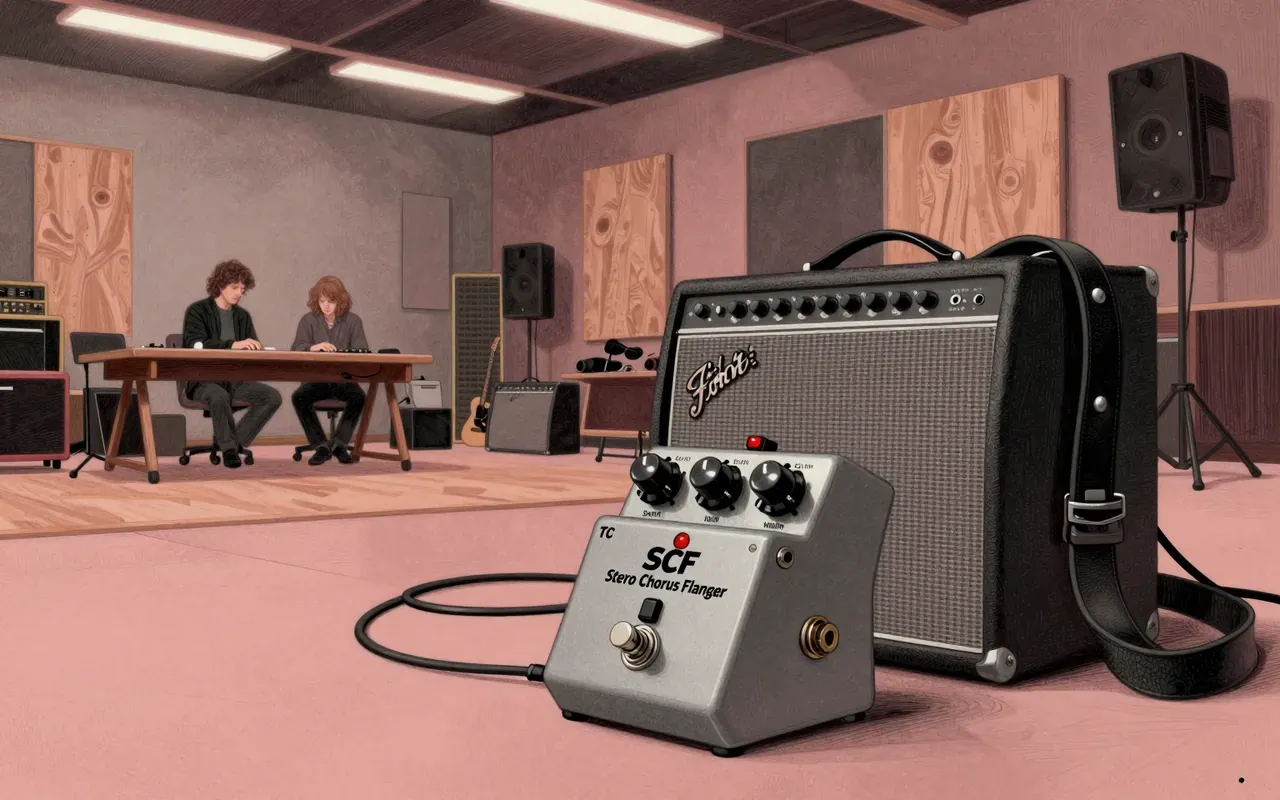
TC Electronic SCF Stereo Chorus FlangerTC ElectronicThe TC Electronic SCF Stereo Chorus Flanger is an analog guitar pedal introduced in the mid-1980s. It offers Chorus, Pitch Mod, and Flanger modes via a 3-way switch. Controls include Speed, Width, and Intensity knobs, independent input gain, and a momentary footswitch. It has mono/stereo outputs, an overload LED, an external bypass jack, and draws power directly from AC mains. Its chorus mode is widely praised for its clean, studio-grade sound — but its flanger and pitch mod modes are less consistent. It is discontinued, replaced by the SCF Gold.
9:26
DigiTech WhammyDigiTech · 1989The DigiTech Whammy is a treadle-controlled digital pitch shifter pedal introduced in 1989. It uses a licensed IVL Technologies algorithm to shift pitch up to two octaves. Early models were monophonic and produced artificial, wobbly artifacts on chords. Later models improved chord tracking accuracy. It was developed by DOD Electronics (branded as DigiTech), a company founded in 1974.
10:37
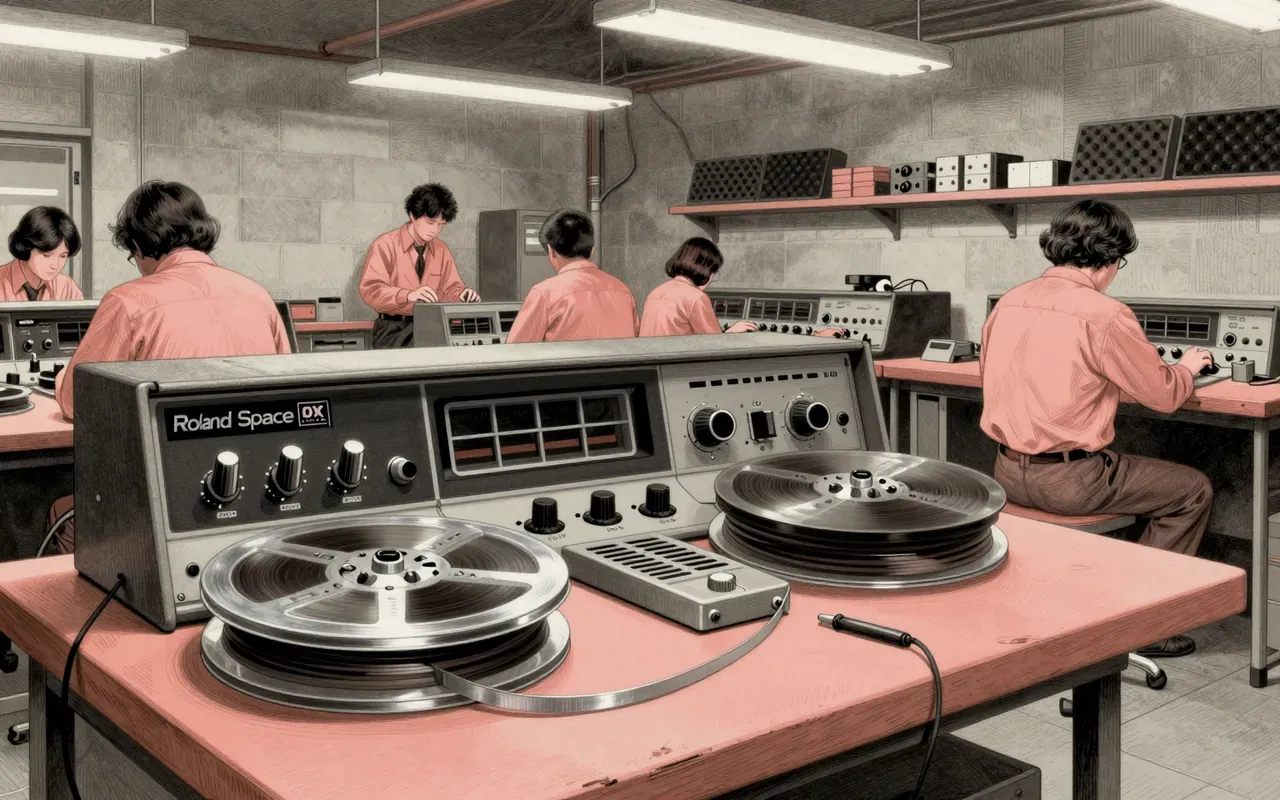
Roland Space Echo RE-201RolandThe Roland RE-201 Space Echo is a non-rackable desktop analog tape echo unit with three inputs (two mic, one instrument), five magnetic tape playback heads, 1/4" wet/direct outputs, footswitch input, and controls for time, feedback (intensity), low/high EQ, dry/wet mix, and reverb. Its reverb has a compromised tonal character ('trs CRADA'). It uses an actual reel of tape — distinguishing it from imitators. It does not offer precision, stability, or clean reverb. It does deliver saturated, decaying, pitch-wobbling repeats no digital model fully replicates.
8:31
Way Huge Swollen PickleWay HugeA fuzz pedal named Swollen Pickle, sold under multiple variants. The source confirms only its category and naming variations — nothing about sound, circuit, usability, or musical role.
Up next in Audio

Roland Cube 60

Roland · 10:32

A self-contained practice amp that trades amp personality for total portability — and wins on the commute.

10:32