What it is and what it was built for
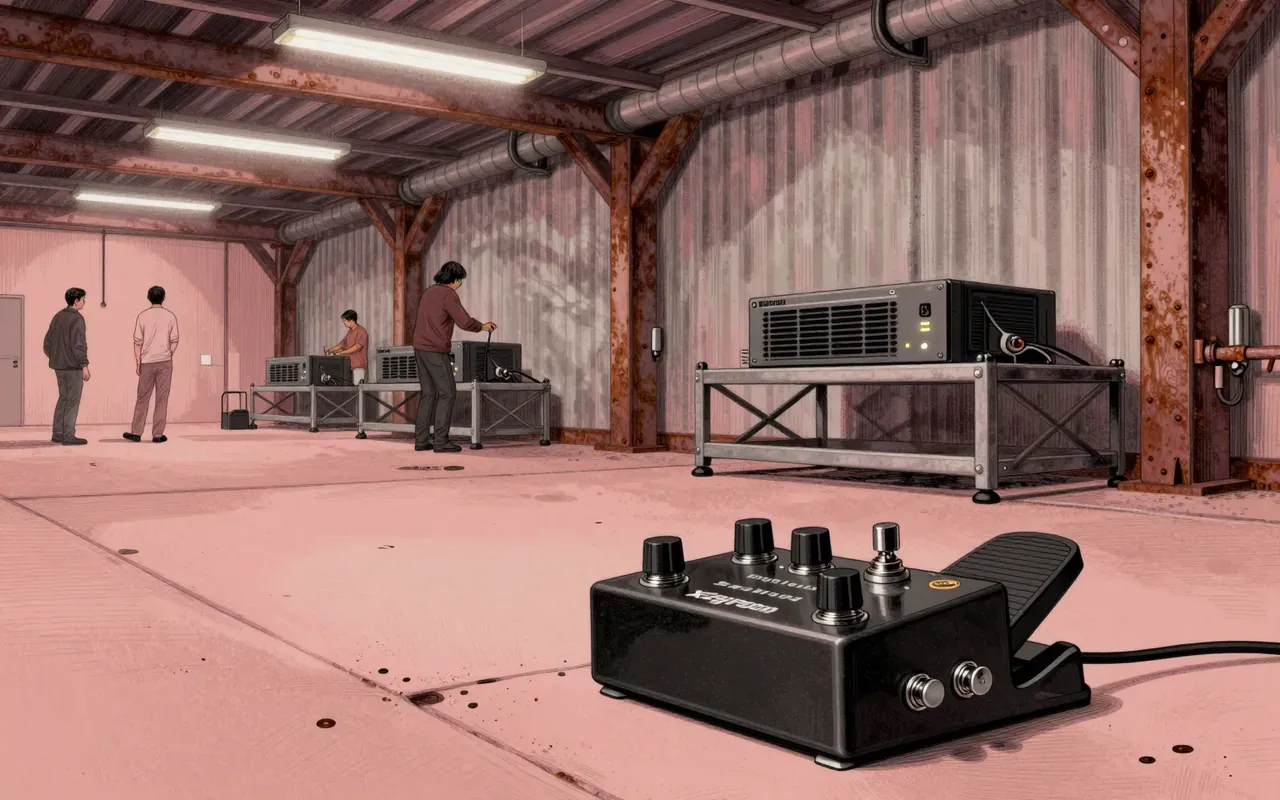
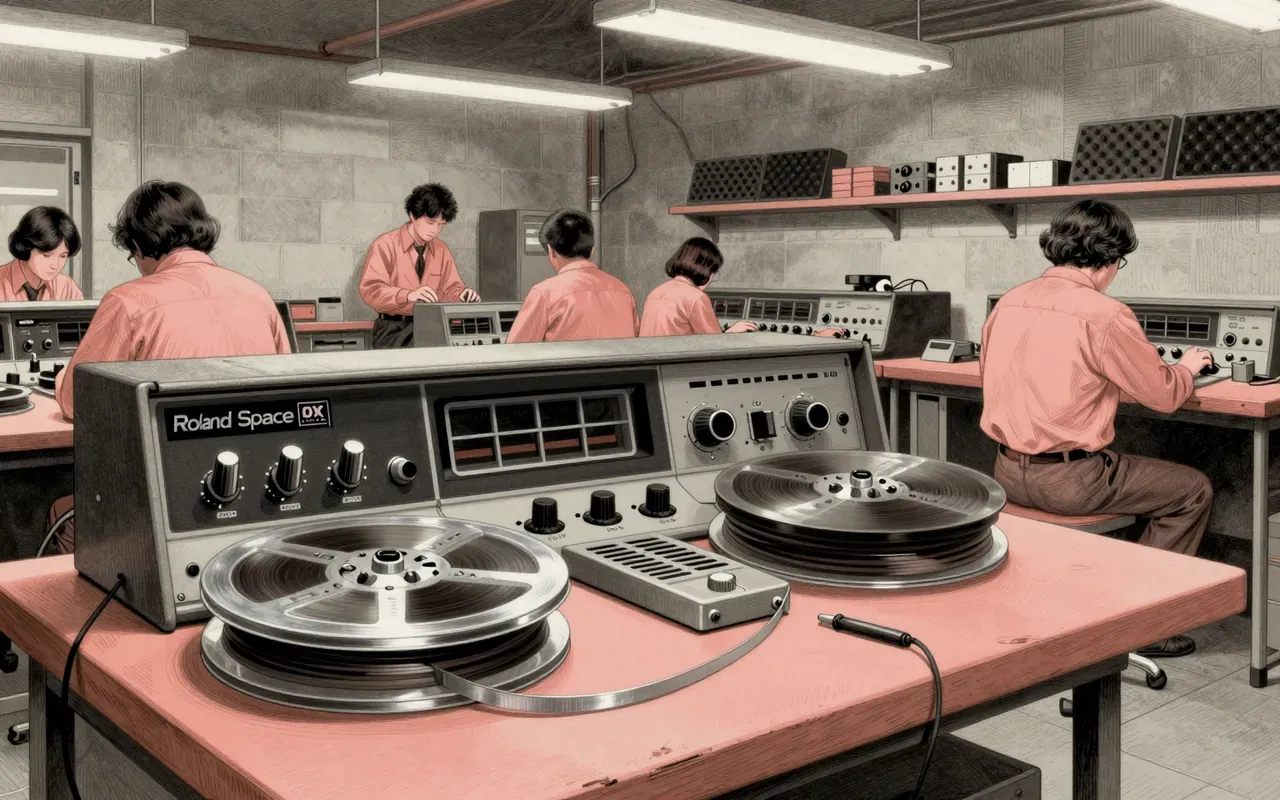
The Roland RE-201 Space Echo is a desktop analog tape echo unit built for live and studio delay effects. It was designed to add spatial depth and rhythmic texture using physical tape mechanics — not emulation.
How it works, in terms a player would use
It uses a real reel of tape. Five magnetic tape playback heads feed delay repeats. Three inputs accept two mic-level and one instrument-level signal. Controls adjust time, feedback (intensity), low and high EQ, dry/wet mix, and reverb. Outputs are 1/4” wet and direct. A footswitch input toggles operation.
What it does better than anything else
It does warm, decaying, pitch-wobbling tape echo better than any digital or solid-state imitator — because it uses an actual reel of tape. The five playback heads create dense, overlapping repeats with organic smear and saturation no algorithm replicates.
What it does badly
It does reverb badly: the tonal character is described as ‘trs CRADA’ — an uncorrected, likely degraded or distorted artefact. It offers no precision: delay time is coarse, feedback unstable, EQ minimal, and signal path non-bypassable. It cannot be rackmounted.
What people made with it
Musicians used it to generate dub rhythms, ambient textures, and psychedelic guitar trails. Its instability became part of the sound — not a flaw to fix, but a feature to exploit.
Who should use it, and who should not
A player who owns, maintains, and trusts tape machines should use it. Anyone seeking reliability, recallable settings, silent operation, or clean reverb should not.
Is it worth your time
It is worth your time only if you need the specific colour and instability of analog tape delay — and can maintain it. It demands tape replenishment, head cleaning, alignment, and power stability. Its quirks are inseparable from its function.