audiobriefs
9:28in productionCh. 1 · First in the rack/ 9:28 · ceiling 15 min
Effects & pedals · Studio & recording

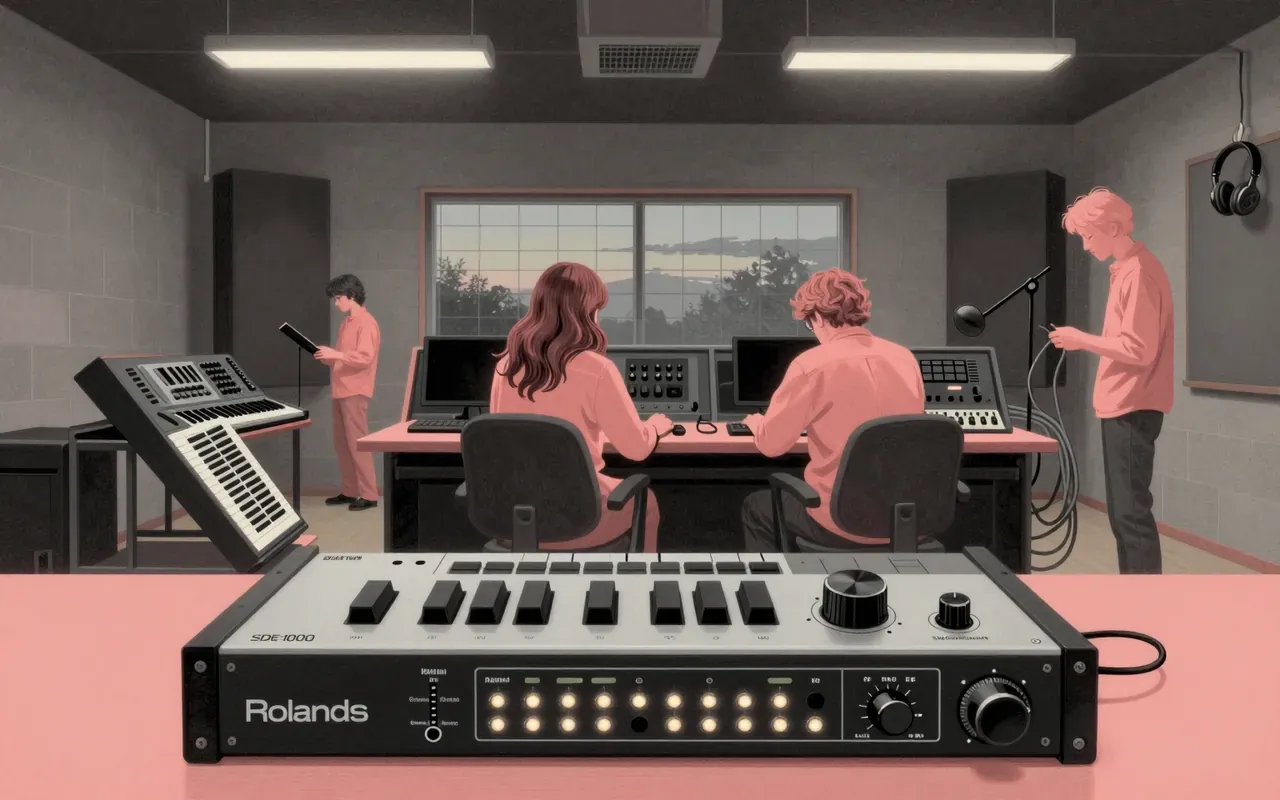
Roland SDE-1000

It gives you four perfect, breathless echoes—and nothing else.

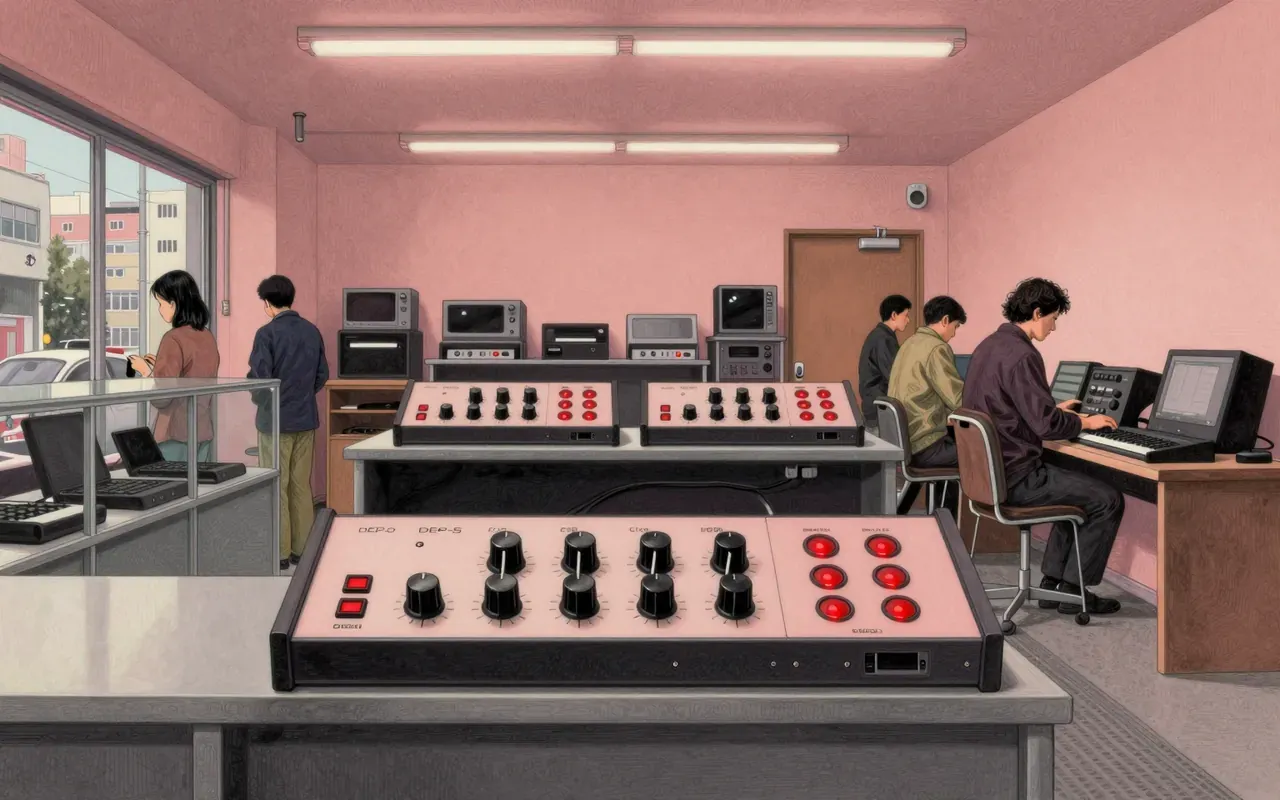
The Roland SDE-1000 is one of the first digital delay rack units. It delivers up to 1.5 seconds of breathless, crystal-clear delay. Four front-panel keys store delay time and on/off state. Modulation knobs do not memorise—but their activation does. A footswitch controls global on/off. It was bought in 1983 or 1984.

Chapters & takeaways4
  1. 0:44
    First in the rack

    One of the first digital delay rack units ever made.

  2. 3:02
    Four keys, four sounds

    Four front-panel memories hold delay time and on/off state.

  3. 4:14
    Half-memory

    Modulation knobs don’t save—but their on/off state does.

  4. 5:52
    Breathless delay

    Crystal-clear sound with no breath or colouration.

Worth your time?

Yes. Use the whole thing.

3.5/ 5
What works
  • crystal-clear delay
  • four instant presets
  • footswitch on/off
  • reliable operation
What does not
  • offer tap tempo
  • store modulation parameters
  • support stereo output
  • accept expression pedal input
Use it if
  • players who prioritise clarity over texture
  • engineers needing fast preset recall
  • collectors of early digital rack gear
Skip it if
  • anyone needing modern workflow integration
  • modulation-heavy sound designers
  • live performers requiring hands-free parameter control
The written brief1 min read

What it is and what it was built for

The Roland SDE-1000 is one of the first digital delay rack units. It was built for studio and live use where clarity and reliability mattered more than texture or variation.

How it works, in terms a player would use

It runs digital delay with four front-panel memory keys. Each stores delay time, feedback and on/off state. Modulation knobs are non-memoryable but their activation can be saved. A footswitch toggles the effect globally.

What it does better than anything else

It delivers breathless, uncoloured delay with intuitive front-panel access to four presets—faster and more direct than most contemporaries.

What it does badly

It cannot store modulation parameters. It offers no tap tempo, no stereo output, no expression pedal input, and no delay time beyond 1.5 seconds.

What people made with it

People used it to create clean echo repeats in 1983–1984 recordings and performances—no specific artists, tracks or studios are named in the source material.

Who should use it, and who should not

Use it if you want vintage digital delay with zero colouration and four instant presets. Do not use it if you need programmable modulation, longer delays, or integration with modern DAWs or MIDI.

Is it worth your time

Yes—if you need a reliable, crystal-clear digital delay from the early 1980s and value tactile immediacy over modern recall or modulation depth.
Same bench · Effects & pedals4 of 121
9:12
Roland SDE-3000RolandThe Roland SDE-3000 is a mono digital delay unit introduced in 1984. It delivers up to 4500 ms of delay with 10 Hz–17 kHz frequency response and low distortion. It has wet/dry outputs, time loop, and TRS footswitch support. It is built for reliability, not versatility.
7:49
Roland DEP-5RolandThe Roland DEP-5 is a mid-1980s multi-effects processor. It gives you reverb, delay, chorus, flanger, double, and a three-band parametric EQ. Its interface is direct — one button, one function — but some parameters demand layered adjustment. Program 5 delivers a long, arching reverb. Its midrange tone is distinctive and hard to replicate. It does not do clean, neutral processing. It does not offer recallable presets. It does not suit users who need precision over character.
8:41
Roland SRV-2000RolandThe Roland SRV-2000 is a 1984 digital reverb unit with pseudo-stereo I/O, 16-bit resolution, and 10 kHz bandwidth. It offers 32 programs — including hall and room — with editable reverb time, pre-delay up to 160 ms, high-frequency attenuation, and a 3-band parametric EQ (+12 dB to −24 dB). It delivers coherent, homogeneous stereo imaging and eliminates breath, snap, and flutter even at high signal levels. It is rated sonically between the Yamaha REV 7 and Lexicon PCM 60 — less refined than the latter, more universal.
9:04
Lexicon Lexicon 224LexiconThe Universal Audio Lexicon 224 Digital Reverb is a UAD plug-in that models the 1978 hardware unit using its exact algorithms, firmware version 4.4, input transformers, and 12-bit AD/DA gain stepping converters. It exposes all eight reverb programs and every tunable parameter as dedicated fader-style controls. It adds Input/Output gain, Pitch Shift, and a selectable Bug Fix mode. It belongs to the UAD Plug-In series and is categorised as a software algorithmic reverb.
Up next in Audio

Roland SDE-3000

Roland · 9:12

A 1984 mono delay that trades flexibility for fidelity—and wins on clarity, not character.

9:12