audiobriefs
8:41in productionCh. 1 · Built for the rack, not the stage/ 8:41 · ceiling 15 min
Effects & pedals

Roland SRV-2000

The SRV-2000 doesn’t sound like space — it sounds like silence shaped into width and depth.

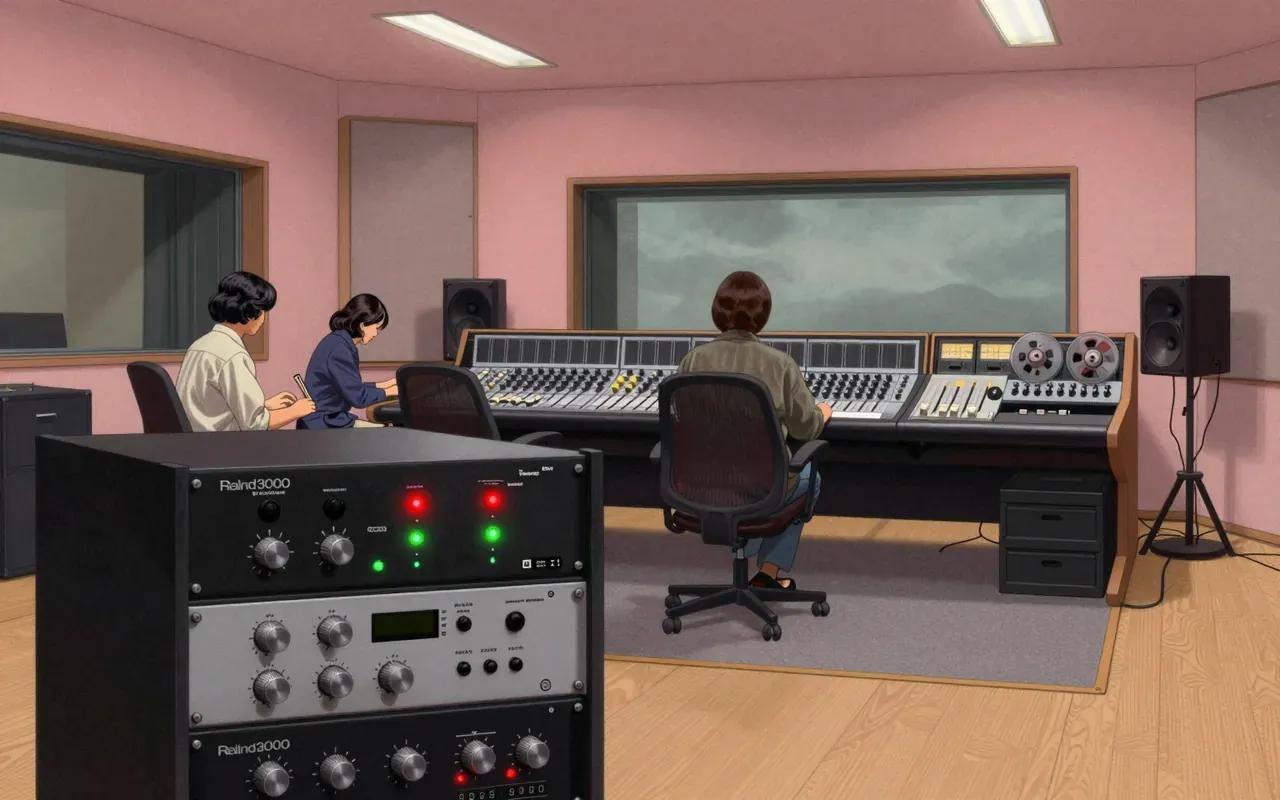
The Roland SRV-2000 is a 1984 digital reverb unit with pseudo-stereo I/O, 16-bit resolution, and 10 kHz bandwidth. It offers 32 programs — including hall and room — with editable reverb time, pre-delay up to 160 ms, high-frequency attenuation, and a 3-band parametric EQ (+12 dB to −24 dB). It delivers coherent, homogeneous stereo imaging and eliminates breath, snap, and flutter even at high signal levels. It is rated sonically between the Yamaha REV 7 and Lexicon PCM 60 — less refined than the latter, more universal.

Chapters & takeaways4
  1. 0:57
    Built for the rack, not the stage

    It’s a 1984 digital rack unit with pseudo-stereo I/O and 10 kHz bandwidth.

  2. 2:39
    Three knobs, one EQ, thirty-two rooms

    You edit reverb time, pre-delay (to 160 ms), HF attenuation, and a 3-band parametric EQ.

  3. 4:20
    No breath. No snap. Just width and depth.

    It images coherently across both channels and produces no breath, snap, or flutter — even at high levels.

  4. 5:36
    Not Lexicon. Not Yamaha. Roland.

    It sits sonically between the Yamaha REV 7 and Lexicon PCM 60 — less refined than the latter, more universal.

Worth your time?

Yes. Use the whole thing.

3.5/ 5
What works
  • spatial imaging
  • high-level stability
  • parametric EQ integration
  • pseudo-stereo coherence
What does not
  • offer true stereo processing
  • support bandwidth beyond 10 kHz
  • allow editing of diffusion or density
  • include modern user interface or recall
Use it if
  • engineers restoring 1984–1987 mixes
  • producers seeking breath-free, high-headroom digital reverb
Skip it if
  • those needing wide-bandwidth reverb
  • users requiring true stereo algorithm control
The written brief1 min read

What it is and what it was built for

The Roland SRV-2000 is a 1984 rack-mount digital reverb unit built for studio and live mixing. It was designed to deliver stable, editable, high-headroom reverb with strong spatial definition and minimal artefacts.

How it works, in terms a player would use

It runs in pseudo-stereo: one input, two outputs. You dial in reverb time, pre-delay up to 160 ms, and high-frequency attenuation. A 3-band parametric EQ sits after the reverb, with ±12 dB to −24 dB adjustment per band. All 32 programs — hall, room, and others — are fixed in character but editable in those core parameters.

What it does better than anything else

It delivers exceptional spatial imaging: width and depth feel plausible, coherent, and homogeneous. It suppresses breath, snap, and flutter more completely than most contemporaries — even when pushed hard.

What it does badly

It has only 10 kHz bandwidth. It offers no true stereo processing — just pseudo-stereo imaging. Its 32 programs are described as ‘pretty basic’ and ‘not linear, flat’. It gives no control over diffusion, density, or early reflection structure.

What people made with it

The sources do not name any artists, recordings, studios, or works made with the SRV-2000.

Who should use it, and who should not

A studio engineer restoring an 80s mix or seeking that specific 10 kHz, pseudo-stereo, breath-free Roland reverb character should use it. A producer needing wide bandwidth, true stereo algorithms, or granular control over decay shape should not.

Is it worth your time

Yes, if you need a clean, stable, spatially coherent digital reverb from the early mid-80s with no audible breath, snap, or flutter — especially at high levels. No, if you need wide bandwidth, true stereo algorithms, or modern flexibility.
Same bench · Effects & pedals4 of 121
9:28
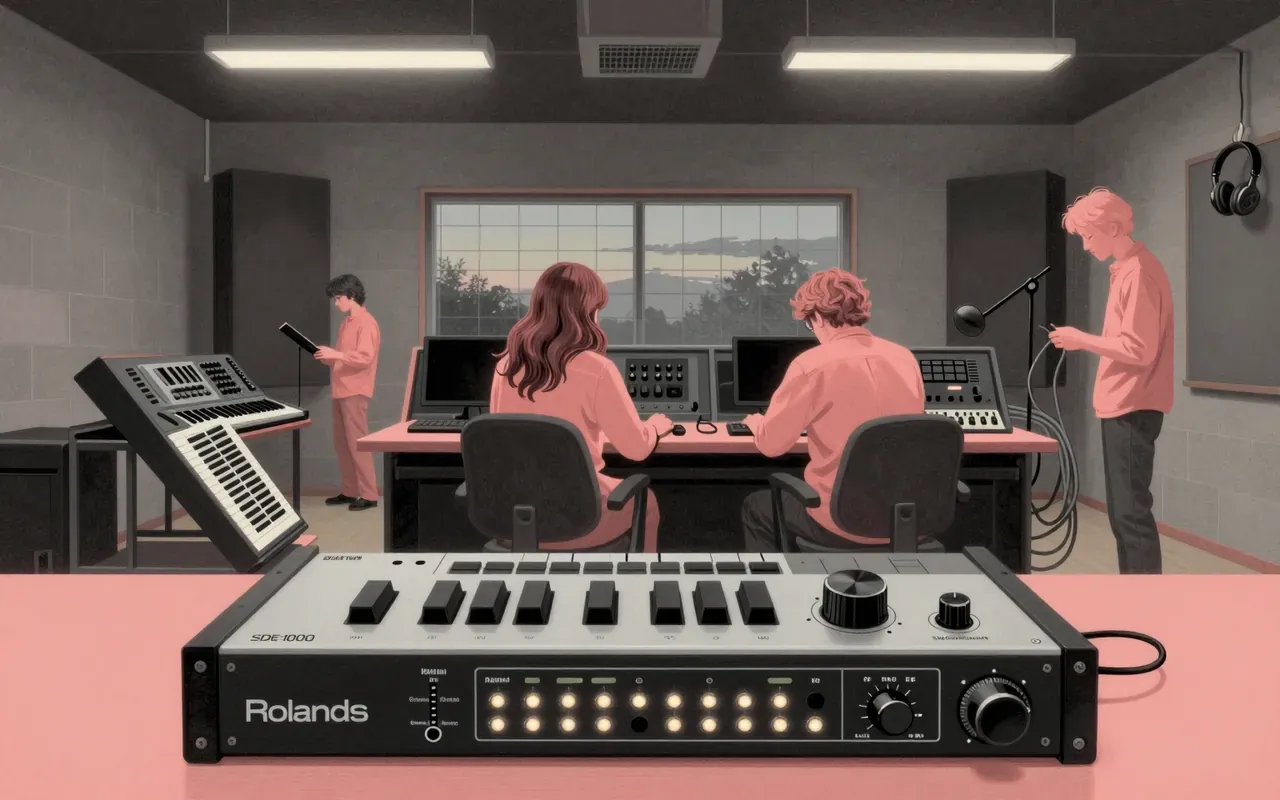
Roland SDE-1000RolandThe Roland SDE-1000 is one of the first digital delay rack units. It delivers up to 1.5 seconds of breathless, crystal-clear delay. Four front-panel keys store delay time and on/off state. Modulation knobs do not memorise—but their activation does. A footswitch controls global on/off. It was bought in 1983 or 1984.
7:49
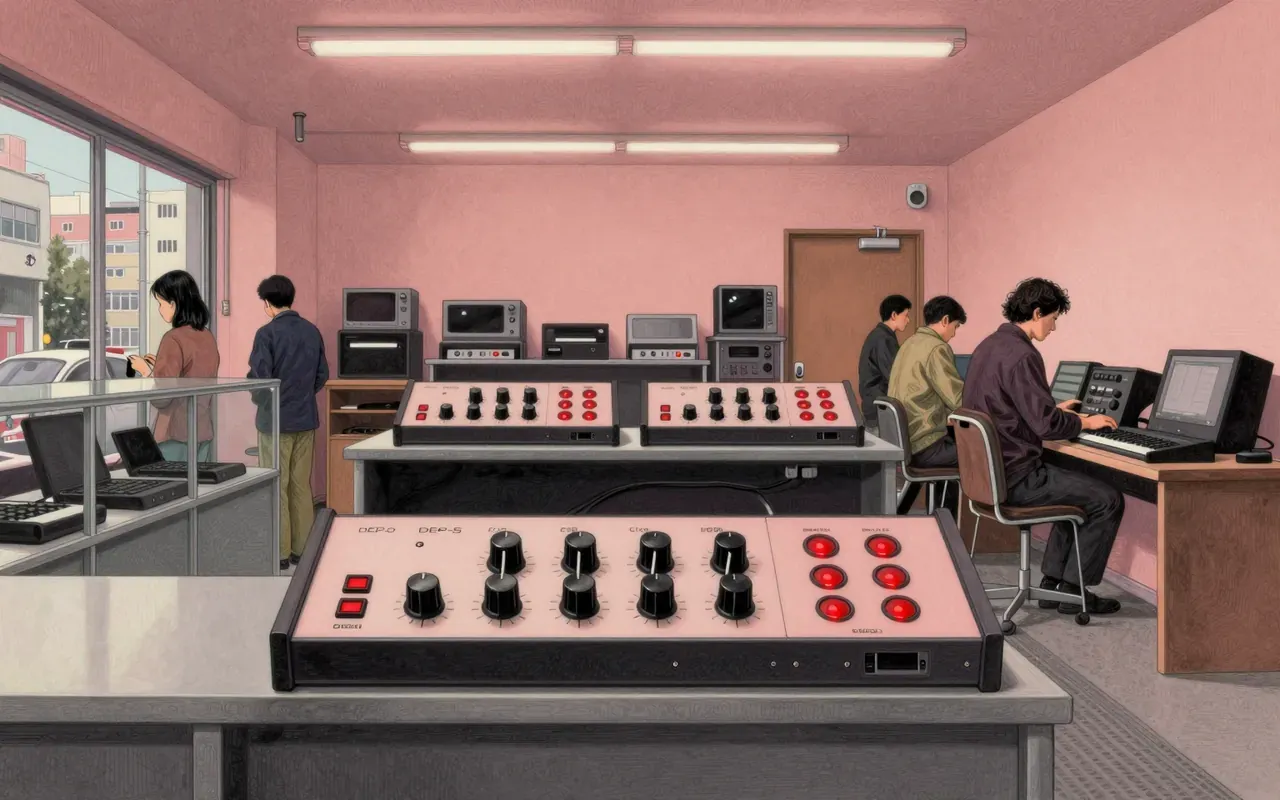
Roland DEP-5RolandThe Roland DEP-5 is a mid-1980s multi-effects processor. It gives you reverb, delay, chorus, flanger, double, and a three-band parametric EQ. Its interface is direct — one button, one function — but some parameters demand layered adjustment. Program 5 delivers a long, arching reverb. Its midrange tone is distinctive and hard to replicate. It does not do clean, neutral processing. It does not offer recallable presets. It does not suit users who need precision over character.
9:12
Roland SDE-3000RolandThe Roland SDE-3000 is a mono digital delay unit introduced in 1984. It delivers up to 4500 ms of delay with 10 Hz–17 kHz frequency response and low distortion. It has wet/dry outputs, time loop, and TRS footswitch support. It is built for reliability, not versatility.
9:18
Lexicon (company)Lexicon · 1971Lexicon is a company, not an instrument. Its first product was a digital delay system released in 1971. It pioneered commercial digital audio processing hardware for professional and live applications — notably digital reverb starting with the Model 224 in 1978. Its hardware is rack-mounted, hardware-controlled, and designed for integration into analog signal paths. It does not run as software, has no built-in synthesis or recording, and offers no modern digital workflow features.
Up next in Audio

TC Electronic Stereo Chorus+

TC Electronic · 8:35

A stereo chorus that gives width without wiggle room — it spreads sound, then locks you in.

8:35