audiobriefs
Instruments

Effects & pedals

122
briefs
9:05
average
1108 min
in total
47
people
All briefs122
10:52

Electric Mistress

Electro-Harmonix · 1976

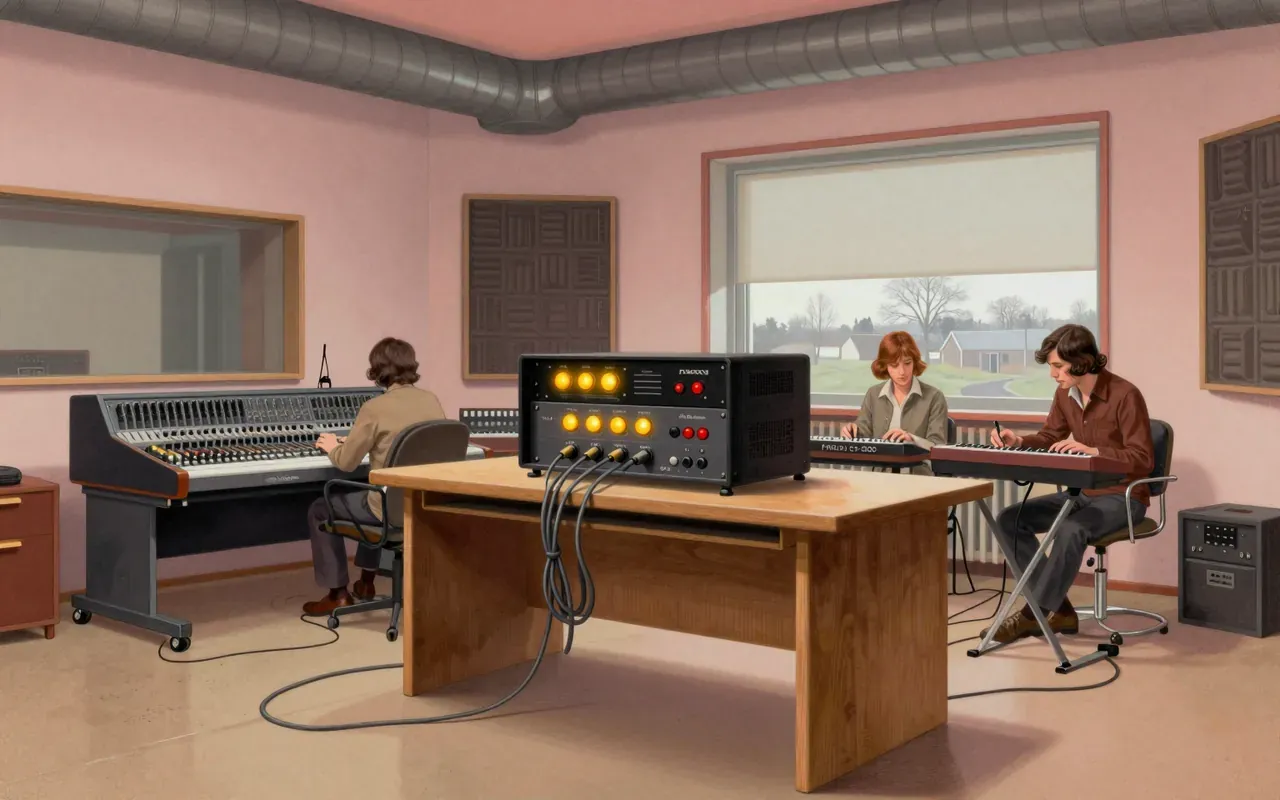
The Electric Mistress is an analog flanger from Electro-Harmonix, first sold in 1976 and the first flanger in pedal format. Every version after the first blue and red one has a Filter Matrix mode that freezes the flange at any point for chime-like tones. The Deluxe version is still in production, and NEO Mistress and Stereo Electric Mistress are digital recreations.
9:30

FireworX

TC Electronic

FireworX is a multi-effects processor from the Danish company TC Electronic. It holds distortion, compression, noise and curve generators, ring modulation, vocoding, parametric EQ, tremolo, reverb and delay, and the effects can be routed in a large variety of ways. It won best Hardware Signal Processing Technology at the 1998 TEC Awards, and producers and DJs used it with CD players for live sets.

8:52

MXR Micro Amp

MXR · 1978

The MXR Micro Amp (M133) is an op-amp boost pedal released in 1978. It has a single volume control and offers 26 dB of boost, meant to add volume or distortion, depending on where it sits in the signal chain, without colouring the tone. It has become perhaps the most commonly used boost pedal on the market.

9:12

ShredMaster

Marshall · 1991

The ShredMaster is the high-gain pedal in the trio Marshall released in 1991 with the Bluesbreaker and Drivemaster. It is a conventional distortion pedal with Gain, Bass, Contour, Treble and Volume controls in a black, wedge-shaped metal case. Poor sales ended the run within a few years, and Marshall reissued it in 2023.

8:38

dbx 120XP Subharmonic Synthesizer

dbx

The dbx 120XP is an undocumented studio effect that generates subharmonics. Its operation is opaque. Its design yields no known advantages over alternatives. Its utility depends entirely on tolerance for uncertainty.

9:34

Ibanez AD9 Analog Delay

Ibanez

The Ibanez AD9 is a stripped-down analog delay pedal that prioritises warmth and clarity over features. Its compander-based signal path delivers clean repeats up to 300 ms. It has no tone control, no modulation, no tap tempo, and no stereo capability. It suits players who want a dependable, affordable analog echo — not a Swiss Army knife.

8:47

Boss BD-2 Blues Driver

Boss

The Boss BD-2 Blues Driver is an overdrive pedal sold since at least 2003. Users report its tone as round, expressive, smooth, and sultry. It responds sharply to small knob adjustments. It covers a wide sonic range — from clean overdrive to heavy grunge. It is available new and second-hand. Prices recorded are $50 (used), $79.99 (Kayes Music Scene), and $80 (Sam Ash).

8:45

Boss BF-1 Flanger

Boss

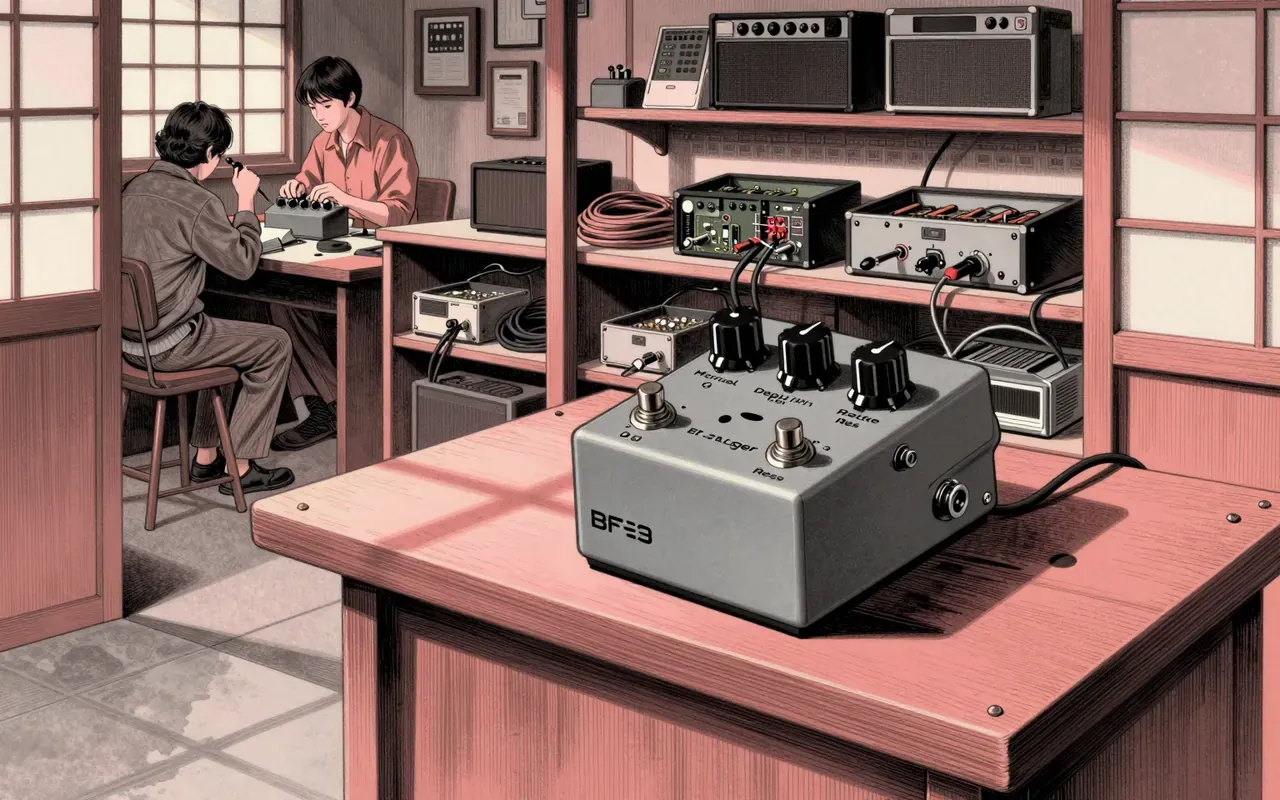
The Boss BF-1 Flanger is a 1979 analog foot pedal designed for electric guitar. It uses four knobs — manual, depth, rate, resonance — to control a simple, unstable flange sweep. It has no bypass, no presets, no expression input, and no stereo output. It was discontinued and replaced by the BF-3.

8:00

Boss BF-2 Flanger

Boss

The Boss BF-2 Flanger is an analog stomp-box flanger pedal sold from June 1980 to December 2001. It has 1/4-inch inputs and outputs, four controls (Manual, Depth, Rate, Res), and runs on 9V battery or AC adapter. It is not rackable. It was succeeded by the digital BF-3.

9:50

Binson Echorec 2

Binson

The Binson Echorec 2 is a delay/echo unit. No technical specifications exist. Its category is confirmed. Nothing else is verifiable.

7:56

Boss CE-1 Chorus Ensemble

Boss

The Boss CE-1 Chorus Ensemble is Boss’s first chorus pedal: an analog stomp box offering chorus or vibrato — never both — with dedicated controls, tone toggle, and fixed power.

8:11

Boss CE-2 Chorus

Boss

The Boss CE-2 Chorus is an all-analog stomp box introduced in the early 1980s. It has two controls: Rate and Depth. It was Boss’s first compact chorus pedal and the first they housed in a stomp box. Production ended in 1990. It runs on 9V battery or transformer. It was made in Japan.

9:33

Boss CE-3 Chorus

Boss

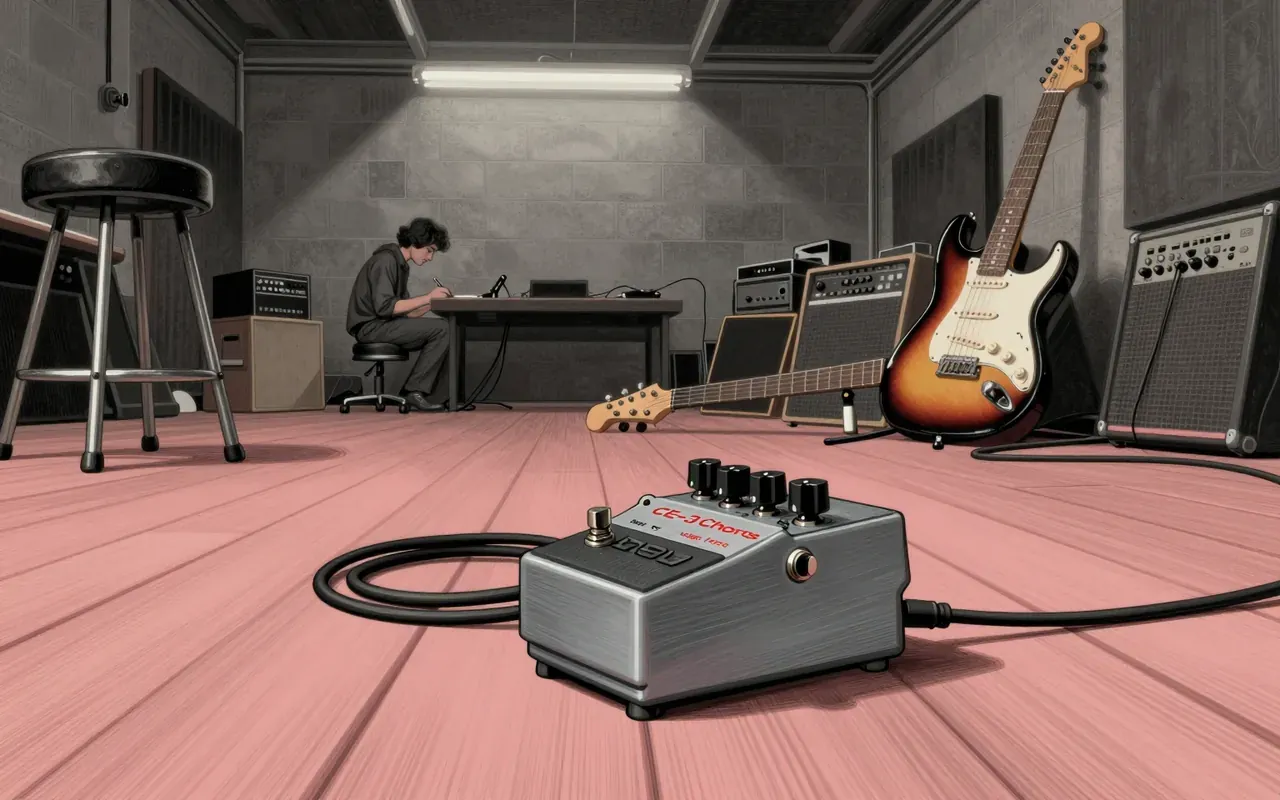
The Boss CE-3 Chorus is an analog guitar pedal built for stereo routing. It has no mix or level control. Its sound matches the CE-2 exactly — lush, hazy, shimmering — but its dual outputs enable wet/dry or true stereo setups. It is useful only where those outputs matter.

9:26

Boss CH-1 Super Chorus

Boss

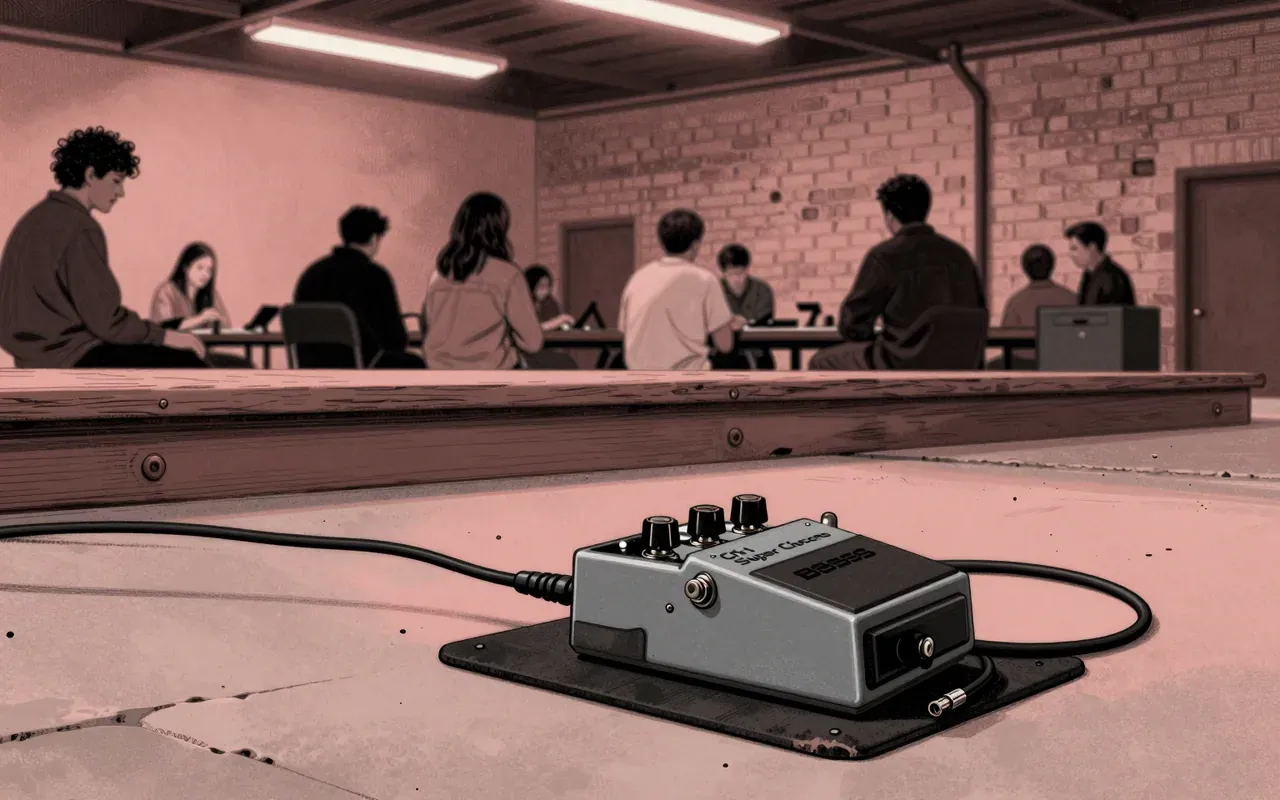
The Boss CH-1 Super Chorus is an analog stomp-box chorus pedal for guitar and keyboards. It has four dedicated knobs — Effect Level, EQ, Rate, Depth — and supports mono input with mono or stereo output. It runs on 9 V battery or AC power. It is Boss’s best-selling chorus pedal. It is not rackable.

7:18

Colorsound Overdriver

Colorsound

The Colorsound OverDriver is a fixed-gain overdrive pedal. It has no controls. It offers no specifications. It does one thing, consistently, without variation.
8:29

dbx 166

dbx

The dbx 166 is a no-compromise stereo FET compressor built for speed and instrument tracking—not vocals, not mixing, not analysis. It delivers efficient, transparent compression with subtle warmth. Its design gives immediacy and reliability. It withholds metering, sidechain, vocal suitability, and fine dynamic control.

9:06

Boss DC-2 Dimension C

Boss

The Boss DC-2 Dimension C is a fixed-preset stereo analog chorus pedal made from 1985 to 1989. It offers five distinct chorus tones — one automatic, four selected by buttons — with no user controls. It reproduces the Roland SDD-320 Dimension D’s spatial effect: thickness, depth and width for a 3D sound. Stereo outputs widen the effect. Built-in noise reduction lowers hiss. It cannot be adjusted mid-performance. It belongs in a rig where consistency matters more than flexibility.

9:56

Boss DD-3 Digital Delay

Boss

The Boss DD-3 is a digital delay pedal for guitar. It uses four knobs to control effect level, feedback time, delay time, and delay mode. It delivers clear, sharp echo without muddiness. It is extremely durable. It is probably the most well-known digital delay pedal.

8:57

Boss DM-1 Delay Machine

Boss

The Boss DM-1 Delay Machine is an analog foot pedal — among the first delay pedals made by Boss — with three knobs (delay time, intensity, balance/mix), an output level switch (0 dB, -15 dB, -35 dB), built-in power cord, and 1/4 inch connections. It is not rack mountable. Its sound is warm, rich, and outstanding. It is considered one of the best delay pedals Boss has made.
7:59

Boss DM-2 Delay

Boss

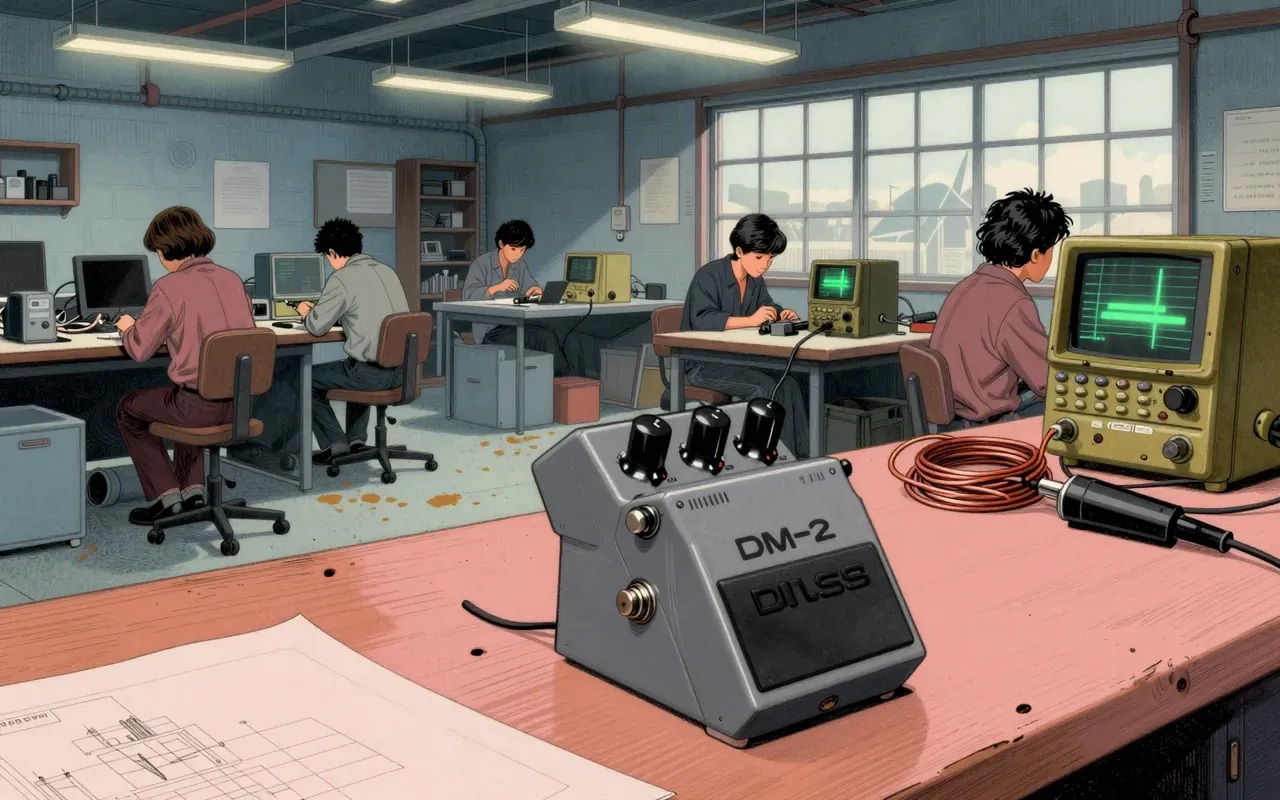
The Boss DM-2 is a Japanese-made analog delay pedal released in 1981. It delivers warm, tone-enhancing repeats from 20ms to 300ms using three knobs: Repeat Rate, Echo, and Intensity. It has no MIDI, no computer control, and is not rackable. It was built for guitar and other electronic instruments. It thickens tone rather than cutting with precision.

9:39

Boss DM-3 Delay

Boss

The Boss DM-3 is the last compact analog delay Boss made. It runs from 1984 to 1988. Its 20ms–300ms delay is set by Repeat Rate, Echo, and Intensity knobs—the only Boss pedal with this shape and layout. It has an unlabeled stereo output and revised filtering to reduce noise. It does not do digital, modulation, or long delays. It does warm, decaying repeats with physical immediacy.

9:08

Ibanez FL9 Flanger

Ibanez

The Ibanez FL9 Flanger is an analog stompbox flanger pedal for guitar. It delivers swooshing phase-based effects via four knobs: Speed, Regen, Width, and Delay Time. It is not true bypass, so it colours the signal even when disengaged. It does not claim to be anything else — no digital emulation, no stereo outputs, no expression input, no presets.

9:23

Boss FZ-2 Hyper Fuzz

Boss

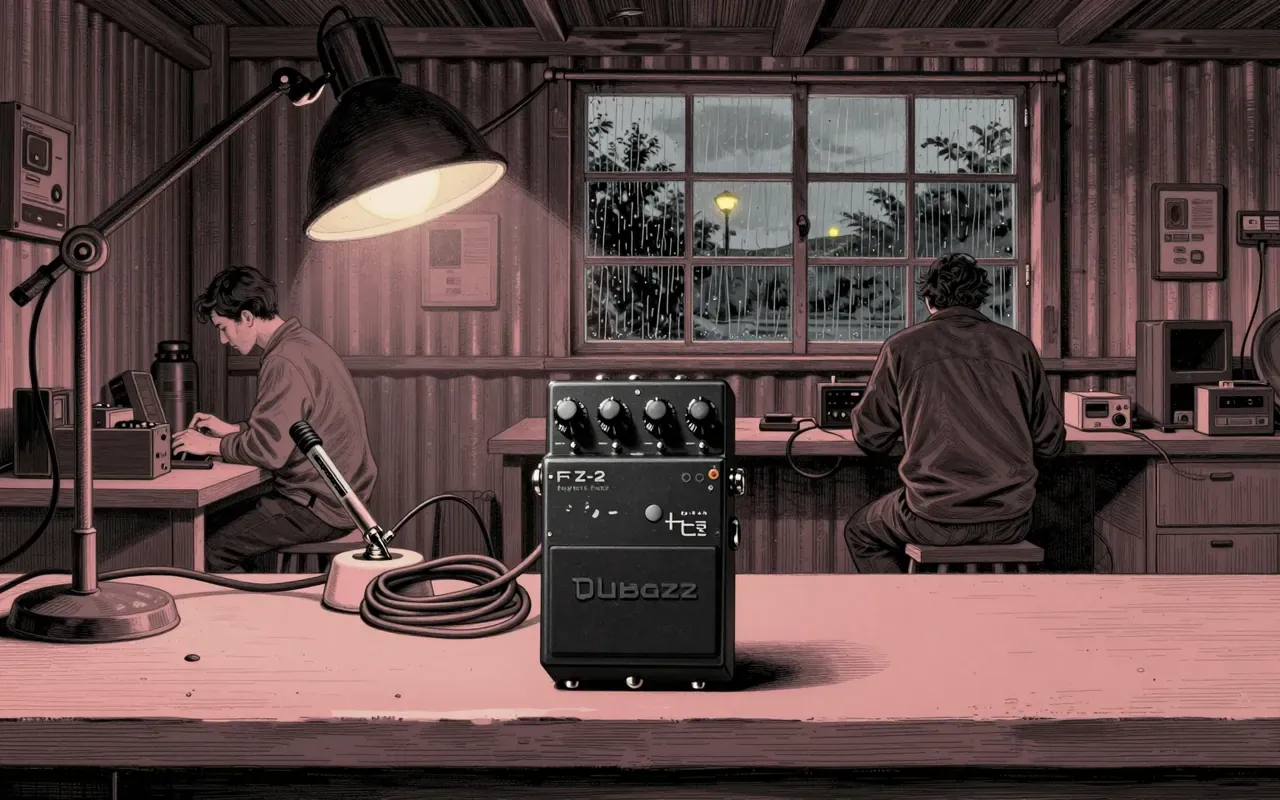
The Boss FZ-2 Hyper Fuzz is a discontinued analog fuzz pedal with three selectable modes and five physical controls. It lacks true bypass. It was succeeded by the FZ-5.

8:36

Korg Kaoss Pad KP3

Korg

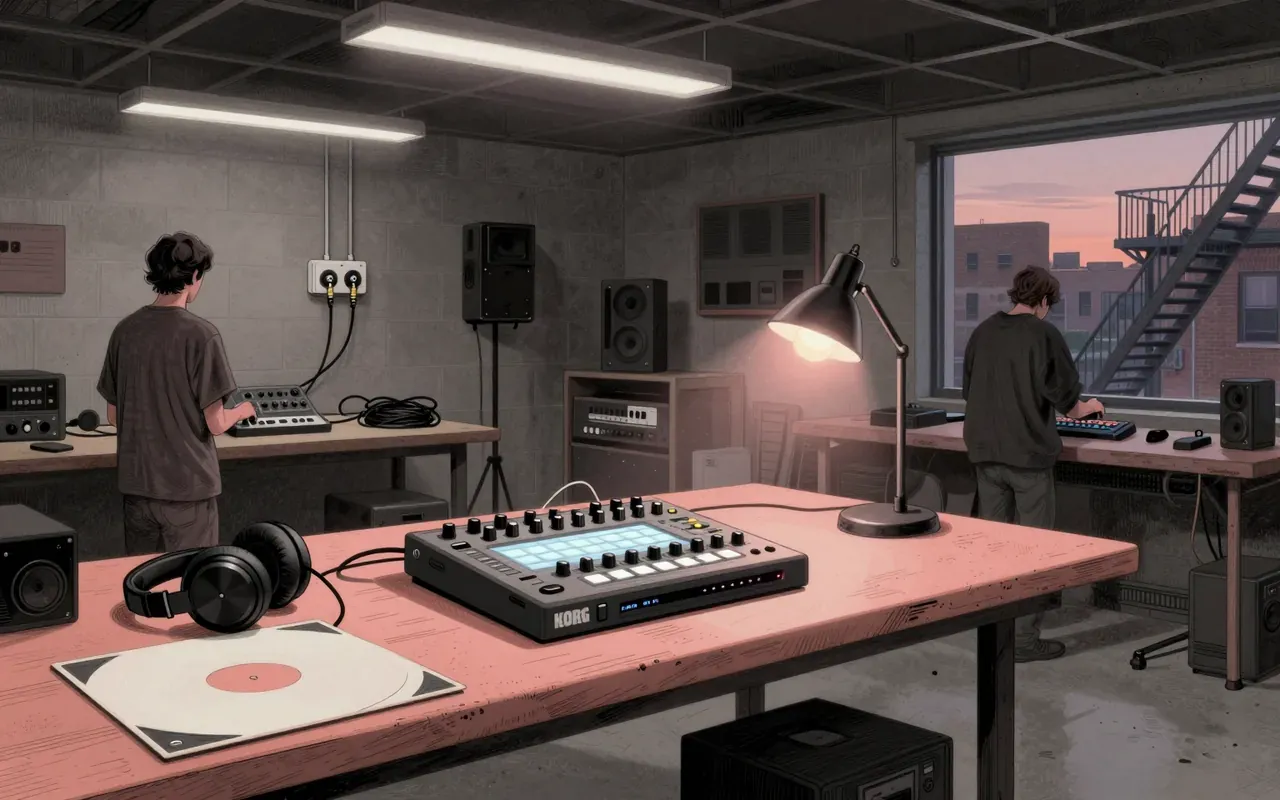
The Korg Kaoss Pad 3 is a live-performance effects unit. It uses an X/Y touchpad for real-time control of 128 built-in programs—including reverb, delay, flanger, analog filter, drive circuit, and a vocoder. It samples onboard. Some effects sync to tempo. It functions as a MIDI controller. Connections are RCA only.

7:50

Lexicon PCM42

Lexicon

The Lexicon PCM 42 is a digital delay unit in Lexicon’s PCM series. No technical specifications are available. Nothing is known about its controls, its sound, its memory, or its use in practice. It declares only its category, its manufacturer, and its model name.

10:22

Boss OD-1 OverDrive

Boss

The Boss OD-1 is a 1977–1985 overdrive pedal with Level and Overdrive knobs only. It uses a FET boost circuit that degrades the dry signal when bypassed. It delivers low-gain saturation by pushing an already overdriven amp’s front end—not by distorting on its own. It lacks tone control. It preceded the SD-1. It performs best in that narrow context—and nowhere else.

7:15

Boss PH-1 Phaser

Boss

The Boss PH-1 is a compact phaser pedal released by Boss in 1977 as one of its first three pedals. It emulates Leslie speaker phasing with greater versatility. It has only two controls: Rate (speed) and Depth (dry/wet mix). Production ran from 1977 to 1981.

9:58

Boss PH-2 Super Phaser

Boss

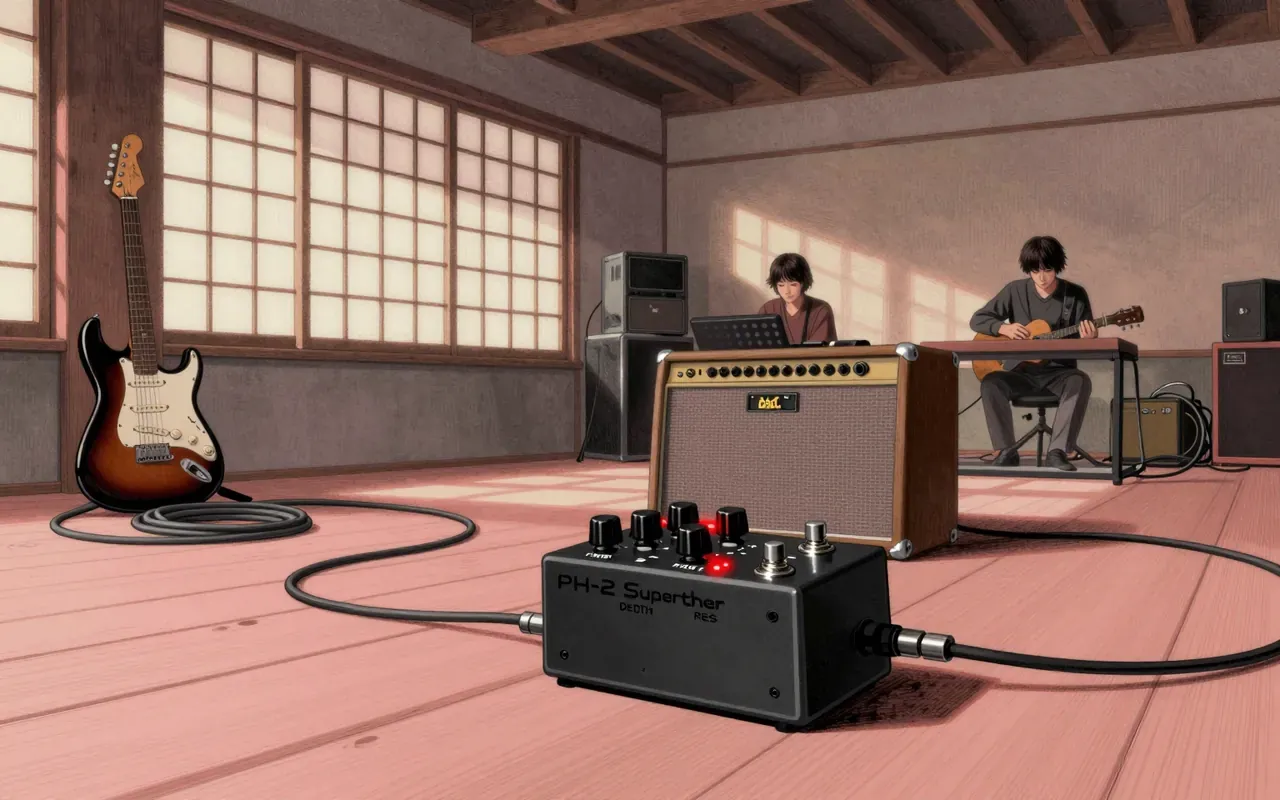
The Boss PH-2 Super Phaser is a discontinued analog guitar stompbox pedal built from 1984 to 2001. It adds a rate knob and two-mode switch to the PH-1 lineage. Mode 1 uses 10-step phasing. Mode 2 uses 12-step phasing. Controls are Rate, Depth, Res, and a 2-way Mode switch. LFO speed ranges from 100 ms to 14 s. Input impedance is 1 Mohm (FET). Residual noise is -80 dBm (IHF-A). Current draw is 20 mA at 9 V DC. Early Incubus used it for its distinctive ‘in-your-face’ phase character—especially in mode 2.

9:13

Boss PS-2 Digital Pitch Shifter/Delay

Boss

The Boss PS-2 is a mono digital pitch shifter and delay pedal with fixed +1/−1 octave modes and three delay time ranges. It delivers immediate, stable octave doubling and atmospheric delay tails — but offers no stereo output, no expression control, and no fine pitch adjustment. It belongs on a gigging guitarist’s board, not in a stereo studio chain.

7:37

Boss RV-2 Digital Reverb

Boss

The Boss RV-2 is a fixed-function digital reverb pedal. It gives guitarists six preset spaces — no editing, no tone control, no stereo input. It is stomp-box-only. It runs on nine volts. It is discontinued. It was Boss’s first reverb.

10:37

Roland Space Echo RE-201

Roland

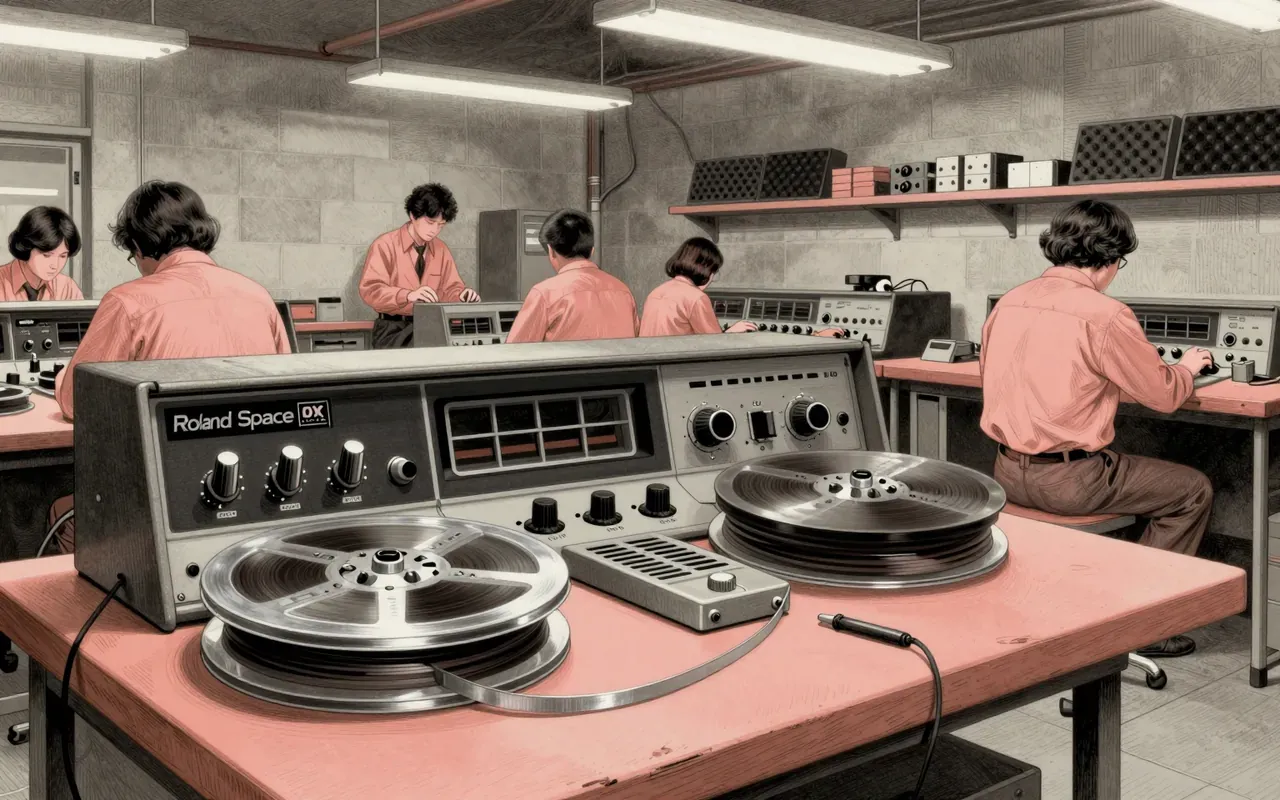
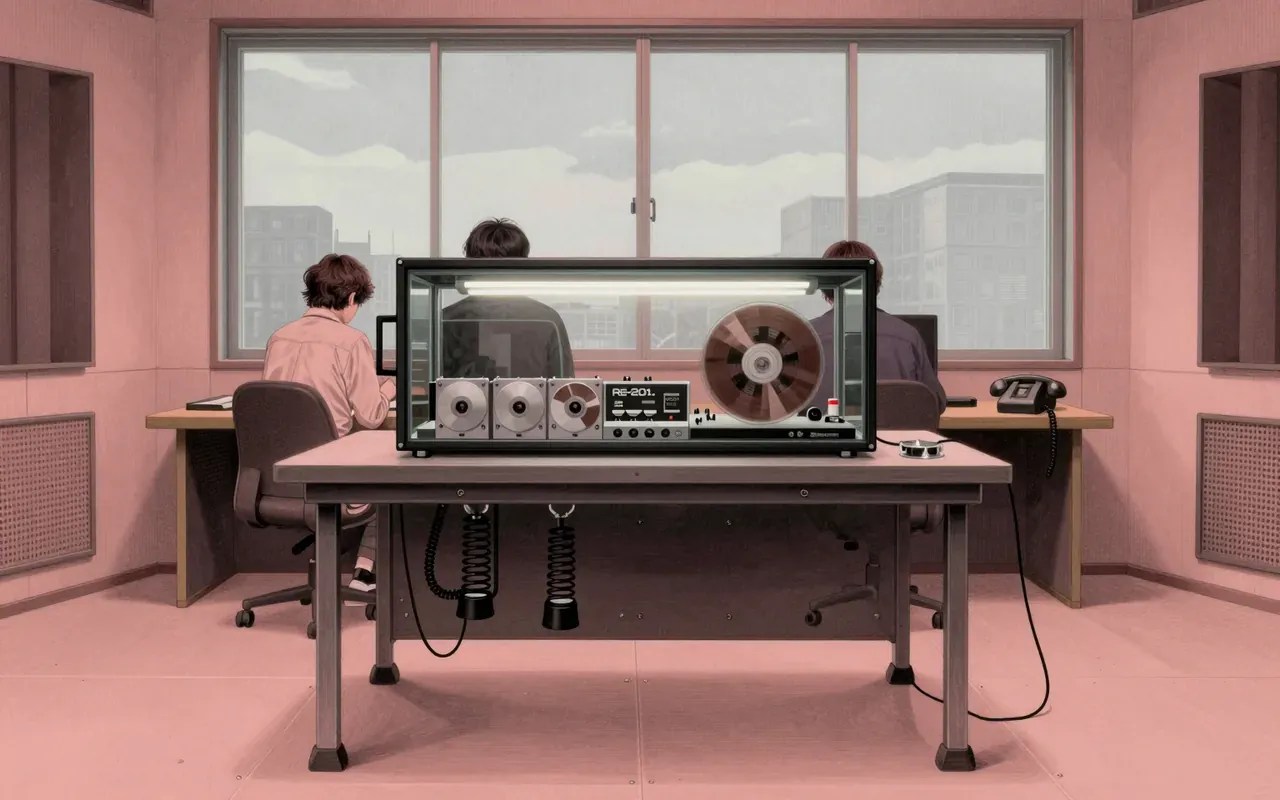
The Roland RE-201 Space Echo is a non-rackable desktop analog tape echo unit with three inputs (two mic, one instrument), five magnetic tape playback heads, 1/4" wet/direct outputs, footswitch input, and controls for time, feedback (intensity), low/high EQ, dry/wet mix, and reverb. Its reverb has a compromised tonal character ('trs CRADA'). It uses an actual reel of tape — distinguishing it from imitators. It does not offer precision, stability, or clean reverb. It does deliver saturated, decaying, pitch-wobbling repeats no digital model fully replicates.

8:54

DigiTech Space Station XP300

DigiTech

A fixed-function digital floor pedal for guitar. Eight synth-effects deliver octave, fifth and third on demand. No editing. No true bypass. An always-on preamp degrades tone even when off. AC-powered. Stereo out. One treadle. That’s all.

8:33

Boss TR-2 Tremolo

Boss

The Boss TR-2 Tremolo is an analog foot pedal for guitarists. It has three knobs: Rate, Depth, and Wave. Rate goes faster than the PN-2. Wave shifts the LFO from triangle to square. It is not rackable.

8:21

Ibanez Tube Screamer TS808

Ibanez

The Ibanez TS808 Tube Screamer Reissue is an analog overdrive pedal in the Tube Screamer series. It has three knobs: tone, level, and overdrive. It uses the JRC4558 chip. It runs on a 9-volt battery or AC adapter. Its metal housing is 4.9" x 2.8" x 2" and weighs just over a pound. It delivers warm, smooth, mid-heavy overdrive suited for solos and blues-rock—not high-gain riffing. It is very strongly built.

8:23

Boss VB-2 Vibrato

Boss

The Boss VB-2 Vibrato is an analog foot pedal that modulates pitch — not volume — for electric guitar and other electronic instruments. It uses depth, rate, and rise time controls, plus a mode switch. It has no MIDI, no rack mounting, and no presets. Its strength is expressive, natural-sounding vibrato. Its weakness is inflexibility and a learning curve. It belongs in the hands of players who value analog immediacy over convenience.

8:46

dbx 160X

dbx

The dbx 160X is a fixed-response analog limiter/compressor built for immediacy, not nuance. It excels when slammed on snare, kick, bass, or guitar — but fails at subtlety, especially on vocals. Its simplicity is functional, not forgiving.

8:04

Aphex 204 Aural Exciter

Aphex

The Aphex 204 Aural Exciter is a two-channel hardware processor that enhances bass tone while preserving attack and avoiding speaker damage. It uses optical low-end enhancement and aural excitation to deliver creamy, fat sound with sleek tone and crystal-clear attack. Users report success in loud live contexts with drums and distorted guitars — the bass remains powerful yet clear and defined. It pulls clean, fat low-end from existing bass amplifiers and speakers, eliminating the need for bulky speaker upgrades. It does not address midrange or high-frequency detail beyond attack preservation. Bass players using standard rigs in loud live settings should use it. Studio engineers seeking surgical EQ or harmonic control should not.

7:39

API 215L

API

The API 215L is a 500-series filter module with no published technical specifications. It exists only as a hardware component for users already invested in API’s ecosystem. Its utility is narrow: it adds API’s transformer-coupled colour to filtered signals, but offers no modulation, no bypass, and no documented response curve. It is not a synthesiser filter, not a creative sound-design tool, and not usable outside a compatible rack.
9:24

TC Electronic 2290 P Dynamic Digital Delay

TC Electronic

The TC Electronic 2290 P Dynamic Digital Delay is a guitar-focused delay, echo, and phrase sampler. No technical specifications are available. Its package weight is 1.7 kg. Nothing else is verified.

8:26

Neve 31102

Neve

The Neve 31102 is a UAD-exclusive software graphic EQ. It has no published technical specifications. It offers fixed-band EQ only. It requires UAD hardware to run. It makes no claim to model any specific Neve hardware circuit.

8:52

AMS AMS RMX16

AMS

The AMS RMX16 is a UAD-only reverb plug-in. It requires UA hardware. It costs $349. It arrived in UA Software 1.7. It gives one sound — nothing more.

8:33

Avalon Design Avalon VT-747sp

Avalon Design

The Kazrog Avalon VT-747SP is a software plugin classified as an 'Other effects bundle or multi-effect'. No technical specifications are available. Its model name references the Avalon VT-747SP hardware unit. Nothing is stated about its sound, controls, workflow, or real-world use.

8:47

Lovetone Big Cheese

Lovetone

The Lovetone Big Cheese is a UK-made, all-analog fuzz pedal for electric guitar. It has four controls: 'Curds' (gain), 'Whey' (volume), a traditional tone knob, and a stepped tone switch with four positions including bypass. It uses 1/4" input/output jacks and a 1/8" 9V power jack. It is not rack-mountable. It produces high-gain, noisy, aggressive fuzz — but can also deliver subtle overdrive. It is expensive and regarded as top-notch.

7:55

Strymon BigSky

Strymon

The Strymon BigSky is a guitar reverb pedal released in 2013. It offers full parameter editing, stores up to 300 presets, and ships with high-quality factory presets. It delivers exceptionally high-quality, easily customisable reverb using both traditional and specific controls. It is regarded as the most complete reverb pedal on the market.

10:55

Boss CS-2 Compression Sustainer

Boss

The Boss CS-2 Compression Sustainer is a guitar compressor/sustainer. This unit is a modified version branded 'Fat Old Comp' by MSM Workshop. No technical specifications are provided.

8:40

Ibanez CS9 Stereo Chorus

Ibanez

The Ibanez CS9 Stereo Chorus is an early-1980s analog chorus pedal using Bucket Brigade Delay chips. It has two knobs (speed and width), one switch, one analog input, and two outputs (L(mono) and R stereo). It operates on 9V battery or AC/DC adapter. Its metal case ensures durability and repairability. The effect is subtle: cranking both knobs yields only gentle thickening—not pronounced modulation. It warms the clean tone rather than applying overt chorus. It does not deliver strong, fast, or wide modulation. It belongs in the rig of players who prioritise warmth, stereo spread, and reliability over dramatic movement.

10:25

Electro-Harmonix Deluxe Electric Mistress

Electro-Harmonix

An analog stereo flanger and filter matrix stomp box for electric guitar. It runs on a dedicated 24 V power supply. It has input, effect out, and clean output jacks. It uses three knobs — color, range, and rate — plus a switch for the filter matrix function. It is not rack-mountable.

8:51

Electro-Harmonix Deluxe Memory Man

Electro-Harmonix

The Electro-Harmonix Deluxe Memory Man Mk4 is an all-analog stomp-box delay/echo pedal with built-in chorus and vibrato. It has no MIDI, no computer editing, no rack-mount capability, and requires a 24-volt power supply. It features a 1/4-inch input, a dry output, and a dedicated echo output for routing to a separate amplifier.

7:49

Roland DEP-5

Roland

The Roland DEP-5 is a mid-1980s multi-effects processor. It gives you reverb, delay, chorus, flanger, double, and a three-band parametric EQ. Its interface is direct — one button, one function — but some parameters demand layered adjustment. Program 5 delivers a long, arching reverb. Its midrange tone is distinctive and hard to replicate. It does not do clean, neutral processing. It does not offer recallable presets. It does not suit users who need precision over character.

6:20

Publison DHM 89 B2

Publison

The Publison DHM 89 B2 is an Other Studio Effect made by Publison. No technical specifications exist for it. Nothing else is confirmed.

8:44

Ensoniq DP/4

Ensoniq

The Ensoniq DP/4 is a rack-mounted digital multi-effects processor. It uses four 24-bit DSPs to process four signals in parallel. Input gain is adjustable for saturation. Effects are intentionally non-realistic. Transformer noise occurs when idle. Front-panel editing is cumbersome. MIDI control via MIDIQuest is unreliable. The manual is unusable. An internal battery is user-replaceable.

8:37

BSS DPR-402

BSS

The Waves BSS DPR-402 is a plugin rendition of a hardware dynamics processor. It is categorised as an 'other effects bundle or multi-effect'. No technical details are given. No usage examples are cited. It exists as software, not circuitry.

10:18

Eventide DSP4000

Eventide

The Eventide DSP4000 is a discontinued multi-effects processor. It converts at 18 bits. It includes pitch shifting, reverb, and compression. Its effects span from subtle to cataclysmic. Learning it requires time and the manual.

8:11

Audio Electronics EchoCzar

Audio Electronics

The Audio Electronics EchoCzar does not exist in the provided material. The instrument named is the Toneczar Echoczar. Audio Electronics is not mentioned anywhere in the sources.

7:37

Oberheim/Gibson Echoplex Digital Pro

Oberheim/Gibson

The Oberheim/Gibson Echoplex Digital Pro is a 1994 hardware looper built for live performance. It records 16-bit/44.1kHz audio to RAM, ships with 50 seconds of memory (expandable to 200), supports unlimited overdubs per loop, stores up to nine loops, and offers MIDI sync, reverse looping, and multiplay. It has no filtering, time stretching, pitch shifting, stereo effects, or resampling.

10:17

Strymon El Capistan

Strymon

The Strymon El Capistan is a discontinued digital tape echo pedal that emulates the Echoplex and Space Echo through three tape head configurations and three operational modes. It uses five front-panel knobs and hidden footswitch-accessed parameters to shape delay character. Its analog dry path preserves unaffected tone. It does not implement phrase sampling, despite the product title. It runs on 9V and supports both buffered and true bypass.

8:13

EMT EMT 250

EMT

The EMT 250 was the first digital reverberation device to create ambience through a purely electronic system. The Universal Audio plug-in models that hardware exactly — including its single reverb program, five additional effects (Delay, Phasing, Chorus, Echo, Space), lever-driven interface and all its limitations: non-linear-phase anti-aliasing filters, system latency, input clipping and limited frequency response. It uses the exact same algorithm as the original, captured from Allen Sides’ unit and re-engineered by Dr. Barry Blesser.

8:02

MXR Flanger

MXR

The MXR Flanger is a guitar flanger pedal. No technical specifications are available. It belongs in the category of flangers for guitar. That is all the material confirms.

8:57

MXR Flanger/Doubler

MXR

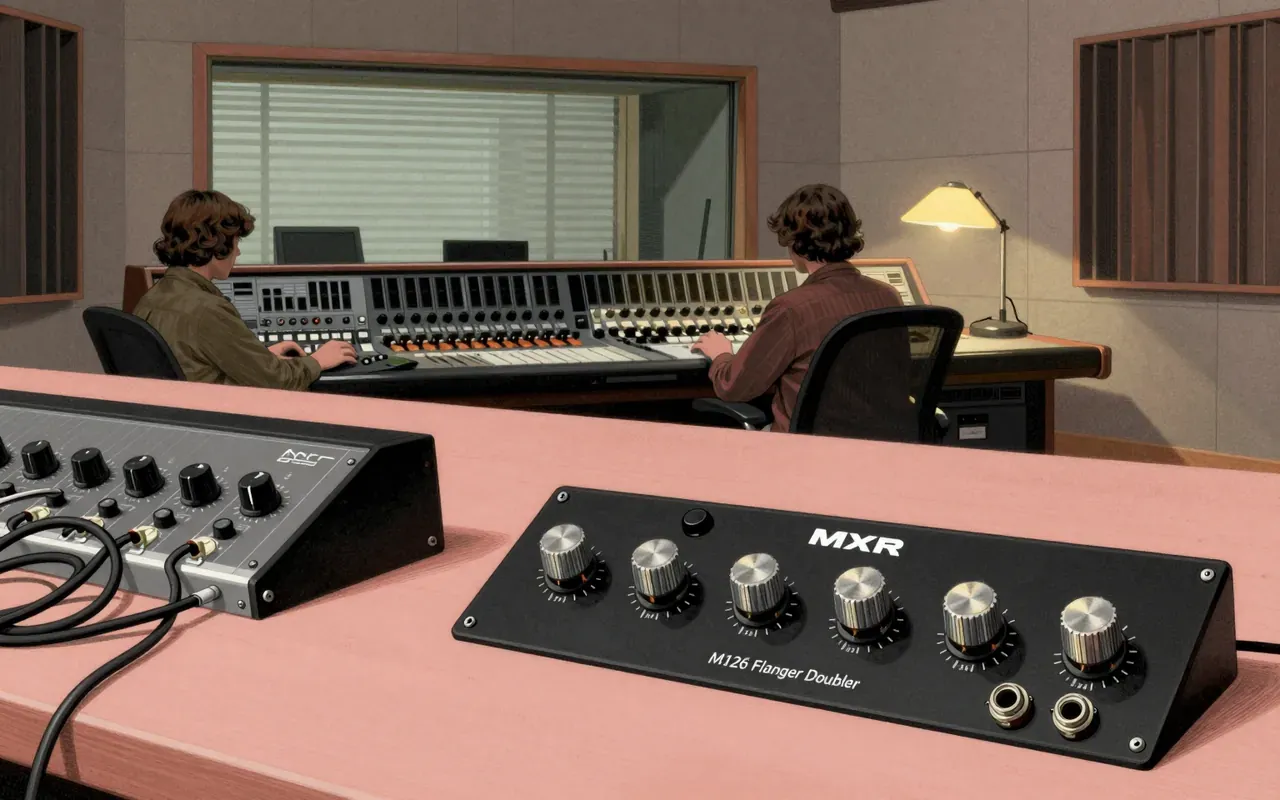
The MXR M126 Flanger/Doubler is a two-space analog rack unit with front-panel 1/4" TRS I/O. It gives players manual, sweep width, sweep speed, mix, and regen knobs plus mode and bypass/invert buttons. It delivers a thick flanging sound and fulfils its synthetic doubling function as advertised. It has no stereo I/O, no expression input, no tap tempo, and no presets. No verified recordings or users are cited. Studio engineers needing fixed, tactile analog flanging or doubling should consider it. Live performers, modular users, and those requiring stereo or foot control should not.
10:08

Fulltone Fulldrive 2

Fulltone

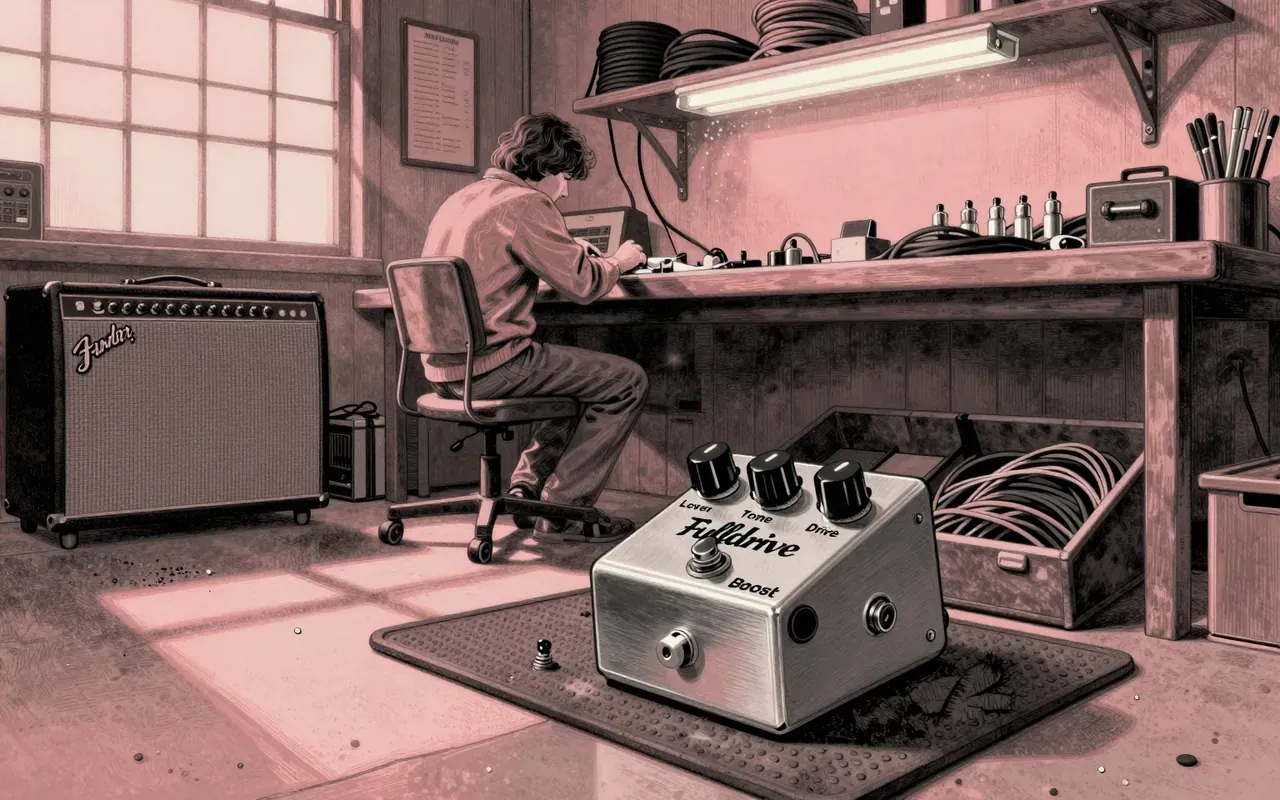
The Fulltone Fulldrive 2 is a hand-wired analog overdrive/booster pedal introduced in 1996. It gives players four knobs, two footswitches, and two 3-way toggles to shape tone, drive, boost, voicing, and clipping. It excels at delivering three distinct tonal identities — clean boost, mid-boosted overdrive, and flat-mid transparency — from one circuit. It falls short where independence and expandability matter: Boost requires overdrive to be active, and it offers no rack option, no buffered bypass, and no external control. It belongs in the hands of guitarists who want tactile, analog tonal switching — not those building a programmable, integrated rig.

12:28

Shin-ei Fuzz-Wah

Shin-ei

The Shin-ei Fuzz-Wah is a 1968 analog pedal that merges wah and fuzz into one foot-controlled unit. Rocking controls wah. Sliding left-right controls fuzz gain. Two switches activate effects independently. A third switch sets order. A knob adjusts fuzz volume. Powered by 9V battery or adapter. It remained in production, in some form, until 1984. Fender reissued it in 2008.

6:48

Marshall Guv'nor

Marshall

The Marshall Guv'nor is a no-compromise analog distortion/overdrive pedal. It gives guitarists direct, unmediated access to Marshall-style grit through five physical controls. It refuses modern conveniences: no USB, no rack ears, no presets. It was discontinued in 2023.

9:30

Eventide H3000

Eventide

The Eventide H3000 Ultra Harmonizer is one of the first analog harmonizers. It is an all-analog, rack-mountable unit occupying two rack spaces. Its layout is sometimes hard to follow. It has few parameters. Its configuration isn't the easiest to follow. Its sound quality is pretty good for its age.

9:36

Eventide H9 Harmonizer

Eventide

The Eventide H9 Harmonizer is a pedal-format multi-effects unit built to consolidate four Eventide Factor-series stompboxes into one device.

8:49

Eventide H949 Harmonizer

Eventide

The Eventide H949 Harmonizer is a pitch shifter and time stretcher. It has no published technical specifications. It is also known as H949Harmonizer, H 949 Harmonizer, and H 949Harmonizer.
8:09

Korg Kaoss Pad KP1

Korg

The KP1 is a 1999 touch-driven effects box for DJs. It runs six effects at once. It has no sampling. It has no synthesis. It has no presets. It has no deep editing. It has a pad, four buttons, and a fader. It rewards gesture over precision. It belongs on a deck, not in a DAW.

9:04

Lexicon Lexicon 224

Lexicon

The Universal Audio Lexicon 224 Digital Reverb is a UAD plug-in that models the 1978 hardware unit using its exact algorithms, firmware version 4.4, input transformers, and 12-bit AD/DA gain stepping converters. It exposes all eight reverb programs and every tunable parameter as dedicated fader-style controls. It adds Input/Output gain, Pitch Shift, and a selectable Bug Fix mode. It belongs to the UAD Plug-In series and is categorised as a software algorithmic reverb.

9:10

Lexicon Lexicon 480L

Lexicon

The Lexicon 480L is a rack-mounted digital reverb processor introduced in 1986. It contains 200 internal programs. It supports RAM and ROM cartridges. It is controlled via the LARC remote control unit. It has 2 or 4 XLR analog outputs. Two units can be cascaded for two independent engines. Version 1.01 launched in 1986 and immediately became the new world standard for high-end studio reverb machines. Firmware extended to version 4.01 with a surround kit before being replaced by the 960L.

8:16

Make Noise Morphagene

Make Noise

The Morphagene is an effects module for modular synthesizers made by Make Noise. It belongs in the 'Effects modules for modular synthesizer' category. It does not function as a sampler, sequencer, or DAW plugin — it transforms audio live using tape-style operations. Its design gives immediate, irreversible, hands-on manipulation. It withholds saving, syncing, and visual feedback.
8:59

TC Electronic Nova Delay

TC Electronic

The TC Electronic ND-1 Nova Delay is a digital guitar effects pedal offering six studio-quality delay types—including Delay line, Dynamic, Reverse, Ping-pong, Pan, and Slap-back—with up to 2290 ms delay time, audio-generated tap tempo, delay spillover, true stereo I/O, true bypass, and nine user-programmable presets; it operates in manual or preset mode and includes analog-tone emulation via a tone knob.

13:06

Boss OC-2 Octave

Boss

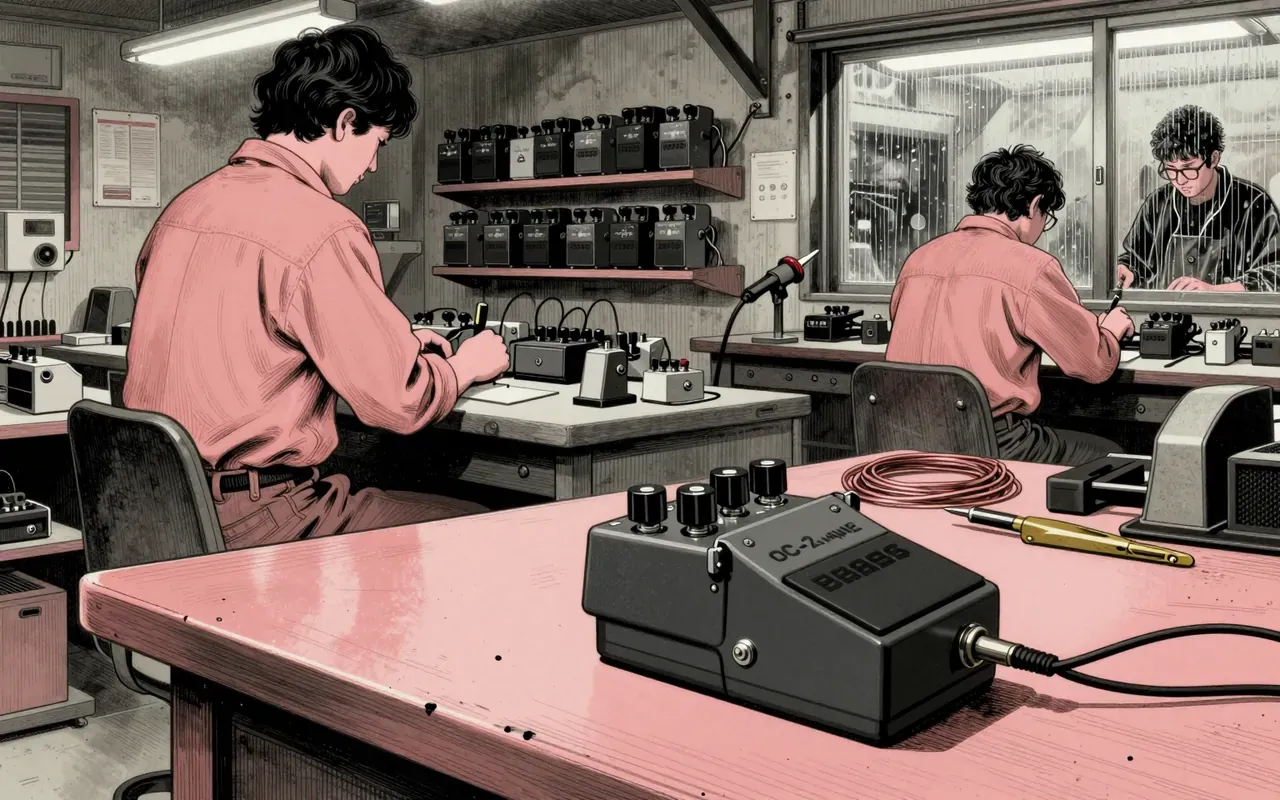
The Boss OC-2 Octave is a stompbox that adds one or two sub-octaves to a guitar signal. Its three knobs control each layer. It runs on 9V DC or battery. Higher notes track smoothly — without digital harshness. But notes below the 12th fret on the low E string mis-track badly: wobbly, out-of-tune, uncorrectable. It is unfit for conventional use. Only noise or experimental players gain anything from its failure.

8:29

Fulltone OCD

Fulltone

The Fulltone OCD V1.1 is an analog overdrive pedal. It has volume, drive, and tone controls. It has a high-pass/low-pass switch. It uses true bypass. It is white with black knobs and a red LED.

9:54

Boss PN-2 Tremolo/Pan

Boss

The Boss PN-2 Tremolo/Pan is an analog stomp box released in May 1990 and discontinued in March 1995. It delivers tremolo and stereo panning via rate, depth, and a 4-way mode switch. It needs two amps for panning and runs on 9V DC. It was replaced by the mono TR-2.

8:18

Electro-Harmonix Polychorus

Electro-Harmonix

The Electro-Harmonix Polychorus Mk2 is a stereo analog stomp-box modulation pedal for guitar. It offers chorus, flanger, double track, and filter matrix modes via toggle switches. It has one input and two outputs. It requires 24V power. It has no preset memory.

8:23

Alesis Quadraverb

Alesis

The Alesis Quadraverb is a rack-mount digital multi-effects processor introduced in the early 1990s. It focuses on reverb and delay but also offers pitch, EQ, and 'Change' effects. It runs up to four effects simultaneously in stereo or mono, covers 20 Hz–20 kHz, and connects via 1/4" stereo I/O and MIDI. Users value its lo-fi character—not its fidelity—for feedback loops and textural layering.

11:48

Boss RE-20 Space Echo

Boss

The Boss RE-20 Space Echo is a digital emulation of the Roland RE-201 Space Echo. It is a twin-pedal stomp box with stereo inputs and outputs, an expression pedal input, and a 12-mode selector. Eight front-panel knobs control Bass, Treble, Reverb Volume, Repeat Rate, Intensity, and Echo Volume. One pedal toggles delay on/off. The other handles tap tempo. It operates in Normal (up to 3s) and Long (up to 6s) delay modes. It supports a 'warp' function via footswitch hold.

8:52

Way Huge Red Llama

Way Huge

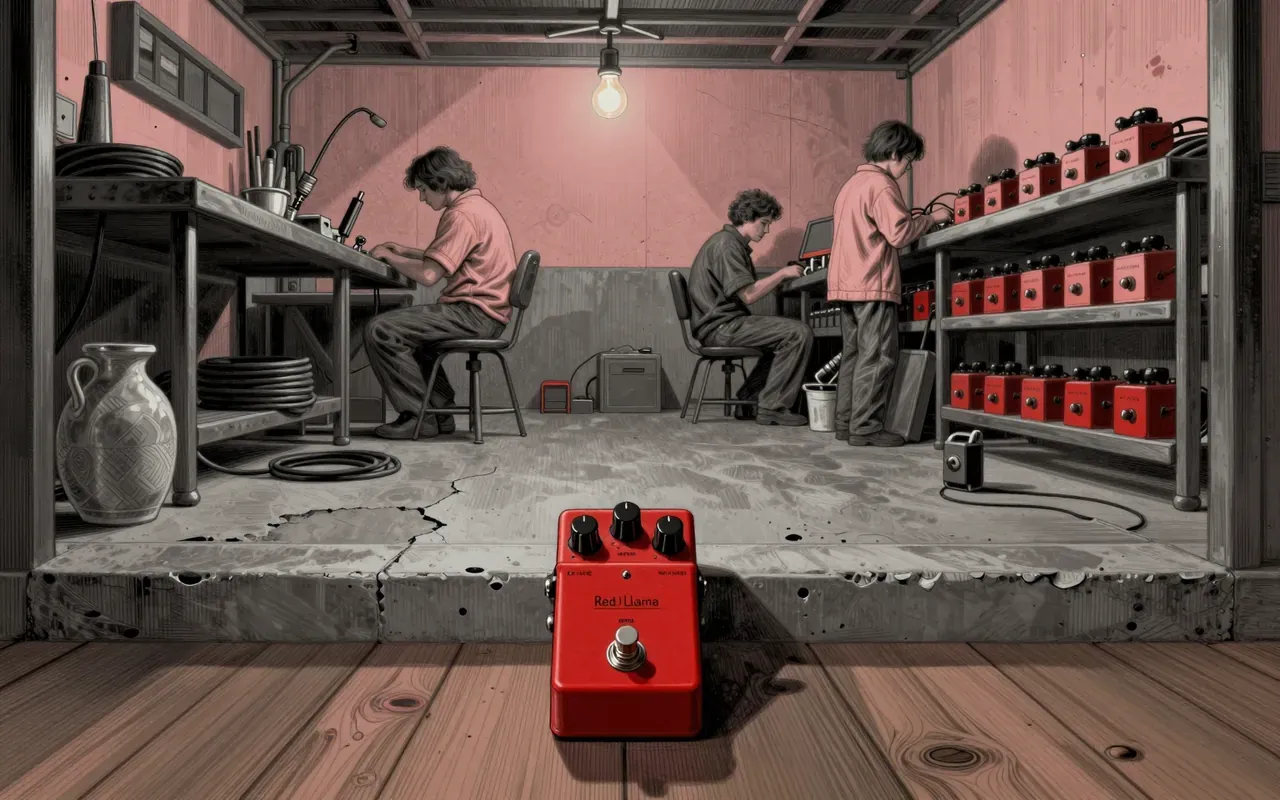
The WM23 Smalls Red Llama Overdrive MKIII is an overdrive pedal made by Way Huge Electronics. It costs $150 including VAT. That is all that is verified.

9:41

Yamaha REV1

Yamaha

The Yamaha REV1 is a two-part digital reverb: a rack unit and a separate remote. It runs at 16-bit/44.1 kHz. It has one XLR input, two XLR outputs, external clock sync, and RS232 remote connectivity. Its sound is clear, clean, soft, and distinct from other Yamaha gear. Only the Lexicon 224 XL surpassed it in finesse among contemporaneous units.

9:59

Yamaha REV7

Yamaha

The Yamaha REV7 is a fixed-architecture digital reverb unit from 1985. It occupies two rack spaces. It offers four reverb types — hall, room, flat, and voice — plus chorus, flanger, phaser, tremolo, and delay. All effects layer over reverb. It has XLR and 1/4-inch audio connections and 5-pin DIN MIDI ports. It has no patch memory, no real-time MIDI parameter control, and no stereo-in/stereo-out routing.

10:39

Lovetone Ring Stinger

Lovetone

The Lovetone Ring Stinger is an all-analog octave and ring modulator pedal with switchable LFO modulation. It delivers distinctive Hendrix- and Jeff Beck–style tones but requires its manual for calibration and stable power for consistent operation.

10:53

TC Electronic SCF Stereo Chorus Flanger

TC Electronic

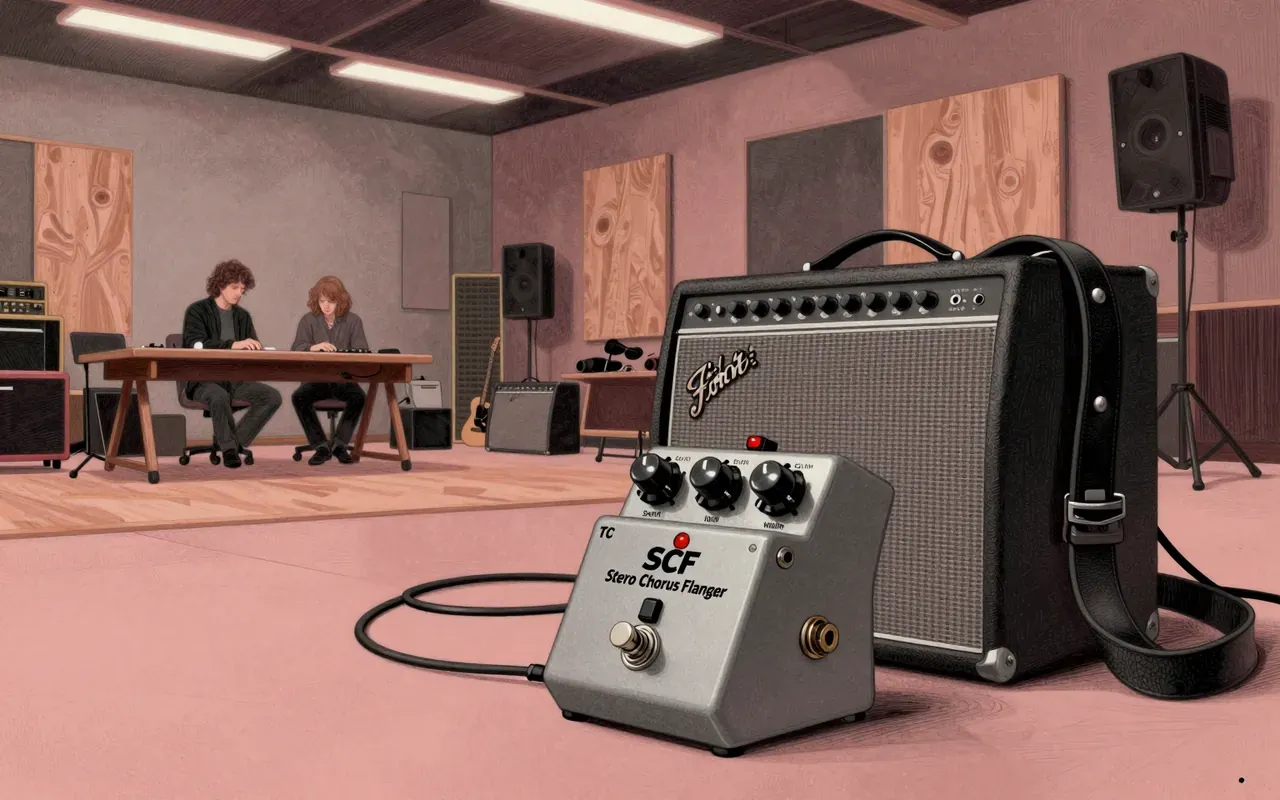
The TC Electronic SCF Stereo Chorus Flanger is an analog guitar pedal introduced in the mid-1980s. It offers Chorus, Pitch Mod, and Flanger modes via a 3-way switch. Controls include Speed, Width, and Intensity knobs, independent input gain, and a momentary footswitch. It has mono/stereo outputs, an overload LED, an external bypass jack, and draws power directly from AC mains. Its chorus mode is widely praised for its clean, studio-grade sound — but its flanger and pitch mod modes are less consistent. It is discontinued, replaced by the SCF Gold.
9:28

Roland SDE-1000

Roland

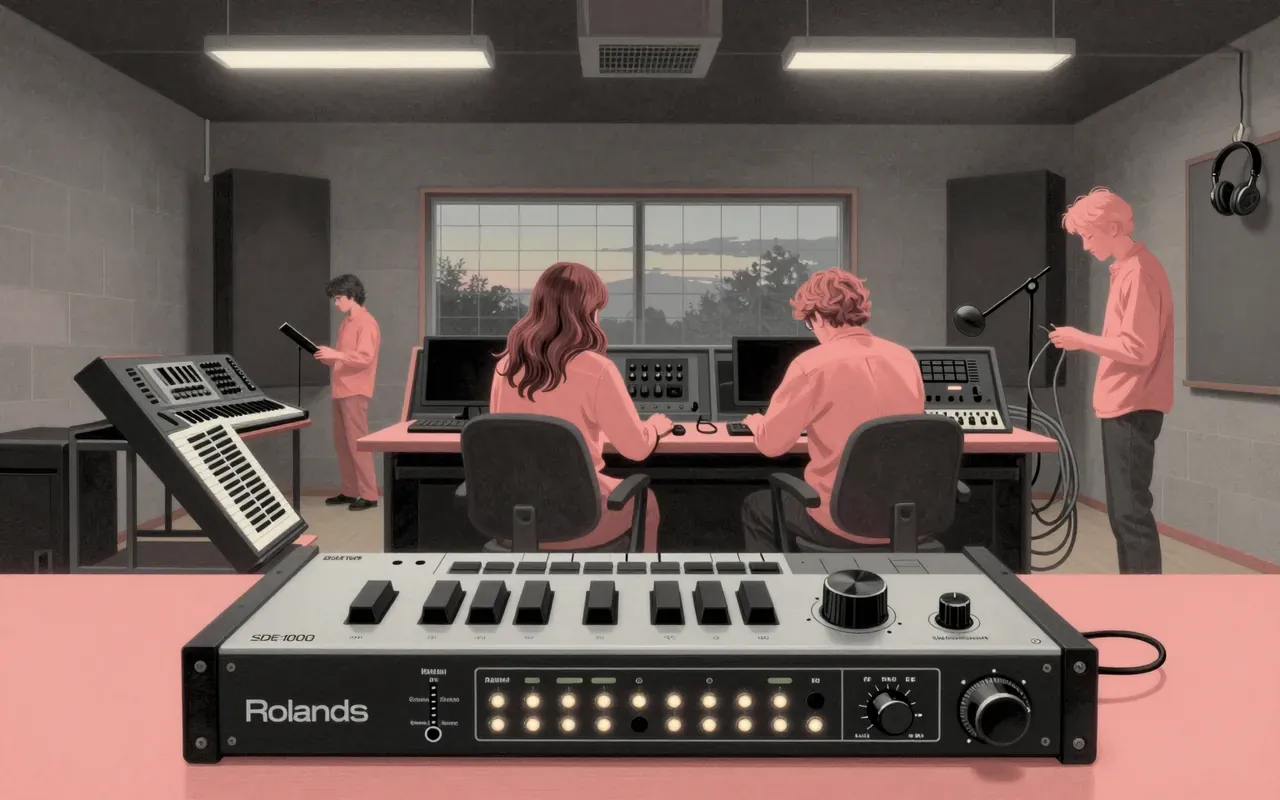
The Roland SDE-1000 is one of the first digital delay rack units. It delivers up to 1.5 seconds of breathless, crystal-clear delay. Four front-panel keys store delay time and on/off state. Modulation knobs do not memorise—but their activation does. A footswitch controls global on/off. It was bought in 1983 or 1984.
9:12

Roland SDE-3000

Roland

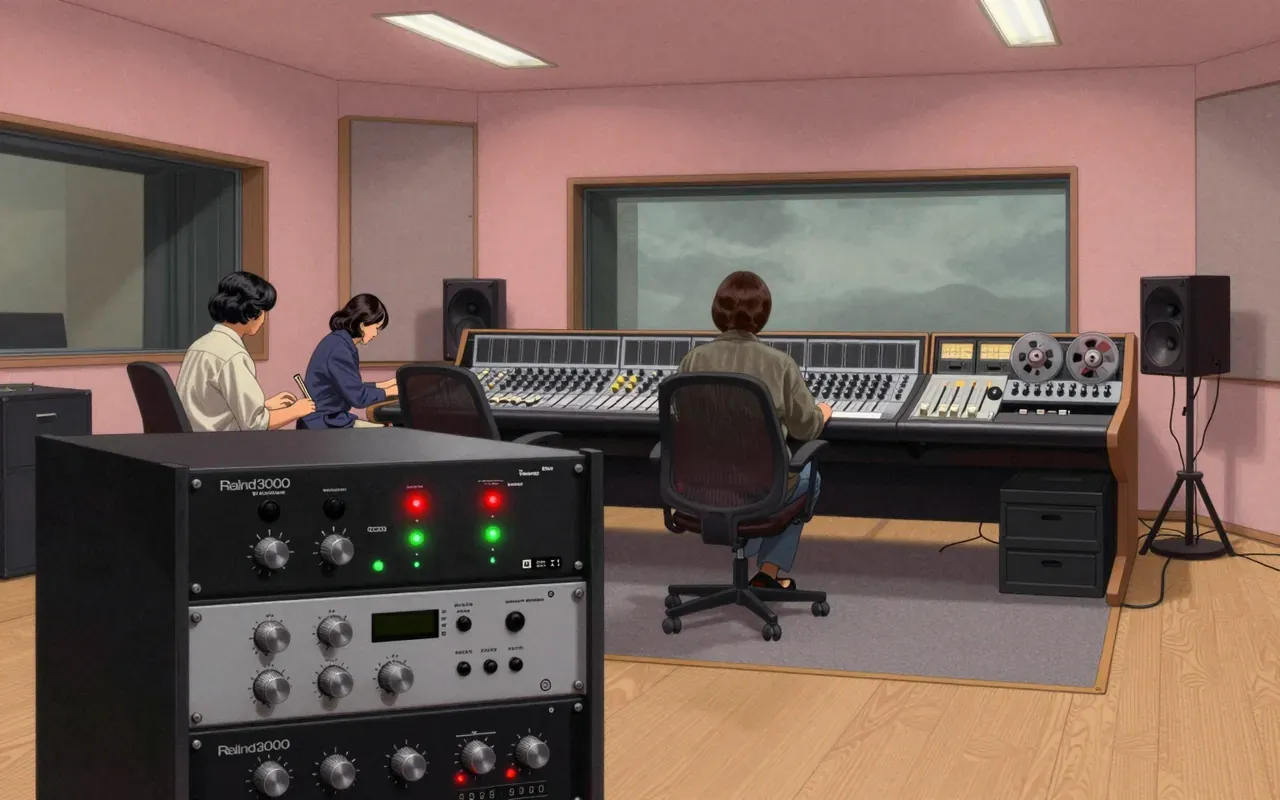
The Roland SDE-3000 is a mono digital delay unit introduced in 1984. It delivers up to 4500 ms of delay with 10 Hz–17 kHz frequency response and low distortion. It has wet/dry outputs, time loop, and TRS footswitch support. It is built for reliability, not versatility.

8:53

Yamaha SPX90

Yamaha

The Yamaha SPX90 is a 1985 digital multi-effects processor in a 1U rack. It offers discrete or combinable effects — reverb, echo, chorus, flanger, phaser, compression, pitch shifting, distortion, tremolo, and delay — but no concurrent processing. Audio is 12-bit, sampled at 31.25 kHz, with a maximum frequency response of 12 kHz. MIDI supports program recall only, not editing. Front-panel controls are simple and direct. It delivers character, not clarity.

8:22

Yamaha SPX900

Yamaha

The Yamaha SPX900 is a 1U digital multi-effects processor with analog-only I/O, 16-bit/44.1 kHz processing, and 99 fixed presets. It delivers studio-ready reverb, delay and modulation in a compact, MIDI-controllable package — but offers no digital connectivity and no on-the-fly parameter editing.

8:41

Roland SRV-2000

Roland

The Roland SRV-2000 is a 1984 digital reverb unit with pseudo-stereo I/O, 16-bit resolution, and 10 kHz bandwidth. It offers 32 programs — including hall and room — with editable reverb time, pre-delay up to 160 ms, high-frequency attenuation, and a 3-band parametric EQ (+12 dB to −24 dB). It delivers coherent, homogeneous stereo imaging and eliminates breath, snap, and flutter even at high signal levels. It is rated sonically between the Yamaha REV 7 and Lexicon PCM 60 — less refined than the latter, more universal.

8:35

TC Electronic Stereo Chorus+

TC Electronic

The Rockman Stereo Chorus is a fixed-function stereo chorus pedal for guitar. It has no tempo sync, no expression input, no adjustable delay or feedback. It spreads the signal across two amps or channels. It is not made by TC Electronic. Its only controls are rate and depth. It is usable, but inflexible.

8:31

Way Huge Swollen Pickle

Way Huge

A fuzz pedal named Swollen Pickle, sold under multiple variants. The source confirms only its category and naming variations — nothing about sound, circuit, usability, or musical role.

9:44

Eventide TimeFactor

Eventide

The Eventide TimeFactor is a 2011 stompbox-format digital delay/echo/phrase sampler for guitar. It offers ten distinct delay types, two independent 3-second delays, stereo I/O with level switches, true analog bypass, rugged cast metal construction, MIDI and expression pedal control, USB firmware updates, and 100 factory presets. Its 12-second looper is integrated into the same unit.

10:17

SPL Transient Designer

SPL

The SPL Transient Designer is a plug-in that reshapes sound by directly manipulating attack and decay — not through compression or gating, but via level-independent envelope control. It excels at tightening, lifting, or taming transients across full-bandwidth sources, but offers no frequency selectivity or threshold-based dynamics. It belongs on drum busses, room mics, and bass tracks — not on vocals needing surgical sibilance control or synths needing dynamic layering.

8:14

Chandler/Butler Tube Driver

Chandler/Butler

A tube overdrive pedal built around one 12AX7 tube. Metal case. Own power supply. High output. Creamy distortion. Nearly a decade of field reliability. No EQ. No blend. No compromise on toughness.

8:10

Neve V Series

Neve

The Waves V-Series is an effects bundle with no published technical details. It offers no verifiable functionality, no documented use cases, and no basis for evaluation beyond its category label.

9:22

SPL Vitalizer

SPL

The SPL Stereo Vitalizer MK2 is a hands-on exciter that trades surgical control for immediate sonic uplift — sharpening treble, rounding bass, widening stereo image, and adding air. Its strength is cohesion, not correction.

9:43

Sennheiser Vocoder 2000

Sennheiser

The Sennheiser Vocoder 2000 is a fully analog, rack-mount vocoder released around 2002. It uses discrete-component circuitry. It includes an internal oscillator with pitch modulation, an internal noise source, and a noise gate. It requires no external sound source. Both white-face and black-face versions share identical analog circuitry.

8:12

EMS Vocoder 5000

EMS

The EMS Vocoder 5000 is classified as an 'Other Effects Processor'. No technical specifications are available for it.

8:49

Tiptop Audio Z-DSP

Tiptop Audio

The Z-DSP is an effects module for modular synthesizers. Tiptop Audio makes it. That is all the source material states.

9:41

Z.Vex Fuzz Factory

Z.Vex

The Z.Vex Fuzz Factory is a 1995 fuzz pedal built around unstable germanium transistors whose biasing is manipulated via five interactive controls; it originated from Zachary Vex’s accidental discovery of extreme sonic behavior when boosting a surplus-transistor circuit, leading him to retain adjustable pots for expressive texture control rather than fixing component values.

10:08

MXR Distortion +

MXR

The MXR Distortion + is a 1974 distortion pedal using a single op-amp and germanium diodes. It has Output and Distortion controls only. Increasing Distortion raises both clipping and treble. It was one of MXR’s earliest original pedals, released shortly after the Phase 90. It later appeared in the Series 2000 line in 1982.

8:44

Line 6 DL4

Line 6

The Line 6 DL4 is a 1999 digital delay pedal. It models 16 vintage delays. It has a 14-second looper. It is one of the first digital modeling effects units.

9:00

Boss DS-1

Boss · 1978

The Boss DS-1 is a 1978 distortion pedal built for tight, aggressive tones using hard-clipping circuitry. It uses input/output buffers, a transistor boost stage, an op-amp gain stage with hard clipping diodes, and a tone control. A JFET switching circuit engages or bypasses the effect via a momentary push button. It helped popularise distortion as a distinct pedal category and served as a template for later designs. The 1994 circuit redesign introduced volume loss and a fizzy or waspy edge—problems that spawned a community of modifiers. It remains Boss’s bestselling drive pedal.

9:18

Lexicon (company)

Lexicon · 1971

Lexicon is a company, not an instrument. Its first product was a digital delay system released in 1971. It pioneered commercial digital audio processing hardware for professional and live applications — notably digital reverb starting with the Model 224 in 1978. Its hardware is rack-mounted, hardware-controlled, and designed for integration into analog signal paths. It does not run as software, has no built-in synthesis or recording, and offers no modern digital workflow features.

9:25

Boss SD-1

Boss · 1981

The Boss SD-1 is a 1981 overdrive pedal. It is the second overdrive made by Boss. It adds a tone control and refines the OD-1’s circuit for more gain and aggression. Its asymmetrical soft-clipping uses two diodes on the positive waveform peak and one on the negative—producing both even and odd harmonics. It is midrange-focused at 800Hz and rolls off less bass than the OD-1. Its circuit has remained unchanged since release.

9:08

Small Stone Records

Electro-Harmonix · 1995

The Small Stone is a 4-stage analog phaser pedal introduced by Electro-Harmonix in 1974. Designed by David Cockerell, it became central to Jean-Michel Jarre’s sound and was later reissued in a Nano chassis. Its simplicity — one knob, two modes — gives immediate, expressive motion but no depth control, no buffered bypass, and no digital features.

8:38

Uni-Vibe

Shin-ei · 1968

The Uni-Vibe is a 1968 Shin-ei footpedal phaser designed by Fumio Mieda. It creates chorus and vibrato simulations using an optical circuit: an incandescent bulb shining on LDRs inside a reflective shield drives staggered phasing filters—without op-amps. Its effect is a throbbing, hypnotic pulse rooted in atmospheric radio modulation, not Leslie emulation. It was modified to improve fuse access and add a speed foot pedal. Players value its lo-fi sweep but contend with bulb burnout, speed instability, and lack of precision.

9:46

Eventide Eclipse

Eventide

A professional-grade digital effects processor with dual independent effects blocks, nearly 100 algorithms—including 11 reverbs—and 24-bit/96kHz conversion. Supports true stereo reverb I/O and extensive looping (up to 20 seconds per block). Firmware updates require Compact Flash and strict version dependencies; bootloader corruption requires factory reprogramming.

8:54

Electro-Harmonix Memory Man

Electro-Harmonix

The Electro-Harmonix Deluxe Memory Man is an analog delay pedal introduced in 2008, offering up to 550ms of delay, selectable chorus or vibrato modulation, true bypass switching, and mono audio I/O.

10:42

MXR Phase 90

MXR · 1972

The MXR Phase 90 is a phaser effects pedal introduced in 1972, the first pedal sold by MXR. It features one knob (Speed), an orange enclosure, and evolved logo designs (script then block). Production ceased in 1984 when MXR went bankrupt. Dunlop resumed production with added features: an LED and optional AC power supply. Pre-1981 units lacked LEDs, A/C adaptor jacks, and true-bypass switching. It was used on the first two Van Halen albums.

9:51

Eventide Space

Eventide

The Eventide Space is a reverb-and-delay pedal offering 12 algorithmic spatial effects—including Hall, Plate, Blackhole®, and Shimmer—controlled via 10 knobs, MIDI, expression pedal, or HotSwitch. It features 100 presets (some artist-designed), true analog bypass, tap tempo/MIDI clock sync, and mono/stereo I/O in a rugged metal pedal format. Software tools FactorLib and H9 Control manage presets; the SpaceTime algorithm combines modulation, two delays, and reverb.

8:17

MXR Dyna Comp

MXR

The MXR Dyna Comp is a guitar compressor pedal introduced in the 1970s. It has two controls: Sensitivity and Output. It produces a non-tone-neutral, colour-rich compression effect. It became a Nashville standard. It smooths out volume differences between notes, especially in chicken picking. It was one of the six original pedals in the MXR Series 2000 line.

9:45

Boss HM-2

Boss · 1983

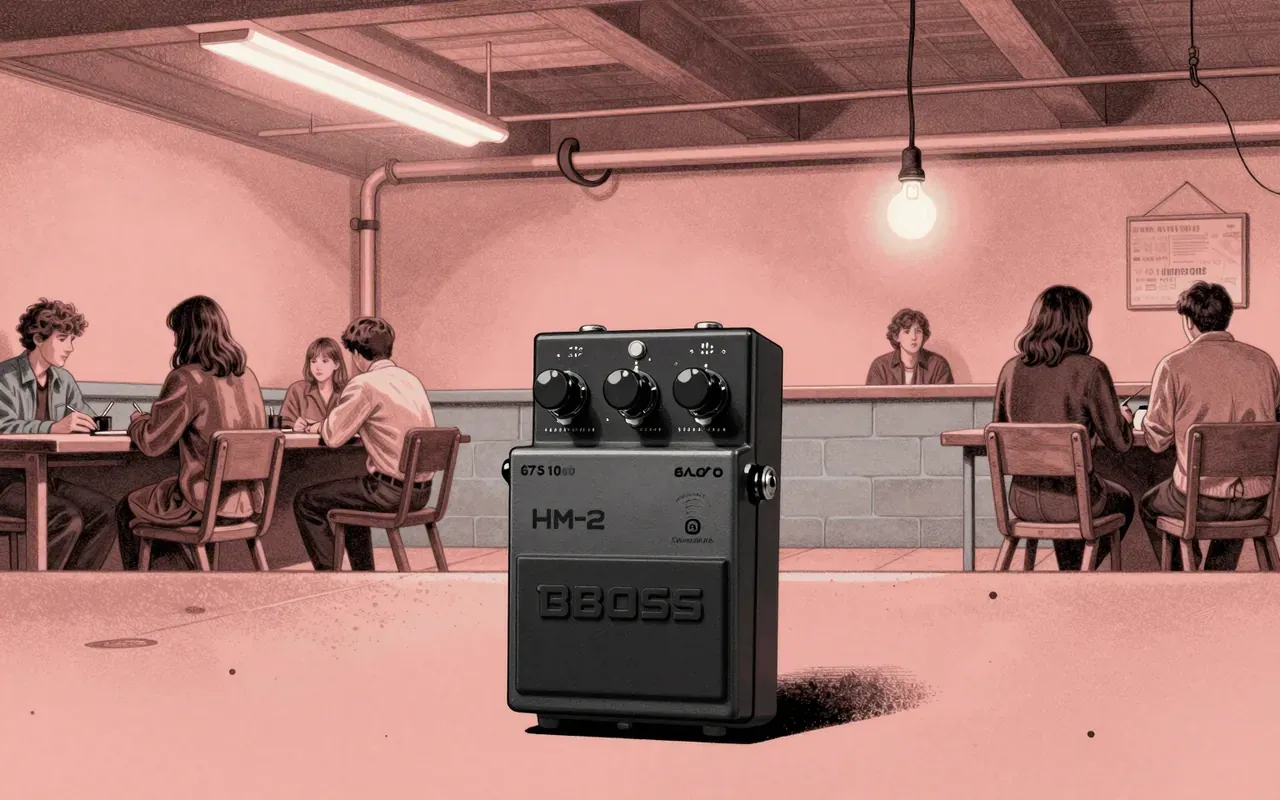
The Boss HM-2 is a distortion pedal introduced in October 1983. It was designed to emulate the mid-range response of a Marshall stack and is based on the Boss DS-1. Its defining feature is the radically versatile Low and High ‘Color Mix’ EQ controls, each offering 20 dB of boost or cut.

9:30

Klon Centaur

Klon · 1994

The Klon Centaur is an overdrive pedal introduced in 1994. It was designed to emulate high-volume amplifier distortion while preserving tone. Its circuit uses a JFET-based TL072 op amp and hard-clipping 1N34A diodes. After internal voltage doubling, the signal splits into three paths. It adds slight midrange emphasis. It was built as a standalone pedal in a custom-cast enclosure.

9:11

Boss MT-2

Boss · 1991

The Boss MT-2 Metal Zone is a 1991 distortion pedal designed for heavy metal guitarists. It features high-gain capabilities, a thick and tight tone, and powerful semi-parametric EQ controls. Boss developed it as a more versatile successor to the HM-2, using a dual-stage gain circuit and seven pre- and post-distortion filters.

9:15

Big Muff

Electro-Harmonix · 1969

The Big Muff Pi is a 1969 fuzz effects pedal with four transistors, two soft-clipping stages, and a tone stack that scoops mids when centred. It delivers smooth, saturated, bass-heavy sustain at any volume—making small amps sound bigger. It was intended to mimic Hendrix but became heavier and more distinctive. It does not offer gain staging, midrange recovery, or dynamic clean-up.

8:52

Watkins Copicat

Watkins

The Watkins Copicat is a valve-based tape echo unit introduced in 1958. It features three replay heads, a selector switch, and a feedback loop for variable echo-repeat. It was designed to be simple, affordable, and portable. It was one of the first commercially available tape delay units and preceded other major European echo units. The first production run of 100 units sold out on the first day.

9:18

Fuzz Face

Arbiter · 1966

The Fuzz Face is a minimal, high-character fuzz pedal built for affordability—not precision. Its two-knob interface and six-component design deliver immediate, touch-sensitive distortion, especially with NKT275 germanium transistors. But its crude biasing makes germanium units thermally unstable. Silicon versions trade warmth for harshness and reliability. It excels at organic, swelling fuzz tones shaped by the player—not the pedal.

8:18

Maestro FZ-1 Fuzz-Tone

Maestro · 1962

The Maestro FZ-1 Fuzz-Tone is the first widely marketed fuzz effect. Introduced in 1962. Achieved mainstream impact in 1965 via Keith Richards on 'Satisfaction'. Uses three germanium transistors. Powered by two 1.5V batteries (later one). Responds directly to input amplitude. Temperature sensitive. Delivers brass-like tones. Integrated into Gibson EB-0F basses circa 1964. Revised as FZ-1a in late 1965.

9:32

Eventide, Inc

Eventide · 1971

There is no instrument called 'Eventide, Inc.' from 1971. Eventide, Inc. is a company. Its earliest instruments were the 1745 Digital Delay Line (1971), the PS 101 Instant Phaser (1971), the Omnipressor (1974), and the H910 Harmonizer (1975). Only the PS 101 is confirmed as rack-mount. No instrument described has polyphony, synthesis architecture, or format beyond rack-mount. Claims about sound, feel, or musical use are absent from the source material.

8:41

Pro Co RAT

Pro Co

The Pro Co RAT is a distortion pedal for electric guitar, first prototyped in 1977 or 1978 and entering full production in 1979. Its distinctive aggressive distortion stems from an accidental 47 ohm resistor substitution that increased op-amp gain, combined with diode-based hard-clipping. It uses an op-amp to amplify and diodes to limit the signal.

9:38

Tone Bender

Sola Sound

The Tone Bender is a lineage of germanium-transistor fuzz pedals designed to out-sustain the Maestro Fuzz-Tone. Its revisions trade transistor count, topology, and features—not stability or convenience. It rewards touch. It punishes precision.

11:00

Dallas Rangemaster Treble Booster

Dallas Rangemaster

The Dallas Rangemaster Treble Booster is a 1965 desktop effects unit made for guitarists in the 1960s. Its function was two-fold: to increase the signal strength of the guitar going into the amplifier, and to increase tones at the high end of the spectrum (a treble booster). The need for a treble booster arose in the mid-1960s, as British tube amplifiers such as the Vox AC30 or Marshall JTM45 tended to produce a slightly dark, muddy sound when overdriven, particularly when used with humbucking pickups. A pre-amplifier that also boosted treble proved a solution. Additionally, the vintage components in the Rangemaster circuitry could add characteristic distortion and overtones to color the guitar sound, much in the way of the more modern overdrive pedals. The Rangemaster Treble Booster was first made in the 1965 by London company Dallas Musical Ltd., incorporated in 1959. The unit is simple and consists of a grey folded metal casing with an on/off switch, a potentiometer controlling the boost setting, and in- and output jacks. It was designed to sit on top of an amplifier rather than on the floor, where most effects units live.

9:26

DigiTech Whammy

DigiTech · 1989

The DigiTech Whammy is a treadle-controlled digital pitch shifter pedal introduced in 1989. It uses a licensed IVL Technologies algorithm to shift pitch up to two octaves. Early models were monophonic and produced artificial, wobbly artifacts on chords. Later models improved chord tracking accuracy. It was developed by DOD Electronics (branded as DigiTech), a company founded in 1974.