audiobriefs
7:55in productionCh. 1 · The Benchmark/ 7:55 · ceiling 15 min
Effects & pedals · Guitars & amps

Strymon BigSky

The most complete reverb pedal ever made — if you’re willing to turn a knob to get there.

The Strymon BigSky is a guitar reverb pedal released in 2013. It offers full parameter editing, stores up to 300 presets, and ships with high-quality factory presets. It delivers exceptionally high-quality, easily customisable reverb using both traditional and specific controls. It is regarded as the most complete reverb pedal on the market.

Chapters & takeaways4
  1. 0:50
    The Benchmark

    It is the most complete reverb pedal on the market.

  2. 1:51
    300 Presets, One Pedal

    It stores 300 presets across 100 banks of three.

  3. 3:00
    Ready Out of the Box

    Factory presets make operation relatively simple.

  4. 4:21
    Easy to Shape, Hard to Match

    It delivers exceptionally high-quality reverb that is easy to tailor.

Worth your time?

Yes. Use the whole thing.

4.5/ 5
What works
  • delivers more editable, high-quality reverb options than any other single reverb pedal available at launch in 2013
What does not
  • simplify deep editing into immediate physical interaction
Use it if
  • guitarists who want precise, repeatable, and rich reverb without external software or rack gear
Skip it if
  • players who dislike menu navigation or need instant knob-per-function access
The written brief1 min read

What it is and what it was built for

The Strymon BigSky is a guitar reverb pedal released in 2013. It was built to give players studio-grade reverb depth and variety in a stompbox.

How it works, in terms a player would use

It gives guitar players full control over reverb parameters: time, mix, pre-delay, tone, and adjustments. It stores 300 presets across 100 banks of three. Factory presets are high-quality and reduce setup time.

What it does better than anything else

It delivers more editable, high-quality reverb options than any other single reverb pedal available at launch in 2013.

What it does badly

It does not simplify deep editing into immediate physical interaction. Parameter changes require navigating menus or using the encoder, not dedicated knobs for every function.

What people made with it

Players used it to shape ambient textures, atmospheric leads, and spatially complex clean and distorted tones—especially where nuanced decay, tone shaping, and preset recall mattered.

Who should use it, and who should not

Guitarists who want precise, repeatable, and rich reverb without external software or rack gear should use it. Players who dislike menu navigation or need instant knob-per-function access should not.

Is it worth your time

Yes—if you need deep, flexible reverb control in a pedal format. No—if you only need one or two simple reverbs or prefer hardware with immediate tactile feedback over menu diving.
Same bench · Effects & pedals4 of 121
9:22
SPL VitalizerSPLThe SPL Stereo Vitalizer MK2 is a hands-on exciter that trades surgical control for immediate sonic uplift — sharpening treble, rounding bass, widening stereo image, and adding air. Its strength is cohesion, not correction.
10:17
Strymon El CapistanStrymonThe Strymon El Capistan is a discontinued digital tape echo pedal that emulates the Echoplex and Space Echo through three tape head configurations and three operational modes. It uses five front-panel knobs and hidden footswitch-accessed parameters to shape delay character. Its analog dry path preserves unaffected tone. It does not implement phrase sampling, despite the product title. It runs on 9V and supports both buffered and true bypass.
8:57
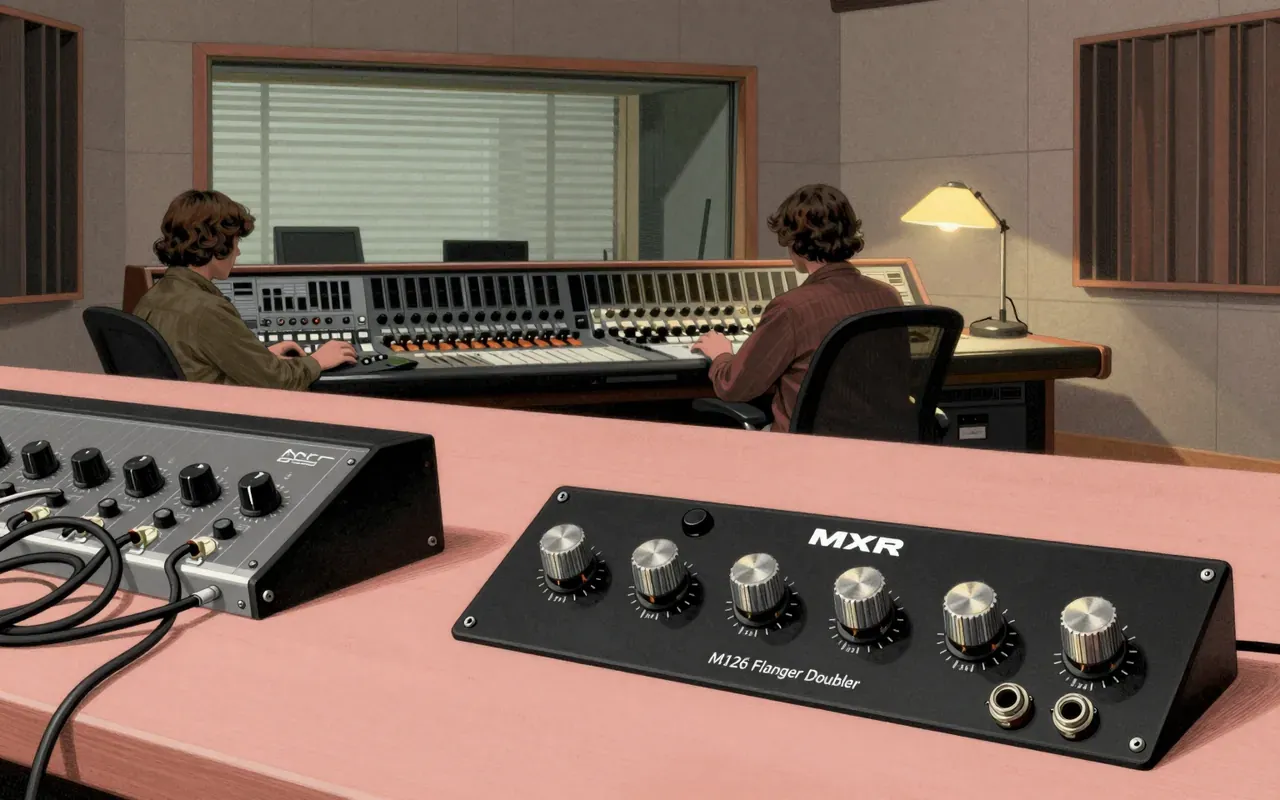
MXR Flanger/DoublerMXRThe MXR M126 Flanger/Doubler is a two-space analog rack unit with front-panel 1/4" TRS I/O. It gives players manual, sweep width, sweep speed, mix, and regen knobs plus mode and bypass/invert buttons. It delivers a thick flanging sound and fulfils its synthetic doubling function as advertised. It has no stereo I/O, no expression input, no tap tempo, and no presets. No verified recordings or users are cited. Studio engineers needing fixed, tactile analog flanging or doubling should consider it. Live performers, modular users, and those requiring stereo or foot control should not.
8:44
Line 6 DL4Line 6The Line 6 DL4 is a 1999 digital delay pedal. It models 16 vintage delays. It has a 14-second looper. It is one of the first digital modeling effects units.
Up next in Audio

Dynaudio Acoustics BM15A

Dynaudio Acoustics · 8:09

A compliant, clean-sounding active monitor that leaks FM radio into your mix.

8:09