What it is and what it was built for
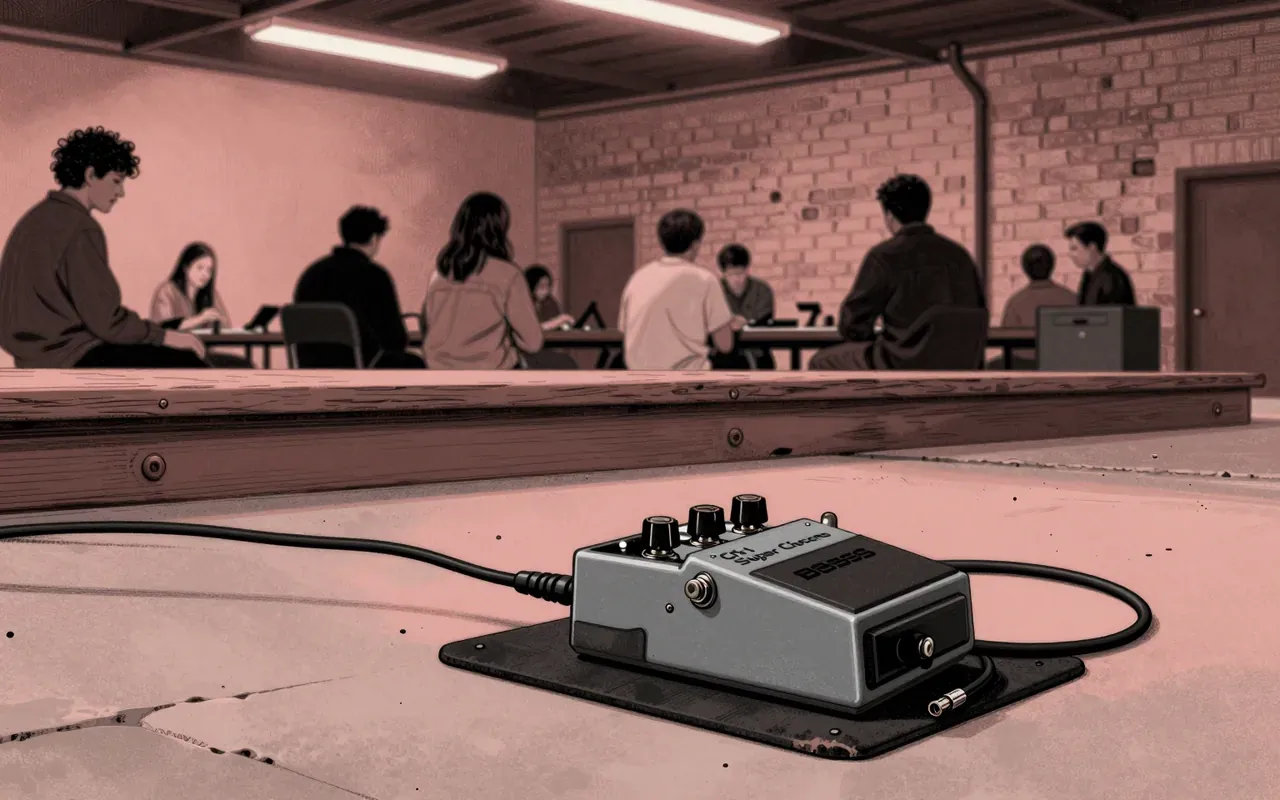
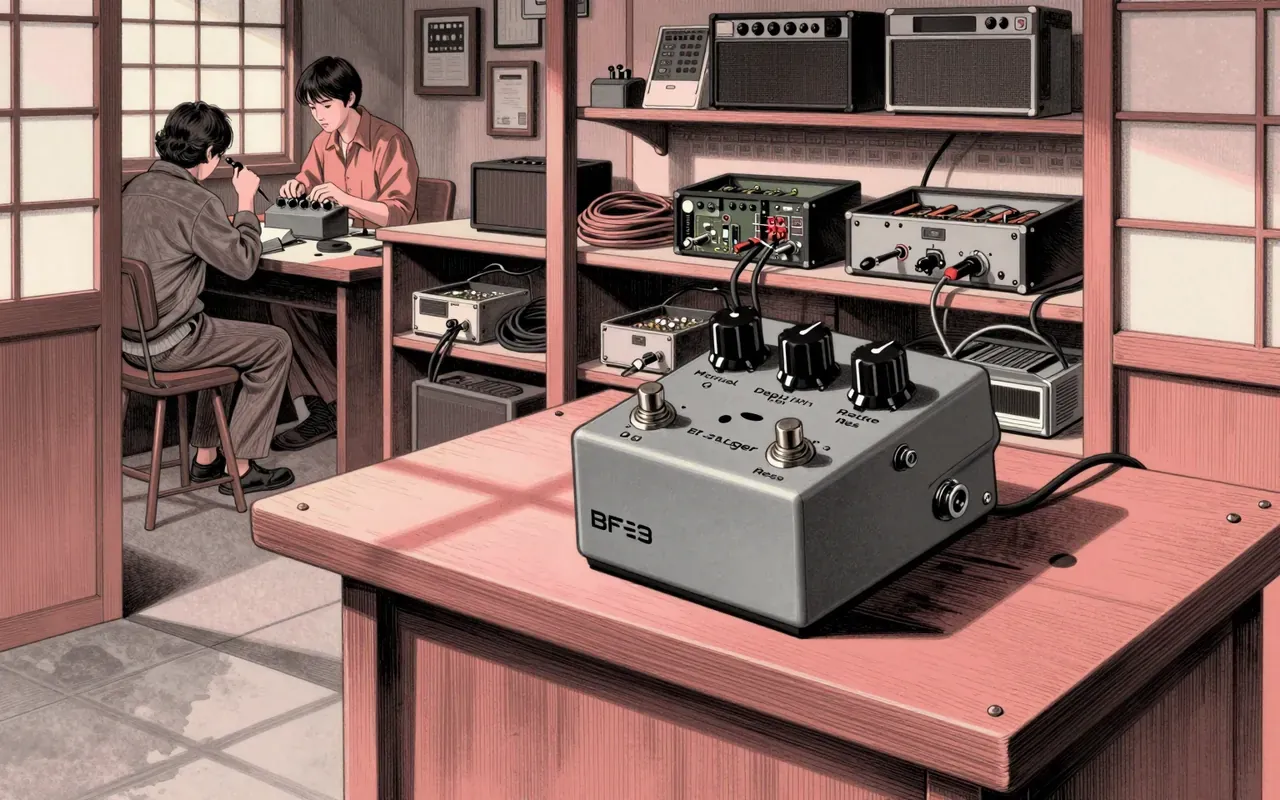
The Boss BF-2 Flanger is an analog stomp-box flanger pedal built for guitarists. It was designed to sit on a pedalboard and modify the instrument’s tone in real time using bucket-brigade delay-based modulation.
How it works, in terms a player would use
It is a stomp box. It has four knobs: Manual, Depth, Rate, Res. It takes a guitar signal in via 1/4-inch jack and outputs via another 1/4-inch jack. It runs on 9V battery or AC adapter. It is not rackable.
What it does better than anything else
It delivers a smooth, organic flanging sweep that thickens single-note lines and swells chords with a liquid, undulating motion. Its analog signal path preserves pick attack and harmonic detail better than early digital flangers.
What it does badly
It does not offer precise speed control. The Manual knob sweeps a fixed range without calibrated markings. It lacks input level adjustment, so hot signals distort early. It cannot be powered by modern multi-pedal power supplies without risk of noise or damage unless isolated.
What people made with it
Players used it to thicken rhythm parts, create jet-like whooshes under solos, and add subtle chorus-like depth to clean tones — particularly in 1980s rock and post-punk contexts.
Who should use it, and who should not
Guitarists who want tactile, immediate flanging with zero latency and no menu diving should use it. Players who rely on presets, MIDI, stereo effects loops or low-noise silent switching should not.
Is it worth your time
It is worth your time if you need an analog flanger with hands-on control and no digital artefacts. It is not worth your time if you need tap tempo, stereo output, preset storage or modulation sync.