Saved
Maker

Boss

30
briefs
9:13
average
277 min
in total
On audio.briefs30
8:47

Boss BD-2 Blues Driver

Boss

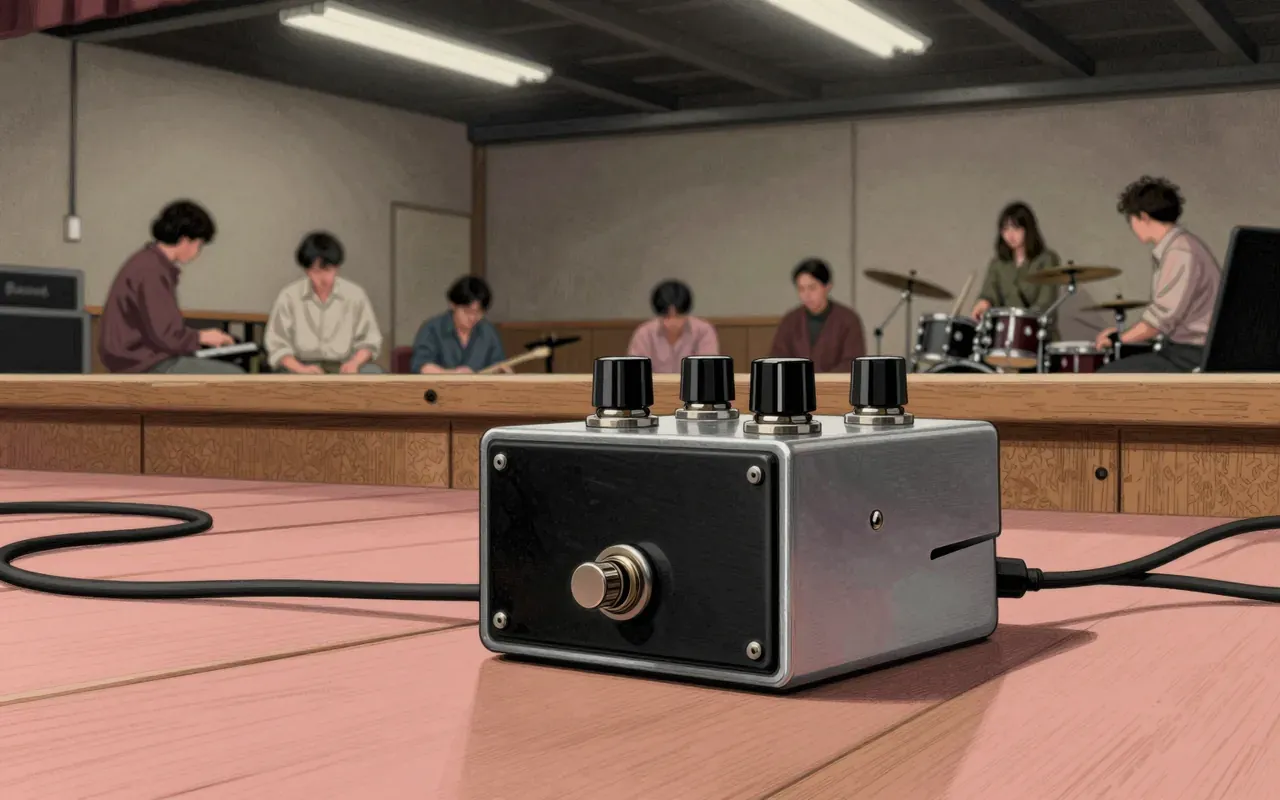
The Boss BD-2 Blues Driver is an overdrive pedal sold since at least 2003. Users report its tone as round, expressive, smooth, and sultry. It responds sharply to small knob adjustments. It covers a wide sonic range — from clean overdrive to heavy grunge. It is available new and second-hand. Prices recorded are $50 (used), $79.99 (Kayes Music Scene), and $80 (Sam Ash).
8:45

Boss BF-1 Flanger

Boss

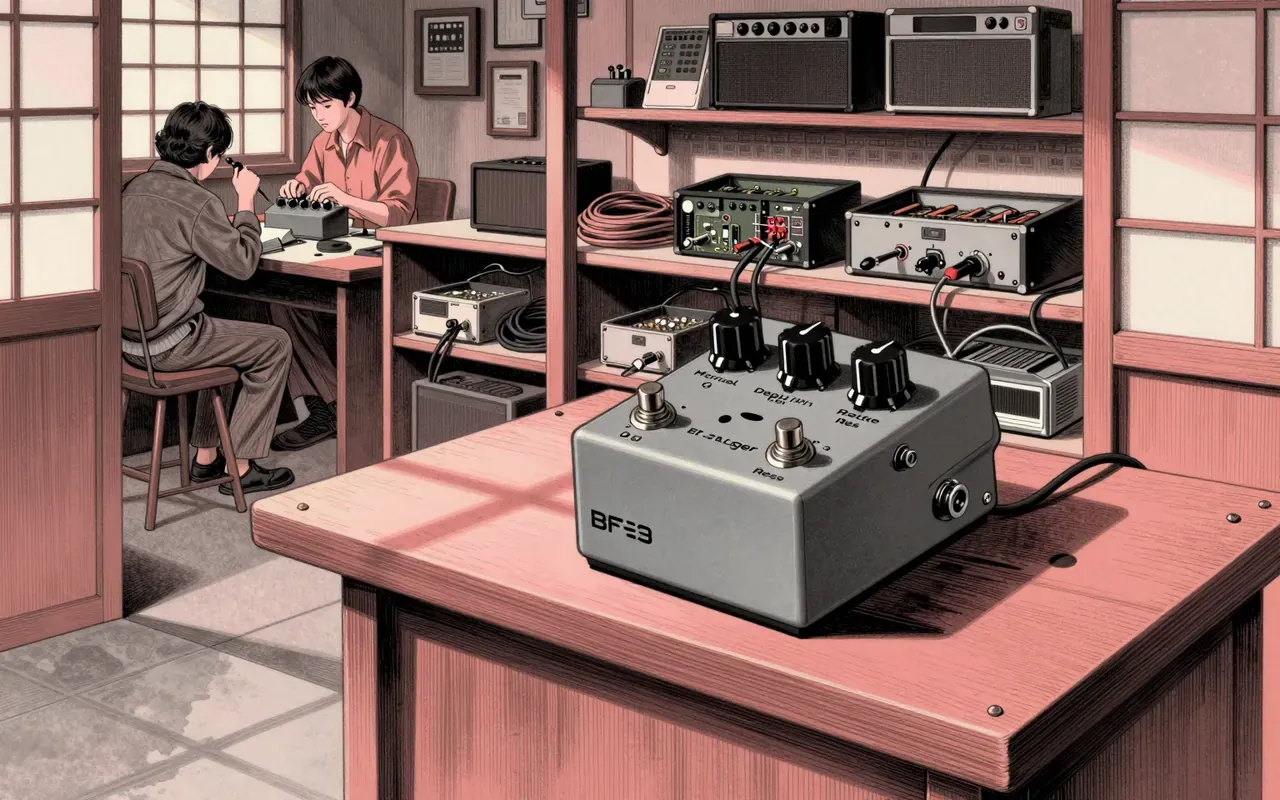
The Boss BF-1 Flanger is a 1979 analog foot pedal designed for electric guitar. It uses four knobs — manual, depth, rate, resonance — to control a simple, unstable flange sweep. It has no bypass, no presets, no expression input, and no stereo output. It was discontinued and replaced by the BF-3.

8:00

Boss BF-2 Flanger

Boss

The Boss BF-2 Flanger is an analog stomp-box flanger pedal sold from June 1980 to December 2001. It has 1/4-inch inputs and outputs, four controls (Manual, Depth, Rate, Res), and runs on 9V battery or AC adapter. It is not rackable. It was succeeded by the digital BF-3.

7:56

Boss CE-1 Chorus Ensemble

Boss

The Boss CE-1 Chorus Ensemble is Boss’s first chorus pedal: an analog stomp box offering chorus or vibrato — never both — with dedicated controls, tone toggle, and fixed power.

8:11

Boss CE-2 Chorus

Boss

The Boss CE-2 Chorus is an all-analog stomp box introduced in the early 1980s. It has two controls: Rate and Depth. It was Boss’s first compact chorus pedal and the first they housed in a stomp box. Production ended in 1990. It runs on 9V battery or transformer. It was made in Japan.

9:33

Boss CE-3 Chorus

Boss

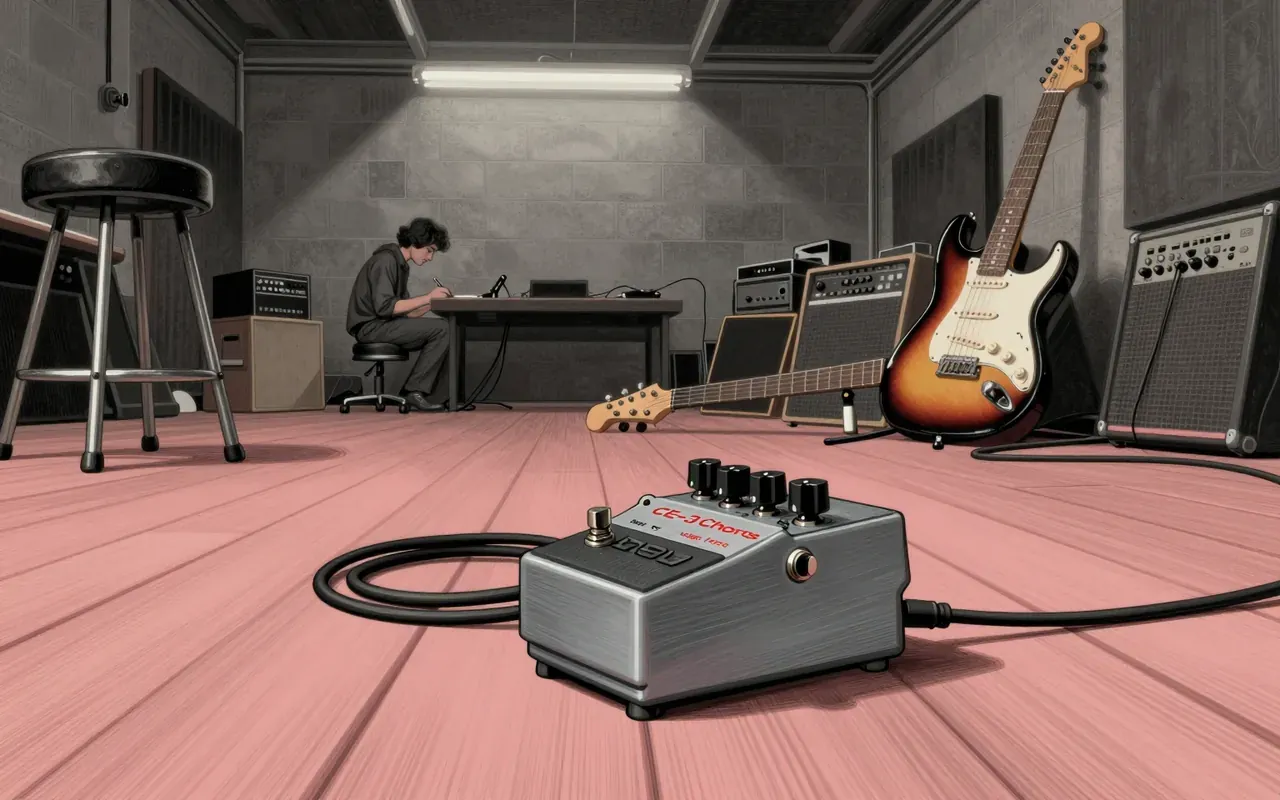
The Boss CE-3 Chorus is an analog guitar pedal built for stereo routing. It has no mix or level control. Its sound matches the CE-2 exactly — lush, hazy, shimmering — but its dual outputs enable wet/dry or true stereo setups. It is useful only where those outputs matter.

9:26

Boss CH-1 Super Chorus

Boss

The Boss CH-1 Super Chorus is an analog stomp-box chorus pedal for guitar and keyboards. It has four dedicated knobs — Effect Level, EQ, Rate, Depth — and supports mono input with mono or stereo output. It runs on 9 V battery or AC power. It is Boss’s best-selling chorus pedal. It is not rackable.

9:06

Boss DC-2 Dimension C

Boss

The Boss DC-2 Dimension C is a fixed-preset stereo analog chorus pedal made from 1985 to 1989. It offers five distinct chorus tones — one automatic, four selected by buttons — with no user controls. It reproduces the Roland SDD-320 Dimension D’s spatial effect: thickness, depth and width for a 3D sound. Stereo outputs widen the effect. Built-in noise reduction lowers hiss. It cannot be adjusted mid-performance. It belongs in a rig where consistency matters more than flexibility.

9:56

Boss DD-3 Digital Delay

Boss

The Boss DD-3 is a digital delay pedal for guitar. It uses four knobs to control effect level, feedback time, delay time, and delay mode. It delivers clear, sharp echo without muddiness. It is extremely durable. It is probably the most well-known digital delay pedal.

8:57

Boss DM-1 Delay Machine

Boss

The Boss DM-1 Delay Machine is an analog foot pedal — among the first delay pedals made by Boss — with three knobs (delay time, intensity, balance/mix), an output level switch (0 dB, -15 dB, -35 dB), built-in power cord, and 1/4 inch connections. It is not rack mountable. Its sound is warm, rich, and outstanding. It is considered one of the best delay pedals Boss has made.

7:59

Boss DM-2 Delay

Boss

The Boss DM-2 is a Japanese-made analog delay pedal released in 1981. It delivers warm, tone-enhancing repeats from 20ms to 300ms using three knobs: Repeat Rate, Echo, and Intensity. It has no MIDI, no computer control, and is not rackable. It was built for guitar and other electronic instruments. It thickens tone rather than cutting with precision.

9:39

Boss DM-3 Delay

Boss

The Boss DM-3 is the last compact analog delay Boss made. It runs from 1984 to 1988. Its 20ms–300ms delay is set by Repeat Rate, Echo, and Intensity knobs—the only Boss pedal with this shape and layout. It has an unlabeled stereo output and revised filtering to reduce noise. It does not do digital, modulation, or long delays. It does warm, decaying repeats with physical immediacy.

9:23

Boss FZ-2 Hyper Fuzz

Boss

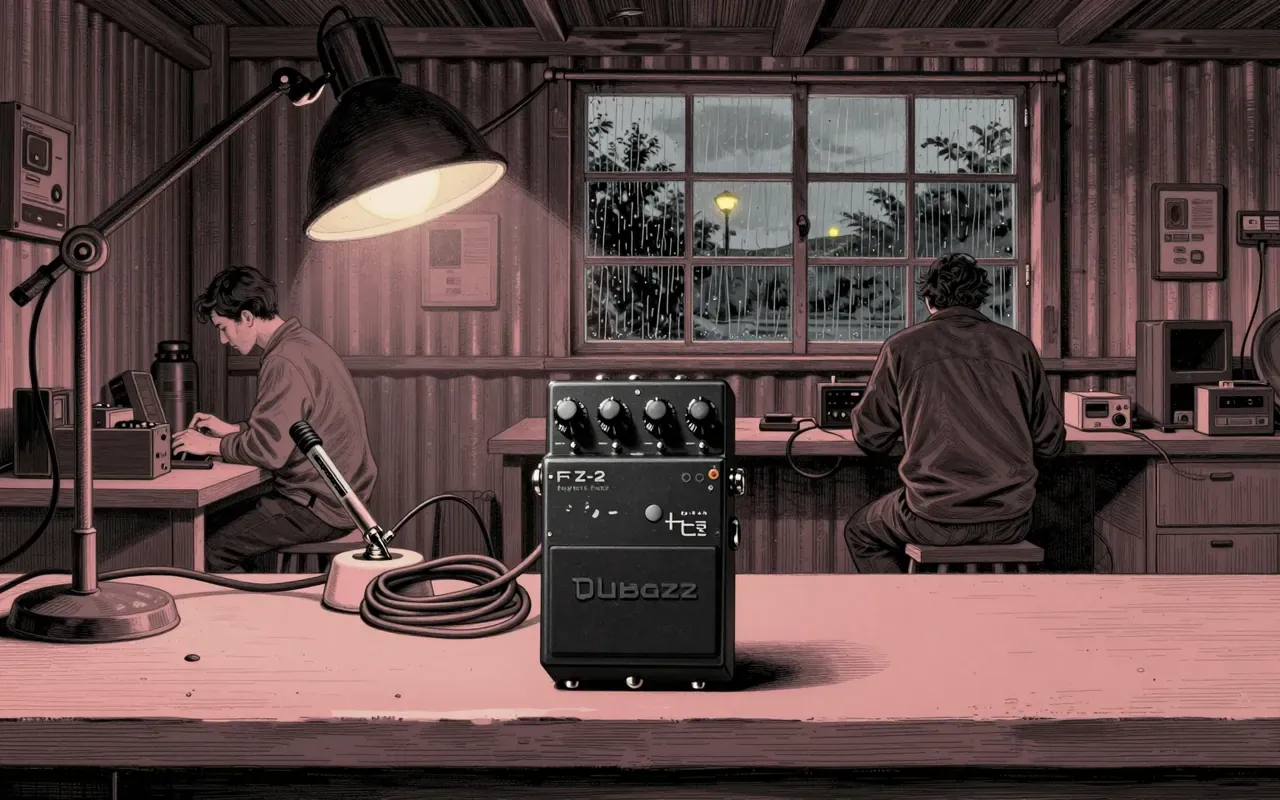
The Boss FZ-2 Hyper Fuzz is a discontinued analog fuzz pedal with three selectable modes and five physical controls. It lacks true bypass. It was succeeded by the FZ-5.

10:22

Boss OD-1 OverDrive

Boss

The Boss OD-1 is a 1977–1985 overdrive pedal with Level and Overdrive knobs only. It uses a FET boost circuit that degrades the dry signal when bypassed. It delivers low-gain saturation by pushing an already overdriven amp’s front end—not by distorting on its own. It lacks tone control. It preceded the SD-1. It performs best in that narrow context—and nowhere else.

7:15

Boss PH-1 Phaser

Boss

The Boss PH-1 is a compact phaser pedal released by Boss in 1977 as one of its first three pedals. It emulates Leslie speaker phasing with greater versatility. It has only two controls: Rate (speed) and Depth (dry/wet mix). Production ran from 1977 to 1981.

9:58

Boss PH-2 Super Phaser

Boss

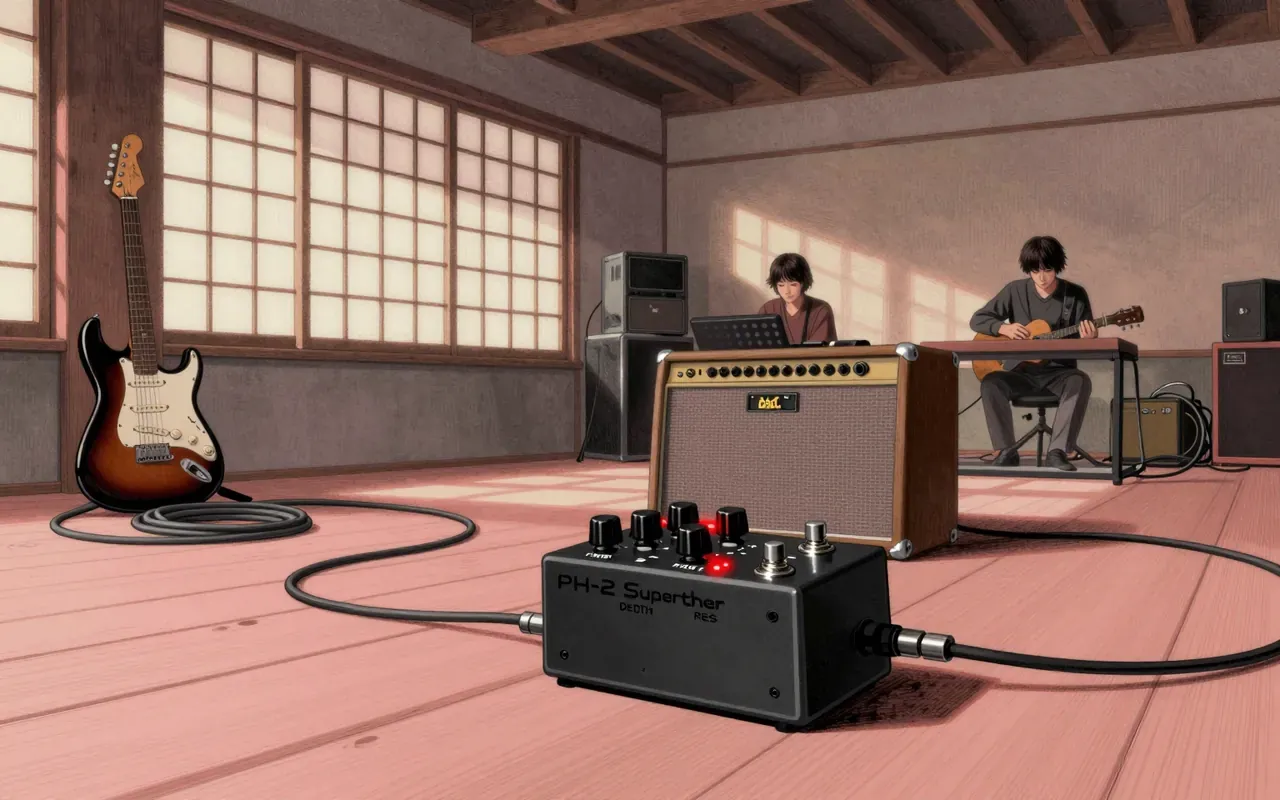
The Boss PH-2 Super Phaser is a discontinued analog guitar stompbox pedal built from 1984 to 2001. It adds a rate knob and two-mode switch to the PH-1 lineage. Mode 1 uses 10-step phasing. Mode 2 uses 12-step phasing. Controls are Rate, Depth, Res, and a 2-way Mode switch. LFO speed ranges from 100 ms to 14 s. Input impedance is 1 Mohm (FET). Residual noise is -80 dBm (IHF-A). Current draw is 20 mA at 9 V DC. Early Incubus used it for its distinctive ‘in-your-face’ phase character—especially in mode 2.

9:13

Boss PS-2 Digital Pitch Shifter/Delay

Boss

The Boss PS-2 is a mono digital pitch shifter and delay pedal with fixed +1/−1 octave modes and three delay time ranges. It delivers immediate, stable octave doubling and atmospheric delay tails — but offers no stereo output, no expression control, and no fine pitch adjustment. It belongs on a gigging guitarist’s board, not in a stereo studio chain.

7:37

Boss RV-2 Digital Reverb

Boss

The Boss RV-2 is a fixed-function digital reverb pedal. It gives guitarists six preset spaces — no editing, no tone control, no stereo input. It is stomp-box-only. It runs on nine volts. It is discontinued. It was Boss’s first reverb.

8:33

Boss TR-2 Tremolo

Boss

The Boss TR-2 Tremolo is an analog foot pedal for guitarists. It has three knobs: Rate, Depth, and Wave. Rate goes faster than the PN-2. Wave shifts the LFO from triangle to square. It is not rackable.

8:23

Boss VB-2 Vibrato

Boss

The Boss VB-2 Vibrato is an analog foot pedal that modulates pitch — not volume — for electric guitar and other electronic instruments. It uses depth, rate, and rise time controls, plus a mode switch. It has no MIDI, no rack mounting, and no presets. Its strength is expressive, natural-sounding vibrato. Its weakness is inflexibility and a learning curve. It belongs in the hands of players who value analog immediacy over convenience.

10:55

Boss CS-2 Compression Sustainer

Boss

The Boss CS-2 Compression Sustainer is a guitar compressor/sustainer. This unit is a modified version branded 'Fat Old Comp' by MSM Workshop. No technical specifications are provided.

13:06

Boss OC-2 Octave

Boss

The Boss OC-2 Octave is a stompbox that adds one or two sub-octaves to a guitar signal. Its three knobs control each layer. It runs on 9V DC or battery. Higher notes track smoothly — without digital harshness. But notes below the 12th fret on the low E string mis-track badly: wobbly, out-of-tune, uncorrectable. It is unfit for conventional use. Only noise or experimental players gain anything from its failure.

9:54

Boss PN-2 Tremolo/Pan

Boss

The Boss PN-2 Tremolo/Pan is an analog stomp box released in May 1990 and discontinued in March 1995. It delivers tremolo and stereo panning via rate, depth, and a 4-way mode switch. It needs two amps for panning and runs on 9V DC. It was replaced by the mono TR-2.

11:48

Boss RE-20 Space Echo

Boss

The Boss RE-20 Space Echo is a digital emulation of the Roland RE-201 Space Echo. It is a twin-pedal stomp box with stereo inputs and outputs, an expression pedal input, and a 12-mode selector. Eight front-panel knobs control Bass, Treble, Reverb Volume, Repeat Rate, Intensity, and Echo Volume. One pedal toggles delay on/off. The other handles tap tempo. It operates in Normal (up to 3s) and Long (up to 6s) delay modes. It supports a 'warp' function via footswitch hold.

9:00

Boss DS-1

Boss · 1978

The Boss DS-1 is a 1978 distortion pedal built for tight, aggressive tones using hard-clipping circuitry. It uses input/output buffers, a transistor boost stage, an op-amp gain stage with hard clipping diodes, and a tone control. A JFET switching circuit engages or bypasses the effect via a momentary push button. It helped popularise distortion as a distinct pedal category and served as a template for later designs. The 1994 circuit redesign introduced volume loss and a fizzy or waspy edge—problems that spawned a community of modifiers. It remains Boss’s bestselling drive pedal.

9:25

Boss SD-1

Boss · 1981

The Boss SD-1 is a 1981 overdrive pedal. It is the second overdrive made by Boss. It adds a tone control and refines the OD-1’s circuit for more gain and aggression. Its asymmetrical soft-clipping uses two diodes on the positive waveform peak and one on the negative—producing both even and odd harmonics. It is midrange-focused at 800Hz and rolls off less bass than the OD-1. Its circuit has remained unchanged since release.

8:14

Boss SP-202

Boss

The Boss SP-202 is a portable sampling workstation released in 1998. It succeeded Roland's MS-1 Digital Sampler. It has eight pads, four banks, two control knobs, a built-in microphone, six built-in effects, BPM-based looping, user-selectable sampling grade per pad, and sampling capacity of 4 minutes 20 seconds internally or up to 37 minutes with a SmartMedia card. It was built for club DJs, hip-hop and dance music artists.

8:27

Boss SP-303

Boss

The Boss SP-303 is a 2001 digital sampler with eight pads, four soundbanks, three minutes and twelve seconds of sampling, twenty-six internal effects, and a built-in pattern sequencer. It was used by J Dilla, Madlib, Animal Collective, Panda Bear, Four Tet, and Moka Only. Dilla used it with a 45 record player to make 29 of the 31 tracks on Donuts while hospitalized. Madlib used it with a portable turntable and cassette deck to produce most of Madvillainy.

9:45

Boss HM-2

Boss · 1983

The Boss HM-2 is a distortion pedal introduced in October 1983. It was designed to emulate the mid-range response of a Marshall stack and is based on the Boss DS-1. Its defining feature is the radically versatile Low and High ‘Color Mix’ EQ controls, each offering 20 dB of boost or cut.

9:11

Boss MT-2

Boss · 1991

The Boss MT-2 Metal Zone is a 1991 distortion pedal designed for heavy metal guitarists. It features high-gain capabilities, a thick and tight tone, and powerful semi-parametric EQ controls. Boss developed it as a more versatile successor to the HM-2, using a dual-stage gain circuit and seven pre- and post-distortion filters.