audiobriefs
7:15in productionCh. 1 · The First Wave/ 7:15 · ceiling 15 min
Effects & pedals

Boss PH-1 Phaser

A Leslie speaker in a box — no more, no less.

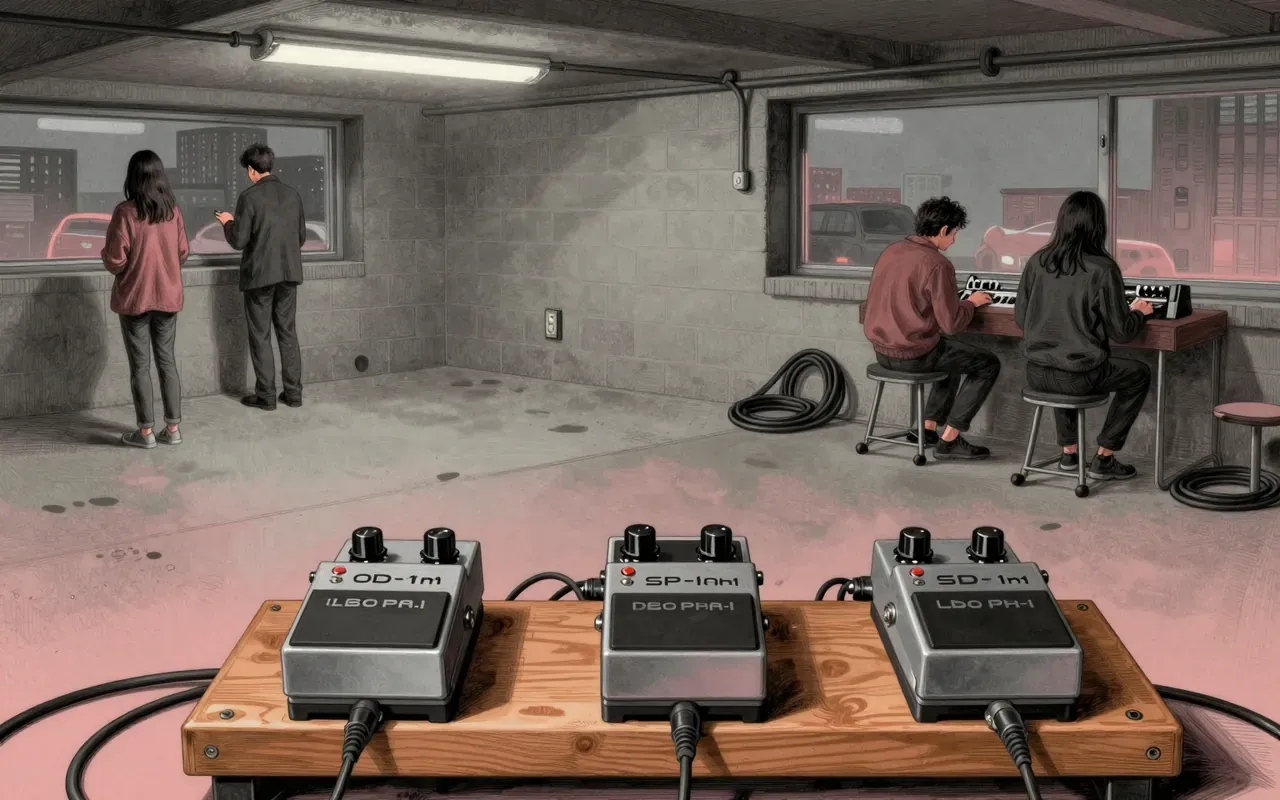
The Boss PH-1 is a compact phaser pedal released by Boss in 1977 as one of its first three pedals. It emulates Leslie speaker phasing with greater versatility. It has only two controls: Rate (speed) and Depth (dry/wet mix). Production ran from 1977 to 1981.

Chapters & takeaways4
  1. 0:55
    The First Wave

    It was one of Boss’s first three pedals — foundational to the compact pedal format.

  2. 1:46
    Leslie in a Box

    It was designed to sound like a Leslie speaker — but with more practical control.

  3. 3:00
    Two Knobs Only

    Rate sets speed. Depth sets dry/wet mix. Nothing else.

  4. 4:04
    Four Years Only

    It was made from 1977 to 1981 — a narrow, defined production window.

Worth your time?

Yes. Use the whole thing.

3.5/ 5
What works
  • as a fixed, portable Leslie-style phaser
  • in setups where simplicity trumps adjustability
What does not
  • emulate rotary speaker movement with variable acceleration
  • allow external control of rate or depth
  • offer true bypass
Use it if
  • players seeking minimal, period-accurate phasing
Skip it if
  • players needing modulation flexibility or integration with modern rigs
The written brief1 min read

What it is and what it was built for

The Boss PH-1 is a compact guitar phaser pedal introduced in 1977 as one of Boss’s first three pedals. It was built to deliver Leslie-style phasing in a stompbox.

How it works, in terms a player would use

It has two knobs: Rate controls phasing speed. Depth controls dry/wet mix. No other controls. No footswitch for effect bypass — it is always on when powered.

What it does better than anything else

It emulates Leslie speaker phasing with greater versatility than a Leslie speaker — and does so in a compact, road-ready enclosure.

What it does badly

It offers no control over stage count, feedback, or waveform shape. It cannot dial in subtle movement or sharp, percussive sweeps. It cannot be synced or paused.

What people made with it

No specific recordings, artists, or tracks are named in the source material. Nothing can be stated about what people made with it.

Who should use it, and who should not

Players who want a simple, vintage-correct Leslie emulation and accept total lack of modulation flexibility should use it. Anyone needing tap tempo, expression control, or blend fine-tuning should not.

Is it worth your time

It is worth your time only if you need a single, fixed, no-frills phaser that sounds like a Leslie speaker but fits on a crowded pedalboard.
Same bench · Effects & pedals4 of 121
11:00
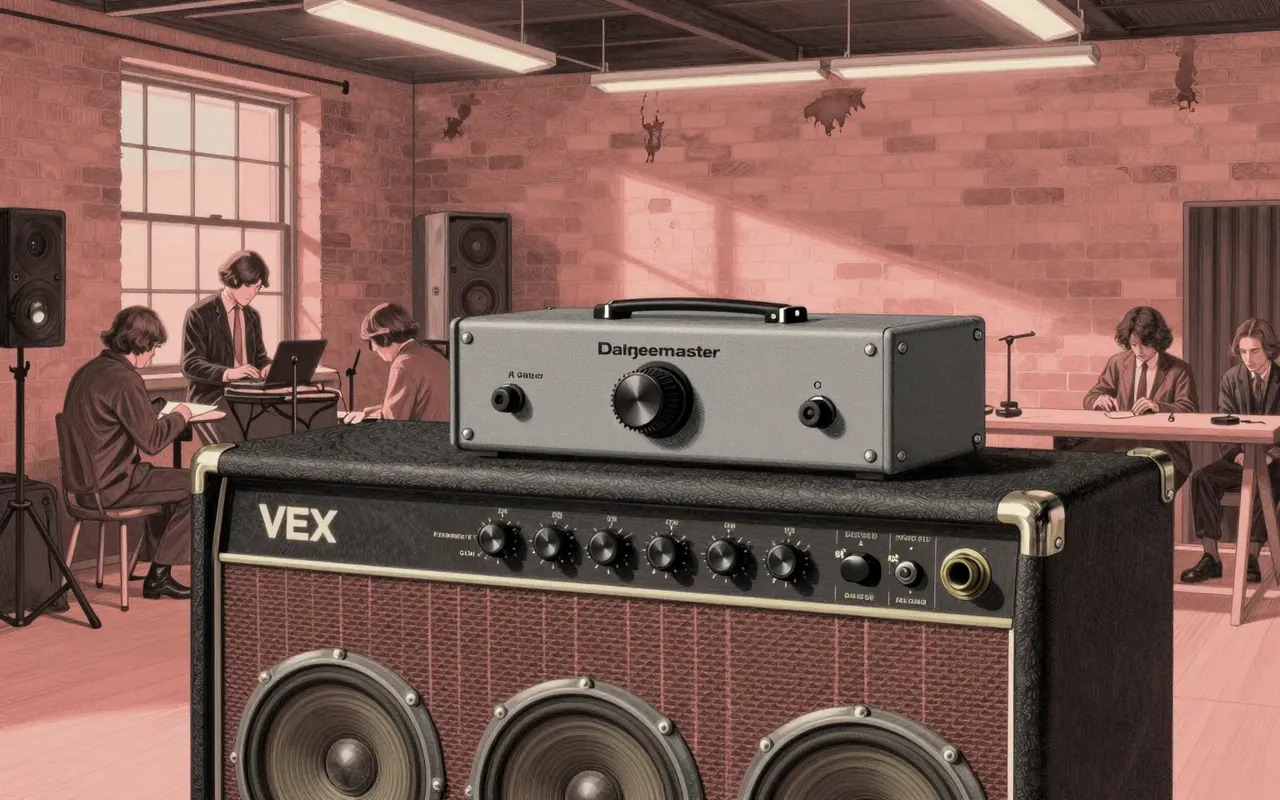
Dallas Rangemaster Treble BoosterDallas RangemasterThe Dallas Rangemaster Treble Booster is a 1965 desktop effects unit made for guitarists in the 1960s. Its function was two-fold: to increase the signal strength of the guitar going into the amplifier, and to increase tones at the high end of the spectrum (a treble booster). The need for a treble booster arose in the mid-1960s, as British tube amplifiers such as the Vox AC30 or Marshall JTM45 tended to produce a slightly dark, muddy sound when overdriven, particularly when used with humbucking pickups. A pre-amplifier that also boosted treble proved a solution. Additionally, the vintage components in the Rangemaster circuitry could add characteristic distortion and overtones to color the guitar sound, much in the way of the more modern overdrive pedals. The Rangemaster Treble Booster was first made in the 1965 by London company Dallas Musical Ltd., incorporated in 1959. The unit is simple and consists of a grey folded metal casing with an on/off switch, a potentiometer controlling the boost setting, and in- and output jacks. It was designed to sit on top of an amplifier rather than on the floor, where most effects units live.
8:45
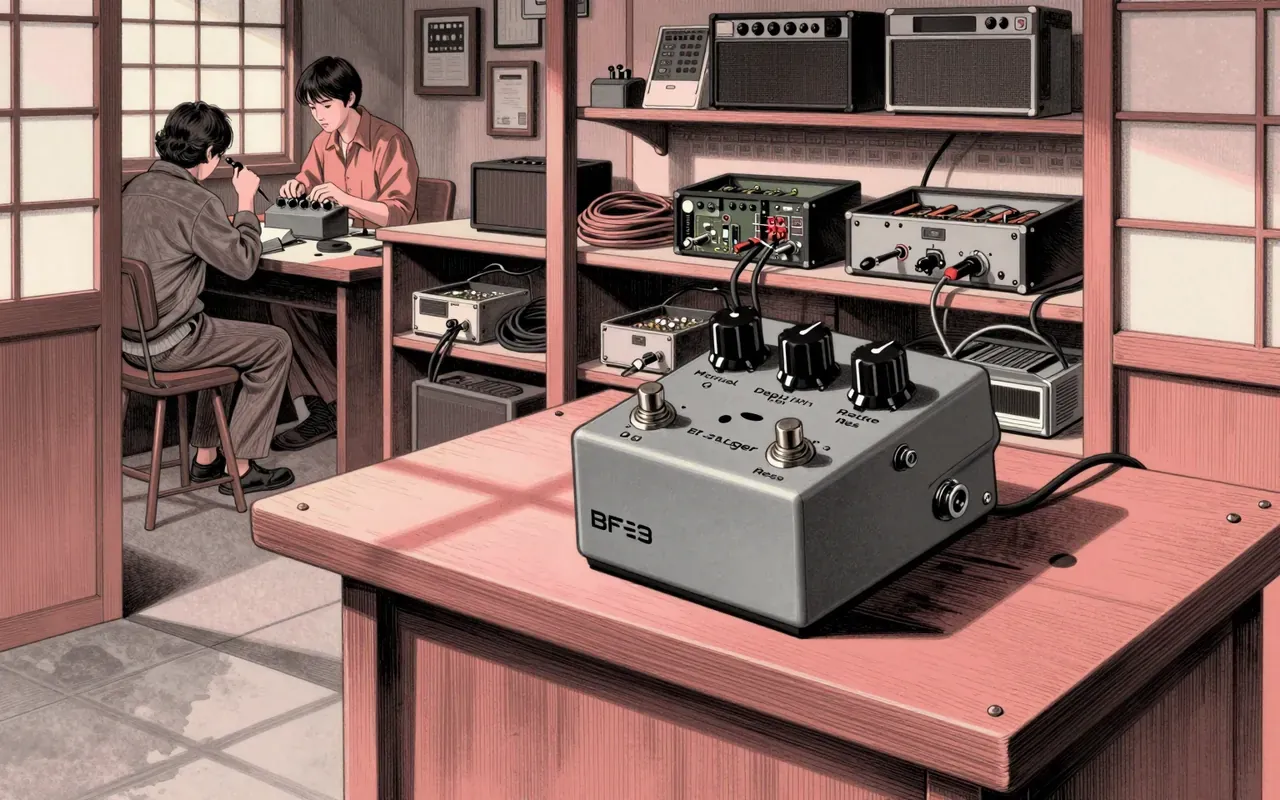
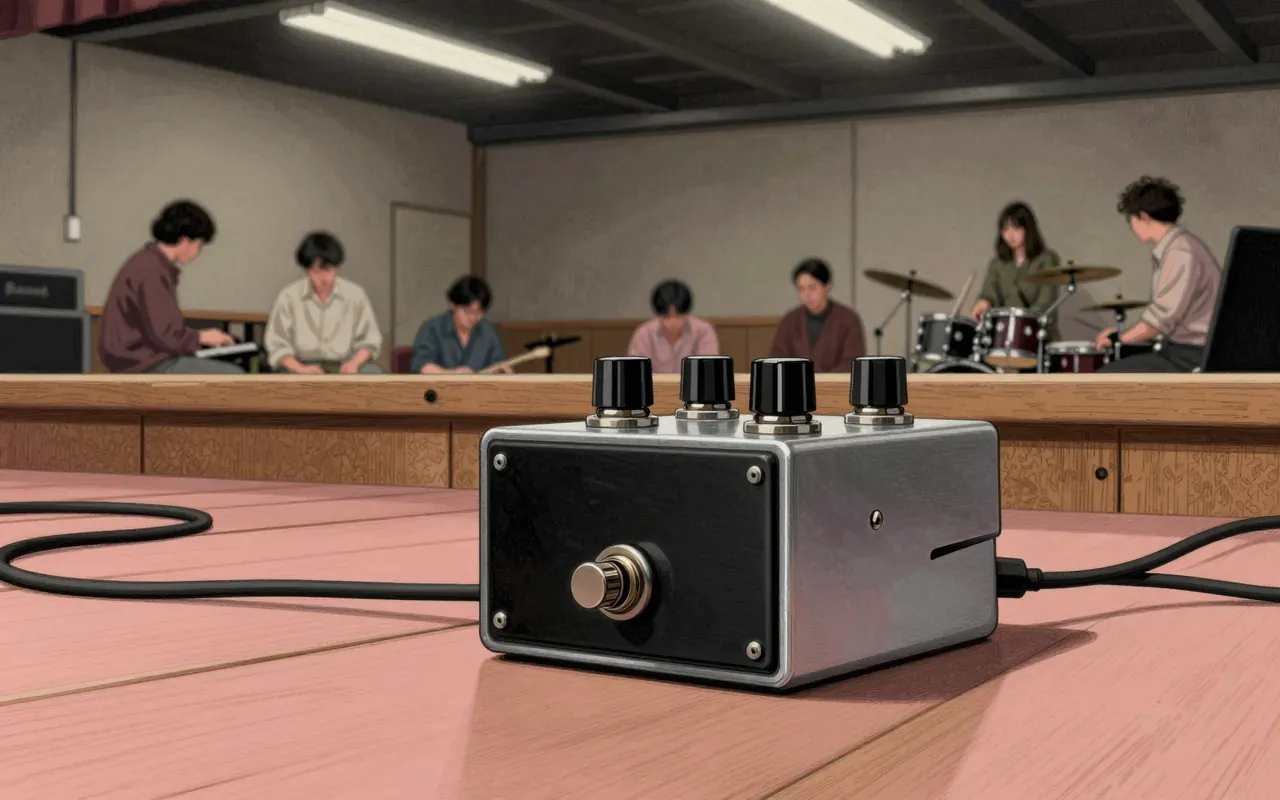
Boss BF-1 FlangerBossThe Boss BF-1 Flanger is a 1979 analog foot pedal designed for electric guitar. It uses four knobs — manual, depth, rate, resonance — to control a simple, unstable flange sweep. It has no bypass, no presets, no expression input, and no stereo output. It was discontinued and replaced by the BF-3.
8:00
Boss BF-2 FlangerBossThe Boss BF-2 Flanger is an analog stomp-box flanger pedal sold from June 1980 to December 2001. It has 1/4-inch inputs and outputs, four controls (Manual, Depth, Rate, Res), and runs on 9V battery or AC adapter. It is not rackable. It was succeeded by the digital BF-3.
8:52
AMS AMS RMX16AMSThe AMS RMX16 is a UAD-only reverb plug-in. It requires UA hardware. It costs $349. It arrived in UA Software 1.7. It gives one sound — nothing more.
Up next in Audio

Boss PH-2 Super Phaser

Boss · 9:58

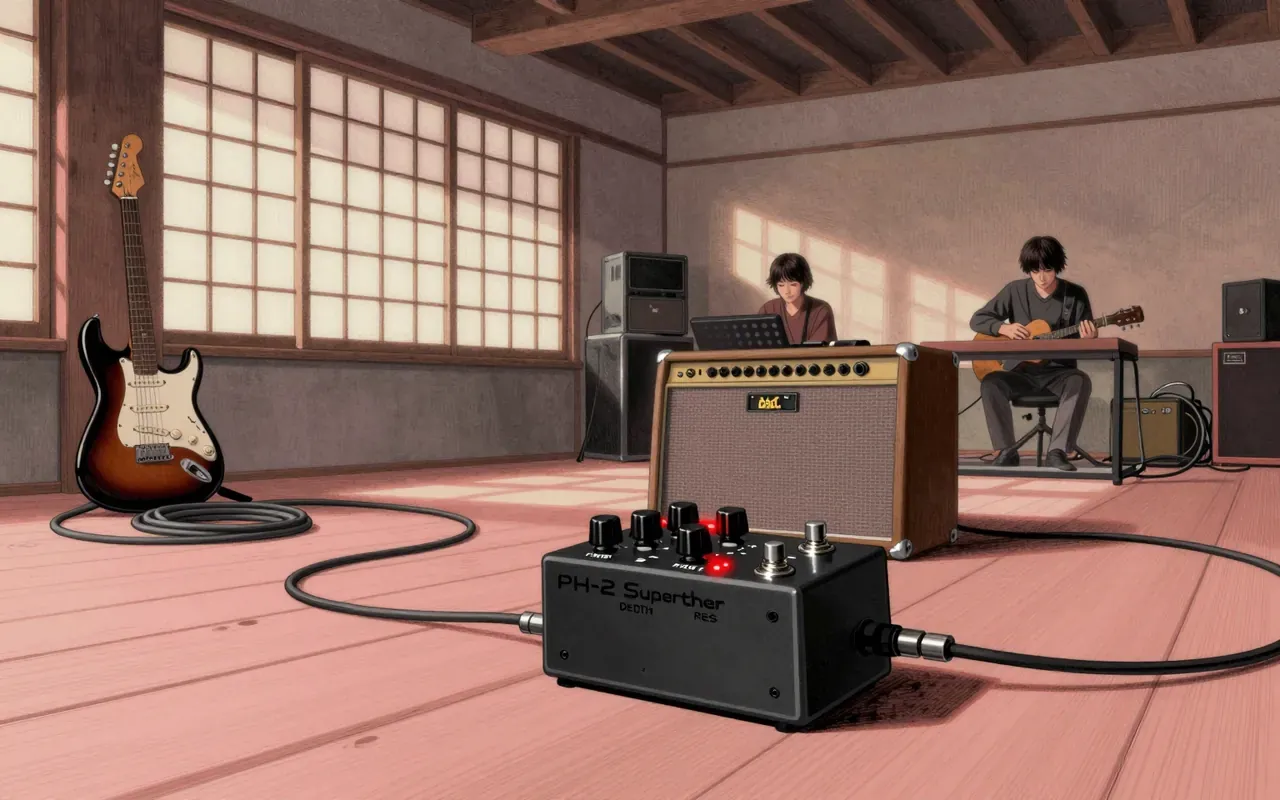
The PH-2 doesn’t smooth your tone—it grabs it by the throat and spins it twice.

9:58