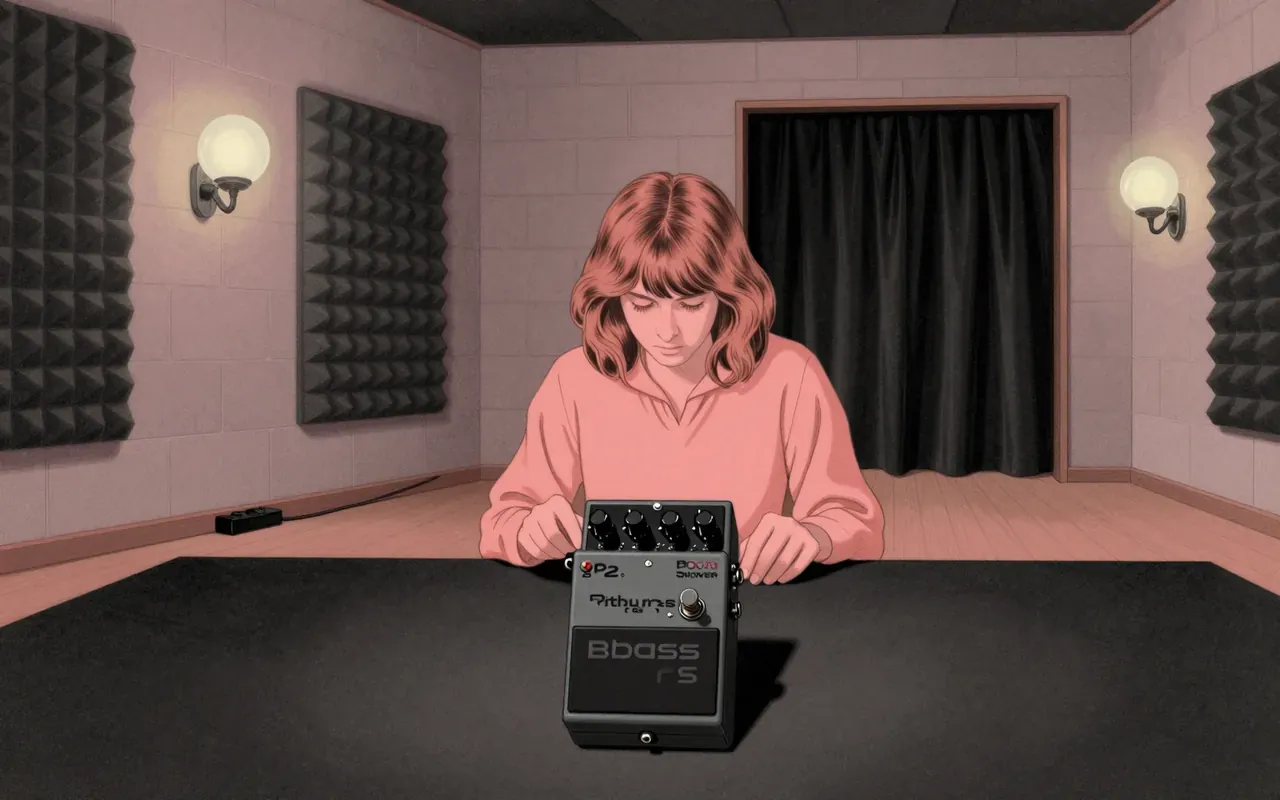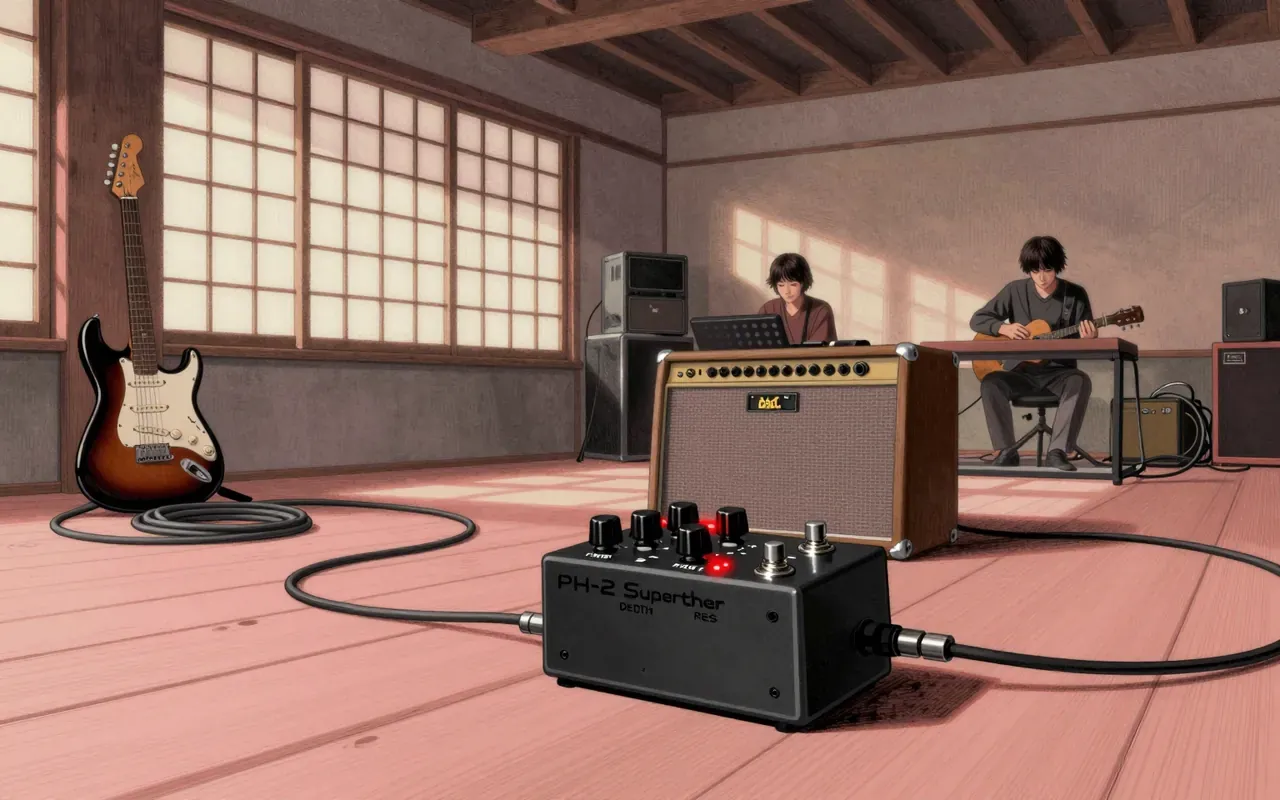
What it is and what it was built for
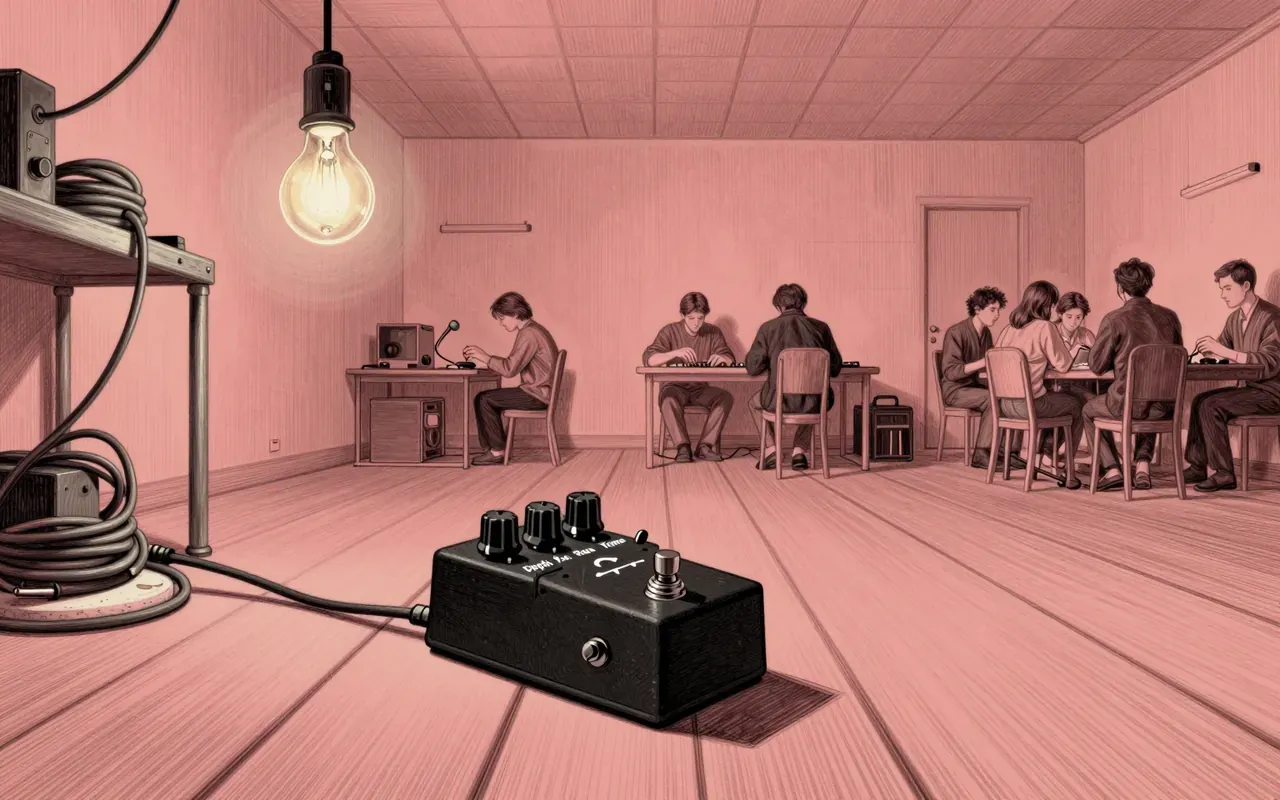
The Boss PH-2 Super Phaser is a discontinued analog guitar stompbox pedal built from 1984 to 2001. It was designed as an evolution of the PH-1 and PH-1R, adding a rate knob and dual-mode switching for greater tonal flexibility.
How it works, in terms a player would use
It gives players two phasing modes: 10-step (mode 1) and 12-step (mode 2), selected with a physical 2-way switch. Rate sets LFO speed from 100 ms to 14 s. Depth controls sweep intensity. Res adjusts resonance peak sharpness. The FET input accepts guitar-level signals at 1 Mohm impedance.
What it does better than anything else
It delivers a more pronounced, ‘in-your-face’ phase character in mode 2 than the PH-1 or PH-1R—especially at high Res and medium Rate settings—due to the 12-step topology and added rate control.
What it does badly
It offers no expression pedal input. It has no bypass indicator LED. Its residual noise level is -80 dBm (IHF-A), higher than modern low-noise pedals. It cannot sync to external clock sources.
What people made with it
Early Incubus used it for distinctive, swirling guitar textures—particularly in mode 2.
Who should use it, and who should not
Players who want vintage-analog phasing with immediate, physical control over step count and resonance should use it. Players needing silent switching, ultra-low noise, or MIDI sync should not.
Is it worth your time
Yes—if you need aggressive, tactile phasing with mode-switched character and don’t require stereo output, tap tempo, or noise floor below -80 dBm.