audiobriefs
8:11in productionCh. 1 · The First Compact Chorus/ 8:11 · ceiling 15 min
Effects & pedals · Guitars & amps

Boss CE-2 Chorus

It doesn’t sculpt sound — it submerges it. And that’s exactly why it still matters.

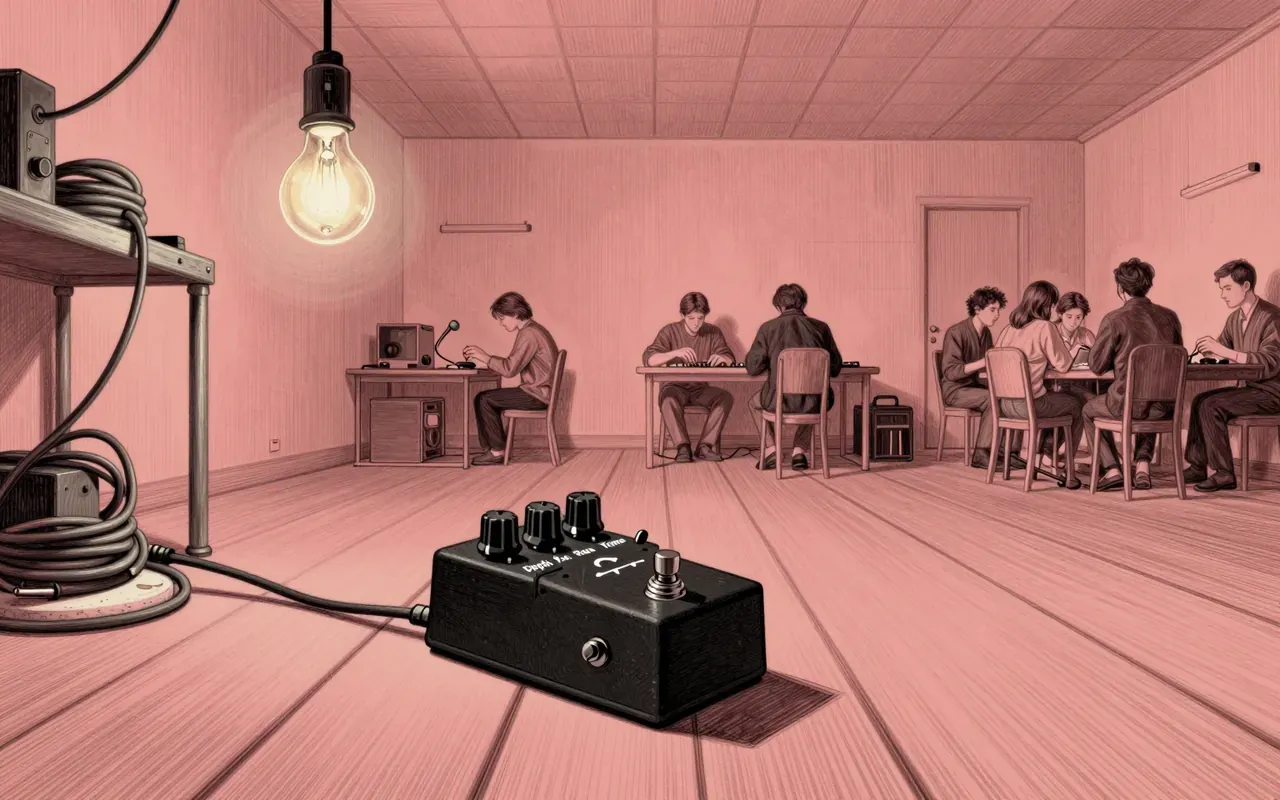
The Boss CE-2 Chorus is an all-analog stomp box introduced in the early 1980s. It has two controls: Rate and Depth. It was Boss’s first compact chorus pedal and the first they housed in a stomp box. Production ended in 1990. It runs on 9V battery or transformer. It was made in Japan.

Chapters & takeaways4
  1. 0:37
    The First Compact Chorus

    It was Boss’s first chorus in a stomp box — and the first compact chorus they ever made.

  2. 2:26
    Two Knobs, One Signal Path

    All-analog circuitry with only two controls: Rate and Depth.

  3. 3:24
    Made in Japan, Early Eighties

    Made in Japan in the early 1980s — a product of its time, not a retro reissue.

  4. 5:34
    Discontinued in 1990

    Production stopped in 1990 — no later revisions, no reissues, no firmware updates.

Worth your time?

Yes. Use the whole thing.

4/ 5
What works
  • as a dedicated, uncluttered chorus engine
  • to thicken clean or lightly overdriven guitar
  • in contexts where movement matters more than clarity
What does not
  • offer dry/wet mix
  • include tone shaping
  • support stereo operation
  • feature true bypass
Use it if
  • players who value analog depth over precision
  • those building a period-accurate 1980s guitar rig
  • anyone who prefers two knobs to a menu
Skip it if
  • players needing silent footswitching
  • users integrating into complex digital rigs
  • those who rely on subtle modulation
The written brief1 min read

What it is and what it was built for

The Boss CE-2 Chorus is an all-analog stomp box chorus pedal built for guitar. It was Boss’s first compact chorus unit, introduced in the early 1980s and made in Japan.

How it works, in terms a player would use

It runs guitar through an all-analog signal path with no dry/wet mix control. Rate sets how fast the chorus wobbles. Depth sets how wide the pitch shift spreads. Level is fixed. There is no tone control, no feedback, no stereo output.

What it does better than anything else

It delivers a thick, swimming, slightly detuned chorus that sits unmistakably in the early 1980s — warmer and less precise than digital units, more organic than later Boss pedals.

What it does badly

It drowns clean tones in modulation. It cannot stay subtle at higher Depth settings. It offers no way to blend in dry signal. Its fixed level can swamp quieter parts of a rig.

What people made with it

Players used it to thicken clean arpeggios, soften overdrive edges, and add motion to sustained chords — especially in post-punk, new wave, and jangle-pop contexts where chorus defined texture but not identity.

Who should use it, and who should not

A player who values simplicity, analog warmth, and period-accurate movement should use it. A player who needs fine-grained control, silent switching, or compatibility with high-gain stacks should not.

Is it worth your time

It is worth your time if you want a single, uncluttered analog chorus that does one thing and does it without options. It is not worth your time if you need adjustability, transparency, or modern features like true bypass or expression input.
Same bench · Effects & pedals4 of 121
7:59
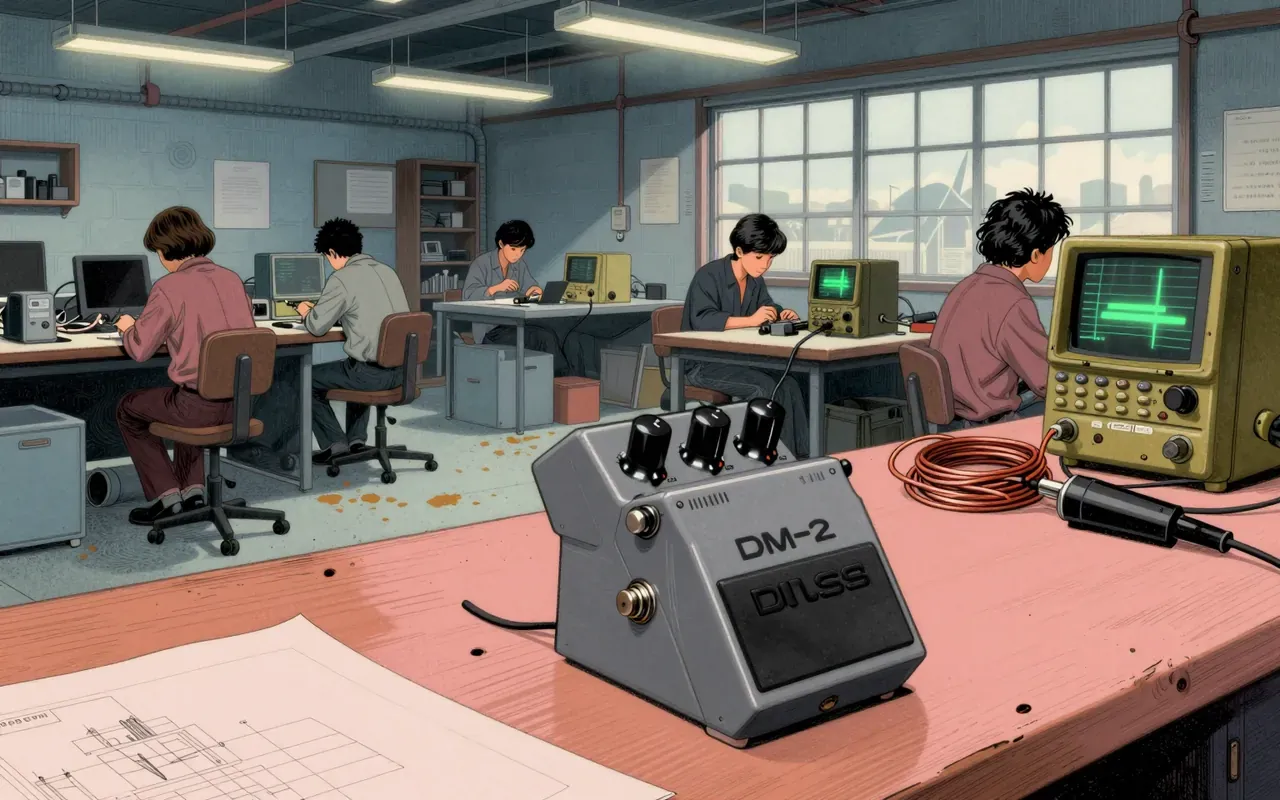
Boss DM-2 DelayBossThe Boss DM-2 is a Japanese-made analog delay pedal released in 1981. It delivers warm, tone-enhancing repeats from 20ms to 300ms using three knobs: Repeat Rate, Echo, and Intensity. It has no MIDI, no computer control, and is not rackable. It was built for guitar and other electronic instruments. It thickens tone rather than cutting with precision.
9:58
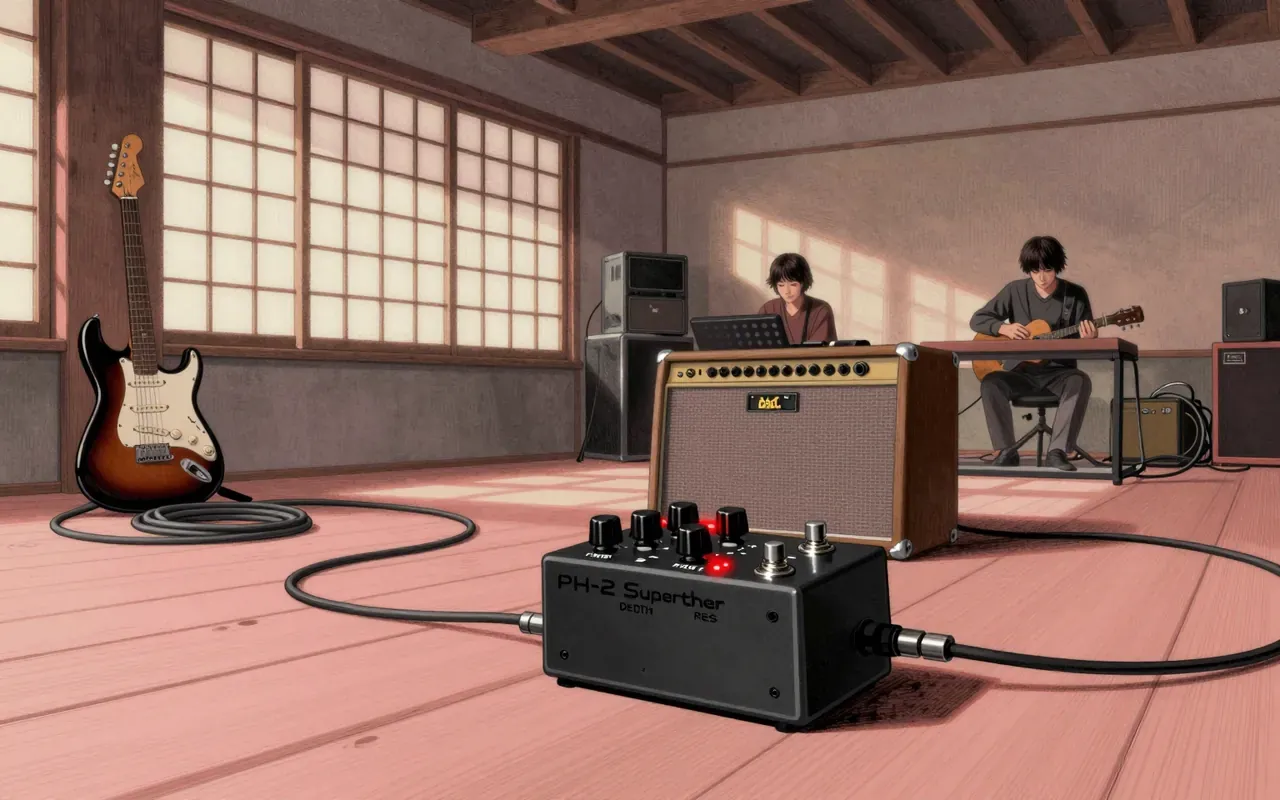
Boss PH-2 Super PhaserBossThe Boss PH-2 Super Phaser is a discontinued analog guitar stompbox pedal built from 1984 to 2001. It adds a rate knob and two-mode switch to the PH-1 lineage. Mode 1 uses 10-step phasing. Mode 2 uses 12-step phasing. Controls are Rate, Depth, Res, and a 2-way Mode switch. LFO speed ranges from 100 ms to 14 s. Input impedance is 1 Mohm (FET). Residual noise is -80 dBm (IHF-A). Current draw is 20 mA at 9 V DC. Early Incubus used it for its distinctive ‘in-your-face’ phase character—especially in mode 2.
8:23
Boss VB-2 VibratoBossThe Boss VB-2 Vibrato is an analog foot pedal that modulates pitch — not volume — for electric guitar and other electronic instruments. It uses depth, rate, and rise time controls, plus a mode switch. It has no MIDI, no rack mounting, and no presets. Its strength is expressive, natural-sounding vibrato. Its weakness is inflexibility and a learning curve. It belongs in the hands of players who value analog immediacy over convenience.
9:45
Boss HM-2Boss · 1983The Boss HM-2 is a distortion pedal introduced in October 1983. It was designed to emulate the mid-range response of a Marshall stack and is based on the Boss DS-1. Its defining feature is the radically versatile Low and High ‘Color Mix’ EQ controls, each offering 20 dB of boost or cut.
Up next in Audio

Boss CE-3 Chorus

Boss · 9:33

Stereo chorus without blend control: it gives you two outputs, then locks you into full wet.

9:33