What it is and what it was built for
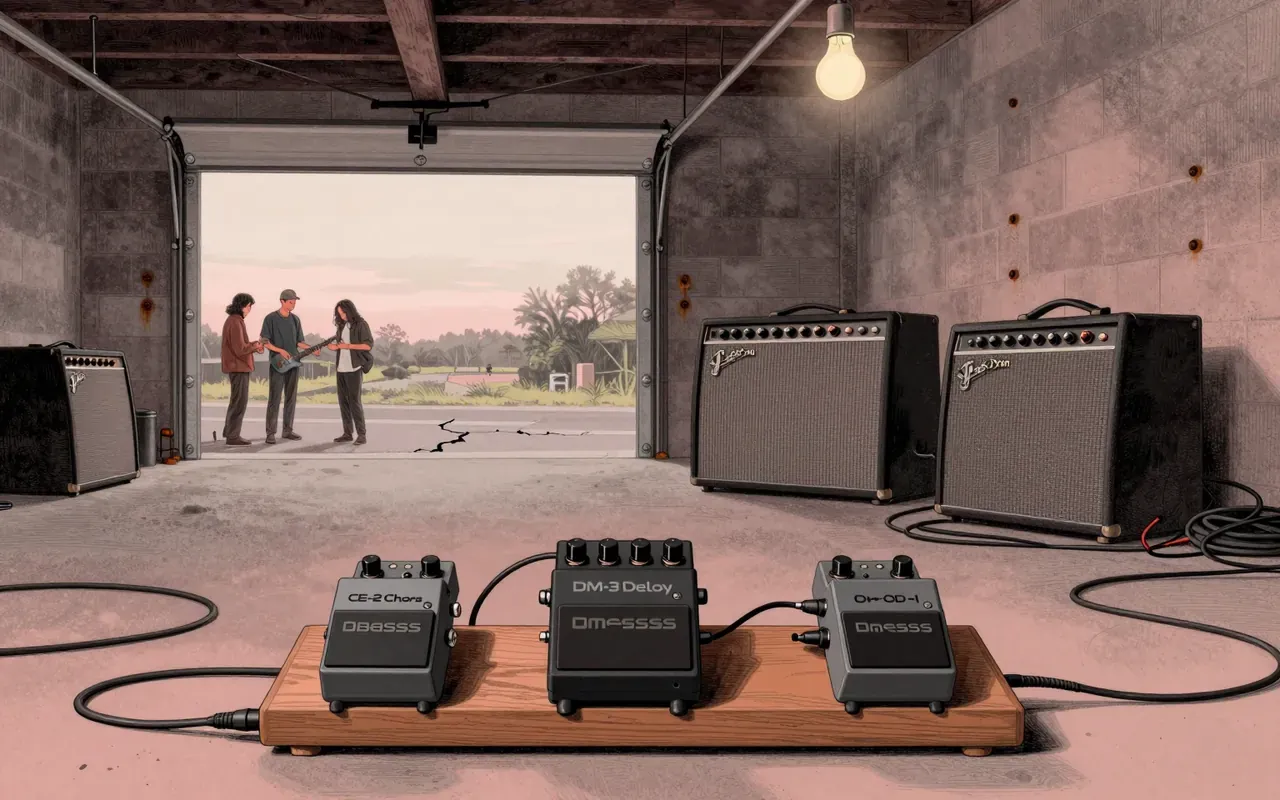
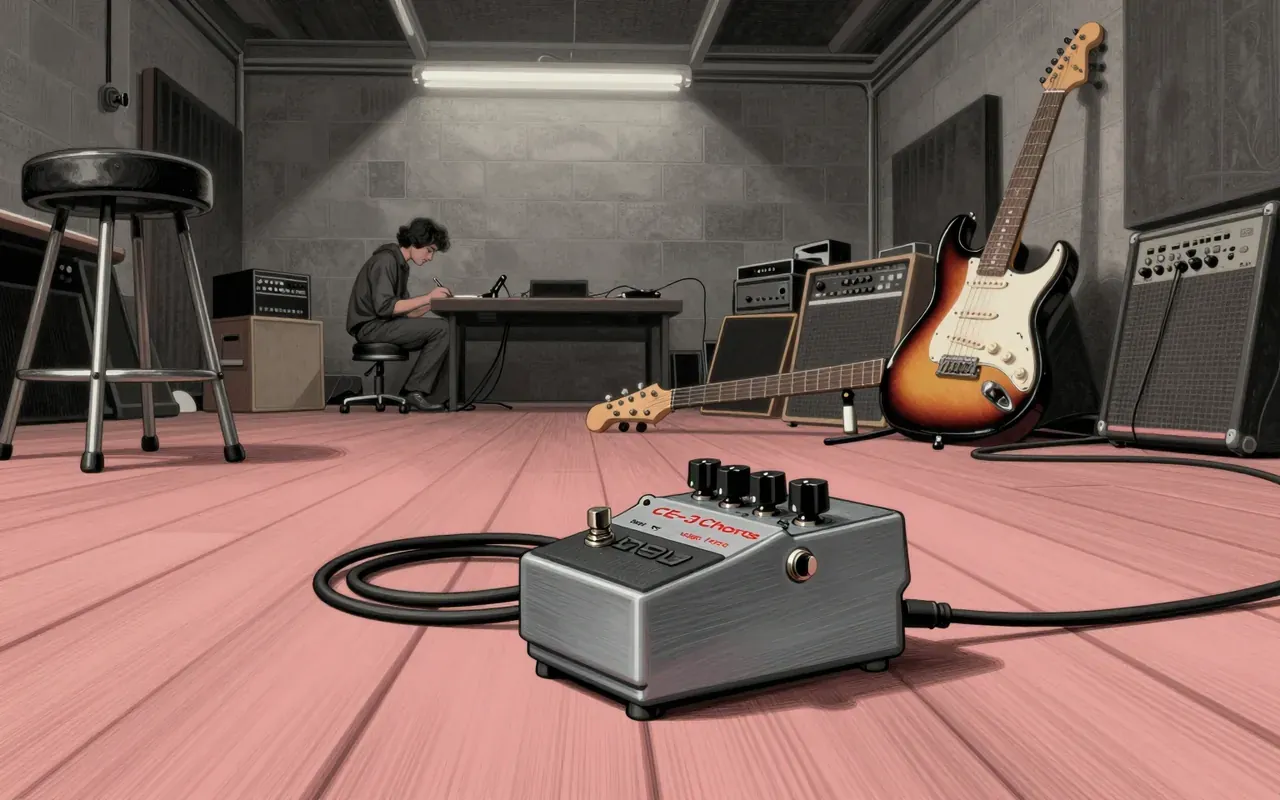
The Boss CE-3 Chorus is an analog guitar effects pedal introduced in the 1980s. It was built to add stereo output capability missing in the CE-2.
How it works, in terms a player would use
It uses analog circuitry to generate chorus. Players adjust Rate to control speed, Depth to control intensity, and flip a switch to choose stereo or mono output. There is no mix or level control — the effect is always fully wet.
What it does better than anything else
It delivers stereo output where the CE-2 does not — two separate outputs let players route wet and dry signals independently, enabling true stereo amp setups or wet/dry rigs.
What it does badly
It cannot dial in subtle chorusing. The lack of a dedicated mix or level control means players cannot attenuate the effect’s intensity or balance wet/dry signals dynamically.
What people made with it
Players used it to widen guitar tone in studio and live settings, particularly where spatial separation between wet and dry signals mattered — such as feeding a chorus signal to a second amp or recording wet and dry tracks separately.
Who should use it, and who should not
Guitarists who run stereo rigs or need discrete wet/dry outputs should use it. Players who rely on expression pedals, need precise effect blending, or use compact mono-only boards should not.
Is it worth your time
Yes — if you need stereo chorus routing and value Boss’s durable metal enclosure and analog tone. No — if you require fine-grained control over blend or volume, or rely on mono compatibility with vintage pedalboards.