audiobriefs
11:48in productionCh. 1 · Digital, Not Analog/ 11:48 · ceiling 15 min
Effects & pedals · Guitars & amps

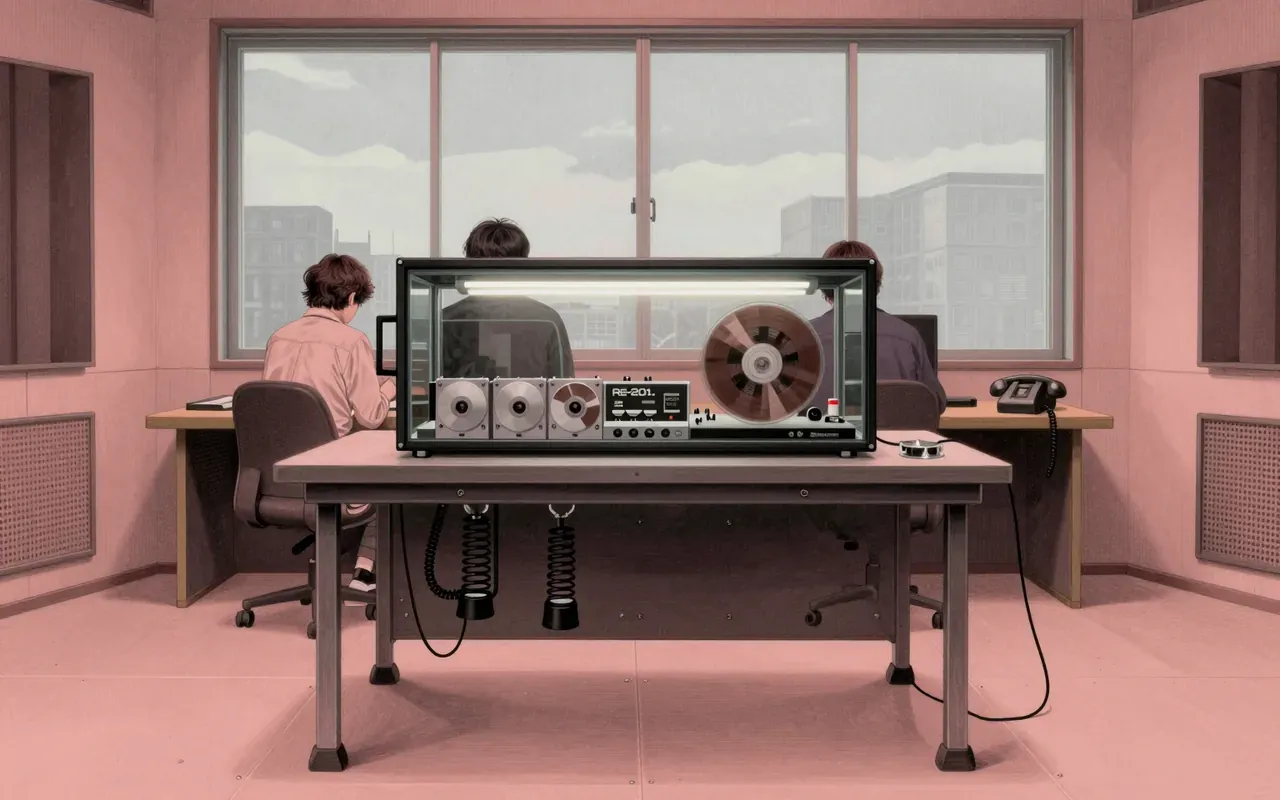
Boss RE-20 Space Echo

It gives you the RE-201’s soul in a pedalboard-friendly box — but swaps tape’s grit for digital precision, and its limits for longer delays and more modes.

The Boss RE-20 Space Echo is a digital emulation of the Roland RE-201 Space Echo. It is a twin-pedal stomp box with stereo inputs and outputs, an expression pedal input, and a 12-mode selector. Eight front-panel knobs control Bass, Treble, Reverb Volume, Repeat Rate, Intensity, and Echo Volume. One pedal toggles delay on/off. The other handles tap tempo. It operates in Normal (up to 3s) and Long (up to 6s) delay modes. It supports a 'warp' function via footswitch hold.

Chapters & takeaways4
  1. 0:59
    Digital, Not Analog

    It is a digital emulation — not a clone — of the Roland RE-201.

  2. 3:42
    Twin-Pedal Control

    Two pedals, eight knobs, stereo I/O, expression input, and a 12-mode selector define its hands-on workflow.

  3. 5:34
    Mode-Based, Not Parameter-Stacked

    Delay, echo, and reverb are separated into distinct modes — not blended in real time.

  4. 7:48
    Character Over Mechanics

    It replicates the RE-201’s character — not its mechanics.

Worth your time?

Yes. Use the whole thing.

4/ 5
What works
  • delivers longer delay times than the RE-201
  • adds tap tempo and expression pedal input
  • packs multiple modes into a compact twin-pedal unit
  • offers dedicated tone and level controls
What does not
  • simulate tape saturation
  • offer tape-head alignment
  • include bias or erase controls
  • provide physical tape loop manipulation
Use it if
  • guitarists needing portable, foot-controlled echo/delay/reverb with tap tempo and expression control
  • players who value expanded delay time and stereo routing over analog tape behaviour
Skip it if
  • players who rely on analog tape behaviour
  • players who require hands-on tape-loop intervention
The written brief1 min read

What it is and what it was built for

It is a digital stomp-box emulation of the Roland RE-201 Space Echo. It was built for guitarists needing portable, foot-controlled echo, delay, and reverb with expanded timing and routing options.

How it works, in terms a player would use

It works as a twin-pedal stomp box. One pedal toggles delay on and off. The other taps tempo. A 12-mode selector chooses between delay, echo, and reverb configurations. Eight front-panel knobs adjust Bass, Treble, Reverb Volume, Repeat Rate, Intensity, and Echo Volume. Stereo inputs and outputs route signal. An expression pedal input adds real-time control.

What it does better than anything else

It delivers longer delay times — up to 6 seconds in Long mode — than the original RE-201’s ~3-second maximum. It adds tap tempo, stereo I/O, and an expression pedal input that the RE-201 lacks. It packs multiple modes into a single twin-pedal unit with dedicated tone and level controls.

What it does badly

It does not simulate tape saturation, wow-and-flutter, or mechanical degradation. It offers no physical tape loop, no head alignment, no bias or erase controls. Its digital emulation withholds the tactile feedback and unpredictable decay of actual tape.

What people made with it

The material does not state what people made with it.

Who should use it, and who should not

Guitarists who want quick-access, stereo-ready echo/delay/reverb with tap tempo and expression control should use it. Players who rely on analog tape behaviour, head-switching, or hands-on tape-loop intervention should not.

Is it worth your time

It is worth your time if you need a compact, footswitch-driven digital emulation of the Roland RE-201 with stereo I/O and mode variety. It is not worth your time if you require analog tape texture, hands-on tape-head manipulation, or hardware-level signal path transparency.
Same bench · Effects & pedals4 of 121
Up next in Audio

Mesa/Boogie Rectifier Recording Preamp

Mesa/Boogie · 10:00

It overdrives mixers — but not your expectations of DI tone.

10:00