What it is and what it was built for
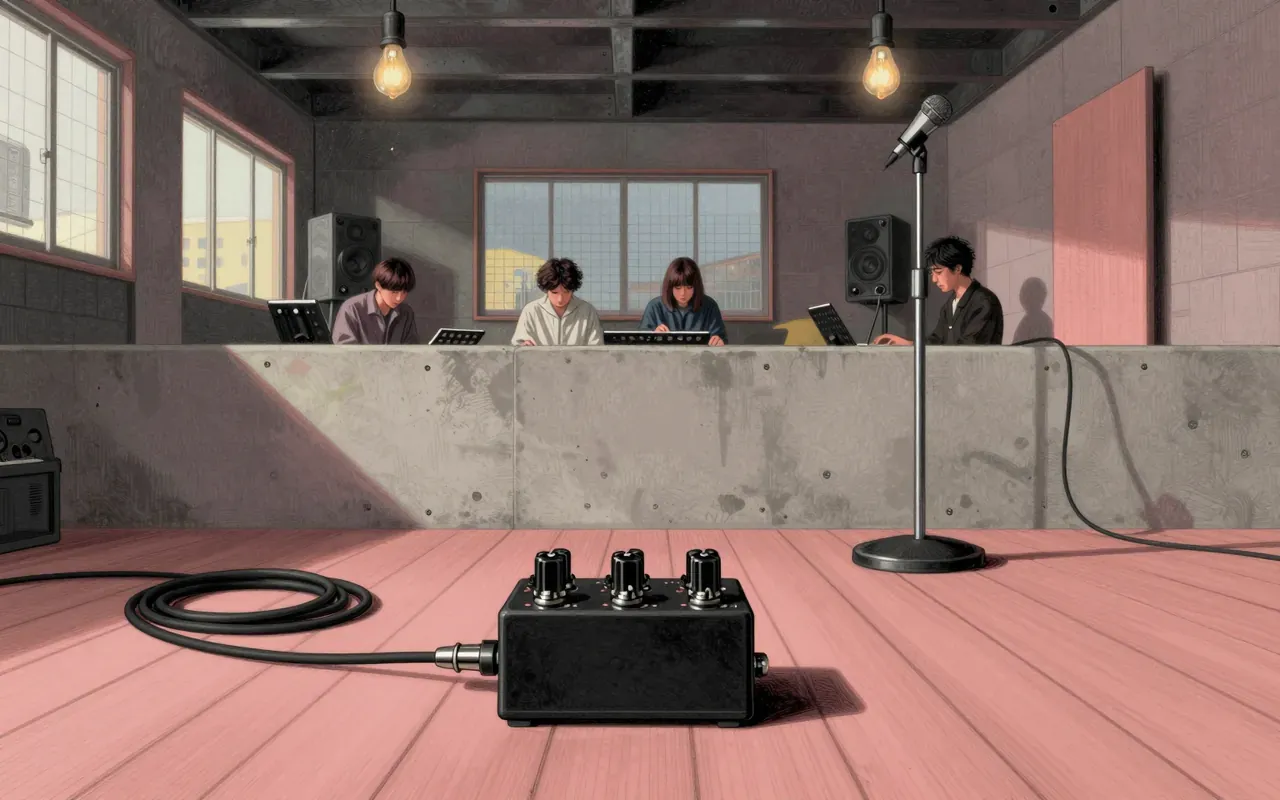
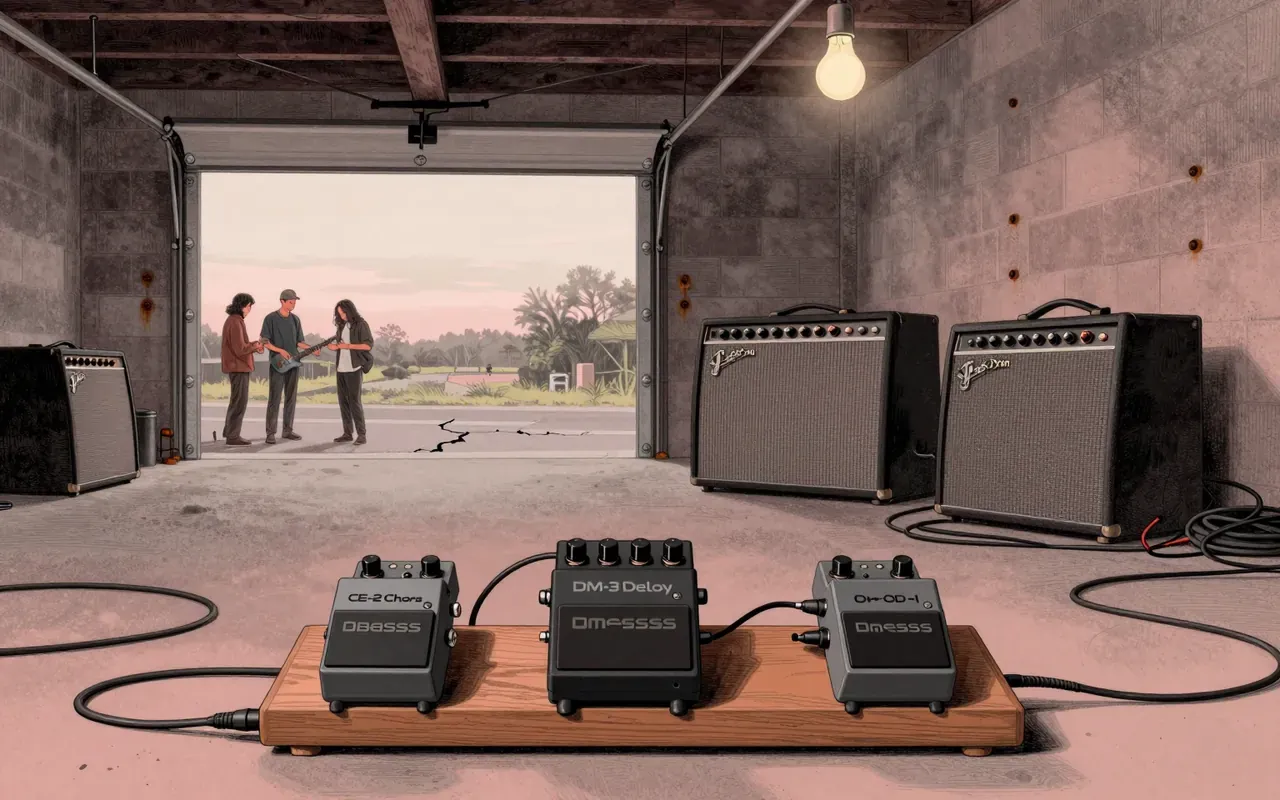
The Boss DM-3 is a compact analog delay pedal built for guitarists who needed portable, hands-on echo between 1984 and 1988. It was designed as a performance tool—not a studio rack unit or phrase sampler—and sits in the signal chain like a stompbox, not a computer.
How it works, in terms a player would use
It delivers analog delay from 20ms to 300ms. Three knobs control it: Repeat Rate sets delay time, Echo sets feedback, Intensity sets wet/dry balance. The stereo output is unlabeled but functional. Its circuit includes noise-reducing revisions and filter modifications.
What it does better than anything else
It delivers warm, degrading repeats with organic decay—unlike later Boss digital units. Its unique knob design gives immediate, grippy control. It is the only Boss compact pedal with this combination of revised filtering, stereo output, and physical tactility.
What it does badly
It offers no modulation, no expression input, no preset storage, and no external sync. Its 300ms ceiling cuts off ambient swells and rhythmic subdivisions beyond dotted-eighth at 120bpm. The noise reduction is partial: hiss remains audible at high Echo settings.
What people made with it
Guitarists used it for slapback, rhythmic echoes, and cascading repeats. Its stereo output enabled spatial layering without extra hardware. Its warmth and degradation suited post-punk, jangle pop, and early alternative guitar textures.
Who should use it, and who should not
Players who value analog character, simple three-knob operation, and stereo width in a compact form should use it. Players who rely on precise timing, silent bypass, or modern features like trails or MIDI should not.
Is it worth your time
Yes—if you want a compact, pre-digital analog delay with tactile controls and stereo width. No—if you need longer delays, tap tempo, or digital clarity.