What it is and what it was built for
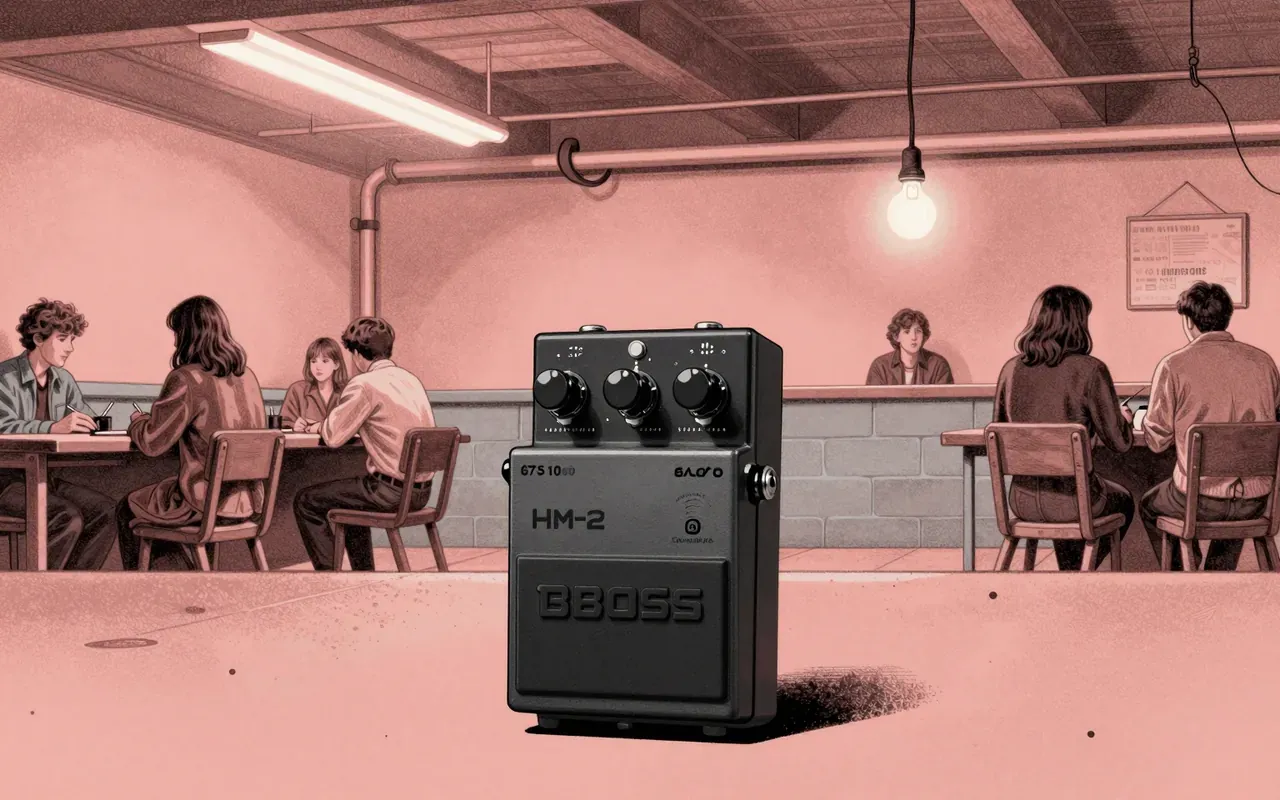
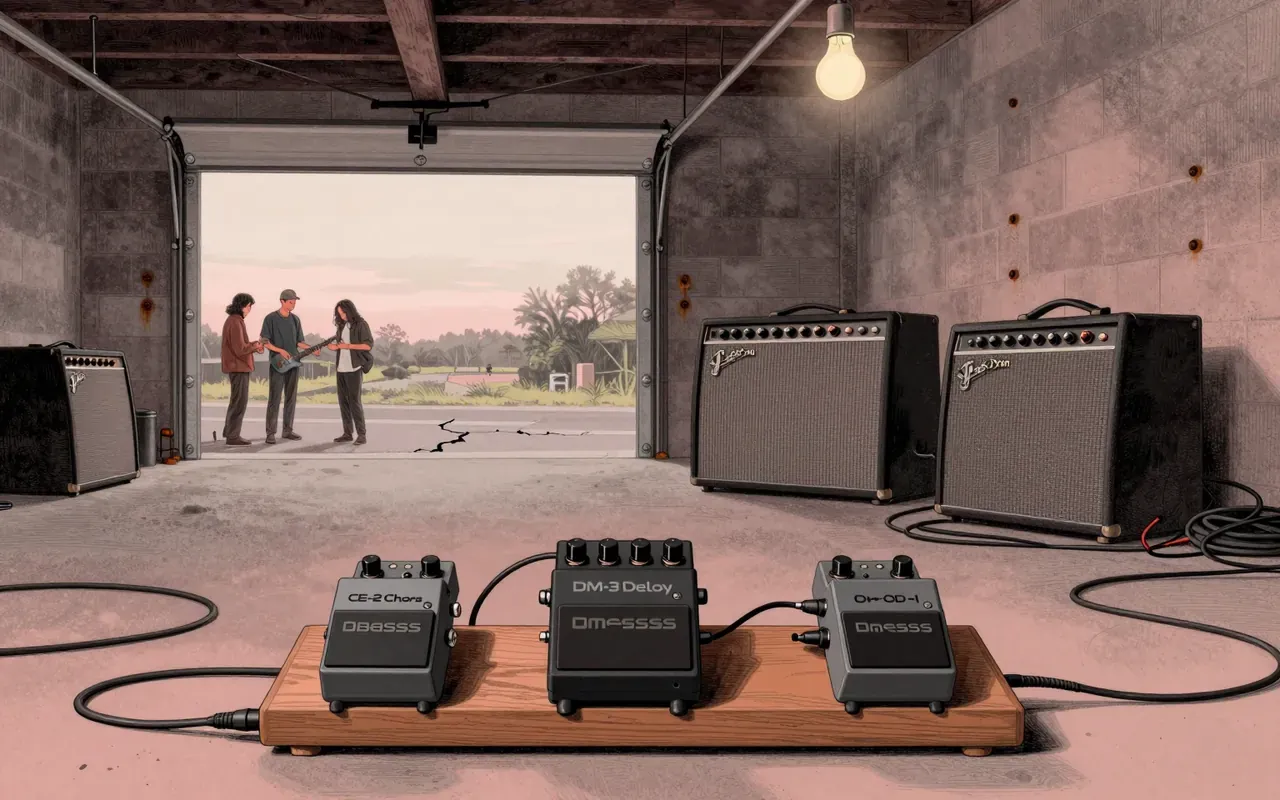
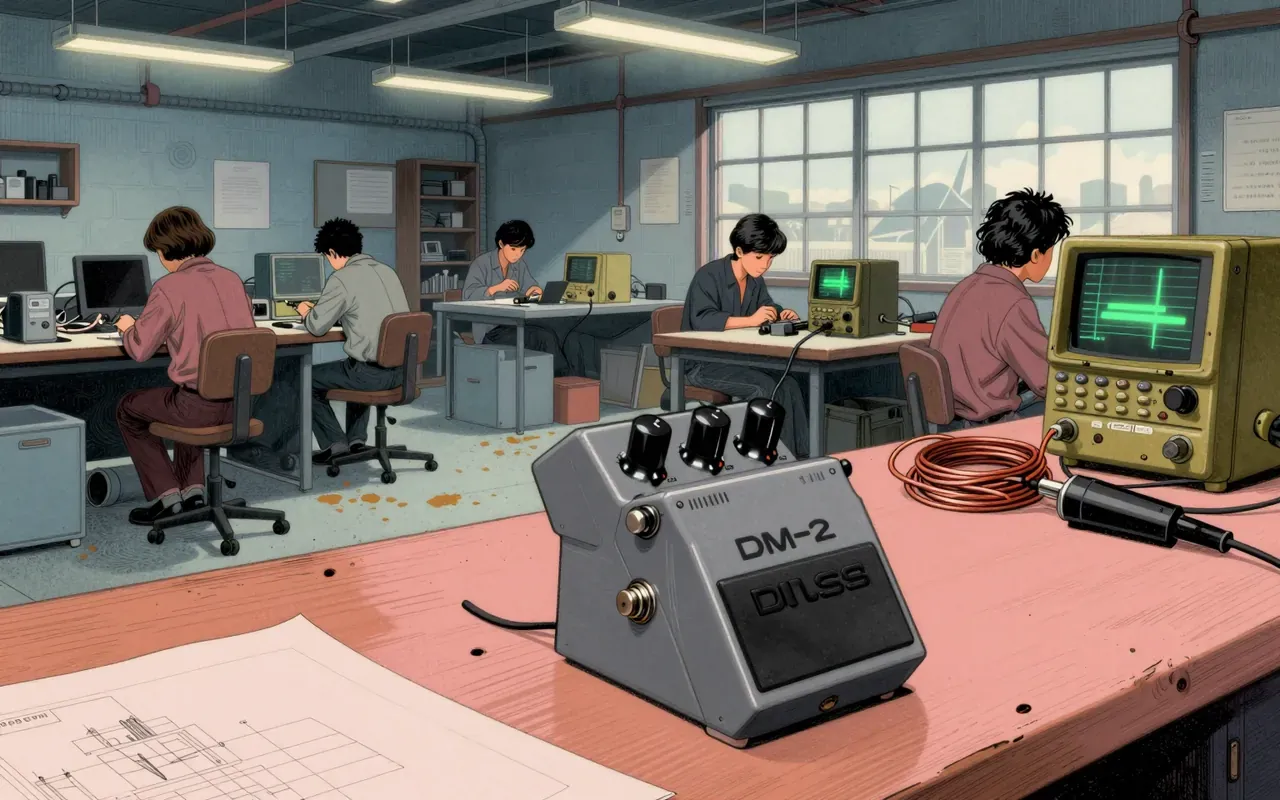
The Boss DM-2 is an analog foot pedal built for guitar and other electronic instruments. It was made in Japan from 1981 to 1984 as a self-contained, stompbox-style delay unit.
How it works, in terms a player would use
It uses three knobs: Repeat Rate sets how fast repeats decay, Echo controls delay time between repeats, Intensity boosts the overall effect level. It runs on analog circuitry. No MIDI, no computer control, no rack mounting.
What it does better than anything else
It thickens guitar tone with organic, slightly saturated repeats that sit musically in a mix. Its analog warmth enhances solos and rhythm parts without cutting through unnaturally.
What it does badly
It does not deliver precise, clean, repeatable delay timing. It cannot sync to external clocks. It offers no modulation, no filtering, no feedback shaping beyond the Echo knob. Its delay range stops at 300ms and starts at 20ms.
What people made with it
Players used it to add depth and presence to solos and rhythm parts—layering repeats that reinforce rather than compete with the dry signal.
Who should use it, and who should not
Guitarists and players who prioritise tactile control, analog texture, and tonal enhancement over accuracy or flexibility should use it. Players needing digital clarity, extended delay times, or integration with modern rigs should not.
Is it worth your time
Yes—if you want warm, tone-enhancing repeats with hands-on immediacy and zero digital precision. No—if you need tap tempo, stereo, preset recall, or delay times under 20ms or beyond 300ms.