What it is and what it was built for
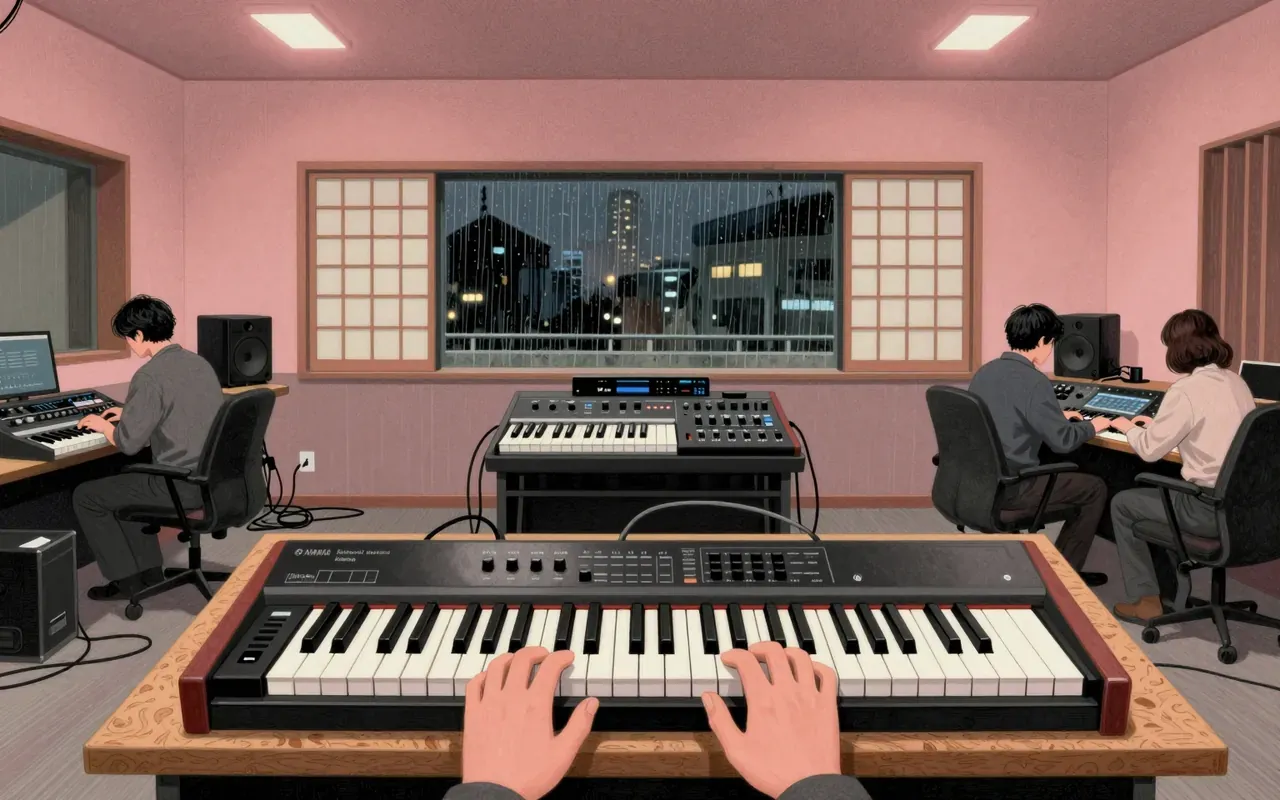
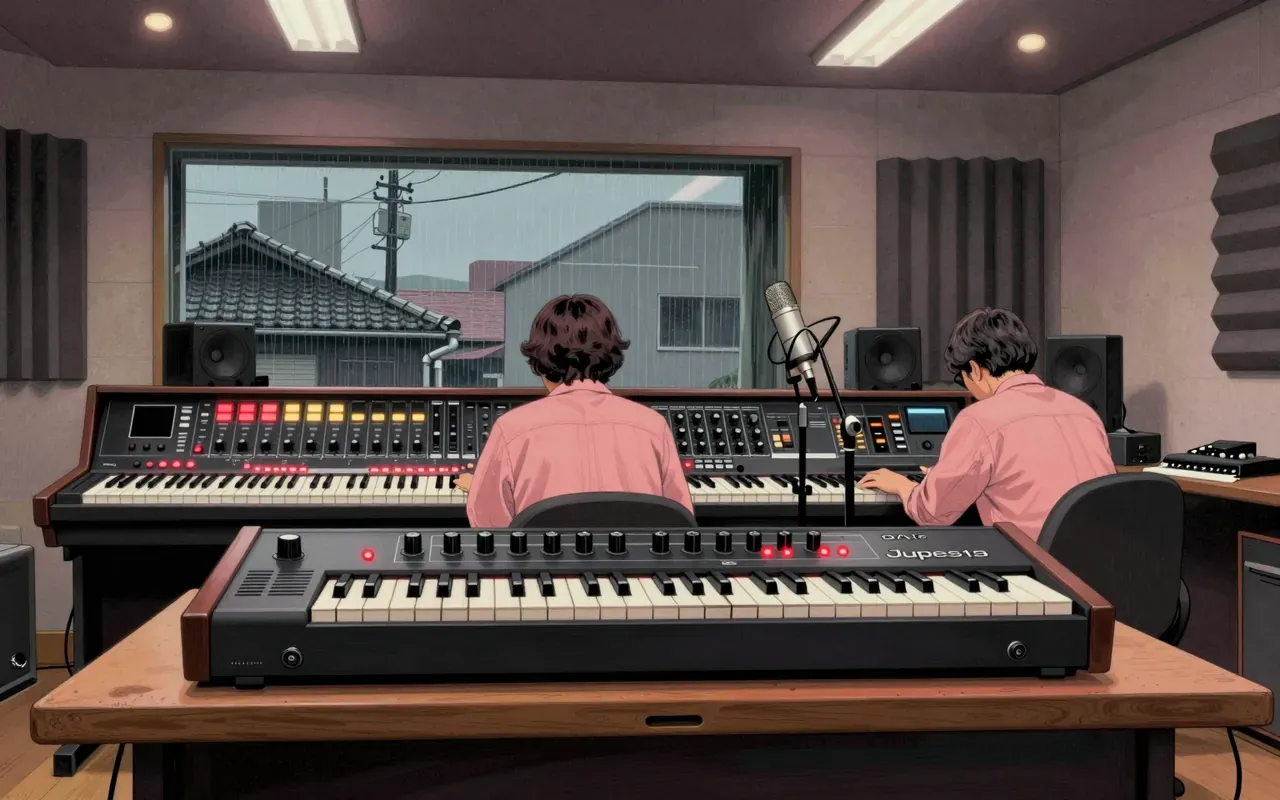
It is an eight-voice polyphonic analog subtractive synthesizer introduced by Roland in early 1981. It was built for studio and stage players who needed expressive, layered analog sound with immediate hands-on control over pitch, filter, and modulation — not programming or patch storage.
How it works, in terms a player would use
It gives you eight voices, each with two VCOs that sync and cross-modulate. You shape tone with a non-resonant high-pass filter and a resonant low-pass filter switchable between 2-pole and 4-pole slopes. An LFO routes to multiple destinations. Two envelope generators — one invertible — control amplitude and filter. Portamento is polyphonic and adjustable. The bender assigns to pitch or filter frequency. Split mode sends Upper and Lower presets to separate balanced XLR and unbalanced 1/4” outputs.
What it does better than anything else
It stacks all 16 oscillators onto a single note in polyphonic unison mode — then divides them cleanly across keys as you play more. No other synth of its era delivers this blend of polyphonic thickness and real-time, assignable performance control.
What it does badly
It falls short on tuning stability in early units. It offers no built-in effects, no memory for patches beyond front-panel settings, and no velocity or aftertouch sensitivity. Its arpeggiator relies on external clocking via DCB or CV — no internal tempo source.
What people made with it
People made lush pads, wide brass stabs, animated basslines, and evolving leads — using its dual-VCO thickness, filter resonance, and polyphonic unison to fill space without sequencers or layering.
Who should use it, and who should not
A player who values tactile control, analog warmth, and polyphonic density should use it. A producer reliant on recall, microtuning, or MIDI CC mapping should not — it has no MIDI, only DCB and CV/Gate.
Is it worth your time
Yes — if you need rich, hands-on analog polyphony with routing flexibility and physical immediacy. No — if you require stable tuning before serial #171700, deep digital integration, or more than two oscillators per voice.