What it is and what it was built for
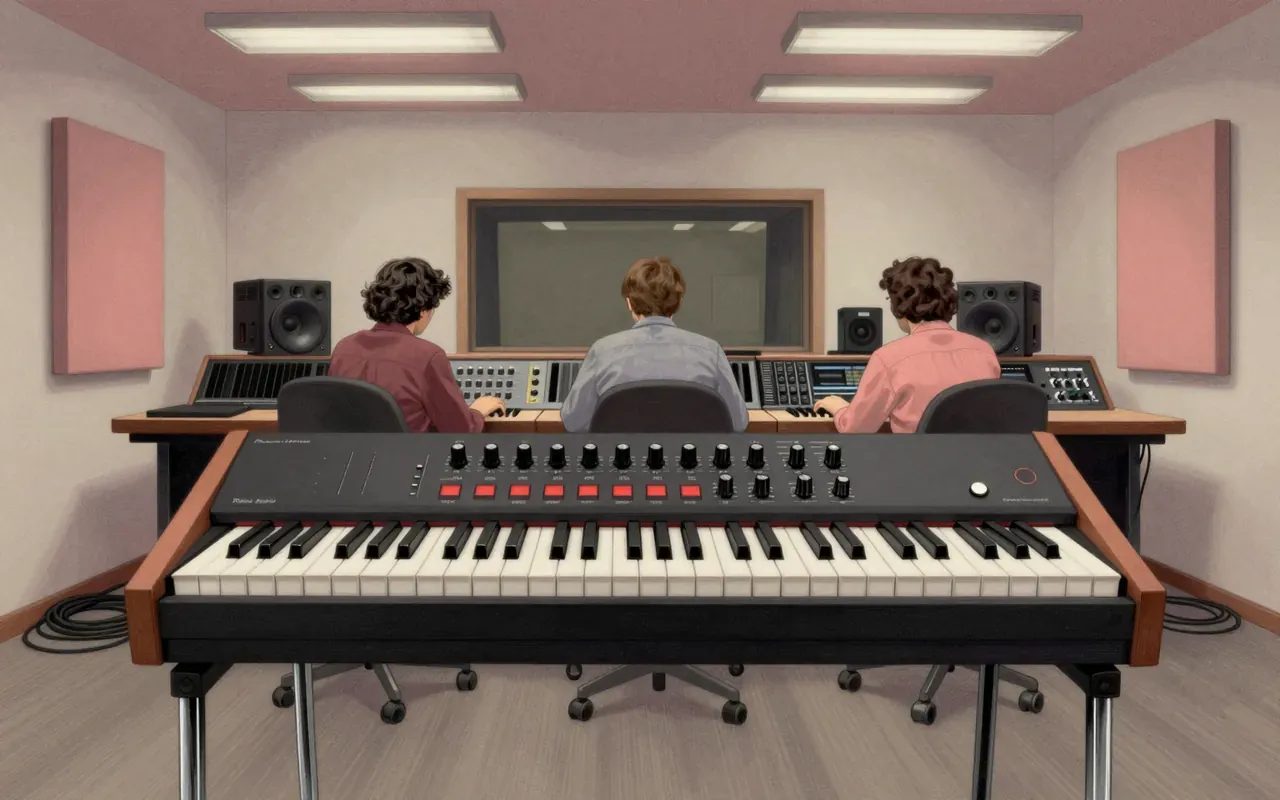
A monophonic analog synthesizer made by Roland Corporation between 1982 and 1986. Built for portability: keytar format, optional handgrip and shoulder strap, battery operation.
How it works, in terms a player would use
It has one oscillator, a sub-oscillator, a low-pass filter, a mixer, a noise generator, an arpeggiator and sequencer. An ADSR envelope controls the filter and VCA. The LFO modulates filter, VCA, pitch and pulse width. It is monophonic: only one note at a time.
What it does better than anything else
It delivers hands-on, immediate sound shaping in a single compact unit that runs on batteries and can be worn as a keytar. Its layout puts every core function—oscillator, filter, envelope, LFO, sequencer—within thumb or finger reach.
What it does badly
It cannot play more than one note at a time. It has no memory for patches. It offers no velocity or aftertouch response. It lacks oscillator sync, ring modulation or multimode filtering.
What people made with it
The document does not state what people made with it.
Who should use it, and who should not
Players who prioritise mobility, tactile immediacy and raw monophonic basslines or leads. Not for producers needing polyphony, patch storage or expressive keyboard dynamics.
Is it worth your time
Yes—if you want immediate, portable, battery-powered monosynth control with no polyphony, no multitimbrality and no digital layering. No—if you need chords, layered textures or real-time parameter recall.