audiobriefs
Topic

Sampling

Building new records out of old ones, and the law that followed.

129
in audio
9:15
average
1193 min
in total
246
across the network
Sampling across the network →
All briefs129
8:41

Chamberlin M1

Chamberlin · 1970

The Chamberlin M1 appeared in 1970 as a table-top, much more durable Chamberlin design. It dropped the rhythm tapes, rewound its tapes with a return-roller system and used higher-quality playback heads. About 130 were built before production ended in 1981.

9:30

Emax II

E-mu Systems · 1989

The Emax II replaced the original Emax in fall 1989. It is a true 16-bit sampler with more polyphony and digital filters, priced from $3,595. The Emax II Turbo of 1990 added 8 MB of built-in sample memory and an internal SCSI hard disk. It stayed in production until 1995, one of the longest runs of any E-mu product.

10:14

Emulator II

E-mu Systems

The Emulator II, released in 1984, was E-mu's second sampler. It stayed an eight-bit machine but improved fidelity with companding converters and a 27.7 kHz sample rate, and it added resonant analog filters, more flexible editing and far better real-time control. At about $8,000 it was priced like the original, and far below a Fairlight.

9:51

Mellotron Mk II

Mellotron

The Mk II was the update to the first commercial Mellotron, released in 1964 with the full set of sounds selectable by banks and stations. About 160 were made. It has two manuals, an organ-style cabinet and two internal 12-inch speakers with an amp, and it was meant for the home rather than the road.

7:59

S950

Akai · 1988

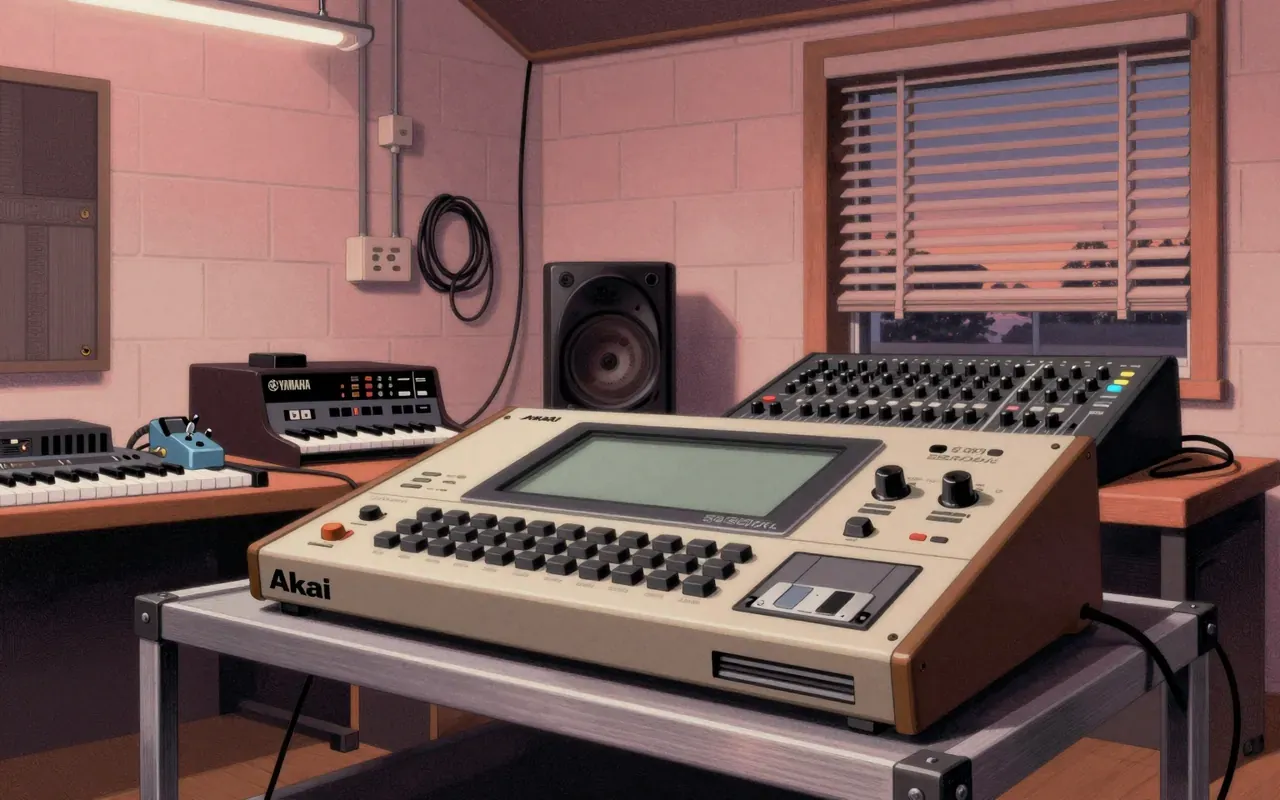
The Akai S950 is an expanded version of the S900 sampler, released in 1988 alongside the higher-end S1000. It took over some of the S1000's improvements, including time-stretching, and raised the maximum sample rate to 48 kHz. Like the rest of the S900 series, it can loop a sample alternating forwards and backwards, which the S1000 series cannot. Akai has discontinued it.

9:34

Ibanez AD9 Analog Delay

Ibanez

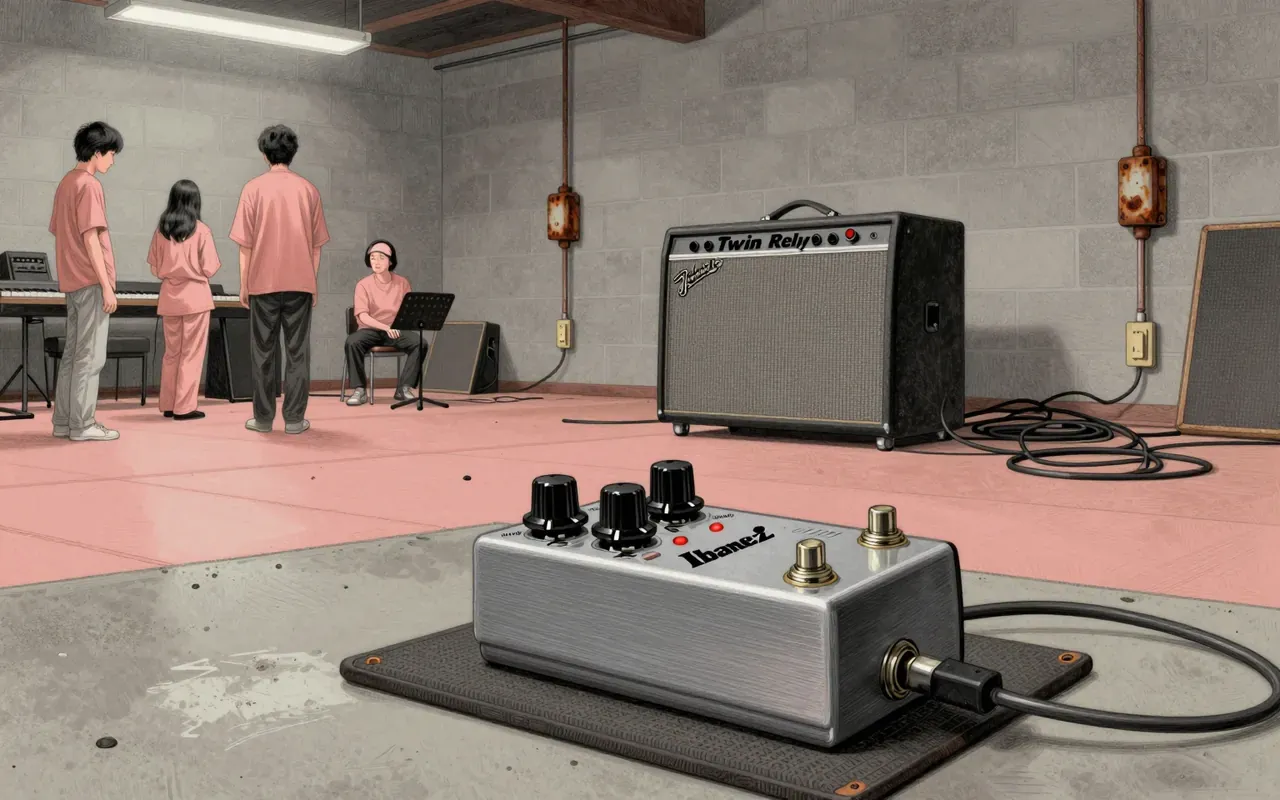
The Ibanez AD9 is a stripped-down analog delay pedal that prioritises warmth and clarity over features. Its compander-based signal path delivers clean repeats up to 300 ms. It has no tone control, no modulation, no tap tempo, and no stereo capability. It suits players who want a dependable, affordable analog echo — not a Swiss Army knife.

8:32

Roland CompuRhythm CR-68

Roland

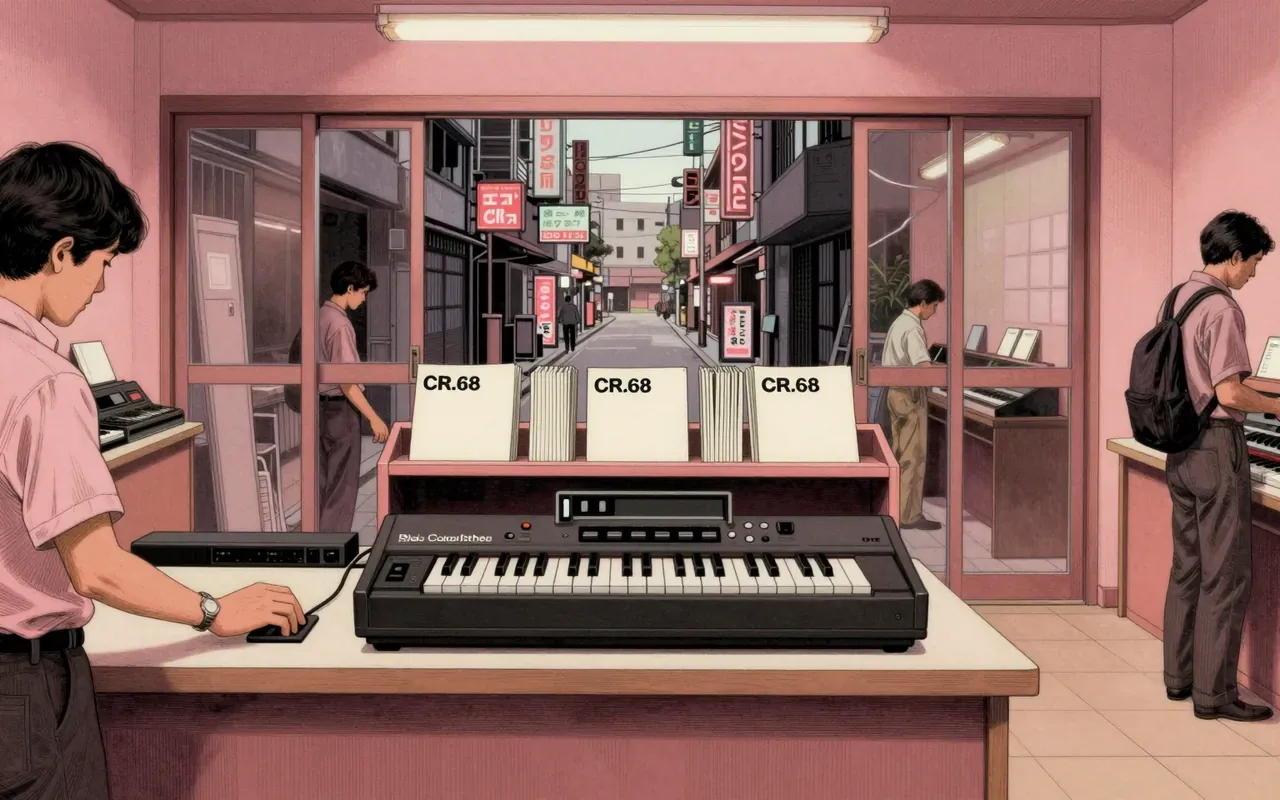
The Roland CR-68 is a non-programmable mono analog rhythm machine from the late 1970s. It shares the CR-78’s sound set and 54 preset rhythms but removes all user programming. Its controls — tempo, level, accent, balance — shape playback in real time. Fills trigger automatically or manually. It has no MIDI, no keyboard, no memory. Its sounds are now more often sampled than played live. Add N To (X) used it.

9:00

Roland CompuRhythm CR-8000

Roland

The Roland CR-8000 is a non-editable analog drum machine from 1980/81. It gives you 13 fixed drum sounds, one mono output, eight user-programmable patterns, and a unique groove knob that alters timing and timbre simultaneously — especially in the hi-hats. That groove cannot be sampled. Everything else is compromised: the sequencer is poorly programmed, the control panel fails under external use, and there are no built-in effects. Artists including Fluke, BT, Jimmy Edgar, and Blondie used it. It belongs in a collection, not a production chain.

9:56

Boss DD-3 Digital Delay

Boss

The Boss DD-3 is a digital delay pedal for guitar. It uses four knobs to control effect level, feedback time, delay time, and delay mode. It delivers clear, sharp echo without muddiness. It is extremely durable. It is probably the most well-known digital delay pedal.

8:57

Boss DM-1 Delay Machine

Boss

The Boss DM-1 Delay Machine is an analog foot pedal — among the first delay pedals made by Boss — with three knobs (delay time, intensity, balance/mix), an output level switch (0 dB, -15 dB, -35 dB), built-in power cord, and 1/4 inch connections. It is not rack mountable. Its sound is warm, rich, and outstanding. It is considered one of the best delay pedals Boss has made.

7:59

Boss DM-2 Delay

Boss

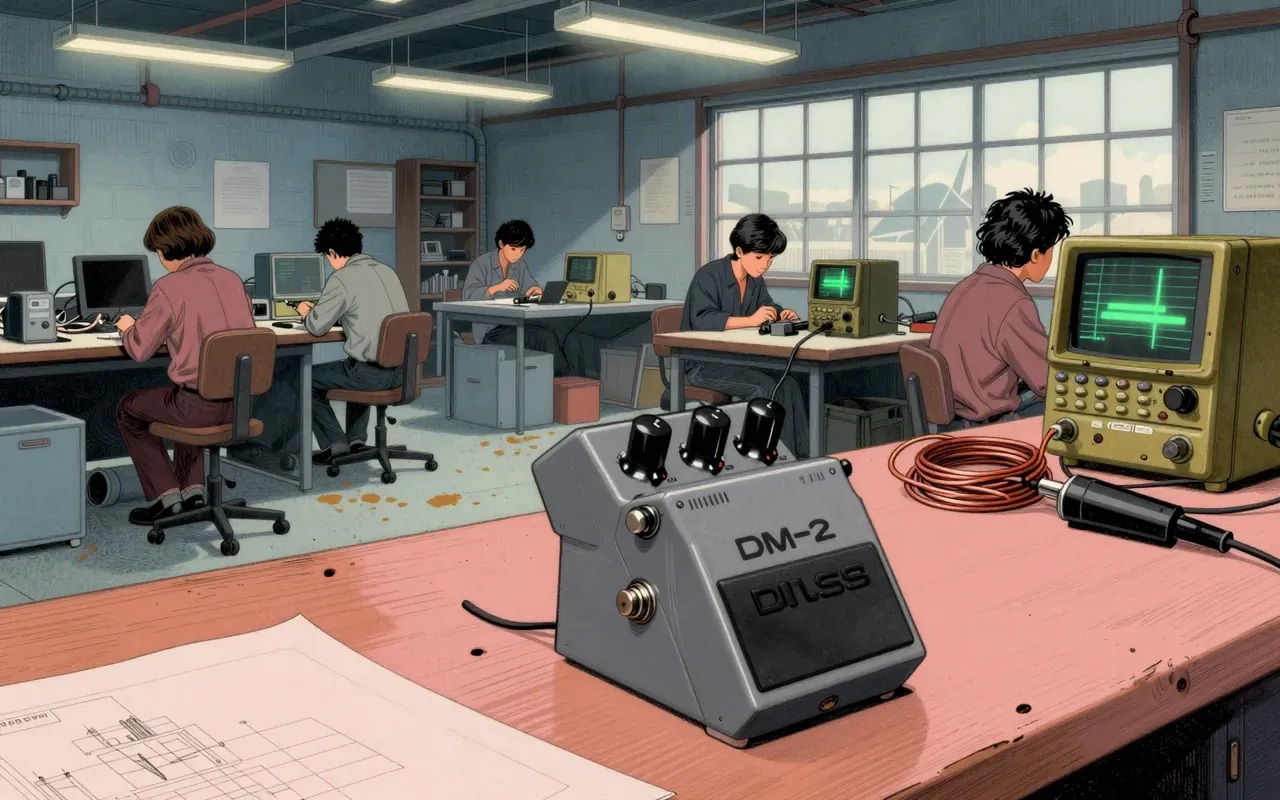
The Boss DM-2 is a Japanese-made analog delay pedal released in 1981. It delivers warm, tone-enhancing repeats from 20ms to 300ms using three knobs: Repeat Rate, Echo, and Intensity. It has no MIDI, no computer control, and is not rackable. It was built for guitar and other electronic instruments. It thickens tone rather than cutting with precision.

8:36

Korg Kaoss Pad KP3

Korg

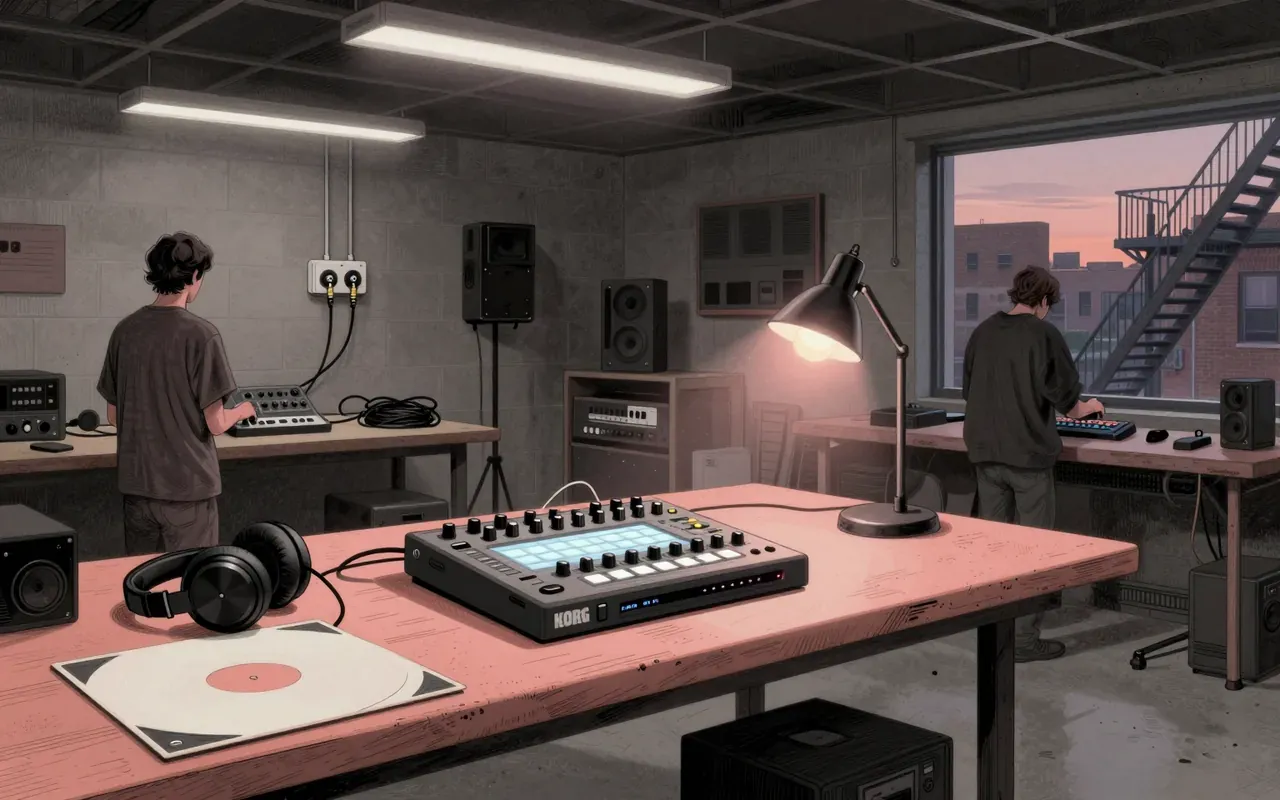
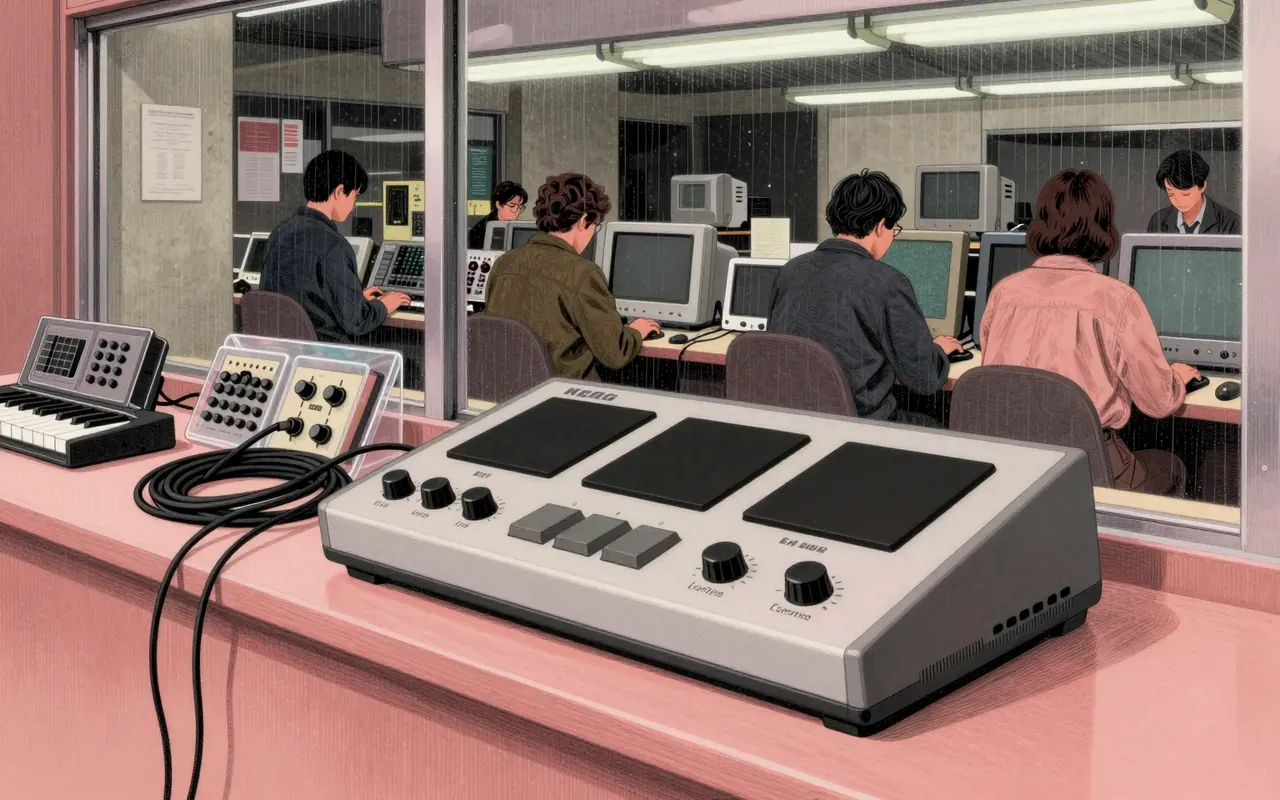
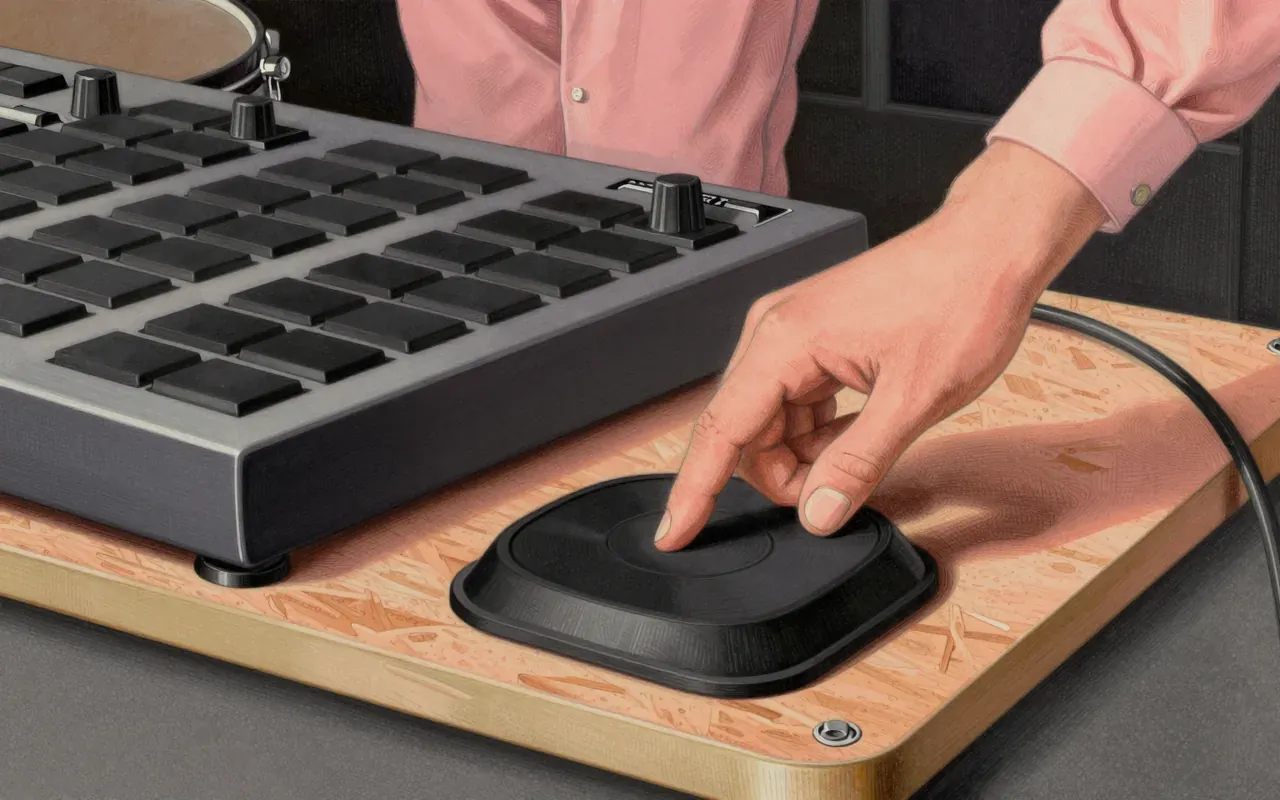
The Korg Kaoss Pad 3 is a live-performance effects unit. It uses an X/Y touchpad for real-time control of 128 built-in programs—including reverb, delay, flanger, analog filter, drive circuit, and a vocoder. It samples onboard. Some effects sync to tempo. It functions as a MIDI controller. Connections are RCA only.

9:24

TC Electronic 2290 P Dynamic Digital Delay

TC Electronic

The TC Electronic 2290 P Dynamic Digital Delay is a guitar-focused delay, echo, and phrase sampler. No technical specifications are available. Its package weight is 1.7 kg. Nothing else is verified.

8:31

Akai ASQ-10

Akai

The ASQ-10 is a sequencer-only instrument. It has no sound generation. It does not sample. It exists solely to trigger, time, and lock external gear. Its design enables rhythmic complexity unplayable by hand — then corrects timing drift across the chain. It is the first MPC-shaped workflow, before the MPC existed.

8:48

Roland D-10

Roland

The Roland D-10 is a 1988 digital synthesizer using LA Synthesis. It has 61 keys and 32-voice polyphony. It is available as both a keyboard and a rack module. Factory sounds are basic and dated. Editing is required to achieve usable tones. It includes built-in sequencing and nine-part multitimbrality. Onboard effects are limited.

8:16

E-mu Systems Drumulator

E-mu Systems

The Drumulator is a fixed-sample, floppy-driven drum machine built to undercut the Linn LM-1 — not match it. It gives you eight gritty 12-bit hits, real-time or step sequencing, and Apple II editing. It withholds sound editing, velocity, swing, and any expansion beyond its ROM.

9:38

E-mu Systems E4XT Ultra

E-mu Systems

The E-MU E4XT Ultra is a 1999 hardware sampler. It delivers verbatim audio playback, 128-voice polyphony, and studio-grade reliability. It has no onboard effects, shallow editing, and fixed storage. It belongs in a rack—not a laptop bag.

8:40

E-mu Systems E6400

E-mu Systems

The E-mu Systems E6400 is a hardware sampler built for radical sample transformation — not faithful reproduction. Its strength is in routing: the modulation matrix and modular-style processing blocks (quantize, flipflop, diode, lag) let users rewire signal flow in ways few samplers allowed. Its SCSI support exceeds its 9GB spec — users ran 18GB drives. Its DACs are transparent; its ADCs are not. It includes Z-plane, formant, phaser, flanger, Doppler, bitreducer and Convolver tools — and its reverb uses impulse response sampling. It ships with EOS 3.00b and 1MB CPU RAM. It is for sound designers who treat samples as raw material to be corrupted, rerouted and convolved — not archived.

8:11

Audio Electronics EchoCzar

Audio Electronics

The Audio Electronics EchoCzar does not exist in the provided material. The instrument named is the Toneczar Echoczar. Audio Electronics is not mentioned anywhere in the sources.

7:37

Oberheim/Gibson Echoplex Digital Pro

Oberheim/Gibson

The Oberheim/Gibson Echoplex Digital Pro is a 1994 hardware looper built for live performance. It records 16-bit/44.1kHz audio to RAM, ships with 50 seconds of memory (expandable to 200), supports unlimited overdubs per loop, stores up to nine loops, and offers MIDI sync, reverse looping, and multiplay. It has no filtering, time stretching, pitch shifting, stereo effects, or resampling.

9:03

Electribe

Korg

The Electribe is a groovebox. It forces drum, bass and synth into one pattern grid. It launched in 1999. It runs on analogue modelling and sampling. It shares sequencing logic across all sound sources. It has no audio recording. It has no expandable storage on early models. It was Korg’s post-Yamaha statement.

8:43

Korg Electribe ER-1

Korg

The Korg Electribe ER-1 is an affordable analogue beat unit. It gives bangs, buzzes, blips and spacey weird noises via four synth keys and four sampled percussion sounds. It saves up to 256 patterns, each up to 4 measures. Real-time changes — like jungle delayed drums or scratching sounds — save instantly. Its PCM sounds (Hclap, HiHat, Crash) are uninteresting. It connects via MIDI in/out/thru. Its housing is plastic.

8:10

Korg Electribe ES-1

Korg

The Korg Electribe ES-1 is a sampling sequencer built for live beat construction and loop manipulation.

10:42

Korg Electribe MX EMX-1

Korg

The Korg Electribe MX EMX-1 is a 2003 desktop dance production instrument built for live electronic music creation. It combines synthesis, sampling, sequencing, and effects in a single unit aimed at performers and producers who work in patterns and loops.

8:42

Korg Electribe SX ESX-1

Korg

The Korg Electribe SX (ESX-1) is a 2003 sample-based groovebox built for dance music production and live performance. It uses sample-based sound creation to generate 16 assignable parts—including nine one-shot drum parts, two keyboard parts for melodic playback, two stretch parts for tempo-adjusted loops, one slice part for rhythmic phrase division, one audio-in part, and one drum accent part. It ships with 196 preloaded samples, 128 factory patterns, and 3 demo songs. A major upgrade over earlier ElecTribe models, it offers 285 seconds of sample memory at 44.1kHz for up to 384 user samples, slicing at rhythmic peaks, Motion Sequencing for real-time parameter automation, and three stereo effects processors with chaining.

9:01

E-mu Systems Emulator III

E-mu Systems

The E-mu Emulator III is a 1987 digital sound production system. It was E-mu's biggest and most professional sampler-synthesizer before the 1990s. It was the first sampler to offer 16-bit, 44.1 kHz stereo or mono sampling. RAM is 4 MB expandable to 8 MB. It includes extensive sample editing features including looping and rate conversions. Its on-board 16-track sequencer and arpeggiator are superb. It is equipped with MIDI, SMPTE, SCSI, a built-in disk drive, and multiple outputs. A Macintosh can be hooked up for graphical editing because the LED screen is so tiny.

8:48

E-mu Systems ESI-32

E-mu Systems

The E-mu ESI-32 is a 1994 16-bit desktop sampler. It delivers 32-voice polyphony, stereo sampling at 22.05 or 44.1 kHz, and real-time editing including Doppler, exciter, and transform multiply. Base RAM is 2 MB—11 seconds at 44.1 kHz stereo—but expands to 32 MB (six minutes). Auto-looping, auto-truncate, and auto key placement streamline sampling. It requires SCSI peripherals and Turbo Expansion for digital I/O and extra effects. It does not support variable sampling rates, higher bit depths, or modern connectivity out of the box.

8:49

Eventide H949 Harmonizer

Eventide

The Eventide H949 Harmonizer is a pitch shifter and time stretcher. It has no published technical specifications. It is also known as H949Harmonizer, H 949 Harmonizer, and H 949Harmonizer.

8:47

Alesis HR-16

Alesis

The Alesis HR-16 is a 1987/88 drum machine with 49 16-bit samples — 10 kicks, 7 snares, and an ethnic set — each tunable and mixable with individual level controls. It supports step or real-time pattern programming, 16-voice polyphony, and syncs via MIDI or external click. Its drum sounds are described as 'pretty cheesy'.

8:10

Publison Infernal Machine 90

Publison

The Publison Infernal Machine 90 is a 3U rackmount analog/digital multi-effects processor built for video post-production. It delivers delay, echo, harmonizer, sampler, reverb, transposition, time compression/expansion, and DVR-style long-sample playback — all synchronised to SMPTE timecode. All programs are editable on-device; no external editor exists. It excels at frame-accurate effect triggering in film dubbing. It fails for anyone needing patch libraries, remote editing, or non-video workflows.

11:18

Kurzweil K2600

Kurzweil

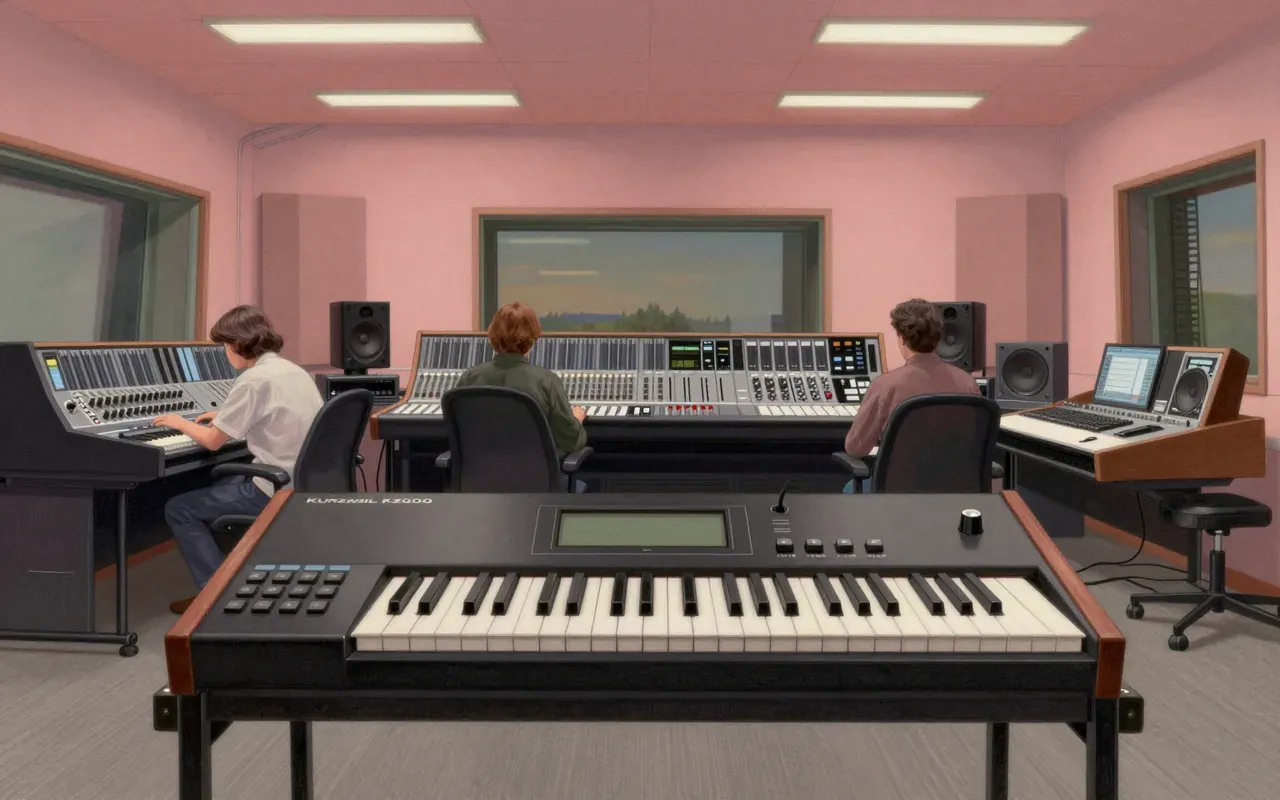
The Kurzweil K2600 is a 1999 workstation built for deep sound engineering — not quick playing. It uses V.A.S.T. synthesis with 60 DSP functions and 438 presets. It holds 12MB of sample ROM (expandable to 44MB) and 64MB of sampling RAM (expandable to 128MB). Its 32-track sequencer supports pattern, linear, and step recording, plus advanced editing. It processes external signals in real time via ADAT, TDIF, and AES/EBU — with any parameter modulating the input and 20-bit digital output. It falls short on immediacy, tactile control, and workflow clarity. It belongs in a fixed studio, not on stage or in a laptop bag.

9:04

Linn Electronics LinnDrum

Linn Electronics

The LinnDrum is a hands-on, sample-based drum machine built for studio precision — not live flexibility.

10:20

Neumann M 50

Neumann

The Korg M50 61 is a 2008 sampling workstation built for real-time layering and editing. It delivers 80-voice polyphony, 1077 samples across 608 editable programs, and up to 896 combinations — all controlled via an angled panel and full-size TouchView interface. It includes one GM2-compatible sound bank. It was reviewed as industry-ready but criticised for weak electro/lead sounds and lack of built-in sampler compared to the M3.

8:32

Roland MC-09 PhraseLab

Roland

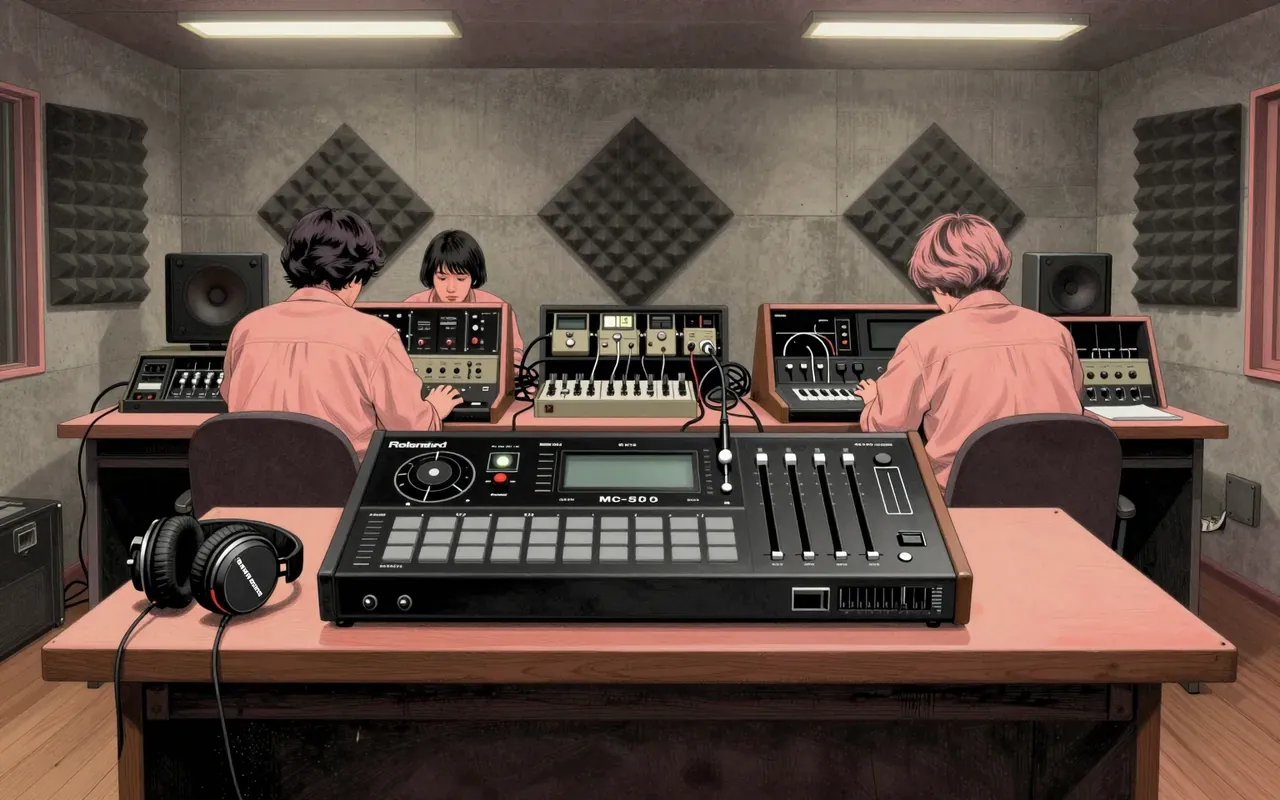
The Roland MC-09 PhraseLab is a compact sampling sequencer built as a simplified, budget counterpart to the MC-909. It integrates monophonic synthesis, a TB-303–style 2×16-step sequencer, and a 4-track looper/sampler. Its sampler sounds like an 8bit unit and introduces audible crackle when tempo changes. It supports only four independent audio loops. Its monophonic synth produces FAT acid bass and lead tones. It is suited for live phrase capture but limited by low screen clarity, slow sample loading, and constrained user memory.

7:34

Mellotron Mellotron M400

Mellotron

The Mellotron M4000D Mini is a digital sampling synthesizer released in 2013. It uses a Fatar keybed and delivers 24-voice polyphony. It replaces tape mechanics with sample playback. It offers consistency, portability, and reliability — at the cost of mechanical character.

8:16

Make Noise Morphagene

Make Noise

The Morphagene is an effects module for modular synthesizers made by Make Noise. It belongs in the 'Effects modules for modular synthesizer' category. It does not function as a sampler, sequencer, or DAW plugin — it transforms audio live using tape-style operations. Its design gives immediate, irreversible, hands-on manipulation. It withholds saving, syncing, and visual feedback.

10:56

Akai MPC1000

Akai

The MPC1000 delivers the MPC workflow in a smaller, cheaper, more portable form. It adds six outputs, built-in effects, and memory expansion over the MPC2000 — while storing samples as WAV and sequences as MIDI on CompactFlash. Build quality is reduced, but sound quality is preserved. It is a sampling and sequencing instrument — not a synth, not a DAW, not a controller.

10:25

Akai MPC2500

Akai

The MPC2500 upgrades the MPC2000 with 16-bit/44.1 kHz sampling, individually adjustable pad sensitivity, and the Grid editor — but keeps 64-track sequencing, 32-voice polyphony, and no automated effects sends.

10:05

Akai MPC4000

Akai

The Akai MPC4000 is a 2002 hardware sampler sequencer built to lead the hardware sampler category. It has 16 velocity- and pressure-sensitive pads. It performs 96 kHz 24-bit sampling. It has 16 MB of sampling memory, upgradeable to 512 MB. It includes IDE bays for installing an internal hard disk drive and CD-ROM drive. It supports optional plug-in boards including Effects, ADAT, S/P-DIF & wordclock, and 8 analogue outputs boards. It has 2 MIDI inputs and 4 MIDI outputs. It was released in 2002 with the intent to lead hardware samplers.

9:39

Akai MPC500

Akai

The MPC500 is Akai’s entry-level sampling sequencer—a portable, self-contained beat-making station built for quick capture, arrangement, and performance.

7:30

Roland MSQ-100

Roland

The Roland MSQ-100 is a sequencer with no documented technical specifications. It exists only as a named object with alternate spellings. Nothing is verified about its function, capacity, interface behaviour, or sonic role.

9:10

Roland MV-8000

Roland

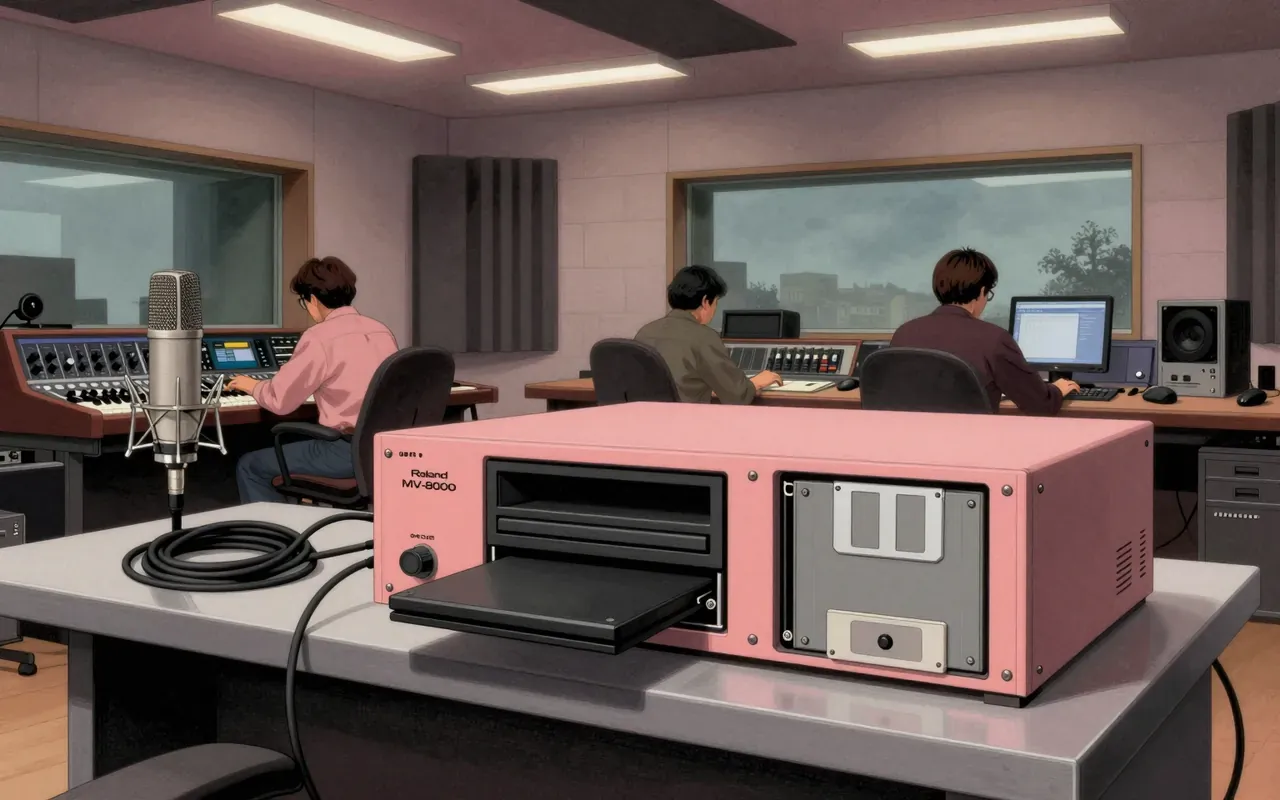
The Roland MV-8000 is a 2004 sampling sequencer built for producers who want to record, edit, sequence, and master full tracks without a computer.

10:47

Roland MV-8800

Roland

The Roland MV-8800 is a sampling sequencer. It hosts VSTs internally. It requires external video monitoring. It accepts a USB mouse. It is complex. Its hard drive is slow. Its manual is poor. One user tested it for three hours in a retail store and found it capable of handling many music production tasks.

8:59

TC Electronic Nova Delay

TC Electronic

The TC Electronic ND-1 Nova Delay is a digital guitar effects pedal offering six studio-quality delay types—including Delay line, Dynamic, Reverse, Ping-pong, Pan, and Slap-back—with up to 2290 ms delay time, audio-generated tap tempo, delay spillover, true stereo I/O, true bypass, and nine user-programmable presets; it operates in manual or preset mode and includes analog-tone emulation via a tone knob.

8:23

Alesis Quadraverb

Alesis

The Alesis Quadraverb is a rack-mount digital multi-effects processor introduced in the early 1990s. It focuses on reverb and delay but also offers pitch, EQ, and 'Change' effects. It runs up to four effects simultaneously in stereo or mono, covers 20 Hz–20 kHz, and connects via 1/4" stereo I/O and MIDI. Users value its lo-fi character—not its fidelity—for feedback loops and textural layering.

9:55

Roland R-70

Roland

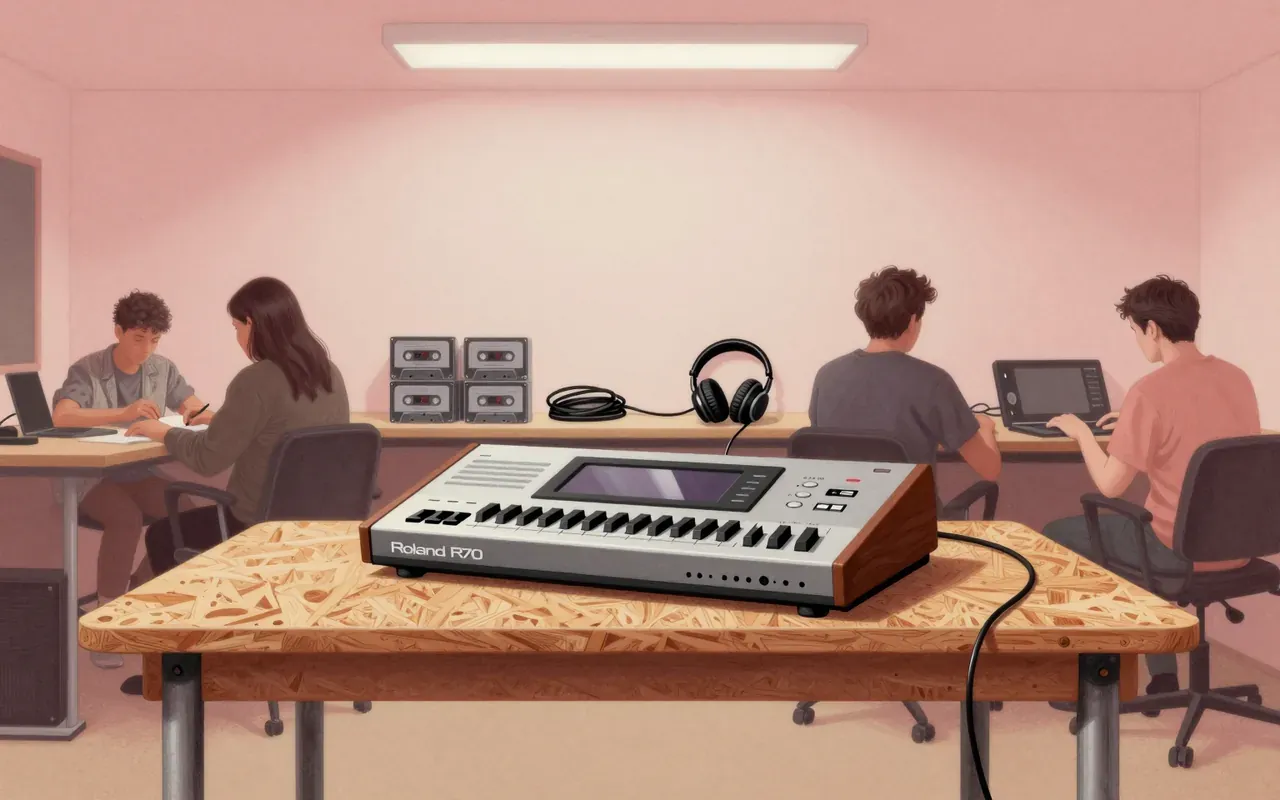
The Roland R-70 is a 1992 full-sized, sample-playback drum machine from Roland’s R series. It offers up to 210 drum sounds across Rock, Jazz, Electronic, and Ethnic kits. It stores 100 programmable patterns and chains them into 20 songs. Its positional pad changes sound by strike location. It includes reverb, flanger, delay, chorus, and humanization. Sound editing is limited to attack, sustain, and pan. Its built-in sequencer is complex—users prefer external sequencing. Kick and cymbal sounds emulate the TR-808. It is a popular, all-purpose drum machine.

9:01

Rhodes Rhodes Mark II

Rhodes

The Rhodes Mark II Stage Piano is a Fender-built electric piano in the Rhodes series. No technical specifications are available. Its value is $900. That is all that is known.

10:40

Yamaha RS7000

Yamaha

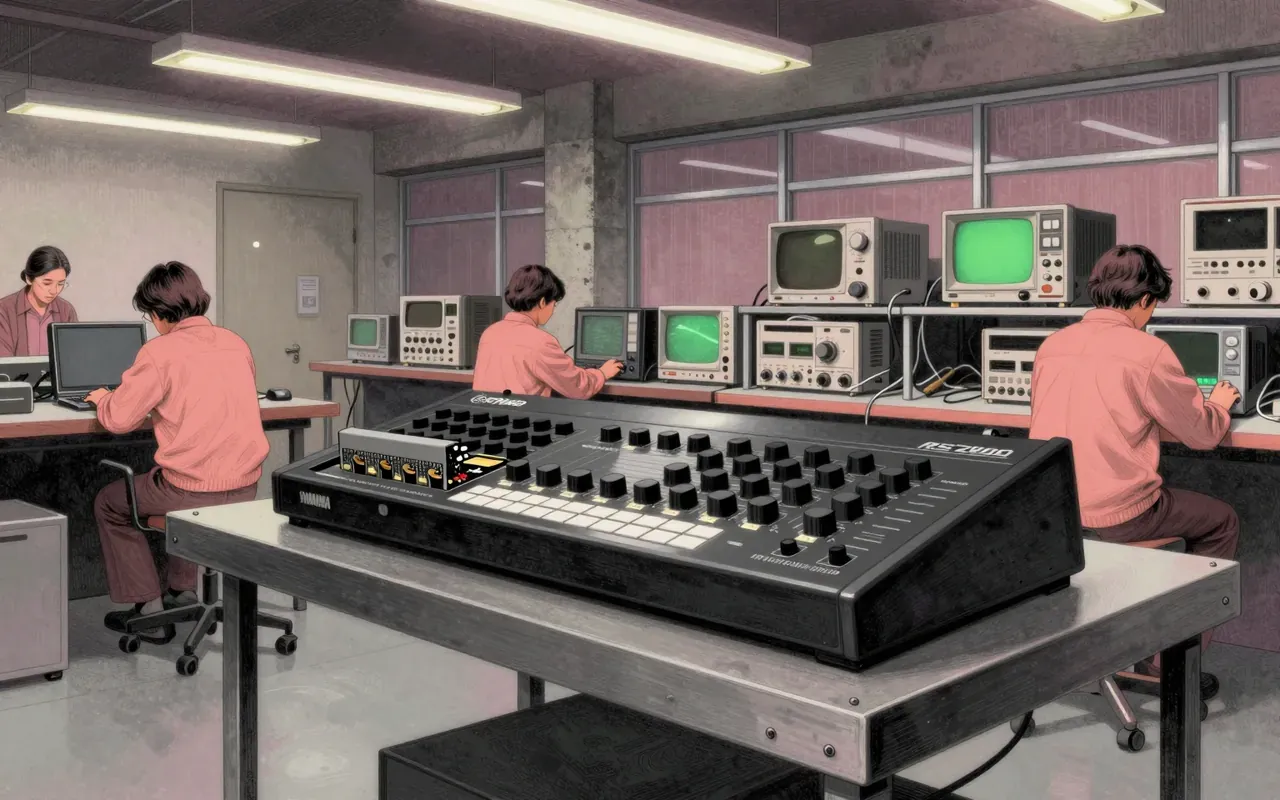
The Yamaha RS7000 is a 2001 groove production workstation. It combines sampling, sequencing, and AWM2 synthesis. It embeds sound and sample edits into patterns. It supports auto-beat slicing, pattern- and linear-based sequencing, and ROM-based sounds only.

9:55

Yamaha RX11

Yamaha

The Yamaha RX11 is a 1984 digital drum machine using 29 fixed 8-bit PCM samples. It was built to accompany the DX7. Each sound has independent volume, pan, and a dedicated audio output. Its interface is laborious. Its sound is synthetic and dated — yet valued in electro and downtempo for its unvarnished 1980s character.

7:59

Yamaha RX7

Yamaha

The Yamaha RX7 is a sample-based drum machine built for live trigger-based rhythm programming and studio sketching in the mid-1980s.

7:25

Casio RZ-1

Casio

The Casio RZ-1 is a 1986 drum machine built for fast, physical beat-making — not pristine sound. It gives you twelve basic PCM drums, four lo-fi sample slots (0.2 seconds each at 20kHz), tone-only editing, 100 patterns, 20 songs, and ten discrete outputs with volume sliders. It does not do fidelity, flexibility, or effects. It does do immediacy, separation, and constraint-as-creative-tool.

9:36

Roland S-750

Roland

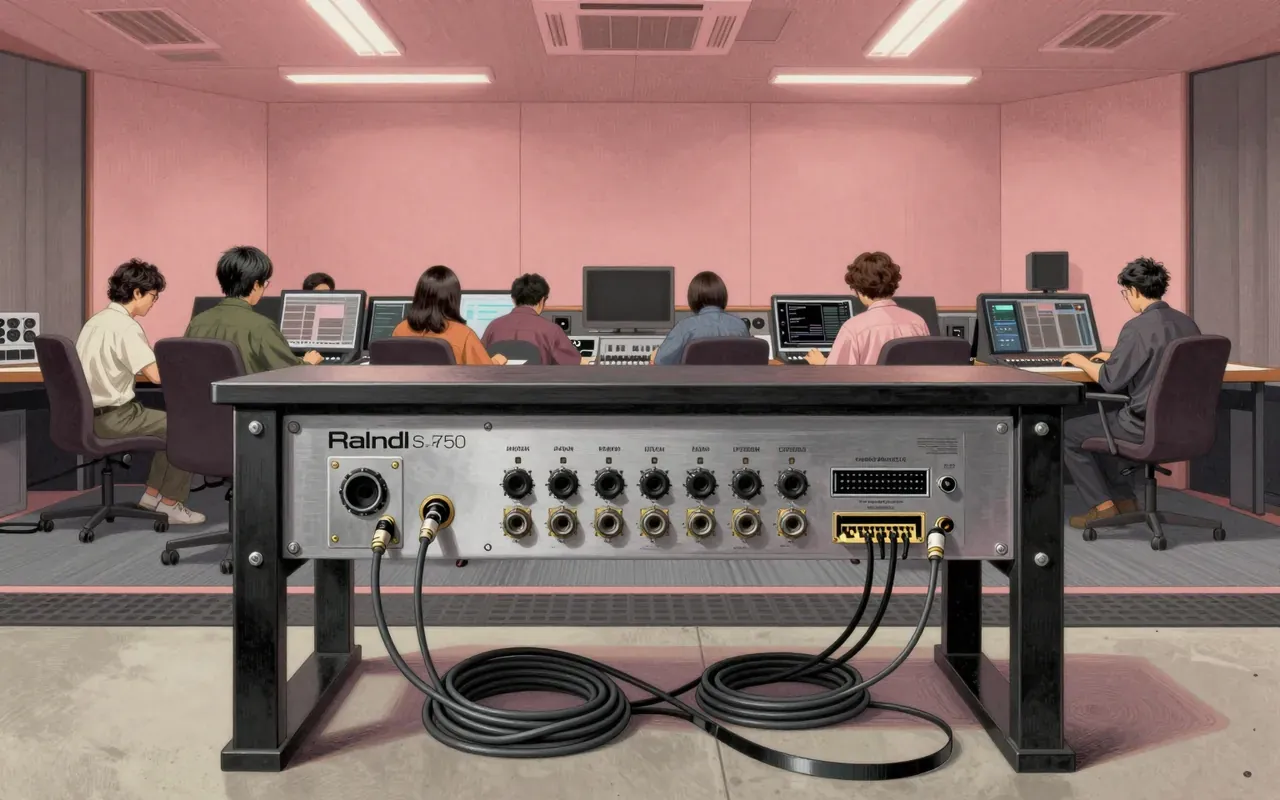
The Roland S-750 is a 1992 hardware sampler built for deep, routed, real-time sampling work—not convenience or compatibility.

8:09

Roland S-760

Roland

The Roland S-760 is a 1990 rackmount sampler. It samples at 44.1 kHz or 48 kHz with 16-bit stereo resolution. It supports 24-voice polyphony across 32 multitimbral parts. It uses no synthesis method beyond sampling. It has built-in filters but no effects.

9:50

Akai S1100

Akai

The Akai S1100 is a sampler. Its name appears in alternate forms: 's1100' and 's 1100'. No technical specifications are available. Nothing else is confirmed.

8:53

Akai S6000

Akai

The Akai S6000 is a 1999 rack sampler. It supports up to 256 MB RAM, optional SCSI hard drives, virtual hard disk sampling, and remote operation via detachable RS-232 screen. Its 26 filter types and extensive modulation routing enable synthesis from single-cycle waveforms. OS 2.14 resolved major bugs in OS 1.0. It includes a large built-in sound library.

10:28

Akai S700

Akai

The Akai S700 is a 1987 rack-mount 12-bit sampler derived from the X7000 keyboard model. It samples mono at 4–32 kHz, holds up to 8 seconds, but at 16 kHz allows only six 0.8-second samples. It offers 6-voice polyphony, non-resonant low-pass filtering, and QuickDisk storage. It is user-friendly but rigid: no stereo, no resonance, no modern file support, no workarounds.

9:26

Danelectro Silvertone 1448

Danelectro

The Danelectro Silvertone 1448 is a 1963 masonite-bodied guitar built by Danelectro, designed by Nat Daniels, and sold by Sears as part of an 'Amp in Case' set. It has a rosewood fretboard, shorter scale, six-in-line tuners, wooden-saddle bridge, and typically one neck-position lipstick pickup. It does not intonate or stay in tune for very long.

10:32

Radikal Technologies Spectralis

Radikal Technologies

The Spectralis is a 2004 hybrid instrument built for studio composition. It combines a monophonic Asynth (four digital oscillators, two analog filters, time linearity modulation) with a 32-voice, 3-part multi-timbral Dsynth engine (128 MB RAM, unrestricted sample import). Its sequencer ties both engines and external gear together with per-parameter automation. It has no audio interface, no velocity-sensitive Dsynth layers, and no DAW integration. It belongs in a production room — not on stage.

10:18

Alesis SR-16

Alesis

The Alesis SR-16 is a 1990 drum machine built for immediacy: twelve velocity-sensitive pads, four outputs, and step editing deliver fast, routable, mechanical rhythm tracks. Its Dynamic Articulation varies tone with hit strength. Its 233 samples sound distinctly synthetic—not acoustic, not modern. It was used by Autechre and Vangelis. It has no swing, no audio input, no built-in effects beyond reverb on some samples. It remains valuable for hands-on pattern building and discrete signal routing—but only if that’s what you need.

9:44

Eventide TimeFactor

Eventide

The Eventide TimeFactor is a 2011 stompbox-format digital delay/echo/phrase sampler for guitar. It offers ten distinct delay types, two independent 3-second delays, stereo I/O with level switches, true analog bypass, rugged cast metal construction, MIDI and expression pedal control, USB firmware updates, and 100 factory presets. Its 12-second looper is integrated into the same unit.

7:49

Sequential Circuits TOM

Sequential Circuits

The Sequential Circuits TOM is a 1985 drum machine that treats eight digitally recorded drum sounds as raw material—not fixed instruments, but malleable elements. It excels at per-voice tuning, layering, reversal, and spatial placement. It falls short on sonic range, documentation, and acoustic verisimilitude. It belongs in the studio of someone who composes with constraints, not presets.

9:45

Roland XV-5080

Roland

The Roland XV-5080 is a 2000 rack-mount sound module built for studio composers needing stereo sample playback, deep modulation via Matrix Control, and expandability through SRX and SR-JV80 boards. It reads Akai S1000 and Roland S-700 CD-ROMs via SCSI, supports up to 128MB of sample memory, and includes COSM effects and digital outputs — features the XV-3080 lacks. It offers no keyboard, no sequencer, no USB, and demands physical navigation. It belongs in a fixed studio with legacy hardware — not on a laptop stand.

8:50

E-mu Emulator

E-mu Systems

A foundational but bare-bones sampler that traded sonic refinement for accessibility.

9:02

Ensoniq Mirage

Ensoniq

The Ensoniq Mirage is an 8-bit sampling keyboard introduced in late 1984 as Ensoniq's first product. It offered eight-voice polyphony, analog Curtis CEM3328 filtering, and wavetable synthesis via alternative OS. It booted and stored data on a built-in 3.5-inch floppy drive — one of the first consumer uses of that format. Priced at $1695, it sold 8,000 units in its first year, undercutting the Fairlight CMI and E-MU Emulator.

10:33

Elektron Octatrack

Elektron

The Elektron Octatrack DPS-1 is a sampling instrument built for real-time, step-sequenced audio manipulation. It loads samples from CompactFlash or live inputs, plays them across eight tracks, and sequences both audio and MIDI with the same button grid. Its strength is tight integration and tactile control. Its limits are RAM-only editing, no non-destructive tools, and no timeline-based workflow.

10:20

Roland R-8

Roland

The Roland R-8 is a 1989 PCM drum machine built for expressive, human-sounding rhythm programming—not raw sound design or live sampling.

12:26

Yamaha RX-5

Yamaha

The Yamaha RX-5 is a 1986 programmable digital sample-based drum machine. It delivers 24 built-in and 28 cartridge-based digitally sampled sounds. It has 12 individual outputs—one per vertical drum pad pair. It supports sound editing including chromatic pitch, envelope, reverse, and damp. Its sequencer records up to 100 patterns in Real Time or Step Time, with lengths up to 99 bars.

8:56

Roland S-50

Roland

The Roland S-50 is a 61-key 12-bit sampler keyboard introduced in 1986. It uses variable sampling rates (15–30 kHz), stores samples on a 3.5-inch DSDD floppy disk drive, supports external CRT monitor editing, and holds up to 32 samples. A rack-mounted version with expanded memory was also available.

9:06

Akai S3000XL

Akai · 1995

The Akai S3000XL is a 16-bit sampler released in 1995. It has 32-voice polyphony and 2 MB of built-in RAM. It loads samples via a 3.5" floppy drive or SCSI-connected devices. Its large screen and intuitive interface enable quick and in-depth sample editing. Akai discontinued production and support, but many working units remain in studios worldwide.

9:32

Akai S900

Akai · 1986

The Akai S900 is a 12-bit sampler introduced in 1986. It supports up to six active samples simultaneously. Its firmware became upgradable via floppy disk from version 1.2. It features alternating forward-and-backward looping — a capability absent in the later S1000 series. An expanded variant, the S950, followed in 1988.

9:01

Gibson EB-3

Gibson

The Gibson EB-3 is a short-scale bass built for midrange punch, not low-end authority. Its 30.5" scale, slim SG-style body, and asymmetric pickup pair — large humbucker at the neck, mini-humbucker at the bridge — define its physical and sonic identity. The four-way rotary switch offers distinctive tonal options, including two that deliberately roll off low frequencies. It was produced from 1961 to 1979. Exactly 14,167 were made.

9:55

Roland Corporation

Roland · 1972

Roland Corporation is a Japanese instrument manufacturer founded in 1972. It pioneered compact synthesizers, programmable drum machines, guitar synths, and early microprocessor sequencers — shaping electronic music through tactile, genre-defining hardware.

8:14

Boss SP-202

Boss

The Boss SP-202 is a portable sampling workstation released in 1998. It succeeded Roland's MS-1 Digital Sampler. It has eight pads, four banks, two control knobs, a built-in microphone, six built-in effects, BPM-based looping, user-selectable sampling grade per pad, and sampling capacity of 4 minutes 20 seconds internally or up to 37 minutes with a SmartMedia card. It was built for club DJs, hip-hop and dance music artists.

8:27

Boss SP-303

Boss

The Boss SP-303 is a 2001 digital sampler with eight pads, four soundbanks, three minutes and twelve seconds of sampling, twenty-six internal effects, and a built-in pattern sequencer. It was used by J Dilla, Madlib, Animal Collective, Panda Bear, Four Tet, and Moka Only. Dilla used it with a 45 record player to make 29 of the 31 tracks on Donuts while hospitalized. Madlib used it with a portable turntable and cassette deck to produce most of Madvillainy.

9:38

Roland V-Synth

Roland · 2003

The Roland V-Synth is a 2003 polyphonic synthesizer combining multiple oscillator technologies and built-in sampling, featuring arpeggiation, COSM filtering, and expandable vocoder/vocal synthesis via VC-2; the XT variant is a rack-mount module.

8:40

Mutable Instruments Clouds

Mutable Instruments

Clouds is a granular audio processor for Eurorack that transforms live input into dense, overlapping grains. It records continuously into a short, variable buffer (up to 8 seconds), allows freezing that buffer to isolate a sonic space, and provides hands-on control over grain position, size, pitch, density, timing distribution, and envelope shape. A diffuser blurs transients using all-pass filters. It supports 40–60 concurrent grains and operates in stereo with extensive CV control, dry/wet blending, feedback, and reverb-like effects during freeze mode. It does not store or recall samples, nor does it support offline processing or waveform editing.

9:03

Korg DDD-1

Korg · 1986

The Korg DDD-1 is a 1986 sampling drum machine with 14 velocity-sensitive pads, 12-bit samples, limited user sampling, five dynamic envelopes, and ROM card expansion (up to four cards, eight sounds each). It has 18 presets and six assignable audio outputs.

9:27

Drumtraks

Sequential Circuits

The Drumtraks is a 1984 sample-based drum machine by Sequential Circuits. It was the company’s first drum machine and first sample-based product. It featured early MIDI implementation, ROM-swappable sounds, velocity-sensitive MIDI input, and flexible synchronization with both MIDI and legacy gear.

9:06

Korg DSS-1

Korg

The Korg DSS-1 is a 1986 polyphonic sampling synthesizer combining sampling, additive synthesis, and hand-drawn waveform creation with an analog signal path. Its 12-bit sampler supports fixed rates from 16–48kHz, yielding up to 16 seconds of recording at the lowest rate. Its synthesis architecture emulates subtractive analog design with dual oscillators, switchable VCF slopes, and an extended ADBSSR envelope.

8:34

Korg DW-6000

Korg

The Korg DW-6000 is a 1985 six-voice hybrid digital-analog synthesizer using sampled waveforms in ROM, analog VCA/VCF, dual oscillators per voice with detune, and a programmable stereo chorus — while noting design limitations like lack of touch sensitivity and single parameter control.

10:10

Korg DW-8000

Korg

The Korg DW-8000 is a hybrid digital-analog synthesizer released in 1985. It features eight-note polyphony, a five-octave keyboard with velocity sensitivity and aftertouch, 16 digital waveforms (created via additive synthesis and stored on ROM chips), analog VCF and VCA, digital delay, arpeggiator, auto-bend, and DWGS architecture. Its rack-mounted counterpart is the EX-8000, which omits the arpeggiator.

9:58

E-mu Emax

E-mu Systems

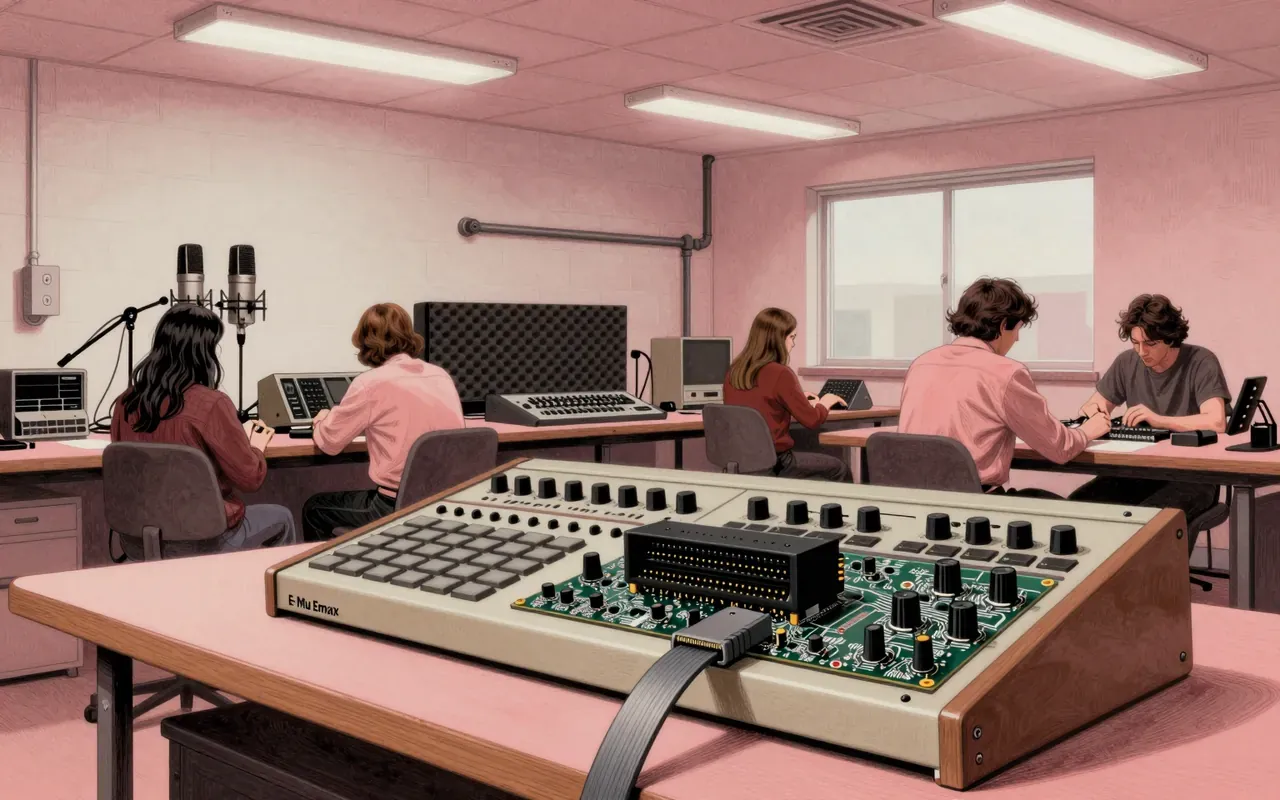
The Emax is a line of samplers introduced by E-mu Systems in 1986 as a low-cost version of the Emulator II. It stored samples on 3½" floppy disks — more reliable than the Emulator II’s 5¼" disks. Models include the HD (with 20 MB hard drive), SE (with additive synthesis), and Plus (with SCSI). All models retain 512 KB of sample memory.

8:22

Eventide Orville

Eventide

The Eventide Orville is a dual-DSP, 24-bit digital audio processor with fully flexible I/O routing, near-three-minute sampling (DSP A), 40-second delay on both engines, UltraShifter™, DistortionCurve™ analog distortion modelling, and Predictive Vocoder™ based on a high-resolution physical model of the vocal tract. Firmware updates require Windows XP and a USB-to-serial adapter—and delete all User Programs unless backed up.

9:01

E-mu SP-12

E-mu Systems

A foundational sampling drum machine introduced in 1985. Built for immediacy, not refinement.

10:39

Korg Trinity

Korg

The Korg Trinity is a 1995 music workstation. It was Korg's first modern workstation. It introduced a large touchscreen for advanced control and editing functions. It became the flagship successor to the M1. It introduced resonant filters to Korg's workstation line. It offered built-in digital audio recording, 32-note polyphony, an extensive internal sound library, and assignable effects.

9:57

Korg 01/W

Korg

The Korg 01/W is a 1991 workstation that expands on the M1 with more polyphony, more memory, and Waveshaping—but does not deepen synthesis control. It delivers reliability and scale, not flexibility.

9:54

Ensoniq ASR-10

Ensoniq · 1982

The Ensoniq ASR-10 is a 1992 sampling keyboard designed for live performance and self-contained music production. It integrates sampling, synthesis, sequencing, and effects in one unit. It loads samples while playing. It layers up to eight samples per instrument. It modulates them with envelopes, filters, LFOs, and real-time controls. It sequences with 16 tracks at 96 PPQN. It applies up to 62 effects — including vocoder and distortion — and resamples with them. It records to SCSI hard drives or proprietary 3.5-inch floppies. Its SCSI implementation rejects many common drives unless specially flashed. It ships in keyboard, weighted (ASR-88), and rackmount (ASR-10R) versions. It is the third-generation EPS-series sampler. It runs at 16-bit, 29.7619 kHz or 44.1 kHz. It ships with 2MB RAM, expandable to 16MB.

7:56

Clavinet

Hohner

The Clavinet is a 60-key electromechanical keyboard made by Hohner from 1964 to 1982. It uses rubber pads to strike tensioned steel strings, with electromagnetic pickups capturing the vibration. Its weighted action enables dynamic volume and aftertouch via string stretch. It excels at percussive, expressive, midrange-heavy articulation—but offers no sustain, limited range, or tonal flexibility beyond its fixed pickup response.

8:56

Ensoniq EPS

Ensoniq

The Ensoniq EPS is a 13-bit sampling keyboard introduced in 1988 as the Mirage's successor. It uses dual processors and a dedicated sound engine to enable load-while-play. It reads double-density 3.5" floppies formatted to 800k. It integrates MIDI for control or computer connection. Early units suffered mechanical issues with their polypressure keyboard.

9:11

Ensoniq EPS-16 Plus

Ensoniq

The EPS-16 Plus is a purpose-built 1990 sampler that trades flexibility for immediacy. It records mono, plays back 16-bit samples at seven fixed rates, and routes everything through stereo panning and 13 effects. Its ES5505 OTIS chip gives it tight, responsive playback—but no sample rate conversion, no stereo input, and no non-destructive editing. Turbo versions added flash and SCSI, but Ensoniq replaced it with the ASR-10 in 1992. It belongs in a room where decisions are made by ear and fingers—not by menu diving.

9:19

Ensoniq ESQ-1

Ensoniq

The ESQ-1 is a hybrid digital-analog workstation that prioritises immediacy and integration over depth or durability.

9:34

Fender Jazz Bass

Fender

The Jazz Bass is a purpose-built alternative to the Precision Bass—brighter, faster, less fundamental, less quiet. It does not replace the P-Bass. It displaces it.

9:05

Roland JD-990

Roland

The Roland JD-990 is a 1993 module-based, PCM sample synthesizer. It expands on the JD-800 with more ROM, multitimbrality, front-panel programming, and expansion support. It generates both vintage-analogue-remnant and modern-digital textures—but only from its fixed 6 MB of PCM waveforms, and only via menu navigation.

9:03

Roland JV-1080

Roland

The Roland JV-1080 is a sample-based 2U rack sound module with 64-voice polyphony and 16-part multi-timbrality, introduced in 1995.

8:23

Roland JV-2080

Roland

The Roland JV-2080 is a rack-mount, sample-based MIDI sound module released in early 1997. It supports 768 internal patches and can be stacked up to eight units for 512-voice polyphony.

8:52

Kurzweil K2000

Kurzweil

The Kurzweil K2000 is a digital synthesizer and music workstation introduced in 1991, built around the V.A.S.T. digital signal processing architecture. V.A.S.T. allows users to select different signal paths containing different DSP functions for sound creation and shaping. It includes an extensive modulation system where modulation sources can be assigned to parameters and combined. The instrument was available in keyboard and rack-mountable formats and included 16-bit user sampling.

9:17

Kurzweil K250

Kurzweil

The Kurzweil K250 was an 88-key, ROM-based sampling keyboard introduced in 1984. It used proprietary 'contoured modelling' compression to store acoustic instrument and oscillator waveform samples. Twelve separate DACs converted the data to analog. CEM 3335 analog envelopes restored dynamics lost in compression. It delivered 12-note polyphony and was the first electronic instrument to faithfully reproduce an acoustic grand piano.

9:36

Linn 9000

Linn Electronics

The Linn 9000 was the first integrated digital drum machine and MIDI sequencer. It introduced 18 velocity- and pressure-sensitive rubber pads. Its Forth-based OS crashed repeatedly, causing data loss and lock-ups. Those flaws affected the LinnSequencer and prevented release of the LinnDrum Midistudio. They contributed to Linn Electronics’ demise in 1986. It appears on Michael Jackson’s 1987 album Bad.

9:19

Roland MC-505

Roland

A 1998 groovebox that prioritises immediacy over depth. It bundles sequencing, synthesis, and classic Roland drums—but locks you into its architecture.

9:41

Roland MC-909

Roland

The Roland MC-909 is a 2002 groovebox built for live pattern performance. It merges ROM-based synthesis, sampling, and 16-track sequencing into one hardware unit. Its strength is immediacy: hands-on control, fast patch loading, and real-time pattern switching. Its limits are hard-coded: buggy OS, shallow sample editing, rigid pattern flow, and no true synthesis — only tone layering from fixed PCM waves. It belongs on stage, not in a modern production chain.

8:40

Prophet 2000

Sequential Circuits

The Prophet 2000 is Sequential Circuits’ first sampler — released in 1985. It uses 12-bit sampling at up to 41.667 kHz, with 256 kilowords of memory. It offers 8-voice polyphony and early multitimbral operation via MIDI channels. Its analog VCFs and VCAs give it warmth absent in later samplers. It was relatively affordable at £2,000.

10:17

Yamaha QY10

Yamaha

The QY10 is a fixed-function sketchpad—not a flexible instrument. It trades control for immediacy. It works only in C major. It rescales, but never reveals how. It stores patterns internally, but exports only via MIDI. It is portable, self-contained, and stubbornly simple.

9:33

Yamaha RM1x

Yamaha

The RM1x is a fixed-architecture groovebox that prioritises fast, style-based arrangement over flexible sound design or real-time control.

10:14

Akai S3000XL

Akai · 1995

The Akai S3000XL is a 1995 sampling instrument with 32-voice polyphony and 2 MB of RAM. It features a large screen and intuitive interface for fast sample editing. It loads sounds via a 3.5" floppy drive and SCSI port, and plays back MIDI files for live triggering. Akai discontinued it in 1995. It belongs to the S3000 series, which succeeded the S1000 series and offered optional CD-ROM.

8:55

S612

Akai · 1985

The S612 was Akai’s first rack-format digital sampler — 12-bit, single-sample, one-second max at 32 kHz, loaded via external Quick Disk drive. It defined the form factor and affordability threshold for what followed, but offered no polyphony, no internal storage, and no upgrade path.

8:32

E-mu SP-1200

E-mu Systems

The E-mu SP-1200 is a sampling drum machine introduced in August 1987 by E-mu Systems. It uses 12-bit linear sampling at 26.04 kHz, drop-sample pitch-shifting, analog SSM2044 lowpass filters on channels 1 and 2, volatile RAM loaded from 3.5" disk, and offers 10 seconds of total sampling time—with a 2.5-second limit per sound. It succeeded the SP-12 and offered integrated sequencing and sample looping in a single unit.

10:00

Roland SP-404

Roland

The SP-404 is a dedicated, tactile sampler built for speed and texture — not precision or polish.

8:44

Roland SP-808

Roland

The SP-808 is a self-contained sampling workstation built for immediacy—not convenience. Its limits are absolute: four stereo voices, Zip-only storage, no modern connectivity. Its strength is integration: sampler, synth, and sequencer in one tactile unit, holding over 1,000 samples internally while demanding physical media discipline.

10:03

Yamaha SY77

Yamaha

The Yamaha SY77 is a 1989 16-voice multitimbral workstation combining AFM (expanded 6-operator FM), AWM2 PCM sampling, and their real-time hybrid RCM. It features a 61-key keyboard with velocity and aftertouch, two modulation wheels, pitch wheel, backlit LCD, floppy drive, expansion slots, on-board effects, and a 16,000-note sequencer. AWM2 waveforms can be used standalone, layered with FM Elements, or — uniquely in the SY/TG series — as modulators for FM operators. Its AFM is a superset of the DX7’s FM, adding waveforms, algorithms, feedback routing, and filter integration.
8:30

Roland TR-505

Roland

The TR-505 delivers rigid, punchy sequencing with integrated Latin percussion — but its 8-voice limit forces trade-offs no modern sequencer accepts.

9:45

Korg Triton

Korg

The Korg Triton is a 1999 music workstation synthesizer with digital sampling and sequencing. It introduced 62-note polyphony, dual polyphonic arpeggiators, RPPR phrase recording, onboard sampling with expandable RAM, five insert effects per Program, dual filters per oscillator (24dB/octave low-pass or parallel 12dB/octave HP/LP), faster touchscreen response, category search UI, and expanded memory and outputs. It was available in 61-, 76-, and 88-key Classic versions and as a rackmount Triton-Rack with optional ADAT/Word Clock via EXB-DI.

7:34

Roland U-20

Roland

The Roland U-20 is a 1989 PCM-sample keyboard that plays back stored sounds with no filtering. It uses ADSR envelopes and DSP effects like reverb and chorus for limited modification. It supports expansion via the M-256E RAM card and two ROM PCM-card slots. Its lack of filters and impractical aftertouch are documented drawbacks.
8:56

PPG Wave

PPG

PPG Wave pioneered real-time interpolated wavetable scanning—making timbre itself a sequenced parameter. Its hybrid digital-analog signal path (digital oscillators, analog filters and VCAs) delivered spectral animation impossible on analog synths of the era. But it demands peripheral hardware for editing, sampling, or expressive control—and offers no direct waveform manipulation or polyphonic sequencing. It belongs in a studio built for sound design, not stage performance.

8:51

Korg Wavestation

Korg

The Korg Wavestation is a vector and wavetable synthesizer introduced in 1990. It uses Wave Sequencing — a method of multi-timbral sound generation using successively played PCM waveforms — combined with Advanced Vector Synthesis, allowing dynamic mixing and morphing between up to four oscillators. It enables crossfading up to 255 waveforms, jumping to any PCM wave in ROM, and generating complex, evolving timbres and rhythmic sequences from a single keypress. Unlike contemporaries, it lacks an onboard sequencer and is designed as a 'pure' synthesizer.

11:15

Roland D-50

Roland · 1987

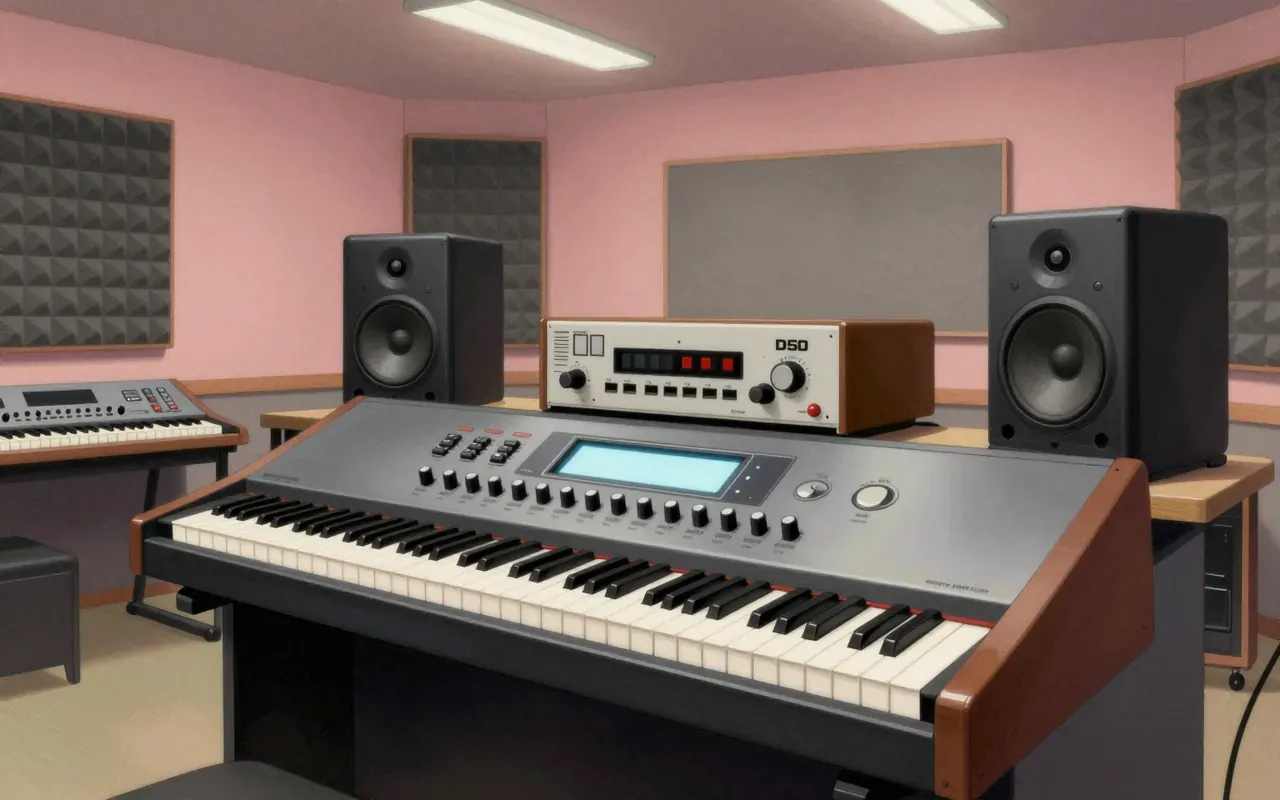
The Roland D-50 is a 1987 hybrid synthesiser that pairs 47 ROM-based PCM attack samples with subtractive synthesis to create realistic, bright, and instantly usable tones. Its architecture — two tones, each with two partials — delivers clarity and presence but imposes strict limits on timbral complexity and real-time control. It was built for affordability and immediacy, not flexibility or depth.

9:08

Oberheim DMX

Oberheim

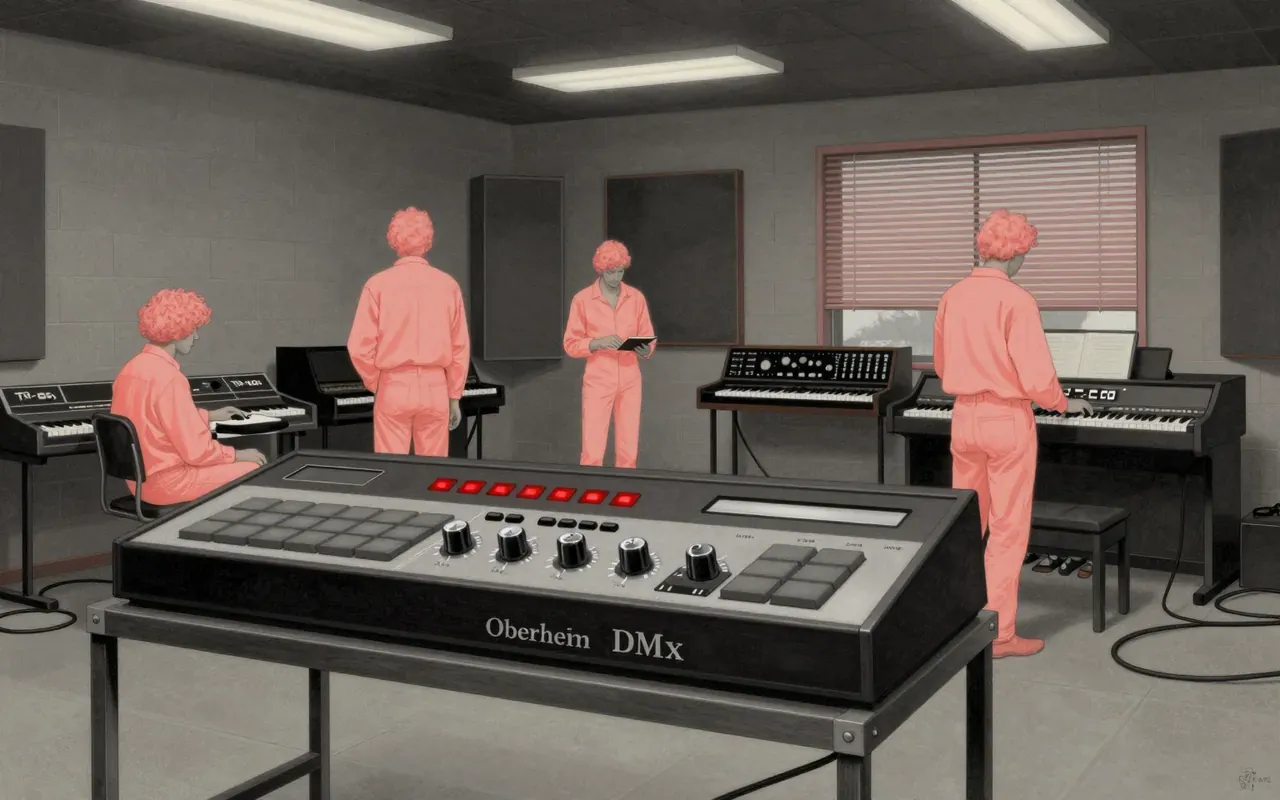
The Oberheim DMX is a programmable digital drum machine introduced in 1980. It was the second commercially sold digital drum machine after the Linn LM-1. It used sampled sounds of real drums stored in EPROM chips on removable voice cards. It offered 24 drum sounds derived from 11 original samples and supported up to 8-voice polyphony. It included humanizing features like rolls, flams, and timing variations. It was designed to interface with the OB-Xa synthesizer via the Oberheim Serial Buss and marketed as part of 'The System' alongside the DSX sequencer and OB-Xa or OB-8. It was widely used in 1980s new wave, synth-pop, and hip hop recordings.

10:47

Fairlight CMI

Fairlight · 1979

The Fairlight CMI defined sampling by doing it first — not perfectly, but decisively. It traded fidelity for immediacy, memory for recognisability, and speed for novelty. Its legacy is linguistic and architectural: it gave sampling a name, and built the first workstation where sound, sequence, and synth shared one chassis.

9:45

Roland JD-800

Roland

The Roland JD-800 is a hands-on, sample-based digital synthesizer manufactured between 1991 and 1996. It features many knobs and sliders for patch editing and performance control. Roland's intention was to return to the roots of synthesis. It employs sample-based oscillators and a fully digital signal path. It has 108 built-in sampled waveforms, expandable via PCM cards. A patch consists of up to four tones. In Multi mode it is possible to play five different patches over MIDI, plus a 'special' patch — which assigns different waveforms to the 61 keys for drums and percussion.
8:50

Linn LM-1

Linn Electronics

The Linn LM-1 is the first programmable drum machine to use digital samples of acoustic drums. Released in 1980, it replaced preset patterns with human-performed, non-degrading sounds. Its quantization enforced perfect sixteenth-note timing. It offered twelve fixed samples—mostly played by Art Wood—with handclaps by Tom Petty and the Heartbreakers. It had no synthesis, no editing, no velocity response, and no visual feedback beyond LEDs. It helped establish drum machines as credible tools in popular music.
10:14

Korg M1

Korg

The Korg M1 is a 1988 sampling-based music workstation with 16-note polyphony, 16-bit PCM sample playback, built-in effects including reverb, delay, chorus, tremolo, EQ, distortion and Leslie simulation, and an eight-track MIDI sequencer. It uses sampled attack transients, loops, sustained waveforms and percussive samples. It was the bestselling synthesizer ever at that time, selling over 250,000 units. None of its features was unique, but their integration was unprecedented.

9:14

Akai MPC

Akai · 1988

The MPC60 redefined beat-making by collapsing sampling, sequencing, and performance into one hardware instrument. Its strength is immediacy. Its weakness is inflexibility.

9:00

Prophet VS

Sequential Circuits

The Prophet VS is an 8-voice hybrid synthesizer released in 1986 by Sequential Circuits. It introduced vector synthesis using a diamond-pattern joystick to mix four 12-bit digital single-cycle waveforms per voice, which are then processed through analog CEM3379/3389 chips. Waves 0–31 are user-editable via MIDI sample dump or onboard harmonic mixing; waves 32–126 are fixed in firmware. It does vector morphing better than anything else of its era—but offers no velocity sensitivity, no aftertouch, no effects, and no reliable patch backup.

9:14

Akai S1000

Akai · 1988

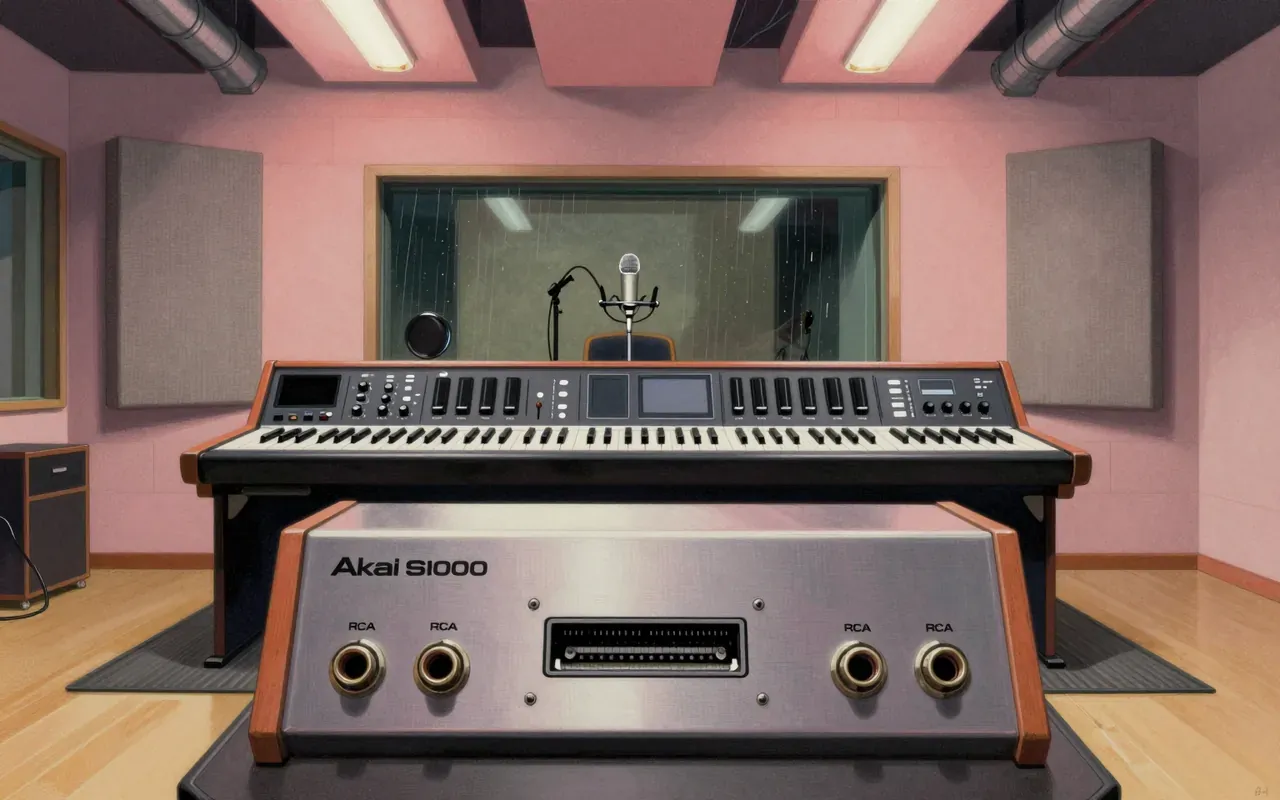
The Akai S1000 was a 16-bit stereo digital sampler released in 1988. It offered CD-quality sampling, 24-bit internal processing, digital filters, effects routing, and early timestretching. It read CD-ROMs and wrote to SCSI hard disks. Its timestretching was crude but sonically distinctive—used on 'Higher State of Consciousness' and 'RipGroove'. It displaced the S900 as the studio standard.

9:27

Yamaha SY99

Yamaha

The Yamaha SY99 is a 1991 hybrid digital synthesizer combining FM, sample-based, and subtractive synthesis. It enables PCM samples to function as FM modulators, controllable via velocity, aftertouch, wheels, pedal, and breath controller. It improves on the SY77 with a 76-key keyboard, expanded ROM, user-loadable PCM samples usable in FM synthesis, and an SPX900-derived real-time controllable effects processor.

9:41

Synclavier

New England Digital

The Synclavier was not a keyboard for players. It was a digital sound laboratory — built for engineers, not performers. Its additive core was brittle. Its sampling was revolutionary. Its 100 kHz rate had no peer. Its role in film sound began at Glen Glenn Sound. Its legacy is infrastructural: the first hard-disk recorder, the first layered digital timbre system, the first computer-based sound editor. It belongs in history — not on a stage.

9:00

Roland TR-909

Roland

The TR-909 is a rigid, unyielding rhythmic engine. Its strength is timing, not texture. Its legacy is built on what it withheld—not what it offered.

10:14

Ensoniq VFX

Ensoniq

The Ensoniq VFX is a performance-type synthesizer released in 1989. It employs Transwave Wavetable Synthesis, Sample playback and Subtractive Synthesis. It has 21-voice polyphony. It features Poly-Key Pressure (Polyphonic Aftertouch). It allows combining up to three voices into a preset for live performance. It includes the Ensoniq Signal Processing (ESP) chip for 24-bit effects. A single sound can contain up to six oscillators. It integrates synthesis, effects and sequencing into a single-unit digital studio. It delivers terrific acoustic sounds and innovative performance and sequencing features.