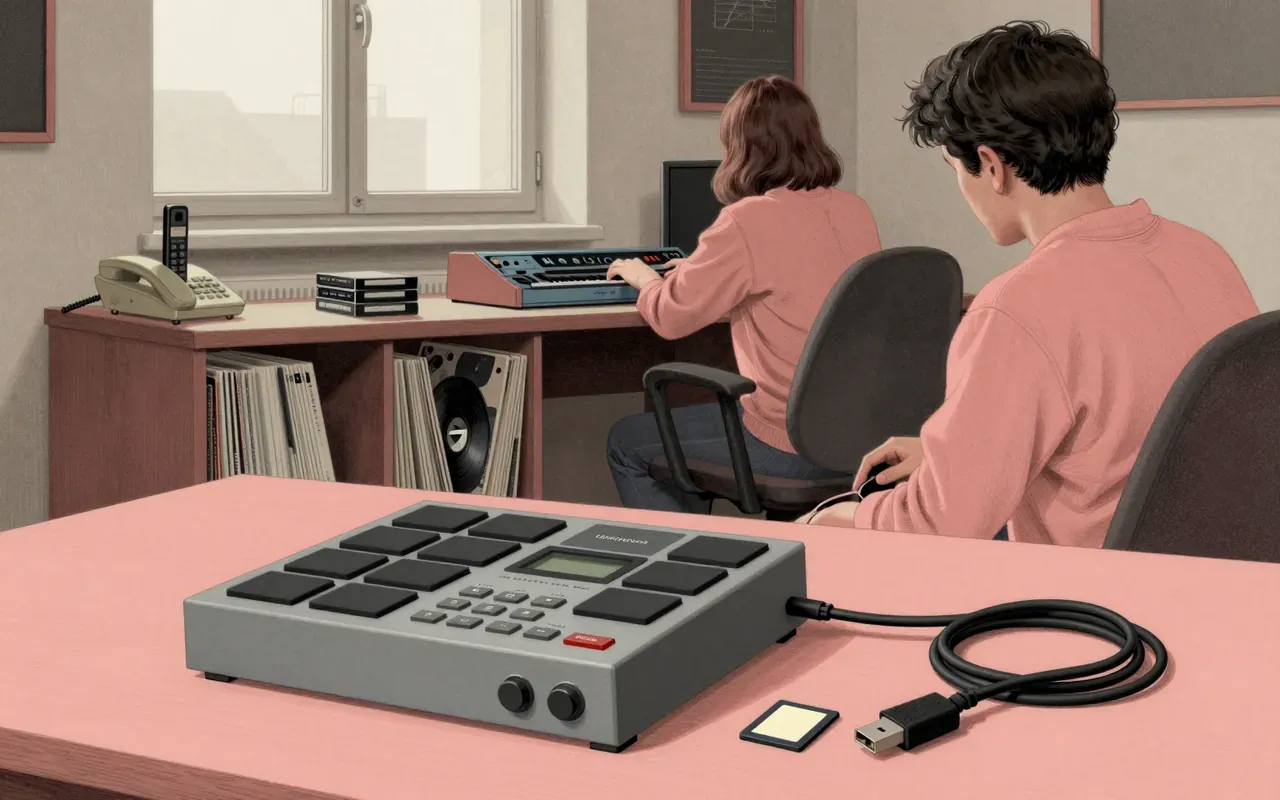
The MPC4000 isn’t a beat machine — it’s a studio in a box that demands you learn its language before it speaks back.
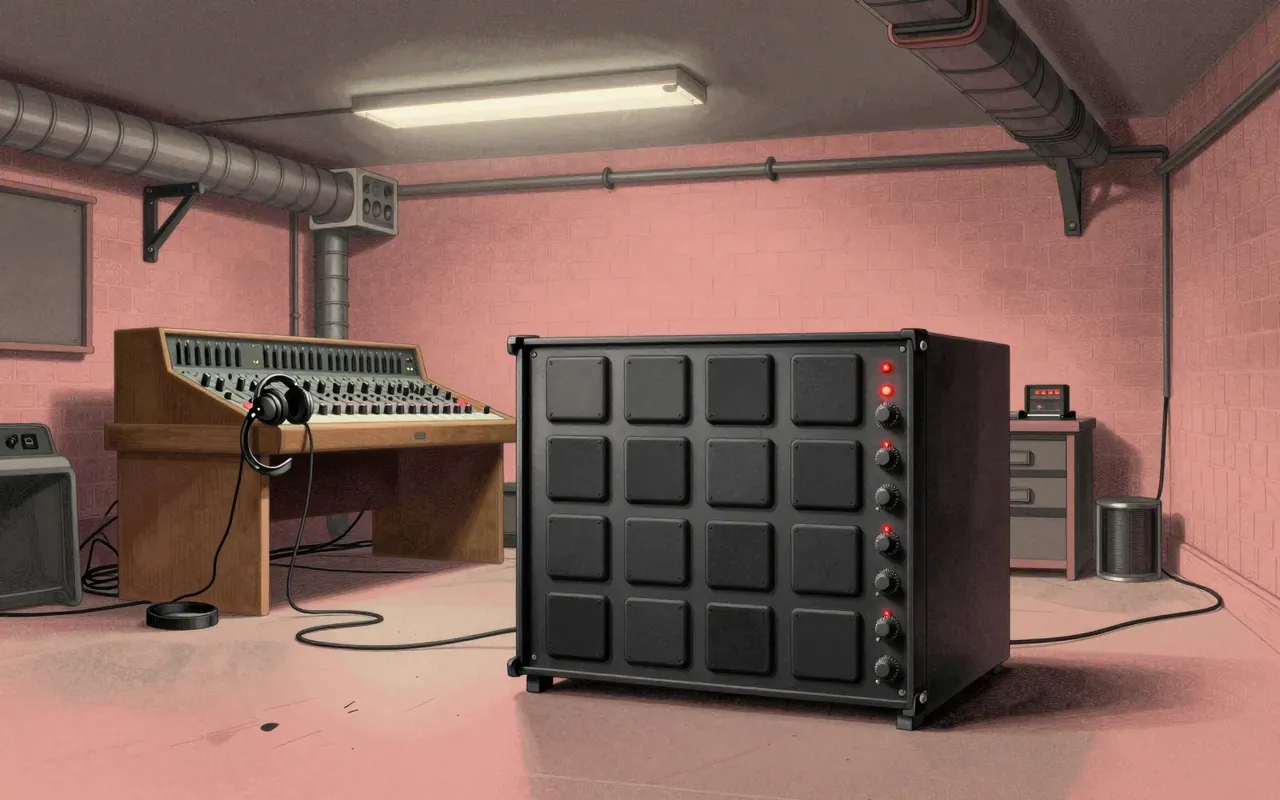
The Akai MPC4000 is a 2002 hardware sampler sequencer built to lead the hardware sampler category. It has 16 velocity- and pressure-sensitive pads. It performs 96 kHz 24-bit sampling. It has 16 MB of sampling memory, upgradeable to 512 MB. It includes IDE bays for installing an internal hard disk drive and CD-ROM drive. It supports optional plug-in boards including Effects, ADAT, S/P-DIF & wordclock, and 8 analogue outputs boards. It has 2 MIDI inputs and 4 MIDI outputs. It was released in 2002 with the intent to lead hardware samplers.
Released in 2002 to lead the hardware sampler category.
3:15
High-res sampling, hands-on control
16 pressure- and velocity-sensitive pads, 96 kHz 24-bit sampling, and 16 MB memory (up to 512 MB).
4:56
Expandable I/O and storage
2 MIDI inputs, 4 MIDI outputs, IDE bays for HDD and CD-ROM, and optional expansion boards.
6:41
Power without hand-holding
No stock samples. No synth presets. A steep learning curve.
Worth your time?
Yes. Use the whole thing.
4/ 5
What works
96 kHz 24-bit sampling
deep MIDI routing
modular hardware expansion
What does not
offer stock samples
include synth presets
provide an easy learning curve
Use it if
producers needing high-resolution sampling in hardware
users requiring expandable MIDI and audio I/O
Skip it if
beginners
those reliant on factory content
software-first workflows
The written brief1 min read
What it is and what it was built for
The Akai MPC4000 is a 2002 hardware sampler sequencer built to lead the hardware sampler category.
How it works, in terms a player would use
You trigger samples with 16 velocity- and pressure-sensitive pads. You sample at 96 kHz 24-bit into 16 MB of memory — expandable to 512 MB. You sequence via an internal sequencer. You route MIDI through 2 inputs and 4 outputs. You install IDE drives for storage or CD-ROM. You add functionality with optional plug-in boards: Effects, ADAT, S/P-DIF & wordclock, or 8 analogue outputs.
What it does better than anything else
It delivers 96 kHz 24-bit sampling resolution in a hardware unit — higher than earlier MPCs — with more memory, more MIDI ports, and more expansion options than any MPC before it.
What it does badly
It offers no stock samples or synth presets. It has a steep learning curve. It lacks built-in synthesis beyond sampling.
What people made with it
The sources do not state what people made with it.
Who should use it, and who should not
A producer who needs high-fidelity sampling, deep hardware integration, and expandable I/O in a single rack unit should use it. Anyone who relies on factory sounds, wants immediate playability, or works primarily in software should not.
Is it worth your time
It is worth your time only if you need a hardware sampler with high-resolution sampling, deep MIDI routing, and expandable I/O — and are prepared to master its steep learning curve without stock sounds or synth presets.