audiobriefs
9:14in productionCh. 1 · Built to fix a failure/ 9:14 · ceiling 15 min
Synths & drum machines · Sound design & sampling

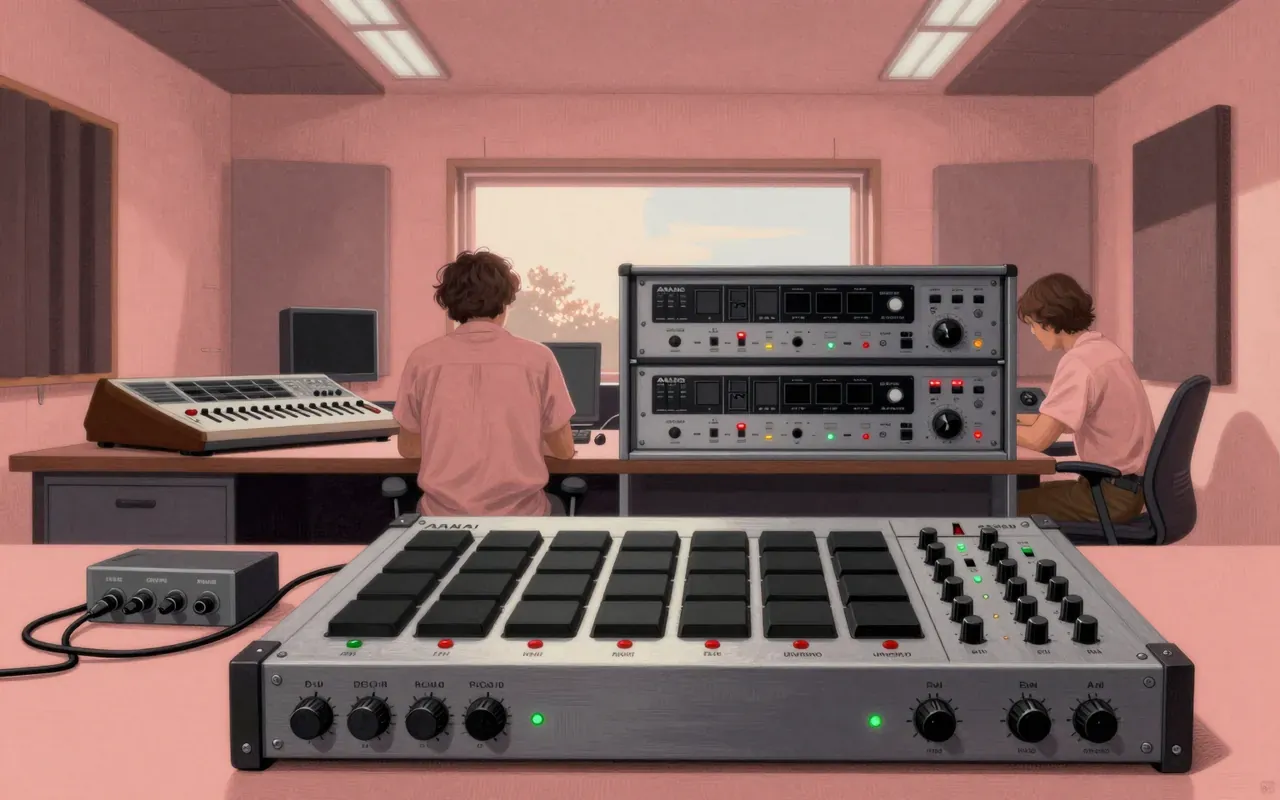
Akai MPC

The MPC60 didn’t invent sampling—it weaponised it for rhythm.

The MPC60 redefined beat-making by collapsing sampling, sequencing, and performance into one hardware instrument. Its strength is immediacy. Its weakness is inflexibility.

Chapters & takeaways4
  1. 1:00
    Built to fix a failure

    The MPC60 was a 1988 collaboration between Akai and Roger Linn to fix the Linn 9000.

  2. 2:16
    One box, one workflow

    It combines sampling, sequencing, and pad performance in one deterministic hardware path.

  3. 3:44
    Engineered top-down

    Linn designed every function, layout, and software—not just the concept.

  4. 5:18
    Why it didn’t last

    The MPC60 was discontinued—its limits became clear once users pushed past its RAM and editing model.

Worth your time?

Yes. Use the whole thing.

4.5/ 5
What works
  • forces rhythmic focus through pad-based sequencing
  • delivers deterministic timing with zero latency
  • integrates sampling and MIDI sequencing in one signal path
What does not
  • support non-destructive editing
  • offer high-resolution audio
  • integrate with modern DAWs
Use it if
  • producers who prefer tactile decision-making
  • hip-hop beat-makers working from vinyl sources
Skip it if
  • sound designers needing deep synthesis
  • engineers requiring recallable session states
The written brief1 min read

What it is and what it was built for

A music workstation built for beat-making and sample-based composition. It was designed to fix the Linn 9000’s flaws—by Roger Linn, in collaboration with Akai—and released as the MPC60 in 1988.

How it works, in terms a player would use

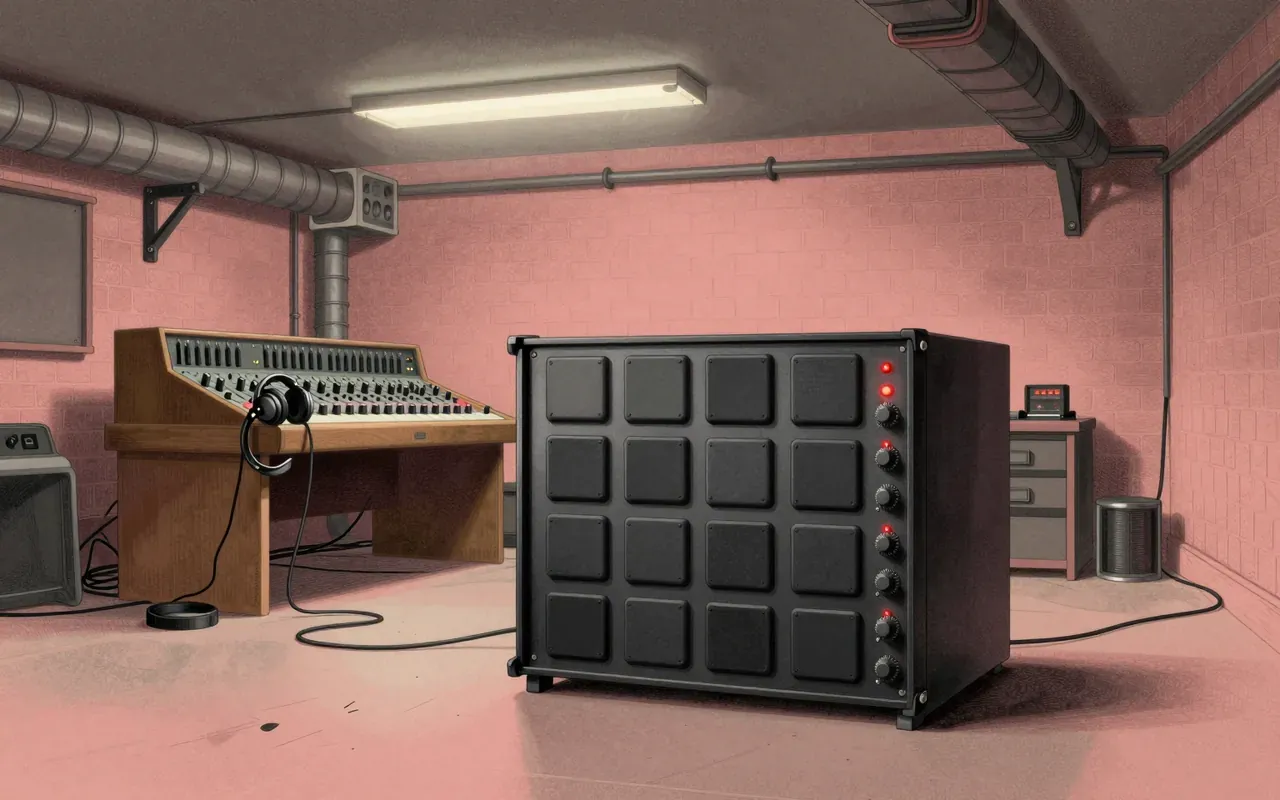
It records sound portions into memory, modifies them with basic editing tools, and triggers them from a grid of velocity-sensitive pads. Sequencing happens in real time or step mode, with MIDI sync and direct-to-disk recording. The panel layout puts controls for sampling, trimming, looping, and sequencing within thumb’s reach.

What it does better than anything else

It integrates sampling, sequencing, and pad performance into one immediate, deterministic signal path. The grid layout and real-time quantisation make beat-making faster and more physical than any contemporary alternative.

What it does badly

It offers no built-in effects beyond basic filtering and level control. Memory is fixed and small. Editing is destructive and linear. There is no undo. Sample length is constrained by RAM. Disk-based storage is slow and fragile by modern standards.

What people made with it

Hip-hop producers used it to build entire tracks from vinyl breaks, layering and rearranging samples in ways previously impossible on tape or early samplers. Its timing and feel defined the rhythmic grammar of late-1980s and 1990s hip-hop.

Who should use it, and who should not

Producers who want constraint as a creative tool. People who work best with hands-on, low-latency feedback and minimal abstraction. Not for those who rely on recallable presets, non-linear editing, or deep sound design.

Is it worth your time

Yes—if you need a tactile, all-in-one sampling and sequencing environment that forces decisions through physical interaction rather than menus. No—if you require high-resolution audio, non-destructive editing, or modern workflow integration.
Same bench · Synths & drum machines4 of 40
9:20
ARP 2600ARPThe ARP 2600 is a foundational analog synthesizer designed for education. Its semimodular architecture, front-panel signal graphics, and duophonic voice count reflect its classroom purpose—not stage use. Its original filter was replaced after a patent dispute. It teaches synthesis more directly than any contemporaneous instrument, but offers no polyphony, no presets, and unstable tuning.
8:47
Roland CR-78RolandThe CR-78 is historically singular: the first microprocessor-based drum machine and the first to allow user-programmable pattern creation. Its analog synthesis yields 14 fixed drum sounds. Its four-note polyphony defines its rhythmic ceiling. It does not offer sound editing, velocity layers, or sample playback. It belongs in rooms where constraint is compositional strategy—not a flaw to be patched.
8:36
Yamaha CS-80Yamaha · 1976The Yamaha CS-80 is an analog synthesizer introduced in 1977. It supports true 8-voice polyphony, with two independent synthesizer layers per voice each with its own set of front panel controls. It has a layered keyboard that is both velocity-sensitive and pressure-sensitive, with polyphonic aftertouch and a ribbon controller for polyphonic pitch-bends and glissandos. Production of the instrument ceased in 1980.
9:20
Casio CZ synthesizersCasioThe Casio CZ series is a line of low-cost, digitally implemented phase distortion synthesizers introduced by Casio in 1984. They simulate analog filter behaviour without physical filters, using digital phase distortion instead. Each oscillator plays waveforms in series—not parallel—enabling sub-harmonics but restricting waveform pairing. Polyphony drops from eight to four voices when using two oscillators per voice. They were built for amateur musicians, prioritising affordability and portability over expressive control or sonic flexibility.
Up next in Audio

Fender Musicmaster

Fender · 9:26

The Musicmaster isn’t cute—it’s calibrated for compromise: small hands, small budgets, small sonic ambitions.

9:26