What it is and what it was built for
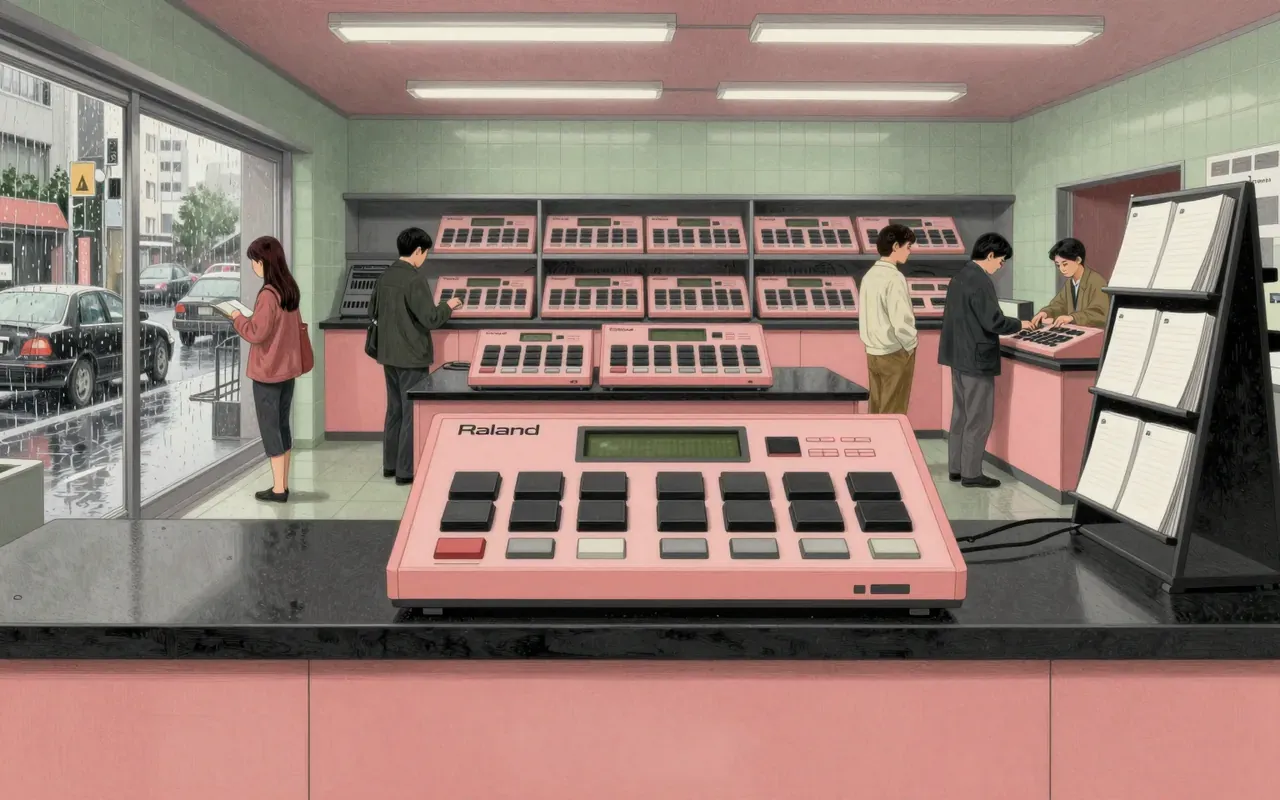
The Casio RZ-1 is a 1986 pad-based drum machine built for live beat sketching and studio prototyping. It prioritises speed, separability, and on-board sampling over sonic refinement.
How it works, in terms a player would use
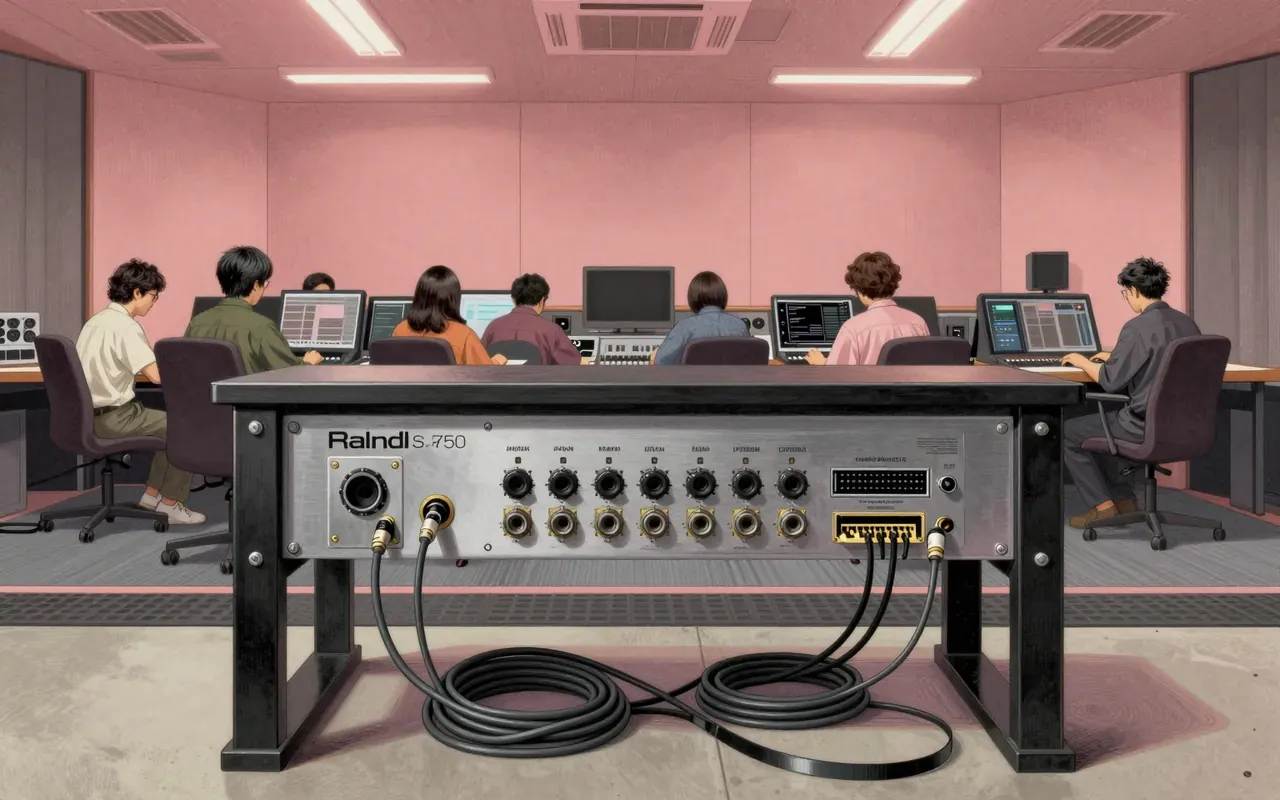
You trigger 12 built-in PCM drum sounds or replace up to four of them with your own samples. Each sample is limited to 0.2 seconds at 20kHz. You edit samples only with a low-pass tone control. You build rhythms in patterns — up to 100 — then chain them into songs — up to 20. Ten individual outputs let you route each sound separately, with dedicated volume sliders.
What it does better than anything else
It delivers immediate, tactile pattern sequencing with zero setup. Its 16-voice polyphony handles dense grooves without choke. The ten discrete outputs and per-sound volume sliders give more physical mixing control than most contemporaries at the price.
What it does badly
It fails at sample fidelity and flexibility. The 20kHz sampling rate and 0.2-second limit per pad produce thin, brittle transients. There is no pitch shifting, looping, truncation, or level editing — only one tone knob per sample. Shared outputs mean some sounds cannot be isolated without external routing.
What people made with it
People made early electronic pop, home-studio demos, and lo-fi percussion beds — using its constraints as texture rather than overcoming them.
Who should use it, and who should not
Use it if you work with hardware sequencers, value physical output routing, and want sampling that feels like carving sound from stone. Do not use it if you rely on sample layering, time-stretching, or clean transient reproduction.
Is it worth your time
Yes, if you want a compact, hands-on drum machine that forces lo-fi decisions and rewards quick pattern-building. No, if you need fidelity, flexible editing, or modern connectivity.