audiobriefs
9:36in productionCh. 1 · Built for the desk, not the rack/ 9:36 · ceiling 15 min
Sound design & sampling · Instruments

Roland S-750

A 1992 sampler that routes eight layers to eight outs—and makes you wrestle floppy disks to do it.

The Roland S-750 is a 1992 hardware sampler built for deep, routed, real-time sampling work—not convenience or compatibility.

Chapters & takeaways4
  1. 1:01
    Built for the desk, not the rack

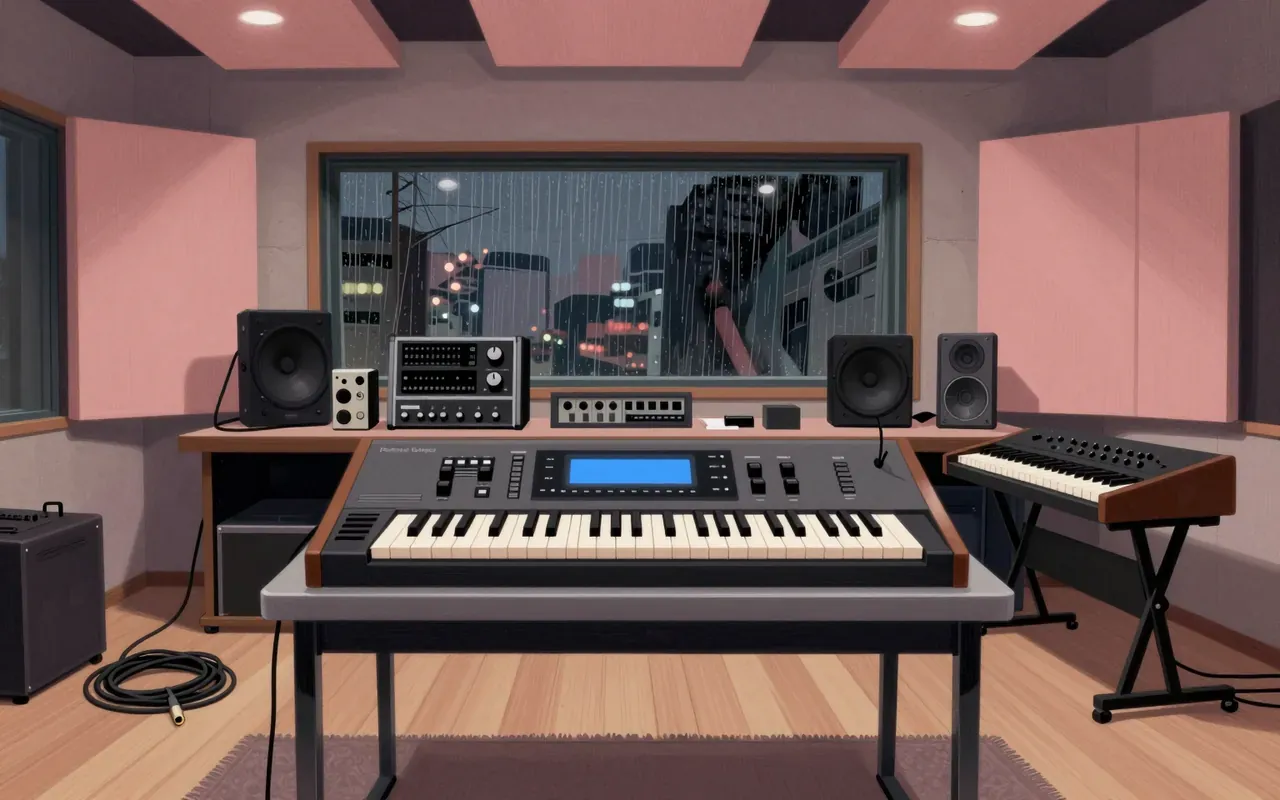
    It was designed as a self-contained studio tool—not an add-on, but the centre of the room.

  2. 2:46
    Polyphony with strings attached

    24 voices and 18 MB RAM let you stack complex, time-stretched loops—but only if you install SIMMs first.

  3. 4:24
    One loop, one output, one filter

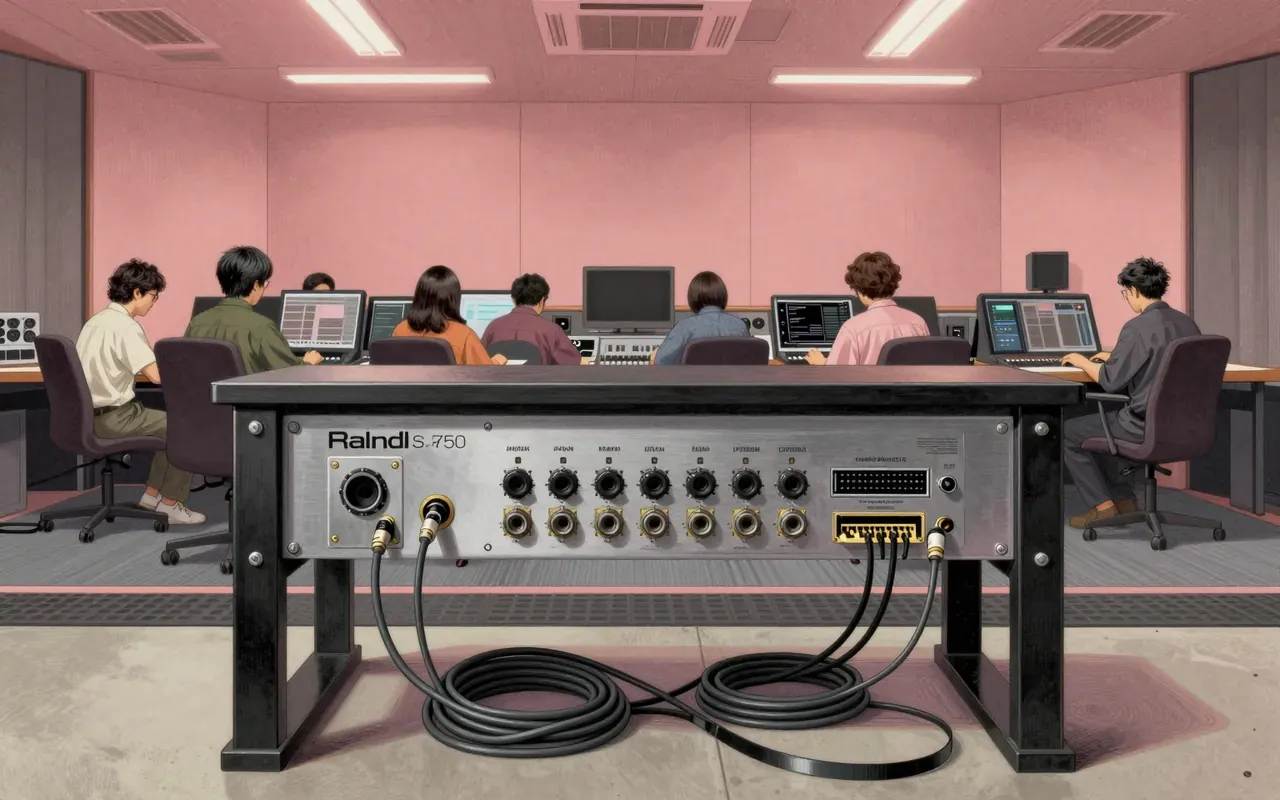
    Eight assignable analog outputs and manual filtering let you route and sculpt each layer independently.

  4. 6:10
    Real-time, not resolution

    Sampling tops out at 44.1 kHz—and multi-loop editing happens in real time, not non-destructively.

Worth your time?

Yes. Use the whole thing.

3.5/ 5
What works
  • multi-loop sampling with real-time DSP
  • 24-voice polyphony with layered output routing
  • manual filtering and time-stretching on hardware
What does not
  • support sample rates above 44.1 kHz
  • offer USB or modern storage interfaces
  • include non-destructive editing
Use it if
  • studio engineers who need eight discrete analog outputs
  • producers committed to hardware-based time-stretching and filtering
Skip it if
  • laptop-based producers
  • beginners
  • anyone reliant on instant recall or cloud sync
The written brief1 min read

What it is and what it was built for

The Roland S-750 is a 1992 digital sampler built for studio-based sound design, film scoring, and live performance where discrete analog outputs and real-time DSP mattered more than portability or speed.

How it works, in terms a player would use

It runs sampling, looping, and DSP editing from a built-in monitor and mouse. You trigger samples in real time. You assign sounds to its 8 analog outputs. You load samples via floppy disk or SCSI. You expand RAM with SIMMs to hold over 100 seconds of audio.

What it does better than anything else

It delivers 24-voice polyphony with layered multi-loop sampling while applying time-stretching and manual filtering in real time—on hardware, with dedicated outputs for each layer.

What it does badly

It cannot sample above 44.1 kHz. It has no built-in effects beyond basic DSP. Its floppy drive is slow and unreliable by modern standards. Its 2 MB base RAM forces expansion for serious work.

What people made with it

Producers used it for layered orchestral hits, processed breakbeats, and custom multi-output instrument patches—especially where time-stretching and per-layer output routing were essential.

Who should use it, and who should not

Studio engineers who want tactile, hardware-based sampling with eight assignable outputs. Not for laptop producers, beginners, or anyone needing instant recall, cloud sync, or USB connectivity.

Is it worth your time

Yes—if you need hands-on, multi-output sampling with time-stretching and manual filtering in a single hardware unit. No—if you rely on modern DAW integration, high-resolution sample rates, or fast workflow without physical media.
Same bench · Sound design & sampling4 of 107
Up next in Audio

Roland S-760

Roland · 8:09

A pure sampler—no synthesis, no effects, just 24 voices of unadorned 16-bit stereo sampling.

8:09