The XV-5080 isn’t a synth — it’s a stereo sample playback engine with surgical modulation and zero tolerance for modern convenience.
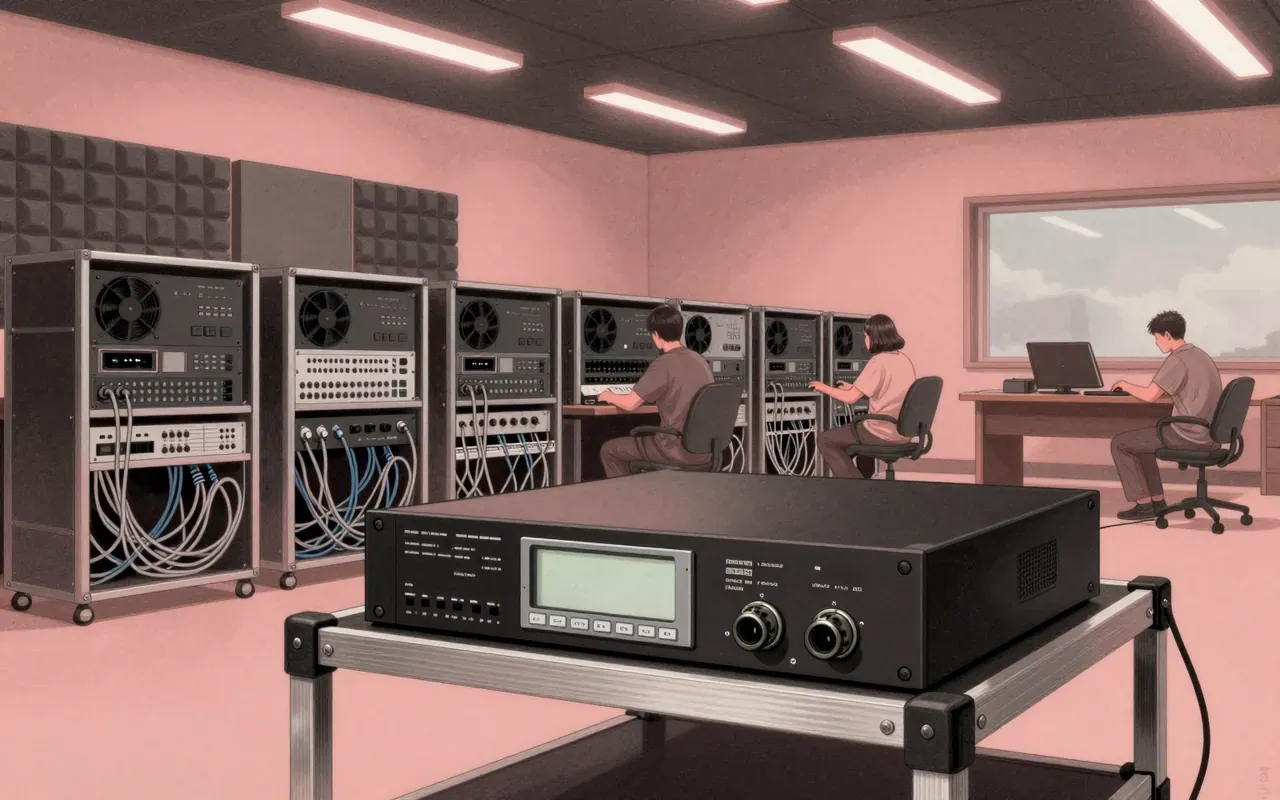
The Roland XV-5080 is a 2000 rack-mount sound module built for studio composers needing stereo sample playback, deep modulation via Matrix Control, and expandability through SRX and SR-JV80 boards. It reads Akai S1000 and Roland S-700 CD-ROMs via SCSI, supports up to 128MB of sample memory, and includes COSM effects and digital outputs — features the XV-3080 lacks. It offers no keyboard, no sequencer, no USB, and demands physical navigation. It belongs in a fixed studio with legacy hardware — not on a laptop stand.
Roland positioned it as the ultimate sound module — not a keyboard, not a workstation, but the peak of its sample-playback architecture.
2:44
Stereo Waveforms & Matrix Control
True stereo waveforms per tone and Matrix Control give expressive, multi-dimensional sound shaping impossible on the XV-3080.
4:44
CD-ROM Libraries & Expandable Memory
SCSI compatibility with S-700 and Akai S1000 CD-ROMs plus 128MB sample memory enables deep library integration and custom sound loading.
6:08
What the 5080 Has — and the 3080 Lacks
Digital outputs, COSM effects, and Akai/S-700 support are the hard lines separating the 5080 from the stripped-down 3080.
Worth your time?
Yes. Use the whole thing.
4/ 5
What works
true stereo waveforms per tone
Matrix Control for nuanced modulation
four SRX and four SR-JV80 expansion slots
SCSI-based Akai/S-700 CD-ROM compatibility
What does not
support USB
include a keyboard
feature a built-in sequencer
allow direct DAW plugin integration
Use it if
studio composers
sample library integrators
analogue/digital hybrid users
Skip it if
laptop performers
beginners
DAW-native producers
The written brief2 min read
What it is and what it was built for
The Roland XV-5080 is a 2000 desktop sound module built as the ultimate expression of Roland’s synthesizer/sample player architecture. It was built for studio composers and producers needing maximum polyphony, stereo sample playback, and expandable, studio-grade effects.
How it works, in terms a player would use
It loads sounds from internal wave memory or external CD-ROMs via SCSI. It uses Matrix Control to route modulation sources like LFOs and envelopes to destinations like filter cutoff or pitch. It accepts SRX and SR-JV80 expansion boards. It outputs audio through analogue, R-Bus or S/PDIF connections.
What it does better than anything else
It delivers true stereo waveforms per tone — a rarity in 2000 — and Matrix Control programming that gives sounds an unprecedented level of nuance. It supports four SRX expansion slots and four SR-JV80 slots simultaneously, enabling vastly more layered tones than the XV-3080.
What it does badly
It cannot load Akai or S-700 libraries without SCSI hardware and compatible CD-ROMs. It lacks USB or MIDI file import. Its interface is menu-dense and requires physical navigation. It has no built-in sequencer or recording.
What people made with it
People made film scores, TV themes, and commercial production music with it — using its COSM effects, stereo waveforms, and library compatibility to build rich, polished textures without external processing.
Who should use it, and who should not
A producer who owns or can source S-700 or Akai S1000 CD-ROMs, needs R-Bus or S/PDIF output, and values hands-on Matrix Control over modern DAW integration should use it. A beginner or laptop-first producer should not.
Is it worth your time
It is worth your time if you need a high-polyphony, expandable sample-based module with deep real-time control and digital connectivity. It is not worth your time if you need modern workflow integration, USB, or software editing.