Its groove cannot be sampled — but nothing else about it can be trusted.
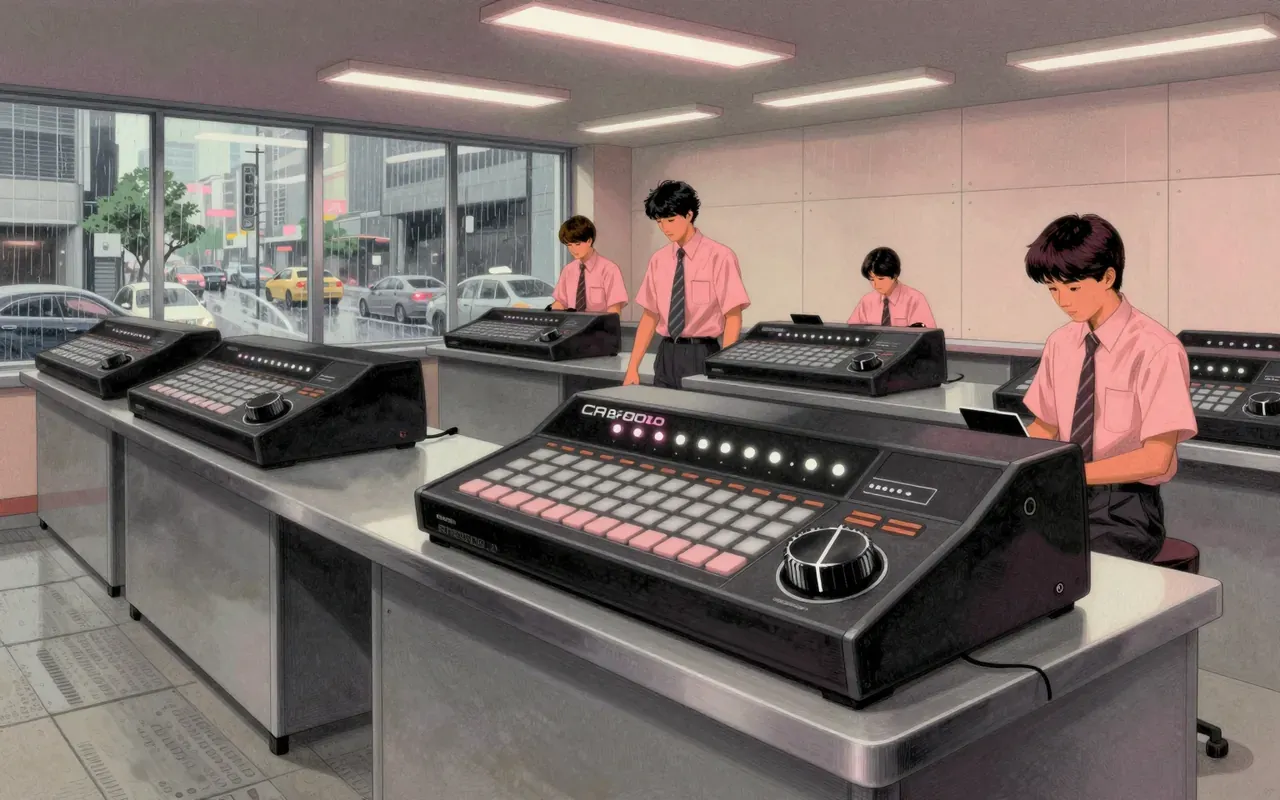
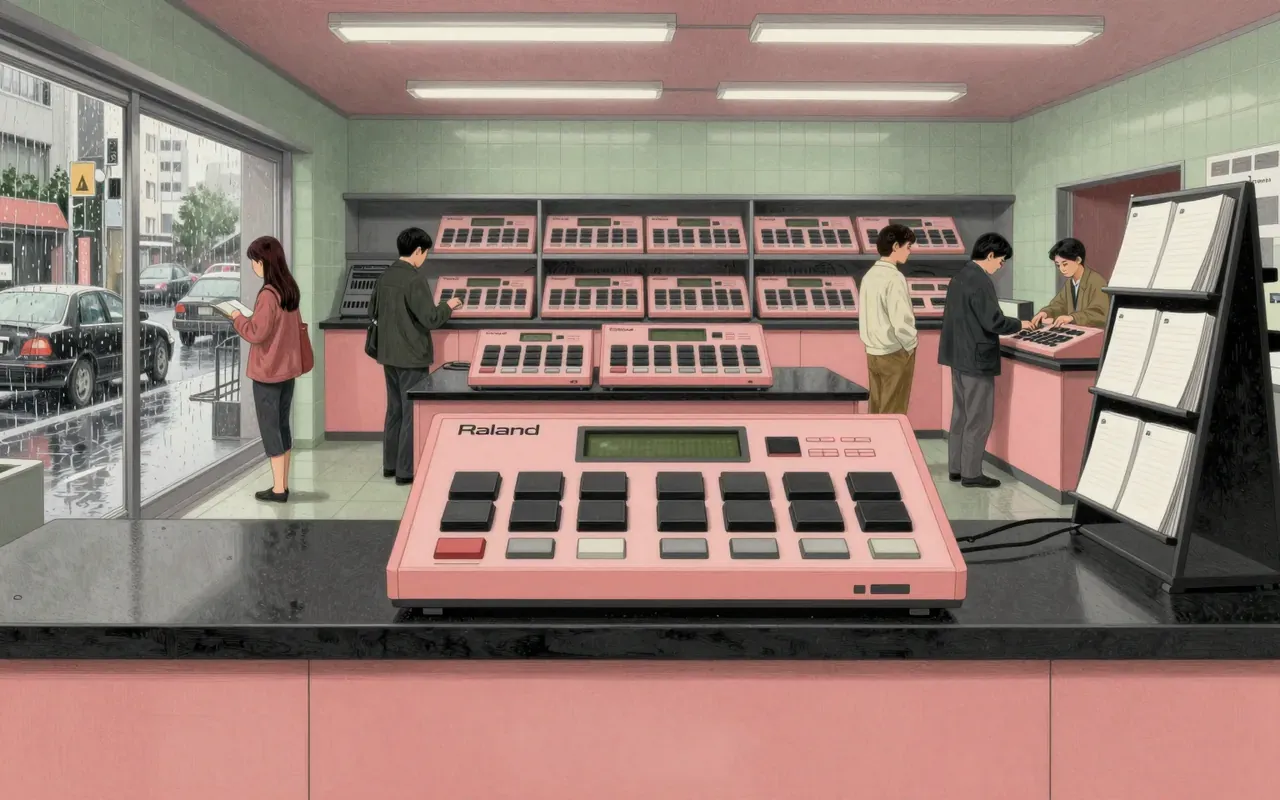
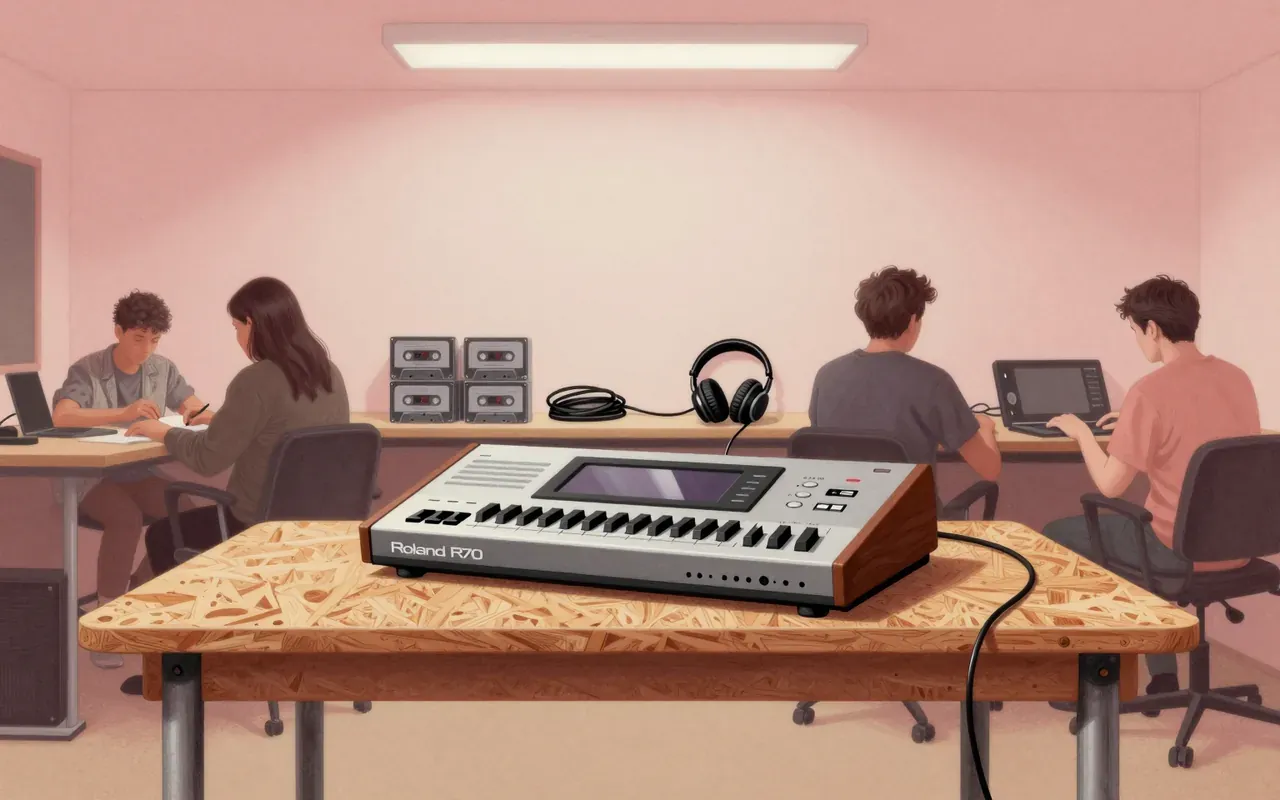
The Roland CR-8000 is a non-editable analog drum machine from 1980/81. It gives you 13 fixed drum sounds, one mono output, eight user-programmable patterns, and a unique groove knob that alters timing and timbre simultaneously — especially in the hi-hats. That groove cannot be sampled. Everything else is compromised: the sequencer is poorly programmed, the control panel fails under external use, and there are no built-in effects. Artists including Fluke, BT, Jimmy Edgar, and Blondie used it. It belongs in a collection, not a production chain.
Thirteen fixed sounds. One mono output. Eight user-programmable pattern slots.
2:10
The groove knob is its only superpower.
A single knob changes both timing and timbre — especially the hi-hats — in ways sampling cannot capture.
3:22
The sequencer breaks. The panel fails.
The sequencer is difficult to use. The interface is simpler than the TR-808 but less capable. The control panel fails under external programming.
4:35
Used by pros. Loved for what it implies, not what it offers.
It sounds like the CR-78 and TR-808. Fluke, BT, Jimmy Edgar, and Blondie used it. No effects — yet users feel effect-like results.
Worth your time?
No. The brief is enough.
2.5/ 5
What works
groove manipulation via physical knob
preset and user-programmable patterns
hi-hat timbre variation synced to timing
What does not
edit sounds
offer stereo output
support modern sequencing workflows
tolerate external programming reliably
Use it if
collectors
performers needing un-samplable groove
Skip it if
producers requiring sound editing
engineers needing multi-output routing
studios relying on stable sequencing
The written brief1 min read
What it is and what it was built for
The Roland CR-8000 is a non-editable, mono-output analog drum machine released in 1980/81. It was built to generate preset and user-programmable rhythm patterns using fixed analog drum voices.
How it works, in terms a player would use
It plays 13 fixed analog drum sounds through a single mono output. You choose from internal presets or program your own patterns into eight user slots. A dedicated swing/groove knob alters both timing intervals and timbre — especially the hi-hats — in real time.
What it does better than anything else
It delivers a swing/groove feel that cannot be captured by sampling — a real-time interplay of timing and timbre controlled by one knob.
What it does badly
It has a poorly programmed sequencer, no built-in effects, and a control panel that fails during external programming. Configuration is simpler than the TR-808 but less capable.
What people made with it
Fluke, BT, Jimmy Edgar, and Blondie used it. Its sound resembles the CR-78 and TR-808, and users report effect-like results despite having no built-in effects.
Who should use it, and who should not
Collectors and performers who prioritise irreplicable groove over flexibility should use it. Producers needing editable sounds, multi-output routing, or reliable sequencing should not.
Is it worth your time
It is worth your time only if you need un-samplable groove, not editable sounds or modern workflow. Its hardware fragility and non-editable nature make it impractical for daily studio use.