What it is and what it was built for
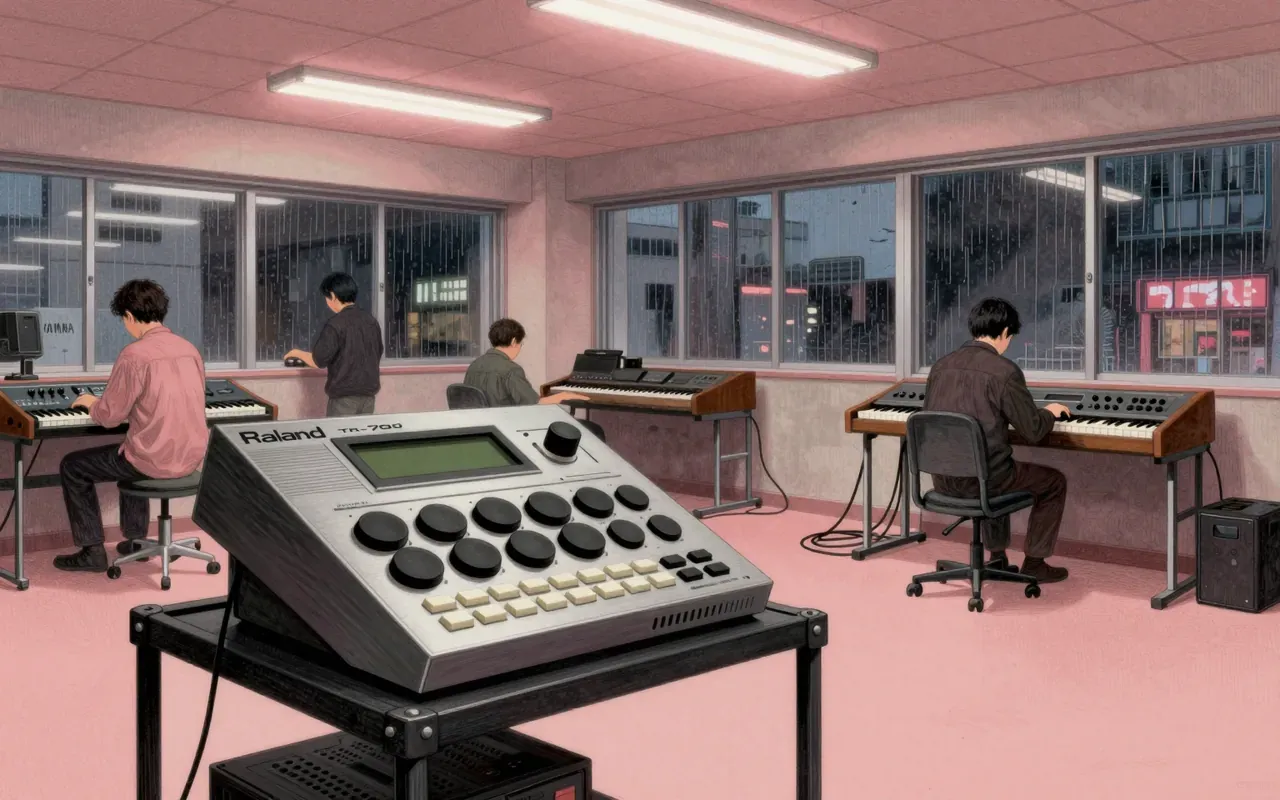
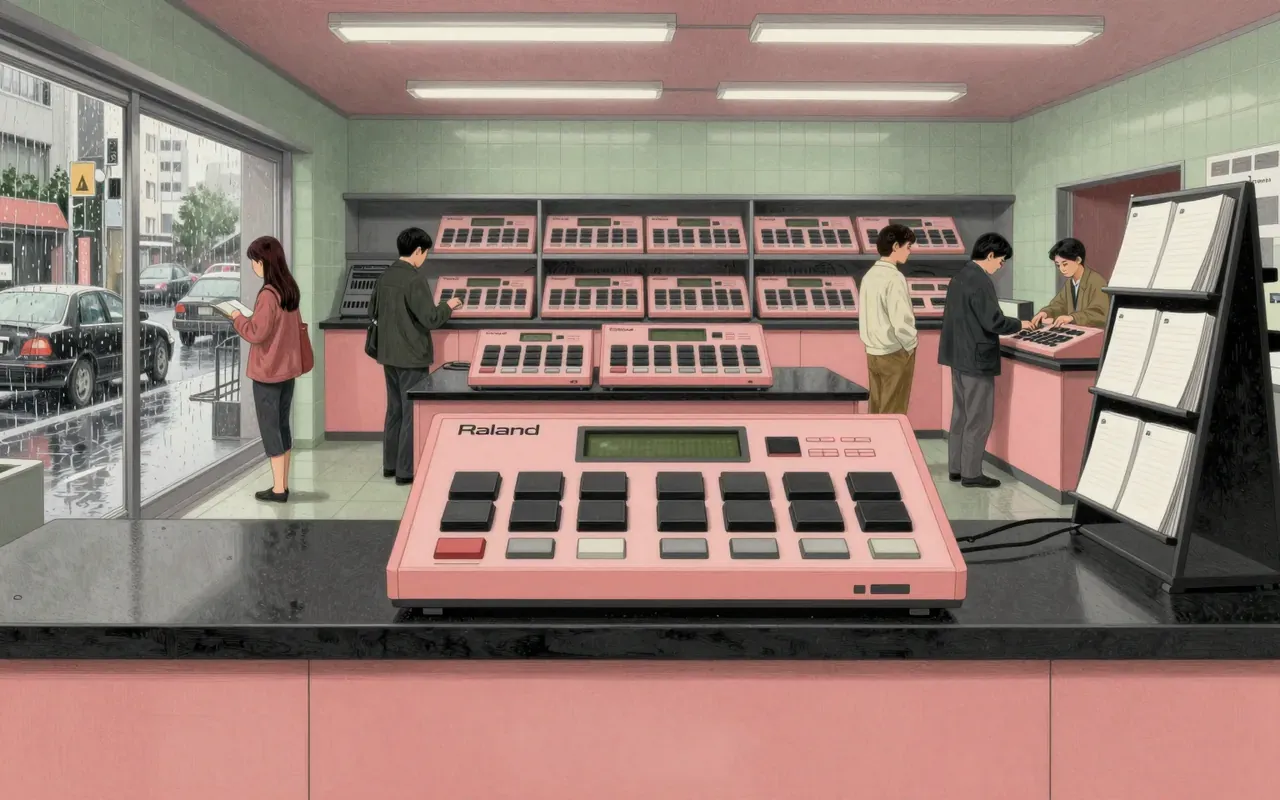
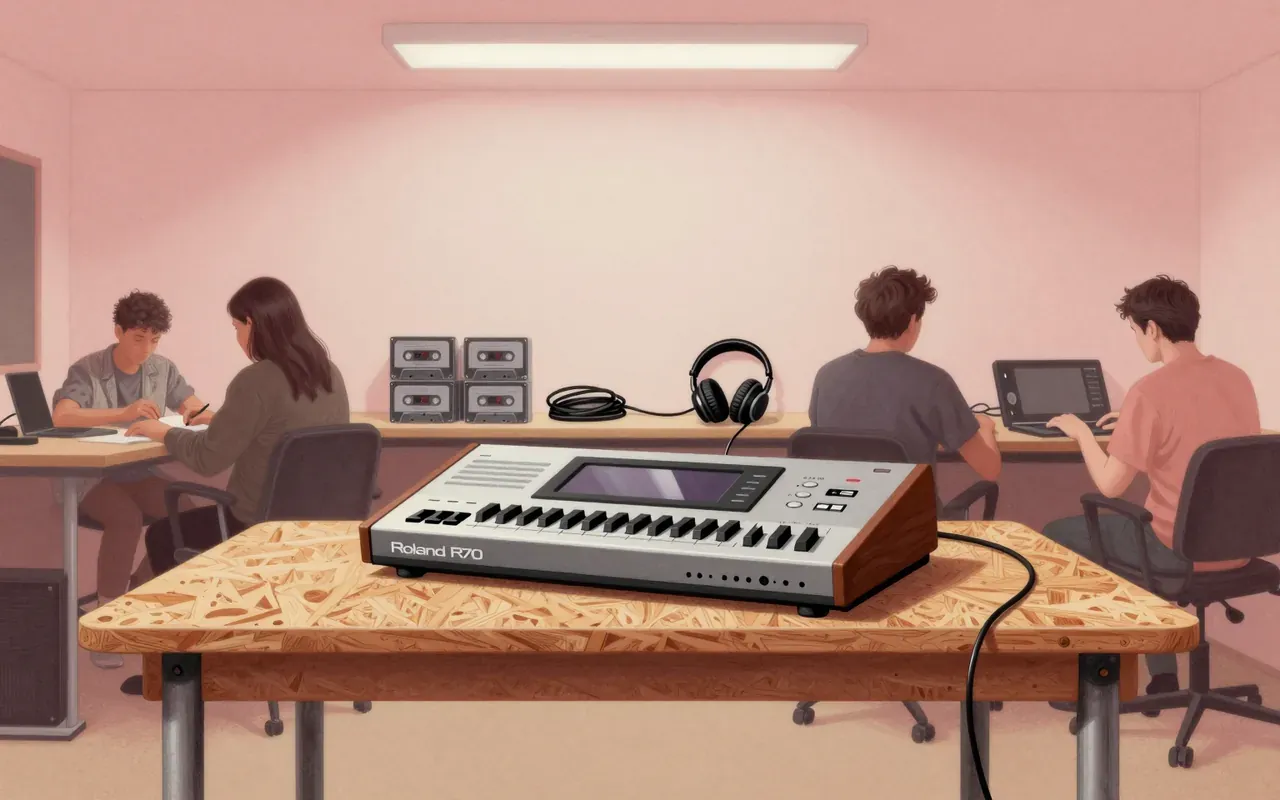
The Roland R-70 is a 1992 full-sized, sample-playback drum machine built for live performance and studio sketching. It was designed as an all-purpose rhythm workstation with programmable patterns, song chaining, and effects.
How it works, in terms a player would use
It plays back digital drum samples. You assign sounds to pads, including TR-606, TR-808, and TR-909 kits. The positional pad changes sound by where you hit it. You build patterns in real time or step input. You chain up to 100 patterns into 20 songs. You edit sounds using only attack, sustain, and pan. You apply reverb, chorus, flanger, delay, or use humanization to vary timing and velocity.
What it does better than anything else
It delivers large, impactful drum sounds—especially kicks and cymbals modelled on the TR-808—with high-quality reverb and chorus. Its positional pad gives physical expressivity rare in 1992. It offers more ready-to-use genre kits (Rock, Jazz, Electronic, Ethnic) than most contemporaries.
What it does badly
Its built-in sequencer is complex and cumbersome. Sound editing is shallow: no filter, tuning, or sample manipulation—only attack, sustain, and pan. It cannot layer sounds or alter sample length. Humanization applies broadly, not per-instrument.
What people made with it
The sources do not specify what people made with it.
Who should use it, and who should not
Producers and performers who value tactile play, genre-flexible kits, and hardware immediacy—and who sequence externally. Not for sound designers needing synthesis depth, or beginners overwhelmed by its sequencer.
Is it worth your time
Yes—if you want a hands-on, full-sized drum machine with genre-spanning samples, humanized groove, and assignable outputs, and you’re willing to work around its complex built-in sequencer. No—if you need deep sound design, modern workflow integration, or intuitive pattern editing.