What it is and what it was built for
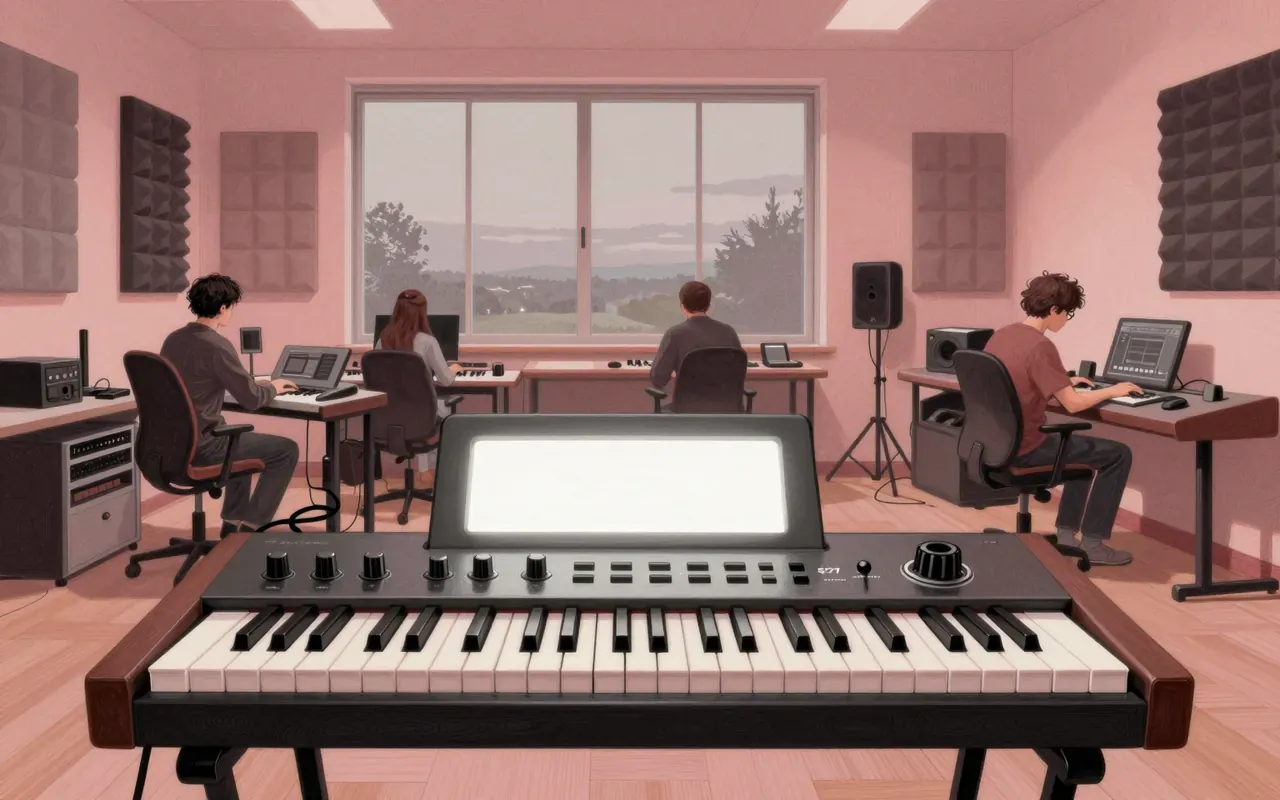
A 16-voice multitimbral music workstation built for studio composition and live performance. It integrates sequencing, synthesis, sampling, and effects in one unit. Yamaha released it in 1989 to extend FM beyond the DX7’s limitations while embedding samples into the synthesis engine.
How it works, in terms a player would use
It layers AFM (an expanded 6-operator FM) and AWM2 PCM samples in three ways: standalone, layered, or with samples modulating FM operators — a capability unique to the SY/TG series. You assign waveforms to Elements, route them through filters and effects, and sequence up to 16,000 notes. The 61-key keyboard gives velocity and aftertouch. Two modulation wheels and a pitch wheel give real-time control.
What it does better than anything else
It uniquely lets PCM samples modulate FM operators — not just trigger or layer, but shape FM spectra in real time. No other synth from 1989 does this. Its RCM mode fuses sample transients with FM sustain in a single voice, giving sharper attack and richer timbral evolution than pure FM or LA synthesis alone.
What it does badly
It offers no multitimbral real-time parameter automation beyond what the sequencer records. Its menu-driven interface slows sound design. There is no audio input for external processing. The floppy drive limits project portability. It cannot layer more than one AWM2 waveform per Element as a modulator — only one sample per FM operator.
What people made with it
The document states no specific works, artists, albums, or genres made with it. No claims about usage are verified.
Who should use it, and who should not
A producer or composer who values hybrid synthesis architecture and has time to learn its layered menu system. Not for beginners, performers needing instant recall, or those reliant on DAW integration — it predates MIDI sync standards beyond basic clock and has no USB or audio interface.
Is it worth your time
Yes — if you need a single-box 1989 workstation that merges sample playback, FM synthesis, and hybrid RCM in one signal path. No — if you require modern polyphony, deep editing without menus, or tactile immediacy. It demands patience, not nostalgia.