What it is and what it was built for
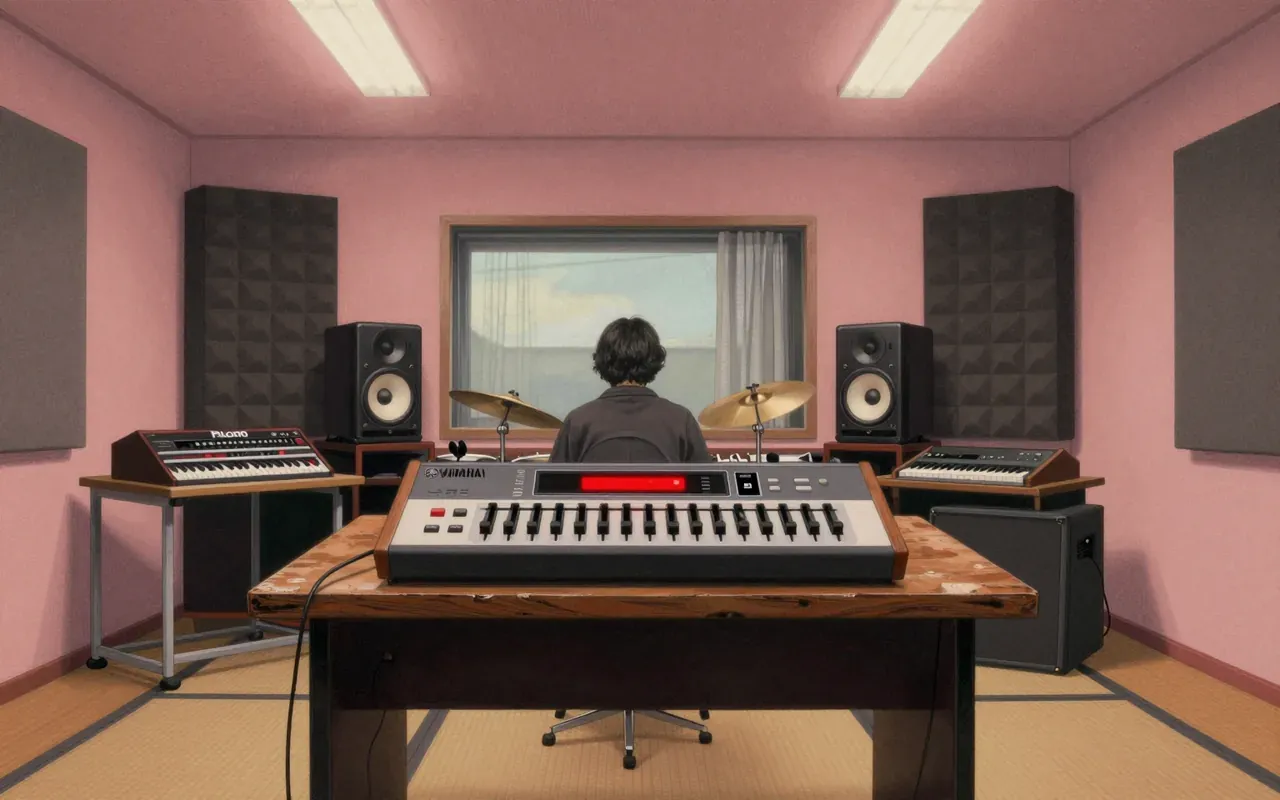
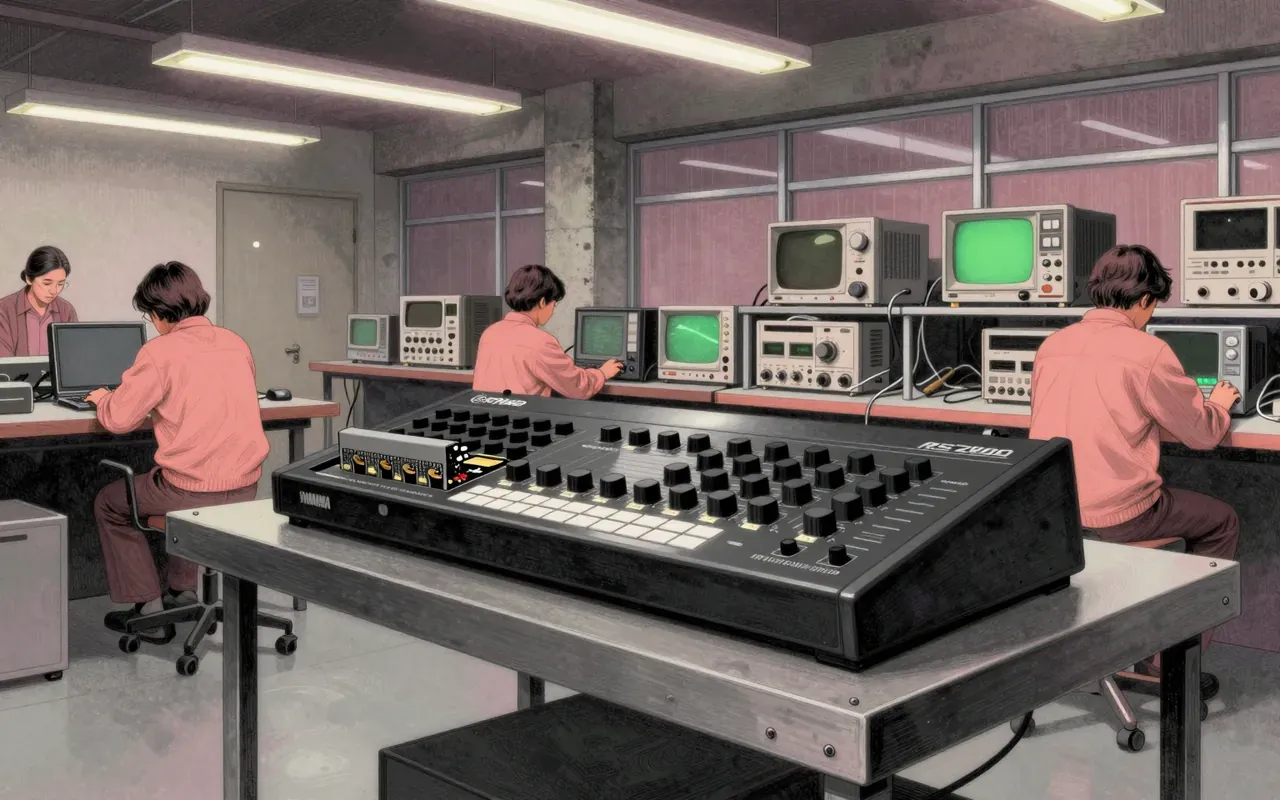
The Yamaha RS7000 is a 2001 groove production workstation. It combines sampling, pattern- and linear-based sequencing, and AWM2 tone generation. It was built for producers who wanted MPC-style workflow with integrated synth sounds—not for sound design or live performance.
How it works, in terms a player would use
It records samples at 5kHz–44.1kHz (or 32kHz–48kHz with the digital option board). It slices loops automatically to tempo. It sequences in patterns across 16 tracks or linearly like Cubase. Edits to sounds and samples embed directly into each pattern. The AWM2 engine plays over 1,000 synth sounds and 63 drum kits from ROM, with 62-voice polyphony.
What it does better than anything else
It embeds sound and sample edits directly into sequence patterns—so every pattern carries its own sonic identity without project file dependencies. No other hardware groove box from 2001 does this with AWM2 ROM sounds, auto-beat slicing and dual pattern/linear sequencing in one unit.
What it does badly
It offers no user-writable synthesis engine. All sounds are ROM-based. Sample editing is limited to slicing, trimming and basic level/pan—no time-stretching, pitch-shifting or effects processing within the sampler. There is no built-in audio recording or multi-track audio playback.
What people made with it
No specific releases, artists or recordings are named in the source material. The sources do not establish what people made with it.
Who should use it, and who should not
A producer who values embedded pattern-level sound control and tempo-synced sampling in hardware—and who accepts ROM-only sounds and no sample synthesis. Not for anyone needing resampling, granular manipulation, or open-ended synthesis.
Is it worth your time
Yes—if you need a self-contained groove workstation that locks sampling, sequencing and ROM-based sound into one hardware workflow. No—if you require deep synthesis editing, real-time sample manipulation, or external instrument integration beyond MIDI.