audiobriefs
9:55in productionCh. 1 · Built for the DX7/ 9:55 · ceiling 15 min
Synths & drum machines · Sound design & sampling

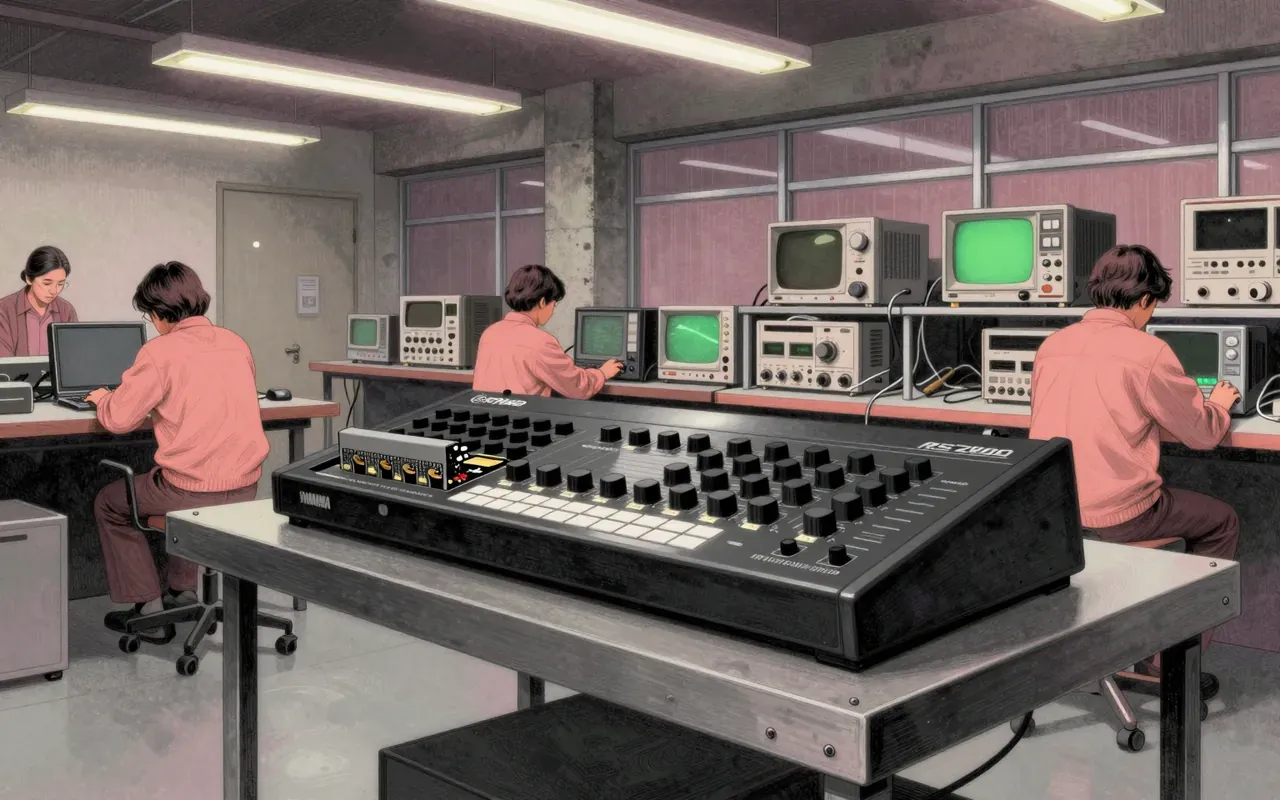
Yamaha RX11

It doesn’t groove — it stamps. The RX11 is 1984’s unyielding drum dictator.

The Yamaha RX11 is a 1984 digital drum machine using 29 fixed 8-bit PCM samples. It was built to accompany the DX7. Each sound has independent volume, pan, and a dedicated audio output. Its interface is laborious. Its sound is synthetic and dated — yet valued in electro and downtempo for its unvarnished 1980s character.

Chapters & takeaways4
  1. 0:51
    Built for the DX7

    Released in 1984 to complete the DX7 system.

  2. 2:04
    No Sound, Just Samples

    29 fixed 8-bit PCM samples — no synthesis, no editing, no variation.

  3. 3:42
    One Output Per Sound

    Each of the 29 sounds has its own volume, pan, and physical output.

  4. 5:32
    Clunky, Brittle, Beloved

    Labourious to operate, sonically synthetic and dated — but prized for its era-specific rigidity.

Worth your time?

Yes. Use the whole thing.

2.5/ 5
What works
  • as a period-specific texture generator
  • in fixed-tempo sequenced tracks
  • when routed through external effects
What does not
  • groove
  • tune
  • adapt
  • integrate
Use it if
  • electro producers
  • vintage hardware collectors
  • downtempo composers
Skip it if
  • live performers
  • sound designers needing flexibility
  • beginners seeking intuitive workflow
The written brief1 min read

What it is and what it was built for

The Yamaha RX11 is a 1984 digital drum machine built as a companion to the DX7, using fixed 8-bit PCM samples to generate rhythm tracks.

How it works, in terms a player would use

It loads 29 fixed 8-bit PCM drum samples. Each has its own volume and pan control. Each sound routes to its own physical audio output.

What it does better than anything else

It delivers a consistent, unmistakable 1980s electro-drum texture — synthetic, clipped, rhythmically rigid — that no software emulator fully replicates.

What it does badly

It offers no sound editing beyond volume and pan. No tuning, no decay, no filtering, no layering. Its interface is laborious to operate.

What people made with it

Producers used it in electro and downtempo music for its authentic 1980s character — not for flexibility or warmth, but for timbral specificity.

Who should use it, and who should not

Use it if you work in retro-focussed electronic production and value hardware-specific sonic artefacts. Avoid it if you need editable sounds, real-time playability, or modern workflow integration.

Is it worth your time

Only if you need its exact 1984 digital character — thin, brittle, unmodulated — and are prepared to work around its clunky interface.
Same bench · Synths & drum machines4 of 243
Up next in Audio

Yamaha RX21

Yamaha · 8:35

It doesn’t play drums—it stamps them out, flat and fast, like a factory press.

8:35