audiobriefs
10:17in productionCh. 1 · The First of Its Kind/ 10:17 · ceiling 15 min
Instruments · Synths & drum machines

Yamaha QY10

The first portable workstation wasn’t powerful—it was obedient: play in C, pick a chord, and it does the rest.

The QY10 is a fixed-function sketchpad—not a flexible instrument. It trades control for immediacy. It works only in C major. It rescales, but never reveals how. It stores patterns internally, but exports only via MIDI. It is portable, self-contained, and stubbornly simple.

Chapters & takeaways4
  1. 0:44
    The First of Its Kind

    It invented the portable workstation category in 1990.

  2. 3:28
    What’s Inside the Pattern

    It plays bass, percussion and two instruments per pattern using 12-bit sample-based synthesis.

  3. 5:00
    C Major Only, Then Magic

    All user patterns must be written in C major—and automatically rescale to match selected chords.

  4. 6:26
    Tracks That Divide Their Labour

    Eight sequencer tracks split into four standard and four pattern-dedicated lanes—with MIDI export for external storage.

Worth your time?

Yes. Use the whole thing.

3.5/ 5
What works
  • as a chord-rescaling pattern player
  • as a battery-powered, all-in-one sketch tool
  • as a bridge between sequencer and live chord selection
What does not
  • support real-time parameter automation
  • allow user key changes
  • offer editable drum kits
  • include velocity-sensitive keys
Use it if
  • songwriters needing quick harmonic sketches
  • portable beat-makers in pre-laptop eras
  • musicians working in European house, R&B or bossa nova
Skip it if
  • composers requiring chromatic flexibility
  • performers needing expressive keyboard control
  • sound designers seeking synthesis depth
The written brief1 min read

What it is and what it was built for

The Yamaha QY10 is a hand-held, battery-powered music workstation introduced in 1990. It was built to let musicians sketch full backing arrangements anywhere, without a computer or studio.

How it works, in terms a player would use

You write patterns in C major on four standard sequencer tracks. Four dedicated pattern tracks play bass, percussion and two other instruments. You select chords; the QY10 rescales your C-major patterns to match them. Sequencer data stays internal via battery backup or moves out via MIDI.

What it does better than anything else

It delivers instant, playable backing grooves—European house, R&B, bossa nova—in one handheld unit with zero external gear. Nothing else in 1990 did that.

What it does badly

It forces all user patterns into C major. It gives no manual control over transposition, timing, or articulation within patterns. It offers no way to edit individual pattern notes—only to trigger or rescale them.

What people made with it

Musicians used it to draft song ideas on trains, in hotel rooms, and backstage—layering bass, percussion and two instruments into portable sketches that could be rescaled to any chord progression.

Who should use it, and who should not

Use it if you work in chord-based genres and value portability over precision. Do not use it if you compose outside C major, need microtiming control, or rely on real-time performance expression.

Is it worth your time

Yes—if you want a self-contained, portable sketchpad for chord-based backing ideas. No—if you need key flexibility, real-time editing, or expressive control beyond preset patterns.
Same bench · Instruments4 of 68
10:15
Doepfer Dark EnergyDoepferA compact, monophonic, fully analog synthesizer released in 2010 as a stand-alone version of the Doepfer A-111-5 Eurorack module. It features dual LFOs capable of audio-rate FM (~5 kHz), a 24 dB/octave low-pass VCF, and a triangle-based VCO. The VCF can function as a sine oscillator when the VCO is disengaged and resonance is maxed. All sound generation and modulation are analog; only USB/MIDI contain digital components. It has no polyphony, no patch memory, no velocity or aftertouch, and no audio input. Superseded by the Dark Energy II in 2012.
9:20
Korg PS-3300KorgThe Korg PS-3300 is a 1977 polyphonic analog synthesizer built from three PS-3100-derived units (PSU-3301), delivering 144 voices with independent oscillators, filters, envelopes, and amplifiers per note. It enables multitimbral sound creation through individual module adjustment and mixing. It omits the PS-3100's ensemble effect. It supports extensive voltage control and patching — including pitch modulation from envelopes or external sources — and uses a detachable keyboard format. It belongs to Korg’s 1970s line of large, expensive, patchable instruments, positioned as a high-end professional device.
9:57
Korg 01/WKorgThe Korg 01/W is a 1991 workstation that expands on the M1 with more polyphony, more memory, and Waveshaping—but does not deepen synthesis control. It delivers reliability and scale, not flexibility.
9:42
Rickenbacker 4001RickenbackerThe Rickenbacker 4001 is a 1961–1986 electric bass built as a deluxe two-pickup successor to the 4000. Its neck-through construction, toaster top pickup, three-way selector, and later Hi-Gain pickups and Ric-O-Sound output give it a bright, articulate, sustaining tone—but limit low-end depth, repairability, and ergonomic flexibility.
Up next in Audio

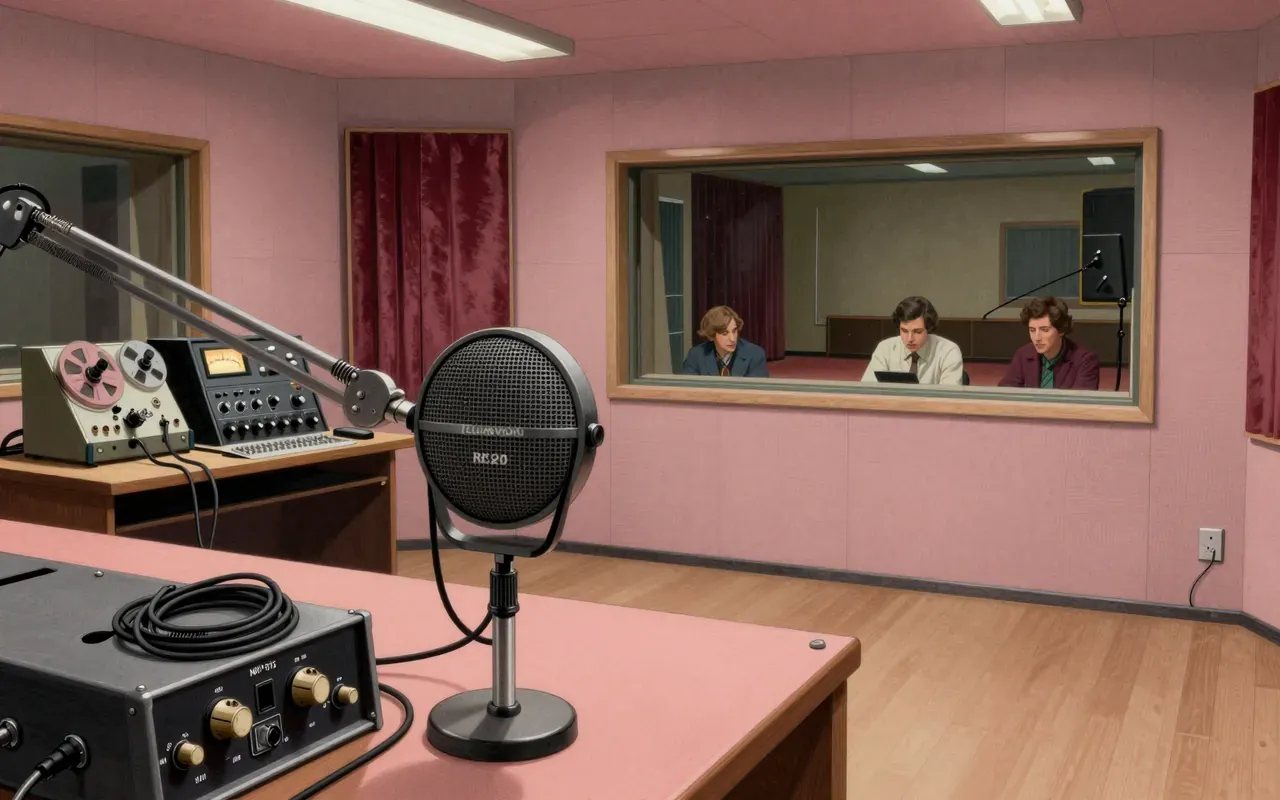
Electro-Voice RE20

Electro-Voice · 9:32

It kills proximity effect so thoroughly, you can’t use it for bass-boosted intimacy—and that’s exactly why it still rules the airwaves.

9:32