It’s cheap, crunchy, and completely unrefined — the HR-16 doesn’t imitate drums; it replaces them with something simpler, dumber, and more direct.
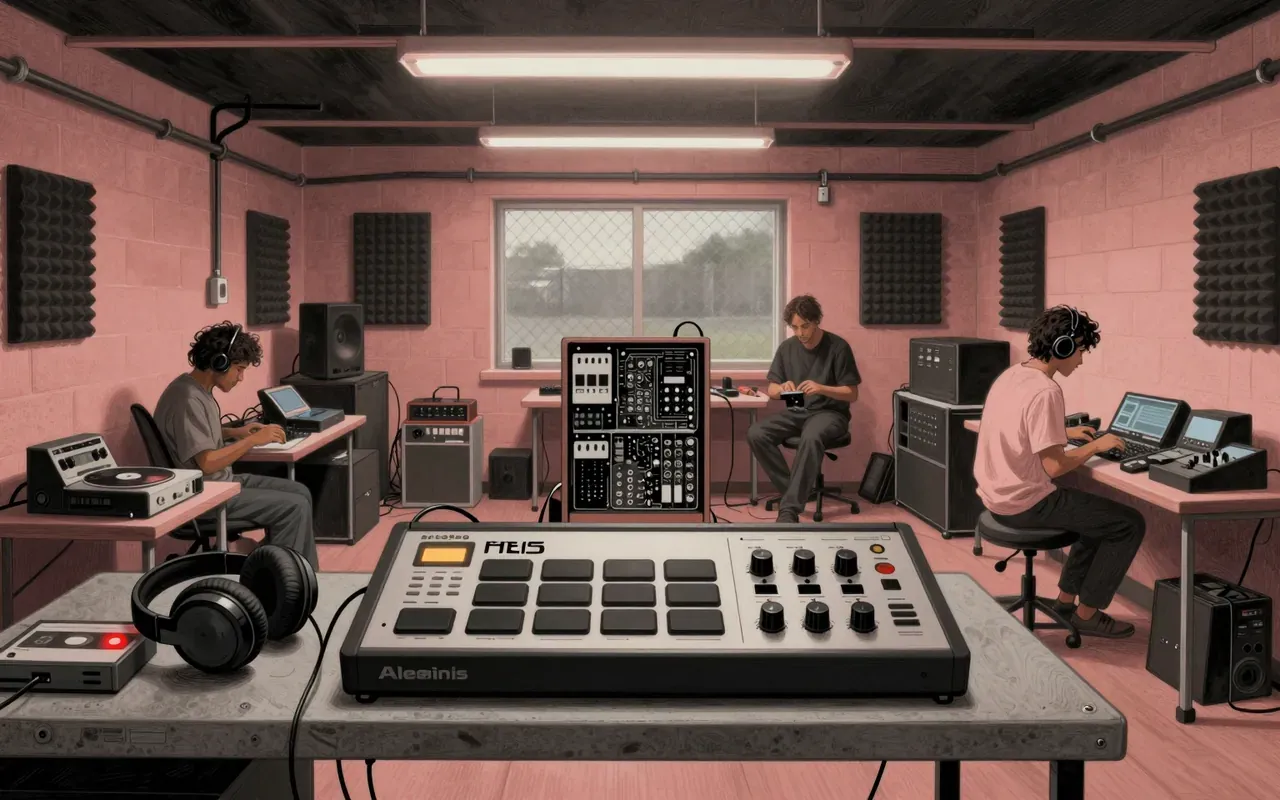
The Alesis HR-16 is a 1987/88 drum machine with 49 16-bit samples — 10 kicks, 7 snares, and an ethnic set — each tunable and mixable with individual level controls. It supports step or real-time pattern programming, 16-voice polyphony, and syncs via MIDI or external click. Its drum sounds are described as 'pretty cheesy'.
One of Alesis’s first drum machines — 49 16-bit samples, including 10 kicks and 7 snares.
2:07
How you shape the beat
Tuning and level per sound. Step or real-time programming. 16-voice polyphony.
3:34
How it talks to other gear
MIDI and external click inputs let it lock in with older gear — no USB, no sync over audio.
5:27
What it sounds like
The drum sounds are 'pretty cheesy' — no euphemism, no qualification.
Worth your time?
Yes. Use the whole thing.
2.5/ 5
What works
pattern-programming
sample-based-rhythm-box
What does not
sound-design
mixing-and-mastering
studio-and-recording
Use it if
hobbyists
educators
Skip it if
professional-producers
The written brief1 min read
What it is and what it was built for
It is a 1987/88 drum machine built for bedroom producers and live sequencers needing a compact, sample-based rhythm box with basic MIDI integration.
How it works, in terms a player would use
It programs patterns in step or real-time. Each of its 49 drum sounds has individual tuning and level controls. It runs 16 voices simultaneously. It syncs via MIDI or external click input.
What it does better than anything else
It gives immediate access to 49 distinct 16-bit samples — including 10 kicks and 7 snares — with per-sound control in a single unit at a low price point.
What it does badly
Its drum sounds are described as ‘pretty cheesy’. It offers no filter, no swing, no velocity sensitivity, and no sound editing beyond tuning and level.
What people made with it
The sources do not state what people made with it.
Who should use it, and who should not
A hobbyist or educator should use it to explore early digital sampling and pattern-based composition. A professional producer should not — its sound and feature set are too limited for modern workflow.
Is it worth your time
It is worth your time only if you want a low-fidelity, hands-on drum machine for lo-fi beat-making or hardware sequencing practice — not for polished production.