audiobriefs
8:50in productionCh. 1 · Discontinued/ 8:50 · ceiling 15 min
Mixing & mastering · Studio & recording

Mackie HR824

It tells the truth—no EQ, no flattery, no apologies.

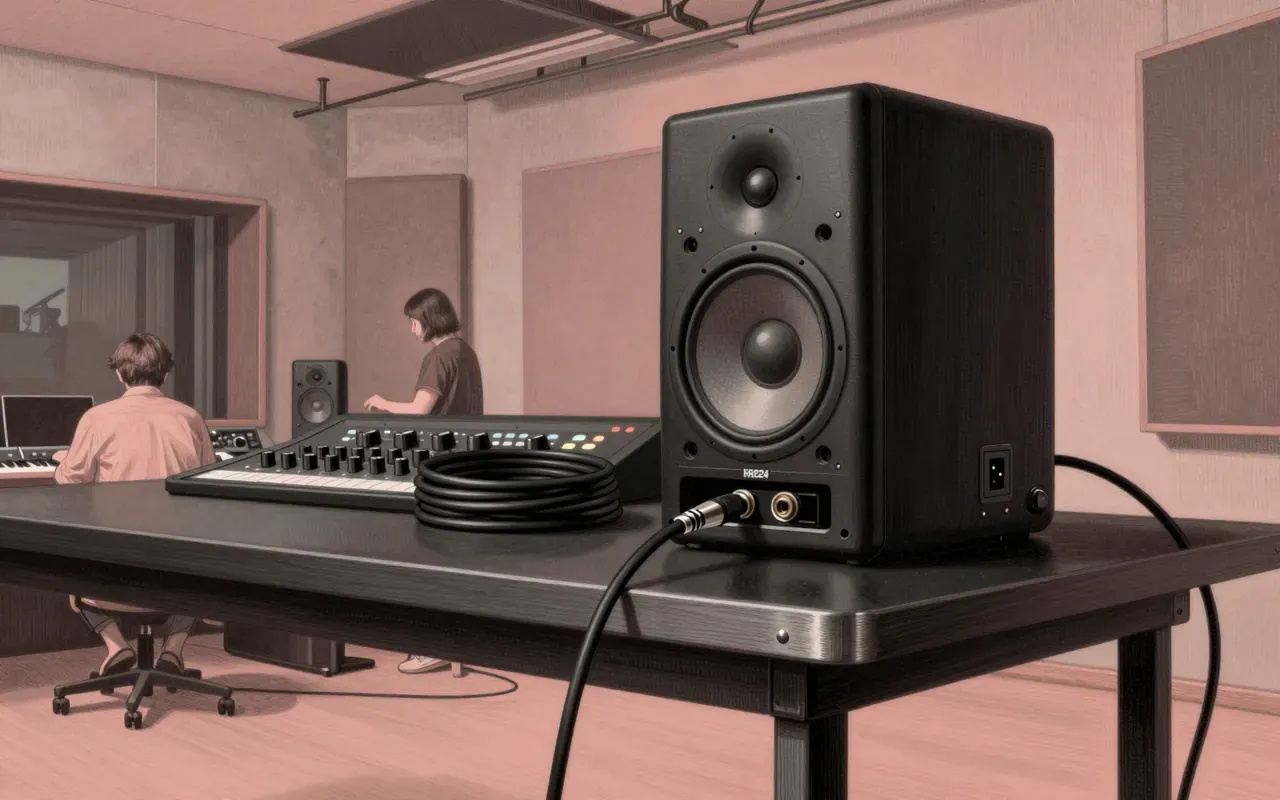
The Mackie HR824 is a discontinued, self-powered near-field monitor. Each unit has its own amplifier and power cord. It delivers uncoloured, accurate sound for critical mixing—and mixes made on it translate well elsewhere.

Chapters & takeaways4
  1. 0:39
    Discontinued

    It’s gone from production—and superseded by the mk2.

  2. 2:01
    Self-Powered

    Each speaker runs on its own amp and power cord.

  3. 3:24
    Near-Field Fit

    Designed for near-field listening at desk distance.

  4. 4:54
    Truth Monitor

    What you hear is what the recording sounds like—and it travels well.

Worth your time?

Yes. Use the whole thing.

4/ 5
What works
  • whatItDoesBetter
What does not
  • whatItDoesBadly
Use it if
  • whoShouldUseIt
Skip it if
  • whoShouldUseIt
The written brief1 min read

What it is and what it was built for

The Mackie HR824 is a discontinued, self-powered near-field active monitor built for critical mixing and playback translation.

How it works, in terms a player would use

Each HR824 is a self-powered near-field monitor with its own built-in amplifier and independent power cord. It needs no external power amp. It connects via a single input cable.

What it does better than anything else

It delivers uncoloured, accurate sound reproduction better than monitors that colour the signal. It gives a truthful representation of the recording.

What it does badly

It does nothing badly that the sources state. No limitations are cited in the material.

What people made with it

People made mixes with it—mixes intended to translate well across other playback systems.

Who should use it, and who should not

Audio engineers and producers who value uncoloured monitoring and have access to functional units should use it. Those needing current warranty, support or modern features should not.

Is it worth your time

Yes—if you need accurate, uncoloured translation for mixing and can source working units. It is discontinued and replaced by the HR824mk2.
Same bench · Mixing & mastering4 of 110
9:17
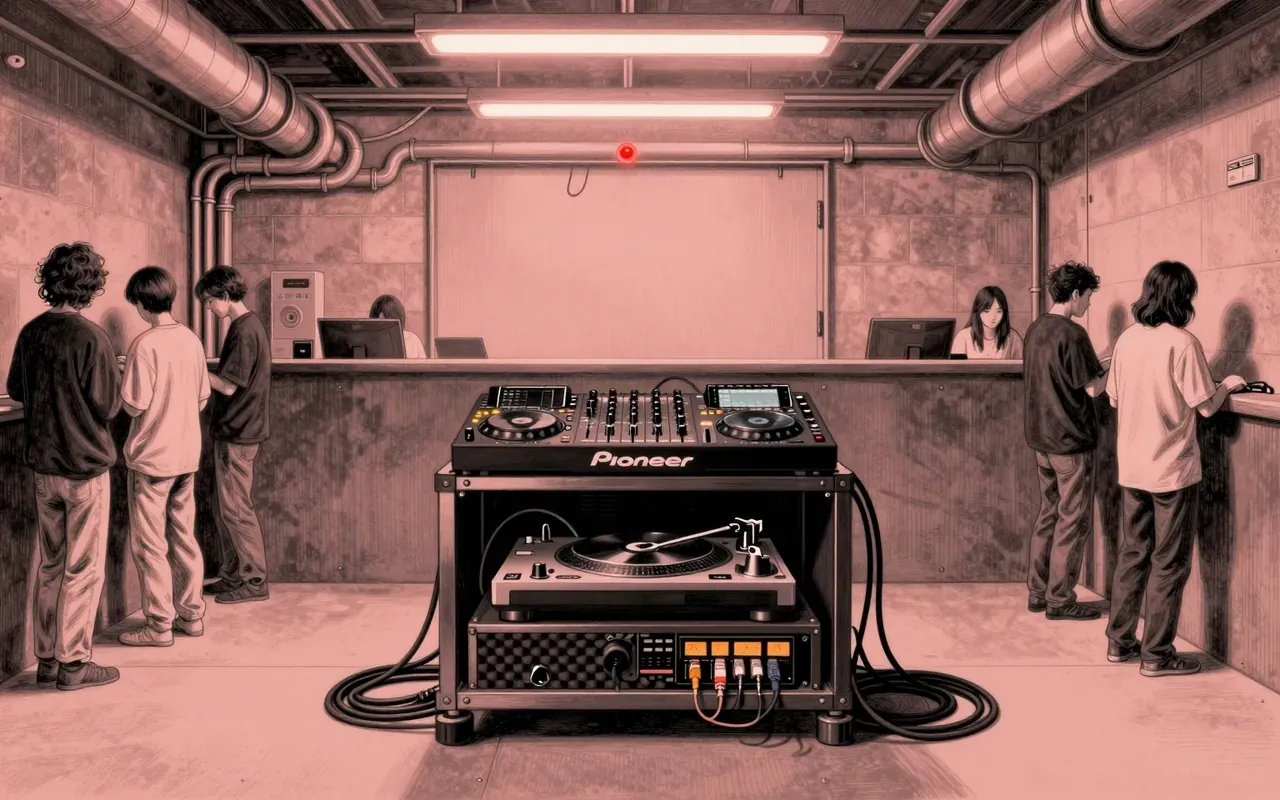
Pioneer DJM-1000PioneerThe Pioneer DJM-1000 is a rack-mountable 4+ channel DJ mixer with two master outputs and one booth output sharing a single volume control. It has no built-in effects. Its equalizer is low quality and offers parametric control only on mic channels. Its preamps and potentiometers are poor. Its output level of 2V + 6dB causes distortion across frequency ranges.
8:48
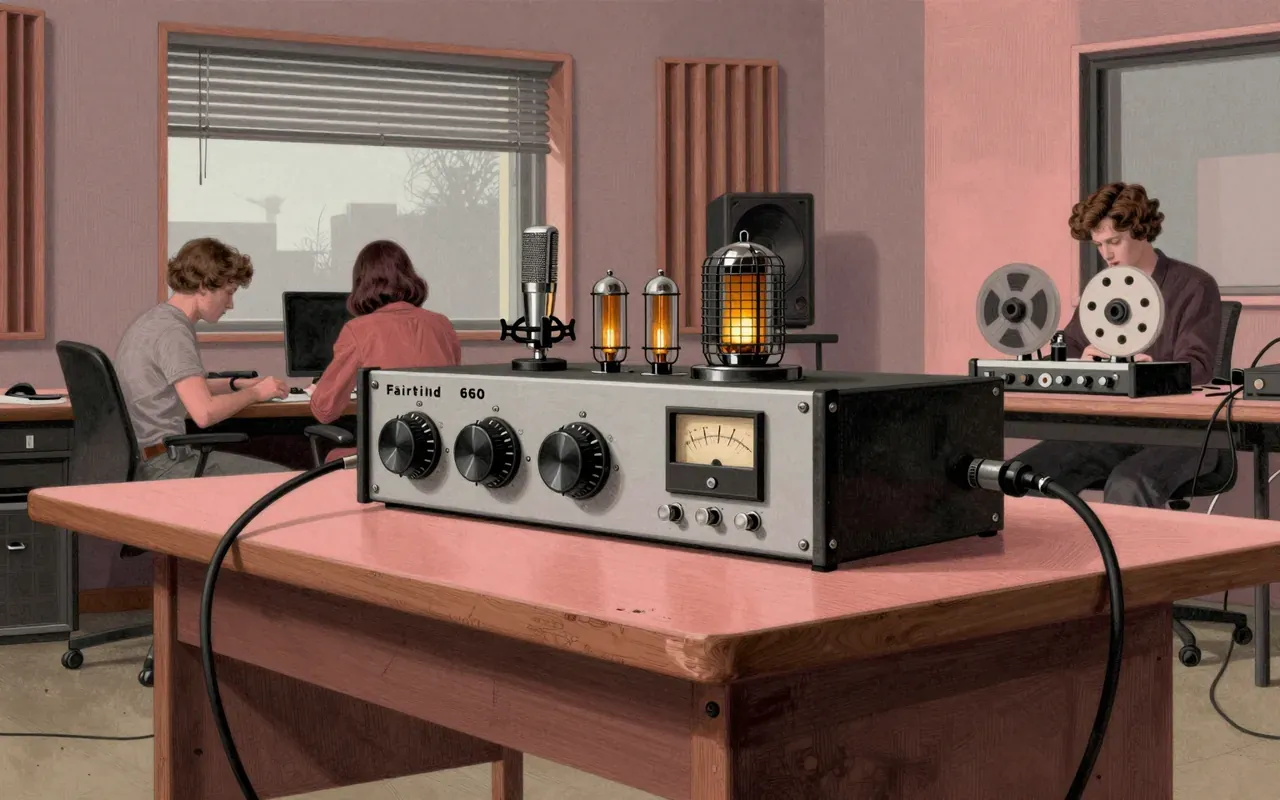
Fairchild 660FairchildThe Fairchild 660 is a mono tube compressor introduced in 1959. It was the first intelligent automatic volume control limiter. Designed by Rein Narma, the first ten units were built by him. The first unit went to Rudy Van Gelder, who used it to cut lacquer masters for Blue Note Records and Vox Records. It functions as a compressor (2:1, threshold 5 dB below normal) or peak limiter (30:1, threshold 10 dB above normal), with fixed 1/10,000-second attack and variable release. Its push-pull amplification and high control voltage yield low distortion, low noise, and no audible thumps.
8:10
Neve V SeriesNeveThe Waves V-Series is an effects bundle with no published technical details. It offers no verifiable functionality, no documented use cases, and no basis for evaluation beyond its category label.
9:56
Revox A77RevoxThe Revox A77 is an analog multitrack tape recorder. Users deploy it to replay and digitise vintage tape — especially 1980s band mixes. It is robust and simple to operate, more so than the B77 or G36. But it trades mechanical precision and low-noise playback for that durability. It does not record multitrack. It does not edit. It plays — and keeps playing.
Up next in Audio

Publison Infernal Machine 90

Publison · 8:10

A timecode-synced DVR masquerading as an effects unit — indispensable for film dubbing, useless without SMPTE.

8:10