audiobriefs
Studio

Studio & recording

146
briefs
8:49
average
1288 min
in total
64
people
All briefs146
8:35

J37

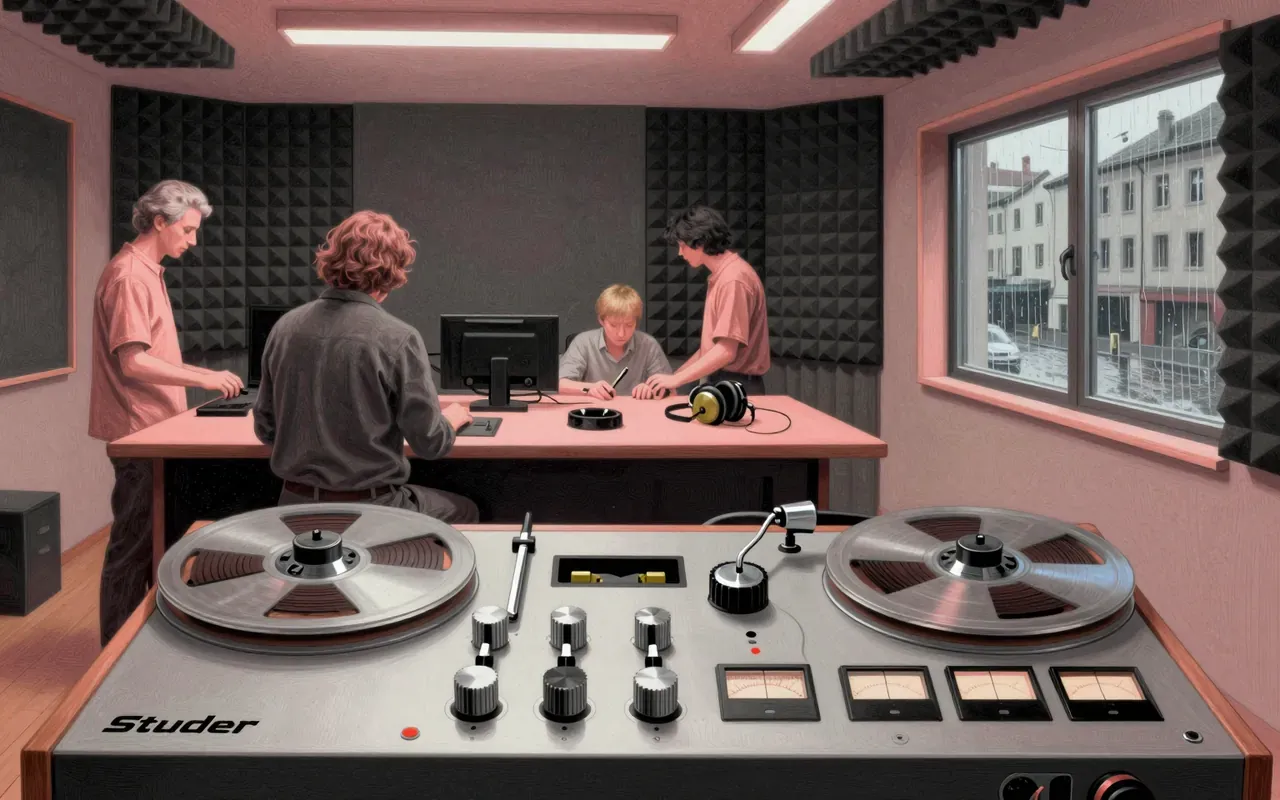
Studer · 1964

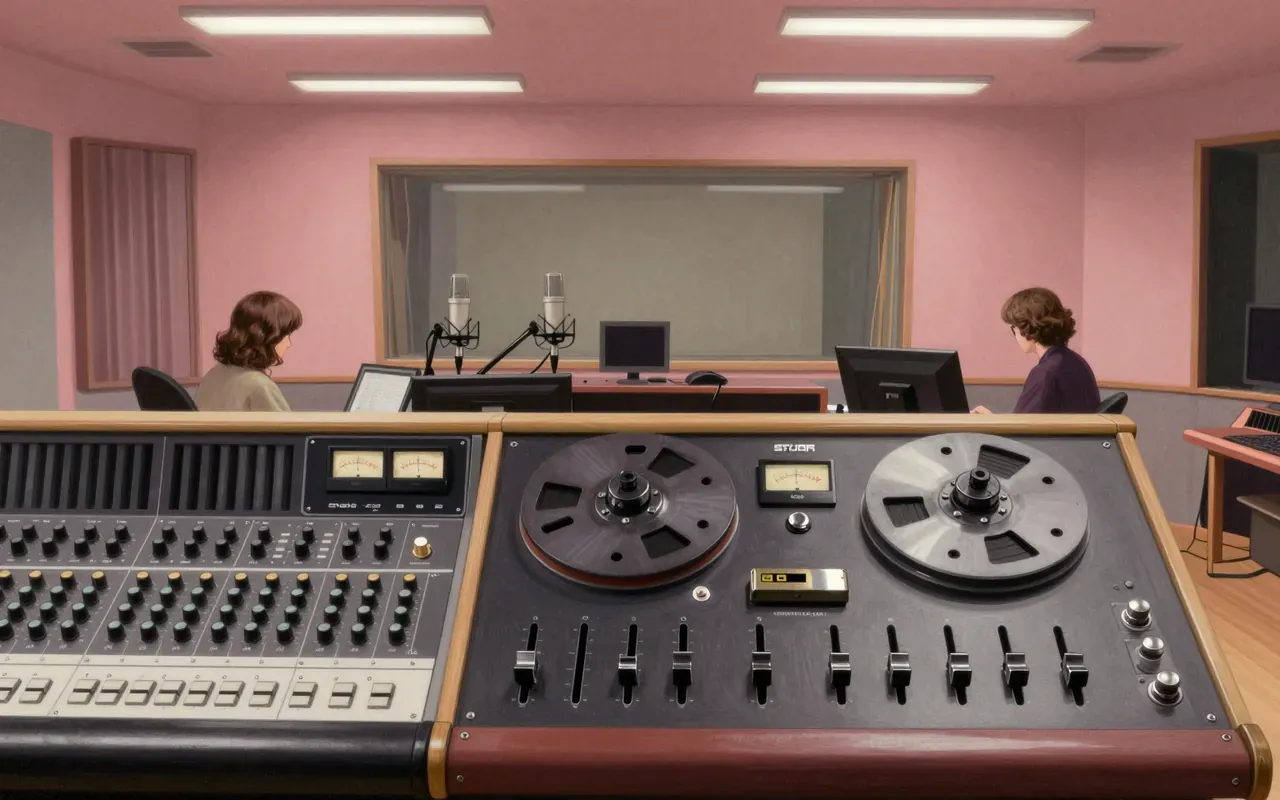
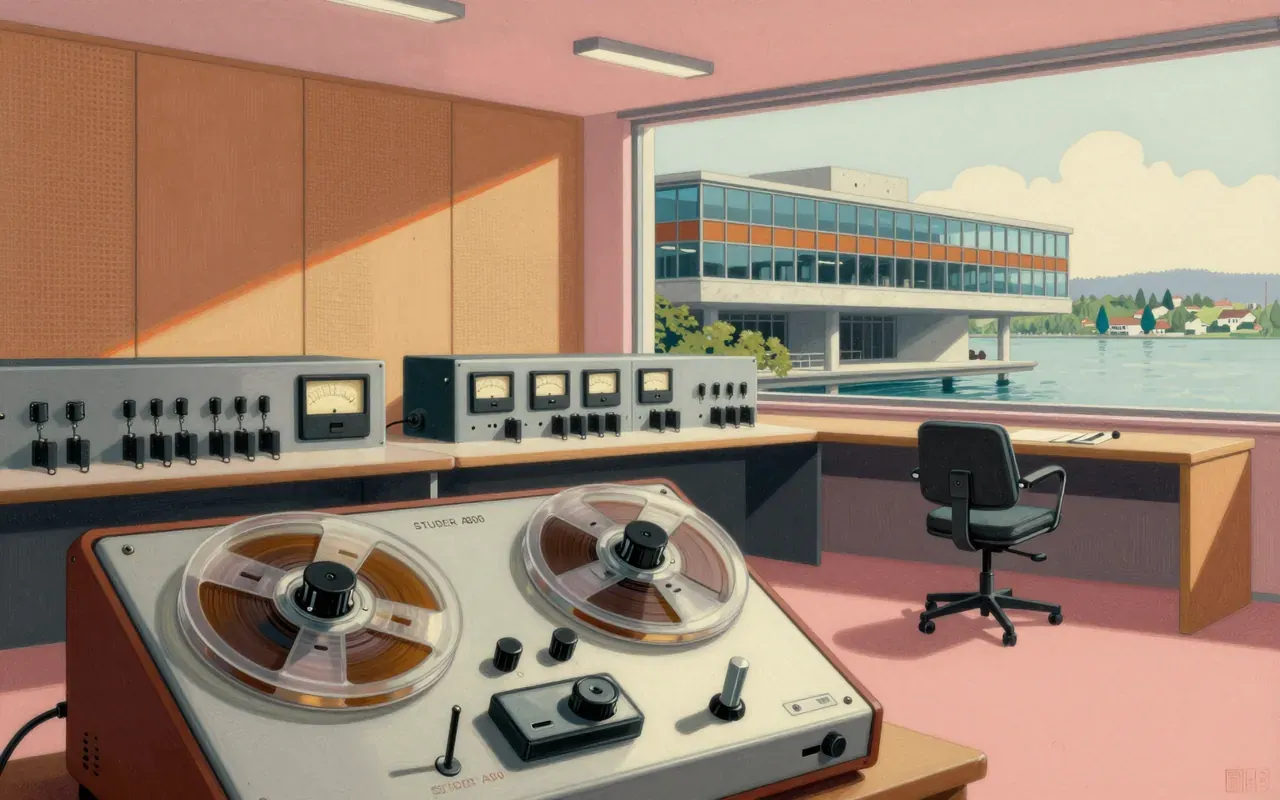
The J37 is Studer’s first multitrack machine, released in 1964. It recorded four tracks on one-inch tape. At EMI Studios London, later renamed Abbey Road Studios, The Beatles used a pair of J37s to record Sgt. Pepper’s Lonely Hearts Club Band in 1967. Studer went on to build 8-, 16- and 24-track machines with tape up to two inches wide.
8:50

Neve 1272 Line Amp

Neve

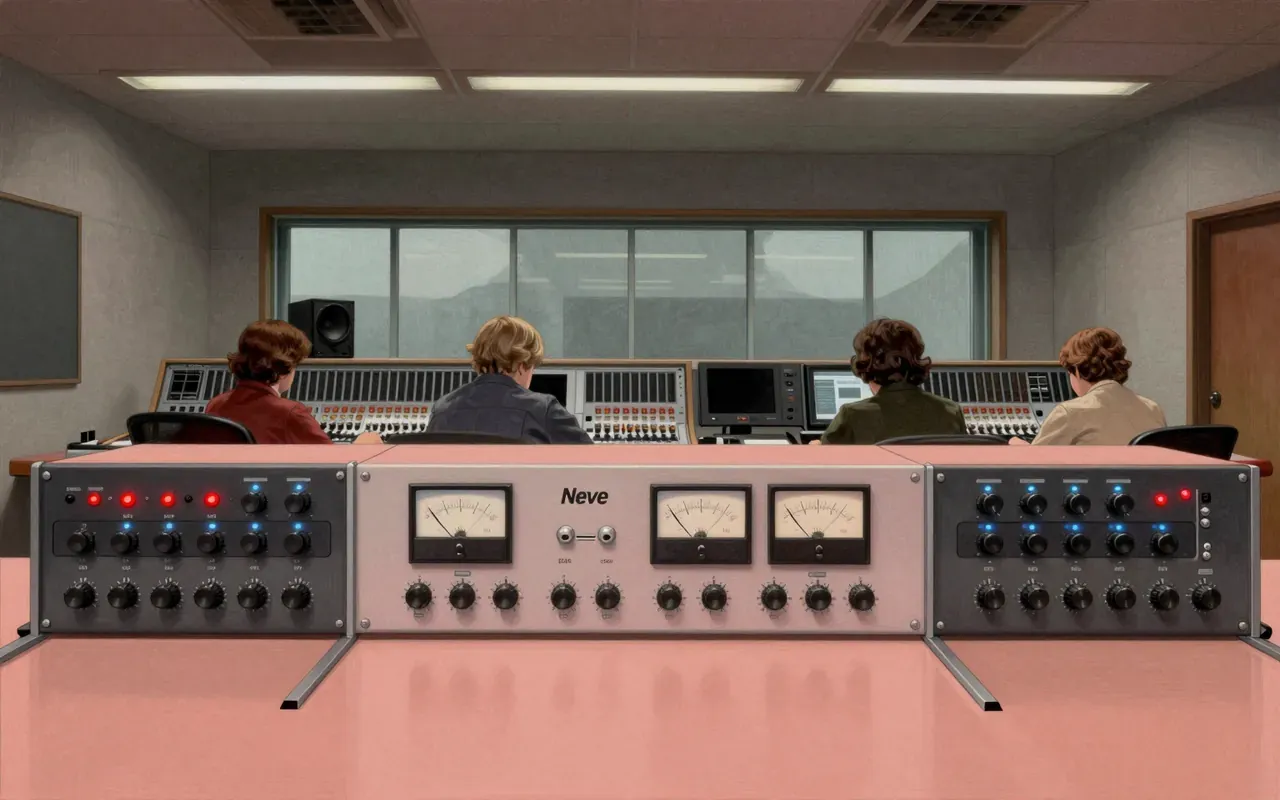
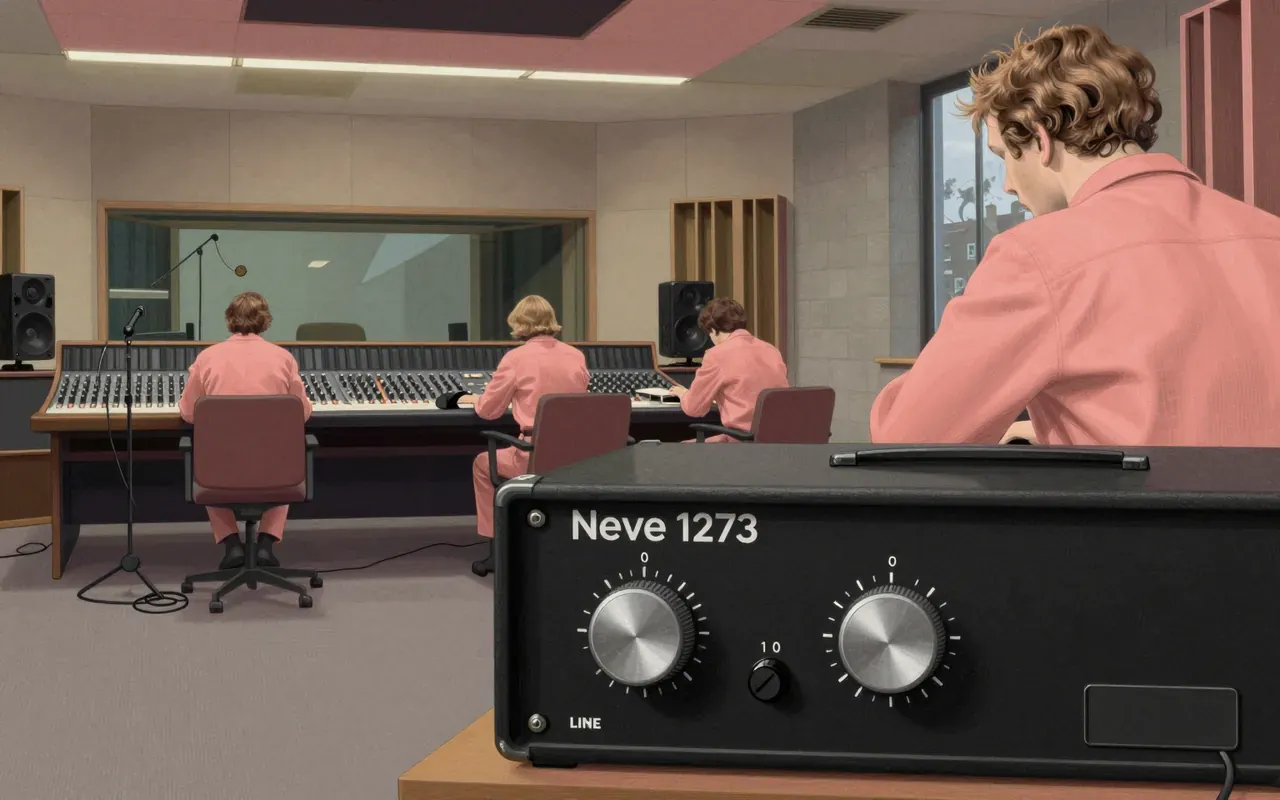
The Neve 1272 is a solid-state line amplifier. It does not accept microphone signals. It adds clean, transformer-coupled gain to line-level sources. It offers no input flexibility, no EQ, no saturation controls. Its value lies in its place in a fixed-path studio chain — not in versatility.

9:48

Digidesign 888/24 I/O

Digidesign

The Digidesign 888/24 is a Pro Tools–only analog-to-digital converter with eight XLR I/O channels and four AES-EBU digital paths. It delivers clean conversion, solid build quality, and low used-market cost—but only functions inside a compatible TDM system. No standalone mode. No MIDI. No monitor control. No software editor. It is a tool, not a platform.

9:14

Auratone 5C Super Sound Cube

Auratone

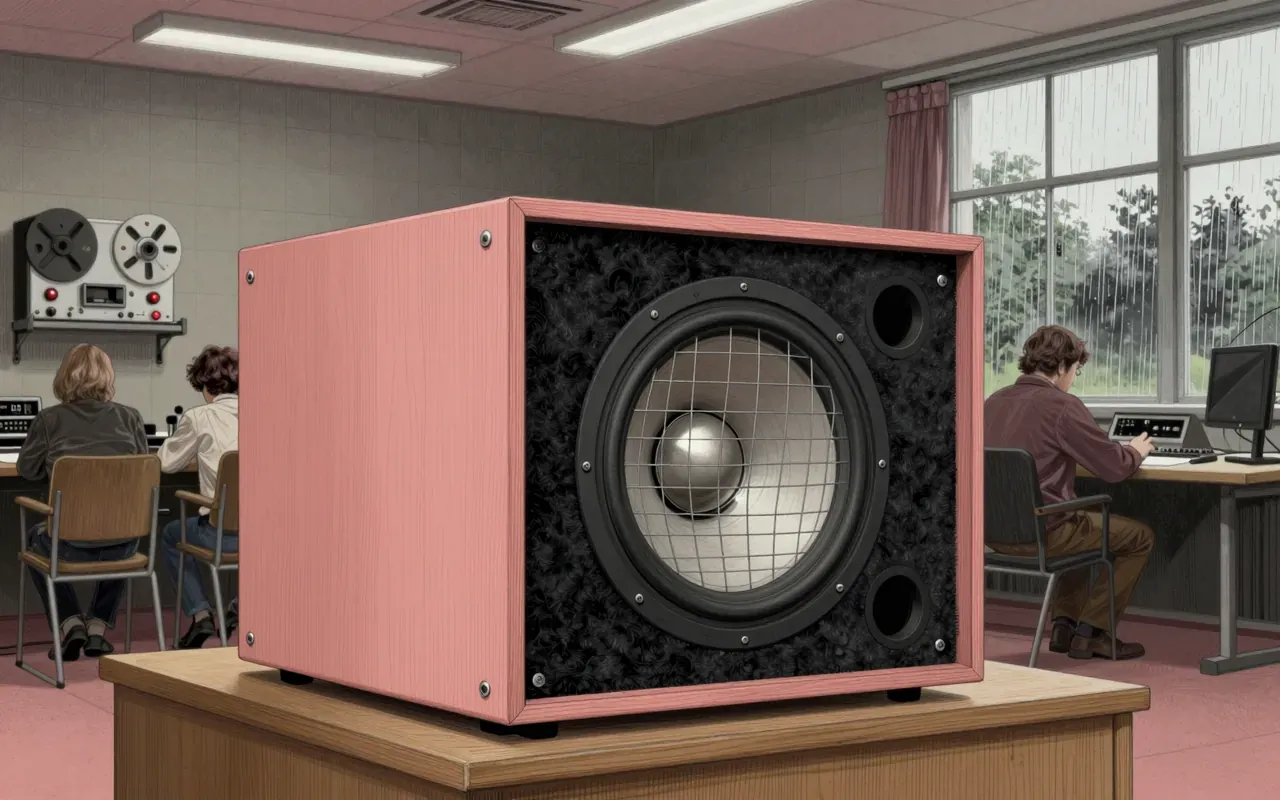
The Auratone 5C is a passive monitor requiring an external amplifier. Its extremely flat response and limited frequency range make it useful for quick A/B checks — but its lack of low-end response rules it out for primary mixing. It does one thing well: revealing what a mix loses when stripped of bass and extension.

8:36

Avalon Design Avalon AD2022

Avalon Design

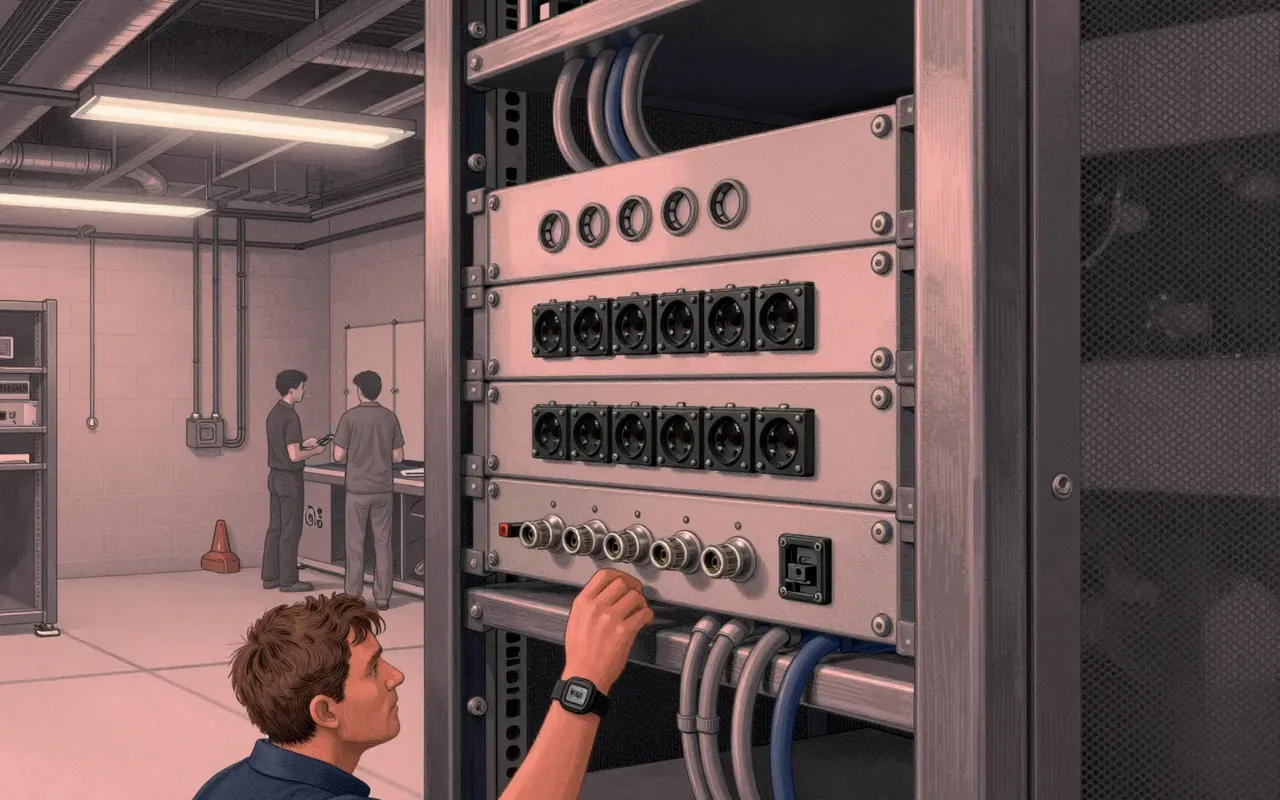
The Avalon AD2022 is a two-channel, analog, solid-state, pure class A microphone preamplifier. It delivers transparent, low-noise amplification. It has variable input impedance. It accepts microphones and DI sources. It includes phantom power, a 20dB pad per channel, polarity reversal, and a switchable variable high-pass filter. It uses XLR connections. It has front-panel XLR and jack connectors for instruments. It is rackmounted and occupies two standard rack spaces.
10:04

Avalon Design Avalon VT-737sp

Avalon Design

A vacuum tube-based, rack-only channel strip with two identical preamp channels, each offering gain, phantom power, pad, phase reverse, Lo-Z input, compressor, EQ, and flexible routing. It trades portability and recall for consistent warmth and headroom — especially with transformerless mics.

7:26

Bozak CMA-10-2DL

Bozak

The Bozak CMA-10-2DL is a 4+ channel analogue mixer. It routes four inputs to two outputs. It has no equalisation, no dynamics, no monitoring path, and no amplification. Its name appears in multiple inconsistent spellings. No use cases, dates, or technical specifications are verified in available sources.

8:11

AKG C414 EB

AKG

The AKG C414 EB is a large diaphragm condenser microphone. It is one of 13 products in the AKG C414 series. No technical, historical, or functional detail beyond that is provided in the source material.

9:22

Daking Mic Pre IV

Daking

The Daking Mic-Pre IV is a 4-channel solid-state analog preamp with minimal controls and no colouration. It amplifies cleanly and intensely—revealing rather than refining the source. Its design prioritises workflow over flavour.

8:14

Sony DAT DTC-1000ES

Sony

The Sony DTC-1000ES is a DAT deck in Sony’s DTC series. No technical specifications are available. Nothing else is verifiable.

9:13

dbx 165

dbx

The dbx 165 is a studio compressor. No technical specifications exist for it. It is categorised as a studio compressor. That is all that is confirmed.

8:29

dbx 166

dbx

The dbx 166 is a no-compromise stereo FET compressor built for speed and instrument tracking—not vocals, not mixing, not analysis. It delivers efficient, transparent compression with subtle warmth. Its design gives immediacy and reliability. It withholds metering, sidechain, vocal suitability, and fine dynamic control.

7:46

Tascam DTRS DA-88

Tascam

The Tascam DA-88 is a dedicated eight-track digital recorder using Hi8 tape. It occupies four rack units. It has XLR and RCA inputs. It uses large VU meters. Its audio quality remains acceptable today.

9:00

Grace Design m201

Grace Design

The Grace Design m201 is a single-channel solid-state microphone preamplifier. It provides clean, high-headroom gain with no EQ, no compression, no digital conversion, and no additional signal path options. It serves one purpose: to amplify a mic signal without alteration. It is not a channel strip. It is not an interface. It is not a tool for tonal manipulation. It is a specialist device for specialists who know exactly when they need it — and when they do not.

9:30

JBL 4310

JBL

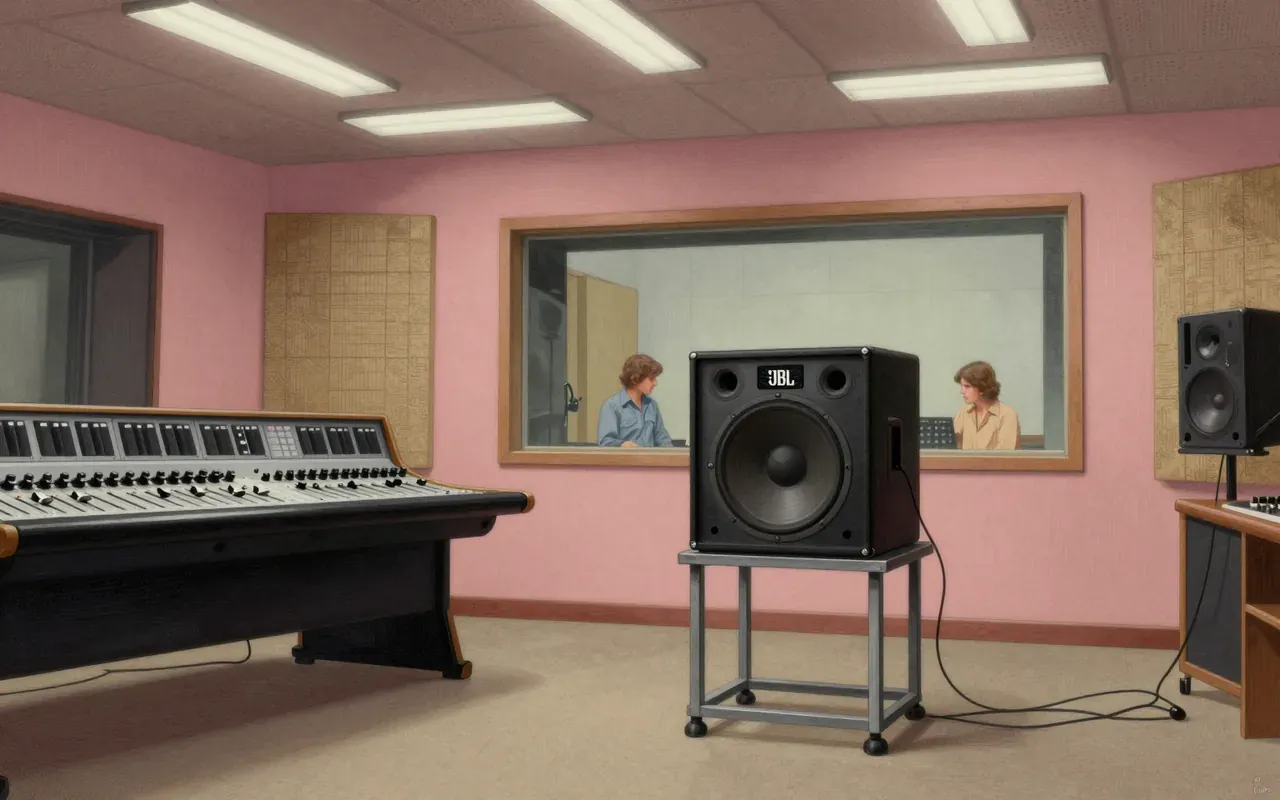
The JBL 4310 is an active studio monitor built for truth-telling. Its neutral and linear sound reveals flaws. It needs an external amp. Bruce Swedien preferred it over the 4311—so much that he dismissed the latter as 'pure dog-doo'.

7:50

Lexicon PCM42

Lexicon

The Lexicon PCM 42 is a digital delay unit in Lexicon’s PCM series. No technical specifications are available. Nothing is known about its controls, its sound, its memory, or its use in practice. It declares only its category, its manufacturer, and its model name.

6:46

Soundcraft 2400

Soundcraft

The Soundcraft 2400 is an analog mixer made by Soundcraft. No technical specifications are published. Nothing else is confirmed.

9:55

Soundcraft Ghost

Soundcraft

The Soundcraft Ghost 32 is a dual-path analog mixer that delivers 64-channel mixing by combining 32 fader-based A channels and 32 knob-based B channels. It prioritises routing flexibility and hands-on control over silent operation or real-time EQ parity.

10:37

Roland Space Echo RE-201

Roland

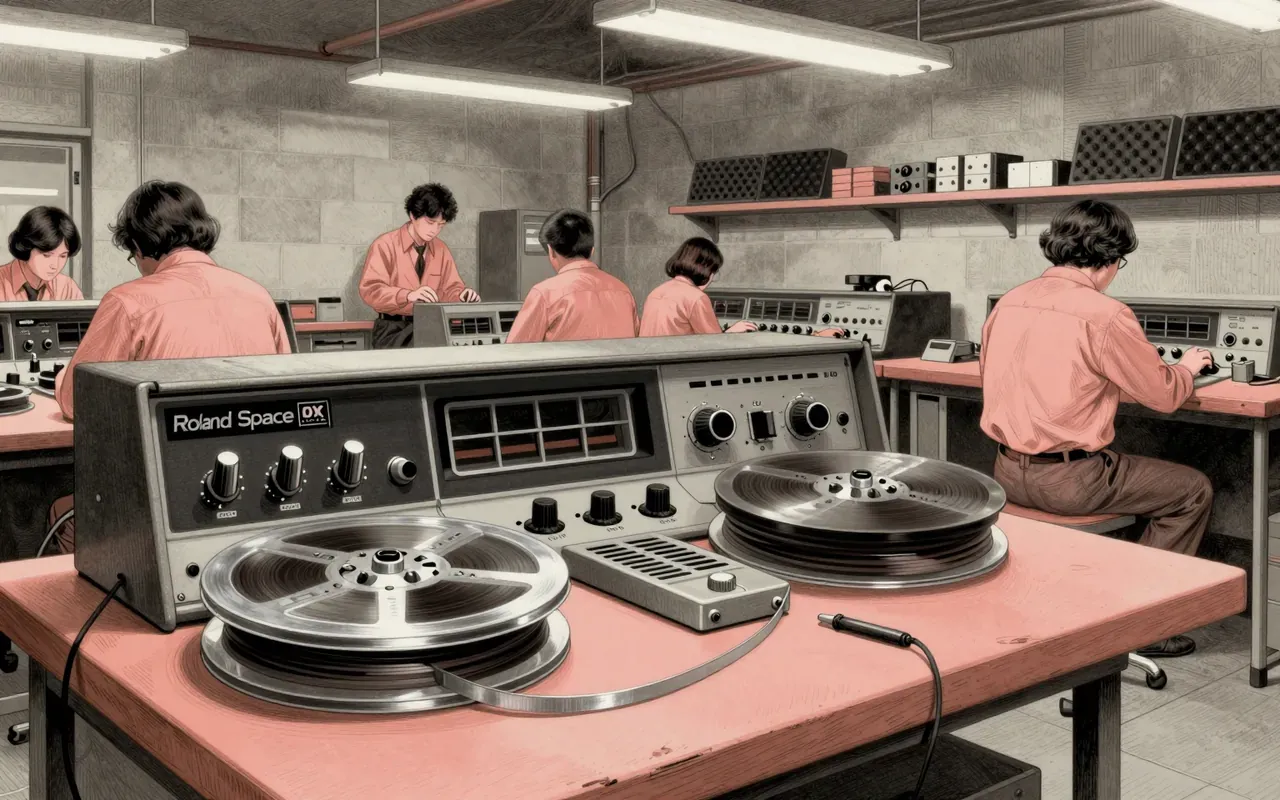
The Roland RE-201 Space Echo is a non-rackable desktop analog tape echo unit with three inputs (two mic, one instrument), five magnetic tape playback heads, 1/4" wet/direct outputs, footswitch input, and controls for time, feedback (intensity), low/high EQ, dry/wet mix, and reverb. Its reverb has a compromised tonal character ('trs CRADA'). It uses an actual reel of tape — distinguishing it from imitators. It does not offer precision, stability, or clean reverb. It does deliver saturated, decaying, pitch-wobbling repeats no digital model fully replicates.

8:54

Trident Series 24

Trident

The Trident Series 24 is an analog mixer made by Trident. No specifications, availability, usage history, or technical details are provided in the source. It is documented only as a category and manufacturer assignment.

9:07

Yamaha DM2000

Yamaha

The Yamaha DM2000 is a discontinued digital mixer console built for professional live sound reinforcement and studio tracking/mixing.

7:46

Genelec 1022A

Genelec

The Genelec 1022A is an active monitor in the Genelec 1000 series. Genelec manufactured it. That is all the source material confirms.

8:18

Genelec 1031A

Genelec

The Genelec 1031A is a large, active, self-powered studio monitor built for stationary use in professional recording studios. It delivers full-spectrum sound with strong low-end presence and tight high-end response. It plays loudly without colouration and reveals fine audio detail. Its built-in amplification is highly effective. Its size and sonic neutrality make it unsuitable for small rooms or home studios. Users report it excels in medium-to-large spaces and is trusted for critical mixing and tracking.

8:48

Genelec 1032A

Genelec

The Genelec 1032A is a high-end, individually sold, active two-way near-field studio monitor. It uses a 10-inch woofer and 1-inch tweeter. Its frequency response is 36 Hz to 23 kHz. It delivers a clean sound with tight highs and reportedly accurate mids and lows. It requires no external power amplifier. It is sold singly, not in pairs.

8:46

dbx 160X

dbx

The dbx 160X is a fixed-response analog limiter/compressor built for immediacy, not nuance. It excels when slammed on snare, kick, bass, or guitar — but fails at subtlety, especially on vocals. Its simplicity is functional, not forgiving.

7:54

dbx 160XT

dbx

The dbx 160XT is a studio compressor. No technical specifications are available for it.

9:02

API 205L

API

The API 205L is a DI unit made by API Audio. No technical specifications are available. No retailers or classified ads currently offer it. Its alternate names are '205l' and '205 l'.

9:12

Neve 2264A

Neve

The Neve 2264A is a mono limiter/compressor module built for studio use. No technical specifications are published. It weighs 1.3 kg. Its function is defined by category, not data sheet.

8:19

MOTU 2408

MOTU

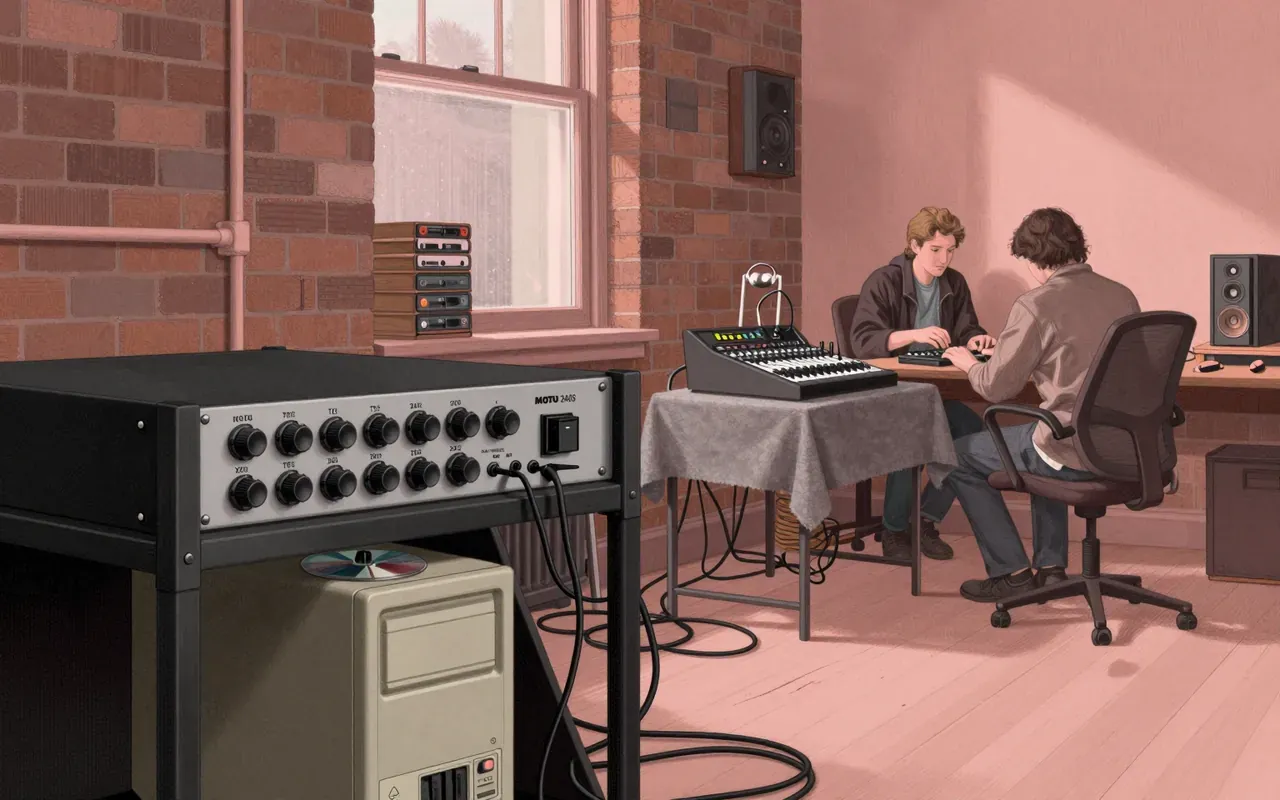
The MOTU 2408 is a discontinued PCI/ISA rack-mount soundcard built for multitrack recording and mixing in home and project studios.

9:12

Neve 31105

Neve

The Neve 31105 is a channel strip. No technical specifications are available. Nothing else is confirmed.

8:02

API 3124+

API

The API 3124+ is a 1U, 4-channel analog microphone preamplifier using the 2520 op-amp and classic console circuit. Each channel has gain, polarity, phantom power, 20 dB pad, mic/line selection, and a VU meter. It accepts XLR inputs at the rear and unbalanced 1/4" inputs at the front. It delivers high headroom and consistent colour across all four channels — but offers no impedance control, channel linking, or digital integration.

8:50

TEAC 3340S

TEAC

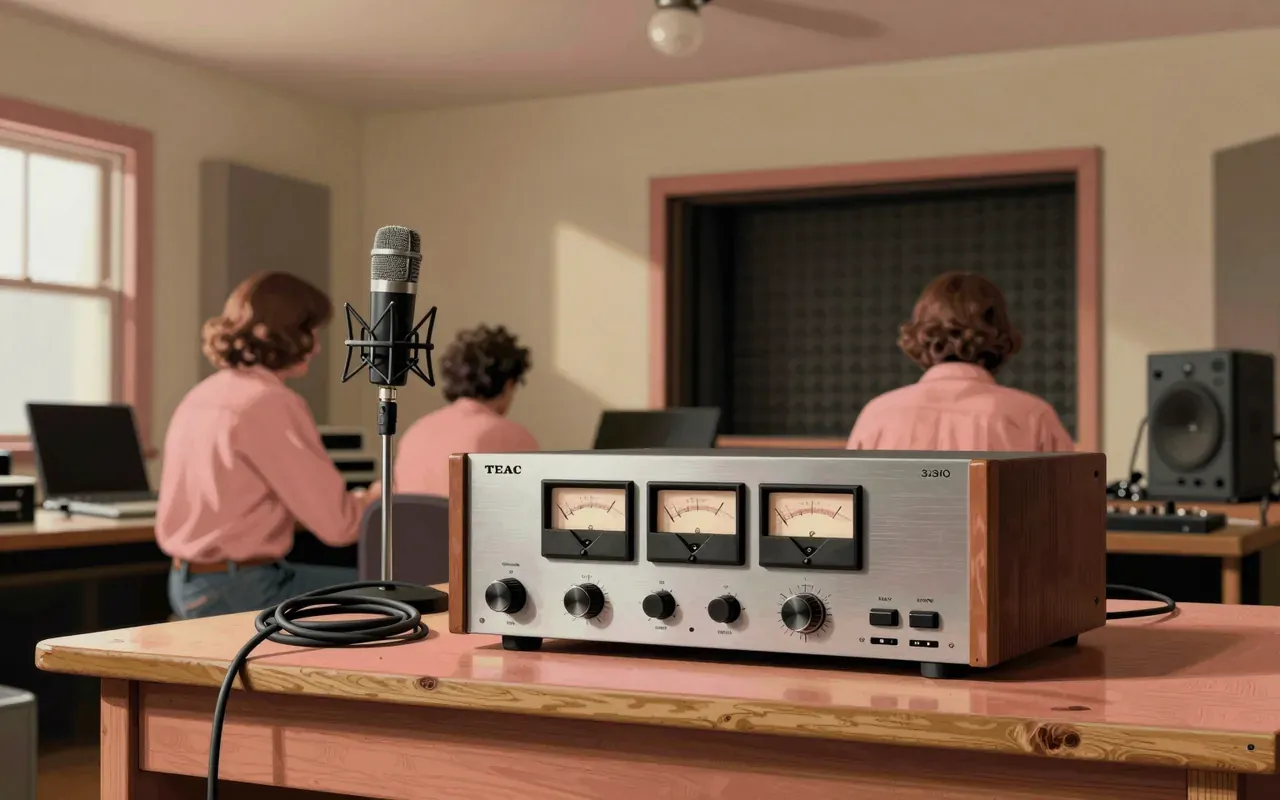
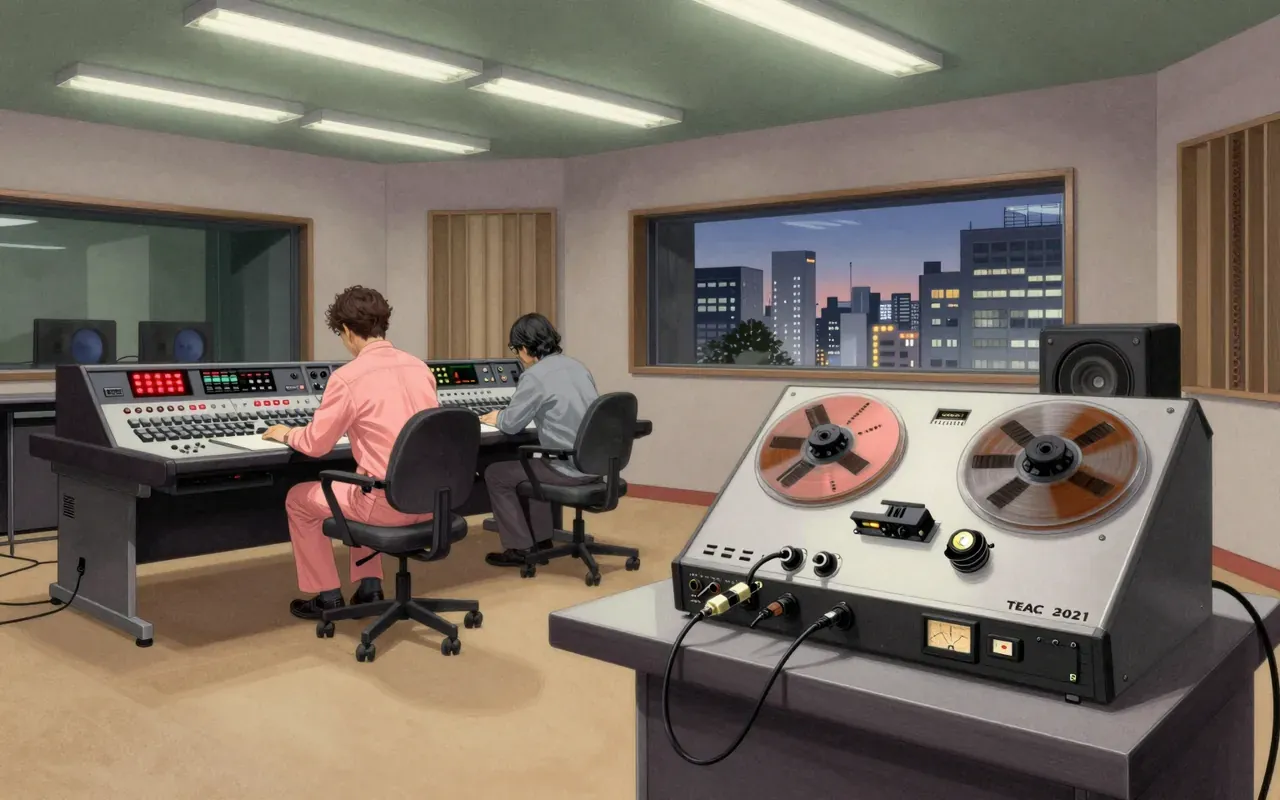
The TEAC 3340S is an analog multitrack recorder with no available technical specifications. It is identified only by category and alternate name spellings. Nothing is confirmed about its operation, sound, reliability, or creative use.

8:10

Neve 33609

Neve

The Neve 33609 is a dual-channel, all-analog studio compressor and limiter occupying two rack units. Each channel contains independent compressor and limiter sections. The compressor section provides threshold, recovery, gain, ratio, and bypass. The limiter section provides threshold, recovery, fast/slow attack, and bypass. It supports dual-mono or stereo operation with per-channel gain reduction metering.

7:42

SSL 4000 E

SSL

The SSL 4000 E is a channel strip. No technical specifications are available. Nothing else is confirmed.

7:57

SSL 4000 G

SSL

The SSL 4000 G+ is a 48-channel analog mixing console built for professional studios. Each channel has a preamp and parametric EQ. It includes built-in compressors and many other features. Its configuration is complex and demands substantial time to master. Its sound quality is judged among the best attainable — the cleanest the reviewer has ever used. Its preamps are extremely clean and full sounding. Its EQs are super clean with precise cut/boost control. It is qualified to record any and all genres of music. It is extremely famous and highly popular among professionals across popular music genres.

8:35

JBL 4311

JBL

The JBL 4311 is an active monitor built for accuracy, not appeal. Its adjustable treble and midrange controls let users tailor response without EQ. It delivers neutral, powerful, precise, and dynamic sound — but only when driven with sufficient gain. Its frequency curve avoids bass saturation and flattery, making it reliable for critical listening across playback systems. Users acquired it in Germany in 1979 and in studio trades by 1983. It belongs in rooms where truth matters more than comfort.

8:28

JBL 4312

JBL

The JBL 4312 is a passive three-way studio monitor built for punch, precision, and stereo imaging — not neutrality or refinement.

8:35

JBL 4350

JBL

The JBL 4350 is a passive studio monitor requiring bi-amplification, offering no passive filter adjustments, and demanding extensive room integration and speaker placement. It is physically imposing and highly detailed in sound reproduction. It is not turnkey-ready.

8:19

JBL 4430

JBL

The JBL 4430 is a 2-way active monitor built for studio monitoring. It delivers stable, wide, non-directional dispersion and excellent overall homogeneity. Its horn is more neutral than predecessors like the 4331 and L200 — eliminating long repetitive directional artifacts. It lacks the top-end finesse of the 2405 tweeter. Bi-amplification enables sonic evolution, but mechanical decoupling from the floor is mandatory. It was produced continuously for 20 years with iterative hardware updates: the 1-inch compression driver shifted from aluminum diaphragm and alnico magnets to titanium and ferrite. Each unit supports up to 80 kg.

7:50

JBL 4435

JBL

The JBL 4435 is a passive monitor built for raw output — not finesse. It trades integration for extension.

8:45

Neve 8108

Neve

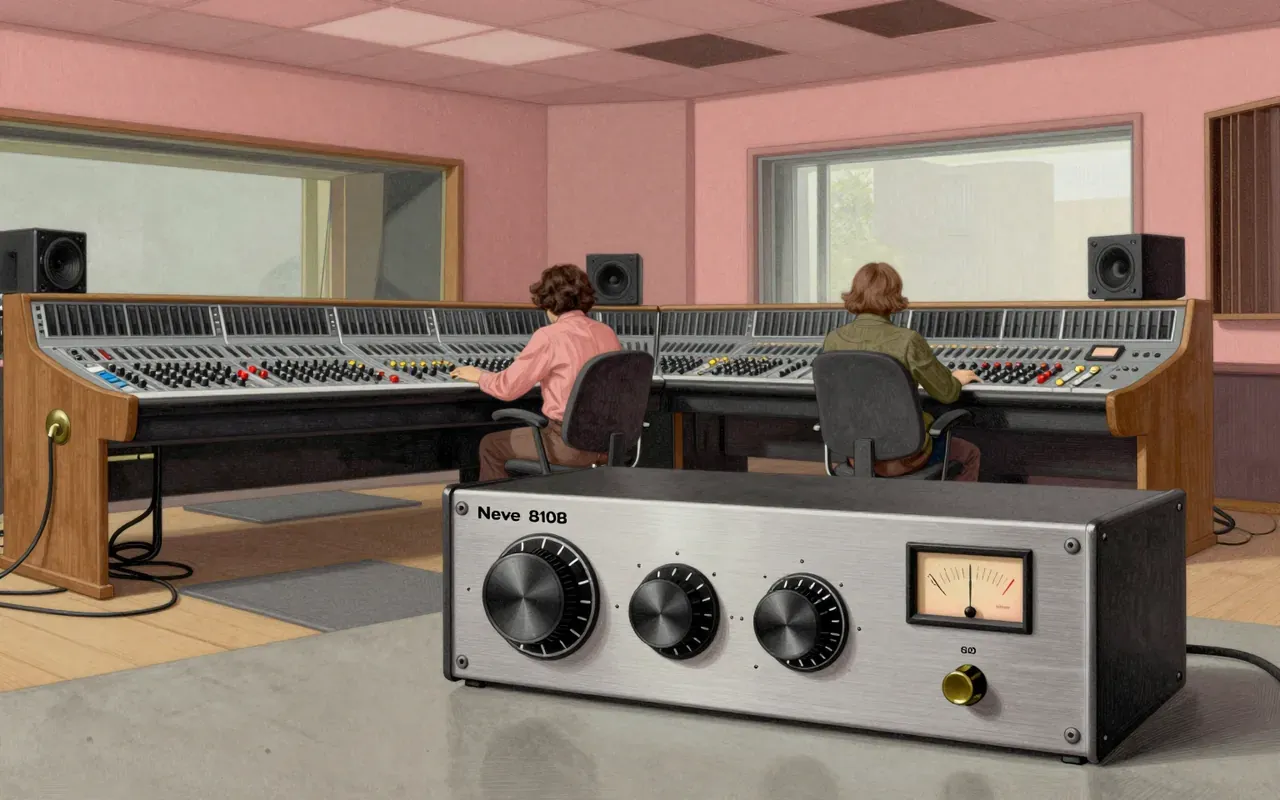
The Neve 8108 is a 32-channel analog mixing console built in 1979. It delivers warm, full preamps and top-notch parametric EQ on every channel. Its channel strips are laid out for convenient access. Its digital routing system is quirky.

9:21

MOTU 828

MOTU

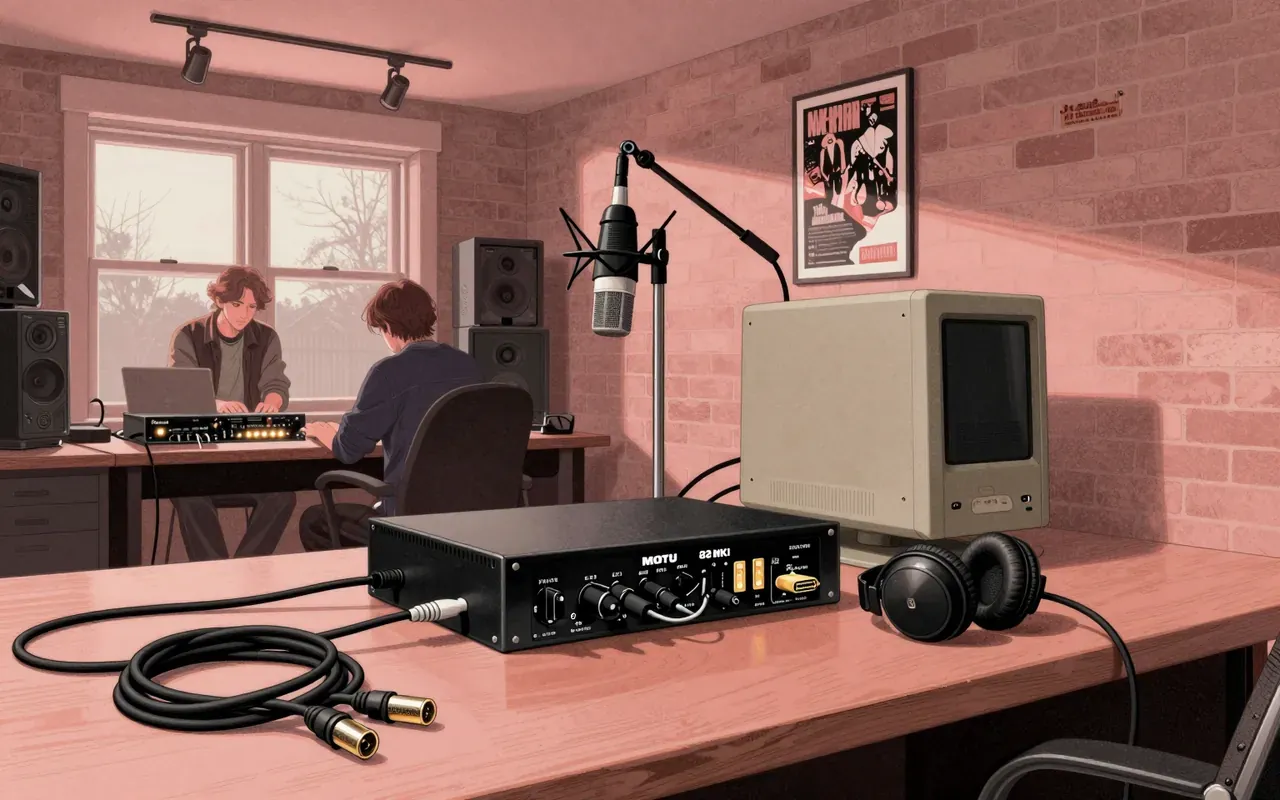
The MOTU 828 MKI is a discontinued FireWire audio interface introduced around 2001–2002. It offered two mic preamps with phantom power and XLR/1/4" inputs, six additional balanced line inputs, eight balanced outputs, ADAT and optical I/O, 24-bit 64x/128x oversampling converters, and front-panel monitoring controls. Priced at $800 at launch, it was considered expensive but highly stable and easy to install. It remains functional for years in typical home studio use but is no longer sold and has been succeeded by newer models including the 828 (2024).

7:57

Digidesign 888 I/O

Digidesign

The Digidesign 888 I/O is a 16-bit analog/digital converter with eight XLR inputs, eight XLR outputs, and digital I/O via AES/EBU and S/PDIF. It was used in home studios, often alongside the 24-bit 888/24. It offers no processing, no preamps, and no variable gain — just fixed-path conversion. Its value lies only in compatibility with legacy Pro Tools TDM systems.

10:06

SSL 9000 J

SSL

The SSL 9000 J is an analog mixer. That is all the source confirms. It belongs to the category of analog mixers. No specifications, features, or use cases beyond that are given. It is not described as rare, expensive, or influential. It is not tied to any record, person, place, or date. It is what it is: a large-format analog mixer for studio use.

9:56

Revox A77

Revox

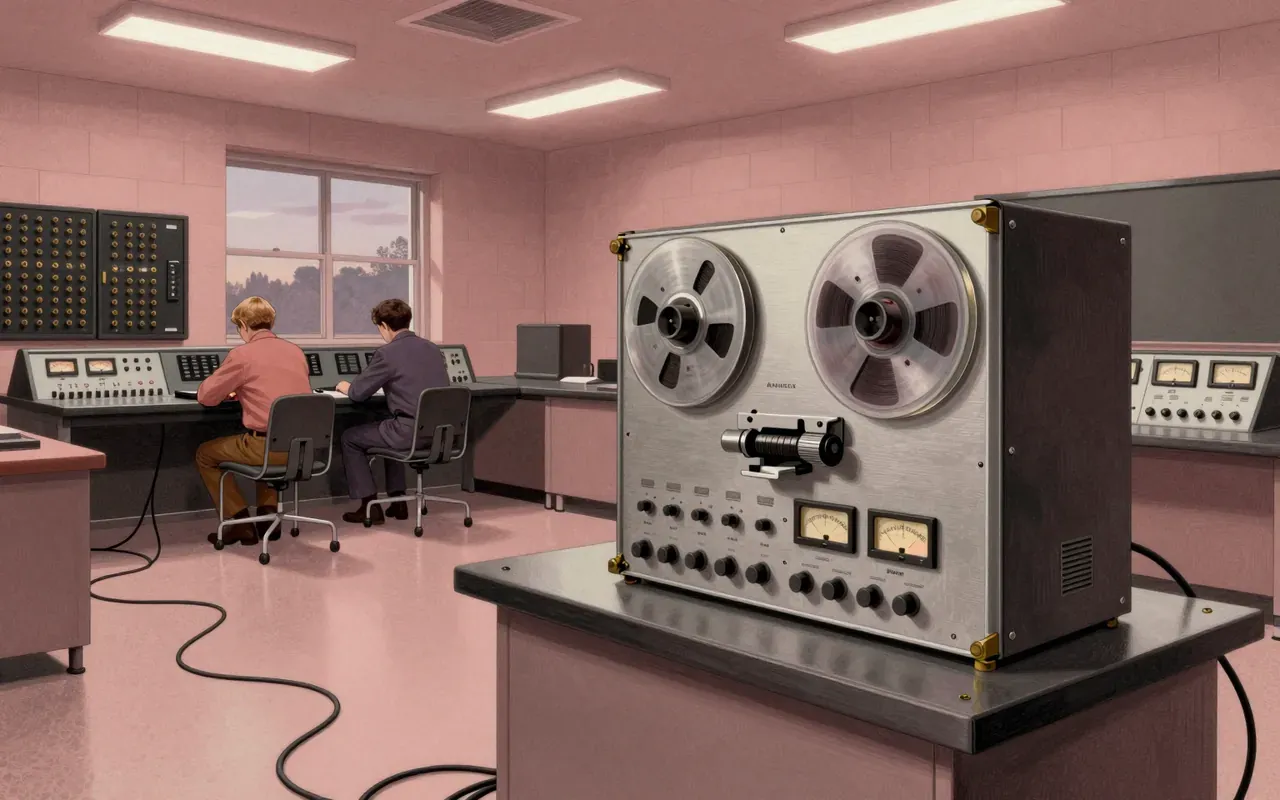
The Revox A77 is an analog multitrack tape recorder. Users deploy it to replay and digitise vintage tape — especially 1980s band mixes. It is robust and simple to operate, more so than the B77 or G36. But it trades mechanical precision and low-noise playback for that durability. It does not record multitrack. It does not edit. It plays — and keeps playing.

8:30

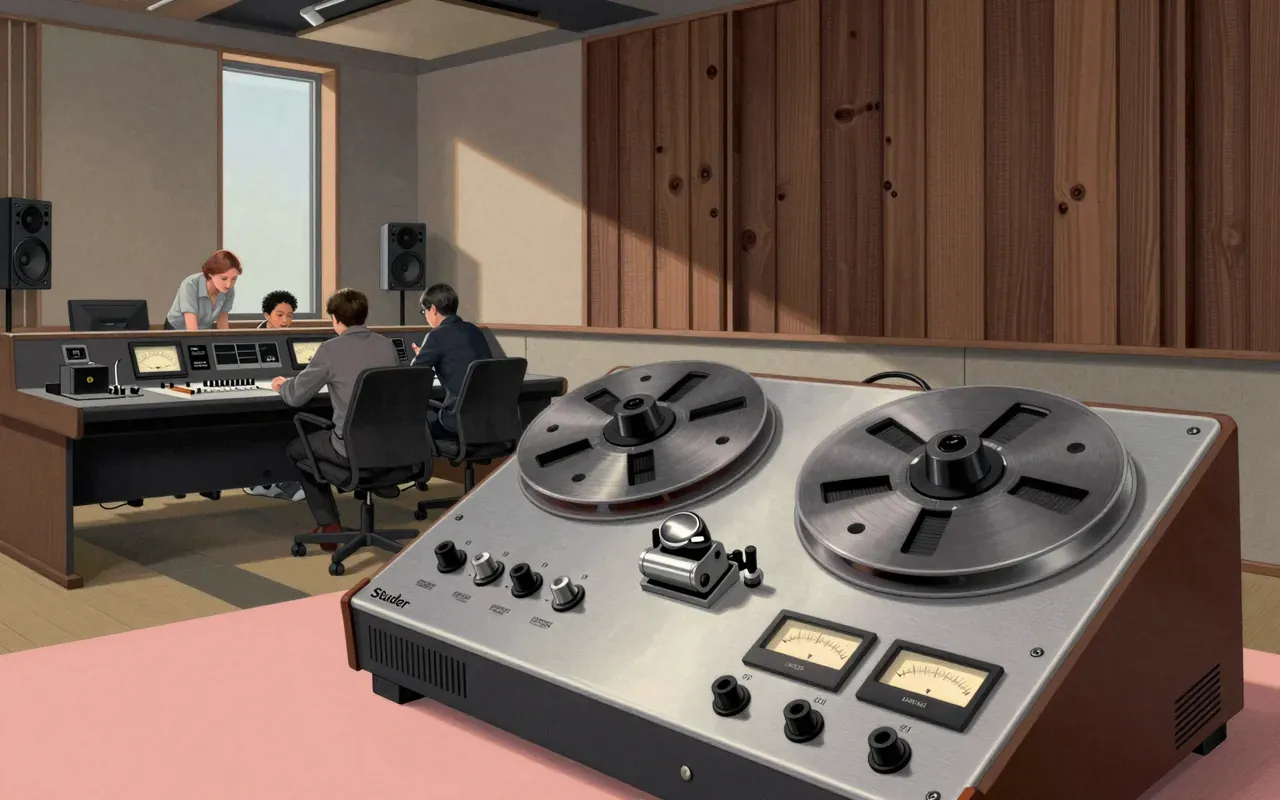
Studer A80

Studer

The Studer A80 is a tape recorder that shapes sound by softening transients and adding organic saturation. It works only when configured precisely: 19/38 or 38/76 cm/s, 1/2-inch tape, GP9-aligned heads. It excels in rock. It fails in dance, house and electro. It is not flexible. It is not neutral. It is a deliberate, physical constraint.

9:58

Studer A800

Studer

The Studer A800 is a UAD-2 plug-in that adds tape-style warmth and drive to digital mixes. It works best post-summing. It uses gang control for unified management. It does not simulate physical tape mechanics.

8:24

Studer A807

Studer

The Studer A807 is an analog multitrack recorder. No technical specifications exist for it. That absence defines it.

8:42

Studer A810

Studer

The Studer A810 is an analog multitrack recorder that functions reliably in steady-state operation. But it fails sharply and obscurely after power interruptions. Troubleshooting those failures is very hard. One user explicitly prefers the A807 over the A810. Nothing is stated about its format, track count, year introduced, or what recordings were made on it.

9:38

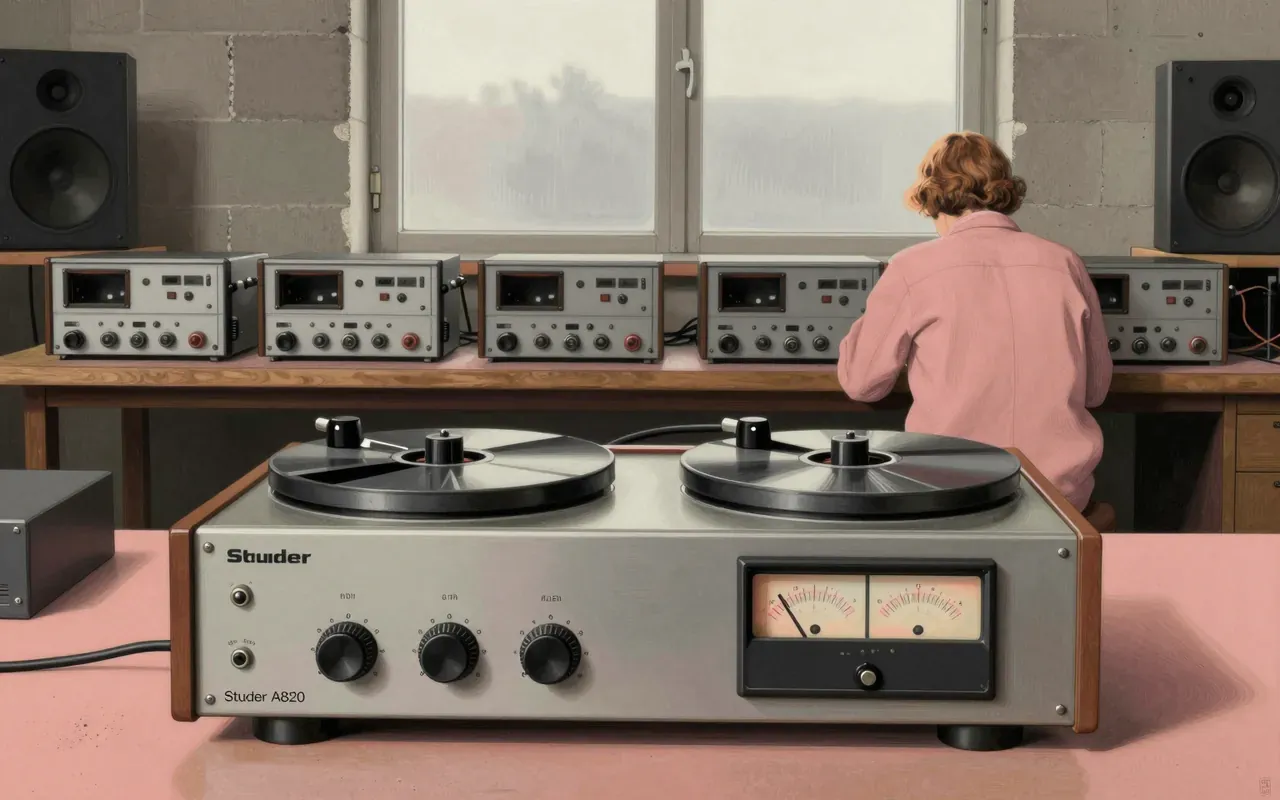
Studer A820

Studer

The Studer A820 is a 24-track analog multitrack tape machine with a portable controller. It excels at low-end and drum capture. It was used to record tracks later transferred to Pro Tools. It is user friendly, with familiar, easily located controls. No verified source states a weakness.

6:44

Studer A827

Studer

The Studer A827 is an analog multitrack-studio. No technical specifications are provided. Its function, design, and use remain undocumented in the source.

9:18

Apogee AD-8000

Apogee

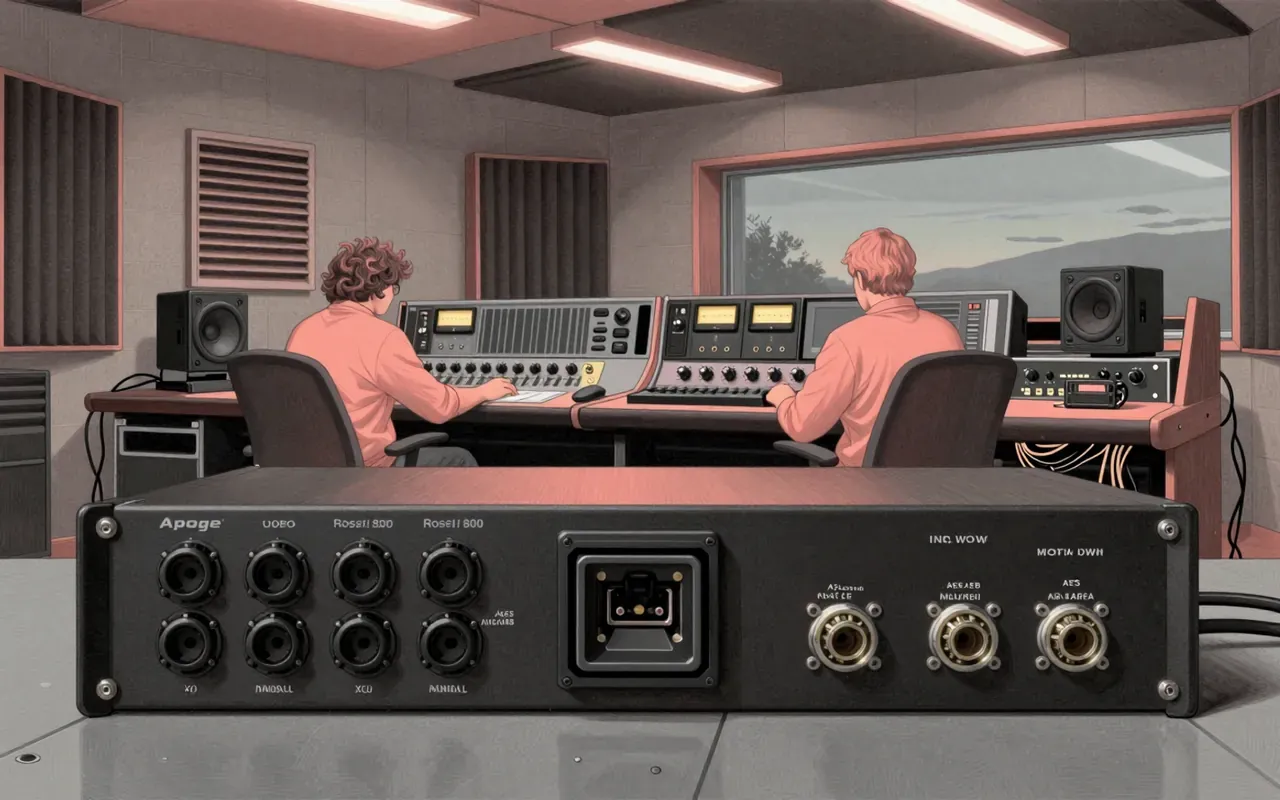
The Apogee AD-8000 is an eight-channel analog-to-digital converter built for recording studios. It was introduced circa 1996. It supports 24-bit resolution at up to 48 kHz. It has eight XLR analog inputs and AES/EBU and S/PDIF digital connections. Front-panel level meters and controls let you monitor and adjust all eight channels. It includes a 1/4-inch headphone jack for direct monitoring. Optional cards enable ADAT, TDIF and Pro Tools connectivity.

9:21

Prism Sound ADA-8

Prism Sound

The Prism Sound Dream ADA-8 is a dual-path AD/DA converter built for clean, separated signal routing at up to 96 kHz. It delivers stable internal clocking and user-friendly displays, but lacks built-in sample rate conversion and fails under external sync with Pro Tools HD interfaces. It belongs in studios where path independence matters more than interoperability.

7:34

Ampex AG-440

Ampex

The Ampex AG-440 is an analog multitrack recorder. No technical specifications are available. Its alternate names include ag440, a 440, and a440. Nothing else is verifiable.

9:04

Echo AudioFire 12

Echo

The Echo Audiofire 12 is a FireWire audio interface in the Audiofire series. It has 12 line inputs and 12 outputs. It has no mic preamps. It has no headphone output. It supports daisy-chaining up to three units for 36 I/O. It achieves 2.9 ms round-trip latency at 24-bit/96 kHz. Its line inputs are transparent and electrically isolated. Users record 12 tracks simultaneously at up to 192 kHz, firmware permitting.

8:01

M-Audio Audiophile 2496

M-Audio

The M-Audio Delta Audiophile 24/96 is a PCI/ISA sound card for Windows-based music production and amateur vocal recording. It connects MIDI controllers and turntables. It supports 24-bit/96 kHz audio when host software allows. Latency drops to 4ms with buffer reductions. It runs silently in Cubase VST, Pro Tools, Fruity Loops, and six other DAWs. Recordings are clean. Softsynths sound great. Wave Table Synthesis is absent — but users found it unnecessary. I/O is limited. Modern OS support is not provided.

7:12

Lynx Aurora 16

Lynx

The Lynx Aurora 16 is an Analog/Digital Converter. No technical specifications are available for it. It belongs to the category of Analog/Digital Converters.

9:06

Studer B67

Studer

The Studer B67 is an analog multitrack recorder. No technical specifications are available for it.

9:45

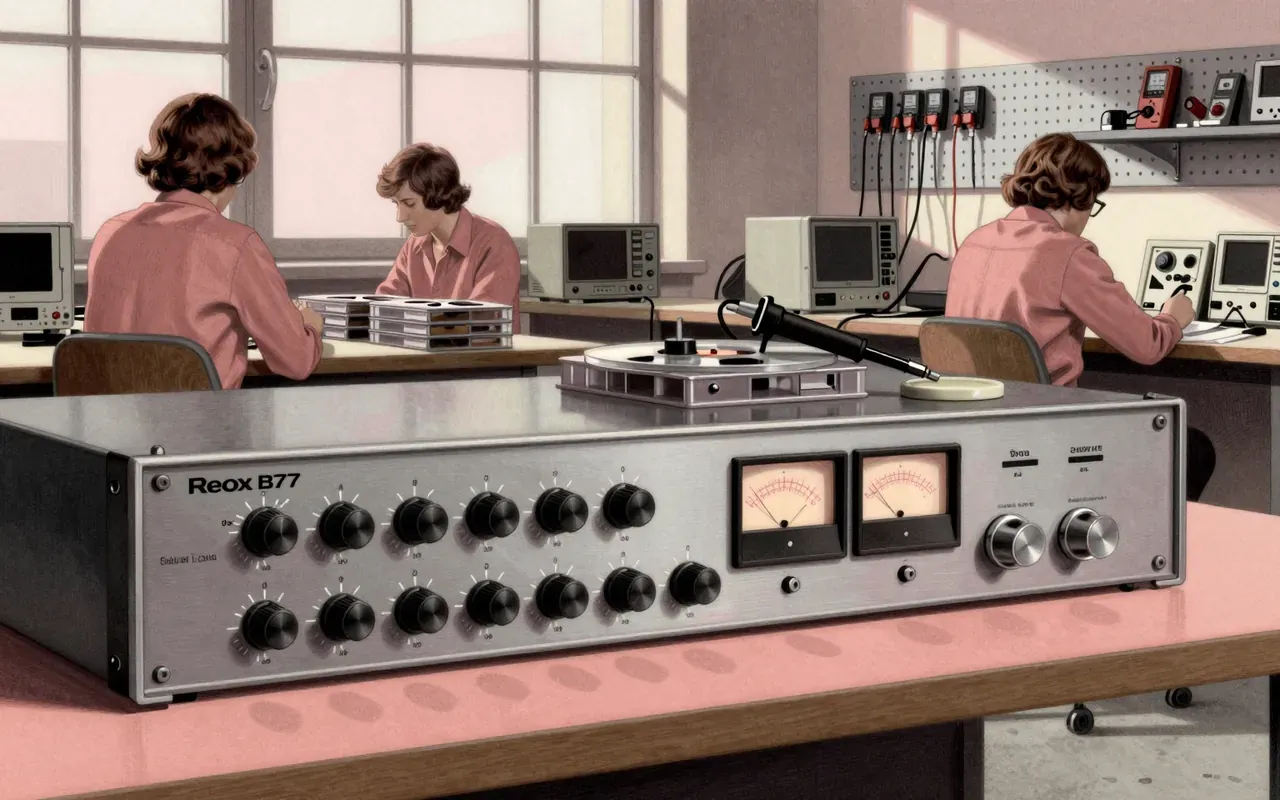
Revox B77

Revox

The Revox B77 is an analog multitrack tape recorder built for studio and project recording. It supports 3 3/4, 7 1/2, and 15 ips tape speeds—but the 15 ips setting is obsolete for digital use. Units from 1980 remain fully functional. It is mechanically robust and quieter than UHER models. Its meter is breakable and irreplaceable. It offers no digital functionality. It is worth your time only if you need durable, low-noise analog multitrack operation—and can maintain it yourself.

8:09

Dynaudio Acoustics BM15A

Dynaudio Acoustics

The Dynaudio Acoustics BM15A is an active studio monitor designed for nearfield monitoring. It integrates amplification, reproduces down to 45 Hz at 0 dB, and complies with EU and FCC electromagnetic shielding standards. One unit exhibited unintended FM radio reception at 104.1 MHz — isolated to the right channel. Users report no distortion or hum, even at maximum volume. No information is given about music, artists, or recordings made with it.

10:26

AKG C24

AKG

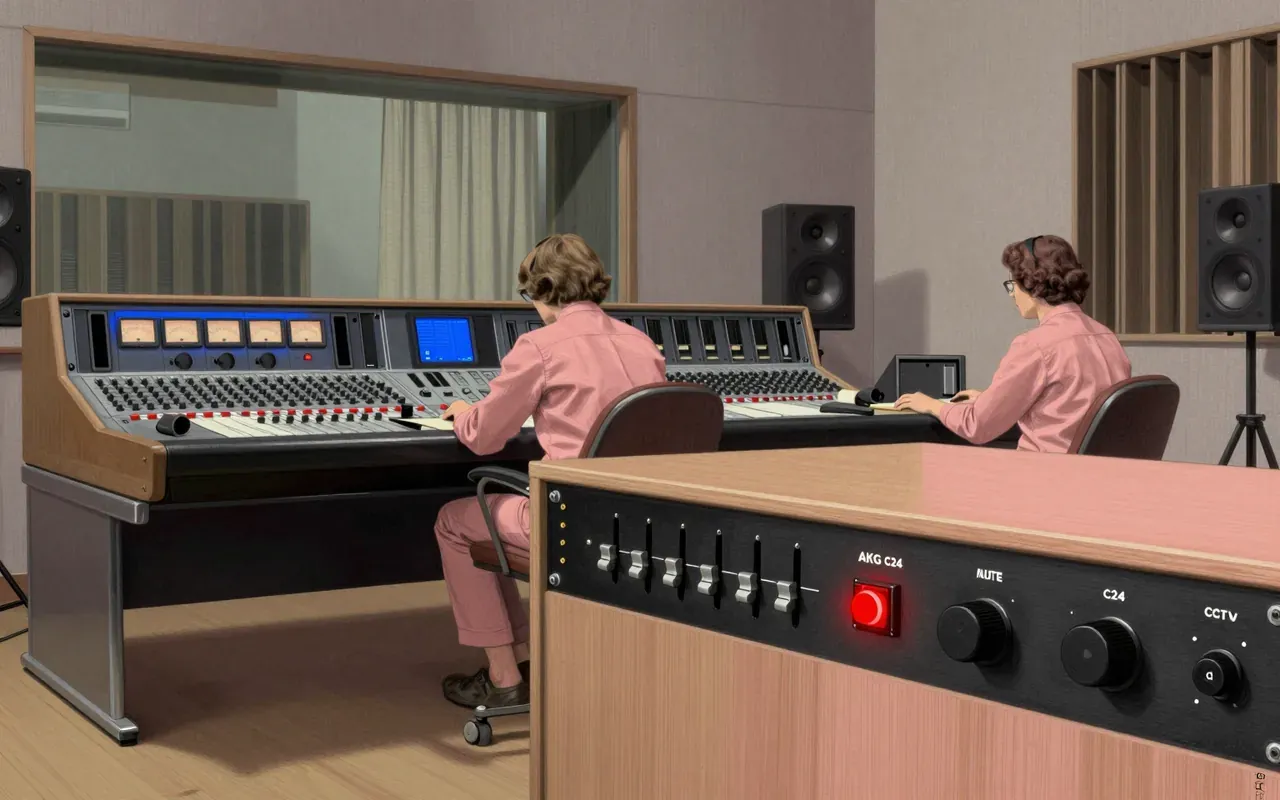
The AKG C24 is a Pro Tools-specific motorized control surface with 24 bankable channel strips, touch-sensitive motorized faders, 16 mic/line/DI preamps, an 8x2 stereo line submixer, a 5.1 analog monitor section, talkback mic inputs, and illuminated dedicated switches for mute, solo, record, select, EQ, dynamics, sends, and inserts.

8:54

AKG C414

AKG

The AKG C414 is a series of large diaphragm condenser microphones. Thirteen variants exist. Two are matched pairs: the XLII and the XLS. All share the same functional category. None are described by frequency response, noise floor, or circuit details in the source.

9:20

Fostex D-80

Fostex

The Fostex D-80 is a dynamic, cardioid microphone built for singing and trumpet. It handles high sound pressure like an SM58 — but delivers a 'crunchy', 1980s-evoking sound the user found in an attic. It offers no features beyond its fixed polar pattern and raw output. It belongs only where that specific texture is the goal.

8:31

M-Audio Delta 1010

M-Audio

The M-Audio Delta 1010 is a discontinued PCI/ISA + rack-mount soundcard. It delivers 8 analogue I/Os plus SPDIF. It achieves 5ms latency. It runs stably with Cubase and Sonar on legacy desktops. It crashes beyond 24 tracks — due to host computer limits, not the card. It inserts real-time effects during mixdown without issue. It requires a Pentium 4–era PC with a free PCI slot. It has no USB or FireWire support. It is no longer manufactured.

7:49

Roland DEP-5

Roland

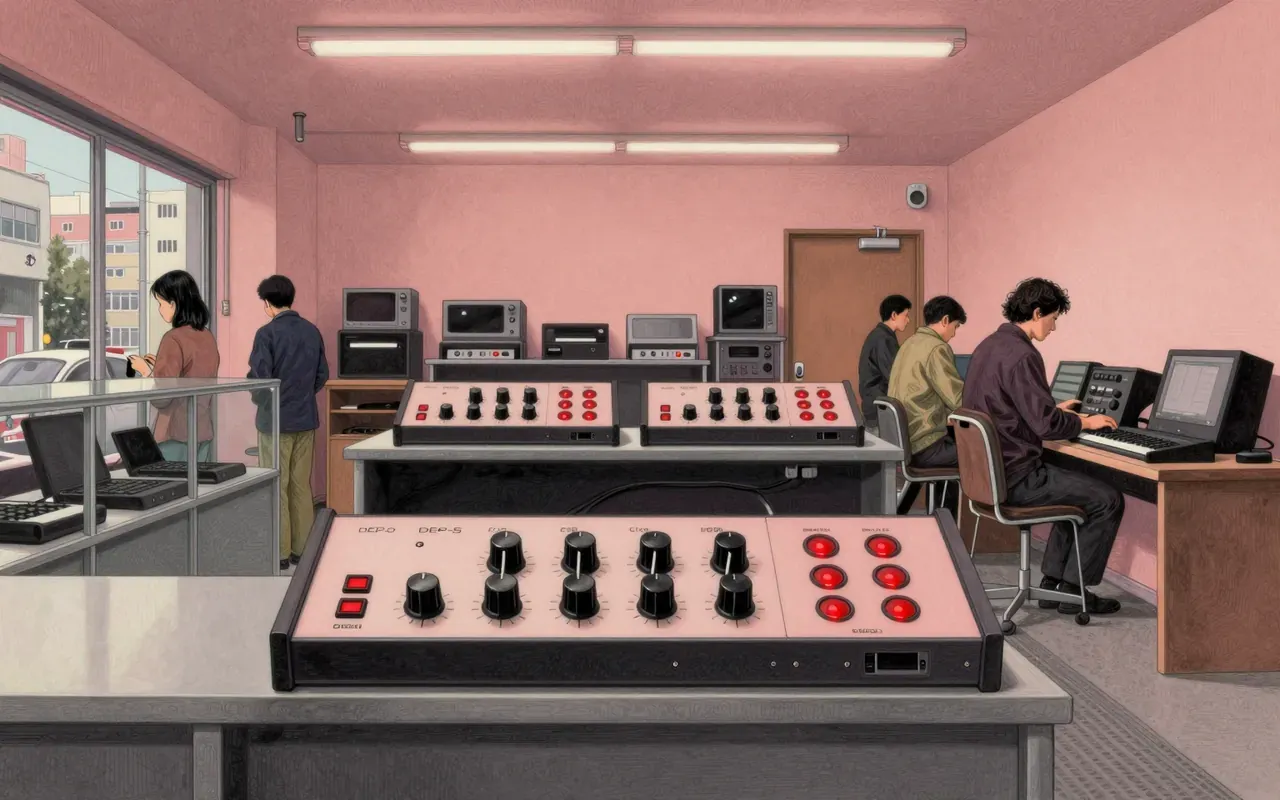
The Roland DEP-5 is a mid-1980s multi-effects processor. It gives you reverb, delay, chorus, flanger, double, and a three-band parametric EQ. Its interface is direct — one button, one function — but some parameters demand layered adjustment. Program 5 delivers a long, arching reverb. Its midrange tone is distinctive and hard to replicate. It does not do clean, neutral processing. It does not offer recallable presets. It does not suit users who need precision over character.

6:20

Publison DHM 89 B2

Publison

The Publison DHM 89 B2 is an Other Studio Effect made by Publison. No technical specifications exist for it. Nothing else is confirmed.

10:22

Digidesign Digi 001

Digidesign

The Digidesign Digi 001 is the original Pro Tools audio interface. It is a rack-mountable PCI/ISA soundcard with two mic preamps, phantom power, gain knobs, -25 dB pads, front headphone output, MIDI, eight outputs (including monitor outs), and six line inputs. It connects via D-Sub and serial port — not FireWire or USB — so it is incompatible with laptops and newer computers. It is obsolete outside legacy systems.

10:50

Digidesign Digi 002

Digidesign

The Digidesign Digi 002 is a FireWire audio interface built exclusively for Pro Tools LE. It delivers four mic preamps, S/PDIF and MIDI, and autonomous digital mixing — but only within that narrow software ecosystem. It is desktop-formatted and non-rack-mountable. Its limits are defined by Pro Tools LE’s track count and host compatibility. It belongs in a period-correct studio, not a modern one.

9:12

Prism Sound Dream ADA-8XR

Prism Sound

The Prism Sound Dream ADA-8XR is an eight-channel analog/digital converter built for fixed-install mastering and DAW integration. It provides eight balanced XLR I/O at +4 dBu, two RCA monitoring outputs, DB-25 AES I/O, and dual BNC Word-Clock. Its build quality is impeccable—but it runs hot, demanding 1U of rack clearance. It does not offer USB, optical, headphone output, or variable monitor level control.

7:20

Beyerdynamic DT 48

Beyerdynamic

The Beyerdynamic DT 48 is the world’s first dynamic headphone, launched in 1939. Its closed, tight-fitting design isolates sound but causes fatigue. Its midrange is superb and revealing—built to monitor voice, sound objects, and mood in reporting, radio, film, and medical audiometry. It is not intended for mastering.

8:18

Fostex E16

Fostex

The Fostex E-16 is an analog multitrack recorder. No technical specifications are available for it.

8:37

Telefunken ELA M 250

Telefunken

The Telefunken ELA M 250 is a large diaphragm condenser tube microphone made by Telefunken Elektroakustik. That is all the source confirms. No specifications, no use cases, no sonic characterisation, no historical context — just category, type, and maker.

8:33

RME Fireface 800

RME

The RME Fireface 800 is a FireWire audio interface built for professional studio routing, synchronization, and digital I/O—not tracking or mixing alone, but glueing hardware together.

8:57

MXR Flanger/Doubler

MXR

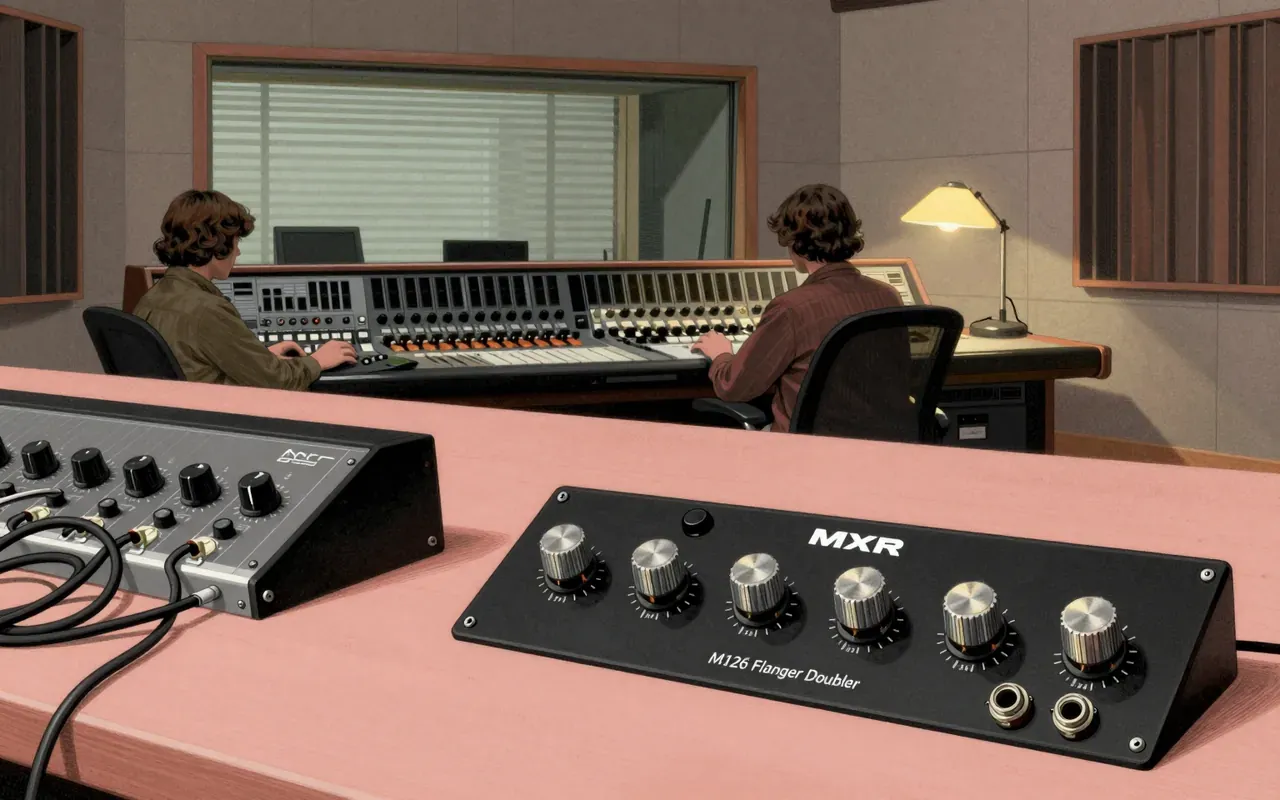
The MXR M126 Flanger/Doubler is a two-space analog rack unit with front-panel 1/4" TRS I/O. It gives players manual, sweep width, sweep speed, mix, and regen knobs plus mode and bypass/invert buttons. It delivers a thick flanging sound and fulfils its synthetic doubling function as advertised. It has no stereo I/O, no expression input, no tap tempo, and no presets. No verified recordings or users are cited. Studio engineers needing fixed, tactile analog flanging or doubling should consider it. Live performers, modular users, and those requiring stereo or foot control should not.

8:24

Chandler Limited Germanium Compressor

Chandler Limited

The Chandler Limited Germanium Compressor is a mono, 1U, all-analog FET compressor using germanium transistors. It offers a ratio range of 1.5:1 to 10:1 and a Clean/Dirty switch that toggles between low-distortion (0.2–0.5%) and higher-distortion (2–5%) modes. It has symmetric XLR I/O, is rack mountable, and linkable for stereo or surround use. It delivers fast, coloured compression — but gives up timing control, metering, and multi-channel operation to do so.

8:37

Crane Song HEDD 192

Crane Song

The Crane Song HEDD 192 is a two-channel DAC for mixing and mastering. It converts digital audio at up to 192 kHz/24-bit. Its defining feature is three fixed analog circuit emulations — triode, pentode, and tape — each altering harmonic texture and dynamics in distinct ways. It offers no transparency, no bypass, no fine-tuning. It exists to commit.

8:50

Mackie HR824

Mackie

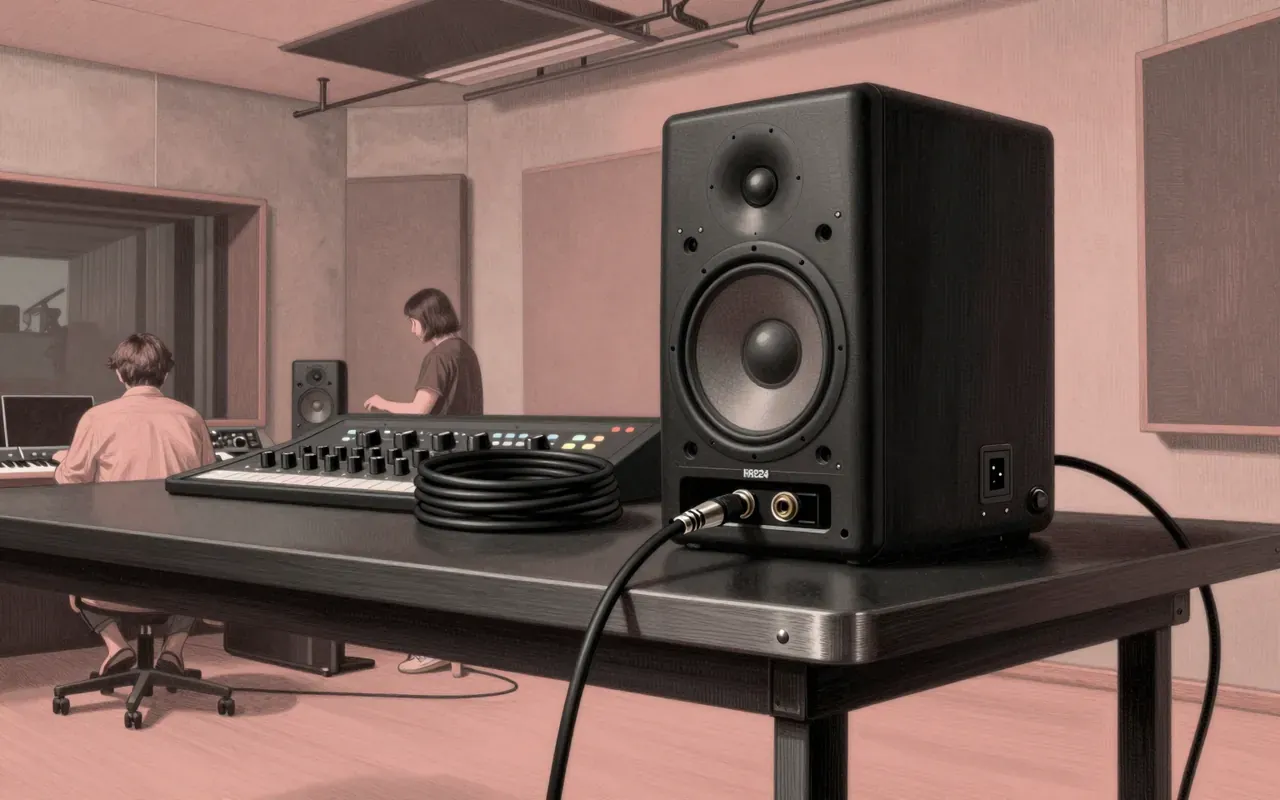
The Mackie HR824 is a discontinued, self-powered near-field monitor. Each unit has its own amplifier and power cord. It delivers uncoloured, accurate sound for critical mixing—and mixes made on it translate well elsewhere.

8:10

Publison Infernal Machine 90

Publison

The Publison Infernal Machine 90 is a 3U rackmount analog/digital multi-effects processor built for video post-production. It delivers delay, echo, harmonizer, sampler, reverb, transposition, time compression/expansion, and DVR-style long-sample playback — all synchronised to SMPTE timecode. All programs are editable on-device; no external editor exists. It excels at frame-accurate effect triggering in film dubbing. It fails for anyone needing patch libraries, remote editing, or non-video workflows.

9:08

Neumann KM 184

Neumann

The KM 184 is a fixed-cardioid small-diaphragm condenser microphone built for clarity, durability, and extreme SPL handling — not for shaping or adapting.

9:07

Neumann KM 54

Neumann

The KM 54 is a rare, discontinued large-diaphragm tube condenser microphone. It has a fixed cardioid pattern and requires its own unique power supply. It is fragile and unsuitable for live use. It delivers a warm, wide vocal tone — ideal for capturing subtlety — but lacks the clarity of newer Neumann tube mics. A reviewer used it successfully on vocals for themselves and a client. It resembles the AKG C12 in sound and appearance.

9:37

Neumann KM 84

Neumann

The Neumann KM 84 is a studio-only small diaphragm condenser microphone. It delivers clean, crisp, accurate recordings of acoustic instruments—no low-end filtering needed. Its presence peak adds clarity; its rapid top-end roll-off removes air. Proximity effect forces tight mic placement. Phantom power is required. It is fragile and unsuited for live or field work.

10:28

Neumann KM 86

Neumann

The KM 86 is not a KM 84 variant. It is a dual-capsule small-diaphragm condenser that delivers three virtual polar patterns — and a sound described as 'more pais'. It was sold with XLR or Tuchel connectors. That is all the source tells us.

8:00

UREI LA-4

UREI

The UREI/JBL LA-4 "s" is a studio compressor. UREI and JBL made it. No technical specifications are available. That is all the sources say.

9:10

Lexicon Lexicon 480L

Lexicon

The Lexicon 480L is a rack-mounted digital reverb processor introduced in 1986. It contains 200 internal programs. It supports RAM and ROM cartridges. It is controlled via the LARC remote control unit. It has 2 or 4 XLR analog outputs. Two units can be cascaded for two independent engines. Version 1.01 launched in 1986 and immediately became the new world standard for high-end studio reverb machines. Firmware extended to version 4.01 with a surround kit before being replaced by the 960L.

9:04

Linn Electronics LinnDrum

Linn Electronics

The LinnDrum is a hands-on, sample-based drum machine built for studio precision — not live flexibility.

10:01

Focusrite Liquid Channel

Focusrite

The Focusrite Liquid Channel is a rack-mounted channel strip that uses convolution to deliver 80 preamp and compressor presets — but only with mandatory software and a steep learning curve.

8:29

MCI MCI JH-500

MCI

The MCI JH-500 is a channel strip module inside the MCI JH-528 B studio rack. It delivers clear, powerful, live-sounding results straight out of the box—especially on acoustic guitar—with no EQ required. Its notch EQ sweeps effectively across the spectrum. Four XLR I/O and two rear line inputs support flexible routing. It is built for immediacy, not fine-grained control.

10:20

Sennheiser MD 409

Sennheiser

The Sennheiser MD 409 is a unidirectional dynamic microphone built for studio and live use, especially guitar cabinet miking.

6:50

Pultec MEQ-5

Pultec

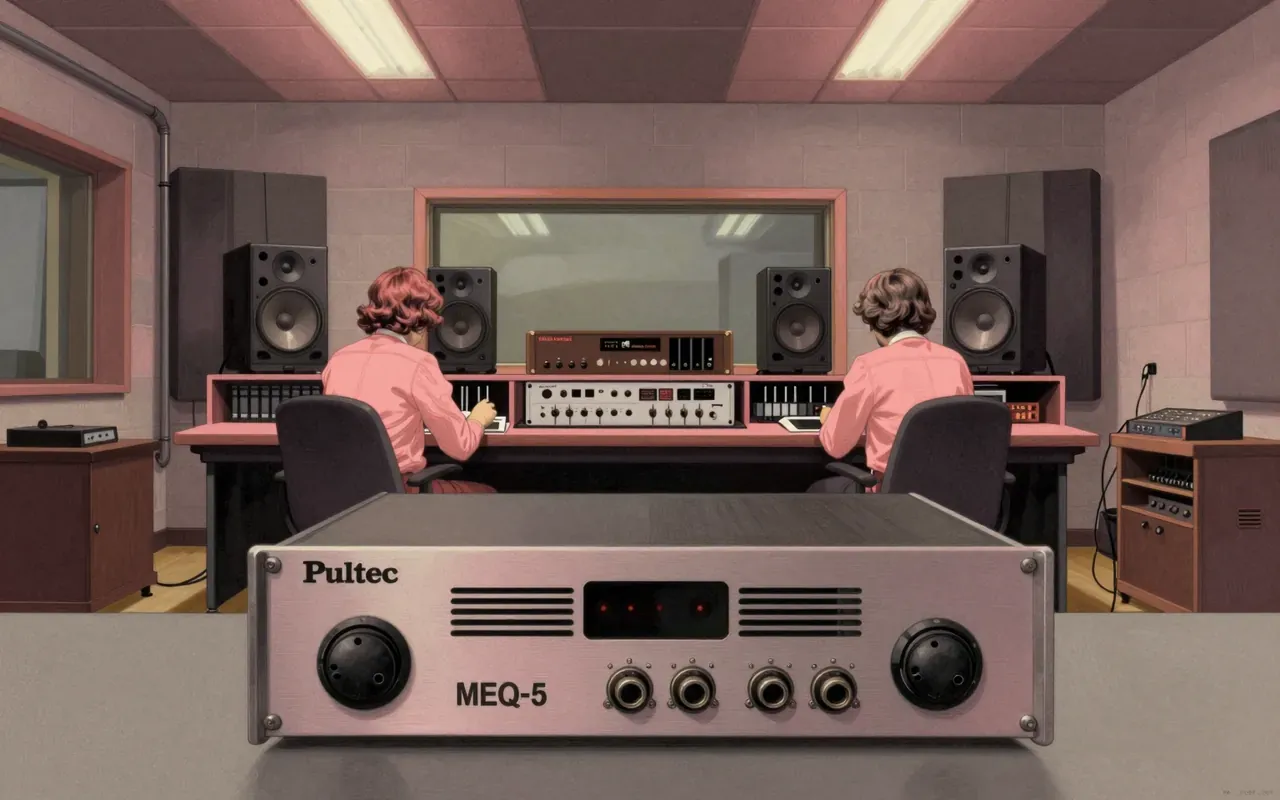
The Pultec MEQ-5 is a clean, transparent, three-band analog EQ. It occupies two rack spaces. Each band uses a frequency switch and a gain knob. It covers nearly the full frequency spectrum. It alters sound cleanly—nothing more, nothing less.

6:54

Ampex MM-1200

Ampex

The Ampex MM-1200 is an analog multitrack recorder. No technical specifications exist for it. That absence defines its limits.

9:00

Roland MSQ-700

Roland

The Roland MSQ-700 is an 8-track MIDI sequencer with lithium battery-backed memory, step-time and real-time recording, punch-in, merge, quantization, chaining, and analog tape sync. It stores 6500 notes per track. It has no screen, no file export, no velocity editing, and no USB.

8:20

Otari MTR-10

Otari

The Otari MTR-10 is an analog multitrack recorder. No technical specifications are available. It is also referred to as 'mtr 10' or 'mtr10'.

10:16

Otari MTR-12

Otari

The Otari MTR12 is an analog multitrack recorder. No technical specifications exist for it. That absence defines its utility — or lack thereof.

6:52

Otari MTR-90

Otari

The Otari MTR-90 is listed as an analog multitrack recorder. No technical specifications are available. Nothing else is confirmed.

10:14

Otari MX-5050

Otari

The Otari MX-5050 is an 8-track analog multitrack cassette recorder introduced in 1987. It records at 3.75 ips. Its recording head is superior to that of the Otari 488 and 488 mkII. dbx Type II noise reduction applies separately to tracks 1–4 and 5–8. A pitch/speed wheel allows ±15% variation. Its digitally controlled transport enables automated punch-in between memory points. It uses direct-drive mechanics — no capstan belt required. It records all eight tracks simultaneously, unlike the 488 models.

9:14

Yamaha NS-10M

Yamaha

The Yamaha NS-10M is a two-way passive near-field monitor. It delivers clear mid and high frequencies but lacks deep low-end extension. Engineers use it to verify mix translation and to A/B compare with other speakers. Its non-neutral response demands experience. It is not a full-range solution.

8:20

Eventide Omnipressor 2830

Eventide

The Eventide Omnipressor 2830 Au is a studio compressor. No technical specifications are available. It belongs to the studio compressors category.

8:51

Tascam Portastudio 144

Tascam

The Tascam Portastudio 144 is a four-track analog cassette recorder. It was used by adolescents for home multitrack recording in 1981. It lacked dBX noise reduction but functioned effectively. It enabled users to record and mix music at home, creating a personal musical environment.

8:43

Tascam Portastudio 244

Tascam

The Tascam Portastudio 244 is a 1984 four-track cassette recorder. It gives immediate, portable multitrack recording with EQ, gain, and switchable input impedance per track. DBX noise reduction works. Analog saturation stays musical. But signal degrades horribly at each bounce. Cassette transport is fragile. Preamps sound thin and harsh. No phantom power. Unbalanced inputs only. It was bought in Paris in 1984 for nearly 5,000 francs.

7:10

Tascam Portastudio 246

Tascam

The Tascam Portastudio 246 is an analog multitrack-studio. No technical specifications exist for it. It belongs to the category of Analog Multitrack-studios.

8:01

Tascam Portastudio 424

Tascam

The Tascam Portastudio 424 is a cassette-based four-track recorder and mixer. It uses type II (CrO2) tape. It has two inputs — XLR and 1/4 inch — and supports tape speeds of 9.5, 4.75, and 2375 cm/s. dbx type II noise reduction is permanent. Each input has gain, three-band EQ, and panning. It has main stereo outputs and a headphone jack.

9:08

Rupert Neve Designs Portico 5033

Rupert Neve Designs

The Portico 5033 is a parametric EQ in Rupert Neve Designs’ Portico series. No technical specifications are published. It offers hands-on control but no documented performance metrics.

8:46

Rupert Neve Designs Portico 5043

Rupert Neve Designs

The Portico 5043 is a studio compressor in Rupert Neve Designs’ Portico series. It delivers consistent, source-agnostic compression with optional harmonic colouration. Its physical format undermines its rack-ready promise. It does not replace a dedicated clean limiter or a compact multi-channel solution — but it rarely needs replacing on a track once engaged.

8:26

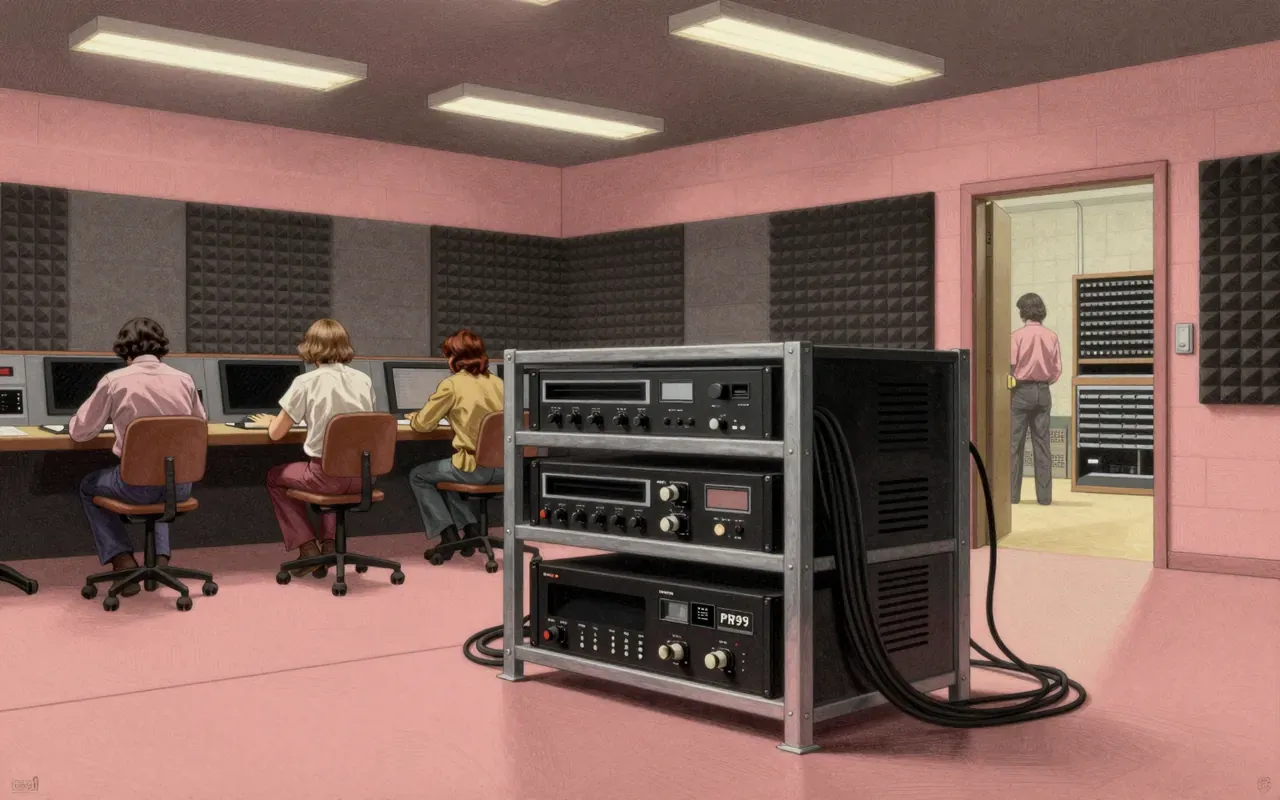
Revox PR99

Revox

The Revox PR99 is an analog multitrack recorder with no published technical specifications. Its function is limited to basic tape-based multitrack recording and playback — but without documented parameters, alignment, or service history, it resists reliable use or evaluation.

8:07

Digidesign Pro Tools 24 MIX

Digidesign

The Digidesign Pro Tools|24 Mix + is a discontinued PCI DSP board for Pro Tools|24 systems. It requires Pro Tools 6.4.1 and Mac OS 10.3.8. Installation is difficult. Setup is simple. Once running, it performs reliably and professionally.

9:41

Yamaha REV1

Yamaha

The Yamaha REV1 is a two-part digital reverb: a rack unit and a separate remote. It runs at 16-bit/44.1 kHz. It has one XLR input, two XLR outputs, external clock sync, and RS232 remote connectivity. Its sound is clear, clean, soft, and distinct from other Yamaha gear. Only the Lexicon 224 XL surpassed it in finesse among contemporaneous units.

9:59

Yamaha REV7

Yamaha

The Yamaha REV7 is a fixed-architecture digital reverb unit from 1985. It occupies two rack spaces. It offers four reverb types — hall, room, flat, and voice — plus chorus, flanger, phaser, tremolo, and delay. All effects layer over reverb. It has XLR and 1/4-inch audio connections and 5-pin DIN MIDI ports. It has no patch memory, no real-time MIDI parameter control, and no stereo-in/stereo-out routing.

8:54

Tannoy Reveal

Tannoy

The Tannoy Reveal is a discontinued passive monitor. It delivers dynamic, clear sound with surprising output for its size — but trades neutrality for listenability. Its low end fades before 65 Hz. Its stereo image depends on precise tweeter alignment. Magnetic shielding works flawlessly near screens. Users call it hi-fi, not monitoring — loudness-coloured, not flat.

7:49

Apogee Rosetta 800

Apogee

The Apogee Rosetta 800-192k is a rack-mountable analog-to-digital converter. It connects via rear-panel analog, ADAT, and AES. It serves Pro Tools HD systems. It runs at 48 kHz, 96 kHz, or 192 kHz. It produces a clean, transparent, smooth signal. It does not do D/A, preamp, or processing.

7:19

ATC SCM100

ATC

The ATC SCM100ASL Pro is an active studio monitor. No technical specifications are available. It requires no external amplifier. Its performance boundaries are undocumented.

7:53

ATC SCM50

ATC

The ATC SCM50 ASL is an active monitor with no published technical specifications. Nothing about its sound, construction, or performance is documented in the source material.

9:28

Roland SDE-1000

Roland

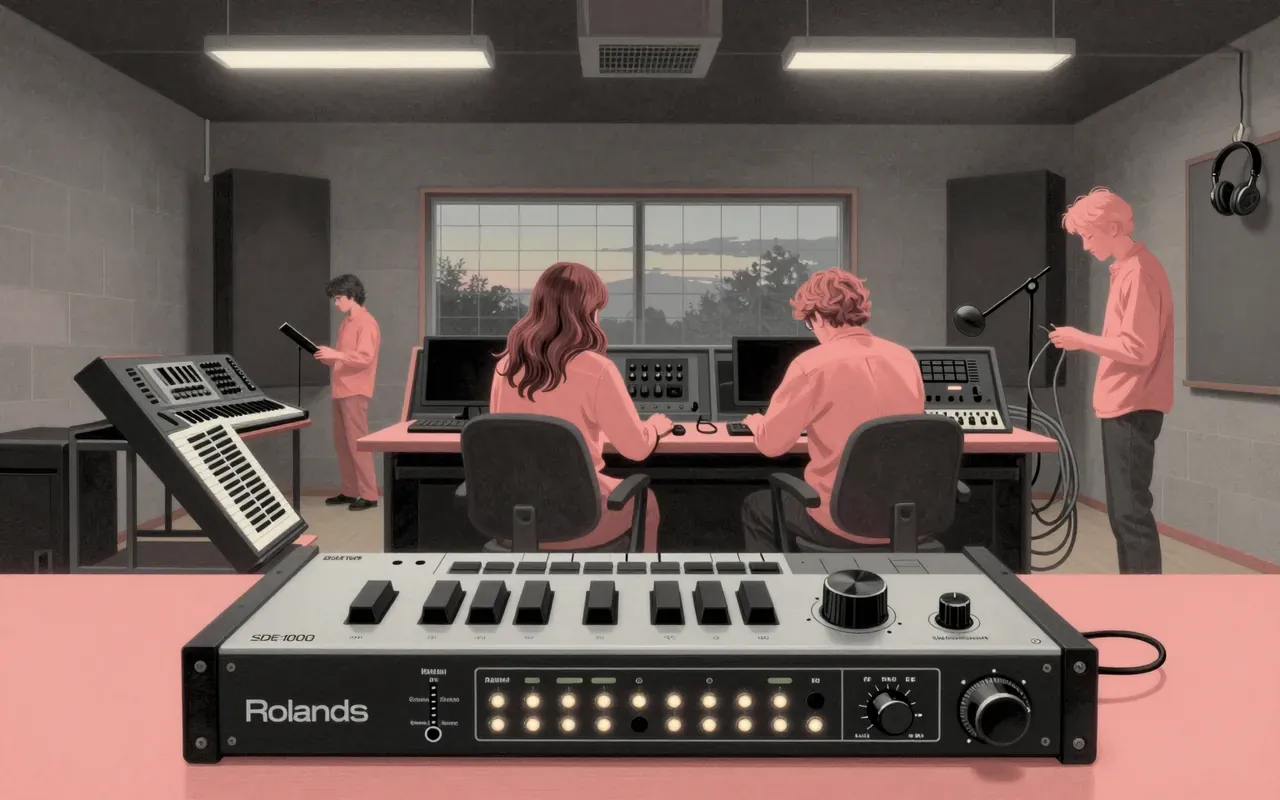
The Roland SDE-1000 is one of the first digital delay rack units. It delivers up to 1.5 seconds of breathless, crystal-clear delay. Four front-panel keys store delay time and on/off state. Modulation knobs do not memorise—but their activation does. A footswitch controls global on/off. It was bought in 1983 or 1984.

9:12

Roland SDE-3000

Roland

The Roland SDE-3000 is a mono digital delay unit introduced in 1984. It delivers up to 4500 ms of delay with 10 Hz–17 kHz frequency response and low distortion. It has wet/dry outputs, time loop, and TRS footswitch support. It is built for reliability, not versatility.

8:53

Yamaha SPX90

Yamaha

The Yamaha SPX90 is a 1985 digital multi-effects processor in a 1U rack. It offers discrete or combinable effects — reverb, echo, chorus, flanger, phaser, compression, pitch shifting, distortion, tremolo, and delay — but no concurrent processing. Audio is 12-bit, sampled at 31.25 kHz, with a maximum frequency response of 12 kHz. MIDI supports program recall only, not editing. Front-panel controls are simple and direct. It delivers character, not clarity.

8:22

Yamaha SPX900

Yamaha

The Yamaha SPX900 is a 1U digital multi-effects processor with analog-only I/O, 16-bit/44.1 kHz processing, and 99 fixed presets. It delivers studio-ready reverb, delay and modulation in a compact, MIDI-controllable package — but offers no digital connectivity and no on-the-fly parameter editing.

7:12

Neumann TLM 103

Neumann

The Neumann TLM 103 is a fixed cardioid condenser microphone. It delivers a full 20 Hz–20 kHz frequency response. It has no low-cut filter or pad. It does not include a shock mount. It ships in a wooden, padded box. Its output impedance is 50 ohms.

9:04

Neumann U 89

Neumann

The Neumann U 89 is a 1980 large-diaphragm condenser microphone built for versatility: five polar patterns via rotary switch, two fixed low-cut filters (80 Hz and 160 Hz), an attenuator, 140 dB SPL handling, and a neutral, less vivid tonal character than the U 87. It excels at distance capture and fits where bulkier mics cannot. It does not offer colouration, warmth or extended sub-bass response. No recordings or users are named in the source material.

8:43

Focusrite VoiceMaster Pro

Focusrite

The Focusrite VoiceMaster Pro is a vocal-optimised channel strip with a discrete Class A preamp, optical compressor, de-esser, and tube simulation. Its preamp is soft in the highs. Its compressor is transparent. Its EQ is functional but unmusical. All controls are front-panel only. It delivers what vocal tracking needs—not what mixing demands.

6:40

Neve VR

Neve

The Neve VR LEGEND 60 is confirmed only as an analog mixer. No technical specifications exist in the source material. Nothing is verified about its design, operation, application, or outcome.

8:26

Empirical Labs Distressor

Empirical Labs · 1995

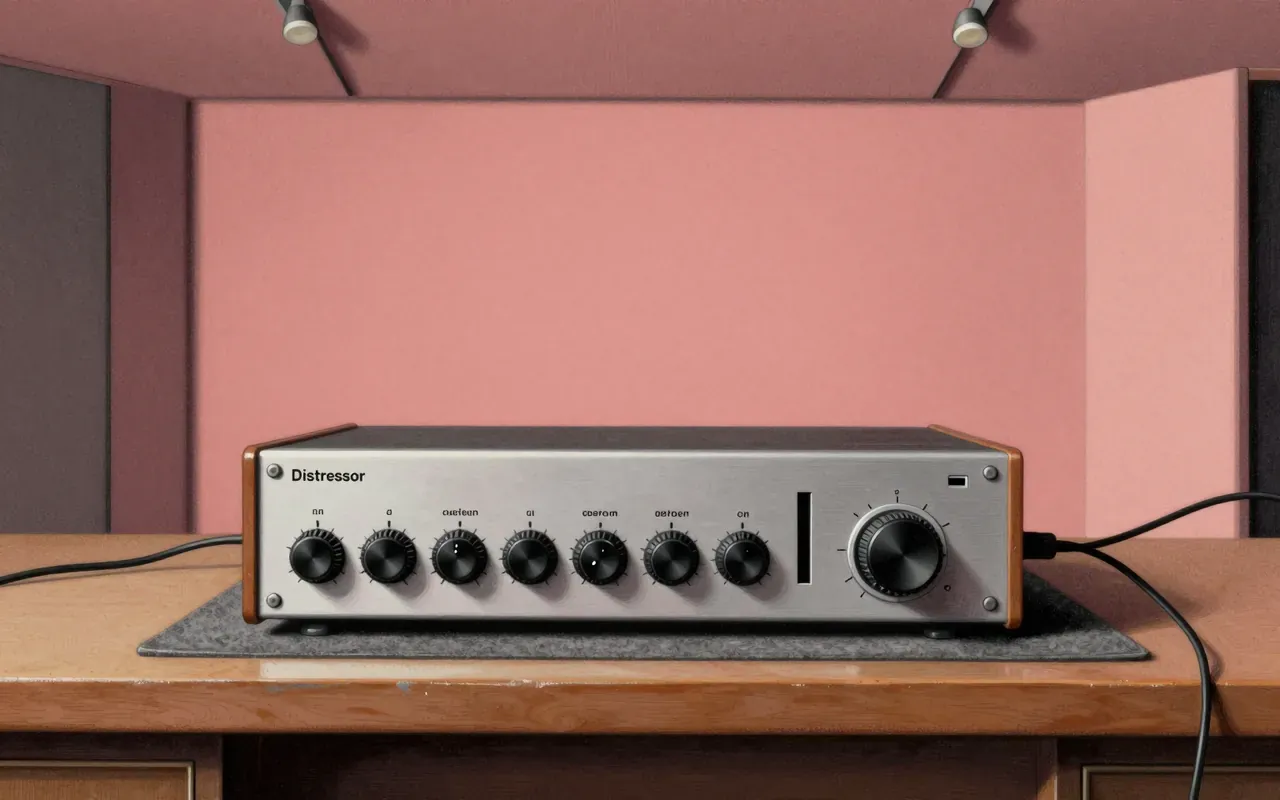
The Empirical Labs Distressor is an analog VCA compressor introduced in 1995. It has a fixed threshold, soft knee, and variable ratio, attack, release, input gain and output gain. At 10:1, it uses a photoresistor-based optical emulation circuit. It includes tube and tape distortion emulations, side-chain high-pass filtering, and on the EL8-X model, British Mode and Image Link. It was inducted into the TECnology Hall of Fame in 2016 and has sold an estimated 40,000 units.

9:00

LA-2A Leveling Amplifier

Teletronix

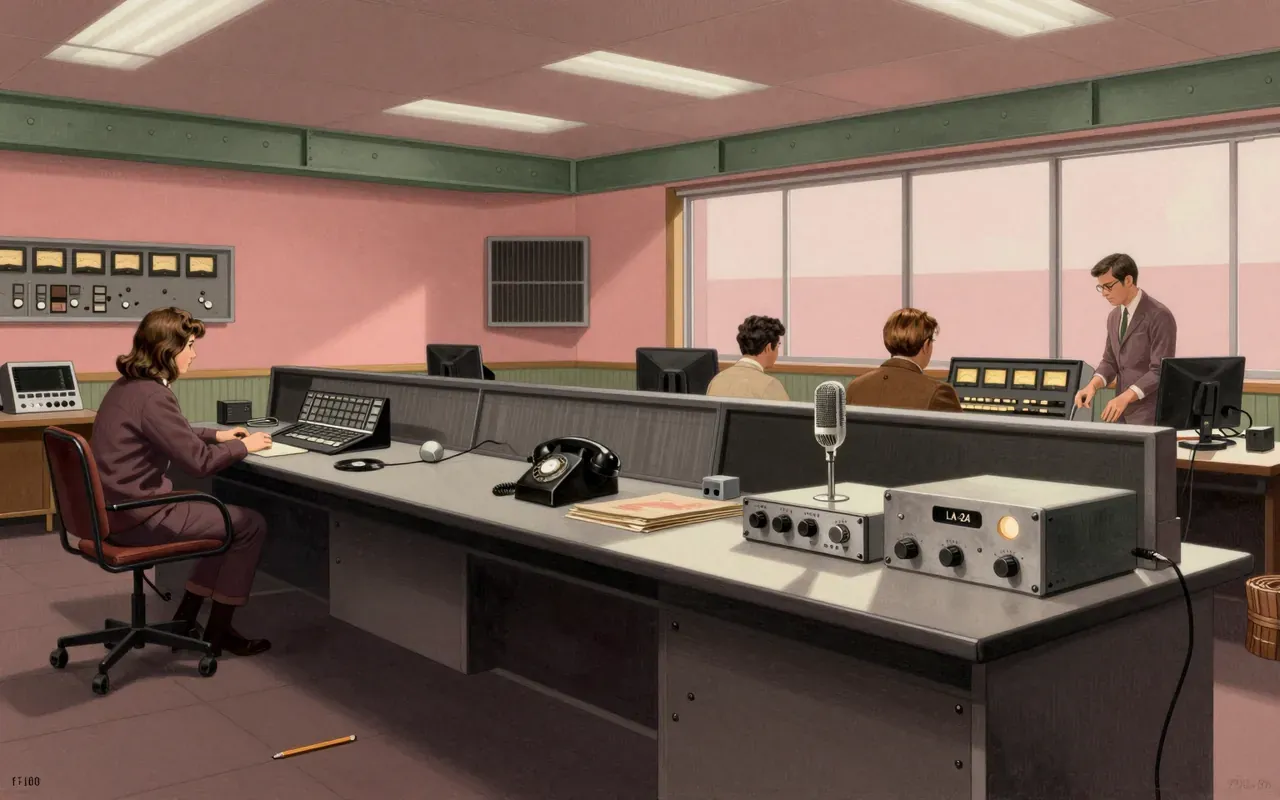
The LA-2A is a hand-wired, vacuum tube-based audio compressor developed by Teletronix and released commercially in 1962. It uses an electroluminescent panel and cadmium sulfide photoresistor for program-dependent gain reduction. Its attack is fixed at 10 ms; its release varies from 60 ms to 15 seconds depending on input. It preserves perceived performance dynamics under heavy compression. UREI acquired its patent rights in 1967.

9:43

Beyerdynamic M 160

Beyerdynamic · 1957

The Beyerdynamic M 160 is a hypercardioid ribbon microphone introduced in 1957. It uses dual 15-mm aluminum ribbons suspended between alnico magnets (later neodymium), rotated 90 degrees to achieve end-address operation and a highly directional pickup pattern. It softens harsh characteristics of strident sound sources. It has been used in broadcasting, live concerts, and studio recordings — notably by Eddie Kramer on Jimi Hendrix and Andy Johns on John Bonham’s drums for 'When the Levee Breaks'. It remains in production over six decades later.

9:10

Marshall Super Lead

Marshall · 1965

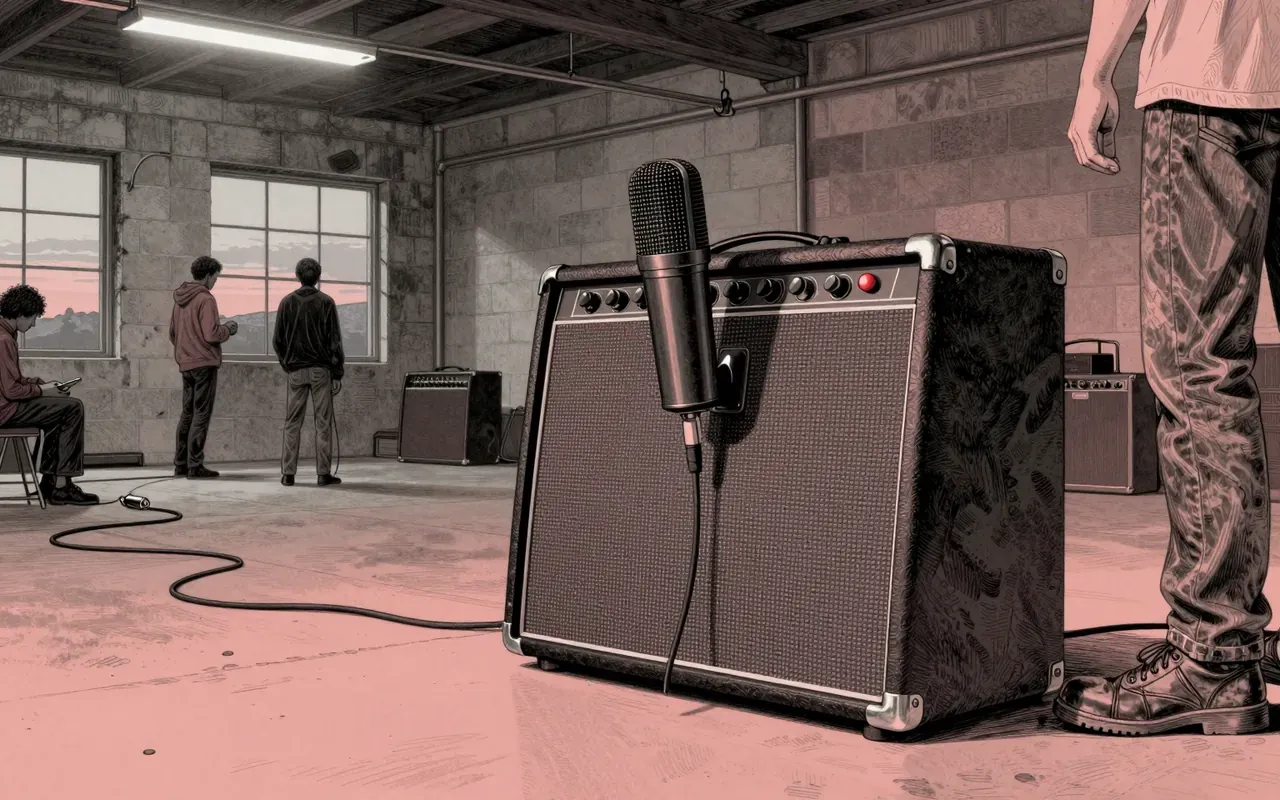
The Marshall Super Lead is a 100-watt guitar amplifier head made by Marshall between 1966 and 1981. It was developed in response to player demand for higher output than the earlier JTM45. Its distortion arises solely from overdriving its EL34-based power amp section at high volume. It has two channels and four inputs but no master volume. Its core character is bold, midrange-heavy, and bright — delivering the foundational 'Marshall crunch' sound of 1970s rock.

9:00

Fender Vibrolux Reverb

Fender

The Fender Vibrolux Reverb is a 35-watt blackface/silverface tube amp built around smaller transformers and 10″ speakers. It breaks up earlier and more sweetly than larger 6L6 Fenders. Its tone is scooped, punchy and sparkling—but it sacrifices clean headroom and low-end weight. CBS-era revisions increased clean headroom, but the core character remains defined by responsiveness over restraint.

9:59

ProDigi

Mitsubishi

ProDigi was a professional reel-to-reel digital audio tape format with stationary heads, introduced in the mid-1980s, using linear digital recording with cyclic redundancy check error correction on metal particle tape in 2-, 16-, and 32-track configurations; it was widely adopted in Nashville country music studios but declined by the mid-1990s with the rise of Pro Tools.

10:23

1176 Peak Limiter

UREI

The UREI 1176 Peak Limiter is a fast, characterful, all-solid-state audio compressor introduced in 1968. It uses a field-effect transistor in feedback configuration for gain reduction. Compression is soft-knee with a fixed threshold controlled by input level. Four ratios — 4:1, 8:1, 12:1, 20:1 — each raise the threshold. Attack and release are program-dependent. Stereo linking is supported. The 'all-button mode' adds harmonic distortion and alters compression behaviour. It marked the transition from vacuum tube to solid-state technology in studio dynamics processing.

8:31

API 550

API

The API 550b is a four-band analog EQ re-issuing the 1967 API 550 with an added band. It offers seven switchable frequency centres per band, ±12 dB boost/cut, shelf/peak switching on bands 1 and 4, Proportional Q, reciprocal and repeatable filtering, and a +30 dBu clipping level. It uses API’s 2520 op amp and is built to original blueprints.

9:46

Eventide Eclipse

Eventide

A professional-grade digital effects processor with dual independent effects blocks, nearly 100 algorithms—including 11 reverbs—and 24-bit/96kHz conversion. Supports true stereo reverb I/O and extensive looping (up to 20 seconds per block). Firmware updates require Compact Flash and strict version dependencies; bootloader corruption requires factory reprogramming.

9:28

Apogee Ensemble

Apogee

The Apogee Ensemble (FireWire) and Ensemble Thunderbolt are legacy audio interfaces with fixed end-of-life dates, discontinued software support, and hard macOS version limits. They offer no documented sonic distinction, no stated creative use cases, and no path forward beyond legacy maintenance.

8:27

LS3/5A

BBC

The LS3/5A is a compact BBC-designed studio monitor built for broadcast consistency, not domestic indulgence. Its revisions track component supply — not artistic evolution. It excels in transparency but fails at bass, volume, and modern amplifier compatibility.

8:22

Eventide Orville

Eventide

The Eventide Orville is a dual-DSP, 24-bit digital audio processor with fully flexible I/O routing, near-three-minute sampling (DSP A), 40-second delay on both engines, UltraShifter™, DistortionCurve™ analog distortion modelling, and Predictive Vocoder™ based on a high-resolution physical model of the vocal tract. Firmware updates require Windows XP and a USB-to-serial adapter—and delete all User Programs unless backed up.

9:51

PCM adaptor

Sony

The PCM adaptor is a transitional artifact: a hardware hack that made digital audio portable and recordable using 1970s video infrastructure. It solved one problem — getting 16-bit audio onto physical media for CD mastering — and introduced many others: tape instability, video sync dependency, and zero interoperability with later digital standards.

8:04

Coles 4038

Coles

The Coles 4038 is a BBC-designed ribbon microphone from 1953. It uses a bi-directional polar pattern and has a flat frequency response from ~30–15,000 Hz. High-frequency attenuation reduces sibilance but also reduces detail. Its technical specifications have remained unchanged since its design in the 1950s.

8:15

Vox AC30

Vox

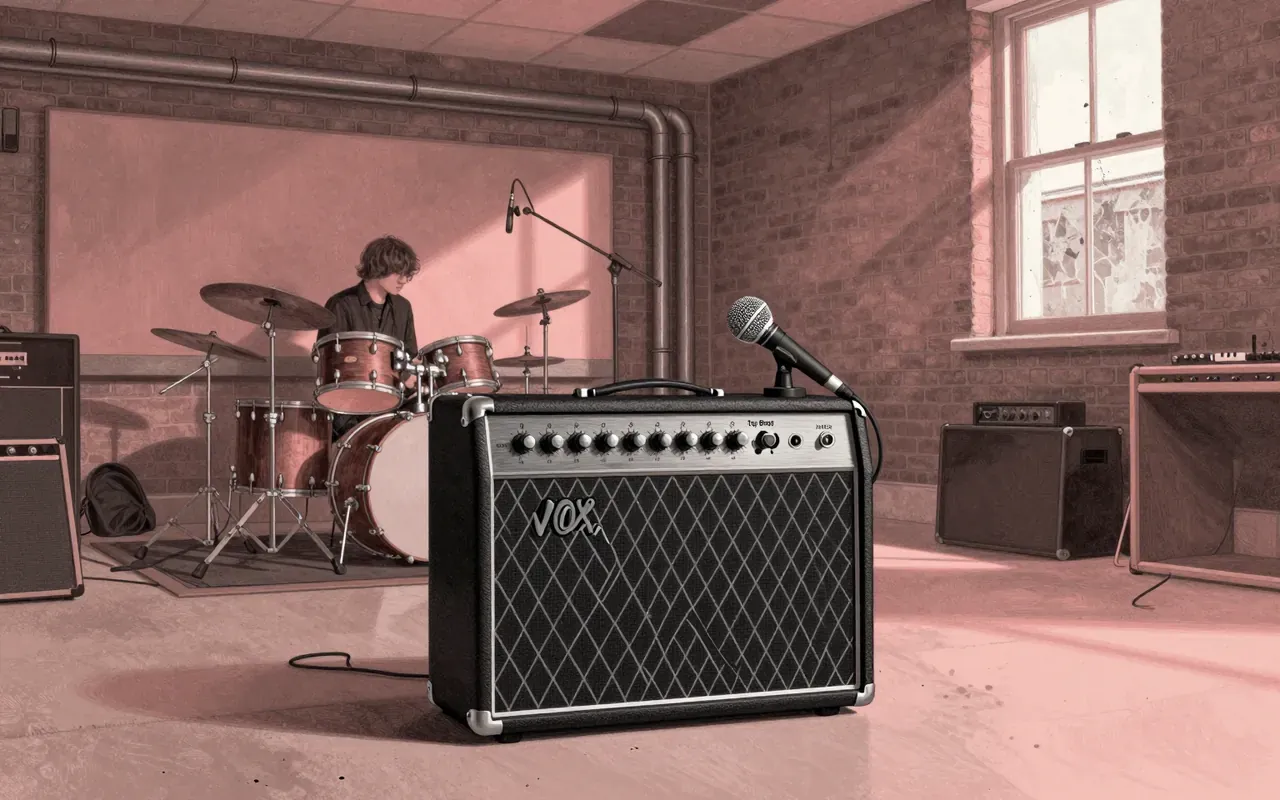
The Vox AC30 is a valve-powered guitar amplifier introduced in 1959 to provide higher wattage and greater volume than the AC15. Its class AB operation, cathode-biased EL84 push-pull output stage, and Celestion Blue speaker pairing produce a jangly, mid-forward, high-clarity tone with limited low-end at low volumes but strong headroom and smooth overdrive. It is not synthesizer-based and does not employ digital or solid-state synthesis methods.

9:26

ADAT

Alesis

The ADAT was a tape-based digital multitrack recorder introduced by Alesis in 1991 and shipped in early 1992. It recorded eight tracks of 16-bit audio on S-VHS cassettes, supported locate points and auto play/record for precise editing, and could be synchronised with up to 15 other units for 128-track recording. Its CD-resolution audio and low price disrupted home and project studios. Later models like the HD24 moved to hard disk and introduced File Streaming Technology.

9:49

Ampex ATR-100

Ampex

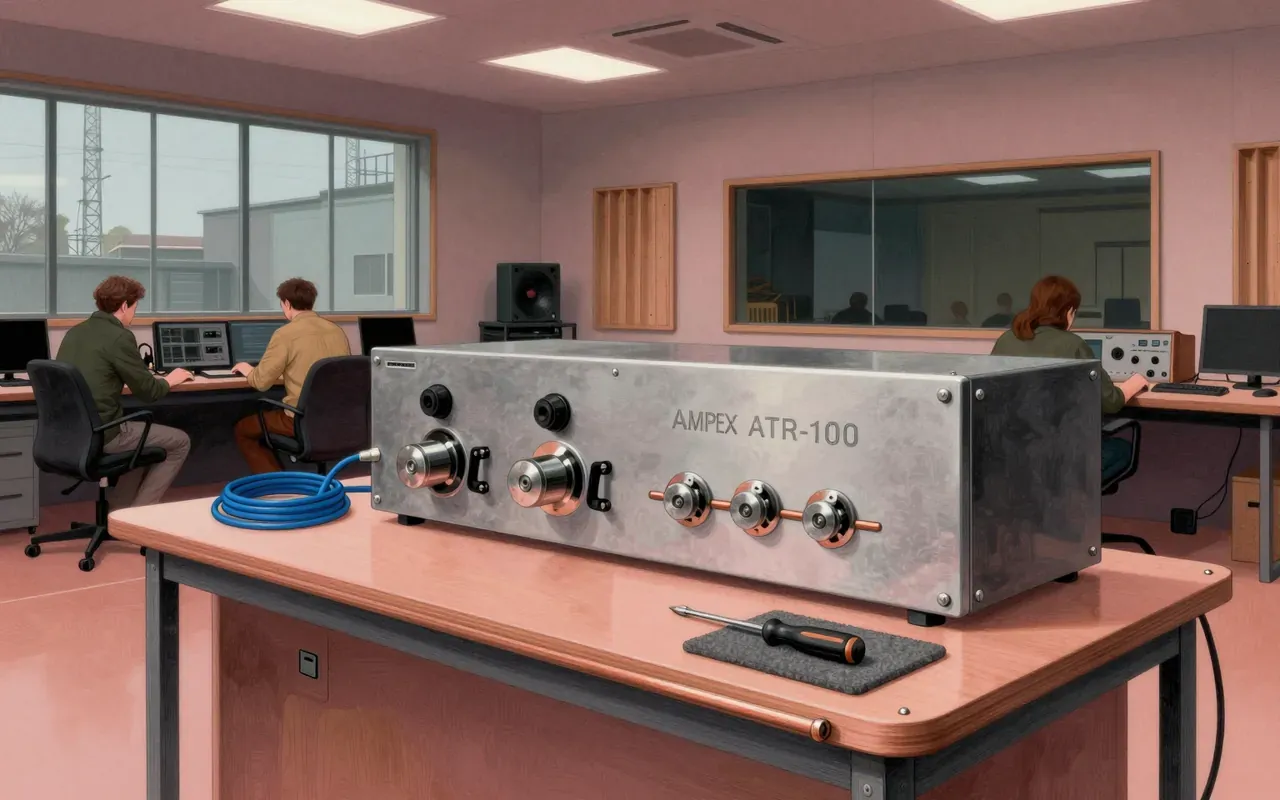
The Ampex ATR-100 is a mastering-grade analogue tape recorder introduced in Spring 1976 at the AES Conference in Los Angeles. Designed exclusively for stereo or quadraphonic mixdown and mastering, it features a servo-controlled direct-drive-capstan transport and interchangeable headblocks for quarter-inch or half-inch tape. Its wow and flutter performance set a new standard for analogue accuracy. It does not support multitrack recording. No verified claims exist about recordings made on it, its users, or its sonic signature beyond accuracy.

10:11

Shure Beta 58A

Shure

A live vocal mic defined by rejection, presence, and deliberate low-end roll-off.

10:20

Fender Deluxe Reverb

Fender

The Fender Deluxe Reverb is a 22-watt tube combo amplifier introduced in 1963, featuring spring reverb, tremolo, and a fixed 12-inch speaker configuration. It uses 6V6GT power tubes operated beyond specification, four 12AX7s, two 12AT7s, and a 5AR4 rectifier. Most commonly fitted with a Jensen C-12Q speaker, it has appeared with Oxford, Marlboro, Utah, and Eminence alternatives. Its circuit remained largely unchanged across black-panel (1963), silver-panel (1968), and black-panel reintroduction (1980) eras.

9:43

Beyerdynamic M 160

Beyerdynamic · 1957

The Beyerdynamic M 160 is a hypercardioid ribbon microphone introduced in 1957. It uses dual 15-mm aluminum ribbons suspended between alnico magnets, rotated 90° to achieve end-address directionality. It softens strident sound sources without dulling transients. It was used by Eddie Kramer on Jimi Hendrix’s vocals and amplifier and by Andy Johns on John Bonham’s drums for 'When the Levee Breaks.' It remains in production after over six decades.

8:47

Nagra

Kudelski · 1951

Nagra recorders were Swiss-engineered portable analog tape machines built for professional film and broadcast sound capture from 1951 onward. They prioritised mechanical reliability, sync accuracy, and tactile control over flexibility or convenience. Their dominance lasted until digital alternatives offered file-based workflows, multitrack capability, and lighter weight.

9:19

Shure SM57

Shure · 1965

The Shure SM57 is a low-impedance cardioid dynamic microphone introduced in 1965. It uses the Unidyne III capsule, shares design DNA with the SM58, and features impedance balancing via XLR. Its frequency response runs from 40 Hz to 15 kHz. Its cardioid pattern reduces background noise and feedback. It was built for TV studios — non-reflective, no on-off switch — and tested under torture. It has been used for every U.S. presidential speech since 1965 and remains one of the world’s two bestselling microphones since the late 1960s.

13:34

Neumann U 87

Neumann · 1967

The Neumann U 87 is a large-diaphragm condenser microphone introduced in 1967 as the solid-state successor to the U 67. It features a 25.4 mm diaphragm and three selectable polar patterns — cardioid, omnidirectional, and figure-8. It can be powered by 48V phantom power or two internal 22.5V batteries. The original used the K 87 capsule, a modified version of the K 67. The 1986 U 87A reverted to the standard K 67 capsule and eliminated the dual-battery requirement.

9:00

Neve 80 Series

Neve

The Neve 80 Series is a hand-wired analogue mixing console built from 1968 to 1979. It uses custom preamps, line amps, and compressor/limiters wired point-to-point by hand. The 8048 model features the 1081 preamp and 4-band EQ across 24 or 32 channels. In 1976, Neve launched the in-line-monitor 8058 and 8068. Late-’70s units offered NECAM, the world’s first successful moving-fader automation system. Production was limited; manufacturing ceased in 1979.

9:46

Pultec EQP-1

Pultec

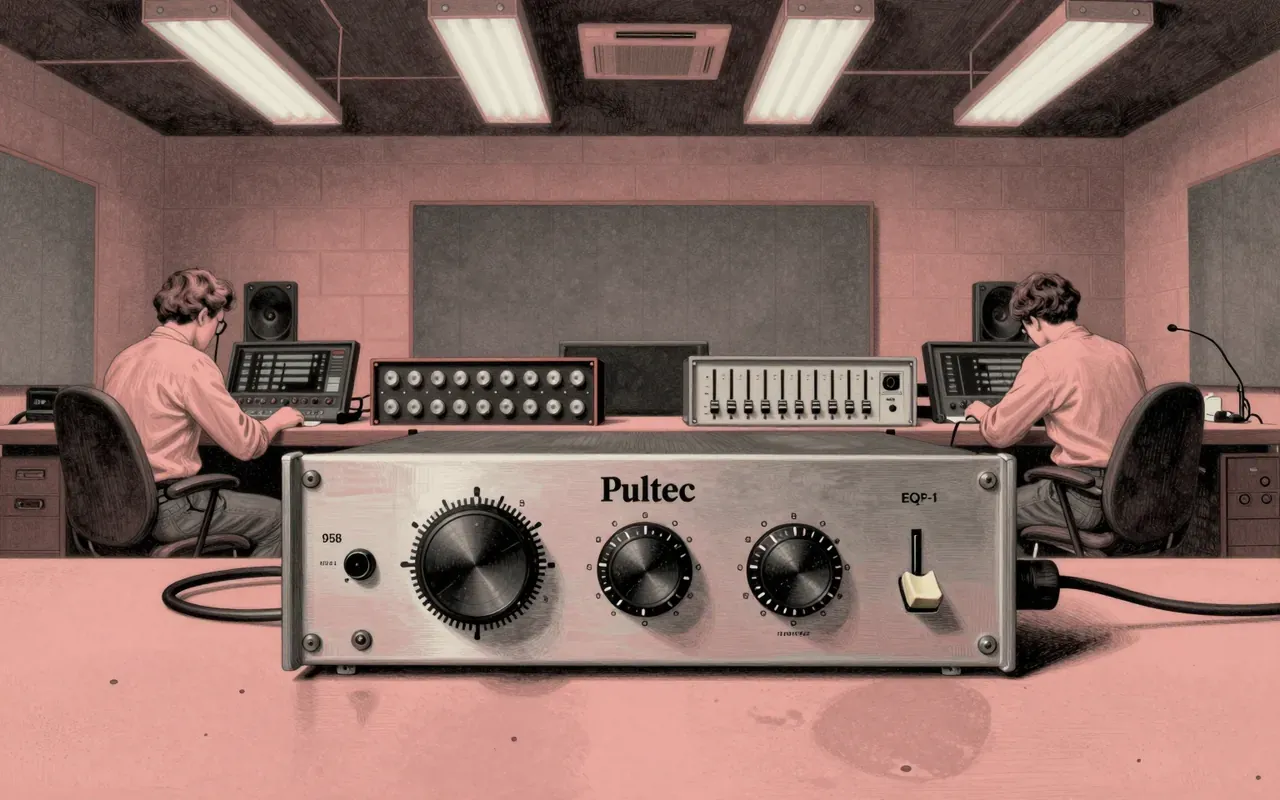
The Pultec EQP-1 is a passive, tube-amplified equalizer introduced in 1956 in a 3U 19-inch rack chassis, designed specifically for professional recording studios to overcome noise issues in existing film-industry equalizers. It features a low-frequency shelving filter with three bands (30, 60, 100 Hz) and a parametric high-frequency section with boost frequencies at 3, 5, 8, 10, and 12 kHz plus adjustable bandwidth. Its design enabled simultaneous boost and attenuation of adjacent low frequencies — a technique later adopted despite being discouraged in the original manual.

9:03

EMI TG12345

EMI

The TG12345 was Abbey Road’s first solid-state console, installed in late 1968 to enable 8-track recording. It had 24 mic inputs, 8 tape outputs, and per-channel compression and EQ — a leap from the tube-based REDD .51 and the four-track Studer J37. It did one thing decisively: expand track count while integrating dynamics and tone shaping into every channel. It offered no automation, no recall, and no adaptability beyond that fixed architecture. It belongs in a working historical studio, not a modern hybrid setup.

8:32

Trident A Range

Trident

The Trident A Range is a rare, studio-built analog mixing console — not an instrument — with only 13 units ever made. It was built by and for Trident Studios, adopted by Cherokee Studios after outperforming Neve, Helios, and Cadac in a drum-miking test, and prized for its distinct, 'musical' EQ and saturated tonal character. It offers no automation, no digital features, no portability, and no relevance outside high-end analog studio contexts.