audiobriefs
9:58in productionCh. 1 · What it is/ 9:58 · ceiling 15 min
Mixing & mastering · Studio & recording

Studer A800

It doesn’t tape—it glues. And it does that better than almost anything else in your plug-in folder.

The Studer A800 is a UAD-2 plug-in that adds tape-style warmth and drive to digital mixes. It works best post-summing. It uses gang control for unified management. It does not simulate physical tape mechanics.

Chapters & takeaways4
  1. 0:49
    What it is

    It is a multichannel tape recorder plug-in for the UAD-2 platform—not hardware, not a standalone app.

  2. 2:09
    How it fits into your session

    It installs like any UAD plug-in and lets you gang-control multiple instances from one interface.

  3. 3:41
    Where it works best

    Its warmth comes from treble decay and tape-like low-end—and hits hardest after mix summation.

  4. 5:36
    What it drives well

    It delivers convincing digital drive—unusually effective on drums and vocals.

Worth your time?

Yes. Use the whole thing.

4/ 5
What works
  • treble decay
  • tape-like low-end
  • digital drive on drums and vocals
  • post-summing glue
What does not
  • simulate tape transport
  • offer per-channel saturation
  • model bias or head alignment
Use it if
  • in-the-box mix engineers
  • those needing quick, cohesive bus saturation
Skip it if
  • analogue purists
  • engineers requiring track-specific tape character
The written brief1 min read

What it is and what it was built for

The Studer A800 is a multichannel tape recorder plug-in for the UAD-2 platform. It was built to simulate tape saturation and colour digitally—not to emulate a hardware recorder’s full signal path.

How it works, in terms a player would use

It installs as standard UAD software with no extra steps. It runs on the UAD-2 platform. You control multiple instances from one place using gang control. You engage it post-mix, after summing tracks.

What it does better than anything else

It delivers treble decay and tape-like low-end more convincingly than most digital tape simulators—especially when applied after mix summation. Its digital drive feels authentic on drums and vocals.

What it does badly

It does not model individual track saturation. It does not simulate tape transport mechanics, head alignment, or bias. It offers no per-channel EQ, speed variation, or wow/flutter controls.

What people made with it

People used it to add warmth and drive to final mixes. They applied it after summing tracks to glue elements together and enhance low-end weight and high-end softness.

Who should use it, and who should not

Mix engineers who work in-the-box and want a fast, unified way to add tape-style cohesion and drive to finished stems. Not for engineers seeking channel-specific tape emulation or hardware workflow integration.

Is it worth your time

Yes—if you want tape-style warmth and drive on drums and vocals in a digital mix. No—if you need physical tape behaviour, channel-by-channel saturation, or analogue signal path fidelity.
Same bench · Mixing & mastering4 of 110
8:30
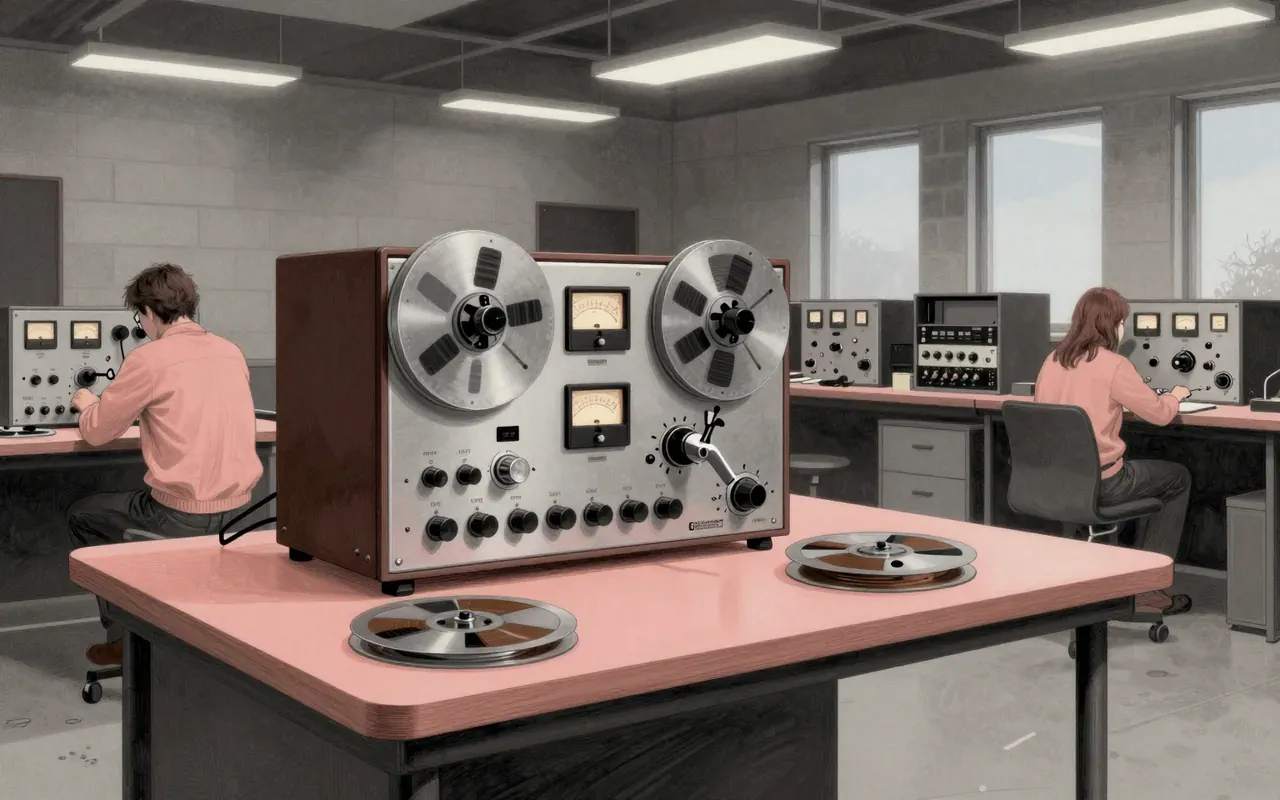
Studer A80StuderThe Studer A80 is a tape recorder that shapes sound by softening transients and adding organic saturation. It works only when configured precisely: 19/38 or 38/76 cm/s, 1/2-inch tape, GP9-aligned heads. It excels in rock. It fails in dance, house and electro. It is not flexible. It is not neutral. It is a deliberate, physical constraint.
9:03
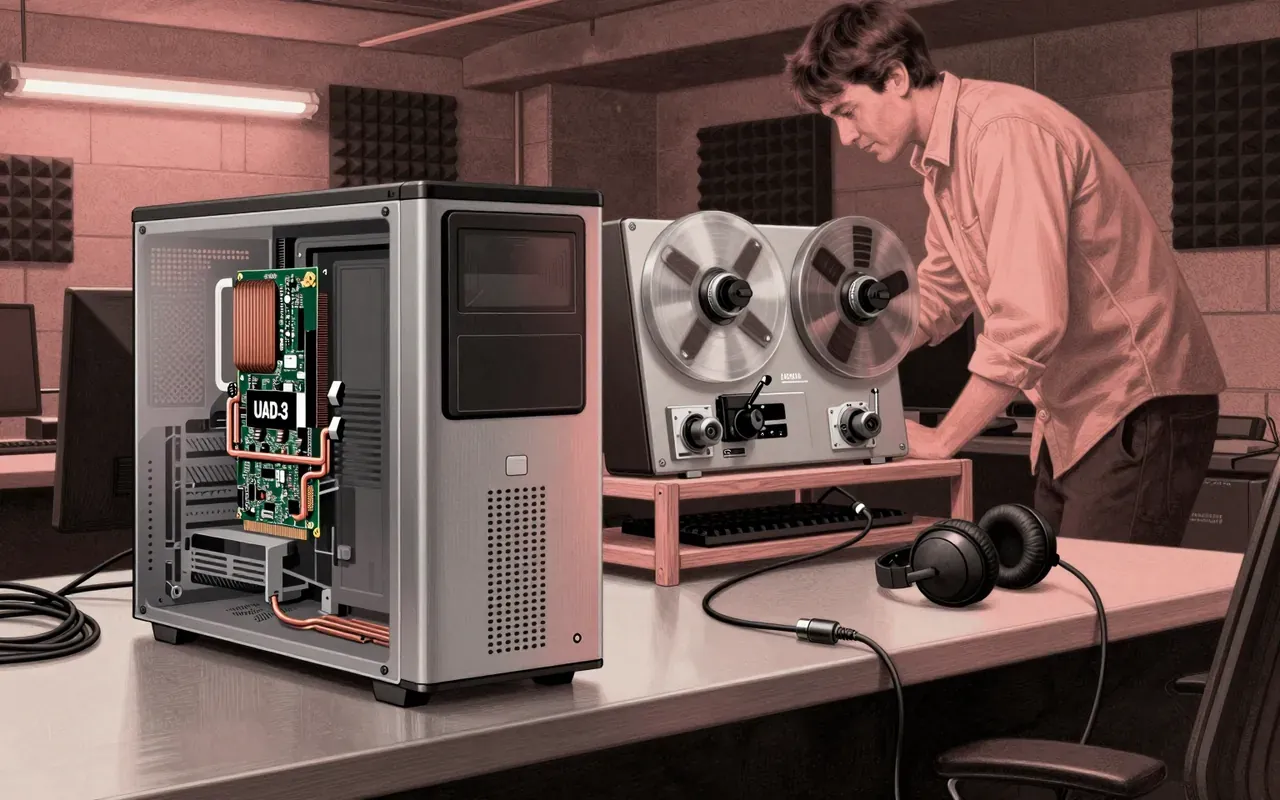
EMI TG12345EMIThe TG12345 was Abbey Road’s first solid-state console, installed in late 1968 to enable 8-track recording. It had 24 mic inputs, 8 tape outputs, and per-channel compression and EQ — a leap from the tube-based REDD .51 and the four-track Studer J37. It did one thing decisively: expand track count while integrating dynamics and tone shaping into every channel. It offered no automation, no recall, and no adaptability beyond that fixed architecture. It belongs in a working historical studio, not a modern hybrid setup.
9:02
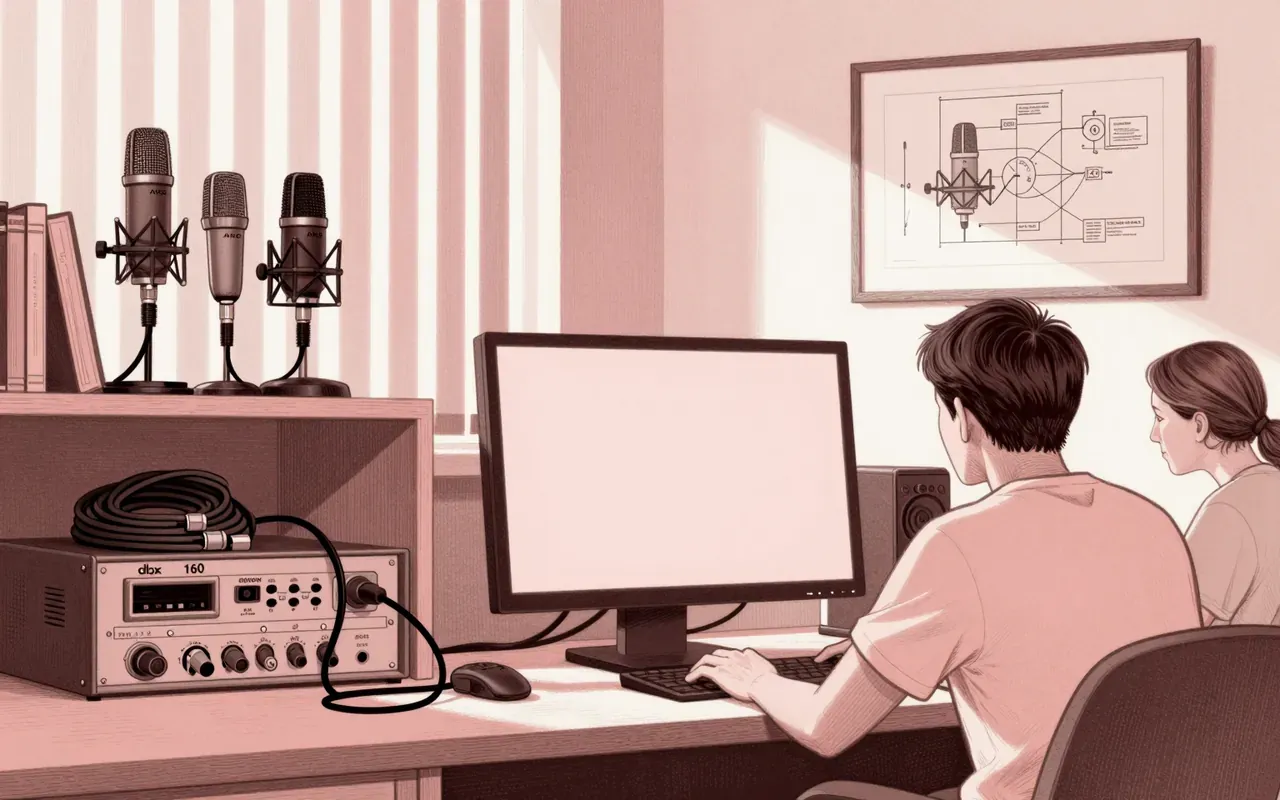
dbx 902 De-EsserdbxThe Lindell Audio 902 De-Esser is a software de-esser. It has no published technical specifications. It belongs to the software de-esser category. That is all that is known.
8:26
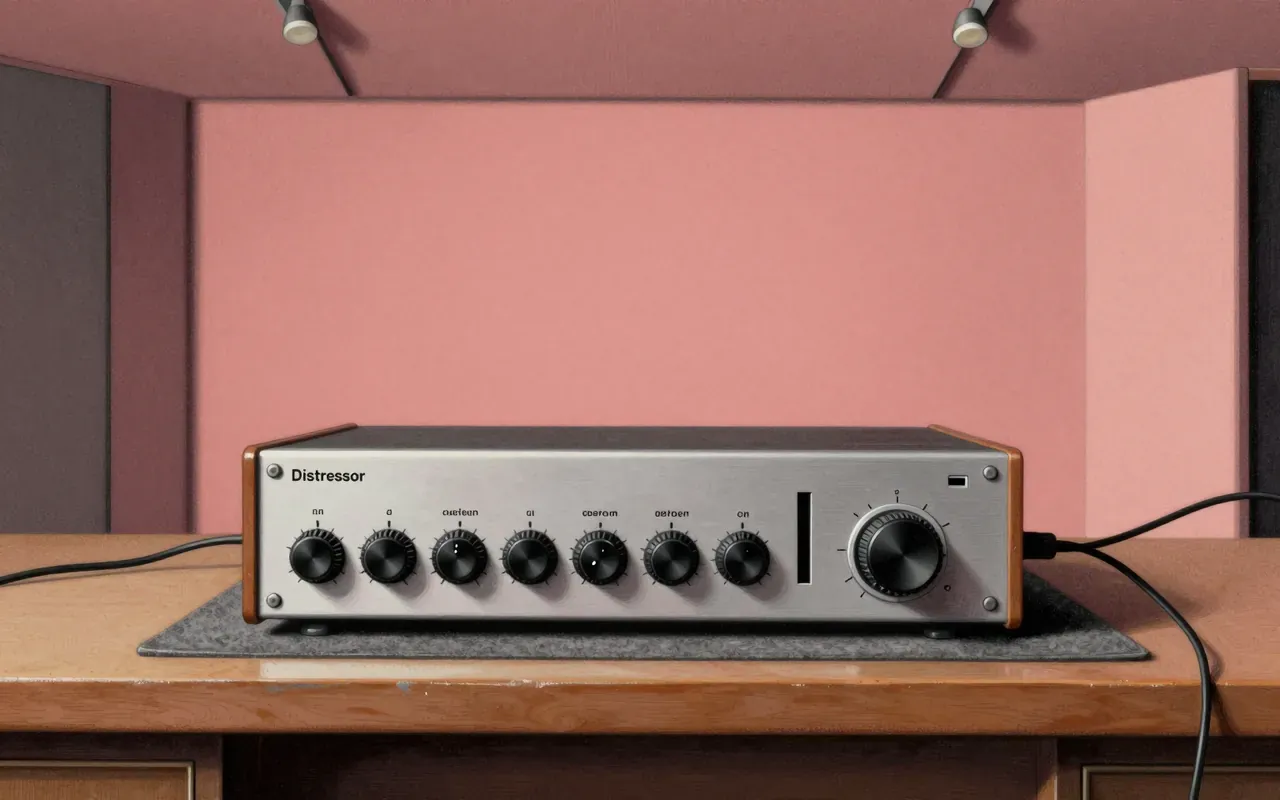
Empirical Labs DistressorEmpirical Labs · 1995The Empirical Labs Distressor is an analog VCA compressor introduced in 1995. It has a fixed threshold, soft knee, and variable ratio, attack, release, input gain and output gain. At 10:1, it uses a photoresistor-based optical emulation circuit. It includes tube and tape distortion emulations, side-chain high-pass filtering, and on the EL8-X model, British Mode and Image Link. It was inducted into the TECnology Hall of Fame in 2016 and has sold an estimated 40,000 units.
Up next in Audio

Studer A807

Studer · 8:24

If it has no specs, it has no place in your studio — not as gear, not as lore.

8:24