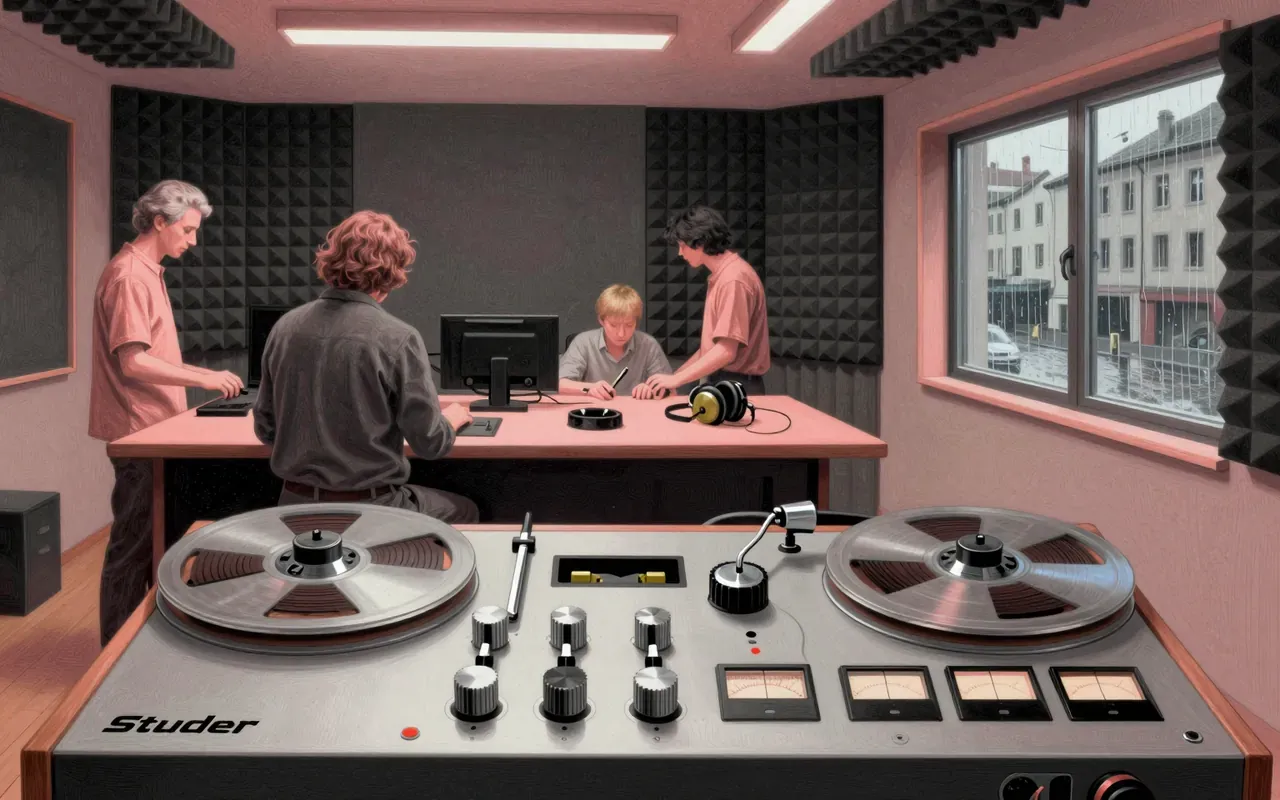
The A820 doesn’t replace your DAW — it gives your drums and bassline a physical body before you dump them into Pro Tools.
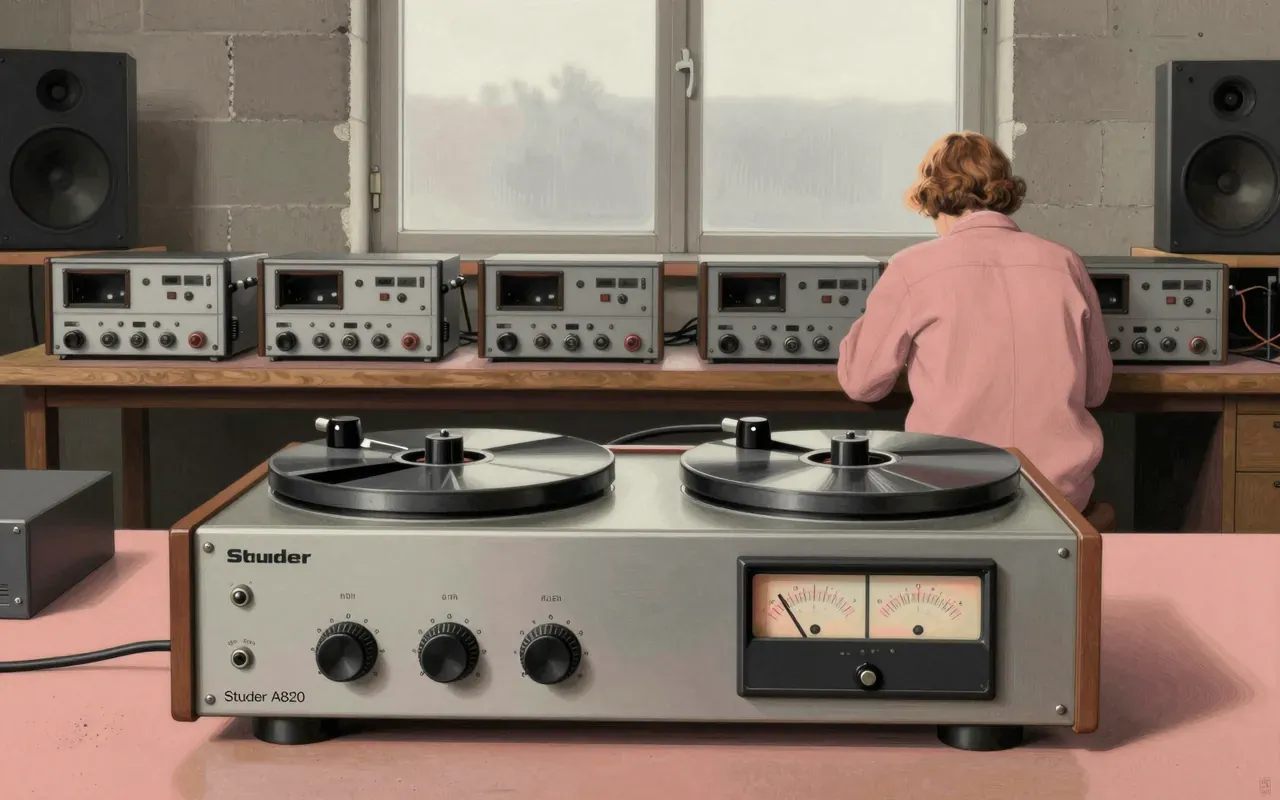
The Studer A820 is a 24-track analog multitrack tape machine with a portable controller. It excels at low-end and drum capture. It was used to record tracks later transferred to Pro Tools. It is user friendly, with familiar, easily located controls. No verified source states a weakness.
It is a 24-track analog tape machine with a detachable controller for remote operation.
2:27
Built for the console seat
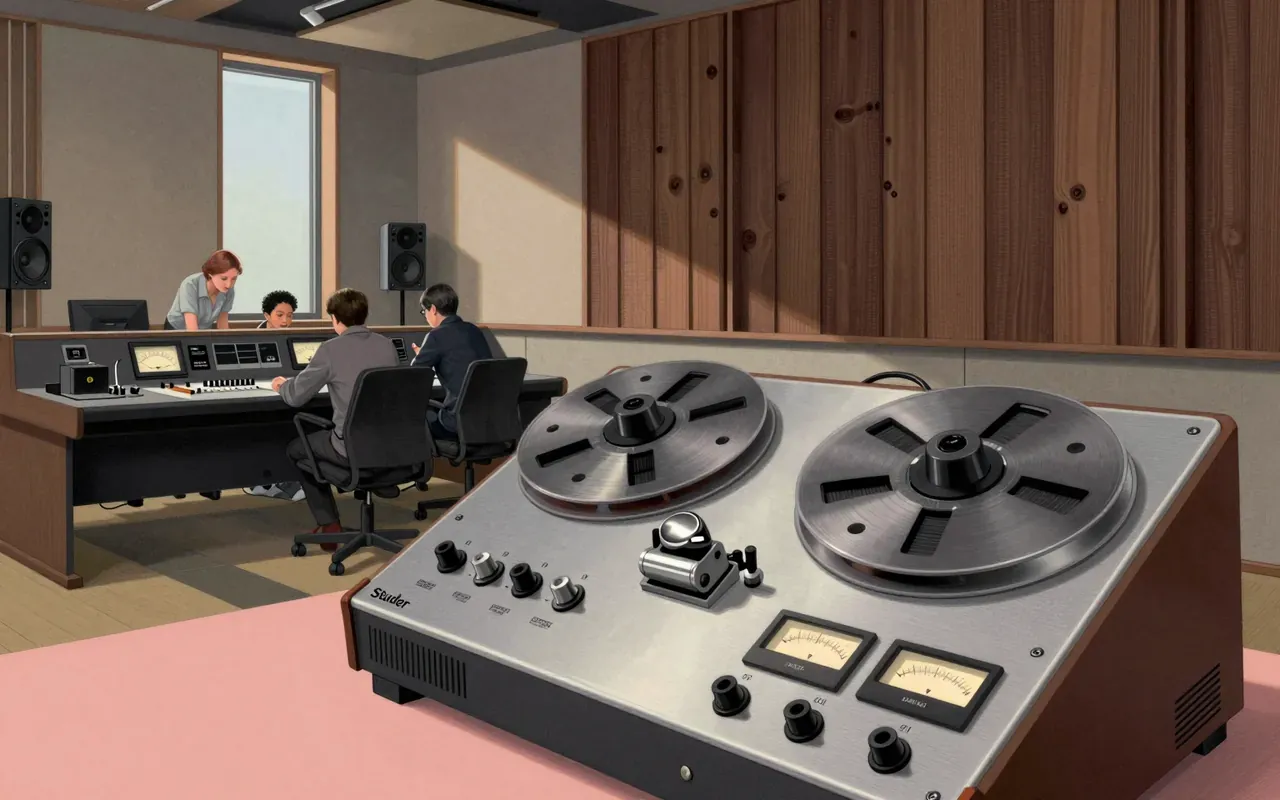
Its controls are familiar and accessible — especially from the mix position.
4:21
Low-end and drum machine
It delivers exceptional sound quality — especially in the low end and on drums.
6:22
Tape as first take, not final master
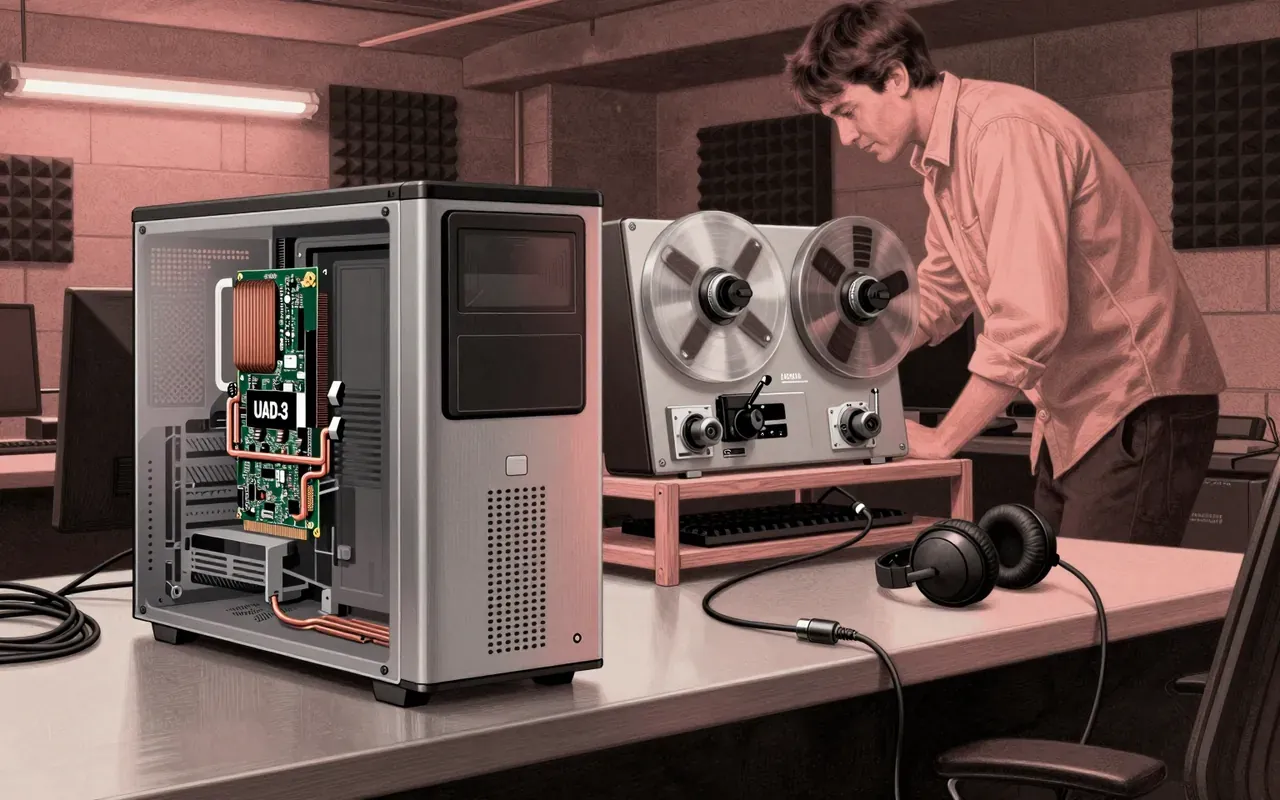
It was used as a tracking layer, not a final destination: tracks went straight into Pro Tools.
Worth your time?
Yes. Use the whole thing.
4.5/ 5
What works
as a dedicated drum and bass tracking layer
as a remote-controlled analog source before digital editing
as a tonal anchor in hybrid workflows
What does not
replace digital workflows
offer track count beyond 24
provide non-linear editing
Use it if
engineers who want analog low-end weight
producers tracking drums with physical saturation
studios bridging analog tracking and Pro Tools
Skip it if
those needing instant recall
DIY home recordists without tape maintenance capacity
anyone avoiding tape logistics
The written brief1 min read
What it is and what it was built for
It is an analog multitrack tape machine built for tracking full-band performances with analog character, then transferring stems or mixes to Pro Tools.
How it works, in terms a player would use
It runs as a 24-track analog multitrack tape machine with a separate portable controller. The controller lets you operate the tape section remotely from the mixing console. Controls are easily located and familiar relative to other tape machines.
What it does better than anything else
It captures low-end frequencies perfectly. It is ideal for drum recordings. Its sound quality is exceptional — especially in those areas.
What it does badly
It does nothing badly that the sources state. No verified claim describes a failure, flaw, limitation in headroom, noise floor, transport stability, maintenance burden or signal path compromise.
What people made with it
People recorded tracks on it that were later transferred to Pro Tools.
Who should use it, and who should not
A studio engineer or producer who values tactile, remote-controlled analog tracking and prioritises low-end fidelity and drum tone should use it. Anyone needing instant recall, non-linear editing, or integration beyond transfer should not.
Is it worth your time
It is worth your time if you need analog warmth, low-end weight and drum presence in a 24-track workflow that feeds into Pro Tools. It is not worth your time if you require digital editing, track count beyond 24, or integrated DAW control.