What it is and what it was built for
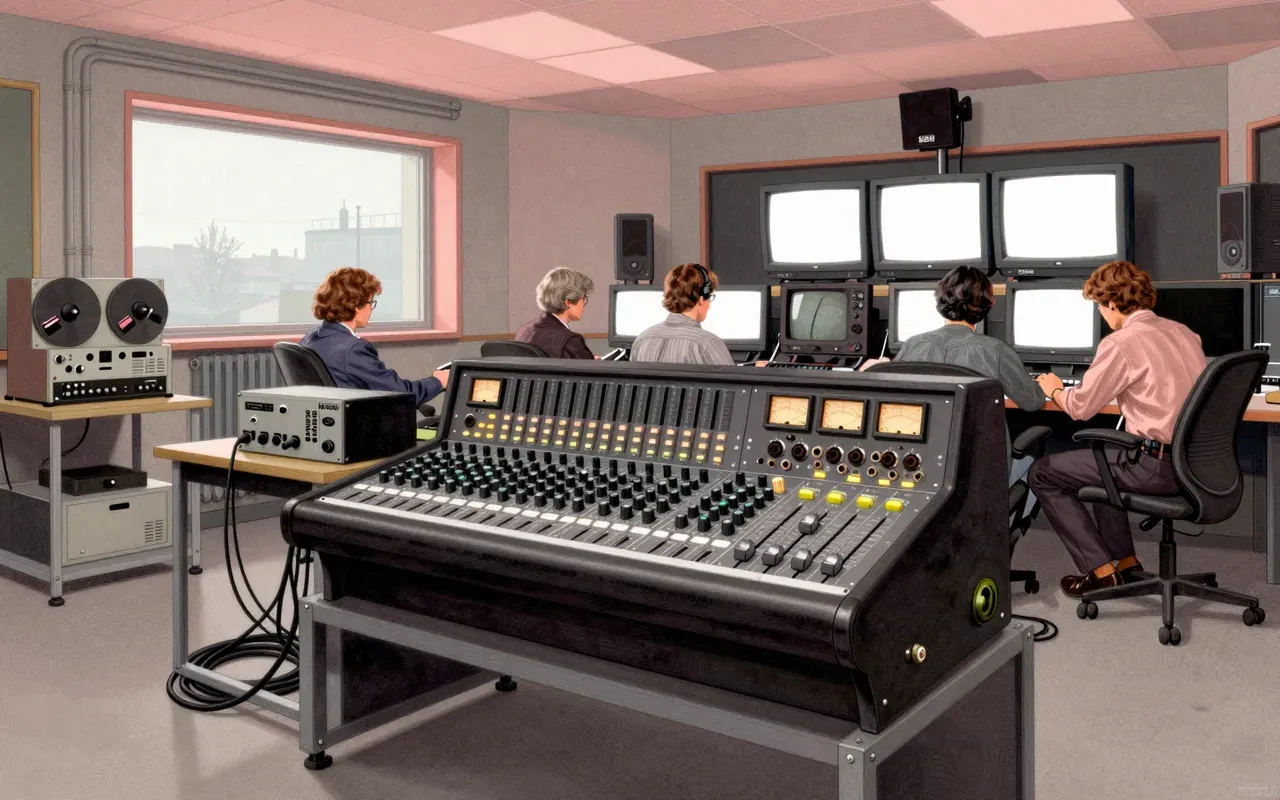
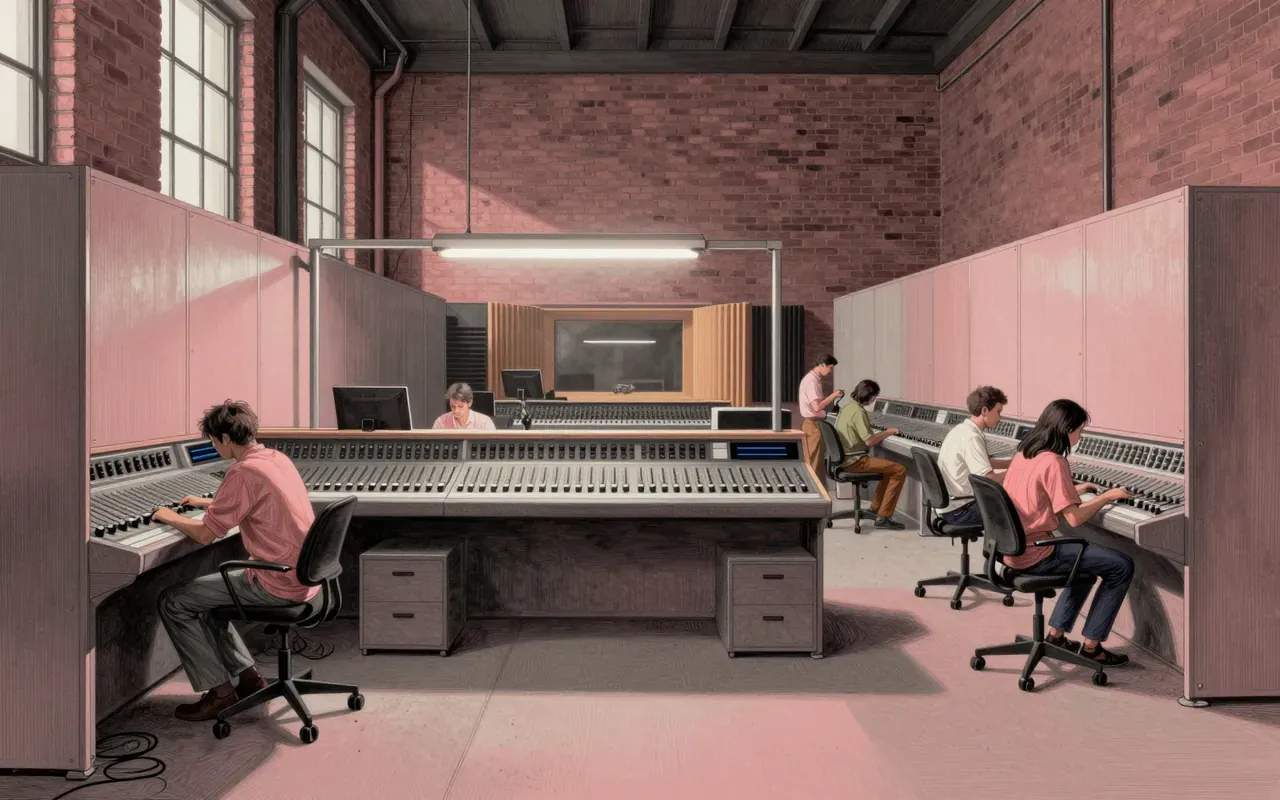
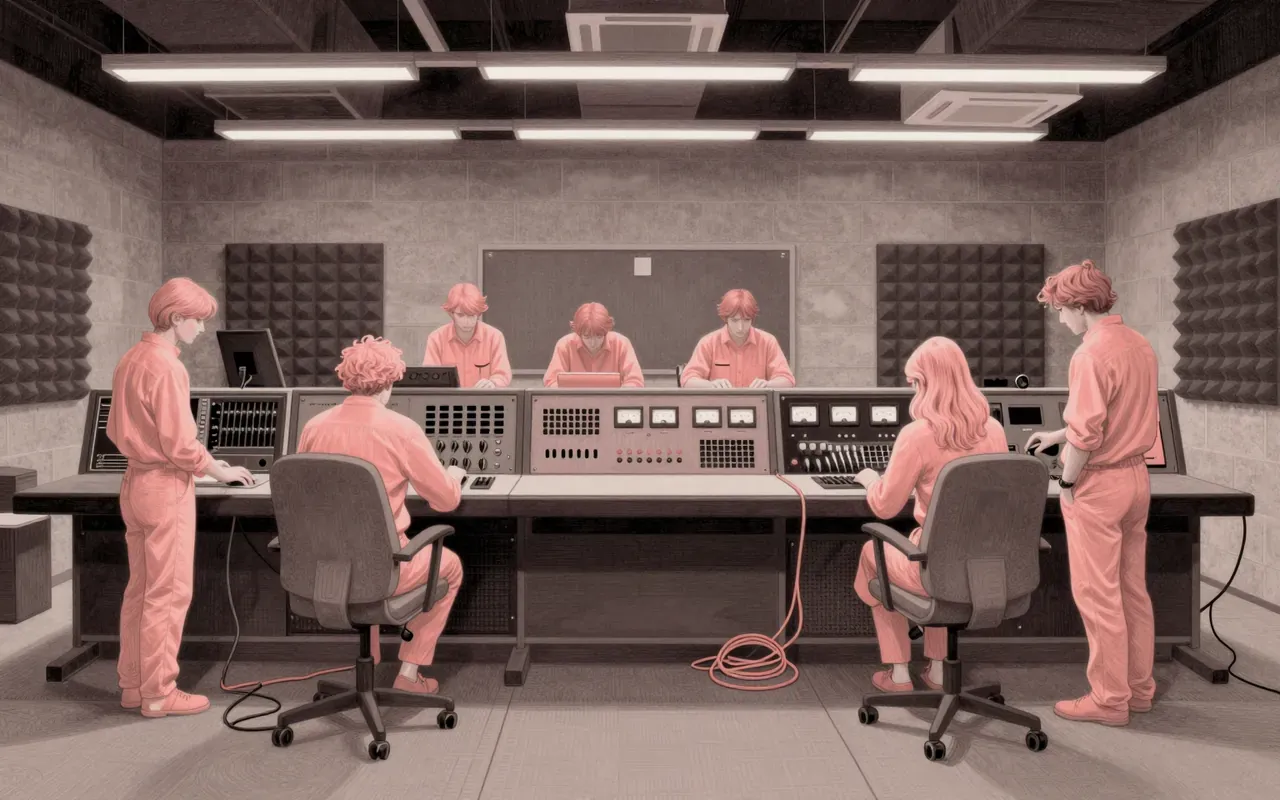
The Soundcraft Ghost 32 is a large-format analog mixing console built for professional studio and live-sound environments where dual-path workflow, channel count, and hands-on analog control are priorities.
How it works, in terms a player would use
It gives you two parallel signal paths: 32 main (A) channels with faders and parametric EQ, and 32 return (B) channels with knobs and high/low EQ. You can route A and B separately or combine them for up to 64-channel mixing. Each A channel has a direct out switchable to one of eight group outs. Six aux sends feed effects or monitors. All 32 mic inputs are XLR with individual phantom power. EQ can be bypassed on any channel for clean recording or A/B comparison.
What it does better than anything else
It offers more simultaneous channel count (64 via A+B combination) than most analog consoles of its size and era—without requiring external summing or patchbay gymnastics. Its per-channel phantom power and direct/group out switching give immediate routing control across all 32 A channels. The ability to disable EQ on any channel—A or B—is rare at this scale and supports transparent signal capture.
What it does badly
Power supply noise leaks into the signal path. Its dual-path design forces trade-offs: B-channel EQ is fixed-band and cannot be upgraded to match A-channel parametric control. Switching EQ between paths only happens at mixdown—not in real time during tracking. Internal jumper changes are required to switch operating level, making on-the-fly format shifts impractical.
What people made with it
Users recorded and mixed full-band sessions, broadcast audio, and post-production stems—leveraging its 64-channel capacity, flexible aux routing, and SMPTE sync for tape-based workflows.
Who should use it, and who should not
Studio engineers who work with tape or hybrid setups and need expandable analog summing with tactile channel separation. Not for producers reliant on DAW-native automation, low-noise critical listening, or plug-in-style EQ recall.
Is it worth your time
Yes—if you need a large-format analog mixer with dual-path flexibility and robust routing, and you accept its operational compromises. No—if you demand silent operation, SSL-level headroom, or modern digital integration without external hardware.