audiobriefs
8:01in productionCh. 1 · Four tracks, one cassette/ 8:01 · ceiling 15 min
Studio & recording · Studio

Tascam Portastudio 424

It forces you to commit — two inputs, four tracks, no undo, and tape that breathes, saturates, and hisses back.

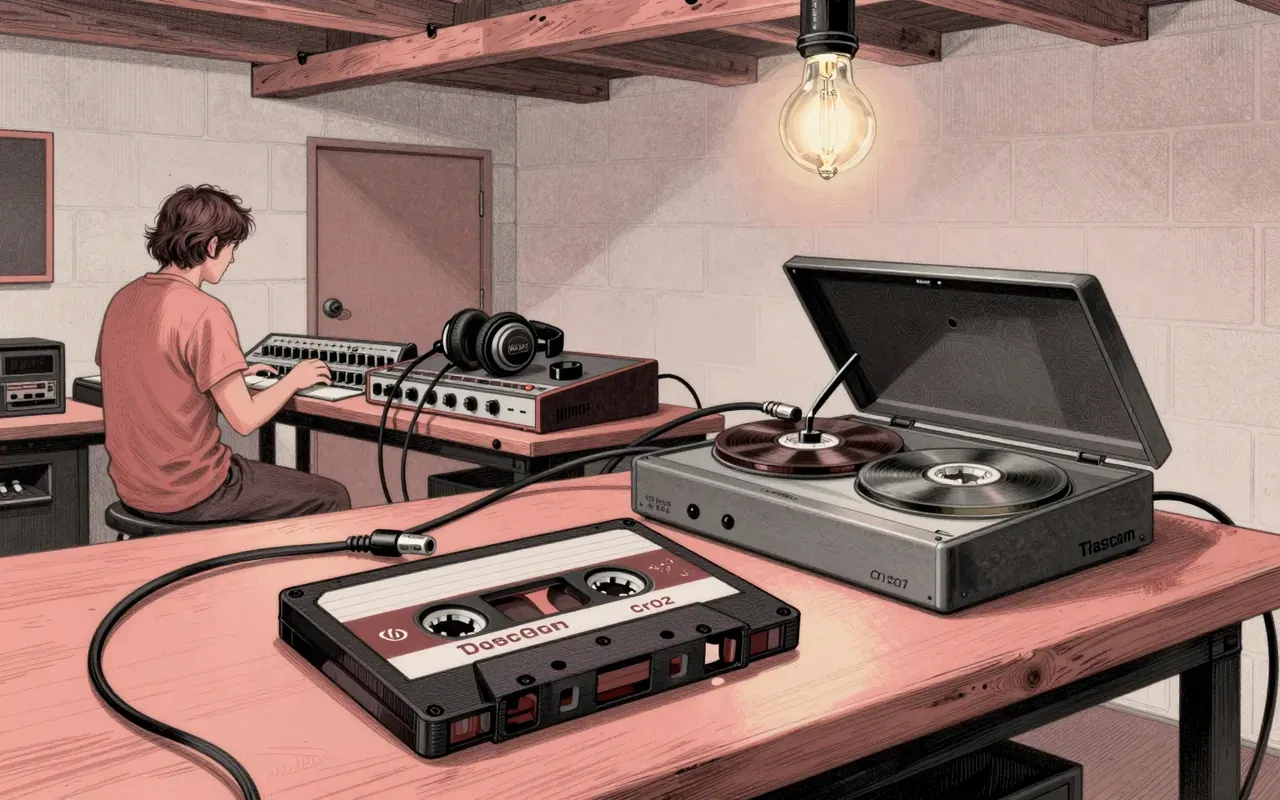
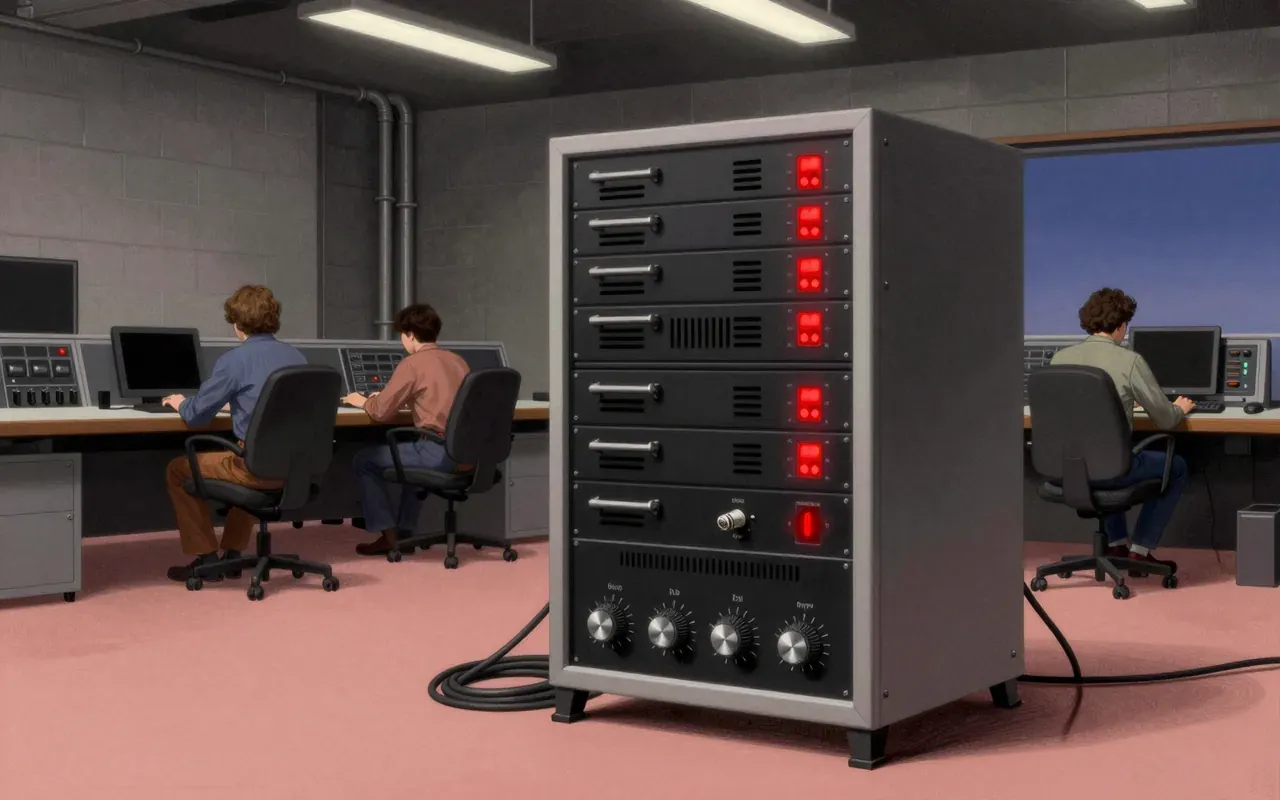
The Tascam Portastudio 424 is a cassette-based four-track recorder and mixer. It uses type II (CrO2) tape. It has two inputs — XLR and 1/4 inch — and supports tape speeds of 9.5, 4.75, and 2375 cm/s. dbx type II noise reduction is permanent. Each input has gain, three-band EQ, and panning. It has main stereo outputs and a headphone jack.

Chapters & takeaways4
  1. 0:59
    Four tracks, one cassette

    It is a self-contained four-track cassette recorder and mixer — no computer, no interface, no plugins.

  2. 1:40
    Speed and silence — fixed

    Tape speed choices include a rare 2375 cm/s mode, and dbx type II noise reduction is permanently engaged.

  3. 3:18
    Two inputs, full control

    Only two inputs — XLR and 1/4 inch — each with gain, three-band EQ, and panning.

  4. 4:22
    No escape from dbx

    dbx type II runs constantly, claiming ~95 dB S/N — but it cannot be switched off, even when unwanted.

Worth your time?

Yes. Use the whole thing.

4/ 5
What works
  • four-track cassette recording with tactile feedback
  • real-time mixing and monitoring
  • tape compression and saturation at 2375 cm/s
  • basic but functional input processing
What does not
  • support more than two simultaneous inputs
  • allow disabling of dbx type II
  • offer track-level faders or solo
  • provide digital editing or recall
Use it if
  • home recordists who value immediacy
  • musicians seeking tape saturation
  • builders of lo-fi arrangements
Skip it if
  • engineers needing multichannel live capture
  • producers requiring automation or recall
  • anyone allergic to tape hiss or bounce-down workflows
The written brief1 min read

What it is and what it was built for

A cassette-based four-track recorder and mixer built for home and project studio use. It was built to let musicians record, layer, and mix full arrangements using only a CrO2 tape and mains power.

How it works, in terms a player would use

It records four tracks onto a type II (CrO2) cassette. Two inputs — XLR and 1/4 inch — feed into gain controls, three-band EQ (low/middle/high), and left/right panning. dbx type II noise reduction is always on. Tape speed options are 9.5 cm/s, 4.75 cm/s, and 2375 cm/s. Monitoring and mixing happen in real time through main stereo outputs or the headphone jack.

What it does better than anything else

It delivers immediate, tactile multitrack recording with tape compression and saturation baked in. The 2375 cm/s speed gives unusually high fidelity for a cassette-based system. Its integrated mixer and monitoring let you overdub and monitor without external gear.

What it does badly

It cannot record more than two tracks at once. The fixed dbx type II system cannot be disabled. EQ is basic and non-bypassable per channel. There is no track-level fader or solo function. Tape hiss remains audible at lower speeds despite dbx.

What people made with it

Musicians made demos, lo-fi albums, and bedroom recordings — full arrangements built up across four tracks using overdubs, bouncing, and manual punch-ins.

Who should use it, and who should not

Home recordists who value immediacy, tape texture, and hardware-only workflow. Not for anyone needing more than two simultaneous inputs, digital editing, or recallable settings.

Is it worth your time

Yes — if you want hands-on, tape-saturated four-track recording with no software layer. No — if you need more than two simultaneous inputs, editable automation, or digital recall.
Same bench · Studio & recording4 of 145
8:46
dbx 160XdbxThe dbx 160X is a fixed-response analog limiter/compressor built for immediacy, not nuance. It excels when slammed on snare, kick, bass, or guitar — but fails at subtlety, especially on vocals. Its simplicity is functional, not forgiving.
8:02
API 3124+APIThe API 3124+ is a 1U, 4-channel analog microphone preamplifier using the 2520 op-amp and classic console circuit. Each channel has gain, polarity, phantom power, 20 dB pad, mic/line selection, and a VU meter. It accepts XLR inputs at the rear and unbalanced 1/4" inputs at the front. It delivers high headroom and consistent colour across all four channels — but offers no impedance control, channel linking, or digital integration.
8:18
Genelec 1031AGenelecThe Genelec 1031A is a large, active, self-powered studio monitor built for stationary use in professional recording studios. It delivers full-spectrum sound with strong low-end presence and tight high-end response. It plays loudly without colouration and reveals fine audio detail. Its built-in amplification is highly effective. Its size and sonic neutrality make it unsuitable for small rooms or home studios. Users report it excels in medium-to-large spaces and is trusted for critical mixing and tracking.
9:21
MOTU 828MOTUThe MOTU 828 MKI is a discontinued FireWire audio interface introduced around 2001–2002. It offered two mic preamps with phantom power and XLR/1/4" inputs, six additional balanced line inputs, eight balanced outputs, ADAT and optical I/O, 24-bit 64x/128x oversampling converters, and front-panel monitoring controls. Priced at $800 at launch, it was considered expensive but highly stable and easy to install. It remains functional for years in typical home studio use but is no longer sold and has been succeeded by newer models including the 828 (2024).
Up next in Audio

Rupert Neve Designs Portico 5012

Rupert Neve Designs · 8:54

Silk isn’t subtle — it’s paradise, by feel, not spec.

8:54