audiobriefs
Bench

Studio

335
briefs
8:59
average
3007 min
in total
112
people
Benches under Studio6
All briefs335
8:35

J37

Studer · 1964

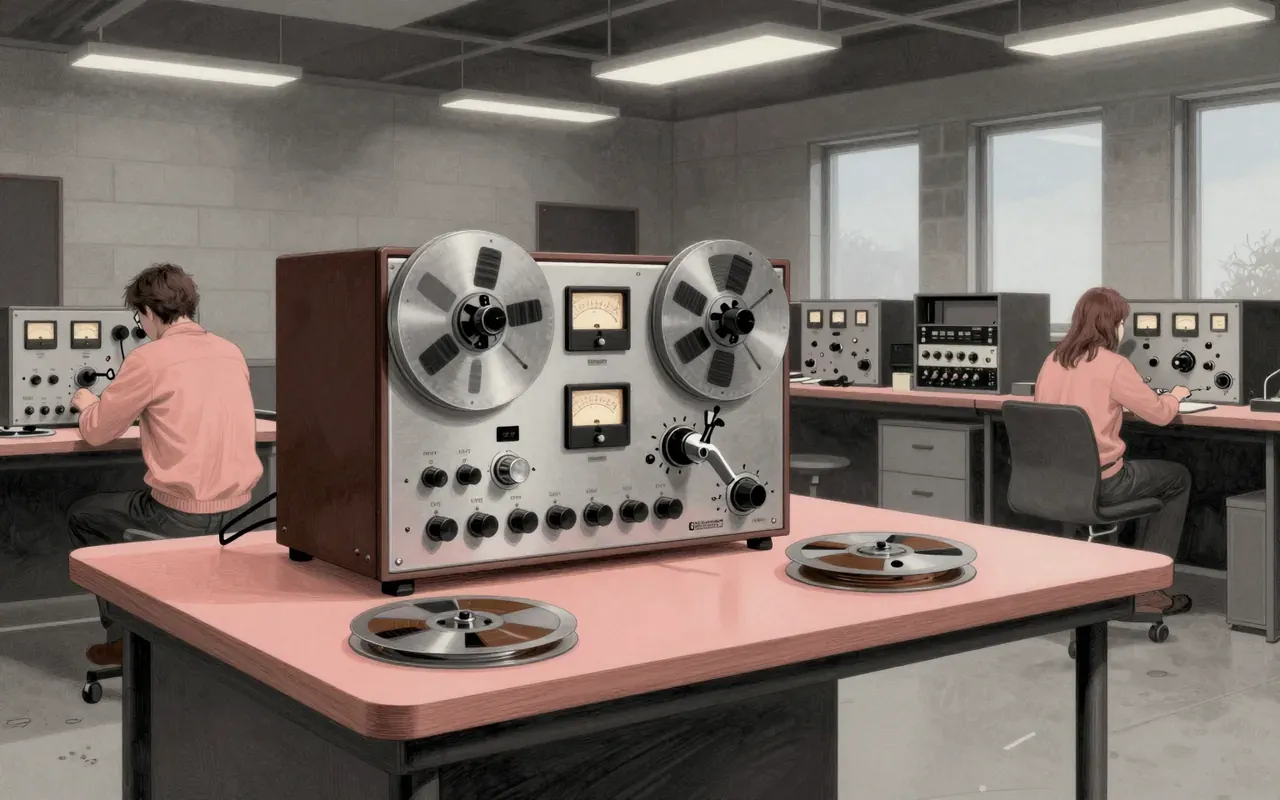
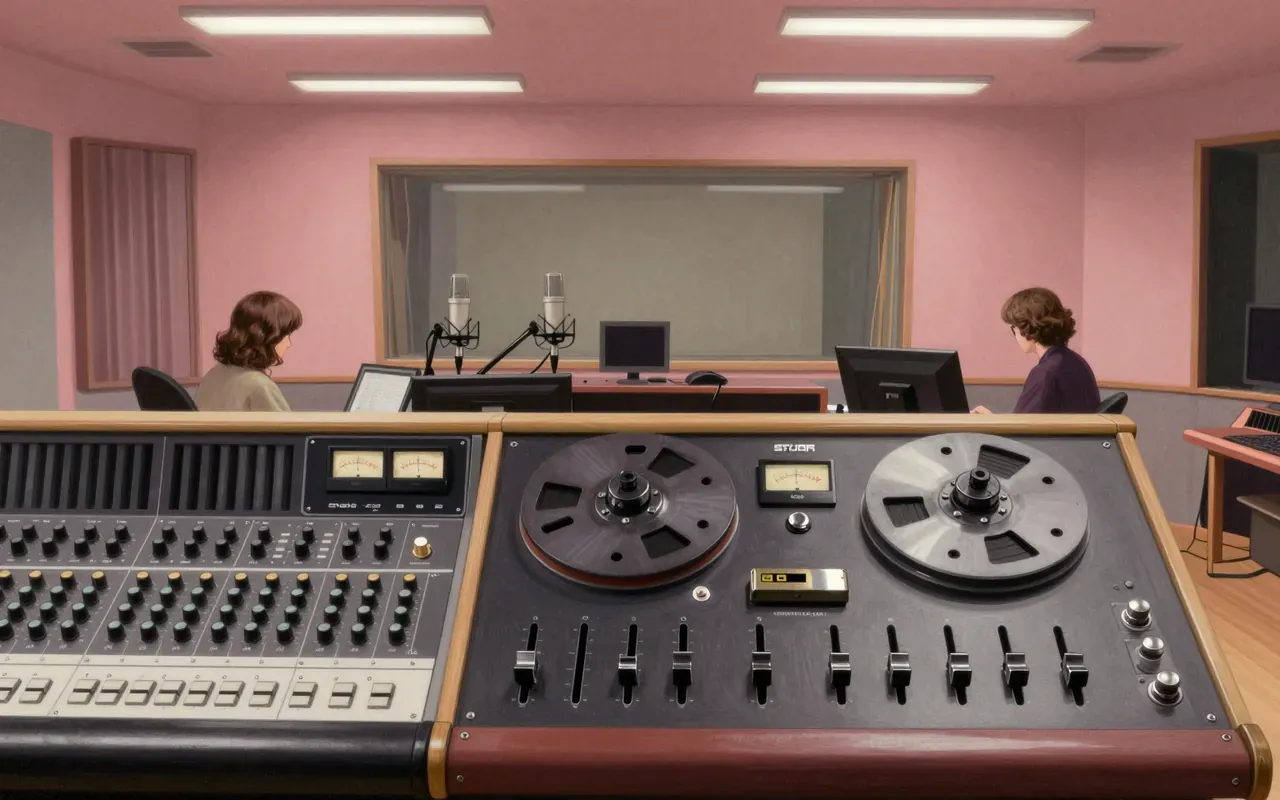
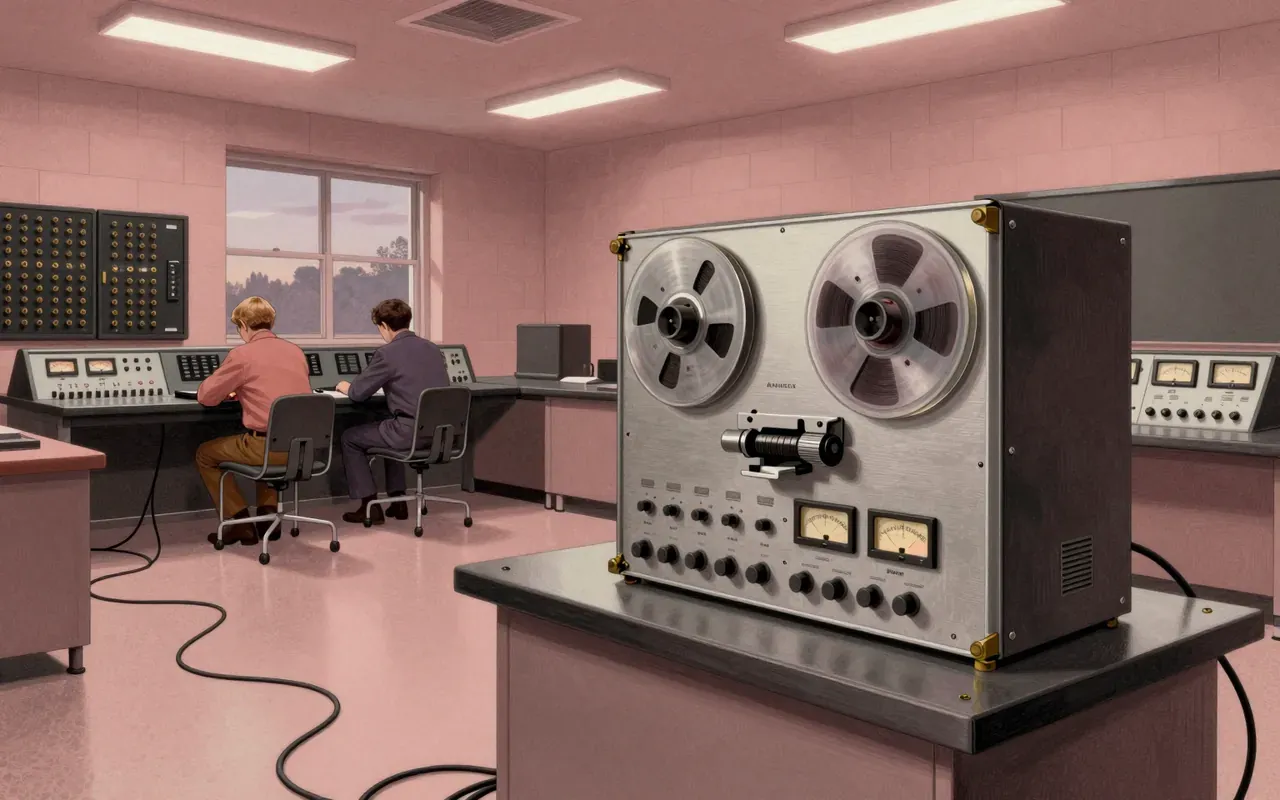
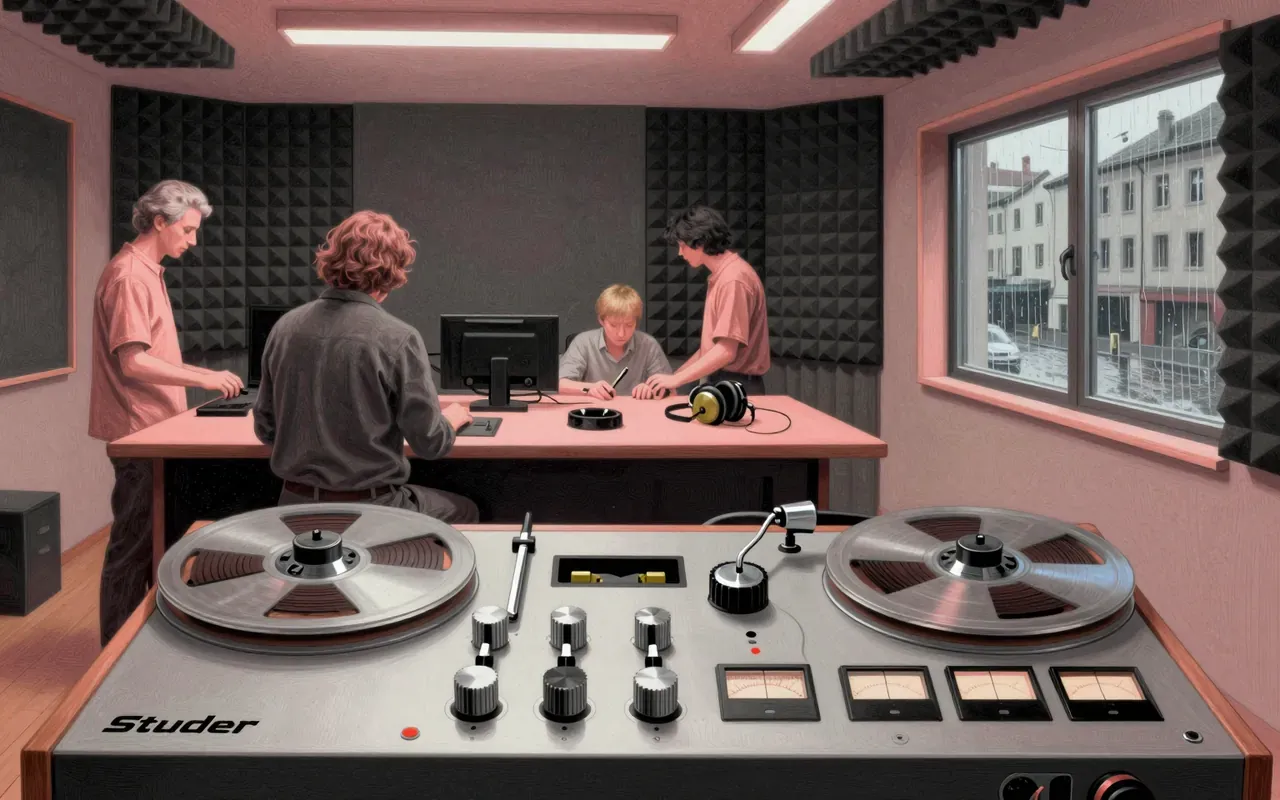
The J37 is Studer’s first multitrack machine, released in 1964. It recorded four tracks on one-inch tape. At EMI Studios London, later renamed Abbey Road Studios, The Beatles used a pair of J37s to record Sgt. Pepper’s Lonely Hearts Club Band in 1967. Studer went on to build 8-, 16- and 24-track machines with tape up to two inches wide.

9:30

Emax II

E-mu Systems · 1989

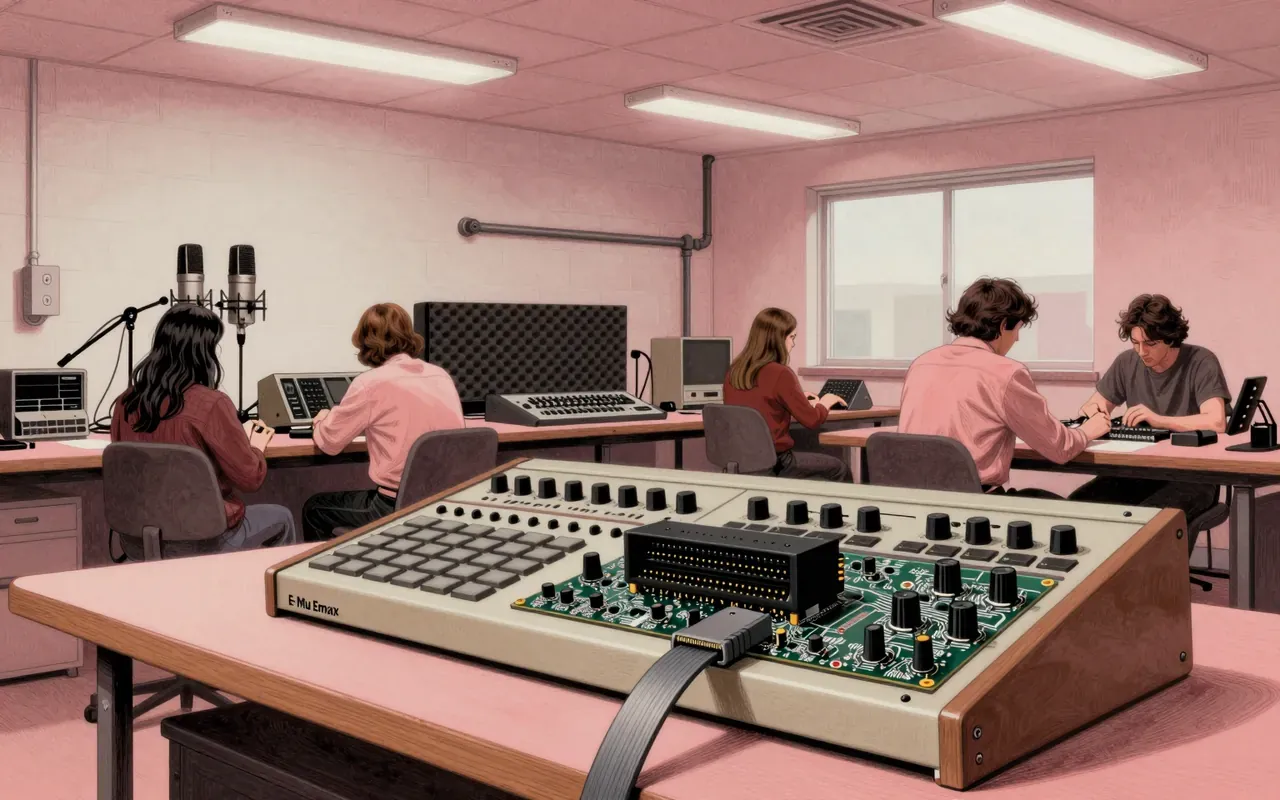
The Emax II replaced the original Emax in fall 1989. It is a true 16-bit sampler with more polyphony and digital filters, priced from $3,595. The Emax II Turbo of 1990 added 8 MB of built-in sample memory and an internal SCSI hard disk. It stayed in production until 1995, one of the longest runs of any E-mu product.

10:14

Emulator II

E-mu Systems

The Emulator II, released in 1984, was E-mu's second sampler. It stayed an eight-bit machine but improved fidelity with companding converters and a 27.7 kHz sample rate, and it added resonant analog filters, more flexible editing and far better real-time control. At about $8,000 it was priced like the original, and far below a Fairlight.

9:30

FireworX

TC Electronic

FireworX is a multi-effects processor from the Danish company TC Electronic. It holds distortion, compression, noise and curve generators, ring modulation, vocoding, parametric EQ, tremolo, reverb and delay, and the effects can be routed in a large variety of ways. It won best Hardware Signal Processing Technology at the 1998 TEC Awards, and producers and DJs used it with CD players for live sets.

7:59

S950

Akai · 1988

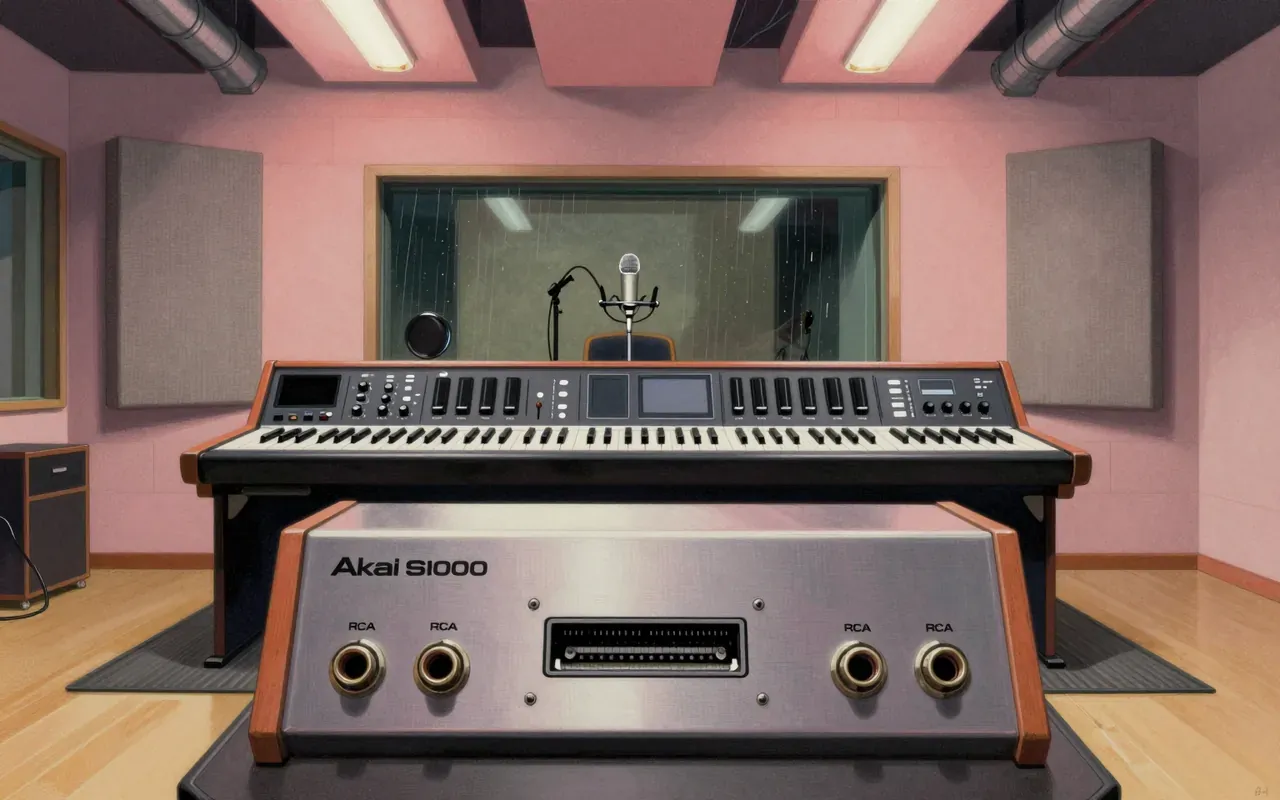
The Akai S950 is an expanded version of the S900 sampler, released in 1988 alongside the higher-end S1000. It took over some of the S1000's improvements, including time-stretching, and raised the maximum sample rate to 48 kHz. Like the rest of the S900 series, it can loop a sample alternating forwards and backwards, which the S1000 series cannot. Akai has discontinued it.

8:14

Sony DAT DTC-1000ES

Sony

The Sony DTC-1000ES is a DAT deck in Sony’s DTC series. No technical specifications are available. Nothing else is verifiable.

7:46

Tascam DTRS DA-88

Tascam

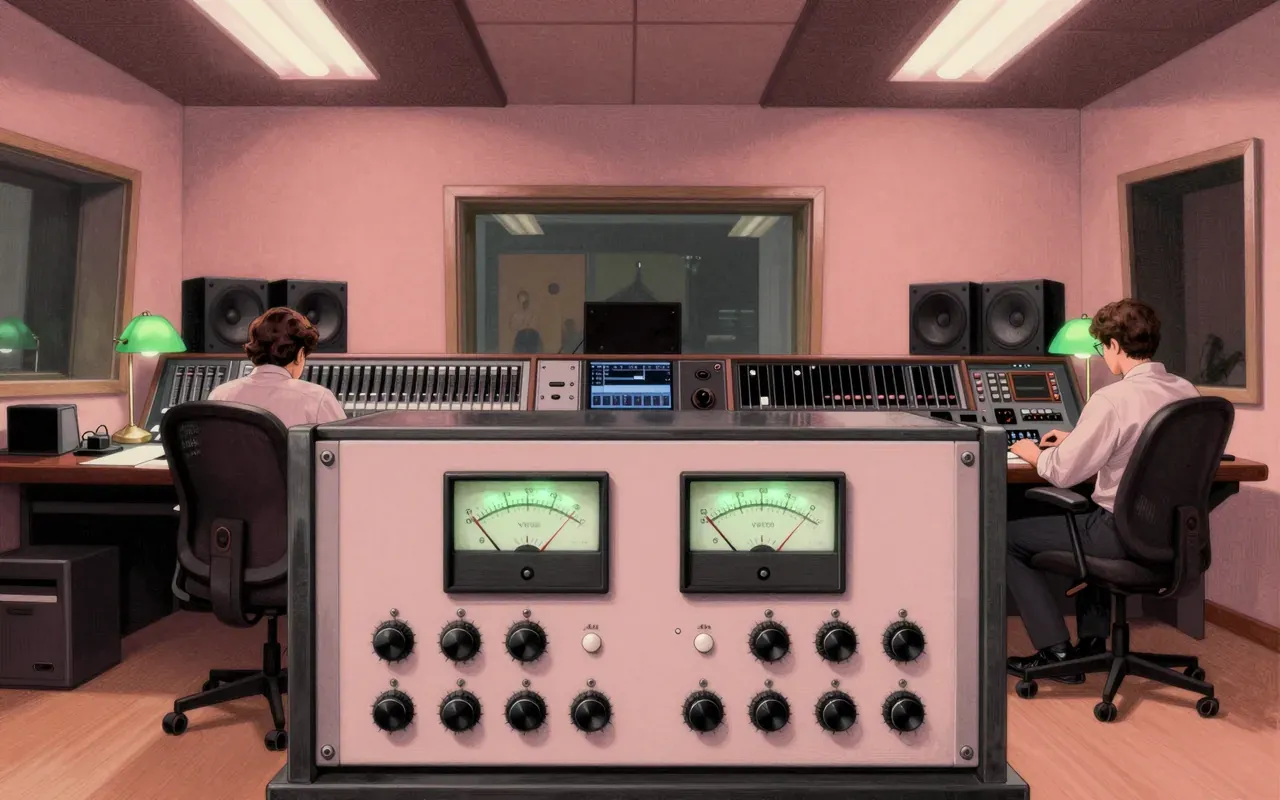
The Tascam DA-88 is a dedicated eight-track digital recorder using Hi8 tape. It occupies four rack units. It has XLR and RCA inputs. It uses large VU meters. Its audio quality remains acceptable today.

8:50

Neve 1272 Line Amp

Neve

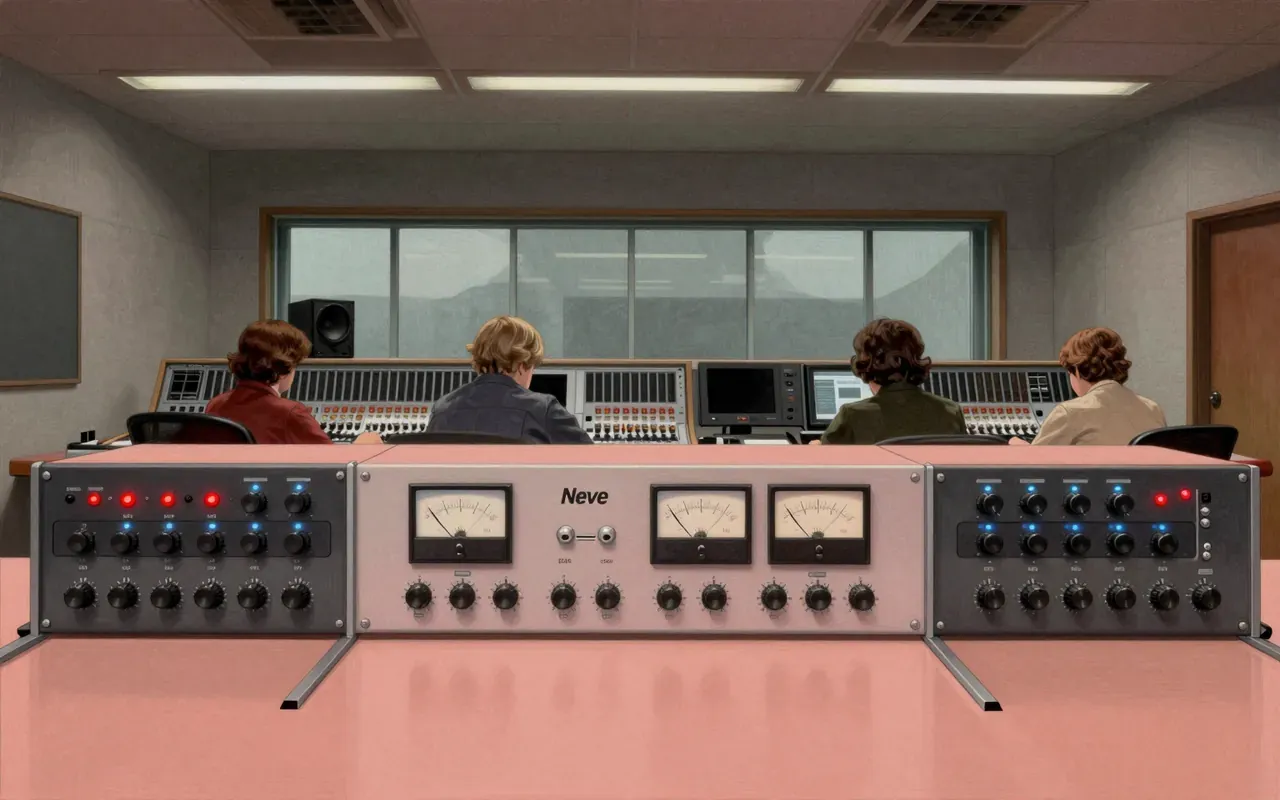
The Neve 1272 is a solid-state line amplifier. It does not accept microphone signals. It adds clean, transformer-coupled gain to line-level sources. It offers no input flexibility, no EQ, no saturation controls. Its value lies in its place in a fixed-path studio chain — not in versatility.

9:48

Digidesign 888/24 I/O

Digidesign

The Digidesign 888/24 is a Pro Tools–only analog-to-digital converter with eight XLR I/O channels and four AES-EBU digital paths. It delivers clean conversion, solid build quality, and low used-market cost—but only functions inside a compatible TDM system. No standalone mode. No MIDI. No monitor control. No software editor. It is a tool, not a platform.

9:14

Auratone 5C Super Sound Cube

Auratone

The Auratone 5C is a passive monitor requiring an external amplifier. Its extremely flat response and limited frequency range make it useful for quick A/B checks — but its lack of low-end response rules it out for primary mixing. It does one thing well: revealing what a mix loses when stripped of bass and extension.

8:36

Avalon Design Avalon AD2022

Avalon Design

The Avalon AD2022 is a two-channel, analog, solid-state, pure class A microphone preamplifier. It delivers transparent, low-noise amplification. It has variable input impedance. It accepts microphones and DI sources. It includes phantom power, a 20dB pad per channel, polarity reversal, and a switchable variable high-pass filter. It uses XLR connections. It has front-panel XLR and jack connectors for instruments. It is rackmounted and occupies two standard rack spaces.

10:04

Avalon Design Avalon VT-737sp

Avalon Design

A vacuum tube-based, rack-only channel strip with two identical preamp channels, each offering gain, phantom power, pad, phase reverse, Lo-Z input, compressor, EQ, and flexible routing. It trades portability and recall for consistent warmth and headroom — especially with transformerless mics.

7:26

Bozak CMA-10-2DL

Bozak

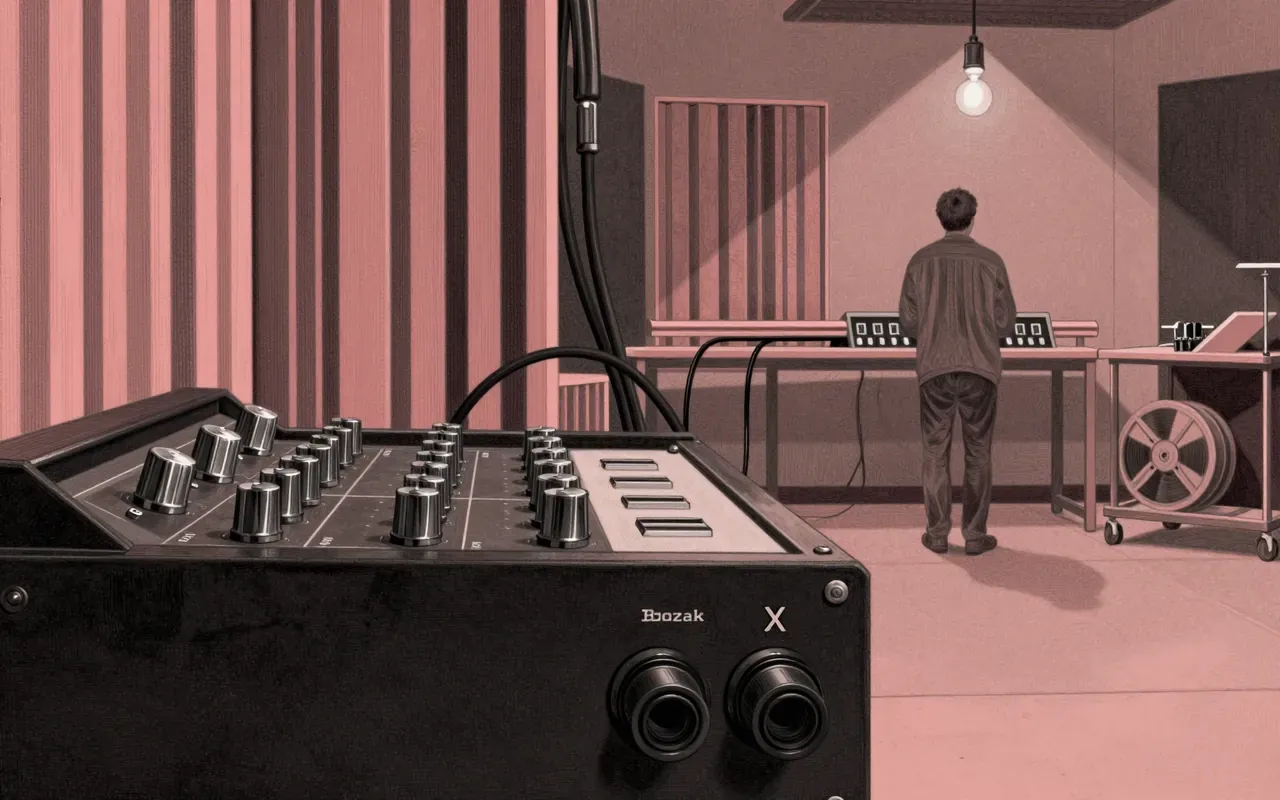
The Bozak CMA-10-2DL is a 4+ channel analogue mixer. It routes four inputs to two outputs. It has no equalisation, no dynamics, no monitoring path, and no amplification. Its name appears in multiple inconsistent spellings. No use cases, dates, or technical specifications are verified in available sources.

8:11

AKG C414 EB

AKG

The AKG C414 EB is a large diaphragm condenser microphone. It is one of 13 products in the AKG C414 series. No technical, historical, or functional detail beyond that is provided in the source material.

9:22

Daking Mic Pre IV

Daking

The Daking Mic-Pre IV is a 4-channel solid-state analog preamp with minimal controls and no colouration. It amplifies cleanly and intensely—revealing rather than refining the source. Its design prioritises workflow over flavour.

9:13

dbx 165

dbx

The dbx 165 is a studio compressor. No technical specifications exist for it. It is categorised as a studio compressor. That is all that is confirmed.

8:29

dbx 166

dbx

The dbx 166 is a no-compromise stereo FET compressor built for speed and instrument tracking—not vocals, not mixing, not analysis. It delivers efficient, transparent compression with subtle warmth. Its design gives immediacy and reliability. It withholds metering, sidechain, vocal suitability, and fine dynamic control.

9:00

Grace Design m201

Grace Design

The Grace Design m201 is a single-channel solid-state microphone preamplifier. It provides clean, high-headroom gain with no EQ, no compression, no digital conversion, and no additional signal path options. It serves one purpose: to amplify a mic signal without alteration. It is not a channel strip. It is not an interface. It is not a tool for tonal manipulation. It is a specialist device for specialists who know exactly when they need it — and when they do not.

9:30

JBL 4310

JBL

The JBL 4310 is an active studio monitor built for truth-telling. Its neutral and linear sound reveals flaws. It needs an external amp. Bruce Swedien preferred it over the 4311—so much that he dismissed the latter as 'pure dog-doo'.

7:50

Lexicon PCM42

Lexicon

The Lexicon PCM 42 is a digital delay unit in Lexicon’s PCM series. No technical specifications are available. Nothing is known about its controls, its sound, its memory, or its use in practice. It declares only its category, its manufacturer, and its model name.

6:46

Soundcraft 2400

Soundcraft

The Soundcraft 2400 is an analog mixer made by Soundcraft. No technical specifications are published. Nothing else is confirmed.

9:55

Soundcraft Ghost

Soundcraft

The Soundcraft Ghost 32 is a dual-path analog mixer that delivers 64-channel mixing by combining 32 fader-based A channels and 32 knob-based B channels. It prioritises routing flexibility and hands-on control over silent operation or real-time EQ parity.

10:37

Roland Space Echo RE-201

Roland

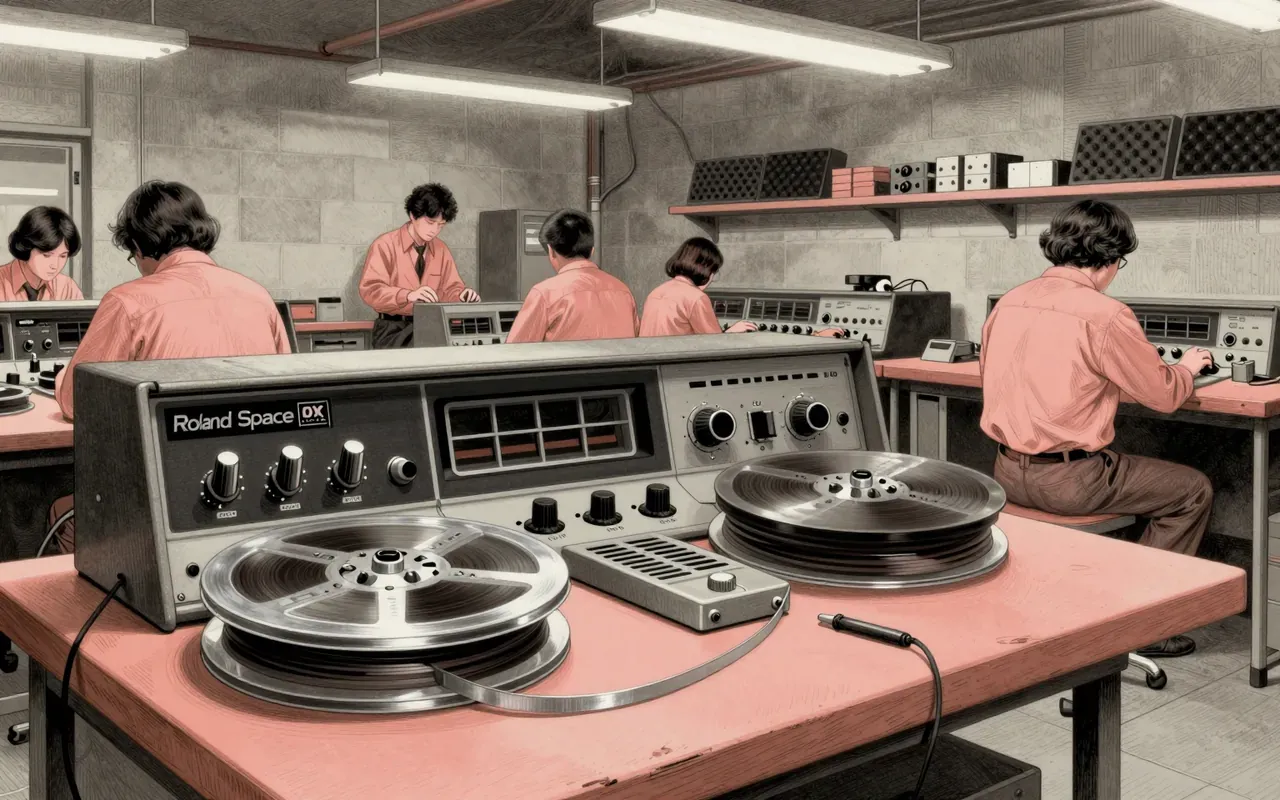
The Roland RE-201 Space Echo is a non-rackable desktop analog tape echo unit with three inputs (two mic, one instrument), five magnetic tape playback heads, 1/4" wet/direct outputs, footswitch input, and controls for time, feedback (intensity), low/high EQ, dry/wet mix, and reverb. Its reverb has a compromised tonal character ('trs CRADA'). It uses an actual reel of tape — distinguishing it from imitators. It does not offer precision, stability, or clean reverb. It does deliver saturated, decaying, pitch-wobbling repeats no digital model fully replicates.

8:54

Trident Series 24

Trident

The Trident Series 24 is an analog mixer made by Trident. No specifications, availability, usage history, or technical details are provided in the source. It is documented only as a category and manufacturer assignment.

9:07

Yamaha DM2000

Yamaha

The Yamaha DM2000 is a discontinued digital mixer console built for professional live sound reinforcement and studio tracking/mixing.

9:02

AKG C414 B-ULS

AKG

The AKG C414 B-ULS is a large diaphragm condenser microphone. It is one of 13 products in the AKG C414 series. The source material gives no further technical, historical, or functional detail.

8:31

Great River MP-2NV

Great River

The MP-2NV gives two channels of the ME-1NV’s analog preamp circuit — no more, no less. It does not add features. It does not subtract fidelity. It occupies one rack space. It accepts mic and line-level sources directly. It meters input and output. It sounds warm, clear, and accurate — as verified by users.

8:26

Millennia HV-3D

Millennia

The Millennia HV-3D is a solid-state mic preamp built for fidelity, not flavour. It gives you three transparent gain stages per channel, 1.5 dB stepped gain, phantom power, no phase flip, and eight channels in two rack units — all on internal power. It excels on strings, voice, and piano. It fails on distorted guitar and bright cymbals. It is not subtle. It is literal.

7:58

Yamaha PM1000

Yamaha

The Yamaha PM1000 is a channel strip. No technical specifications are available. Nothing else is confirmed.

8:32

Roland CompuRhythm CR-68

Roland

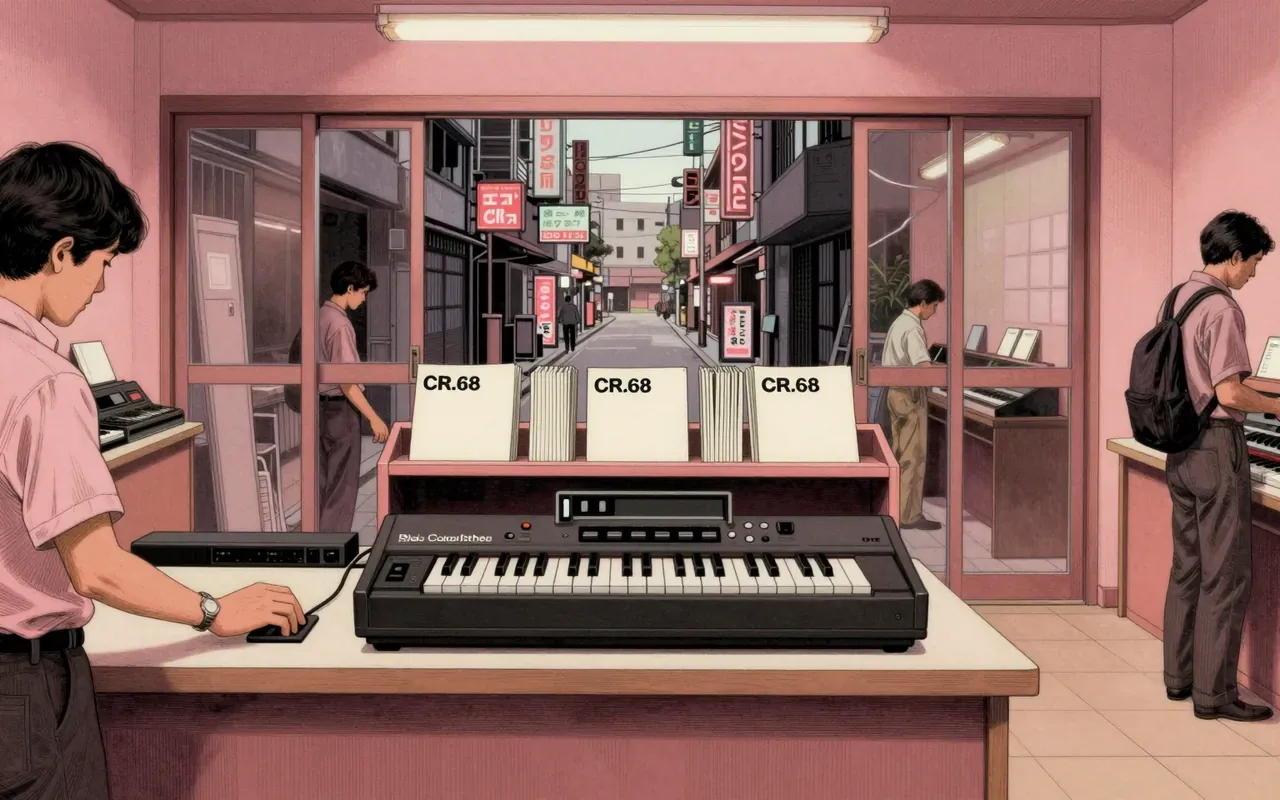
The Roland CR-68 is a non-programmable mono analog rhythm machine from the late 1970s. It shares the CR-78’s sound set and 54 preset rhythms but removes all user programming. Its controls — tempo, level, accent, balance — shape playback in real time. Fills trigger automatically or manually. It has no MIDI, no keyboard, no memory. Its sounds are now more often sampled than played live. Add N To (X) used it.

8:24

Studer A807

Studer

The Studer A807 is an analog multitrack recorder. No technical specifications exist for it. That absence defines it.

8:42

Studer A810

Studer

The Studer A810 is an analog multitrack recorder that functions reliably in steady-state operation. But it fails sharply and obscurely after power interruptions. Troubleshooting those failures is very hard. One user explicitly prefers the A807 over the A810. Nothing is stated about its format, track count, year introduced, or what recordings were made on it.

9:45

Revox B77

Revox

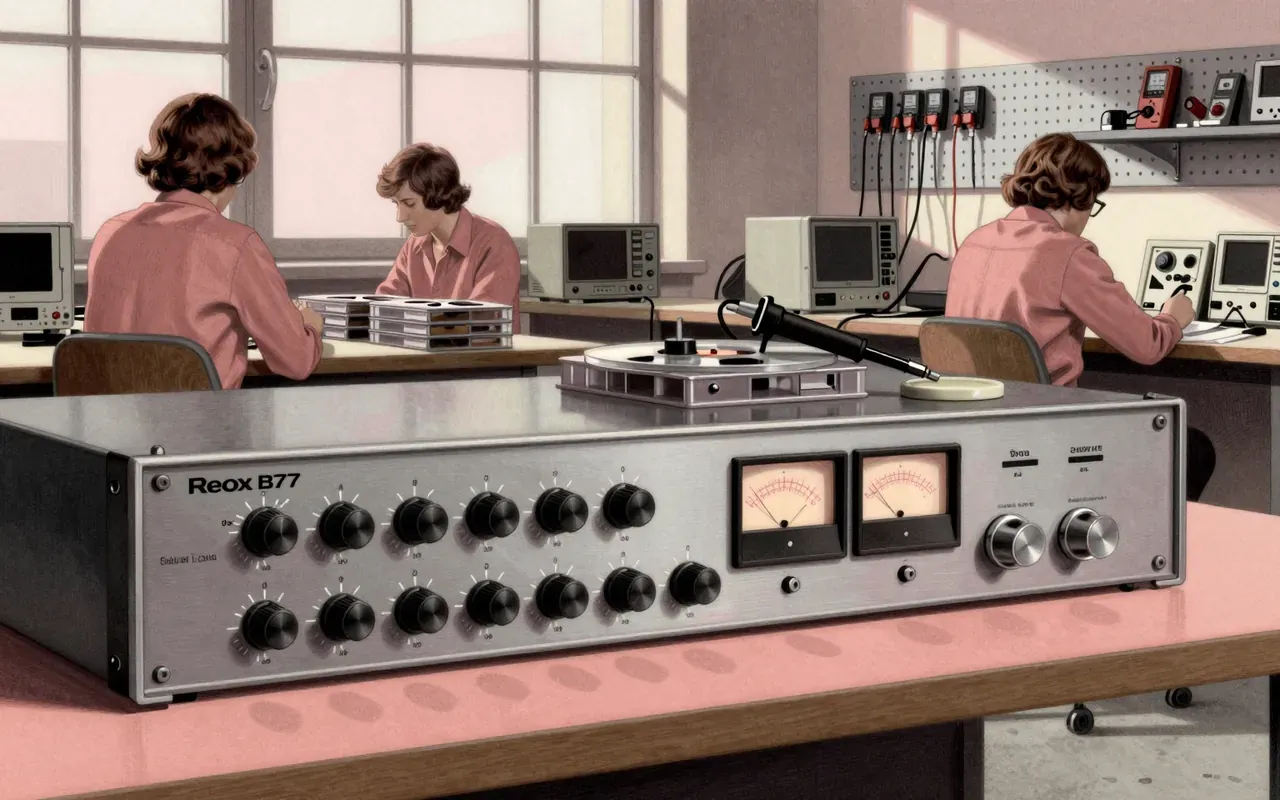
The Revox B77 is an analog multitrack tape recorder built for studio and project recording. It supports 3 3/4, 7 1/2, and 15 ips tape speeds—but the 15 ips setting is obsolete for digital use. Units from 1980 remain fully functional. It is mechanically robust and quieter than UHER models. Its meter is breakable and irreplaceable. It offers no digital functionality. It is worth your time only if you need durable, low-noise analog multitrack operation—and can maintain it yourself.

6:54

Ampex MM-1200

Ampex

The Ampex MM-1200 is an analog multitrack recorder. No technical specifications exist for it. That absence defines its limits.

8:20

Otari MTR-10

Otari

The Otari MTR-10 is an analog multitrack recorder. No technical specifications are available. It is also referred to as 'mtr 10' or 'mtr10'.

6:52

Otari MTR-90

Otari

The Otari MTR-90 is listed as an analog multitrack recorder. No technical specifications are available. Nothing else is confirmed.

10:14

Otari MX-5050

Otari

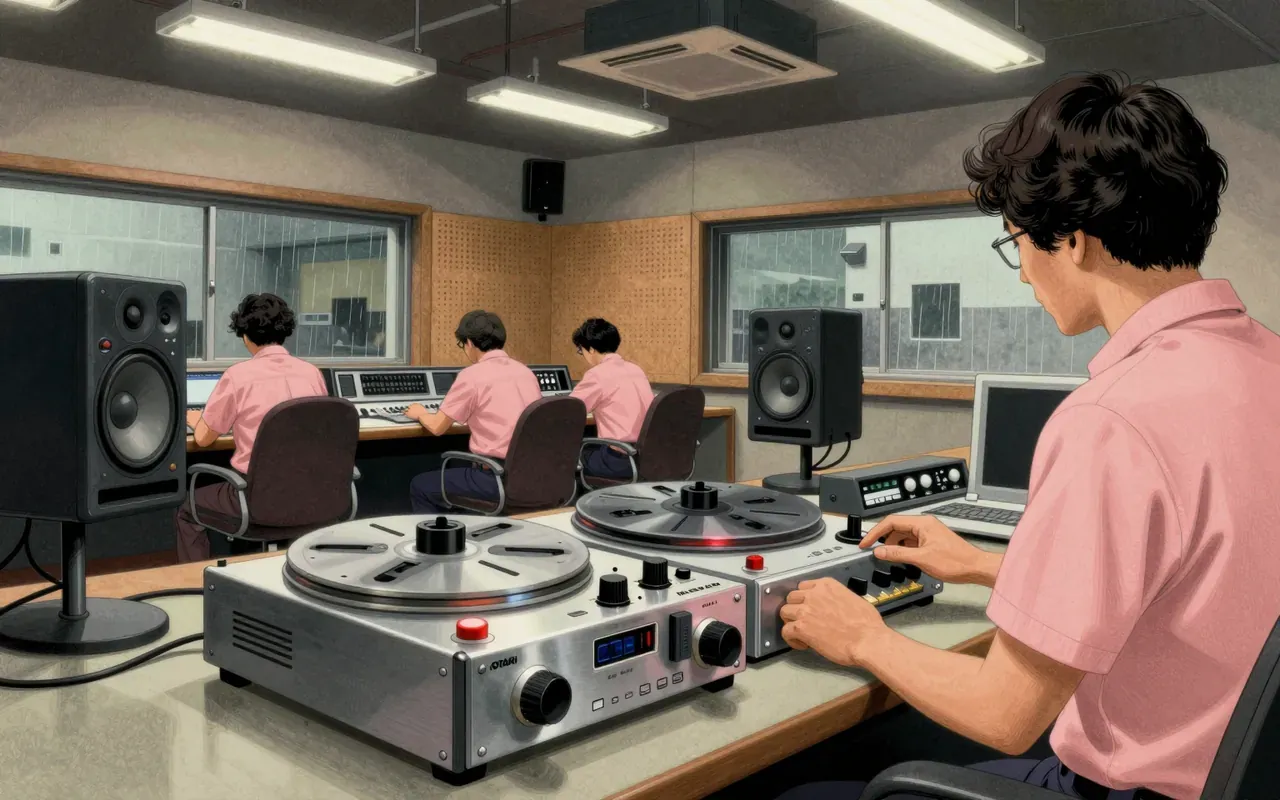
The Otari MX-5050 is an 8-track analog multitrack cassette recorder introduced in 1987. It records at 3.75 ips. Its recording head is superior to that of the Otari 488 and 488 mkII. dbx Type II noise reduction applies separately to tracks 1–4 and 5–8. A pitch/speed wheel allows ±15% variation. Its digitally controlled transport enables automated punch-in between memory points. It uses direct-drive mechanics — no capstan belt required. It records all eight tracks simultaneously, unlike the 488 models.

9:18

Thermionic Culture Phoenix

Thermionic Culture

The Aerial7 Phoenix is a HiFi/audiophile headphone. It belongs to the Street series. It is made by Aerial7. It has an alternate name: phoenixchino. Nothing else is verified.

8:51

Tascam Portastudio 144

Tascam

The Tascam Portastudio 144 is a four-track analog cassette recorder. It was used by adolescents for home multitrack recording in 1981. It lacked dBX noise reduction but functioned effectively. It enabled users to record and mix music at home, creating a personal musical environment.

8:01

Tascam Portastudio 424

Tascam

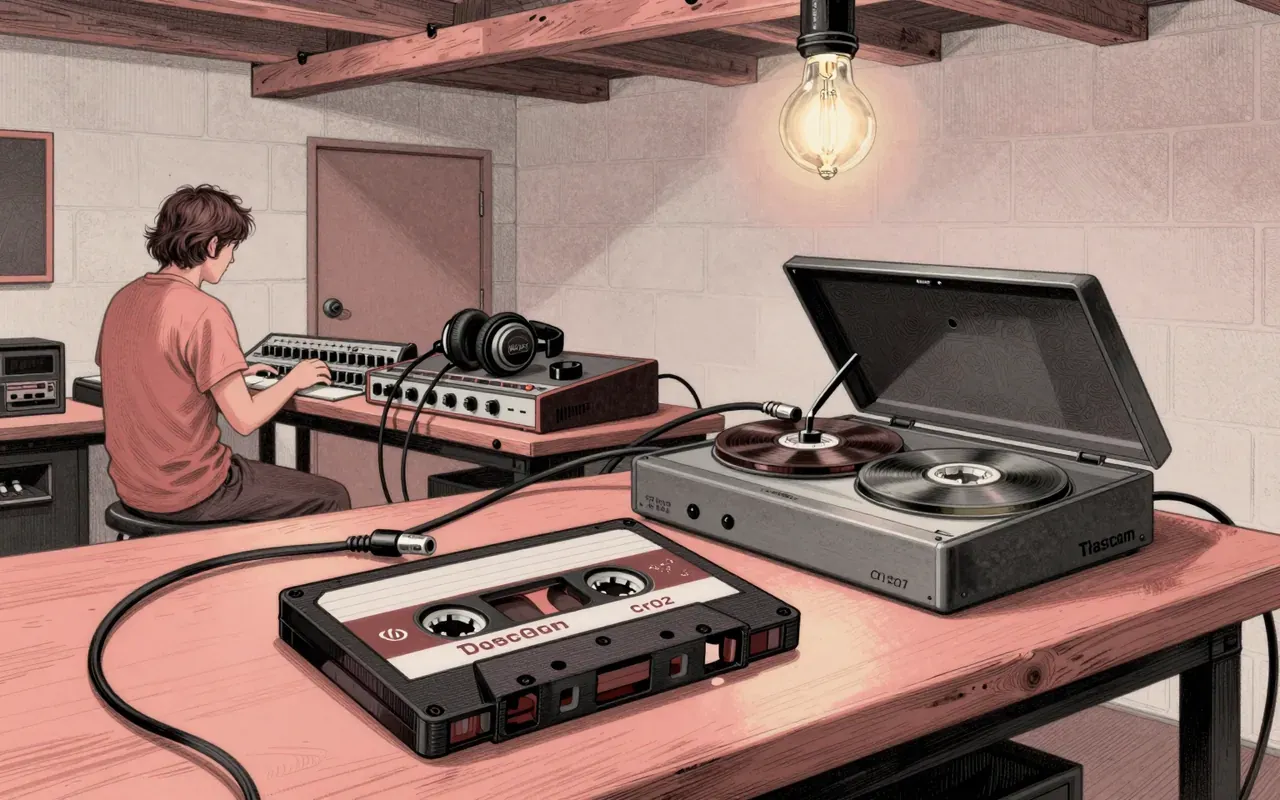
The Tascam Portastudio 424 is a cassette-based four-track recorder and mixer. It uses type II (CrO2) tape. It has two inputs — XLR and 1/4 inch — and supports tape speeds of 9.5, 4.75, and 2375 cm/s. dbx type II noise reduction is permanent. Each input has gain, three-band EQ, and panning. It has main stereo outputs and a headphone jack.

8:26

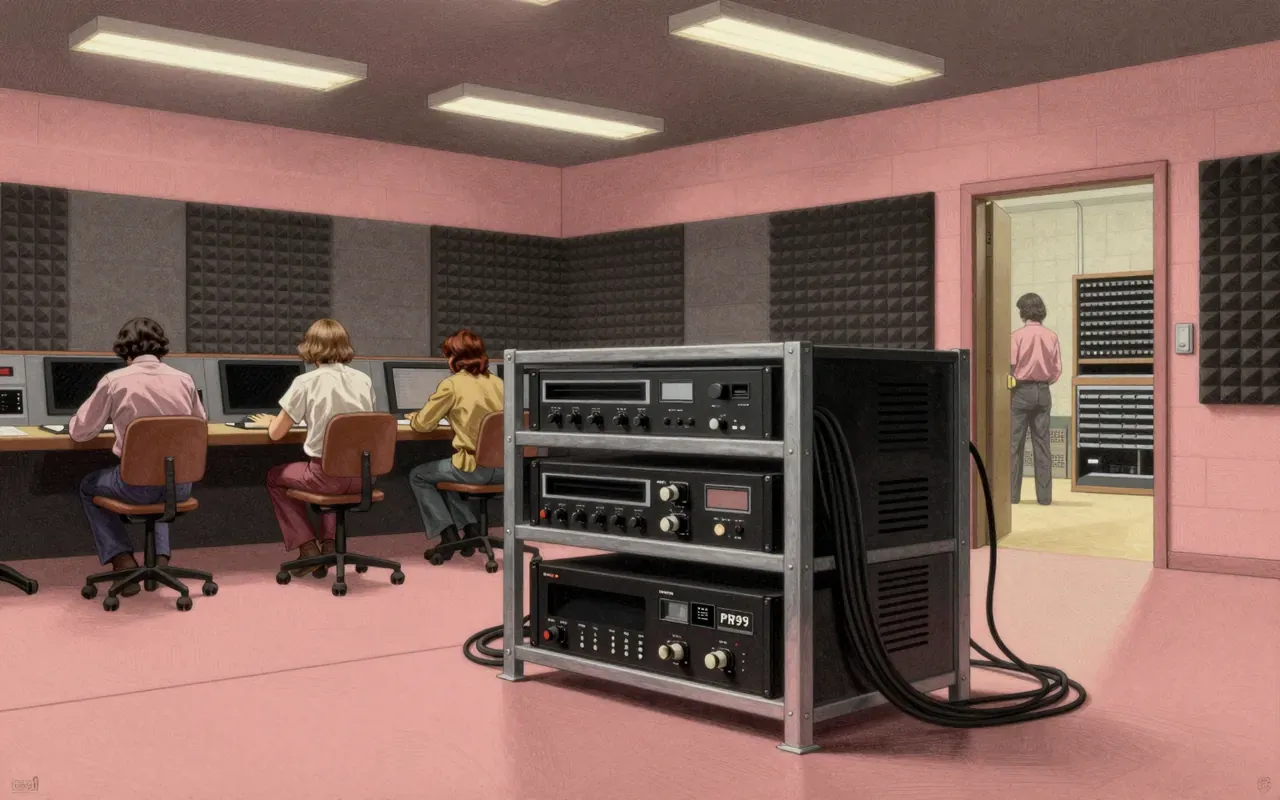
Revox PR99

Revox

The Revox PR99 is an analog multitrack recorder with no published technical specifications. Its function is limited to basic tape-based multitrack recording and playback — but without documented parameters, alignment, or service history, it resists reliable use or evaluation.

9:02

dbx 902 De-Esser

dbx

The Lindell Audio 902 De-Esser is a software de-esser. It has no published technical specifications. It belongs to the software de-esser category. That is all that is known.

9:27

API 2500

API

The API 2500 Bus Compressor is a UAD Plug-In. That is all the sources confirm. No function, no sound, no interface, no history, no use case is stated. It exists only as a named item in a software category.

8:01

M-Audio Audiophile 2496

M-Audio

The M-Audio Delta Audiophile 24/96 is a PCI/ISA sound card for Windows-based music production and amateur vocal recording. It connects MIDI controllers and turntables. It supports 24-bit/96 kHz audio when host software allows. Latency drops to 4ms with buffer reductions. It runs silently in Cubase VST, Pro Tools, Fruity Loops, and six other DAWs. Recordings are clean. Softsynths sound great. Wave Table Synthesis is absent — but users found it unnecessary. I/O is limited. Modern OS support is not provided.

8:33

Avalon Design Avalon VT-747sp

Avalon Design

The Kazrog Avalon VT-747SP is a software plugin classified as an 'Other effects bundle or multi-effect'. No technical specifications are available. Its model name references the Avalon VT-747SP hardware unit. Nothing is stated about its sound, controls, workflow, or real-world use.

9:12

RCA BA-6A

RCA

The BA-6A is a software compressor by Antelope Audio. No technical specifications are available. Its controls, behaviour, and sonic role are undocumented. It exists only as a named category and a set of alternate spellings.

7:56

SSL Bus Compressor

SSL

The Bus Compressor is a software-only bus compression plugin made by IK Multimedia for the T-Racks series. It is categorised as a software compressor. No technical details, sonic traits, release date, or usage examples appear in the sources. It is not an SSL emulation. It is defined solely by its name, manufacturer, and category.

8:12

Tube-Tech CL 1B

Tube-Tech

The Tube-Tech CL 1B MKII is a Universal Audio software compressor plugin. Nothing more is verified.

9:15

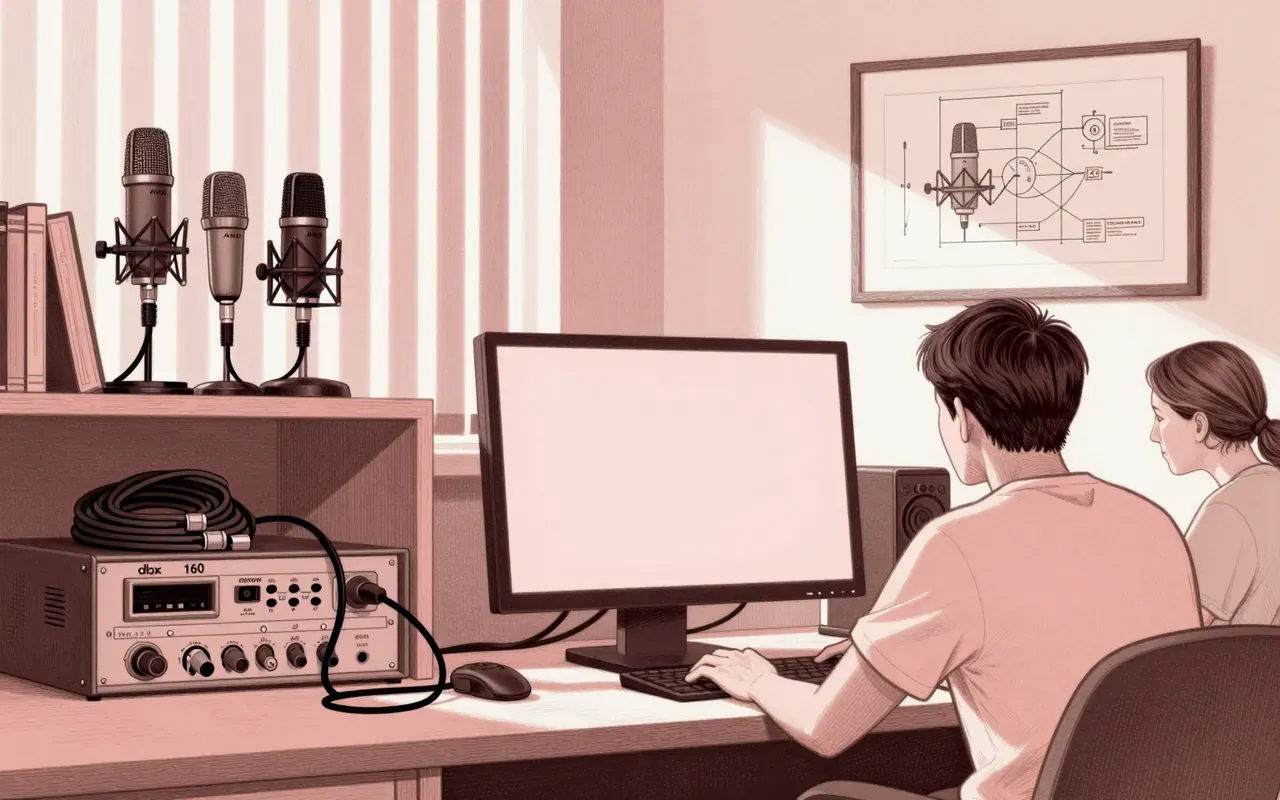
dbx 160

dbx

The Waves dbx 160 is a software compressor plug-in released in 2015. It delivers fast, aggressive compression with minimal setup. It lacks flexibility and colour but excels at tightening drums and bass. It costs $49 on sale. It belongs in the mix bus, not the mastering chain.

10:22

Digidesign Digi 001

Digidesign

The Digidesign Digi 001 is the original Pro Tools audio interface. It is a rack-mountable PCI/ISA soundcard with two mic preamps, phantom power, gain knobs, -25 dB pads, front headphone output, MIDI, eight outputs (including monitor outs), and six line inputs. It connects via D-Sub and serial port — not FireWire or USB — so it is incompatible with laptops and newer computers. It is obsolete outside legacy systems.

9:36

Roland JC-120 Jazz Chorus

Roland

The Roland JC-120 Jazz Chorus Plug-In is a software amp simulator released by Roland in January 2025. It models the JC-120’s sound for use inside a DAW. Nothing in the source describes its controls, signal path, tone-shaping options, or how closely it matches the hardware. It offers convenience and consistency — not physicality or unpredictability.

9:45

Marshall JMP 2203

Marshall

The Softube Marshall JMP 2203 is a software amp simulator in the Amp Room series. Softube made it. It carries the Marshall JMP 2203 name. It belongs to the Software Amp Simulators category.

8:07

Digidesign Pro Tools 24 MIX

Digidesign

The Digidesign Pro Tools|24 Mix + is a discontinued PCI DSP board for Pro Tools|24 systems. It requires Pro Tools 6.4.1 and Mac OS 10.3.8. Installation is difficult. Setup is simple. Once running, it performs reliably and professionally.

8:56

Marshall Silver Jubilee 2555

Marshall

The Marshall Silver Jubilee 2555 is a software amp simulator by Softube. It belongs to the Amp Room series. It has no published technical specifications. It is not hardware. It is not a standalone application. It is a plugin for digital audio workstations that host Amp Room.

7:46

Genelec 1022A

Genelec

The Genelec 1022A is an active monitor in the Genelec 1000 series. Genelec manufactured it. That is all the source material confirms.

8:18

Genelec 1031A

Genelec

The Genelec 1031A is a large, active, self-powered studio monitor built for stationary use in professional recording studios. It delivers full-spectrum sound with strong low-end presence and tight high-end response. It plays loudly without colouration and reveals fine audio detail. Its built-in amplification is highly effective. Its size and sonic neutrality make it unsuitable for small rooms or home studios. Users report it excels in medium-to-large spaces and is trusted for critical mixing and tracking.

8:48

Genelec 1032A

Genelec

The Genelec 1032A is a high-end, individually sold, active two-way near-field studio monitor. It uses a 10-inch woofer and 1-inch tweeter. Its frequency response is 36 Hz to 23 kHz. It delivers a clean sound with tight highs and reportedly accurate mids and lows. It requires no external power amplifier. It is sold singly, not in pairs.

8:46

dbx 160X

dbx

The dbx 160X is a fixed-response analog limiter/compressor built for immediacy, not nuance. It excels when slammed on snare, kick, bass, or guitar — but fails at subtlety, especially on vocals. Its simplicity is functional, not forgiving.

7:54

dbx 160XT

dbx

The dbx 160XT is a studio compressor. No technical specifications are available for it.

9:02

API 205L

API

The API 205L is a DI unit made by API Audio. No technical specifications are available. No retailers or classified ads currently offer it. Its alternate names are '205l' and '205 l'.

9:12

Neve 2264A

Neve

The Neve 2264A is a mono limiter/compressor module built for studio use. No technical specifications are published. It weighs 1.3 kg. Its function is defined by category, not data sheet.

8:19

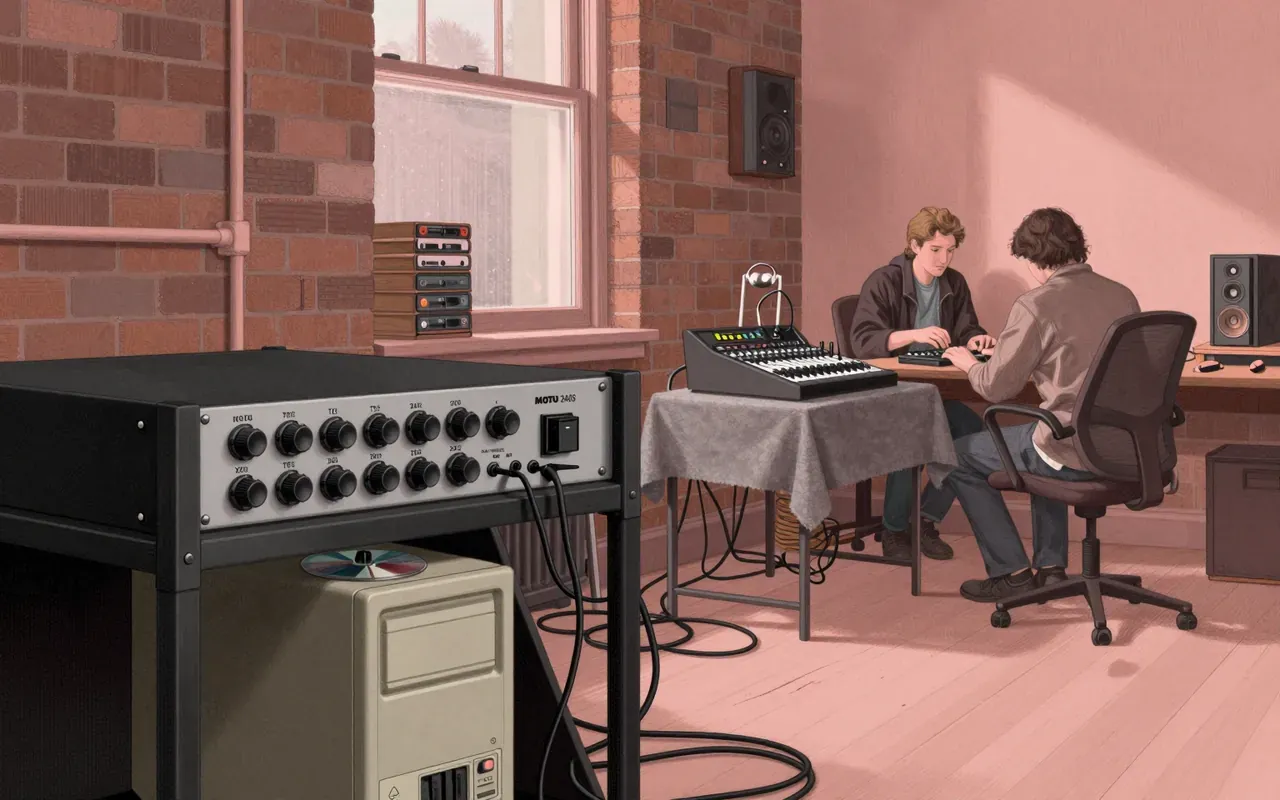
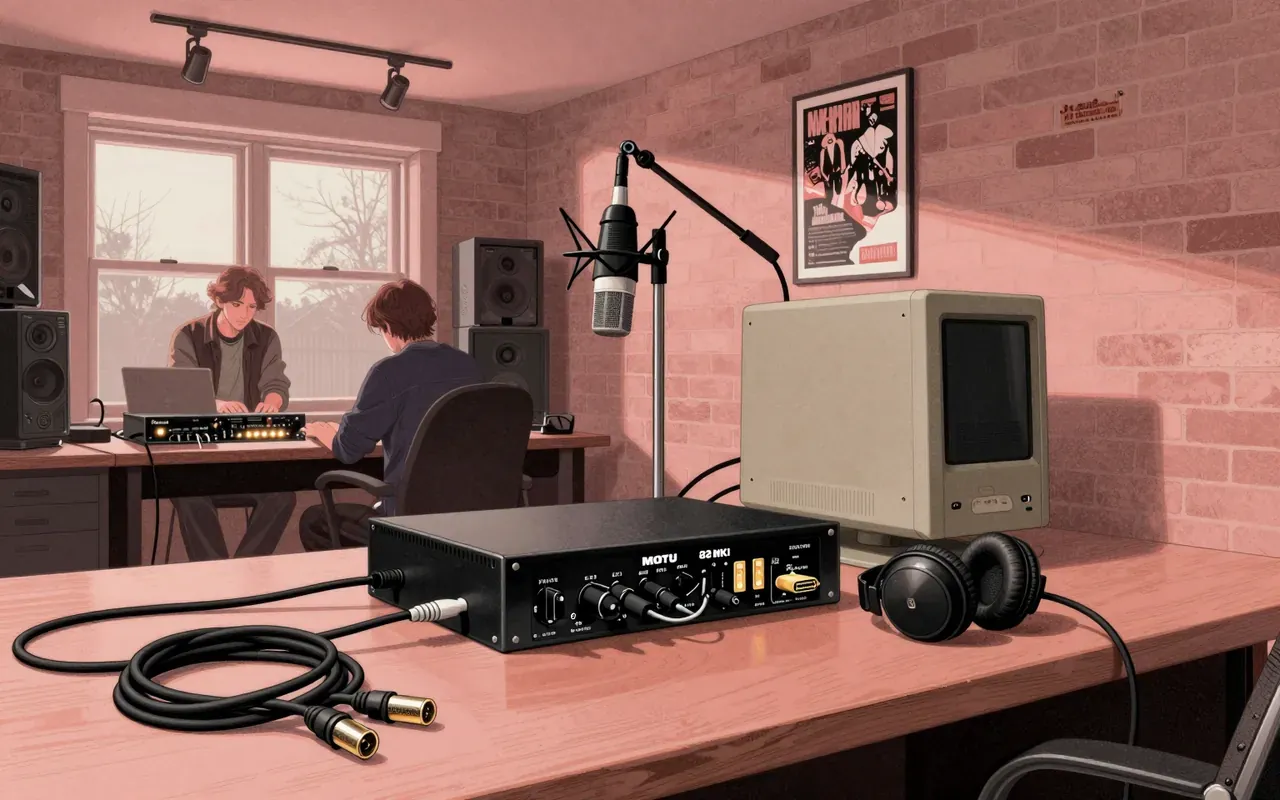
MOTU 2408

MOTU

The MOTU 2408 is a discontinued PCI/ISA rack-mount soundcard built for multitrack recording and mixing in home and project studios.

9:12

Neve 31105

Neve

The Neve 31105 is a channel strip. No technical specifications are available. Nothing else is confirmed.

8:02

API 3124+

API

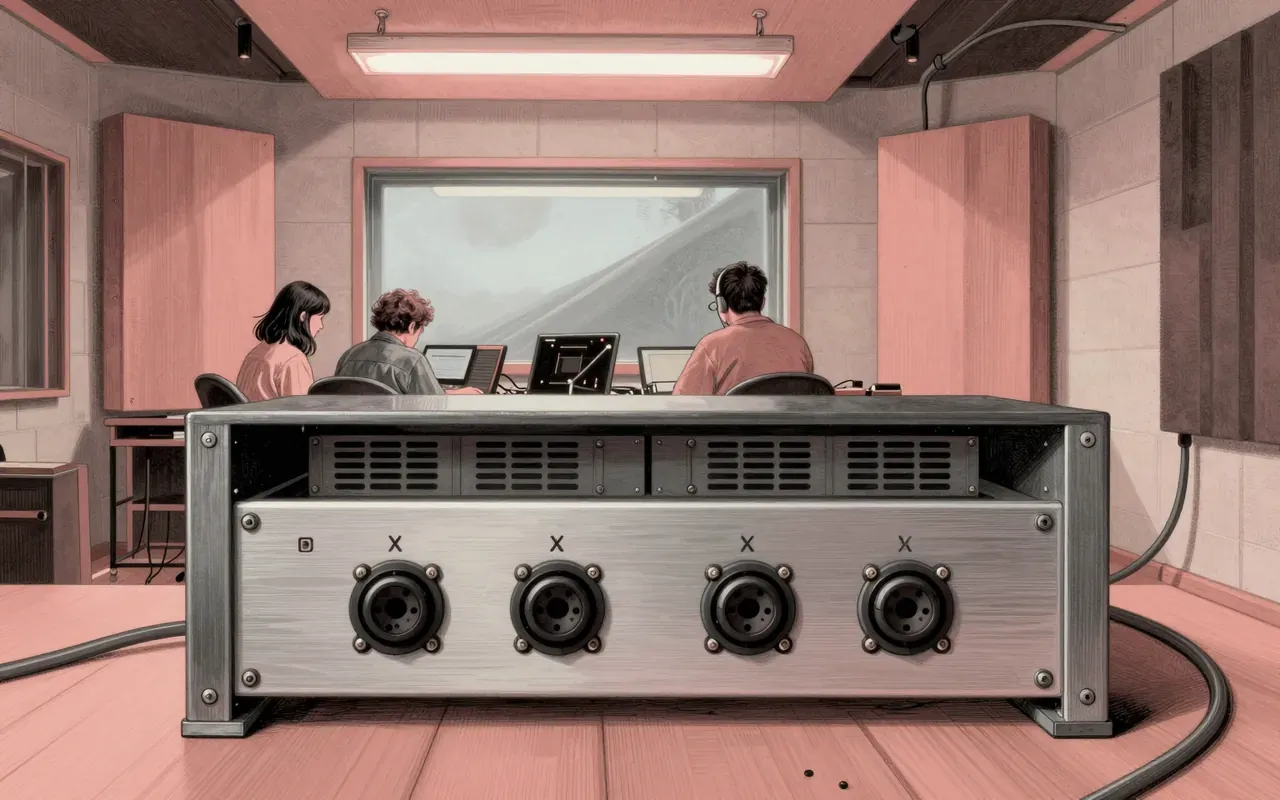
The API 3124+ is a 1U, 4-channel analog microphone preamplifier using the 2520 op-amp and classic console circuit. Each channel has gain, polarity, phantom power, 20 dB pad, mic/line selection, and a VU meter. It accepts XLR inputs at the rear and unbalanced 1/4" inputs at the front. It delivers high headroom and consistent colour across all four channels — but offers no impedance control, channel linking, or digital integration.

8:50

TEAC 3340S

TEAC

The TEAC 3340S is an analog multitrack recorder with no available technical specifications. It is identified only by category and alternate name spellings. Nothing is confirmed about its operation, sound, reliability, or creative use.

8:10

Neve 33609

Neve

The Neve 33609 is a dual-channel, all-analog studio compressor and limiter occupying two rack units. Each channel contains independent compressor and limiter sections. The compressor section provides threshold, recovery, gain, ratio, and bypass. The limiter section provides threshold, recovery, fast/slow attack, and bypass. It supports dual-mono or stereo operation with per-channel gain reduction metering.

7:42

SSL 4000 E

SSL

The SSL 4000 E is a channel strip. No technical specifications are available. Nothing else is confirmed.

7:57

SSL 4000 G

SSL

The SSL 4000 G+ is a 48-channel analog mixing console built for professional studios. Each channel has a preamp and parametric EQ. It includes built-in compressors and many other features. Its configuration is complex and demands substantial time to master. Its sound quality is judged among the best attainable — the cleanest the reviewer has ever used. Its preamps are extremely clean and full sounding. Its EQs are super clean with precise cut/boost control. It is qualified to record any and all genres of music. It is extremely famous and highly popular among professionals across popular music genres.

8:35

JBL 4311

JBL

The JBL 4311 is an active monitor built for accuracy, not appeal. Its adjustable treble and midrange controls let users tailor response without EQ. It delivers neutral, powerful, precise, and dynamic sound — but only when driven with sufficient gain. Its frequency curve avoids bass saturation and flattery, making it reliable for critical listening across playback systems. Users acquired it in Germany in 1979 and in studio trades by 1983. It belongs in rooms where truth matters more than comfort.

8:28

JBL 4312

JBL

The JBL 4312 is a passive three-way studio monitor built for punch, precision, and stereo imaging — not neutrality or refinement.

8:35

JBL 4350

JBL

The JBL 4350 is a passive studio monitor requiring bi-amplification, offering no passive filter adjustments, and demanding extensive room integration and speaker placement. It is physically imposing and highly detailed in sound reproduction. It is not turnkey-ready.

8:19

JBL 4430

JBL

The JBL 4430 is a 2-way active monitor built for studio monitoring. It delivers stable, wide, non-directional dispersion and excellent overall homogeneity. Its horn is more neutral than predecessors like the 4331 and L200 — eliminating long repetitive directional artifacts. It lacks the top-end finesse of the 2405 tweeter. Bi-amplification enables sonic evolution, but mechanical decoupling from the floor is mandatory. It was produced continuously for 20 years with iterative hardware updates: the 1-inch compression driver shifted from aluminum diaphragm and alnico magnets to titanium and ferrite. Each unit supports up to 80 kg.

7:50

JBL 4435

JBL

The JBL 4435 is a passive monitor built for raw output — not finesse. It trades integration for extension.

8:45

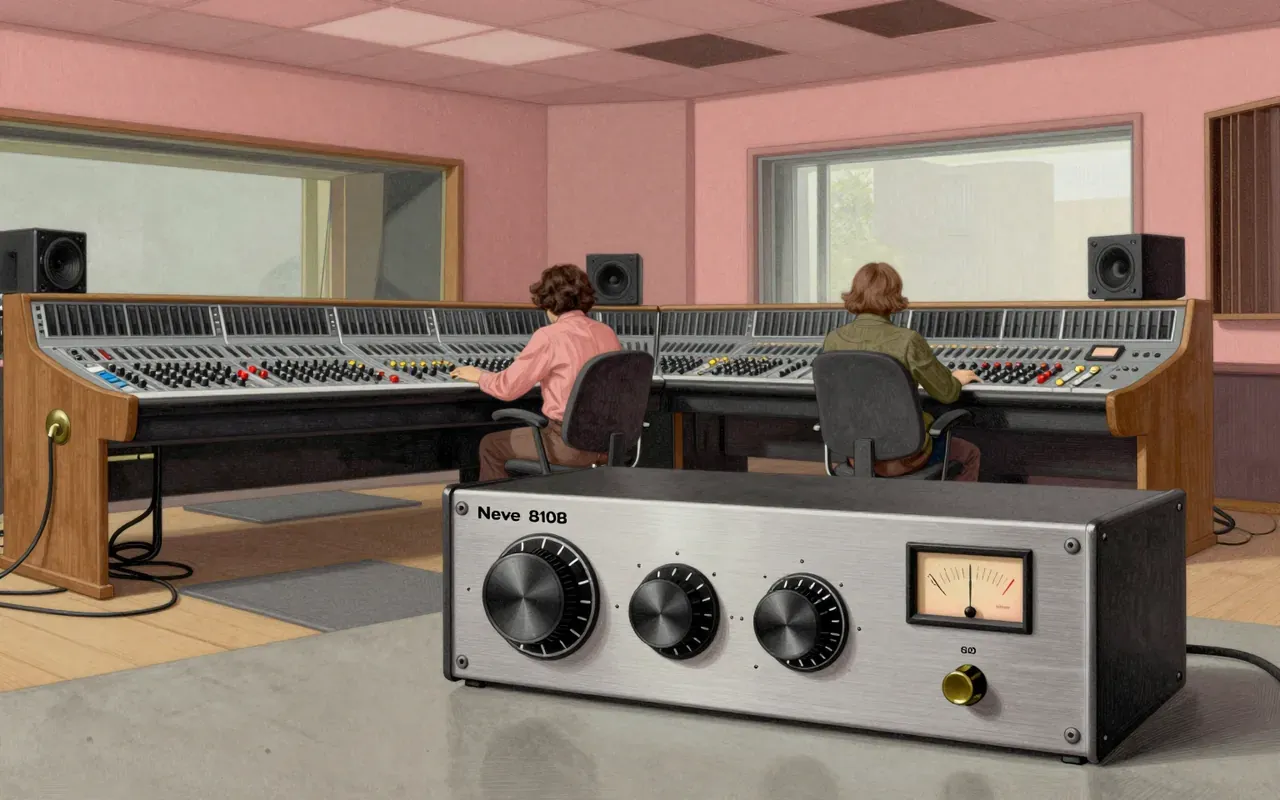
Neve 8108

Neve

The Neve 8108 is a 32-channel analog mixing console built in 1979. It delivers warm, full preamps and top-notch parametric EQ on every channel. Its channel strips are laid out for convenient access. Its digital routing system is quirky.

9:21

MOTU 828

MOTU

The MOTU 828 MKI is a discontinued FireWire audio interface introduced around 2001–2002. It offered two mic preamps with phantom power and XLR/1/4" inputs, six additional balanced line inputs, eight balanced outputs, ADAT and optical I/O, 24-bit 64x/128x oversampling converters, and front-panel monitoring controls. Priced at $800 at launch, it was considered expensive but highly stable and easy to install. It remains functional for years in typical home studio use but is no longer sold and has been succeeded by newer models including the 828 (2024).

7:57

Digidesign 888 I/O

Digidesign

The Digidesign 888 I/O is a 16-bit analog/digital converter with eight XLR inputs, eight XLR outputs, and digital I/O via AES/EBU and S/PDIF. It was used in home studios, often alongside the 24-bit 888/24. It offers no processing, no preamps, and no variable gain — just fixed-path conversion. Its value lies only in compatibility with legacy Pro Tools TDM systems.

10:06

SSL 9000 J

SSL

The SSL 9000 J is an analog mixer. That is all the source confirms. It belongs to the category of analog mixers. No specifications, features, or use cases beyond that are given. It is not described as rare, expensive, or influential. It is not tied to any record, person, place, or date. It is what it is: a large-format analog mixer for studio use.

9:56

Revox A77

Revox

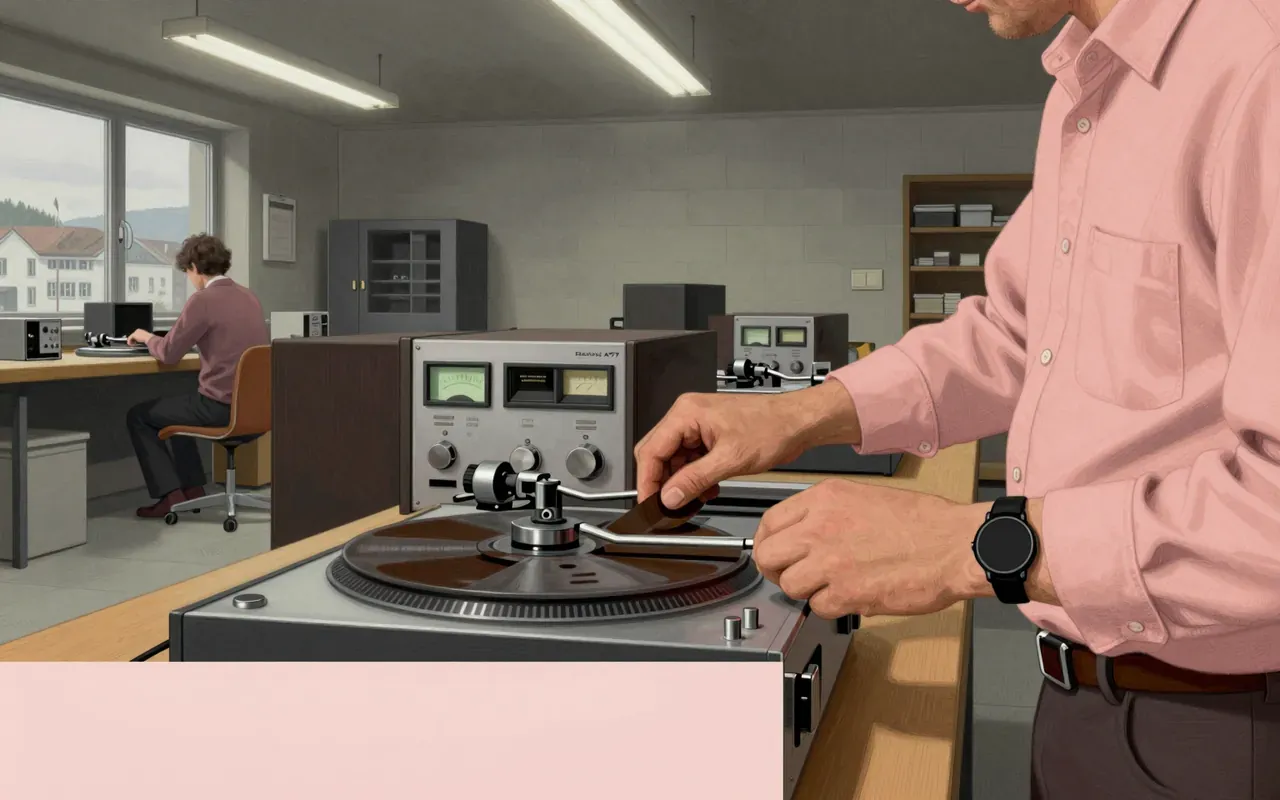
The Revox A77 is an analog multitrack tape recorder. Users deploy it to replay and digitise vintage tape — especially 1980s band mixes. It is robust and simple to operate, more so than the B77 or G36. But it trades mechanical precision and low-noise playback for that durability. It does not record multitrack. It does not edit. It plays — and keeps playing.

8:30

Studer A80

Studer

The Studer A80 is a tape recorder that shapes sound by softening transients and adding organic saturation. It works only when configured precisely: 19/38 or 38/76 cm/s, 1/2-inch tape, GP9-aligned heads. It excels in rock. It fails in dance, house and electro. It is not flexible. It is not neutral. It is a deliberate, physical constraint.

9:58

Studer A800

Studer

The Studer A800 is a UAD-2 plug-in that adds tape-style warmth and drive to digital mixes. It works best post-summing. It uses gang control for unified management. It does not simulate physical tape mechanics.

9:38

Studer A820

Studer

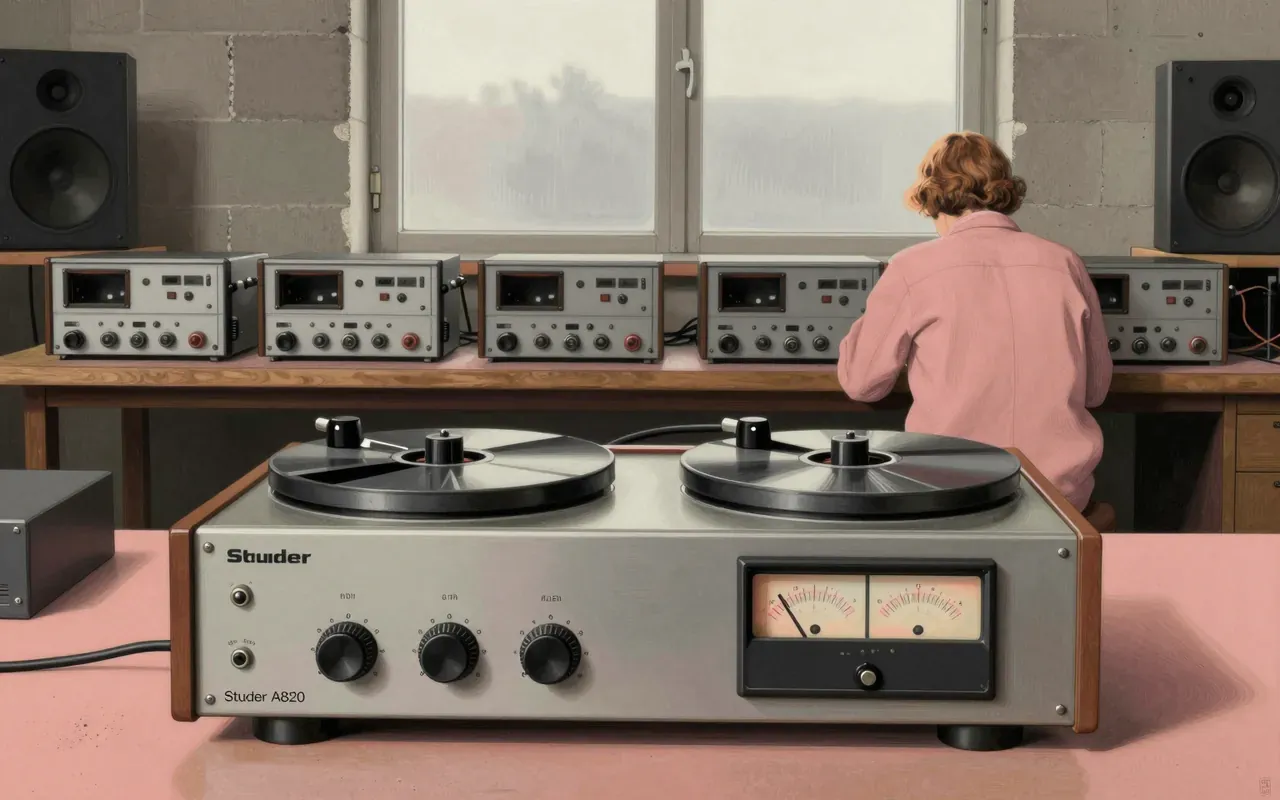
The Studer A820 is a 24-track analog multitrack tape machine with a portable controller. It excels at low-end and drum capture. It was used to record tracks later transferred to Pro Tools. It is user friendly, with familiar, easily located controls. No verified source states a weakness.

6:44

Studer A827

Studer

The Studer A827 is an analog multitrack-studio. No technical specifications are provided. Its function, design, and use remain undocumented in the source.

9:18

Apogee AD-8000

Apogee

The Apogee AD-8000 is an eight-channel analog-to-digital converter built for recording studios. It was introduced circa 1996. It supports 24-bit resolution at up to 48 kHz. It has eight XLR analog inputs and AES/EBU and S/PDIF digital connections. Front-panel level meters and controls let you monitor and adjust all eight channels. It includes a 1/4-inch headphone jack for direct monitoring. Optional cards enable ADAT, TDIF and Pro Tools connectivity.

9:21

Prism Sound ADA-8

Prism Sound

The Prism Sound Dream ADA-8 is a dual-path AD/DA converter built for clean, separated signal routing at up to 96 kHz. It delivers stable internal clocking and user-friendly displays, but lacks built-in sample rate conversion and fails under external sync with Pro Tools HD interfaces. It belongs in studios where path independence matters more than interoperability.

7:34

Ampex AG-440

Ampex

The Ampex AG-440 is an analog multitrack recorder. No technical specifications are available. Its alternate names include ag440, a 440, and a440. Nothing else is verifiable.

9:04

Echo AudioFire 12

Echo

The Echo Audiofire 12 is a FireWire audio interface in the Audiofire series. It has 12 line inputs and 12 outputs. It has no mic preamps. It has no headphone output. It supports daisy-chaining up to three units for 36 I/O. It achieves 2.9 ms round-trip latency at 24-bit/96 kHz. Its line inputs are transparent and electrically isolated. Users record 12 tracks simultaneously at up to 192 kHz, firmware permitting.

7:12

Lynx Aurora 16

Lynx

The Lynx Aurora 16 is an Analog/Digital Converter. No technical specifications are available for it. It belongs to the category of Analog/Digital Converters.

9:06

Studer B67

Studer

The Studer B67 is an analog multitrack recorder. No technical specifications are available for it.

8:09

Dynaudio Acoustics BM15A

Dynaudio Acoustics

The Dynaudio Acoustics BM15A is an active studio monitor designed for nearfield monitoring. It integrates amplification, reproduces down to 45 Hz at 0 dB, and complies with EU and FCC electromagnetic shielding standards. One unit exhibited unintended FM radio reception at 104.1 MHz — isolated to the right channel. Users report no distortion or hum, even at maximum volume. No information is given about music, artists, or recordings made with it.

10:26

AKG C24

AKG

The AKG C24 is a Pro Tools-specific motorized control surface with 24 bankable channel strips, touch-sensitive motorized faders, 16 mic/line/DI preamps, an 8x2 stereo line submixer, a 5.1 analog monitor section, talkback mic inputs, and illuminated dedicated switches for mute, solo, record, select, EQ, dynamics, sends, and inserts.

8:54

AKG C414

AKG

The AKG C414 is a series of large diaphragm condenser microphones. Thirteen variants exist. Two are matched pairs: the XLII and the XLS. All share the same functional category. None are described by frequency response, noise floor, or circuit details in the source.

9:20

Fostex D-80

Fostex

The Fostex D-80 is a dynamic, cardioid microphone built for singing and trumpet. It handles high sound pressure like an SM58 — but delivers a 'crunchy', 1980s-evoking sound the user found in an attic. It offers no features beyond its fixed polar pattern and raw output. It belongs only where that specific texture is the goal.

8:31

M-Audio Delta 1010

M-Audio

The M-Audio Delta 1010 is a discontinued PCI/ISA + rack-mount soundcard. It delivers 8 analogue I/Os plus SPDIF. It achieves 5ms latency. It runs stably with Cubase and Sonar on legacy desktops. It crashes beyond 24 tracks — due to host computer limits, not the card. It inserts real-time effects during mixdown without issue. It requires a Pentium 4–era PC with a free PCI slot. It has no USB or FireWire support. It is no longer manufactured.

7:49

Roland DEP-5

Roland

The Roland DEP-5 is a mid-1980s multi-effects processor. It gives you reverb, delay, chorus, flanger, double, and a three-band parametric EQ. Its interface is direct — one button, one function — but some parameters demand layered adjustment. Program 5 delivers a long, arching reverb. Its midrange tone is distinctive and hard to replicate. It does not do clean, neutral processing. It does not offer recallable presets. It does not suit users who need precision over character.

6:20

Publison DHM 89 B2

Publison

The Publison DHM 89 B2 is an Other Studio Effect made by Publison. No technical specifications exist for it. Nothing else is confirmed.

10:50

Digidesign Digi 002

Digidesign

The Digidesign Digi 002 is a FireWire audio interface built exclusively for Pro Tools LE. It delivers four mic preamps, S/PDIF and MIDI, and autonomous digital mixing — but only within that narrow software ecosystem. It is desktop-formatted and non-rack-mountable. Its limits are defined by Pro Tools LE’s track count and host compatibility. It belongs in a period-correct studio, not a modern one.

9:12

Prism Sound Dream ADA-8XR

Prism Sound

The Prism Sound Dream ADA-8XR is an eight-channel analog/digital converter built for fixed-install mastering and DAW integration. It provides eight balanced XLR I/O at +4 dBu, two RCA monitoring outputs, DB-25 AES I/O, and dual BNC Word-Clock. Its build quality is impeccable—but it runs hot, demanding 1U of rack clearance. It does not offer USB, optical, headphone output, or variable monitor level control.

7:20

Beyerdynamic DT 48

Beyerdynamic

The Beyerdynamic DT 48 is the world’s first dynamic headphone, launched in 1939. Its closed, tight-fitting design isolates sound but causes fatigue. Its midrange is superb and revealing—built to monitor voice, sound objects, and mood in reporting, radio, film, and medical audiometry. It is not intended for mastering.

8:18

Fostex E16

Fostex

The Fostex E-16 is an analog multitrack recorder. No technical specifications are available for it.

8:37

Telefunken ELA M 250

Telefunken

The Telefunken ELA M 250 is a large diaphragm condenser tube microphone made by Telefunken Elektroakustik. That is all the source confirms. No specifications, no use cases, no sonic characterisation, no historical context — just category, type, and maker.

8:33

RME Fireface 800

RME

The RME Fireface 800 is a FireWire audio interface built for professional studio routing, synchronization, and digital I/O—not tracking or mixing alone, but glueing hardware together.

8:57

MXR Flanger/Doubler

MXR

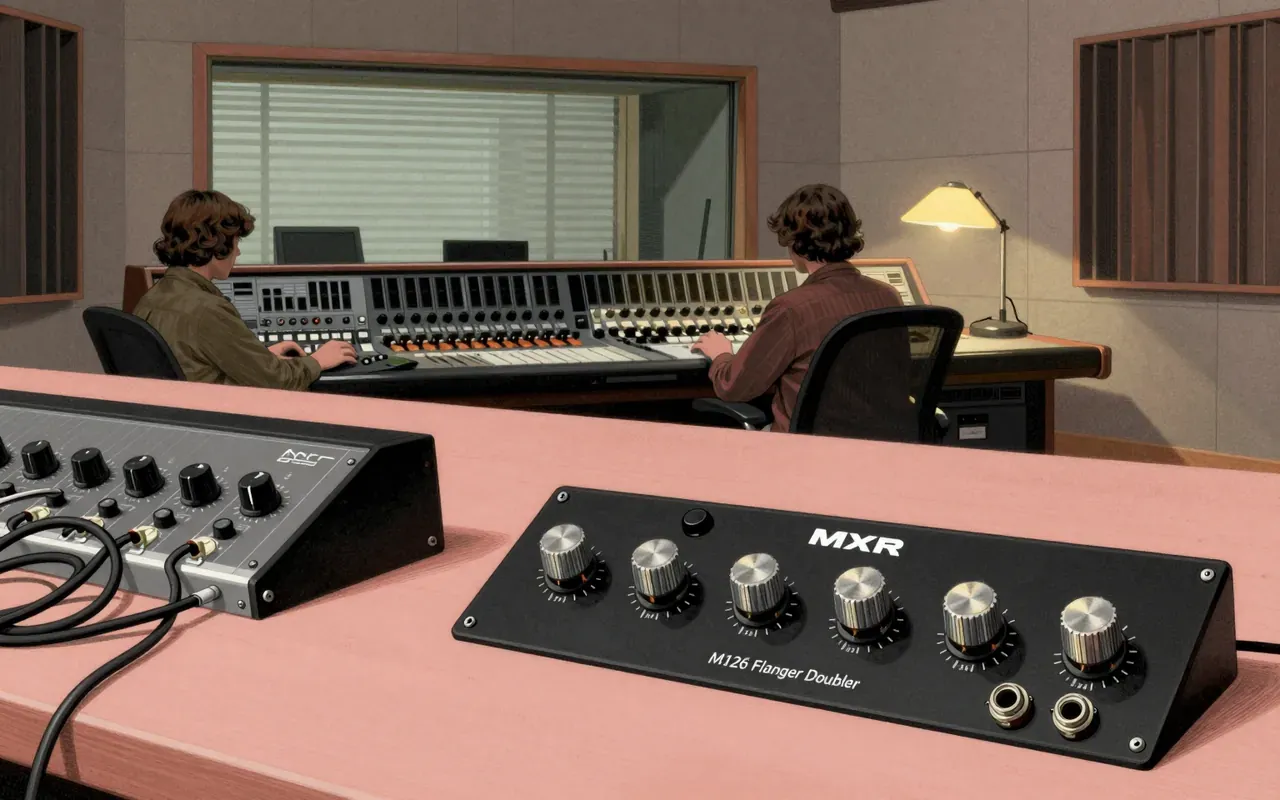
The MXR M126 Flanger/Doubler is a two-space analog rack unit with front-panel 1/4" TRS I/O. It gives players manual, sweep width, sweep speed, mix, and regen knobs plus mode and bypass/invert buttons. It delivers a thick flanging sound and fulfils its synthetic doubling function as advertised. It has no stereo I/O, no expression input, no tap tempo, and no presets. No verified recordings or users are cited. Studio engineers needing fixed, tactile analog flanging or doubling should consider it. Live performers, modular users, and those requiring stereo or foot control should not.

8:24

Chandler Limited Germanium Compressor

Chandler Limited

The Chandler Limited Germanium Compressor is a mono, 1U, all-analog FET compressor using germanium transistors. It offers a ratio range of 1.5:1 to 10:1 and a Clean/Dirty switch that toggles between low-distortion (0.2–0.5%) and higher-distortion (2–5%) modes. It has symmetric XLR I/O, is rack mountable, and linkable for stereo or surround use. It delivers fast, coloured compression — but gives up timing control, metering, and multi-channel operation to do so.

8:37

Crane Song HEDD 192

Crane Song

The Crane Song HEDD 192 is a two-channel DAC for mixing and mastering. It converts digital audio at up to 192 kHz/24-bit. Its defining feature is three fixed analog circuit emulations — triode, pentode, and tape — each altering harmonic texture and dynamics in distinct ways. It offers no transparency, no bypass, no fine-tuning. It exists to commit.

8:50

Mackie HR824

Mackie

The Mackie HR824 is a discontinued, self-powered near-field monitor. Each unit has its own amplifier and power cord. It delivers uncoloured, accurate sound for critical mixing—and mixes made on it translate well elsewhere.

8:10

Publison Infernal Machine 90

Publison

The Publison Infernal Machine 90 is a 3U rackmount analog/digital multi-effects processor built for video post-production. It delivers delay, echo, harmonizer, sampler, reverb, transposition, time compression/expansion, and DVR-style long-sample playback — all synchronised to SMPTE timecode. All programs are editable on-device; no external editor exists. It excels at frame-accurate effect triggering in film dubbing. It fails for anyone needing patch libraries, remote editing, or non-video workflows.

9:08

Neumann KM 184

Neumann

The KM 184 is a fixed-cardioid small-diaphragm condenser microphone built for clarity, durability, and extreme SPL handling — not for shaping or adapting.

9:07

Neumann KM 54

Neumann

The KM 54 is a rare, discontinued large-diaphragm tube condenser microphone. It has a fixed cardioid pattern and requires its own unique power supply. It is fragile and unsuitable for live use. It delivers a warm, wide vocal tone — ideal for capturing subtlety — but lacks the clarity of newer Neumann tube mics. A reviewer used it successfully on vocals for themselves and a client. It resembles the AKG C12 in sound and appearance.

9:37

Neumann KM 84

Neumann

The Neumann KM 84 is a studio-only small diaphragm condenser microphone. It delivers clean, crisp, accurate recordings of acoustic instruments—no low-end filtering needed. Its presence peak adds clarity; its rapid top-end roll-off removes air. Proximity effect forces tight mic placement. Phantom power is required. It is fragile and unsuited for live or field work.

10:28

Neumann KM 86

Neumann

The KM 86 is not a KM 84 variant. It is a dual-capsule small-diaphragm condenser that delivers three virtual polar patterns — and a sound described as 'more pais'. It was sold with XLR or Tuchel connectors. That is all the source tells us.

8:00

UREI LA-4

UREI

The UREI/JBL LA-4 "s" is a studio compressor. UREI and JBL made it. No technical specifications are available. That is all the sources say.

9:10

Lexicon Lexicon 480L

Lexicon

The Lexicon 480L is a rack-mounted digital reverb processor introduced in 1986. It contains 200 internal programs. It supports RAM and ROM cartridges. It is controlled via the LARC remote control unit. It has 2 or 4 XLR analog outputs. Two units can be cascaded for two independent engines. Version 1.01 launched in 1986 and immediately became the new world standard for high-end studio reverb machines. Firmware extended to version 4.01 with a surround kit before being replaced by the 960L.

9:04

Linn Electronics LinnDrum

Linn Electronics

The LinnDrum is a hands-on, sample-based drum machine built for studio precision — not live flexibility.

10:01

Focusrite Liquid Channel

Focusrite

The Focusrite Liquid Channel is a rack-mounted channel strip that uses convolution to deliver 80 preamp and compressor presets — but only with mandatory software and a steep learning curve.

8:29

MCI MCI JH-500

MCI

The MCI JH-500 is a channel strip module inside the MCI JH-528 B studio rack. It delivers clear, powerful, live-sounding results straight out of the box—especially on acoustic guitar—with no EQ required. Its notch EQ sweeps effectively across the spectrum. Four XLR I/O and two rear line inputs support flexible routing. It is built for immediacy, not fine-grained control.

10:20

Sennheiser MD 409

Sennheiser

The Sennheiser MD 409 is a unidirectional dynamic microphone built for studio and live use, especially guitar cabinet miking.

6:50

Pultec MEQ-5

Pultec

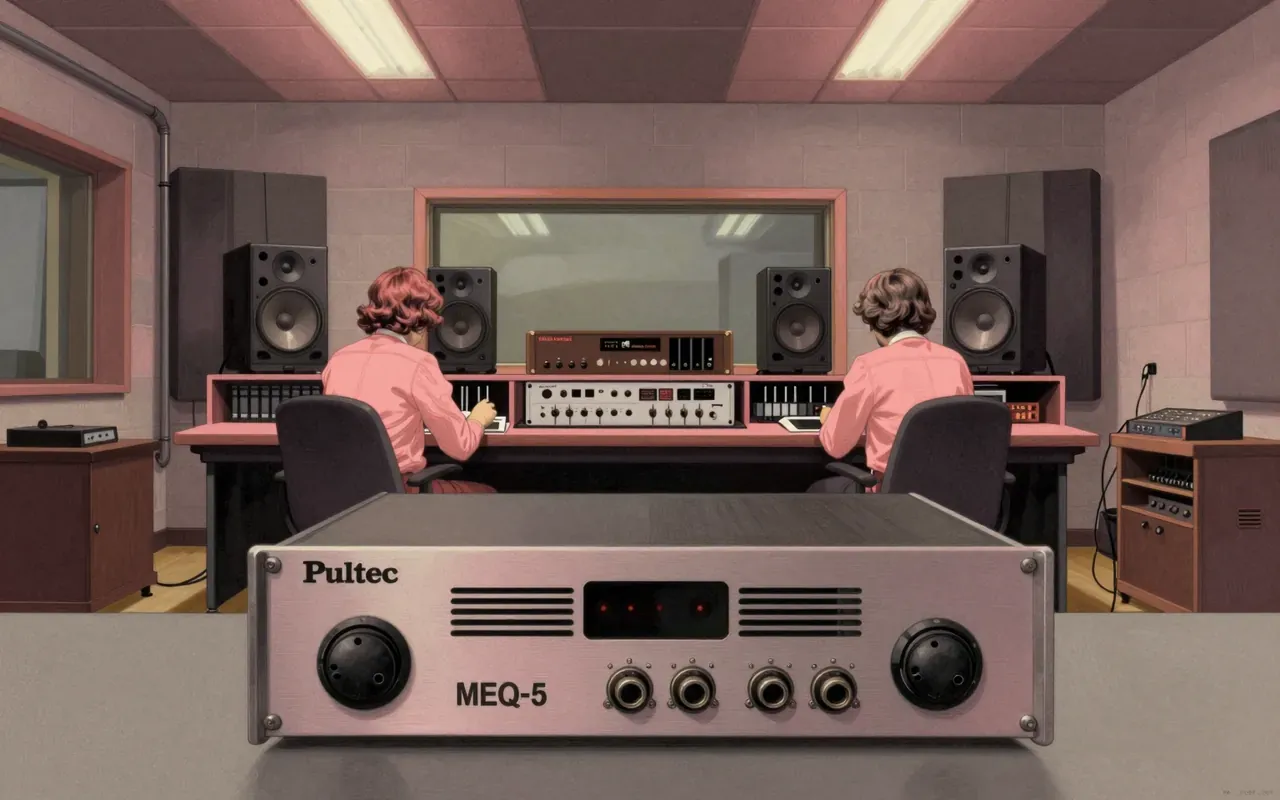
The Pultec MEQ-5 is a clean, transparent, three-band analog EQ. It occupies two rack spaces. Each band uses a frequency switch and a gain knob. It covers nearly the full frequency spectrum. It alters sound cleanly—nothing more, nothing less.

9:00

Roland MSQ-700

Roland

The Roland MSQ-700 is an 8-track MIDI sequencer with lithium battery-backed memory, step-time and real-time recording, punch-in, merge, quantization, chaining, and analog tape sync. It stores 6500 notes per track. It has no screen, no file export, no velocity editing, and no USB.

10:16

Otari MTR-12

Otari

The Otari MTR12 is an analog multitrack recorder. No technical specifications exist for it. That absence defines its utility — or lack thereof.

9:14

Yamaha NS-10M

Yamaha

The Yamaha NS-10M is a two-way passive near-field monitor. It delivers clear mid and high frequencies but lacks deep low-end extension. Engineers use it to verify mix translation and to A/B compare with other speakers. Its non-neutral response demands experience. It is not a full-range solution.

8:20

Eventide Omnipressor 2830

Eventide

The Eventide Omnipressor 2830 Au is a studio compressor. No technical specifications are available. It belongs to the studio compressors category.

8:43

Tascam Portastudio 244

Tascam

The Tascam Portastudio 244 is a 1984 four-track cassette recorder. It gives immediate, portable multitrack recording with EQ, gain, and switchable input impedance per track. DBX noise reduction works. Analog saturation stays musical. But signal degrades horribly at each bounce. Cassette transport is fragile. Preamps sound thin and harsh. No phantom power. Unbalanced inputs only. It was bought in Paris in 1984 for nearly 5,000 francs.

7:10

Tascam Portastudio 246

Tascam

The Tascam Portastudio 246 is an analog multitrack-studio. No technical specifications exist for it. It belongs to the category of Analog Multitrack-studios.

9:08

Rupert Neve Designs Portico 5033

Rupert Neve Designs

The Portico 5033 is a parametric EQ in Rupert Neve Designs’ Portico series. No technical specifications are published. It offers hands-on control but no documented performance metrics.

8:46

Rupert Neve Designs Portico 5043

Rupert Neve Designs

The Portico 5043 is a studio compressor in Rupert Neve Designs’ Portico series. It delivers consistent, source-agnostic compression with optional harmonic colouration. Its physical format undermines its rack-ready promise. It does not replace a dedicated clean limiter or a compact multi-channel solution — but it rarely needs replacing on a track once engaged.

9:41

Yamaha REV1

Yamaha

The Yamaha REV1 is a two-part digital reverb: a rack unit and a separate remote. It runs at 16-bit/44.1 kHz. It has one XLR input, two XLR outputs, external clock sync, and RS232 remote connectivity. Its sound is clear, clean, soft, and distinct from other Yamaha gear. Only the Lexicon 224 XL surpassed it in finesse among contemporaneous units.

9:59

Yamaha REV7

Yamaha

The Yamaha REV7 is a fixed-architecture digital reverb unit from 1985. It occupies two rack spaces. It offers four reverb types — hall, room, flat, and voice — plus chorus, flanger, phaser, tremolo, and delay. All effects layer over reverb. It has XLR and 1/4-inch audio connections and 5-pin DIN MIDI ports. It has no patch memory, no real-time MIDI parameter control, and no stereo-in/stereo-out routing.

8:54

Tannoy Reveal

Tannoy

The Tannoy Reveal is a discontinued passive monitor. It delivers dynamic, clear sound with surprising output for its size — but trades neutrality for listenability. Its low end fades before 65 Hz. Its stereo image depends on precise tweeter alignment. Magnetic shielding works flawlessly near screens. Users call it hi-fi, not monitoring — loudness-coloured, not flat.

7:49

Apogee Rosetta 800

Apogee

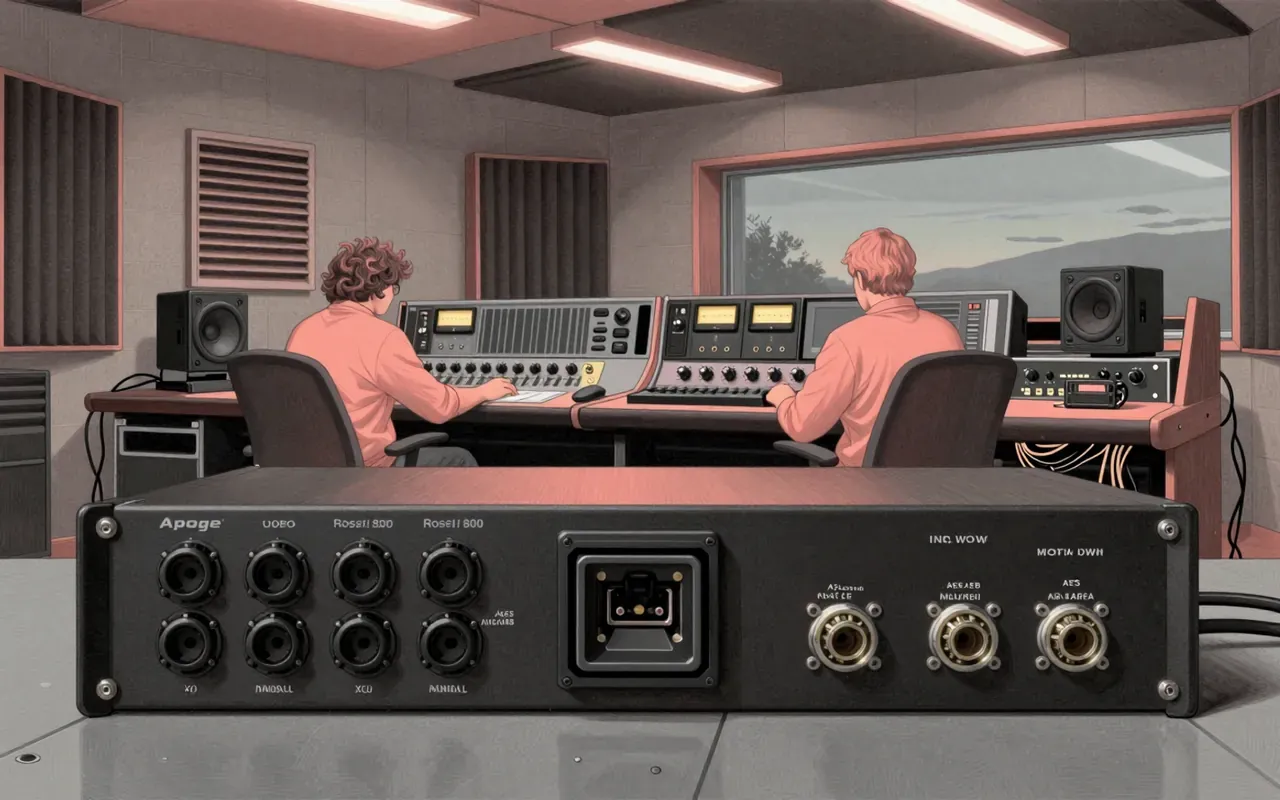
The Apogee Rosetta 800-192k is a rack-mountable analog-to-digital converter. It connects via rear-panel analog, ADAT, and AES. It serves Pro Tools HD systems. It runs at 48 kHz, 96 kHz, or 192 kHz. It produces a clean, transparent, smooth signal. It does not do D/A, preamp, or processing.

7:19

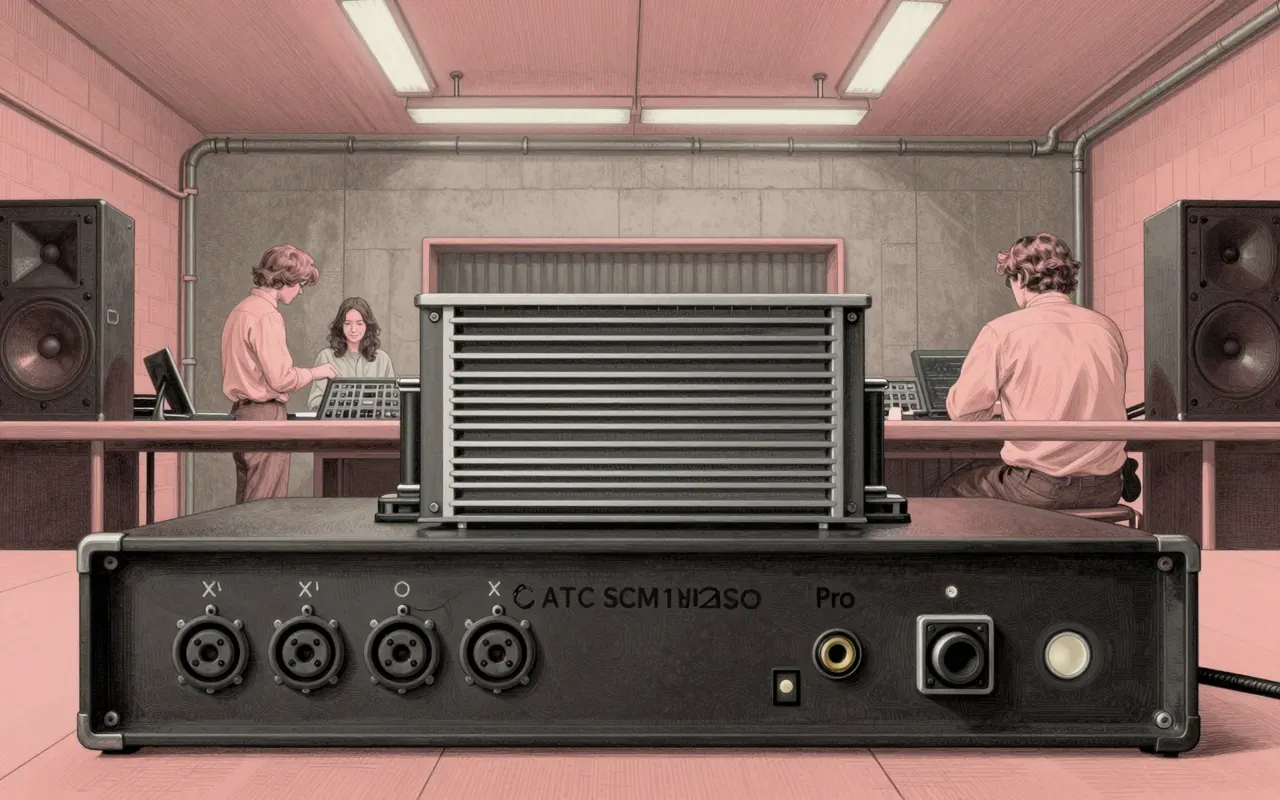
ATC SCM100

ATC

The ATC SCM100ASL Pro is an active studio monitor. No technical specifications are available. It requires no external amplifier. Its performance boundaries are undocumented.

7:53

ATC SCM50

ATC

The ATC SCM50 ASL is an active monitor with no published technical specifications. Nothing about its sound, construction, or performance is documented in the source material.

9:28

Roland SDE-1000

Roland

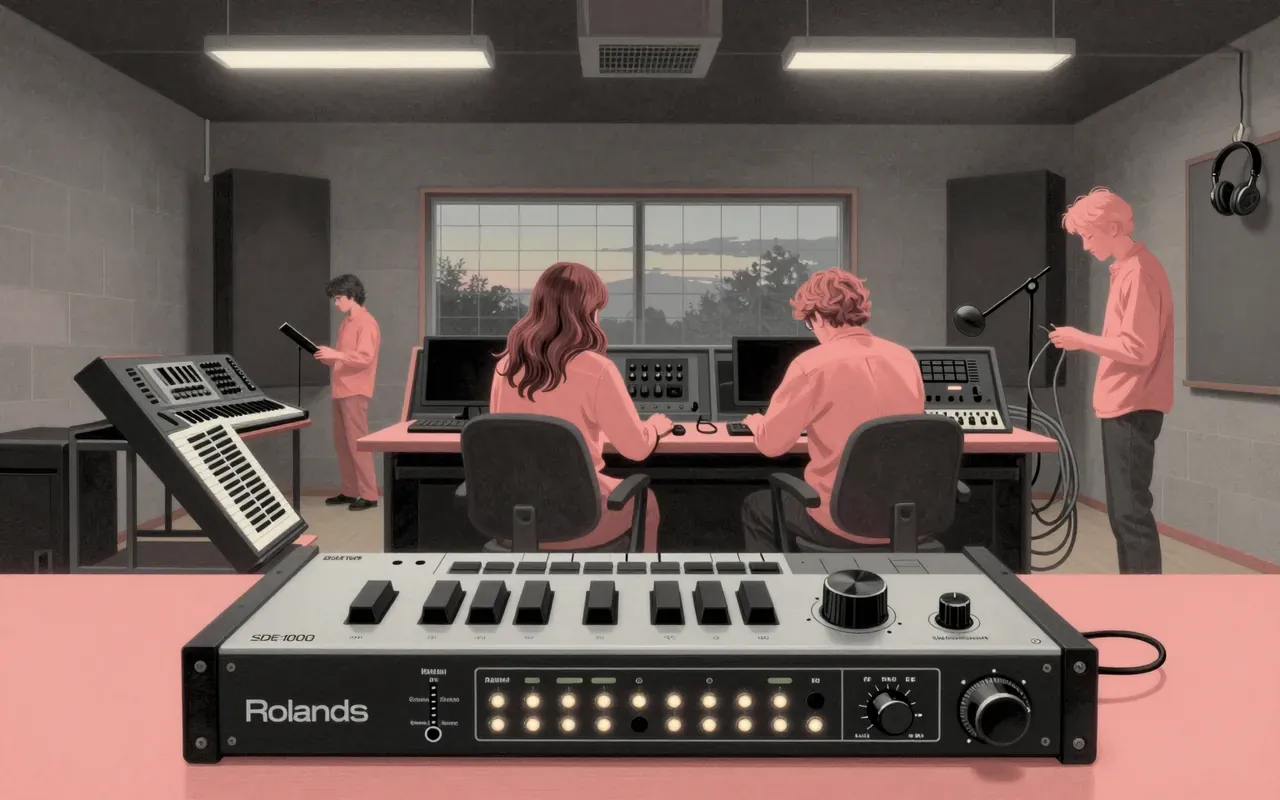
The Roland SDE-1000 is one of the first digital delay rack units. It delivers up to 1.5 seconds of breathless, crystal-clear delay. Four front-panel keys store delay time and on/off state. Modulation knobs do not memorise—but their activation does. A footswitch controls global on/off. It was bought in 1983 or 1984.

9:12

Roland SDE-3000

Roland

The Roland SDE-3000 is a mono digital delay unit introduced in 1984. It delivers up to 4500 ms of delay with 10 Hz–17 kHz frequency response and low distortion. It has wet/dry outputs, time loop, and TRS footswitch support. It is built for reliability, not versatility.

8:53

Yamaha SPX90

Yamaha

The Yamaha SPX90 is a 1985 digital multi-effects processor in a 1U rack. It offers discrete or combinable effects — reverb, echo, chorus, flanger, phaser, compression, pitch shifting, distortion, tremolo, and delay — but no concurrent processing. Audio is 12-bit, sampled at 31.25 kHz, with a maximum frequency response of 12 kHz. MIDI supports program recall only, not editing. Front-panel controls are simple and direct. It delivers character, not clarity.

8:22

Yamaha SPX900

Yamaha

The Yamaha SPX900 is a 1U digital multi-effects processor with analog-only I/O, 16-bit/44.1 kHz processing, and 99 fixed presets. It delivers studio-ready reverb, delay and modulation in a compact, MIDI-controllable package — but offers no digital connectivity and no on-the-fly parameter editing.

7:12

Neumann TLM 103

Neumann

The Neumann TLM 103 is a fixed cardioid condenser microphone. It delivers a full 20 Hz–20 kHz frequency response. It has no low-cut filter or pad. It does not include a shock mount. It ships in a wooden, padded box. Its output impedance is 50 ohms.

9:04

Neumann U 89

Neumann

The Neumann U 89 is a 1980 large-diaphragm condenser microphone built for versatility: five polar patterns via rotary switch, two fixed low-cut filters (80 Hz and 160 Hz), an attenuator, 140 dB SPL handling, and a neutral, less vivid tonal character than the U 87. It excels at distance capture and fits where bulkier mics cannot. It does not offer colouration, warmth or extended sub-bass response. No recordings or users are named in the source material.

8:43

Focusrite VoiceMaster Pro

Focusrite

The Focusrite VoiceMaster Pro is a vocal-optimised channel strip with a discrete Class A preamp, optical compressor, de-esser, and tube simulation. Its preamp is soft in the highs. Its compressor is transparent. Its EQ is functional but unmusical. All controls are front-panel only. It delivers what vocal tracking needs—not what mixing demands.

6:40

Neve VR

Neve

The Neve VR LEGEND 60 is confirmed only as an analog mixer. No technical specifications exist in the source material. Nothing is verified about its design, operation, application, or outcome.

7:28

AMS Neve 1073 DPA

AMS Neve

The AMS Neve 1073 DPA is a solid-state, pure class A, 2-channel preamp with DI, variable impedance, phantom power, and phase inversion — but no EQ, no insert, no flexibility beyond its fixed tonal signature. It gives you a clear, present midrange, smooth highs, and round, deep lows. It is not neutral. It is not modular. It is not subtle. It is specific.

9:26

Neve 33115

Neve

The Neve 33115 is a compact, broadcast-optimised channel strip built in Cambridge between 1974 and 1975. It uses the same class A preamp and EQ circuitry as the 1081 but drops the fourth EQ band and simplifies the layout. Its 300/1200 Ω input switch supports ribbons. It belongs in small consoles like the Melbourne and broadcast frames like the 5315 and 5316—not in large-format studio rigs.

8:46

Shure Beta 52

Shure

The Shure Beta 52 is a dynamic microphone built for kick drum and bass. It has a supercardioid pattern, 20Hz–10kHz response with 4kHz presence boost, strong proximity effect, and handles 174dB SPL. It was replaced by the Beta 52A.

8:17

AKG C12

AKG

The AKG C12 is a large diaphragm condenser tube microphone designed for studio recording. It requires a dedicated power supply. It captures a wide frequency range. It is exceptionally high-performing but delicate and unsuitable for live use.

7:32

Sony C37A

Sony

The Sony C37A is a large diaphragm condenser tube microphone. It belongs to a narrow class of studio mics defined by harmonic colour rather than flexibility. It has no documented switches, filters or pads. Its alternate names — 'c 37a' and 'c37 a' — appear in official listings but indicate no functional variation.

9:24

AKG C451

AKG

The AKG C451 B is a fixed-cardioid small-diaphragm condenser with -10 dB/-20 dB pads and 75 Hz/150 Hz high-pass filters. Its CK1 capsule cannot be swapped. It delivers precision on acoustic sources but fails under high SPLs due to capsule fragility.

8:41

AKG C452

AKG

The AKG C452 C is a small diaphragm condenser microphone. It has no stated controls, no pattern options, no filters, no pad. Its function is narrow and fixed. Its value lies in consistency, not versatility.

8:44

AKG C460

AKG

The AKG C460B + CK63ULS is a small diaphragm condenser microphone. It delivers accuracy, not attitude. It has no switches, no colour, no compromise — just a fixed cardioid pattern, fixed frequency response, and fixed reliance on external preamp and placement. It excels where definition matters most. It fails where character is required.

8:44

AKG D112

AKG

The AKG D112 MkII is a dynamic microphone built for one purpose: capturing kick drum impact. It is heavier than many mics (778 g), requires no power, and belongs to the same lineage as the original D112 — updated, not reinvented. It excels where low-end punch and SPL tolerance matter most. It fails where clarity, air, or transient fidelity are required. It is not a vocal mic. Not a room mic. Not a hi-hat mic. It is a kick drum mic — and nothing more.

7:30

AKG D19

AKG

The AKG D19 B200 is a dynamic microphone. No technical specifications are available. It cannot be evaluated against alternatives. It offers no documented advantage. It provides no actionable information to a user.

7:07

AKG D202

AKG

The AKG d202 is a dynamic microphone. That is all the material confirms. No specs. No year. No use cases. Just its category and its $299 price.

9:12

Telefunken ELA M 251

Telefunken

The Telefunken ELA M 251 is a large diaphragm condenser tube microphone made by Telefunken Elektroakustik. It belongs to the category of large diaphragm condenser tube microphones. Nothing else is verified.

8:52

Focusrite ISA 110

Focusrite

The Focusrite ISA 110 is a discontinued solid-state microphone preamplifier. It belongs to Focusrite’s ISA series. It was replaced by the ISA 430 MKII. It is no longer sold.

9:09

Neumann KM 56

Neumann

The Neumann KM 56 is a small diaphragm condenser microphone in the KM series. It belongs to the category of small diaphragm condenser microphones. It is also referred to as ‘km 56’ or ‘km56’. No technical specifications are provided.

9:19

Neumann M 269

Neumann

The Neumann M269 is a large diaphragm condenser tube microphone made by Neumann. It is listed under that category. It is also called 'm269' or 'm 269'. No technical specifications are available. Nothing is stated about its use, sound, controls, or history.

7:27

Beyerdynamic M 88

Beyerdynamic

The Beyerdynamic M 88 TG - 90 years edition is a discontinued dynamic microphone. It has been replaced by the M 88 TG. It is no longer sold.

8:34

Sennheiser MD 21

Sennheiser

The Sennheiser MD 21 is a dynamic omnidirectional proximity microphone built for TV and film sound. It excels where other mics fail: under physical stress, in loud environments, and with aggressive vocal delivery. It gives warmth and intelligibility without colouring consonants. It offers no directionality, no pad, no filter — just durability and clarity. It belongs on stage, on set, and in the hands of performers who move while they speak.

8:54

Rupert Neve Designs Portico 5012

Rupert Neve Designs

The Portico 5012 is a solid-state mic preamp with intuitive gain staging and a subjective Silk function that transforms its clean base tone into something euphoric — but unpredictable.

8:33

Royer R-121

Royer

The Royer R-121 is a studio-only ribbon microphone. It delivers fast, flat, high-SPL capture — but offers zero user controls, zero ruggedness, and zero tolerance for phantom power. It belongs where the environment is controlled and the source is loud.

10:00

Mesa/Boogie Rectifier Recording Preamp

Mesa/Boogie

The Mesa Boogie Rectifier Recording Preamp is a 2U rack-mount tube preamp with two channels and six voicings. It prioritises high-output direct recording but includes I/O for live use. Its six 12AX7 tubes deliver raw gain capable of overdriving mixers. It lacks speaker emulation and falls short when compared to miked cabinet tone.

8:34

Manley SLAM!

Manley

The Manley SLAM! is a stereo microphone preamp and limiter. It uses lamp-based preamplification and two analog limiting circuits — optical (ELOP) and FET — in a fixed signal path. It mounts in 2U of rack space. It does not offer variable routing, metering, or sidechain control.

11:02

Neumann TLM 170

Neumann

The Neumann TLM 170 is a discontinued large-diaphragm condenser microphone built solely for studio recording. It offers five polar patterns, a -10 dB pad, and a low-cut switch. It ships with a swivel mount and supports U87-style suspension. It fails in live performance. No recordings, artists or sessions are documented in the source material.

7:18

Neve 2254

Neve

The Neve 2254 is an all-analog compressor/limiter from the late 1960s, revived as the 2254-R with identical circuitry and only a new casing. It delivers thick, heavy compression — especially on vocals — via straightforward controls: ratio, attack, recovery, limit level, gain makeup and mode. Its unique meter and lack of digital elements make it tactile and immediate. It offers no stereo linking, no variable knee, no recall — just weight, simplicity and a singular sonic character.

8:26

Neve 31102

Neve

The Neve 31102 is a UAD-exclusive software graphic EQ. It has no published technical specifications. It offers fixed-band EQ only. It requires UAD hardware to run. It makes no claim to model any specific Neve hardware circuit.

7:02

Neve 8058

Neve

The Neve 8058 is a 24-channel analog mixer with 31102 preamps (essentially 1084s), semi-parametric EQ per channel, and 16 buses. It has no automation. Its sound is full, deep and low-mid-rich — a deliberate, non-neutral colouration.

8:04

Neve 8068

Neve

The Neve 8068 is a 1970s large-format analog console with 32 fully equipped channel strips—24 on the left, 8 on the right—each featuring a mic preamp, parametric EQ in the standard Neve style, and routing options. Its sound is defined by strong low-mid response and a balance of clarity and warmth. It is exceptionally difficult for beginners but familiar to experienced Neve users.

9:23

SSL 9000 K

SSL

The SSL 9000 K is an analog mixer. That is all the sources confirm. It belongs to the category of analog mixers. Nothing more is verified.

8:52

AMS AMS RMX16

AMS

The AMS RMX16 is a UAD-only reverb plug-in. It requires UA hardware. It costs $349. It arrived in UA Software 1.7. It gives one sound — nothing more.

9:51

API API Vision

API

The API Vision Console Emulation Bundle is a UAD plug-in channel strip made by Universal Audio. It requires UAD hardware to run. It offers no standalone operation, no technical specs in the source material, and no evidence of real-world usage examples. Its value is strictly conditional on existing UAD ownership and desire for API’s sonic signature in digital form.

8:05

Neve BCM10

Neve

The Neve BCM10/2 Mk2 is an analog mixer made by AMS-Neve. No technical specifications are available. Nothing else is verified.

8:04

Neve Capricorn

Neve

The AMS-Neve Capricorn is a digital mixer. That is all the source confirms. No specifications. No year. No sound. No interface description. No user reports. No cultural footprint. It exists only as a category entry.

9:18

Farfisa Compact

Farfisa

The JB Systems Compact is a no-nonsense 3-channel DJ mixer from 2008. It delivers reliable talk-over, basic EQ, and straightforward monitoring — all at entry-level cost and fidelity. It does not pretend to be more.

8:11

Chandler Limited Curve Bender

Chandler Limited

The Curve Bender is a software parametric EQ made by Softube. It costs $299 including VAT. It does not claim to be hardware. It does not add dynamics, M/S, or analysis. It does one thing: shape tone with four bands, modelled on Chandler’s approach.

9:17

Pioneer DJM-1000

Pioneer

The Pioneer DJM-1000 is a rack-mountable 4+ channel DJ mixer with two master outputs and one booth output sharing a single volume control. It has no built-in effects. Its equalizer is low quality and offers parametric control only on mic channels. Its preamps and potentiometers are poor. Its output level of 2V + 6dB causes distortion across frequency ranges.

7:52

Pioneer DJM-500

Pioneer

The Pioneer DJM-500 is a 4-channel DJ mixer with RCA, 1/4" jack and XLR connectors. Its EQ is adequate. Its effects section is limited but sufficient. It can be rack-mounted—with a modification. Some users doubt its rack-mountability. Its signal path is transparent. Its build invites daily use—but demands maintenance as it ages.

7:20

Pioneer DJM-600

Pioneer

The Pioneer DJM-600 is a 4-channel analog DJ mixer with RCA and XLR I/O, non-parametric EQ, integrated non-automatable effects, no sync capability, and clean, distortion-free sound — though perceived as dated by 2010. It is widely used in clubs and praised for reliability, intuitive layout, and ease of installation.

9:35

Pioneer DJM-800

Pioneer

The Pioneer DJM-800 is a 4-channel, 96 kHz / 24-bit digital mixer designed for live DJ performance. It delivers tight, immediate control over EQ, beat effects (Roll, Reverse Delay, Filter), and harmonic effects (Sweep, Crush). Its 61 assignable MIDI/HID controls integrate hardware and software without abstraction. But it offers no resonance adjustment on its filter effect, and headphone monitoring routing is rigid.

8:21

Pioneer DJM-909

Pioneer

The Pioneer DJM-909 is a 2-channel DJ mixer built for live blending, EQ, and effects. It has no published technical specifications. Pioneer manufactured it. User reviews highlight transparency and effective equalization—but give no data on filter slope, latency, or headroom. It does not integrate with software or offer recallable settings. It belongs in a booth, not a studio rack.

8:37

BSS DPR-402

BSS

The Waves BSS DPR-402 is a plugin rendition of a hardware dynamics processor. It is categorised as an 'other effects bundle or multi-effect'. No technical details are given. No usage examples are cited. It exists as software, not circuitry.

8:13

EMT EMT 250

EMT

The EMT 250 was the first digital reverberation device to create ambience through a purely electronic system. The Universal Audio plug-in models that hardware exactly — including its single reverb program, five additional effects (Delay, Phasing, Chorus, Echo, Space), lever-driven interface and all its limitations: non-linear-phase anti-aliasing filters, system latency, input clipping and limited frequency response. It uses the exact same algorithm as the original, captured from Allen Sides’ unit and re-engineered by Dr. Barry Blesser.

7:37

Sennheiser HD 600

Sennheiser

The Sennheiser HD 600 is a studio-grade open-back headphone. It delivers an even frequency response. It renders acoustic instruments realistically across the full spectrum. Its highs are clear and crisp without harshness. Its lows are detailed and clear without overpowering. It was tested against the HD650, HD700, and HD800 using a decent D/A converter and a good headphone amplifier. It is used for mixing and mastering in professional and home studios. It requires capable amplification. It offers no sound isolation.

9:04

Lexicon Lexicon 224

Lexicon

The Universal Audio Lexicon 224 Digital Reverb is a UAD plug-in that models the 1978 hardware unit using its exact algorithms, firmware version 4.4, input transformers, and 12-bit AD/DA gain stepping converters. It exposes all eight reverb programs and every tunable parameter as dedicated fader-style controls. It adds Input/Output gain, Pitch Shift, and a selectable Bug Fix mode. It belongs to the UAD Plug-In series and is categorised as a software algorithmic reverb.

9:56

Manley Massive Passive

Manley

The Manley Massive Passive is a stereo, all-tube, passive parametric EQ. It occupies four rack spaces. It runs hot. It has four bands per channel plus high-pass and low-pass filters. It does not boost or cut actively — tubes restore level after passive attenuation. It is built for stereo bus and mastering, not surgical channel work.

6:22

Ampex MM-1000

Ampex

The Gemini DJ MM-1000 is a 3-channel analogue mixer. It offers no EQ, no effects, no headphone output, no crossfader, and no cueing. It exists only to sum three line-level signals and send them to one output. Its value lies entirely in its simplicity and reliability — not in versatility or sonic character.

8:19

Rane MP2016

Rane

The Rane MP2016 is a 3U rack-mount DJ mixer with six inputs — four phono/line, two mic/line — each with bass/mid/treble and gain. Master/House and Booth outputs each have a 3-band EQ. It delivers crystal-clear sound with no noise or bleed. It has no built-in effects.

9:14

Vestax PMC-25

Vestax

The Vestax PMC-25 is a 2-channel DJ mixer designed for house music. It is 3U tall and rack mountable. It features PGM vs. Master LED VU metering, split cue, a third cueable aux input, and EQ kill switches implemented as mini faders to avoid clicks and achieve -85 dB attenuation. The crossfader has a fixed curve. Faders and crossfader are replaceable. Sound quality is perceived as superior to a cheap Numark mixer.

8:16

Eventide SP2016

Eventide

The Eventide SP2016 Reverb plug-in is a faithful software recreation of the 1982 hardware unit. It gives users six algorithmic reverbs — Room, Stereo Room, and Hi-Density Plate, each in Vintage and Modern variants — with authentic early reflections, evolving echo density, and smooth decay. It prioritises immediacy and character over flexibility or physical accuracy.

10:17

SPL Transient Designer

SPL

The SPL Transient Designer is a plug-in that reshapes sound by directly manipulating attack and decay — not through compression or gating, but via level-independent envelope control. It excels at tightening, lifting, or taming transients across full-bandwidth sources, but offers no frequency selectivity or threshold-based dynamics. It belongs on drum busses, room mics, and bass tracks — not on vocals needing surgical sibilance control or synths needing dynamic layering.

7:52

Rane TTM 56

Rane

The Rane TTM 56 is a 2-channel DJ performance mixer. It uses magnetic faders impervious to smoke or moisture. Its EQ cuts frequencies completely. It produces no fader bleed or swipe sounds. Its signal-to-noise ratio is outstanding. It has adjustable fader contour and inversion. It has an integrated effects loop with dry/wet control.

8:10

Neve V Series

Neve

The Waves V-Series is an effects bundle with no published technical details. It offers no verifiable functionality, no documented use cases, and no basis for evaluation beyond its category label.

9:22

SPL Vitalizer

SPL

The SPL Stereo Vitalizer MK2 is a hands-on exciter that trades surgical control for immediate sonic uplift — sharpening treble, rounding bass, widening stereo image, and adding air. Its strength is cohesion, not correction.

8:26

Allen & Heath Xone:62

Allen & Heath

The Allen & Heath Xone:62 (Old Design) is a rack-mountable analog DJ mixer with twelve inputs, six channels, four balanced XLR outputs, per-channel analog high-pass/band-pass/low-pass filters, six channel sends, a four-band EQ whose knobs do not fully cut the signal, and a crossfader that does not fully cut the signal.

9:44

Allen & Heath Xone:92

Allen & Heath

The Allen & Heath Xone:92 (Old Design) is a discontinued 4+ channel DJ mixer. It features dual voltage-controlled filters and low-frequency oscillators. You assign either filter to any channel using switches — including to the cross fader. A tap button sets LFO speed to match tempo or lock in a custom rate. It includes a semi-parametric equalizer. Rackmount is optional. It was replaced by the Xone:92 MK2. It is no longer sold.

8:17

Allen & Heath Xone:V6

Allen & Heath

The Xone:V6 is a 4+ channel analogue DJ mixer from Allen & Heath. It routes four main sources plus an effects return. It has no digital features, no software, no built-in effects. It delivers clean, hands-on control—nothing more, nothing less.

9:24

TC Electronic 2290 P Dynamic Digital Delay

TC Electronic

The TC Electronic 2290 P Dynamic Digital Delay is a guitar-focused delay, echo, and phrase sampler. No technical specifications are available. Its package weight is 1.7 kg. Nothing else is verified.

9:17

Elektron Analog Rytm

Elektron

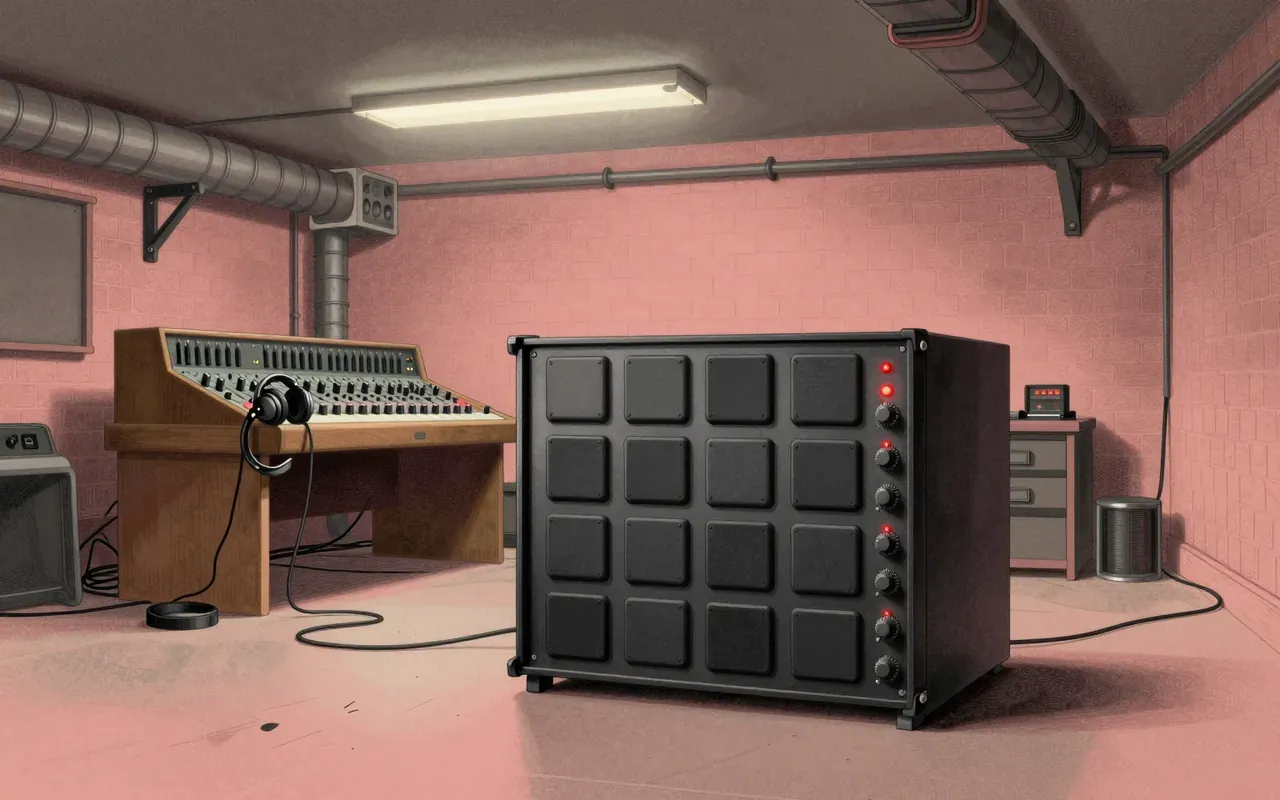
The Analog Rytm is a true analog drum synth. It gives each voice its own engine, up to six oscillators, and a 16-step sequencer. Its pads are velocity-sensitive but small. It enables radical timbral shifts across voices with minimal changes. It falls short on pad ergonomics, stereo per voice, and external audio input. It belongs in the studio of a sound designer—not a live beatmaker.

8:44

Ensoniq DP/4

Ensoniq

The Ensoniq DP/4 is a rack-mounted digital multi-effects processor. It uses four 24-bit DSPs to process four signals in parallel. Input gain is adjustable for saturation. Effects are intentionally non-realistic. Transformer noise occurs when idle. Front-panel editing is cumbersome. MIDI control via MIDIQuest is unreliable. The manual is unusable. An internal battery is user-replaceable.

9:22

Make Noise DPO

Make Noise

The Make Noise DPO is a dual-oscillator Eurorack VCO built for FM synthesis and wavefolding. It produces deep, rich FM-type sounds using its dedicated wavefolder section. Its output is clean and cold—not Moog-style warm. It has no built-in LFO, envelope, or quantizer. It is not a full voice module. It is a precision tool for FM texture generation.

10:18

Eventide DSP4000

Eventide

The Eventide DSP4000 is a discontinued multi-effects processor. It converts at 18 bits. It includes pitch shifting, reverb, and compression. Its effects span from subtle to cataclysmic. Learning it requires time and the manual.

9:38

E-mu Systems E4XT Ultra

E-mu Systems

The E-MU E4XT Ultra is a 1999 hardware sampler. It delivers verbatim audio playback, 128-voice polyphony, and studio-grade reliability. It has no onboard effects, shallow editing, and fixed storage. It belongs in a rack—not a laptop bag.

8:40

E-mu Systems E6400

E-mu Systems

The E-mu Systems E6400 is a hardware sampler built for radical sample transformation — not faithful reproduction. Its strength is in routing: the modulation matrix and modular-style processing blocks (quantize, flipflop, diode, lag) let users rewire signal flow in ways few samplers allowed. Its SCSI support exceeds its 9GB spec — users ran 18GB drives. Its DACs are transparent; its ADCs are not. It includes Z-plane, formant, phaser, flanger, Doppler, bitreducer and Convolver tools — and its reverb uses impulse response sampling. It ships with EOS 3.00b and 1MB CPU RAM. It is for sound designers who treat samples as raw material to be corrupted, rerouted and convolved — not archived.

7:37

Oberheim/Gibson Echoplex Digital Pro

Oberheim/Gibson

The Oberheim/Gibson Echoplex Digital Pro is a 1994 hardware looper built for live performance. It records 16-bit/44.1kHz audio to RAM, ships with 50 seconds of memory (expandable to 200), supports unlimited overdubs per loop, stores up to nine loops, and offers MIDI sync, reverse looping, and multiplay. It has no filtering, time stretching, pitch shifting, stereo effects, or resampling.

8:43

Korg Electribe ER-1

Korg

The Korg Electribe ER-1 is an affordable analogue beat unit. It gives bangs, buzzes, blips and spacey weird noises via four synth keys and four sampled percussion sounds. It saves up to 256 patterns, each up to 4 measures. Real-time changes — like jungle delayed drums or scratching sounds — save instantly. Its PCM sounds (Hclap, HiHat, Crash) are uninteresting. It connects via MIDI in/out/thru. Its housing is plastic.

8:10

Korg Electribe ES-1

Korg

The Korg Electribe ES-1 is a sampling sequencer built for live beat construction and loop manipulation.

8:42

Korg Electribe SX ESX-1

Korg

The Korg Electribe SX (ESX-1) is a 2003 sample-based groovebox built for dance music production and live performance. It uses sample-based sound creation to generate 16 assignable parts—including nine one-shot drum parts, two keyboard parts for melodic playback, two stretch parts for tempo-adjusted loops, one slice part for rhythmic phrase division, one audio-in part, and one drum accent part. It ships with 196 preloaded samples, 128 factory patterns, and 3 demo songs. A major upgrade over earlier ElecTribe models, it offers 285 seconds of sample memory at 44.1kHz for up to 384 user samples, slicing at rhythmic peaks, Motion Sequencing for real-time parameter automation, and three stereo effects processors with chaining.

9:01

E-mu Systems Emulator III

E-mu Systems

The E-mu Emulator III is a 1987 digital sound production system. It was E-mu's biggest and most professional sampler-synthesizer before the 1990s. It was the first sampler to offer 16-bit, 44.1 kHz stereo or mono sampling. RAM is 4 MB expandable to 8 MB. It includes extensive sample editing features including looping and rate conversions. Its on-board 16-track sequencer and arpeggiator are superb. It is equipped with MIDI, SMPTE, SCSI, a built-in disk drive, and multiple outputs. A Macintosh can be hooked up for graphical editing because the LED screen is so tiny.

8:48

E-mu Systems ESI-32

E-mu Systems

The E-mu ESI-32 is a 1994 16-bit desktop sampler. It delivers 32-voice polyphony, stereo sampling at 22.05 or 44.1 kHz, and real-time editing including Doppler, exciter, and transform multiply. Base RAM is 2 MB—11 seconds at 44.1 kHz stereo—but expands to 32 MB (six minutes). Auto-looping, auto-truncate, and auto key placement streamline sampling. It requires SCSI peripherals and Turbo Expansion for digital I/O and extra effects. It does not support variable sampling rates, higher bit depths, or modern connectivity out of the box.

8:49

Eventide H949 Harmonizer

Eventide

The Eventide H949 Harmonizer is a pitch shifter and time stretcher. It has no published technical specifications. It is also known as H949Harmonizer, H 949 Harmonizer, and H 949Harmonizer.

11:18

Kurzweil K2600

Kurzweil

The Kurzweil K2600 is a 1999 workstation built for deep sound engineering — not quick playing. It uses V.A.S.T. synthesis with 60 DSP functions and 438 presets. It holds 12MB of sample ROM (expandable to 44MB) and 64MB of sampling RAM (expandable to 128MB). Its 32-track sequencer supports pattern, linear, and step recording, plus advanced editing. It processes external signals in real time via ADAT, TDIF, and AES/EBU — with any parameter modulating the input and 20-bit digital output. It falls short on immediacy, tactile control, and workflow clarity. It belongs in a fixed studio, not on stage or in a laptop bag.

7:54

Leslie Leslie 122

Leslie

The Leslie 122 is a rotating speaker cabinet designed for organs—not a preamp, not an effects unit, not a standalone amplifier. Its entire function depends on connection to a compatible organ like the Hammond M3. It offers no user controls. Its effect is purely mechanical: rotation creates tremolo and vibrato through air displacement. It cannot be used without modification for guitar or other instruments. It belongs only where an organ lives—and nowhere else.

10:20

Neumann M 50

Neumann

The Korg M50 61 is a 2008 sampling workstation built for real-time layering and editing. It delivers 80-voice polyphony, 1077 samples across 608 editable programs, and up to 896 combinations — all controlled via an angled panel and full-size TouchView interface. It includes one GM2-compatible sound bank. It was reviewed as industry-ready but criticised for weak electro/lead sounds and lack of built-in sampler compared to the M3.

10:41

Elektron Machinedrum SPS-1

Elektron

The Machinedrum SPS-1 gives you four distinct drum synthesis methods—TR emulation, FM, SP1200/Simmons sampling, and acoustic physical modelling—all editable per voice with multimode filtering, distortion, and sample-rate reduction. Its Extended sequencer stores kits and tweaks across complex patterns; Classic mode abandons both. It delivers unmatched hybrid control—but demands patience, not immediacy.

9:13

Oberheim Matrix-1000

Oberheim

The Oberheim Matrix-1000 is a 1987 rackmount analog synthesizer. It contains 1,000 Matrix 6 patches. Each voice has two DCOs, one low-pass filter, two VCAs, three envelope generators, two LFOs and two ramp generators. Editing requires external MIDI tools. It is optimised for pads, textures and ambient sound design.

10:56

Akai MPC1000

Akai

The MPC1000 delivers the MPC workflow in a smaller, cheaper, more portable form. It adds six outputs, built-in effects, and memory expansion over the MPC2000 — while storing samples as WAV and sequences as MIDI on CompactFlash. Build quality is reduced, but sound quality is preserved. It is a sampling and sequencing instrument — not a synth, not a DAW, not a controller.

10:25

Akai MPC2500

Akai

The MPC2500 upgrades the MPC2000 with 16-bit/44.1 kHz sampling, individually adjustable pad sensitivity, and the Grid editor — but keeps 64-track sequencing, 32-voice polyphony, and no automated effects sends.

10:05

Akai MPC4000

Akai

The Akai MPC4000 is a 2002 hardware sampler sequencer built to lead the hardware sampler category. It has 16 velocity- and pressure-sensitive pads. It performs 96 kHz 24-bit sampling. It has 16 MB of sampling memory, upgradeable to 512 MB. It includes IDE bays for installing an internal hard disk drive and CD-ROM drive. It supports optional plug-in boards including Effects, ADAT, S/P-DIF & wordclock, and 8 analogue outputs boards. It has 2 MIDI inputs and 4 MIDI outputs. It was released in 2002 with the intent to lead hardware samplers.

9:39

Akai MPC500

Akai

The MPC500 is Akai’s entry-level sampling sequencer—a portable, self-contained beat-making station built for quick capture, arrangement, and performance.

8:50

Korg MS-50

Korg

The Korg MS-50 is a 1978 keyboard-less analog expander module. It has one VCO, two VCFs (highpass and lowpass), two ADSRs, an LFO, pink and white noise, ring modulator, voltmeter, and sample & hold. It uses Hz/V CV/Gate control and was designed to complement the SQ-10 sequencer.

9:10

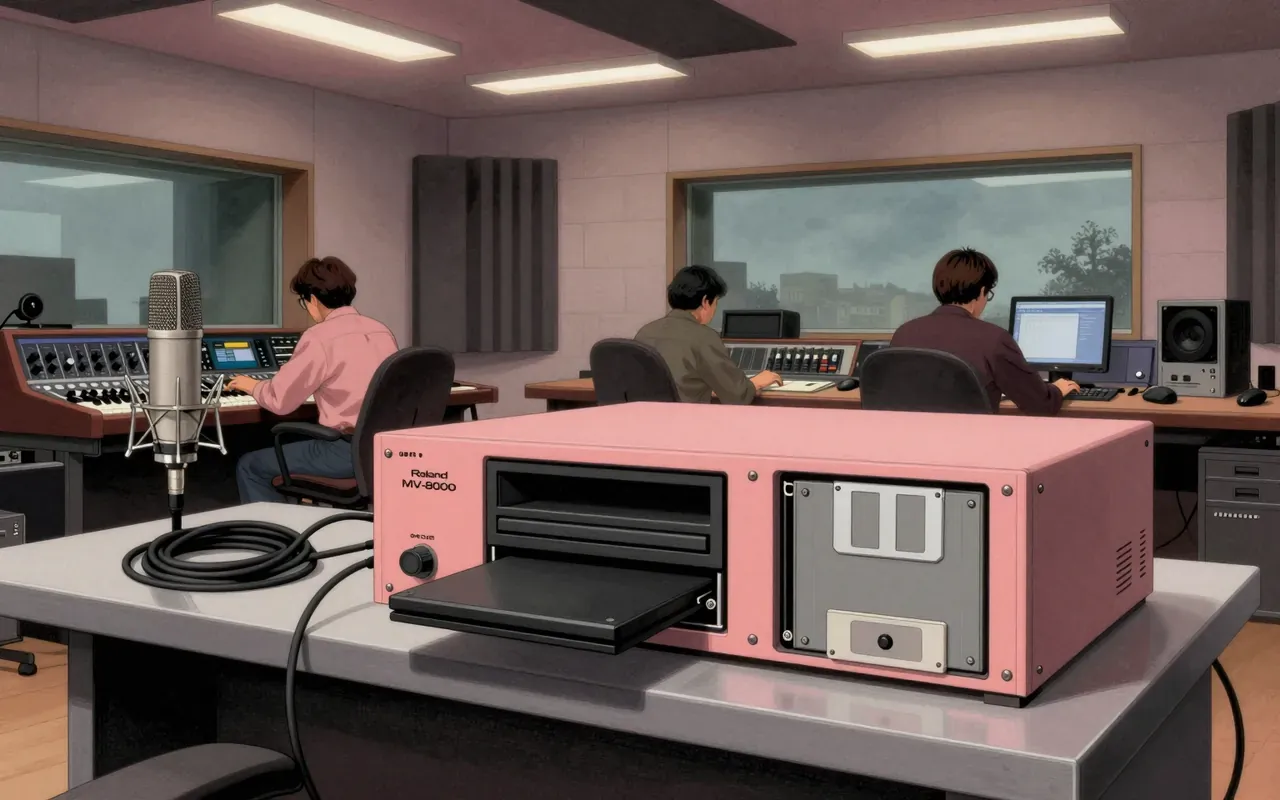
Roland MV-8000

Roland

The Roland MV-8000 is a 2004 sampling sequencer built for producers who want to record, edit, sequence, and master full tracks without a computer.

10:47

Roland MV-8800

Roland

The Roland MV-8800 is a sampling sequencer. It hosts VSTs internally. It requires external video monitoring. It accepts a USB mouse. It is complex. Its hard drive is slow. Its manual is poor. One user tested it for three hours in a retail store and found it capable of handling many music production tasks.

8:12

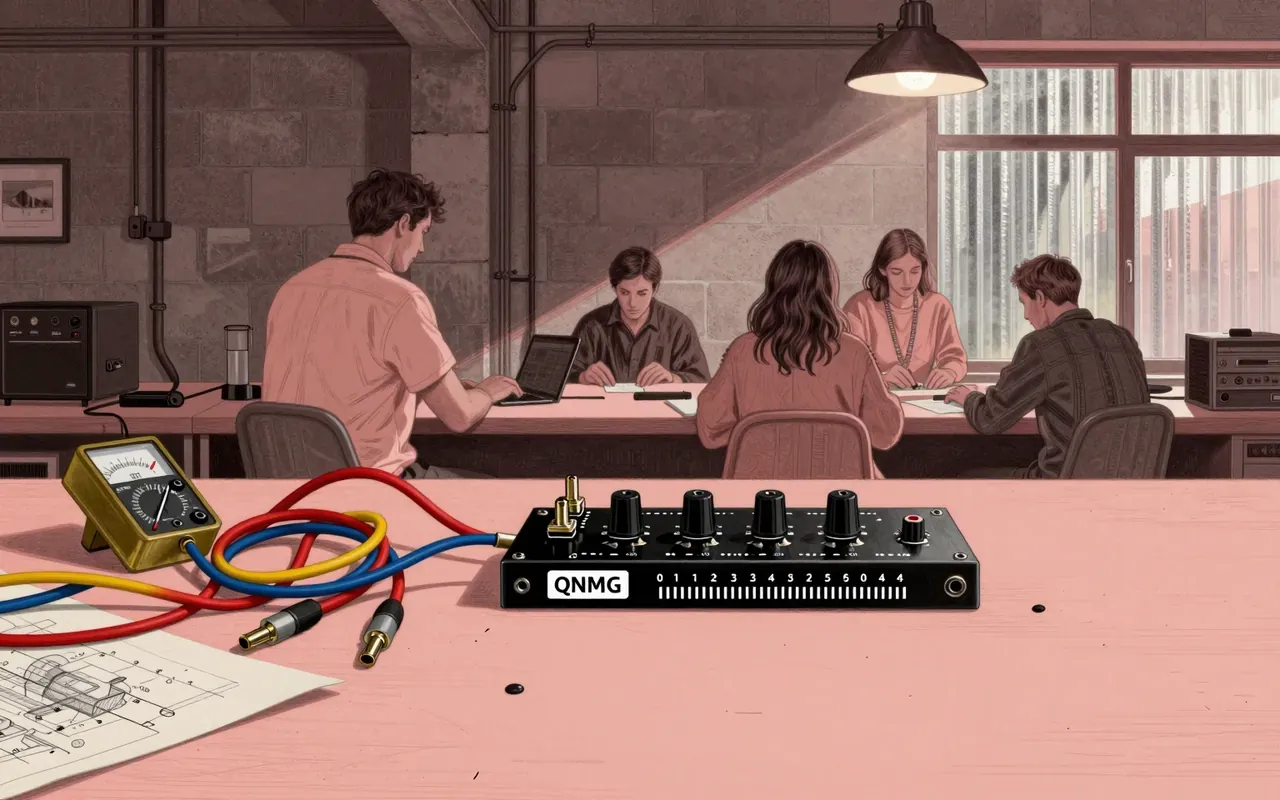
Make Noise QMMG

Make Noise

The QMMG is a filter module for modular synthesizers. That is all the sources confirm. It is made by Make Noise. It belongs in the category 'Filter modules for modular synthesizers'. Nothing else is verified.

9:55

Roland R-70

Roland

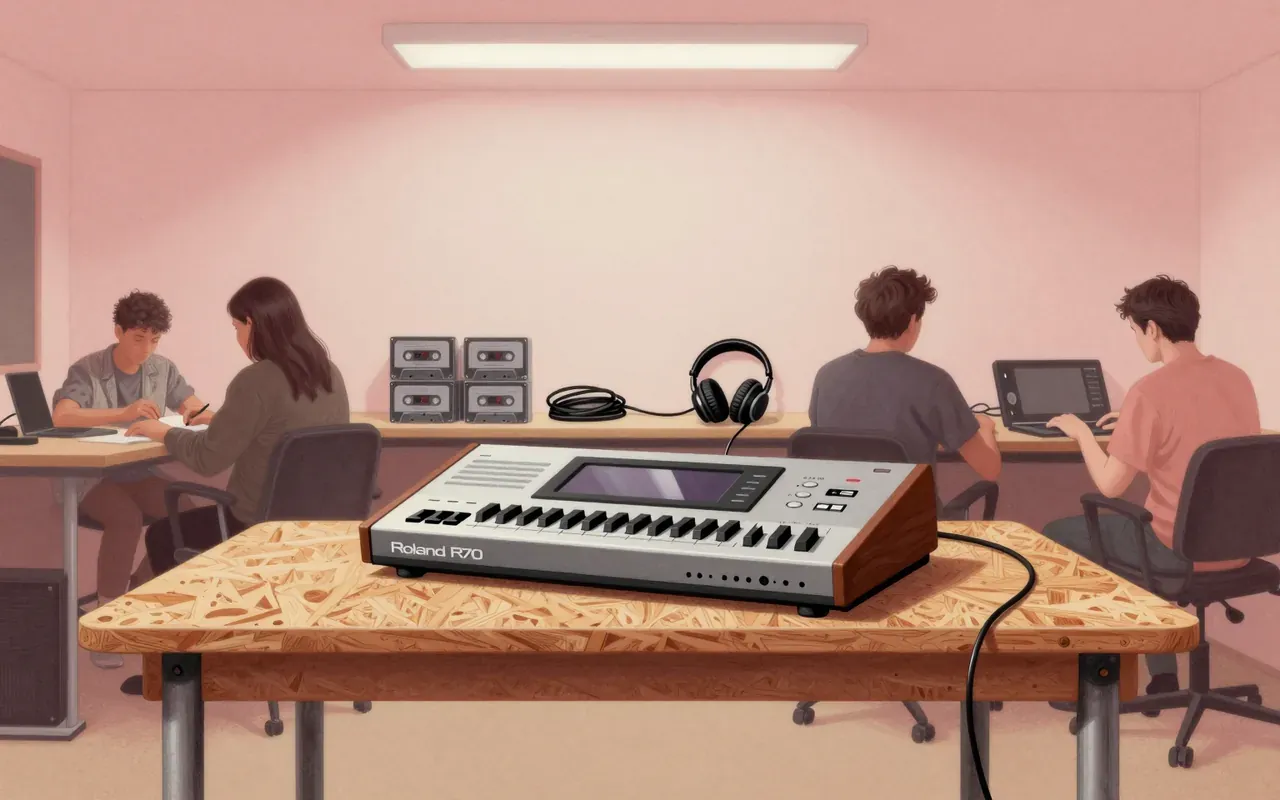
The Roland R-70 is a 1992 full-sized, sample-playback drum machine from Roland’s R series. It offers up to 210 drum sounds across Rock, Jazz, Electronic, and Ethnic kits. It stores 100 programmable patterns and chains them into 20 songs. Its positional pad changes sound by strike location. It includes reverb, flanger, delay, chorus, and humanization. Sound editing is limited to attack, sustain, and pan. Its built-in sequencer is complex—users prefer external sequencing. Kick and cymbal sounds emulate the TR-808. It is a popular, all-purpose drum machine.

10:40

Yamaha RS7000

Yamaha

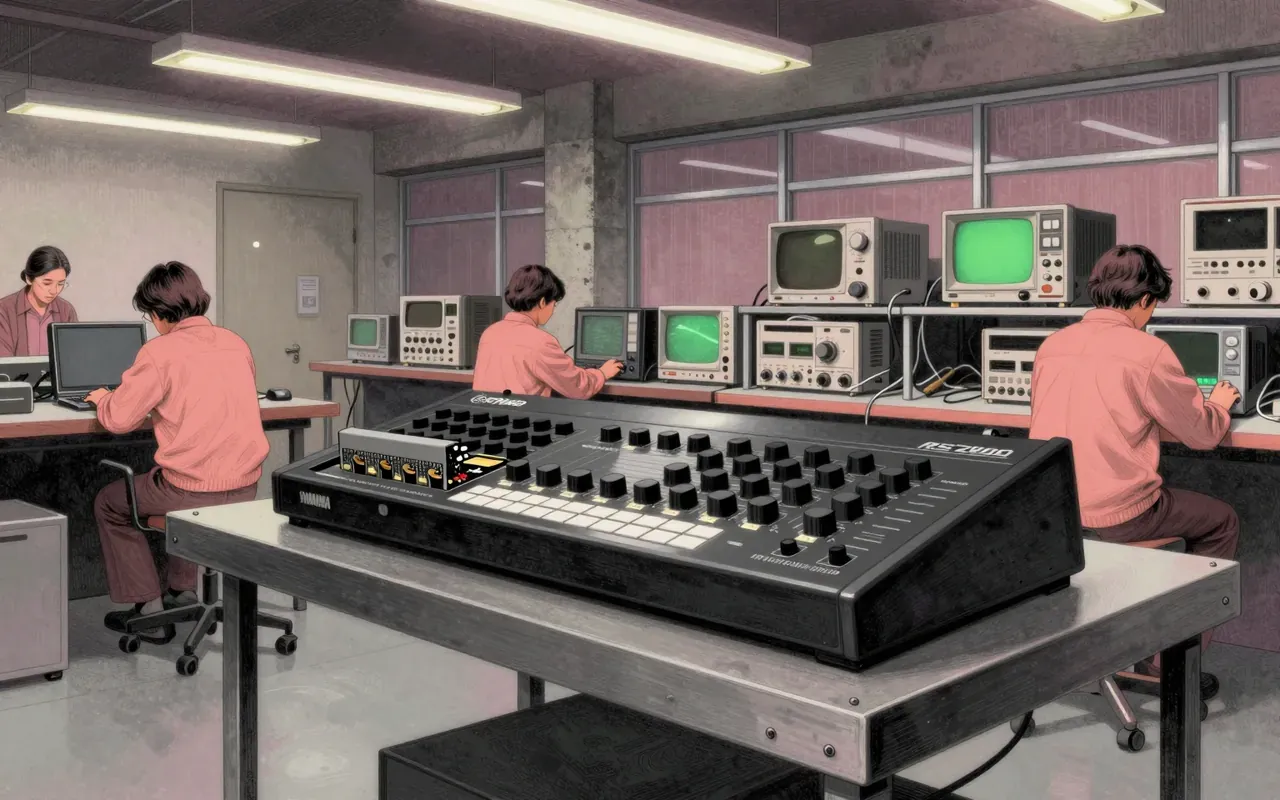
The Yamaha RS7000 is a 2001 groove production workstation. It combines sampling, sequencing, and AWM2 synthesis. It embeds sound and sample edits into patterns. It supports auto-beat slicing, pattern- and linear-based sequencing, and ROM-based sounds only.

9:55

Yamaha RX11

Yamaha

The Yamaha RX11 is a 1984 digital drum machine using 29 fixed 8-bit PCM samples. It was built to accompany the DX7. Each sound has independent volume, pan, and a dedicated audio output. Its interface is laborious. Its sound is synthetic and dated — yet valued in electro and downtempo for its unvarnished 1980s character.

7:59

Yamaha RX7

Yamaha

The Yamaha RX7 is a sample-based drum machine built for live trigger-based rhythm programming and studio sketching in the mid-1980s.

7:25

Casio RZ-1

Casio

The Casio RZ-1 is a 1986 drum machine built for fast, physical beat-making — not pristine sound. It gives you twelve basic PCM drums, four lo-fi sample slots (0.2 seconds each at 20kHz), tone-only editing, 100 patterns, 20 songs, and ten discrete outputs with volume sliders. It does not do fidelity, flexibility, or effects. It does do immediacy, separation, and constraint-as-creative-tool.

9:36

Roland S-750

Roland

The Roland S-750 is a 1992 hardware sampler built for deep, routed, real-time sampling work—not convenience or compatibility.

8:09

Roland S-760

Roland

The Roland S-760 is a 1990 rackmount sampler. It samples at 44.1 kHz or 48 kHz with 16-bit stereo resolution. It supports 24-voice polyphony across 32 multitimbral parts. It uses no synthesis method beyond sampling. It has built-in filters but no effects.

9:50

Akai S1100

Akai

The Akai S1100 is a sampler. Its name appears in alternate forms: 's1100' and 's 1100'. No technical specifications are available. Nothing else is confirmed.

8:53

Akai S6000

Akai

The Akai S6000 is a 1999 rack sampler. It supports up to 256 MB RAM, optional SCSI hard drives, virtual hard disk sampling, and remote operation via detachable RS-232 screen. Its 26 filter types and extensive modulation routing enable synthesis from single-cycle waveforms. OS 2.14 resolved major bugs in OS 1.0. It includes a large built-in sound library.

10:28

Akai S700

Akai

The Akai S700 is a 1987 rack-mount 12-bit sampler derived from the X7000 keyboard model. It samples mono at 4–32 kHz, holds up to 8 seconds, but at 16 kHz allows only six 0.8-second samples. It offers 6-voice polyphony, non-resonant low-pass filtering, and QuickDisk storage. It is user-friendly but rigid: no stereo, no resonance, no modern file support, no workarounds.

8:42

Roland SH-5

Roland

The Roland SH-5 is a monophonic analog synthesizer introduced in 1976. It has two VCOs, two LFOs, two multi-mode filters, two VCAs, a 5-source mixer, stereo panning, portamento and ring modulation. It is no longer manufactured. No technical specifications are available.

10:32

Radikal Technologies Spectralis

Radikal Technologies

The Spectralis is a 2004 hybrid instrument built for studio composition. It combines a monophonic Asynth (four digital oscillators, two analog filters, time linearity modulation) with a 32-voice, 3-part multi-timbral Dsynth engine (128 MB RAM, unrestricted sample import). Its sequencer ties both engines and external gear together with per-parameter automation. It has no audio interface, no velocity-sensitive Dsynth layers, and no DAW integration. It belongs in a production room — not on stage.

10:18

Alesis SR-16

Alesis

The Alesis SR-16 is a 1990 drum machine built for immediacy: twelve velocity-sensitive pads, four outputs, and step editing deliver fast, routable, mechanical rhythm tracks. Its Dynamic Articulation varies tone with hit strength. Its 233 samples sound distinctly synthetic—not acoustic, not modern. It was used by Autechre and Vangelis. It has no swing, no audio input, no built-in effects beyond reverb on some samples. It remains valuable for hands-on pattern building and discrete signal routing—but only if that’s what you need.

9:33

Yamaha SU700

Yamaha

The Yamaha SU700 is a 1998 all-in-one sampler/sequencer music production studio designed for dance music creation.

9:43

Sennheiser Vocoder 2000

Sennheiser

The Sennheiser Vocoder 2000 is a fully analog, rack-mount vocoder released around 2002. It uses discrete-component circuitry. It includes an internal oscillator with pitch modulation, an internal noise source, and a noise gate. It requires no external sound source. Both white-face and black-face versions share identical analog circuitry.

9:45

Roland XV-5080

Roland

The Roland XV-5080 is a 2000 rack-mount sound module built for studio composers needing stereo sample playback, deep modulation via Matrix Control, and expandability through SRX and SR-JV80 boards. It reads Akai S1000 and Roland S-700 CD-ROMs via SCSI, supports up to 128MB of sample memory, and includes COSM effects and digital outputs — features the XV-3080 lacks. It offers no keyboard, no sequencer, no USB, and demands physical navigation. It belongs in a fixed studio with legacy hardware — not on a laptop stand.

8:03

Technics SL-1300

Technics

The Technics SL-1300 is a Hi-Fi turntable made by Technics. It has no stated technical specifications, no DJ features, and no digital functionality. Its design prioritises mechanical stability over versatility.

8:40

Beyerdynamic DT 770 Pro

Beyerdynamic

The DT 770 PRO is a closed-back, handcrafted-in-Germany studio headphone. It delivers neutral, precise full-range sound with punchy lows and analytical highs. It isolates exceptionally well. It weighs 375 g including cable. All components are replaceable. It is used globally by music producers, sound engineers, and broadcasters.

8:26

Empirical Labs Distressor

Empirical Labs · 1995

The Empirical Labs Distressor is an analog VCA compressor introduced in 1995. It has a fixed threshold, soft knee, and variable ratio, attack, release, input gain and output gain. At 10:1, it uses a photoresistor-based optical emulation circuit. It includes tube and tape distortion emulations, side-chain high-pass filtering, and on the EL8-X model, British Mode and Image Link. It was inducted into the TECnology Hall of Fame in 2016 and has sold an estimated 40,000 units.

9:00

LA-2A Leveling Amplifier

Teletronix

The LA-2A is a hand-wired, vacuum tube-based audio compressor developed by Teletronix and released commercially in 1962. It uses an electroluminescent panel and cadmium sulfide photoresistor for program-dependent gain reduction. Its attack is fixed at 10 ms; its release varies from 60 ms to 15 seconds depending on input. It preserves perceived performance dynamics under heavy compression. UREI acquired its patent rights in 1967.

9:43

Beyerdynamic M 160

Beyerdynamic · 1957

The Beyerdynamic M 160 is a hypercardioid ribbon microphone introduced in 1957. It uses dual 15-mm aluminum ribbons suspended between alnico magnets (later neodymium), rotated 90 degrees to achieve end-address operation and a highly directional pickup pattern. It softens harsh characteristics of strident sound sources. It has been used in broadcasting, live concerts, and studio recordings — notably by Eddie Kramer on Jimi Hendrix and Andy Johns on John Bonham’s drums for 'When the Levee Breaks'. It remains in production over six decades later.

9:10

Marshall Super Lead

Marshall · 1965

The Marshall Super Lead is a 100-watt guitar amplifier head made by Marshall between 1966 and 1981. It was developed in response to player demand for higher output than the earlier JTM45. Its distortion arises solely from overdriving its EL34-based power amp section at high volume. It has two channels and four inputs but no master volume. Its core character is bold, midrange-heavy, and bright — delivering the foundational 'Marshall crunch' sound of 1970s rock.

9:00

Fender Vibrolux Reverb

Fender

The Fender Vibrolux Reverb is a 35-watt blackface/silverface tube amp built around smaller transformers and 10″ speakers. It breaks up earlier and more sweetly than larger 6L6 Fenders. Its tone is scooped, punchy and sparkling—but it sacrifices clean headroom and low-end weight. CBS-era revisions increased clean headroom, but the core character remains defined by responsiveness over restraint.

9:59

ProDigi

Mitsubishi

ProDigi was a professional reel-to-reel digital audio tape format with stationary heads, introduced in the mid-1980s, using linear digital recording with cyclic redundancy check error correction on metal particle tape in 2-, 16-, and 32-track configurations; it was widely adopted in Nashville country music studios but declined by the mid-1990s with the rise of Pro Tools.

9:08

RCA Type 44

RCA

The RCA Type 44 is a bi-directional ribbon microphone introduced in 1931. Its thin corrugated metal ribbon generates voltage when vibrating in a magnetic field. It hears only front and back. It breaks under wind, phantom power, and loud transients. It flatters voice and acoustic instruments with smooth mids and gentle highs. It belongs in a vintage studio chain—not on a podcast desk or a stage.

9:41

Shure 55SH

Shure

The Shure 55SH is a 1939 cardioid dynamic microphone built for public address. It delivers vocal clarity under load, resists feedback, and shrugs off physical stress. It does not offer studio-grade fidelity or flexibility. It belongs on podiums—not in overdub booths.

10:06

Neumann M 49

Neumann

The Neumann M 49 is a large-diaphragm condenser microphone developed at the NWDR’s Central Laboratory in Hamburg. It entered German broadcasting studios in 1952. It was the world’s first microphone with a remotely switchable polar pattern. Its pressure-gradient capsule causes proximity effect even in omnidirectional mode.

10:14

EMI REDD

EMI

The EMI REDD was not a product. It was Abbey Road’s first custom-built, vacuum-tube-based stereo mixing system — engineered in-house, adapted for four-track tape, and retired when it could not scale beyond four outputs. Its sound came from saturation, not precision. Its limits were physical: fixed routing, no patching, no serviceability. Its legacy is inseparable from the room, the tape machines, and the engineers who worked it daily.

10:08

Yamaha CS-15

Yamaha

The Yamaha CS-15 is a monophonic analog synthesizer produced by Yamaha from 1979 to 1982. It features two voltage-controlled oscillators, two 12 dB/Oct multi-mode voltage-controlled filters (low-pass, high-pass or band-pass), two ADSR envelopes and a low-frequency oscillator. It also features white noise and an external-in for processing other sounds. The CS-15 offers great flexibility with various routing possibilities to the filters and envelopes. You can, for example, route VCO 1 to both VCFs and the VCFs to any of the envelopes positive or negative voltage. It's actually a duophonic / bitimbral synthesizer but you have to connect it to two separate CV/Gate controls (Hz/V like Korg synthesizers not V/Oct) to play the extra voice. In the CS series, the CS-5, CS-10, CS-30 and CS-30L were similar in sound, structure and design. The CS-5 and CS-10 had a single oscillator and one multimode filter, whereas the CS-15, CS-30 and CS-30L each had two oscillators that could be routed in various ways through two multimode filters.

8:50

E-mu Emulator

E-mu Systems

A foundational but bare-bones sampler that traded sonic refinement for accessibility.

9:45

Bombardier M5000

TC Electronic

The Bombardier M5000 is a light rail vehicle. TC Electronic is an audio equipment company. They have no relationship. The M5000 uses pre-recorded WAV files for warnings — but offers no user-accessible audio controls, no synthesis, no sampling, no modulation, no inputs or outputs. It is not an instrument. It is not software. It is not part of TC Electronic’s product line. It belongs in transport policy, not in an audio brief.

9:02

Ensoniq Mirage

Ensoniq

The Ensoniq Mirage is an 8-bit sampling keyboard introduced in late 1984 as Ensoniq's first product. It offered eight-voice polyphony, analog Curtis CEM3328 filtering, and wavetable synthesis via alternative OS. It booted and stored data on a built-in 3.5-inch floppy drive — one of the first consumer uses of that format. Priced at $1695, it sold 8,000 units in its first year, undercutting the Fairlight CMI and E-MU Emulator.

8:58

Elektron Monomachine

Elektron

The Elektron Monomachine is a 2007 hardware synthesizer and music sequencer. It runs six sequencer tracks, each assigned one of five synthesis engines: SID, VO, FM+, SuperWave, or DigiPro. Every step stores a full snapshot of all track parameters — what Elektron calls parameter locks. It routes audio to six mono or three stereo outputs. Two physical variants exist: the SFX-6 keyboard version with joystick, and the SFX-60 desktop module. The MkII revision improved signal-to-noise ratio, reduced size, and added user waveform support via OS 1.20.

8:08

Moog Modular

Moog · 1964

The Moog synthesizer is a modular, voltage-controlled analog synthesizer invented by Robert Moog in 1964. It was the first commercial synthesizer and established the analog synthesizer concept through its use of patch-cord-connected modules—including voltage-controlled oscillators, filters, envelope generators, and amplifiers—to implement subtractive synthesis.

10:33

Elektron Octatrack

Elektron

The Elektron Octatrack DPS-1 is a sampling instrument built for real-time, step-sequenced audio manipulation. It loads samples from CompactFlash or live inputs, plays them across eight tracks, and sequences both audio and MIDI with the same button grid. Its strength is tight integration and tactile control. Its limits are RAM-only editing, no non-destructive tools, and no timeline-based workflow.

10:20

Roland R-8

Roland

The Roland R-8 is a 1989 PCM drum machine built for expressive, human-sounding rhythm programming—not raw sound design or live sampling.

12:26

Yamaha RX-5

Yamaha

The Yamaha RX-5 is a 1986 programmable digital sample-based drum machine. It delivers 24 built-in and 28 cartridge-based digitally sampled sounds. It has 12 individual outputs—one per vertical drum pad pair. It supports sound editing including chromatic pitch, envelope, reverse, and damp. Its sequencer records up to 100 patterns in Real Time or Step Time, with lengths up to 99 bars.

8:56

Roland S-50

Roland

The Roland S-50 is a 61-key 12-bit sampler keyboard introduced in 1986. It uses variable sampling rates (15–30 kHz), stores samples on a 3.5-inch DSDD floppy disk drive, supports external CRT monitor editing, and holds up to 32 samples. A rack-mounted version with expanded memory was also available.

9:06

Akai S3000XL

Akai · 1995

The Akai S3000XL is a 16-bit sampler released in 1995. It has 32-voice polyphony and 2 MB of built-in RAM. It loads samples via a 3.5" floppy drive or SCSI-connected devices. Its large screen and intuitive interface enable quick and in-depth sample editing. Akai discontinued production and support, but many working units remain in studios worldwide.

9:32

Akai S900

Akai · 1986

The Akai S900 is a 12-bit sampler introduced in 1986. It supports up to six active samples simultaneously. Its firmware became upgradable via floppy disk from version 1.2. It features alternating forward-and-backward looping — a capability absent in the later S1000 series. An expanded variant, the S950, followed in 1988.

8:14

Boss SP-202

Boss

The Boss SP-202 is a portable sampling workstation released in 1998. It succeeded Roland's MS-1 Digital Sampler. It has eight pads, four banks, two control knobs, a built-in microphone, six built-in effects, BPM-based looping, user-selectable sampling grade per pad, and sampling capacity of 4 minutes 20 seconds internally or up to 37 minutes with a SmartMedia card. It was built for club DJs, hip-hop and dance music artists.

8:27

Boss SP-303

Boss

The Boss SP-303 is a 2001 digital sampler with eight pads, four soundbanks, three minutes and twelve seconds of sampling, twenty-six internal effects, and a built-in pattern sequencer. It was used by J Dilla, Madlib, Animal Collective, Panda Bear, Four Tet, and Moka Only. Dilla used it with a 45 record player to make 29 of the 31 tracks on Donuts while hospitalized. Madlib used it with a portable turntable and cassette deck to produce most of Madvillainy.

9:38

Roland V-Synth

Roland · 2003

The Roland V-Synth is a 2003 polyphonic synthesizer combining multiple oscillator technologies and built-in sampling, featuring arpeggiation, COSM filtering, and expandable vocoder/vocal synthesis via VC-2; the XT variant is a rack-mount module.

9:28

Apogee Ensemble

Apogee

The Apogee Ensemble (FireWire) and Ensemble Thunderbolt are legacy audio interfaces with fixed end-of-life dates, discontinued software support, and hard macOS version limits. They offer no documented sonic distinction, no stated creative use cases, and no path forward beyond legacy maintenance.

10:23

1176 Peak Limiter

UREI

The UREI 1176 Peak Limiter is a fast, characterful, all-solid-state audio compressor introduced in 1968. It uses a field-effect transistor in feedback configuration for gain reduction. Compression is soft-knee with a fixed threshold controlled by input level. Four ratios — 4:1, 8:1, 12:1, 20:1 — each raise the threshold. Attack and release are program-dependent. Stereo linking is supported. The 'all-button mode' adds harmonic distortion and alters compression behaviour. It marked the transition from vacuum tube to solid-state technology in studio dynamics processing.

8:31

API 550

API

The API 550b is a four-band analog EQ re-issuing the 1967 API 550 with an added band. It offers seven switchable frequency centres per band, ±12 dB boost/cut, shelf/peak switching on bands 1 and 4, Proportional Q, reciprocal and repeatable filtering, and a +30 dBu clipping level. It uses API’s 2520 op amp and is built to original blueprints.

9:46

Eventide Eclipse

Eventide

A professional-grade digital effects processor with dual independent effects blocks, nearly 100 algorithms—including 11 reverbs—and 24-bit/96kHz conversion. Supports true stereo reverb I/O and extensive looping (up to 20 seconds per block). Firmware updates require Compact Flash and strict version dependencies; bootloader corruption requires factory reprogramming.

8:27

LS3/5A

BBC

The LS3/5A is a compact BBC-designed studio monitor built for broadcast consistency, not domestic indulgence. Its revisions track component supply — not artistic evolution. It excels in transparency but fails at bass, volume, and modern amplifier compatibility.

8:22

Eventide Orville

Eventide

The Eventide Orville is a dual-DSP, 24-bit digital audio processor with fully flexible I/O routing, near-three-minute sampling (DSP A), 40-second delay on both engines, UltraShifter™, DistortionCurve™ analog distortion modelling, and Predictive Vocoder™ based on a high-resolution physical model of the vocal tract. Firmware updates require Windows XP and a USB-to-serial adapter—and delete all User Programs unless backed up.

9:51

PCM adaptor

Sony

The PCM adaptor is a transitional artifact: a hardware hack that made digital audio portable and recordable using 1970s video infrastructure. It solved one problem — getting 16-bit audio onto physical media for CD mastering — and introduced many others: tape instability, video sync dependency, and zero interoperability with later digital standards.

8:19

Mutable Instruments Braids

Mutable Instruments

Braids delivers radical timbral variety in minimal space—but with no internal editing, no tuning stability guarantees, and no analogue circuitry. It is a selector, not a synthesizer.

8:40

Mutable Instruments Clouds

Mutable Instruments

Clouds is a granular audio processor for Eurorack that transforms live input into dense, overlapping grains. It records continuously into a short, variable buffer (up to 8 seconds), allows freezing that buffer to isolate a sonic space, and provides hands-on control over grain position, size, pitch, density, timing distribution, and envelope shape. A diffuser blurs transients using all-pass filters. It supports 40–60 concurrent grains and operates in stereo with extensive CV control, dry/wet blending, feedback, and reverb-like effects during freeze mode. It does not store or recall samples, nor does it support offline processing or waveform editing.

9:03

Korg DDD-1

Korg · 1986

The Korg DDD-1 is a 1986 sampling drum machine with 14 velocity-sensitive pads, 12-bit samples, limited user sampling, five dynamic envelopes, and ROM card expansion (up to four cards, eight sounds each). It has 18 presets and six assignable audio outputs.

9:27

Drumtraks

Sequential Circuits

The Drumtraks is a 1984 sample-based drum machine by Sequential Circuits. It was the company’s first drum machine and first sample-based product. It featured early MIDI implementation, ROM-swappable sounds, velocity-sensitive MIDI input, and flexible synchronization with both MIDI and legacy gear.

9:06

Korg DSS-1

Korg

The Korg DSS-1 is a 1986 polyphonic sampling synthesizer combining sampling, additive synthesis, and hand-drawn waveform creation with an analog signal path. Its 12-bit sampler supports fixed rates from 16–48kHz, yielding up to 16 seconds of recording at the lowest rate. Its synthesis architecture emulates subtractive analog design with dual oscillators, switchable VCF slopes, and an extended ADBSSR envelope.

9:58

E-mu Emax

E-mu Systems

The Emax is a line of samplers introduced by E-mu Systems in 1986 as a low-cost version of the Emulator II. It stored samples on 3½" floppy disks — more reliable than the Emulator II’s 5¼" disks. Models include the HD (with 20 MB hard drive), SE (with additive synthesis), and Plus (with SCSI). All models retain 512 KB of sample memory.

10:15

Mutable Instruments Marbles

Mutable Instruments

Mutable Instruments Marbles is a Eurorack module for generative timing and control voltage. It uses hardware randomness, memory-based reuse (DEJA VU), and adaptive quantization (STEPS) to produce rhythm and pitch that respond to player input. It has no audio output, no presets, no MIDI, and no visual interface beyond LEDs. Its strength is in linking decision-making across domains—timing, pitch, and memory—in real time.

9:34

Make Noise Maths

Make Noise

MATHS is a 20hp Eurorack module by Make Noise Music that functions as an analog computer for generating, transforming, and routing control voltages and digital timing signals. It extends Buchla’s legacy of analog control voltage processing, enabling scaling, inversion, amplification, integration, arithmetic, logic, and autonomous function generation — including LFOs and envelopes — with timing ranging from milliseconds to minutes.

9:11

Waldorf Microwave

Waldorf

The Waldorf Microwave is a hybrid wavetable-analogue synthesizer whose distinctiveness comes from forcing digital waveforms through characterful analogue filters — not from flexibility, expansion, or modern workflow features.

9:22

Mutable Instruments Plaits

Mutable Instruments

Plaits is a decisive instrument. It forces choices — bank or trigger, pitch or noise, sweep or strike. It gives no second chances, no presets, no visual confirmation. But within those limits, it delivers sixteen coherent sonic identities in one compact, power-efficient package.

9:48

Make Noise René

Make Noise

René is a 34hp Eurorack module that functions as a three-channel, three-dimensional Cartesian sequencer, enabling real-time, performative programming and delivering maximal musical variation from minimal analog input; it stores up to 64 complete STATEs and features simultaneous Snake and Cartesian patterns, visual feedback via illuminated knobs and touch buttons, and Select Bus integration with TEMPI.

9:01

E-mu SP-12

E-mu Systems

A foundational sampling drum machine introduced in 1985. Built for immediacy, not refinement.

9:51

Eventide Space

Eventide

The Eventide Space is a reverb-and-delay pedal offering 12 algorithmic spatial effects—including Hall, Plate, Blackhole®, and Shimmer—controlled via 10 knobs, MIDI, expression pedal, or HotSwitch. It features 100 presets (some artist-designed), true analog bypass, tap tempo/MIDI clock sync, and mono/stereo I/O in a rugged metal pedal format. Software tools FactorLib and H9 Control manage presets; the SpaceTime algorithm combines modulation, two delays, and reverb.

9:26

ADAT

Alesis

The ADAT was a tape-based digital multitrack recorder introduced by Alesis in 1991 and shipped in early 1992. It recorded eight tracks of 16-bit audio on S-VHS cassettes, supported locate points and auto play/record for precise editing, and could be synchronised with up to 15 other units for 128-track recording. Its CD-resolution audio and low price disrupted home and project studios. Later models like the HD24 moved to hard disk and introduced File Streaming Technology.

9:05

Final Scratch

Stanton/Native Instruments

Final Scratch was the first widely adopted vinyl emulation system. It required timecoded records, a ScratchAmp interface, and dedicated software. It gave DJs precise, tactile control over digital audio — but introduced latency, calibration drift, and hardware dependency. It shaped DJ practice before Serato and Traktor matured.

10:12

Pro Tools

Digidesign · 1989

Pro Tools is a digital audio workstation used for music creation, sound for picture, and audio recording, editing, and mastering. It operates as standalone software and with external analog-to-digital converters and PCIe cards with on-board DSP, which provides additional processing power for real-time effects and lower latency. It performs multitrack tape recorder and mixing console functions plus digital-only features including non-linear and non-destructive editing, track compositing, time compression and expansion, pitch shifting, and faster-than-real-time mixdown. Audio, MIDI, and video tracks are graphically represented on a timeline. Audio effects, virtual instruments, and hardware emulators can be added, adjusted, and processed in real-time in a virtual mixer. It supports 16-bit, 24-bit, and 32-bit float audio bit depths at sample rates up to 192 kHz.
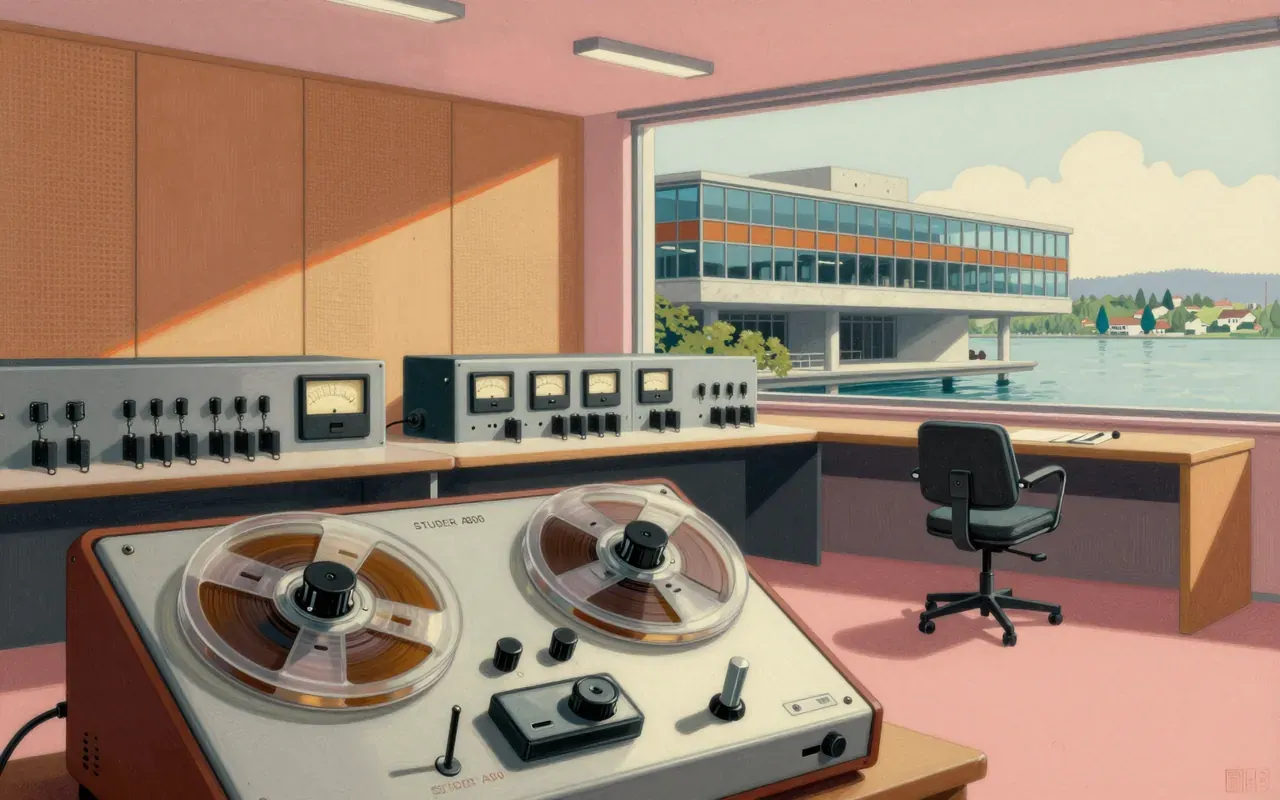
8:04

Coles 4038

Coles

The Coles 4038 is a BBC-designed ribbon microphone from 1953. It uses a bi-directional polar pattern and has a flat frequency response from ~30–15,000 Hz. High-frequency attenuation reduces sibilance but also reduces detail. Its technical specifications have remained unchanged since its design in the 1950s.

8:15

Vox AC30

Vox

The Vox AC30 is a valve-powered guitar amplifier introduced in 1959 to provide higher wattage and greater volume than the AC15. Its class AB operation, cathode-biased EL84 push-pull output stage, and Celestion Blue speaker pairing produce a jangly, mid-forward, high-clarity tone with limited low-end at low volumes but strong headroom and smooth overdrive. It is not synthesizer-based and does not employ digital or solid-state synthesis methods.

9:49

Ampex ATR-100

Ampex

The Ampex ATR-100 is a mastering-grade analogue tape recorder introduced in Spring 1976 at the AES Conference in Los Angeles. Designed exclusively for stereo or quadraphonic mixdown and mastering, it features a servo-controlled direct-drive-capstan transport and interchangeable headblocks for quarter-inch or half-inch tape. Its wow and flutter performance set a new standard for analogue accuracy. It does not support multitrack recording. No verified claims exist about recordings made on it, its users, or its sonic signature beyond accuracy.

10:11

Shure Beta 58A

Shure

A live vocal mic defined by rejection, presence, and deliberate low-end roll-off.

10:20

Fender Deluxe Reverb

Fender

The Fender Deluxe Reverb is a 22-watt tube combo amplifier introduced in 1963, featuring spring reverb, tremolo, and a fixed 12-inch speaker configuration. It uses 6V6GT power tubes operated beyond specification, four 12AX7s, two 12AT7s, and a 5AR4 rectifier. Most commonly fitted with a Jensen C-12Q speaker, it has appeared with Oxford, Marlboro, Utah, and Eminence alternatives. Its circuit remained largely unchanged across black-panel (1963), silver-panel (1968), and black-panel reintroduction (1980) eras.

9:43

Beyerdynamic M 160

Beyerdynamic · 1957

The Beyerdynamic M 160 is a hypercardioid ribbon microphone introduced in 1957. It uses dual 15-mm aluminum ribbons suspended between alnico magnets, rotated 90° to achieve end-address directionality. It softens strident sound sources without dulling transients. It was used by Eddie Kramer on Jimi Hendrix’s vocals and amplifier and by Andy Johns on John Bonham’s drums for 'When the Levee Breaks.' It remains in production after over six decades.

8:47

Nagra

Kudelski · 1951

Nagra recorders were Swiss-engineered portable analog tape machines built for professional film and broadcast sound capture from 1951 onward. They prioritised mechanical reliability, sync accuracy, and tactile control over flexibility or convenience. Their dominance lasted until digital alternatives offered file-based workflows, multitrack capability, and lighter weight.

9:19

Shure SM57

Shure · 1965

The Shure SM57 is a low-impedance cardioid dynamic microphone introduced in 1965. It uses the Unidyne III capsule, shares design DNA with the SM58, and features impedance balancing via XLR. Its frequency response runs from 40 Hz to 15 kHz. Its cardioid pattern reduces background noise and feedback. It was built for TV studios — non-reflective, no on-off switch — and tested under torture. It has been used for every U.S. presidential speech since 1965 and remains one of the world’s two bestselling microphones since the late 1960s.
13:34

Neumann U 87

Neumann · 1967

The Neumann U 87 is a large-diaphragm condenser microphone introduced in 1967 as the solid-state successor to the U 67. It features a 25.4 mm diaphragm and three selectable polar patterns — cardioid, omnidirectional, and figure-8. It can be powered by 48V phantom power or two internal 22.5V batteries. The original used the K 87 capsule, a modified version of the K 67. The 1986 U 87A reverted to the standard K 67 capsule and eliminated the dual-battery requirement.

8:24

RCA Type 77-DX microphone

RCA

The RCA Type 77-DX is a 1954 poly-directional ribbon microphone with mechanical pattern control, low-tension 2.5-micron ribbon, and user-selectable impedance and low-frequency rolloff.

9:18

Sennheiser MD 421

Sennheiser · 1960

The MD 421 is a 1960 cardioid dynamic mic with a 27 mm diaphragm, 30–17,000 Hz ± 3 dB response, portless closed housing, and hum-compensation coil. Still in production. Over 500,000 units sold.

9:39

Sennheiser MD 441

Sennheiser

A purpose-built dynamic mic from 1971 that prioritises rejection, bass control, and electromagnetic immunity over sonic versatility or modern convenience.

9:32

Electro-Voice RE20

Electro-Voice

The Electro-Voice RE20 is a professional cardioid dynamic microphone introduced in 1968 for broadcasting applications. It employs Variable-D technology—a single transducer element with internal porting—to eliminate proximity effect and maintain stable frequency response regardless of source distance. It features a switch to attenuate frequencies below 400 Hz, a humbucking coil for EMI rejection, and a deeply mounted element to handle high SPLs. It delivers excellent fidelity despite its large size and weight. It continues to be used in recording studios and on the concert stage.

8:46

Shure SM58

Shure · 1966

The Shure SM58 is a professional cardioid dynamic microphone introduced in 1966. It is commonly used in live vocal applications. It has been produced since 1966 and is still the industry standard for live vocal performance microphones. It is the most popular live vocal microphone in the world. Like all directional microphones, it is subject to proximity effect, a low-frequency boost when used close to the source. Its cardioid response reduces pickup from the side and rear, helping to avoid feedback onstage. The SM58 uses an internal shock mount to reduce handling noise. A distinctive feature of the SM58 is its pneumatic suspension system for the microphone capsule. The SM58 was introduced in 1966 as part of the SM series. The SM58 was originally developed for the TV studio market with a non-reflective finish and no on-off switch. The SM58 has been one of the two bestselling microphones in the world since the late 1960s. The SM58 shares nearly identical features with the SM57, differing mainly in grille design.

9:53

Sony MDR-V6

Sony

The Sony MDR-V6 is a folding, closed-back, circumaural headphone introduced in 1985 and discontinued in 2020. It was designed for professional monitoring in live and studio settings. Its closed, sealed-ear construction provides isolation and portability. Consumer Reports measured it as the most accurate headphone they had tested in 1989. Dave Rat confirmed its near-neutral response—though slightly rolled off at both extremes. It was part of Sony’s Studio Monitor line, produced by Sony/Taiyo Corporation in Ōita Prefecture, Japan. Its durability and consistency made it a staple for sound engineers and DJs for thirty-five years.

9:54

Ensoniq ASR-10

Ensoniq · 1982

The Ensoniq ASR-10 is a 1992 sampling keyboard designed for live performance and self-contained music production. It integrates sampling, synthesis, sequencing, and effects in one unit. It loads samples while playing. It layers up to eight samples per instrument. It modulates them with envelopes, filters, LFOs, and real-time controls. It sequences with 16 tracks at 96 PPQN. It applies up to 62 effects — including vocoder and distortion — and resamples with them. It records to SCSI hard drives or proprietary 3.5-inch floppies. Its SCSI implementation rejects many common drives unless specially flashed. It ships in keyboard, weighted (ASR-88), and rackmount (ASR-10R) versions. It is the third-generation EPS-series sampler. It runs at 16-bit, 29.7619 kHz or 44.1 kHz. It ships with 2MB RAM, expandable to 16MB.
7:51

Buchla 100

Buchla · 1962

The Buchla Electronic Musical Instruments (1965) were modular, voltage-controlled systems designed for creating novel sounds—not imitating existing ones—using touch/pressure interfaces instead of keyboards, with synthesis based on FM, AM, and dynamic waveshaping.
8:56

Ensoniq EPS

Ensoniq

The Ensoniq EPS is a 13-bit sampling keyboard introduced in 1988 as the Mirage's successor. It uses dual processors and a dedicated sound engine to enable load-while-play. It reads double-density 3.5" floppies formatted to 800k. It integrates MIDI for control or computer connection. Early units suffered mechanical issues with their polypressure keyboard.

9:11

Ensoniq EPS-16 Plus

Ensoniq

The EPS-16 Plus is a purpose-built 1990 sampler that trades flexibility for immediacy. It records mono, plays back 16-bit samples at seven fixed rates, and routes everything through stereo panning and 13 effects. Its ES5505 OTIS chip gives it tight, responsive playback—but no sample rate conversion, no stereo input, and no non-destructive editing. Turbo versions added flash and SCSI, but Ensoniq replaced it with the ASR-10 in 1992. It belongs in a room where decisions are made by ear and fingers—not by menu diving.

10:52

Yamaha FS1R

Yamaha

The FS1R is a rare hybrid: a formant-driven FM module that expanded what FM synthesis could model — but collapsed under its own complexity. It delivered new waveforms, deeper operator mapping, and vocal resonance no DX7 could match. Yet its interface, manual, and lack of tactile feedback made it a lab tool, not a stage instrument. Its legacy lives in Montage — but not its formants.

8:52

Kurzweil K2000

Kurzweil

The Kurzweil K2000 is a digital synthesizer and music workstation introduced in 1991, built around the V.A.S.T. digital signal processing architecture. V.A.S.T. allows users to select different signal paths containing different DSP functions for sound creation and shaping. It includes an extensive modulation system where modulation sources can be assigned to parameters and combined. The instrument was available in keyboard and rack-mountable formats and included 16-bit user sampling.

9:41

Roland MC-909

Roland

The Roland MC-909 is a 2002 groovebox built for live pattern performance. It merges ROM-based synthesis, sampling, and 16-track sequencing into one hardware unit. Its strength is immediacy: hands-on control, fast patch loading, and real-time pattern switching. Its limits are hard-coded: buggy OS, shallow sample editing, rigid pattern flow, and no true synthesis — only tone layering from fixed PCM waves. It belongs on stage, not in a modern production chain.

9:22

Nord Modular

Clavia

The Nord Modular is a 1997 software-based semi-modular synthesizer that uses DSP to emulate analogue circuitry and supports multiple synthesis methods including subtractive, additive, FM, and physical modelling. Patch editing is performed on a PC using graphical editor software, while sound generation occurs independently on the hardware. Patch complexity is constrained by available DSP resources, and polyphony varies from 4 to 32 voices depending on patch complexity. It was upgraded in 2004 as the Nord Modular G2 with endless rotary knobs and a larger keyboard with aftertouch.

8:40

Prophet 2000

Sequential Circuits

The Prophet 2000 is Sequential Circuits’ first sampler — released in 1985. It uses 12-bit sampling at up to 41.667 kHz, with 256 kilowords of memory. It offers 8-voice polyphony and early multitimbral operation via MIDI channels. Its analog VCFs and VCAs give it warmth absent in later samplers. It was relatively affordable at £2,000.

10:14

Akai S3000XL

Akai · 1995

The Akai S3000XL is a 1995 sampling instrument with 32-voice polyphony and 2 MB of RAM. It features a large screen and intuitive interface for fast sample editing. It loads sounds via a 3.5" floppy drive and SCSI port, and plays back MIDI files for live triggering. Akai discontinued it in 1995. It belongs to the S3000 series, which succeeded the S1000 series and offered optional CD-ROM.

8:55

S612

Akai · 1985

The S612 was Akai’s first rack-format digital sampler — 12-bit, single-sample, one-second max at 32 kHz, loaded via external Quick Disk drive. It defined the form factor and affordability threshold for what followed, but offered no polyphony, no internal storage, and no upgrade path.

8:53

Serge Modular

Serge

The Serge synthesizer is an analogue modular system developed at CalArts in late 1972. It was built to be inexpensive and powerful, a democratic alternative to Buchla systems. It shipped as DIY kits assembled unofficially on a CalArts balcony. Modules expose circuit aspects on the front panel for unconventional patching. All signals use banana jacks—no separation between audio and control voltage. Stackable banana plugs reduce the need for mults. One unit was used on the 1975 Greenpeace anti-whaling expedition to approximate and broadcast whale sounds.

8:32

E-mu SP-1200

E-mu Systems

The E-mu SP-1200 is a sampling drum machine introduced in August 1987 by E-mu Systems. It uses 12-bit linear sampling at 26.04 kHz, drop-sample pitch-shifting, analog SSM2044 lowpass filters on channels 1 and 2, volatile RAM loaded from 3.5" disk, and offers 10 seconds of total sampling time—with a 2.5-second limit per sound. It succeeded the SP-12 and offered integrated sequencing and sample looping in a single unit.

10:00

Roland SP-404

Roland

The SP-404 is a dedicated, tactile sampler built for speed and texture — not precision or polish.

8:44

Roland SP-808

Roland

The SP-808 is a self-contained sampling workstation built for immediacy—not convenience. Its limits are absolute: four stereo voices, Zip-only storage, no modern connectivity. Its strength is integration: sampler, synth, and sequencer in one tactile unit, holding over 1,000 samples internally while demanding physical media discipline.

10:03

Yamaha SY77

Yamaha

The Yamaha SY77 is a 1989 16-voice multitimbral workstation combining AFM (expanded 6-operator FM), AWM2 PCM sampling, and their real-time hybrid RCM. It features a 61-key keyboard with velocity and aftertouch, two modulation wheels, pitch wheel, backlit LCD, floppy drive, expansion slots, on-board effects, and a 16,000-note sequencer. AWM2 waveforms can be used standalone, layered with FM Elements, or — uniquely in the SY/TG series — as modulators for FM operators. Its AFM is a superset of the DX7’s FM, adding waveforms, algorithms, feedback routing, and filter integration.

8:30

Roland TR-505

Roland

The TR-505 delivers rigid, punchy sequencing with integrated Latin percussion — but its 8-voice limit forces trade-offs no modern sequencer accepts.

9:45

Korg Triton

Korg

The Korg Triton is a 1999 music workstation synthesizer with digital sampling and sequencing. It introduced 62-note polyphony, dual polyphonic arpeggiators, RPPR phrase recording, onboard sampling with expandable RAM, five insert effects per Program, dual filters per oscillator (24dB/octave low-pass or parallel 12dB/octave HP/LP), faster touchscreen response, category search UI, and expanded memory and outputs. It was available in 61-, 76-, and 88-key Classic versions and as a rackmount Triton-Rack with optional ADAT/Word Clock via EXB-DI.

9:53

EMS VCS 3

EMS · 1969

The EMS VCS 3 is a portable analogue synthesizer introduced in 1969 by Electronic Music Studios. Designed largely by David Cockerell and styled by Tristram Cary, it uses a pin-based patchboard matrix instead of cables. It lacks a built-in keyboard, making it better suited for sound effects generation and external signal processing than melodic playing. Its tuning instability stems from exponential voltage-to-frequency conversion. It was one of the first portable commercially available synthesizers, housed entirely in a small wooden case.

8:56

PPG Wave

PPG

PPG Wave pioneered real-time interpolated wavetable scanning—making timbre itself a sequenced parameter. Its hybrid digital-analog signal path (digital oscillators, analog filters and VCAs) delivered spectral animation impossible on analog synths of the era. But it demands peripheral hardware for editing, sampling, or expressive control—and offers no direct waveform manipulation or polyphonic sequencing. It belongs in a studio built for sound design, not stage performance.

8:51

Korg Wavestation

Korg

The Korg Wavestation is a vector and wavetable synthesizer introduced in 1990. It uses Wave Sequencing — a method of multi-timbral sound generation using successively played PCM waveforms — combined with Advanced Vector Synthesis, allowing dynamic mixing and morphing between up to four oscillators. It enables crossfading up to 255 waveforms, jumping to any PCM wave in ROM, and generating complex, evolving timbres and rhythmic sequences from a single keypress. Unlike contemporaries, it lacks an onboard sequencer and is designed as a 'pure' synthesizer.

8:38

Korg Z1

Korg

The Korg Z1 is a 1997 digital synthesizer using physical modelling synthesis with 12-voice polyphony. It extends Korg's MOSS system—first introduced in the 1995 Prophecy—into a polyphonic, multitimbral format, incorporating OASYS-based physical modelling engines, two physically modelled oscillators per voice plus sub-oscillator and noise generator, and performance features including a 61-note keyboard with aftertouch and an XY touchpad.

9:00

Neve 80 Series

Neve

The Neve 80 Series is a hand-wired analogue mixing console built from 1968 to 1979. It uses custom preamps, line amps, and compressor/limiters wired point-to-point by hand. The 8048 model features the 1081 preamp and 4-band EQ across 24 or 32 channels. In 1976, Neve launched the in-line-monitor 8058 and 8068. Late-’70s units offered NECAM, the world’s first successful moving-fader automation system. Production was limited; manufacturing ceased in 1979.

9:46

Pultec EQP-1

Pultec

The Pultec EQP-1 is a passive, tube-amplified equalizer introduced in 1956 in a 3U 19-inch rack chassis, designed specifically for professional recording studios to overcome noise issues in existing film-industry equalizers. It features a low-frequency shelving filter with three bands (30, 60, 100 Hz) and a parametric high-frequency section with boost frequencies at 3, 5, 8, 10, and 12 kHz plus adjustable bandwidth. Its design enabled simultaneous boost and attenuation of adjacent low frequencies — a technique later adopted despite being discouraged in the original manual.

9:03

EMI TG12345

EMI

The TG12345 was Abbey Road’s first solid-state console, installed in late 1968 to enable 8-track recording. It had 24 mic inputs, 8 tape outputs, and per-channel compression and EQ — a leap from the tube-based REDD .51 and the four-track Studer J37. It did one thing decisively: expand track count while integrating dynamics and tone shaping into every channel. It offered no automation, no recall, and no adaptability beyond that fixed architecture. It belongs in a working historical studio, not a modern hybrid setup.

8:32

Trident A Range

Trident

The Trident A Range is a rare, studio-built analog mixing console — not an instrument — with only 13 units ever made. It was built by and for Trident Studios, adopted by Cherokee Studios after outperforming Neve, Helios, and Cadac in a drum-miking test, and prized for its distinct, 'musical' EQ and saturated tonal character. It offers no automation, no digital features, no portability, and no relevance outside high-end analog studio contexts.

10:30

Neumann U 47

Neumann · 2015

The U 47 is a historically significant but operationally constrained microphone. Its innovation lies solely in being the first switchable-pattern condenser — a functional milestone, not a sonic benchmark. It demands specialist maintenance, offers no modern conveniences, and has no documented sonic signature beyond its era-specific implementation. It belongs in a museum or a dedicated vintage studio — not a general-purpose rig.

8:48

Fairchild 660

Fairchild

The Fairchild 660 is a mono tube compressor introduced in 1959. It was the first intelligent automatic volume control limiter. Designed by Rein Narma, the first ten units were built by him. The first unit went to Rudy Van Gelder, who used it to cut lacquer masters for Blue Note Records and Vox Records. It functions as a compressor (2:1, threshold 5 dB below normal) or peak limiter (30:1, threshold 10 dB above normal), with fixed 1/10,000-second attack and variable release. Its push-pull amplification and high control voltage yield low distortion, low noise, and no audible thumps.

10:47

Fairlight CMI

Fairlight · 1979

The Fairlight CMI defined sampling by doing it first — not perfectly, but decisively. It traded fidelity for immediacy, memory for recognisability, and speed for novelty. Its legacy is linguistic and architectural: it gave sampling a name, and built the first workstation where sound, sequence, and synth shared one chassis.

8:50

Linn LM-1

Linn Electronics

The Linn LM-1 is the first programmable drum machine to use digital samples of acoustic drums. Released in 1980, it replaced preset patterns with human-performed, non-degrading sounds. Its quantization enforced perfect sixteenth-note timing. It offered twelve fixed samples—mostly played by Art Wood—with handclaps by Tom Petty and the Heartbreakers. It had no synthesis, no editing, no velocity response, and no visual feedback beyond LEDs. It helped establish drum machines as credible tools in popular music.

9:14

Akai MPC

Akai · 1988

The MPC60 redefined beat-making by collapsing sampling, sequencing, and performance into one hardware instrument. Its strength is immediacy. Its weakness is inflexibility.

9:14

Akai S1000

Akai · 1988

The Akai S1000 was a 16-bit stereo digital sampler released in 1988. It offered CD-quality sampling, 24-bit internal processing, digital filters, effects routing, and early timestretching. It read CD-ROMs and wrote to SCSI hard disks. Its timestretching was crude but sonically distinctive—used on 'Higher State of Consciousness' and 'RipGroove'. It displaced the S900 as the studio standard.

9:41

Synclavier

New England Digital

The Synclavier was not a keyboard for players. It was a digital sound laboratory — built for engineers, not performers. Its additive core was brittle. Its sampling was revolutionary. Its 100 kHz rate had no peer. Its role in film sound began at Glen Glenn Sound. Its legacy is infrastructural: the first hard-disk recorder, the first layered digital timbre system, the first computer-based sound editor. It belongs in history — not on a stage.