A pure class A preamp that gives you midrange clarity and round lows — but nothing else.
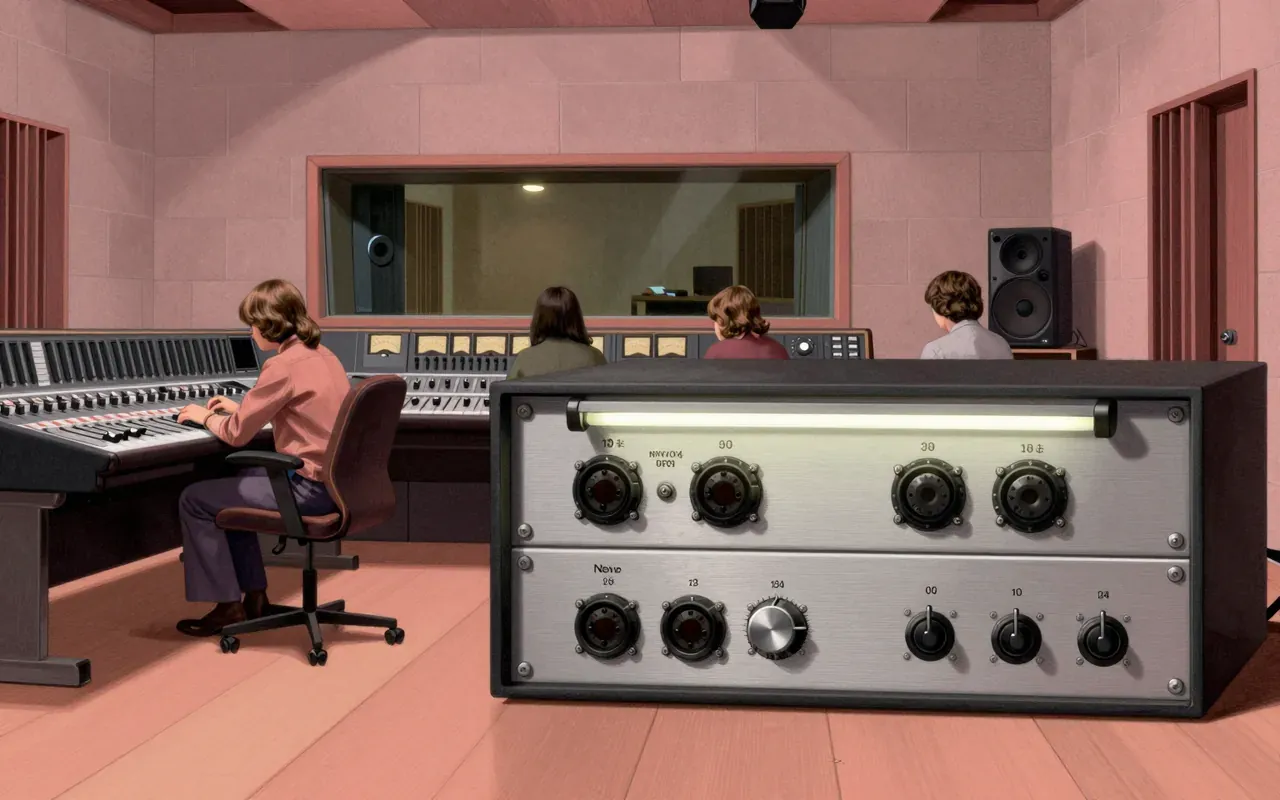
The AMS Neve 1073 DPA is a solid-state, pure class A, 2-channel preamp with DI, variable impedance, phantom power, and phase inversion — but no EQ, no insert, no flexibility beyond its fixed tonal signature. It gives you a clear, present midrange, smooth highs, and round, deep lows. It is not neutral. It is not modular. It is not subtle. It is specific.
It’s a no-EQ, no-insert, pure class A preamp with variable impedance, phantom power, and DI — built for simplicity and sonic consistency.
2:18
What the sound actually does
Its midrange is clear and present, its highs are smooth and pleasantly coloured, and its lows are round and deep.
3:12
Colourful, not clinical
It is colourful — but not excessively so — delivering balance without neutrality.
4:14
Impedance is your first knob
Variable impedance lets you shape source tone at the input — before any amplification.
Worth your time?
Yes. Use the whole thing.
4/ 5
What works
midrange clarity
low-end depth
high-frequency smoothness
impedance shaping
What does not
equalisation
signal routing
dynamic processing
Use it if
vocal engineers
mastering engineers
synth-focused producers
Skip it if
engineers needing inserts
mixers requiring onboard EQ
live sound operators
The written brief1 min read
What it is and what it was built for
The AMS Neve 1073 DPA is a solid-state, 2-channel, pure class A microphone preamplifier with DI functionality. It was built for tracking and mastering where colour, clarity, and dynamic integrity matter more than surgical control.
How it works, in terms a player would use
It is a two-channel, transistor-based preamplifier operating in pure class A. It accepts mic and DI sources via XLR and jack connectors. It offers variable high- and low-impedance inputs, phantom power, phase inversion, and DI capability. It has no insert point.
What it does better than anything else
It delivers a clear, defined, and fairly present midrange better than many solid-state preamps — paired with round, deep lows and smooth, pleasant highs.
What it does badly
It does badly where an insert point is required. It does not offer equalisation, compression, or any tone-shaping beyond its fixed sonic character.
What people made with it
People made vocal recordings, synth tracks, line-level source captures, and mastering passes with it.
Who should use it, and who should not
Engineers and producers who value consistent, musical colouration and need DI + mic pre in one unit should use it. Anyone needing EQ, dynamics, or signal routing flexibility should not.
Is it worth your time
It is worth your time if you need a colourfully balanced, mid-forward preamp with round lows and smooth highs for vocals, synths, line-level sources, or mastering — and can work without inserts or EQ.