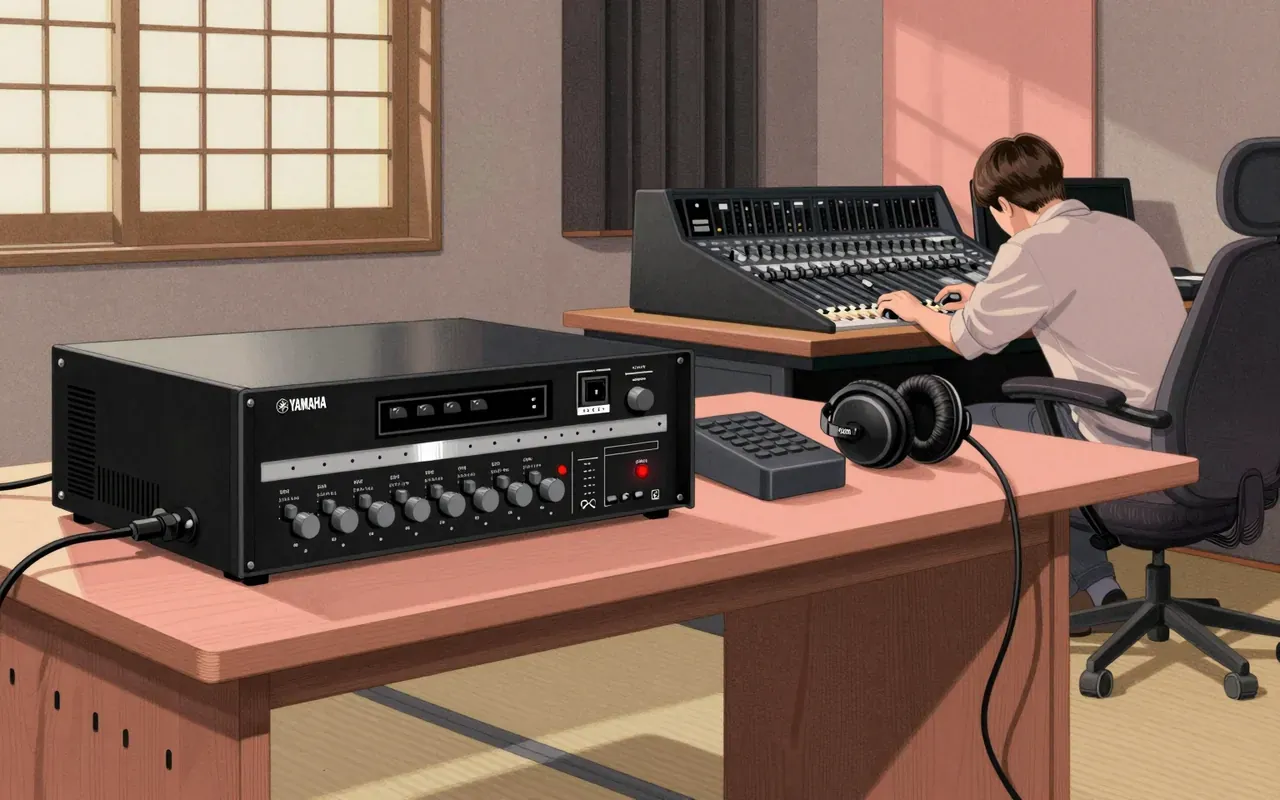
The REV1 isn’t warm or characterful—it’s clean, soft, and surgically precise. And that’s why it still matters.
The Yamaha REV1 is a two-part digital reverb: a rack unit and a separate remote. It runs at 16-bit/44.1 kHz. It has one XLR input, two XLR outputs, external clock sync, and RS232 remote connectivity. Its sound is clear, clean, soft, and distinct from other Yamaha gear. Only the Lexicon 224 XL surpassed it in finesse among contemporaneous units.
Clear, soft, and distinct from every other Yamaha—finesse second only to the Lexicon 224 XL.
Worth your time?
Yes. Use the whole thing.
4/ 5
What works
clean reverb tail shaping
precise remote parameter adjustment
external clock synchronisation
What does not
offer preset memory on the unit
support MIDI or USB
provide multi-effects or modulation
Use it if
studio engineers with serial infrastructure
producers prioritising clarity over colour
Skip it if
laptop-based producers without RS232 adapters
live performers needing instant recall
The written brief1 min read
What it is and what it was built for
The Yamaha REV1 is a two-part digital reverb system: a rackmount processor and a dedicated remote control. It was built for studio engineers who needed high-fidelity, adjustable reverb with physical control and external sync.
How it works, in terms a player would use
It processes audio at 16-bit/44.1 kHz through one XLR input and two XLR outputs for stereo. A separate remote control connects via RS232. External clock sync is available on the rack unit.
What it does better than anything else
It delivers clarity and finesse unmatched by other Yamaha units of its era—and rivalled only by the Lexicon 224 XL among contemporaneous reverbs.
What it does badly
It offers no internal preset storage or real-time parameter editing without the remote. It has no MIDI, no USB, no patch memory on the unit itself, and only one input.
What people made with it
The sources do not state what people made with it.
Who should use it, and who should not
Studio engineers with legacy serial infrastructure and a preference for tactile, remote-controlled reverb tuning should use it. Laptop-based producers or live performers without RS232 hardware should not.
Is it worth your time
Yes—if you need a clean, soft digital reverb with precise remote control and no onboard presets to scroll through. No—if you need quick recall, multi-effects, or integration with modern DAWs without serial adapters.