audiobriefs
8:08in productionCh. 1 · The First/ 8:08 · ceiling 15 min
Synths & drum machines · Sound design & sampling

Moog synthesizer

Voltage control didn’t just change synthesis—it rewired how sound is thought, built, and broken.

The Moog synthesizer is a modular, voltage-controlled analog synthesizer invented by Robert Moog in 1964. It was the first commercial synthesizer and established the analog synthesizer concept through its use of patch-cord-connected modules—including voltage-controlled oscillators, filters, envelope generators, and amplifiers—to implement subtractive synthesis.

Chapters & takeaways4
  1. 0:47
    The First

    It was the first commercial synthesizer—and Robert Moog invented it in 1964.

  2. 2:06
    How It Talks

    Patch cords link voltage-controlled modules—oscillators, filters, envelopes—to build sound from scratch.

  3. 3:27
    How It Shapes Sound

    It makes sound by generating waveforms, then carving them down with filters—subtractive synthesis.

  4. 4:45
    When It Lived

    Production ran 1965–1981, paused, then resumed in 2014.

Worth your time?

Yes. Use the whole thing.

4.5/ 5
What works
  • patch-cord signal routing
  • voltage-controlled pitch
  • hands-on subtractive timbre shaping
  • envelope generator integration
What does not
  • hold pitch reliably
  • offer presets
  • support polyphony
  • include a built-in keyboard
Use it if
  • studio composers
  • sound designers
  • analogue synthesis learners
Skip it if
  • live performers
  • beginners seeking immediacy
  • musicians reliant on memory or sequencing
The written brief1 min read

What it is and what it was built for

It is a modular, voltage-controlled analog synthesizer built for experimental sound design and studio-based electronic composition—not live performance or mass-market music-making.

How it works, in terms a player would use

It uses patch cords to connect separate voltage-controlled modules: oscillators, filters, envelope generators, and amplifiers. Voltage controls pitch. Players shape sound by routing signals through these modules in custom configurations.

What it does better than anything else

It establishes voltage control as the central logic of analog synthesis. Its modularity gives direct, tactile access to every stage of sound generation and shaping—oscillation, filtering, amplitude contouring—in ways later instruments abstract away.

What it does badly

It does not hold pitch reliably over time. It offers no built-in keyboard, sequencer, or memory. It cannot play chords. Its monophonic, patch-cord-dependent design forces constant reconfiguration for new sounds.

What people made with it

People made early electronic music, film scores, and avant-garde compositions with it—including Wendy Carlos’s Switched-On Bach—using its capacity for precise timbral sculpting via subtractive synthesis.

Who should use it, and who should not

Studio composers and sound designers who want foundational understanding of analog signal flow should use it. Keyboard players expecting immediacy, gigging musicians needing reliability, or beginners seeking intuitive interfaces should not.

Is it worth your time

Yes—if you need a hands-on, modular foundation for subtractive synthesis and are prepared to invest time in learning patching, tuning stability, and manual workflow. No—if you rely on presets, polyphony, or immediate playability.
Same bench · Synths & drum machines4 of 119
8:19
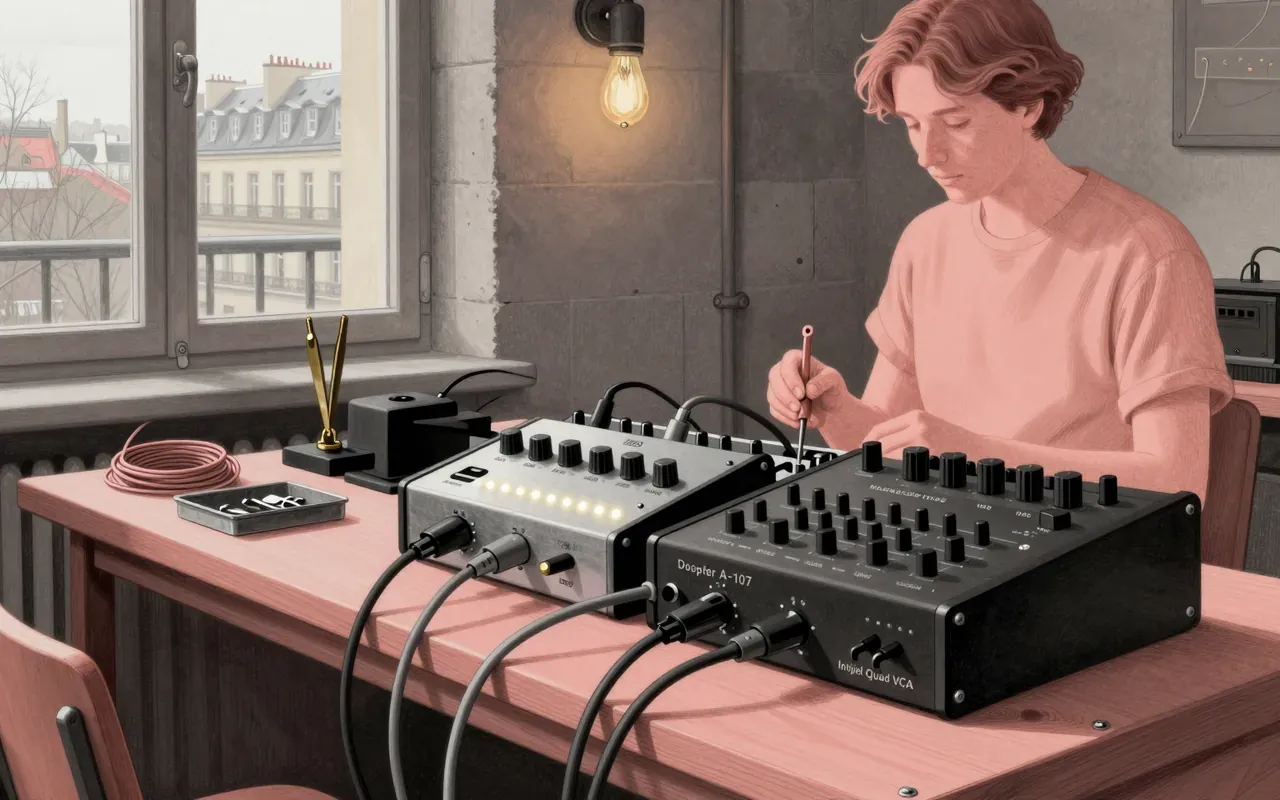
Mutable Instruments BraidsMutable InstrumentsBraids delivers radical timbral variety in minimal space—but with no internal editing, no tuning stability guarantees, and no analogue circuitry. It is a selector, not a synthesizer.
8:40
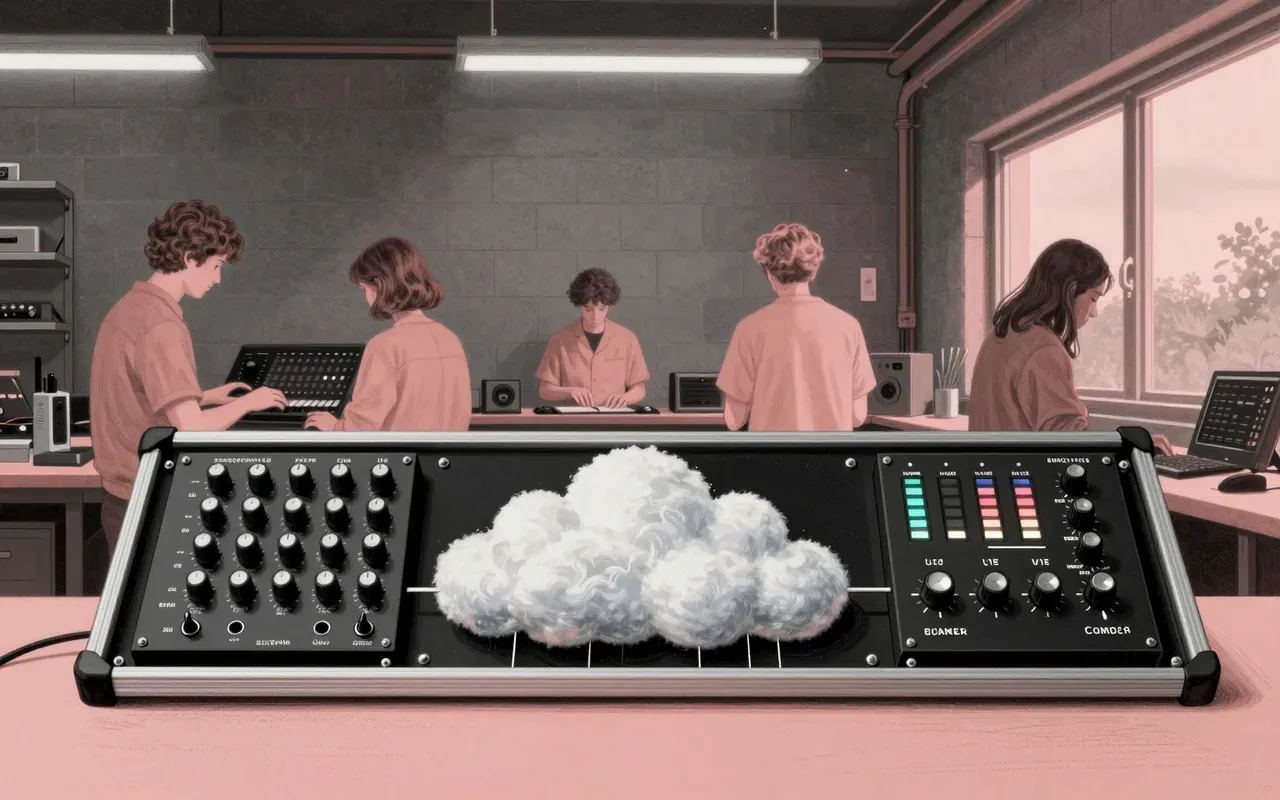
Mutable Instruments CloudsMutable InstrumentsClouds is a granular audio processor for Eurorack that transforms live input into dense, overlapping grains. It records continuously into a short, variable buffer (up to 8 seconds), allows freezing that buffer to isolate a sonic space, and provides hands-on control over grain position, size, pitch, density, timing distribution, and envelope shape. A diffuser blurs transients using all-pass filters. It supports 40–60 concurrent grains and operates in stereo with extensive CV control, dry/wet blending, feedback, and reverb-like effects during freeze mode. It does not store or recall samples, nor does it support offline processing or waveform editing.
10:15
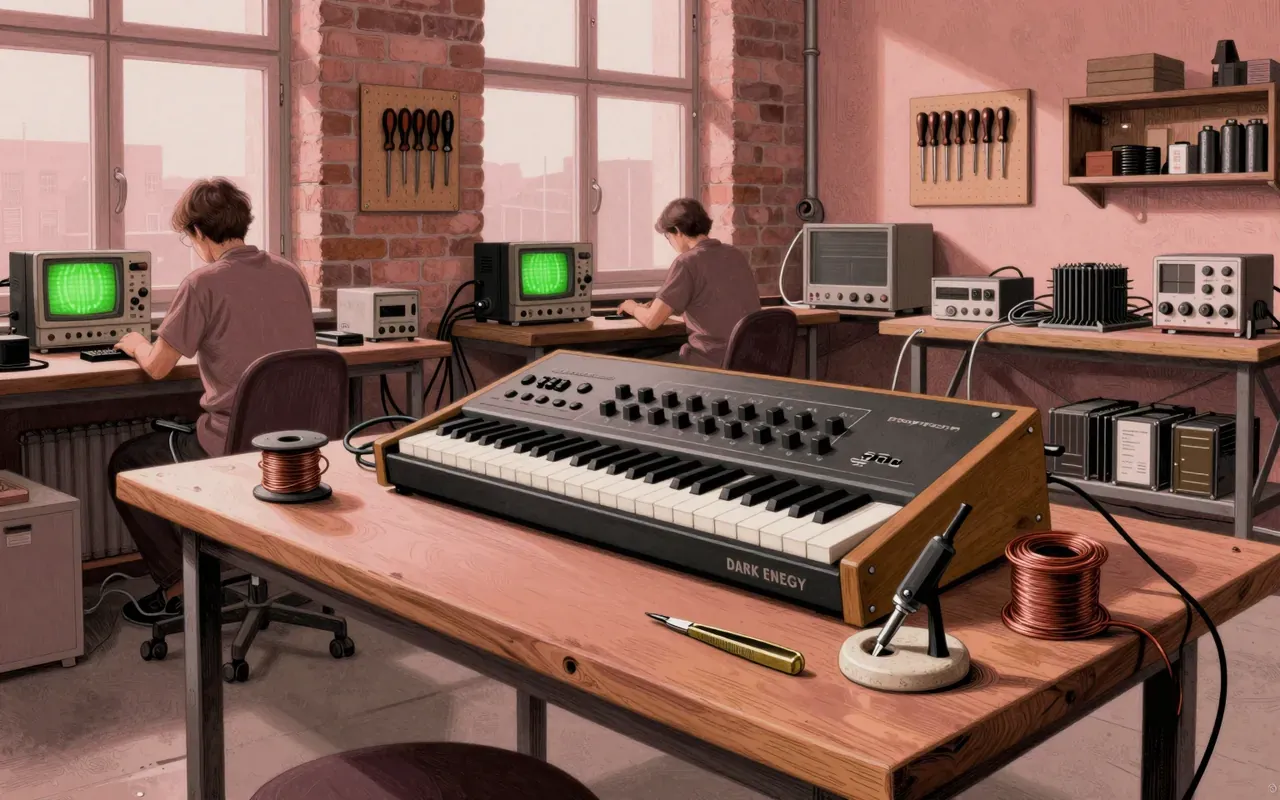
Doepfer Dark EnergyDoepferA compact, monophonic, fully analog synthesizer released in 2010 as a stand-alone version of the Doepfer A-111-5 Eurorack module. It features dual LFOs capable of audio-rate FM (~5 kHz), a 24 dB/octave low-pass VCF, and a triangle-based VCO. The VCF can function as a sine oscillator when the VCO is disengaged and resonance is maxed. All sound generation and modulation are analog; only USB/MIDI contain digital components. It has no polyphony, no patch memory, no velocity or aftertouch, and no audio input. Superseded by the Dark Energy II in 2012.
9:03
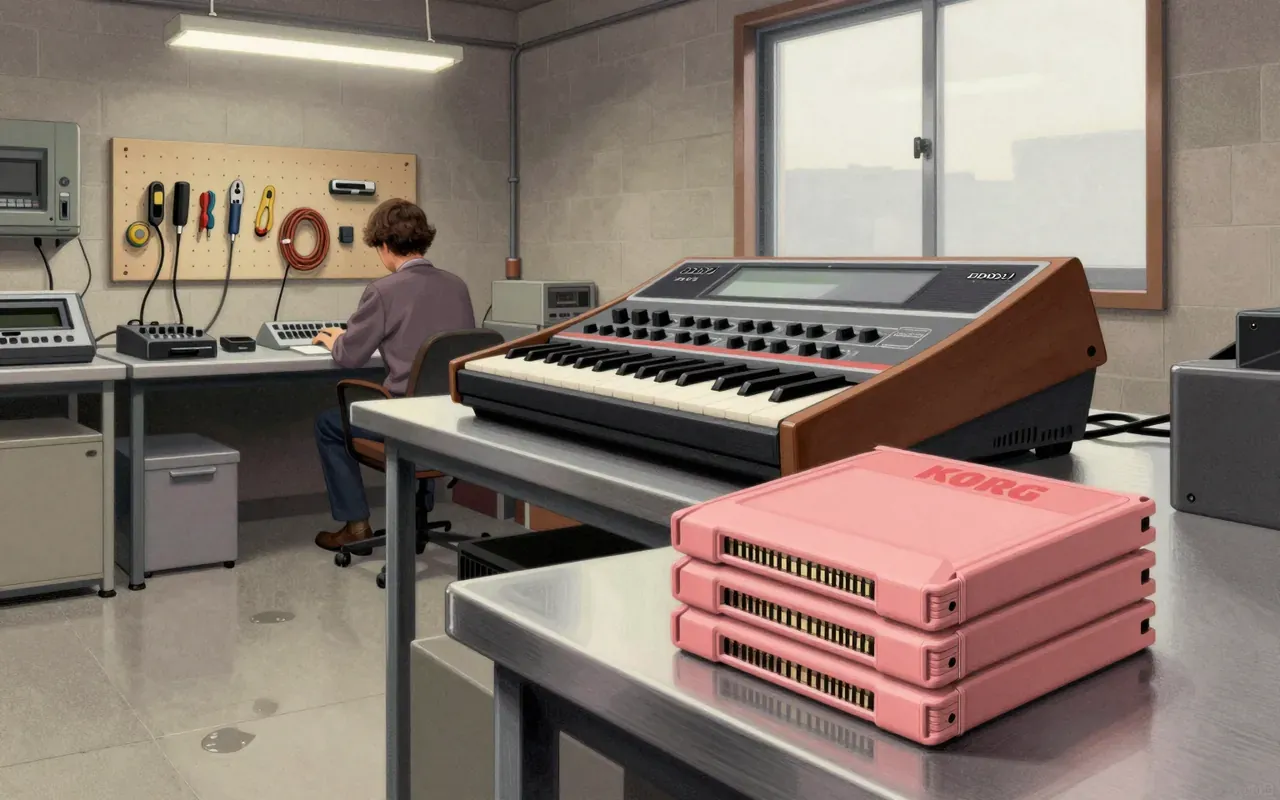
Korg DDD-1Korg · 1986The Korg DDD-1 is a 1986 sampling drum machine with 14 velocity-sensitive pads, 12-bit samples, limited user sampling, five dynamic envelopes, and ROM card expansion (up to four cards, eight sounds each). It has 18 presets and six assignable audio outputs.
Up next in Audio

Streamer bass

Warwick · 8:27

A bass built to copy — then legally outrun — the Spector NS-Bass. It wins on ergonomics, loses on originality.

8:27