What it is and what it was built for
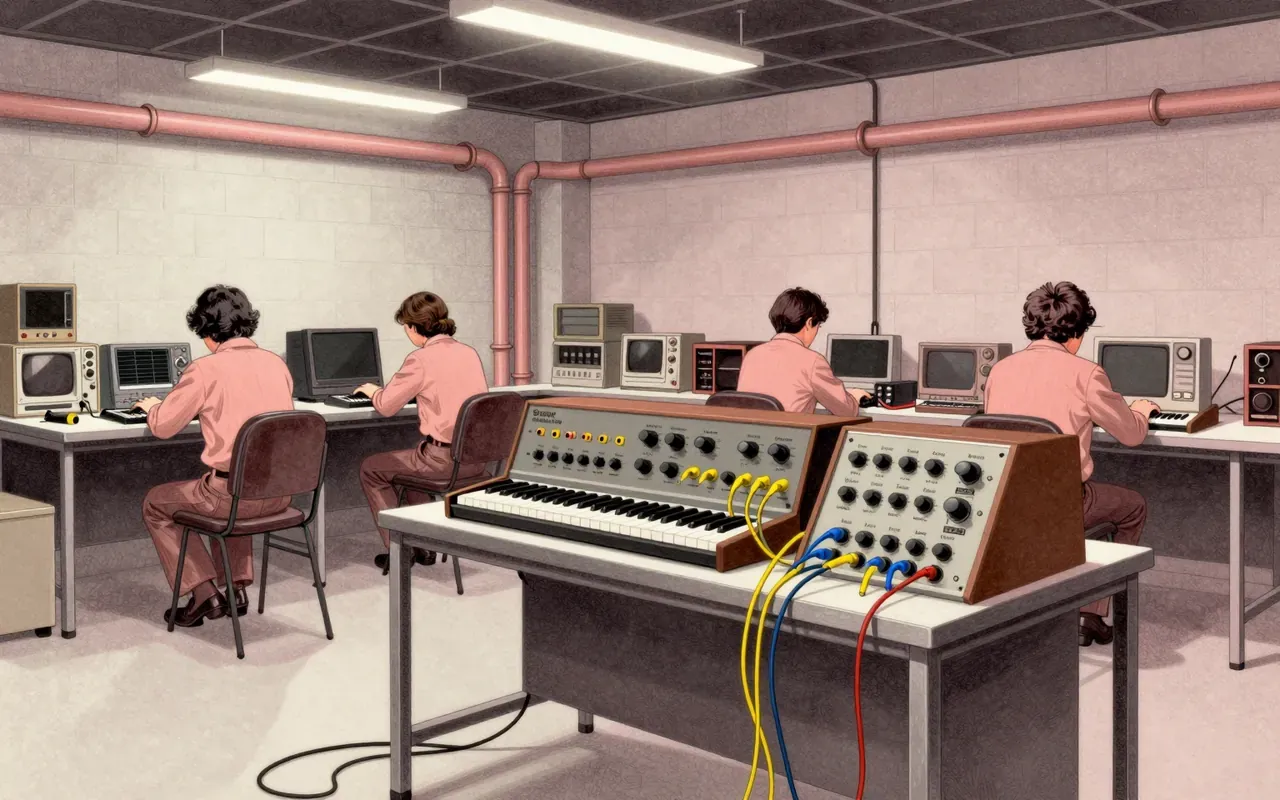
The Synclavier is a modular digital system developed from the Dartmouth Digital Synthesizer. It was built for film/TV sound design, Foley production, and studio-based digital composition — not live performance or traditional keyboard playing.
How it works, in terms a player would use
It blends up to four layers of sound files or partial timbres. It records external sounds and saves them as sound files. With the optional FM module, a harmonic envelope shapes dynamics. The mature system is modular: FM synthesis, digital sampling, hard-disk recording, and computer-based editing are separate components.
What it does better than anything else
It was the only digital sampling system capable of 100 kHz sample rates. It pioneered hard-disk digital audio recording in 1981. It enabled layered timbre-frame synthesis — blending up to four sound files or partial timbres — for complex, dynamic textures.
What it does badly
Additive synthesis alone produces thin, steady-state sounds. It fails at percussive transients. Its core architecture does not generate sharp attacks without layering samples or adding FM.
What people made with it
People made movie and television sound effects and Foley at Glen Glenn Sound. They built pioneering digital non-linear synthesis, polyphonic sampling, and sequencing systems — foundational to modern DAWs and sound design tools.
Who should use it, and who should not
Sound designers working with archival high-sample-rate material should consider it. Musicians seeking expressive real-time control or warm analog-like synthesis should not. It demands technical fluency, not musical instinct.
Is it worth your time
It is worth your time only if you need ultra-high-fidelity sampling at 100 kHz, non-linear digital sound design workflows, or direct lineage to early hard-disk audio — not as a playable instrument, but as a historical node in sound design infrastructure.